South African Intelligence Involvement in South West Africa (SWA): 1949 to1990
Wolfgang Witschas
Abstract
The South African Security and Intelligence involvement in South West Africa (SWA) began during WWI in June 1915 after South Africa occupied the former German colony of Deutsch Südwest Afrika (DSWA). The security and intelligence involvement ended in March 1990 when the then SWA/N became independent.
Historical Background from a Policing Security and Intelligence perspective: 1915 to1948
Imperial Germany declared “South West Africa” a protectorate on 07 August 1884,
when the German flag was raised at Angra Pequena, which they renamed Lüderitzbucht. The territory became “Deutsch-Südwestafrika (DSWA) and remained a German colony until 09 July 1915, when the German forces capitulated and the South African forces occupied the territory during WWI. The territory was placed under South African military administration. In 1920, the League of Nations gave South Africa a Class C mandate to govern it as South West Africa.
SWA was under Marshall Law from 1915 to 1920 and security was conducted by the military police of the Union Defence Force (UDF). With the return of civilian governance in the territory, the South West Africa Police (SWAP) was formed to uphold the law and protect the territory. The UDF had only a small force stationed in SWA until the end of the 1920s.
During the mid 1930s, with the emergence of the Nazis party in Germany, the German population in SWA started to sympathise with upcoming Nazi ideology and began to develop a new sense of pro Germany sediment. The South African authorities monitored the situation via the SWAP and other government entities. Since mid 1938, after the annexation of Austria, the occupation the Sudetenland and the occupation of Czechoslovakia by Nazi Germany, the pro Nazi and pro German sentiment in SWA was very strong. In April of 1939, prior to WWII, the Union government decided to send a contingent of SAP policemen to SWA to take over security and policing from the SWAP. The SAP remained the only police force until 1982 when the South West Africa Police (SWAPOL) was created and served until 1990. During the period 1915 to 1949 existed no formally intelligence structure in the territory, only the police and military.
South African intelligence involvement in SWA/Namibia 1949–1990
The Focus from 1949 to 1990:
• 1949–66: Political monitoring
• 1966–74: Counter-insurgency build-up
• 1974–89: Full counter-insurgency war
• 1989–90: Transition intelligence
Introduction
South African intelligence involvement in SWA/Namibia 1949–1990, was a 41-year continuum that shifted from colonial policing to counter-insurgency to transition management. The various agencies’ focus changed as the territory moved from “mandate” to “war zone” to “transition”.
It was never a single agency – it was SAP Security Branch, Republican Intelligence (RI), Bureau of State Security (BOSS), National Intelligence Service (NIS) and South African Defence Force (SADF) Military Intelligence (SADF MI) operating in parallel.
1949–1963: 1949
SWA was still administered under the League of Nations mandate (now a United Nations mandate) and treated as a 5th province of SA.
The SAP Security Branch – “Colonial policing” phase:
The Intelligence role was handled by the SAP Security Branch as no separate civilian intelligence service existed yet.The SAP Security Branch, based in Windhoek, the capital of SWA, with sub offices strategic towns in SWA.
Intelligence role:
Focus:
Political surveillance/monitoring the South West Africa Peoples Organisation (SWAPO’s) political organizing from its formation as Ovambo Peoples Organisation) in 1959 onward. Monitoring trade unions, and the German-speaking community. SWAPO formed 1960. Early intelligence was basic informer networks, mail intercepts, surveillance and detentions under the Suppression of Communism Act 1950.
The SAP Security Branch had no external intelligence capability. Focus was internal control.
Key point:
SWA was considered “domestic” territory, so there was no legal or operational distinction between SA and SWA intelligence.
Legal cover:
Suppression of Communism Act 1950, Sabotage Act 1962 gave SAP wide powers.
1963–1969: Republican Intelligence (RI)
In 1963 the Republican Intelligence (RI) was formed as a secret offshoot of SAP Security Branch under Hendrik van den Bergh. It was SA’s first dedicated civilian intelligence service.
The role of RI in SWA was to establish a station in Windhoek using SAP Security Branch cover. The Windhoek office was situated on the first floor of the Police Station on the c/o Kaiser & Bahnhof Straße. It was located in the “Fire Arms Licence” office. The office was manned by Ben Burger, Pieter Swanepoel and MC Swart.
Context:
On 20 March 1960 the Sharpeville massacre took place and SWAPO was banned. SWAPO turns to the armed struggle and the People’s Liberation Army of Namibia (PLAN) is created. launched first infiltration into Ovamboland in 1966 and established a base at Omugulugwombashe.
In 1967 the SAP opened the Windhoek Air Wing at Eros Airport south of Windhoek. Three Sud Aviation Alouette III helicopters were stationed there. The Helicopters were intensively used in Ovamboland with SAAF crews, coordinated with RI intelligence.
Focus:
RI focused on tracking Ovambo youth leaving for military training abroad. SWAPO’s external links and early infiltration attempts from Zambia to the Caprivi Strip.
Another focus point was the monitoring of the German-speaking community, Churches and the SWA administration for “subversion”.
RI also conducted surveillance and monitoring of the activities of the US, UK and West German consulates general in Windhoek via agents and informants.
The Consulate General of West Germany was located on the 4th floor of the Marie Neef Building, 67 c/o Kaiser and Post Street, opposite the General Post Office.
Limitation:
RI got bogged down in internal security and could not handle external intelligence well.
The Bureau of State Security (BfSS): 1969–1978
In 1969 the Bureau of State Security (BfSS) was created with the absorbing RI and SAP Security Branch intelligence functions. It reported directly to Prime Minister JB Vorster.
The Windhoek station:
BfSS ran a covert station in Windhoek out of SAP/SADF premises. In later years BOSS established an office in the Nictus Building in Kaiser Straße to the north oh the SAP police station and opposite the South African Railways & Harbours (SAR&H) Head Office.
The Staff consisted of about 15-30 officers, mostly SAP/SADF secondments. Used SAP cover ranks.
The era was known as the “Counter-insurgency war phase”
Context:
From 26 August 1966 the infiltration of PLAN terrorist gradually escalated first in East Caprivi and later in Ovamboland.
When Portugal withdrew from Angola 1974 and a civil war started in Angola, South Africa/the SADF became covertly involved militarily with the sanction of the US Central Intelligence Agency (CIA), Operation Savannah. After South Africa withdrew from Angola in 1976, the Border war intensified.
The SADF had established military Sector 10 HQ in Oshakati in early 1976, with the base being set up opposite Oshakati State Hospital as from 1975. BOSS opened a covert sub-station in Oshakati around 1974–1975.
The Oshakati sub-station handled agent running in Ovamboland, surveillance of local headmen, churches, and SWAPO suspects, and passed intelligence to SADF Sector 10.
The Functions of BfSS in SWA
The collection of counter-insurgency intelligence on PLAN/SWAPO in northern SWA and southern Angola. Determine infiltration routes, caches, safe houses in Ovamboland and Kaokoland.
The tracking of Ovambo youth leaving for military training in Zambia/Tanzania and the monitoring of SWAPO’s external missions in Lusaka and Dar es Salaam.
Political intelligence:
Monitor SWAPO’s internal political wing, the involvement of churches and church organisations in assisting SWAPO, organised labour, student groups and the activities and sediment of the German community.
Running agents and informers amongst contract workers from Ovamboland and in Ovamboland.
Foreign missions in Windhoek
Surveillance and monitoring of the activities of the US, UK, West German consulates general in Windhoek and the SWA administration for “subversion”.
Role of the West German Consulate in Windhoek seen in context of the historical German heritage in SWA
The consulate handled trade, cultural ties, and consular services for the German-speaking community in SWA/Namibia. The German community was large, it consisted of around 20-25,000 people in the 1970s-1980s.
Cold War angle:
West Germany maintained ties with SWA/SA despite international pressure over apartheid and SWA’s status. The consulate was one of the few Western diplomatic posts in Windhoek alongside the US, UK, and France.
Trade & aid:
It promoted German business interests in mining, agriculture, and fishing. German companies were active in SWA through the 1970s-80s.
Cultural work:
Supported German schools, churches, and the Deutscher Schulverein in Windhoek and Swakopmund. Also monitored the German-speaking press.
Political sensitivity:
The consulate had to navigate carefully. West Germany officially supported UN Resolution 435 and Namibian independence, but maintained practical relations with the SA administration in Windhoek.
Regional operations:
Coordination with the Portuguese “Polícia Internacional e de Defesa do Estado” (PIDE) in Angola until 1974. Material support by channelling funds/equipment to anti-SWAPO groups in Angola.
Turf wars:
Constant conflict with SADF Military Intelligence (MI) over who controlled SWA intelligence.
Legal cover:
1969 law made disclosure of BOSS info illegal. All operations under “Prime Minister’s Office” cover.
In 1978 as a result of the “Information Scandal” BOSS was renamed “Department of National Security (DONS) and brought under PM’s portfolio.
1980–1990: National Intelligence Service (NIS) and SADF Directorate Military Intelligence (DMI): Transition and negotiation phase
After Mulder gate/Information Scandal in 1978, General van den Bergh resigned and BOSS was renamed “Department of National Security (DONS)” in September 1978, then replaced by the National Intelligence Service (NIS) in February 1980. Dr LD “Niel” Barnard, was appointed as Director General. Barnard was born in Otjiwarongo, SWA in 1949.
Context:
UN Resolution 435 process, Cuban withdrawal from Angola, independence talks.
NIS’s role in SWA/N:
Structure & Operations of NIS
The NIS had four offices in SWA/N. The main office was in Windhoek, first located in the Nictus Building in Kaiser Straße until 1983 and then in the “Berg Hotel” in Klein Windhoek. There were three offices located in northern SWA/N at Oshikati, Ovambo, Rundu, Kavango and Katima Mulilo in Eastern Caprivi. The focus shifted from combat intelligence to political intelligence.
The focus of NIS:
NIS role was strategic, so the focus shifted from direct counter-insurgency to political intelligence. Focused on SWAPO’s political wing, UN process, and managing the transition. NIS initiated pre-negotiation contacts with external SWAPO leadership in Lusaka, Zambia. Domestic stability and election monitoring: “What does SWAPO want, will they stick to a deal, and how do we manage the post-independence relationship”
• Watching political parties in SWA: DTA, SWAPO, Namibia National Front (NNF), and smaller groups during the 1989 independence election
• Assessing the risk of violence during the transition. NIS reports focused on whether SWAPO would respect the electoral outcome
• Liaising with SAP Security Branch and SWAPOL on internal security, but avoiding direct counter-insurgency roles that SADF MI and Koevoet handled.
The SADF MI became more dominant in SWA/N after PW Botha’s securocracy rise 1978. The South West Africa Territorial Force (SWATF) and the SAP Operation “K” or Koevoet (later renamed to SWAPOL TIN (Counter Insurgency “COIN”) had their own intelligence units formed by SAP Security Branch members for northern SWA/N (Owambo, Kavango and Kaokoveld)
Overlap:
SAP Security Branch continued internal security. All 4 agencies reported to the State Security Council.
NIS Monitoring of the German-speaking community and organizations in SWA/N
BfSS from 1969–1980 actively monitored the German-speaking community and organizations.
BfSS saw them as a potential source of anti-government sentiment, and kept tabs on the following:
• Political statements from German-language newspapers such as the Allgemeine Zeitung, and Windhoeker Anzeiger
• Church groups in the Evangelical Lutheran Church in Namibia DELK
• Youth groups and cultural associations that were critical of apartheid policy
• Any links between German nationals in SWA and West German diplomats
The NIS from 1980–1990 continued with the monitoring, but it was lower priority and more “political intelligence” than “security threat” focused
The Interessengemeinschaft Deutschsprachiger Südwester (IG) was established on 26 July 1980. Later, the Arbeitsgemeinschaft Deutschsprachiger Südwester (ADSV) was formed in the mid-1980s after a split within the IG over disagreements about handling the South African administration and the political situation at the time. Since both organizations served as umbrella bodies for the German-speaking community in SWA/Namibia, they were monitored by NIS.
The IG and the ADSV stood for cultural and language preservation i.e. Schools, German-language media and cultural festivals. Political lobbying with the SA Administration on land rights, citizenship, and language policy. It opposed SWAPO but also criticized aspects of apartheid that hurt the German community. From 1985 onwards it pushed for minority rights, constitutional guarantees for minorities in an independent Namibia. West Germany was the key external factor. If Bonn supported the settlement, the German community would follow.
Why NIS kept monitoring:
The IGD/ADSV was the main representative body for the German community. It had 30,000 members and lobbied on property rights, language policy, and citizenship. NIS needed to know if they would become a destabilizing factor during the transition period.
What changed:
Under Dr Niel Barnard, NIS dropped the “subversion” framing. Reports treated the German community as a political constituency to manage, not a security threat. The main concern was whether they would oppose independence or lobby that West Germany to block it.
Post-1984:
Once back-channel talks with SWAPO started, NIS was more interested in whether the German community would accept a SWAPO-led government and what guarantees they’d demand for minority rights.
Evidence:
West German consulate reports from Windhoek 1980–89, now in the Politisches Archiv Auswärtiges Amt, note: There was regular contact with NIS officers who asked about IGD/ADSV activities, participation in the interim DTA government, contact with the internal wing of SWAPO and with regard to West German government policy. NIS didn’t run covert operations against the German community like BOSS did in the 1970s. It was mostly file monitoring and meetings. The monitoring shifted from “is this a threat?” to “what do they want in the new Namibia?”
Bottom line of the NIS policy:
The German community was rather seen as a “nuisance politically”, not a security threat. That is why NIS downgraded it from “subversive organization” under BOSS to “minority interest group” by 1985. The real threat to SA’s position came from both the SWAPO external and the internal wing and international sanctions, not the IGD/ADSV.
Counter Espionage
NIS ran counterespionage investigations on suspected East German, Ministerium für Staatssicherheit “Stasi” agents identified and operating under cover in SWA/N. NIS Monitored the visits to SWA/N of Intelligence officers attached to the Pretoria based Embassies of the US (Central Intelligence Agency ‘CIA’) German (Bundesnachrichtendienst ‘BND’) and UK (Secret Service ‘MI6’).
The US “Liaison office” in Windhoek which opened in March 1984 was essentially a diplomatic outpost for the Namibia negotiations and handled liaison with the South African administration, SWAPO, and the Joint Monitoring Commission overseeing SADF troop withdrawals from Angola. The offices were located in Lossen Street near the Ausspanplatz traffic circle Windhoek, which was also monitored from a CE point of view. Assessing how foreign governments would respond to independence and what influence they would have on a post-independence Namibia.
Endgame:
NIS wound down covert ops in SWA 1989–90 as independence approached. Handed over to UNTAG monitoring.
Common features across from 1949–1990
Secrecy
No public intelligence offices in SWA/N. All stations used RI BOSS, DONS/NIS, SAP, SADF, or PM Office cover
Fragmentation:
SAP Security Branch, RI, BOSS, DONS/NIS, SADF DMI, and SWAPOL all had overlapping mandates. Coordination was poor until the State Security Council was strengthened post-1978.
Comments by Compiler:
The compiler’s father, Herbert Ernst Witschas, served as an agent for Republican Intelligence (RI) and the Bureau for State Security (BfSS) from 1964 to 1978. His assignment was to monitor the German community in South West Africa. By virtue of his background, he had natural access to the West German Consulate in Windhoek. He was also involved in German cultural organizations, the German Private School, the German Evangelical Lutheran Church (DELKSWA), and German business circles.
https://en.wikipedia.org/wiki/Rpublican_Intelligence
https://en.wikipedia.org/wiki/Bureau_of_State_Security
https://en.wikipedia.org/wiki/National_Intelligence_Service_(South Africa)
TRC amnesty hearings, Kevin O’Brien’s “The South African Intelligence Services”, and memoirs like Pieter Swanepoel’s Really Inside BOSS.
Dr LD “Niel” Barnard’s TRC amnesty hearings, NIS declassified summaries
Books::
Dr LD “Niel” Barnard
– Secret Revolution
– Peaceful Revolution
Die Buro
Pages: 100 & 104 (RI Windhoek)
Henning van Aswegen, Imprimatur Publishers, Pretoria.
National Archives Pretoria:
SAB-SWA, SAB-BOSS, SAB-NIS, SAP Security Branch files
TRC Archives:
Amnesty applications, hearings of BOSS/SADF operations in SWA, 1969–89
Politisches Archiv Auswärtiges Amt, Berlin. Botschaft Windhoek files. West German consulate reports on SA intelligence 1969–90
UK National Archives: FCO 45, FCO 105 British monitoring of SA intel in SWA.
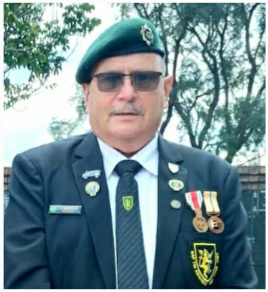
Wolfgang Witschas was born in Windhoek, SWA, spent his entire youth in Windhoek, attended the Deutsche Höhere Privat Schule (DHPS) in Windhoek from Sub A to Matric. After school he joined the South African Police (SAP) 1976 – 1981, he then joined the National Intelligence Service (NIS) and was stationed at the Windhoek and Rundu Regional Offices until 1987. Wolfgang’s German heritage background was a major advantage for the NIS, who assigned him to monitoring the German community in South West Africa/Namibia as a primary intelligence focus. This encompassed media, civic organizations, and interpersonal contact with German as well as other people across Windhoek and the northern towns of Tsumeb, Otavi, Outjo, and Grootfontein, as well as Omaruru, Karibib, Swakopmund, Walvis Bay, Keetmanshoop and Lüderitz in the south.
References:
