Nongqai Vol 17 no 7 – Det/Head-Constable LWJ Arangies
Abstract
Detective Head‑Constable Lourens Wilhelm Johannes Arangies served nearly 36 years in the South African Police, distinguishing himself as one of the most capable detectives of his era. Joining the force in 1913, he worked through major events such as the 1914 strike and later became a key figure in the Criminal Investigation Department. Arangies was renowned for his exceptional ability to gather, interpret, and connect information, a skill that contributed to solving an estimated 500 murder cases. His career included service in Johannesburg, Durban, Newlands, and Krugersdorp, where he rose to the respected rank of Head‑Constable. He volunteered during World War II, earning the Africa Service Medal and the Good Service Medal. Arangies played a decisive role in several high‑profile investigations, including complex murder and robbery cases between 1934 and 1946. He retired in 1949 and passed away in 1969, leaving behind a legacy of dedication, investigative excellence, and service to his community.
Keywords
Detective Head‑Constable L.W.J. Arangies, South African Police History, Criminal Investigation Department, Johannesburg Policing, Durban Policing, Krugersdorp Policing, 1914 Strike, Africa Service Medal, Good Service Medal, Historical Murder Investigations, South African Policing Heritage, Nongqai Archives, Family History & Heritage Research
SOUTH AFRICAN RESEARCHER – FAMILY HISTORY & HERITAGE
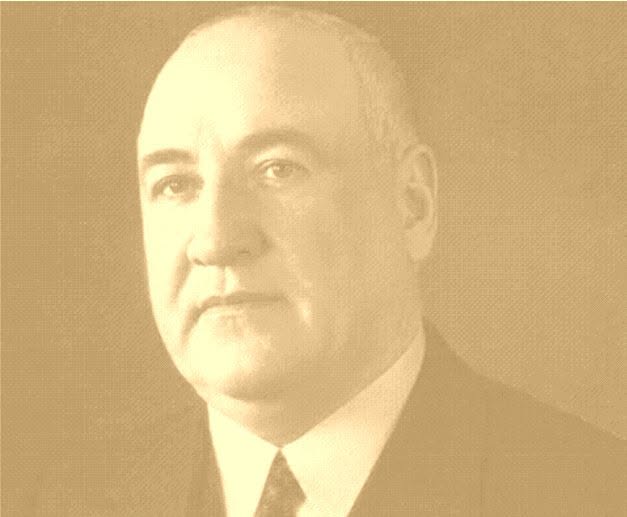
Detective Head Constable Lourens Wilhelm Johannes ARANGIES, stationed at Newlands, Johannesburg, retired from the South African Police in September 1949 after almost 36 years of service. At the time, he estimated that he had dealt with about 500 murders during his career. He excelled at obtaining and piecing together information.
He joined the police in 1913 and was stationed on the Reef during the 1914 strike, and later in Johannesburg. He transferred to the Criminal Investigation Department in 1918, and was stationed at Marshall Square, Durban, and Newlands in Johannesburg before being transferred to Krugersdorp in 1928. He became head constable in 1933 and in 1937 returned to Newlands, where he remained until his retirement.
He volunteered for service during World War II and was awarded the Africa Service Medal. He also earned the Good Service Medal for his police service.
He married Emily Elizabeth Frances HOARE in 1917 at St Mary the Less in Jeppestown. He died on 01 February 1969. He last lived in Blyvooruitzicht. His funeral service was at St Peter’s Anglican Church in Krugersdorp. He was survived by his wife and daughter. Emily died in December 1978.
Some of the high-profile cases he solved included a 1934 murder in Krugersdorp. A man (28) strangled his wife and hanged her behind a door. He almost convinced police that she had committed suicide. A few days after the burial, Arangies received information from a Free State source that the husband had been courting a young girl in Senekal. The body was exhumed and Arangies arrested the husband.
In April 1940, a Portuguese market gardener (62) and his family were attacked in their sleep on their farm Klipfontein in Linden. The man died of his injuries the day after the assault. His wife and two children were seriously injured. Two other sons were uninjured. The detective heard through his informants that a man boasted about the robbery and assaults. During his follow-up, Arangies recovered most of the stolen property. Seven men were arrested and convicted.
In 1946 he solved the murder of a Pretoria taxi driver who was engaged to take a young man to Johannesburg. The taxi disappeared and the driver’s body was subsequently found at the side of the road at Jackson’s Drift. He had been shot. The taxi was later found abandoned outside a garage in Langlaagte. Three days later, Arangies, who had nothing to do with the case up to then, arrested the young man.
© 2026 South African Researcher – Family History & Heritage
Please don’t steal my content. I work hard to research and produce this original content. If you’d like to share my work, please use the post’s share option.
——————————————————————————————————-
Comments by Brig HB Heymans
We have obtained permission to re-publish in the Nongqai. We thank South African Researcher – Family History & Heritage.
Detective Head‑Constable Arangies joined the South African Police on 12 May 1913 as a member of the Foot Police, and Force Number 4109F was allocated to him. He was bilingual in Afrikaans and English. At the time, the rank of Head‑Constable was a senior and respected one — broadly equivalent to a modern Warrant Officer. In earlier years, section heads of large stations were often Detective Head‑Constables, and Head‑Constables frequently served as Station Commanders. As late as the 1960s, Durban still had No No 7049 Head‑Constable JH Grobler serving as its Station Commander.

