Nongqai Vol 17 No 7 – 1SWA Spes
Abstract
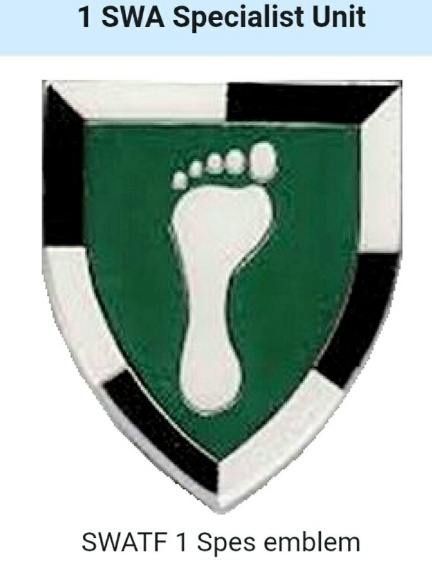
1 SWA Specialist Unit, or 1 SWASpes, was a unique South West African Territorial Force (SWATF) counter-insurgency unit during the Border War. Formed in 1977 as 101 Specialist Unit in Oshivelo (in 1980 became part of the SWATF), it combined horse-mounted infantry, motorcycles, expert trackers, and specialized dogs. The idea of this combined unit rose from the use of tracker dogs and mounted infantry that the South African Defence Force (SADF) at the beginning of the Border War.
Keywords
Border War,
South West African Territorial Force (SWATF), 1 SWA Specialist Unit, or 1 SWA Spes,
South African Defence Force (SADF),
SADF Equestrian Centre,
Mounted Infantry,
Tracker Dog,
Motor cycles,
Ovambo, Kavango, Caprivi Strip, cross-border into Angola,
Main base Otavi,
South West Africa Territorial Force (SWATF): 1 SWA Specialist Unit (SWA Spes)
Compiled by Wolfgang Witschas
Introduction
After taking over COIN operations from the South African Police (SAP) and some harsh lessons learned during Operation Savannah, the South African Defence Force (SADF) experimented with many unique operational concepts.
The SADF created several specialist units focused on tracking of insurgents by dogs, human trackers, horse- and motorcycle mounted specialist troops.
The SADF Dog School, which was also responsible for everything horse-related, had been established at Voortrekkerhoogte on 01 April 1964. In 1974 it was split into separate units to train and handle dogs and horses.
The SADF Dog Centre moved to Bourke’s Luck in the then Eastern Transvaal and the SADF Equestrian Centre was established on the farm Welgegund, 13 km north of the then Western Transvaal town of Potchefstroom, in January 1974. The size of an understrength battalion, Equestrian Centre’s main focus was training horses and soldiers for the bush war and raising the level of horsemanship in the SADF. The first operational horse platoon went to northern SWA in September 1974, a few months after the SADF had assumed control of the escalating bush war.
Background
Mounted Infantry
By 1974, it comprised a company of mounted infantry at the SADF Equestrian Centre. Most of the operational horses originate from the procurement Wing on a stud farm near the Northern Cape Town of De Aar.
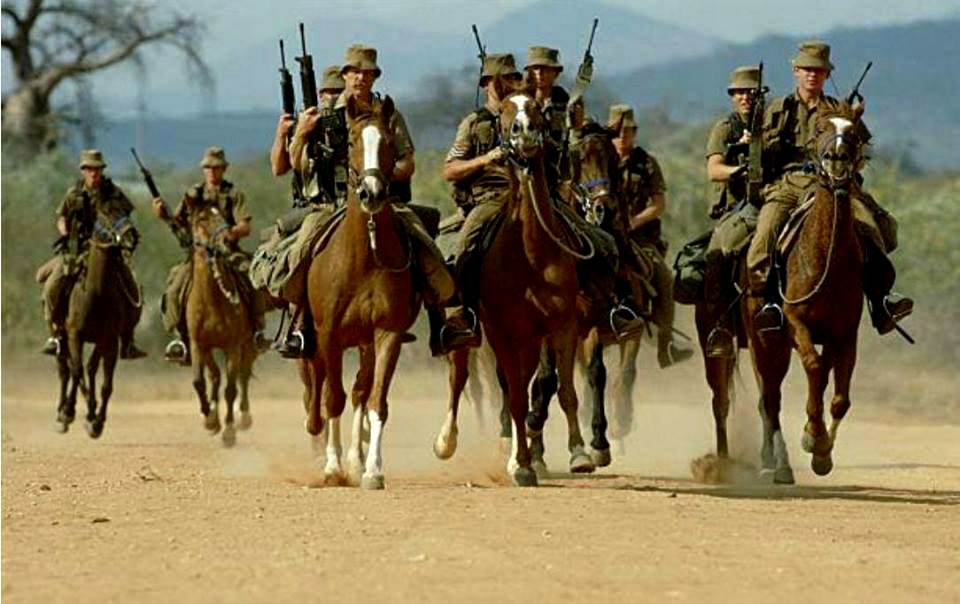
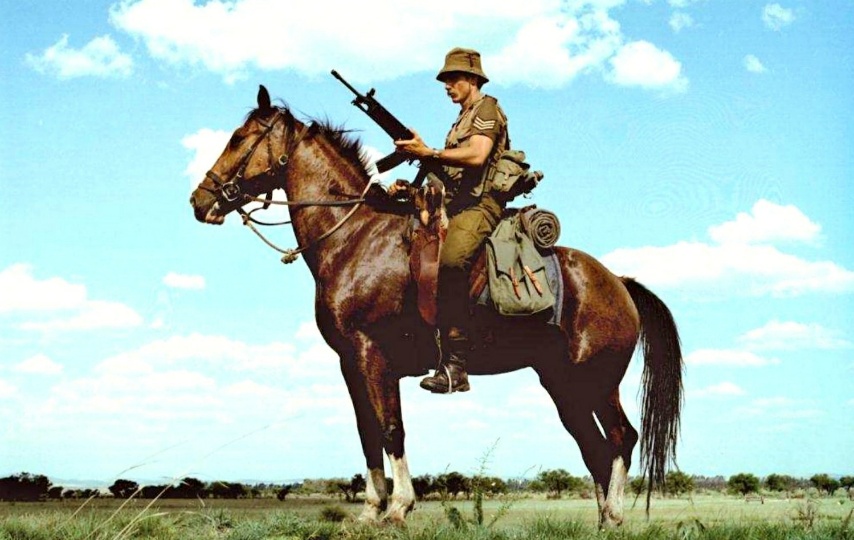
The legacy of the horse-mounted infantryman of the South African War era commando was evident in this unit, which proved competent in the counter-insurgency patrol in the Area of Operations.
When deployed to the operational area of Northern SWA they were attached to the larger ‘modular’ infantry battalions stationed in Ovambo.
• The SADF Equestrian Centre evolved from 1974 to 1985, adapting horse-mounted infantry to counterinsurgency needs.
• Mounted infantry units provided effective reconnaissance and combat roles during the beginning stages of the SWA Border War.
• The relationship between horse and rider was crucial for operational effectiveness, emphasizing training and emotional bonding.
• Challenges included logistical support and training, reflecting the evolving role of equestrian tactics in modern warfare.
 https://en.wikipedia.org/wiki/1_SWA_Specialist_Unit
 https://en.wikipedia.org/wiki/1_SWA_Specialist_Unit
Dog unit
The premier function of the Dog Training School at Voortrekkerhoogte, was to train dogs and their handlers in mine detection reconnaissance, tactical and security work. The unit was also responsible for acquiring suitable dogs and researching dog diseases, nutrition and breeding.
Many young servicemen wished to be trained as dog handlers. He was required to be physically fit, patient and display and affection for and understanding of animals, particularly dogs. In the main, German Shepherds, Rottweilers, Dobermans, Labradors and Border Collies were trained and this training started when the dogs were almost two years old and lasted from one to two years.
The small, specialised units (horses, dogs & motorcycles) were attached to the larger ‘modular’ infantry battalions that controlled specific areas of Ovamboland: 51 Battalion at Ruacana in the west; 52 at Ogongo; 53 at Ondangwa; and 54 at Eenhana in the east.
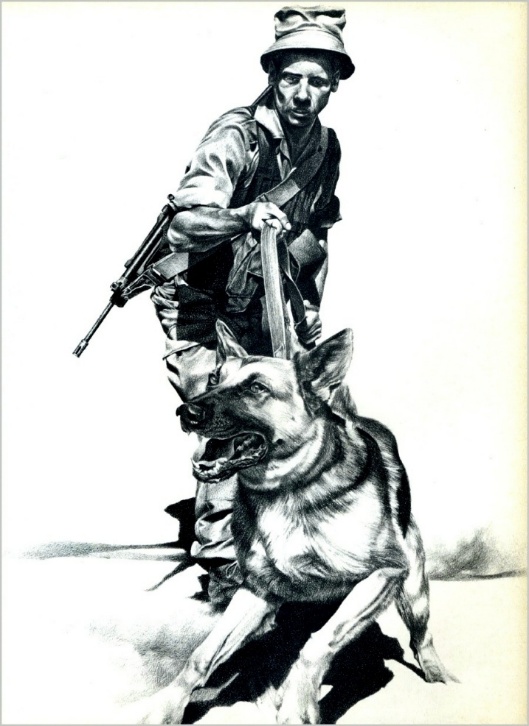
Images of War: Nr 23: Peter Badcock
Motorcycle Unit
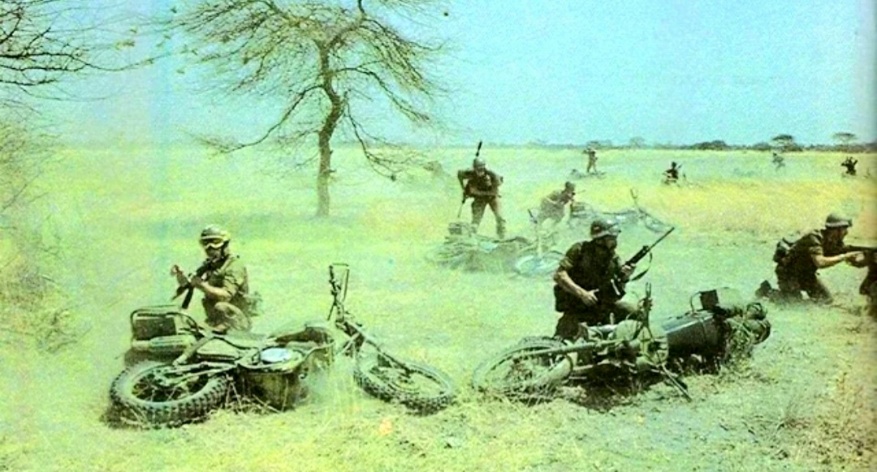
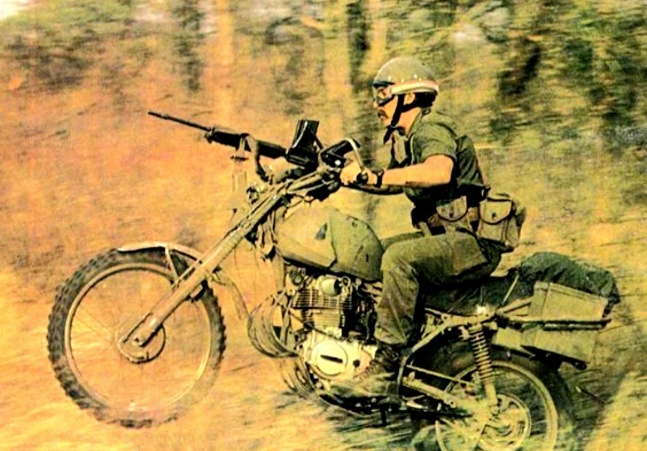
During the beginning of the border war motorcycles were primarily used by specially trained infantry units, with roughly 450 soldiers serving in the Bike Squad, and were employed for rapid mobility, reconnaissance, and border operations. They rode specially adapted 350cc motorcycles into action during operations, providing rapid response capabilities that allowed them to pursue or outmanoeuvre enemy fighters in the field. In addition, the larger 1200cc motorcycles were sometimes used by army forces for greater endurance and reliability.
 https://en.wikipedia.org/wiki/1_SWA_Specialist_Unit
The 14 bike squad platoons from 1977-1985 formed a unique specialist unit the likes of which will never be seen again on the African savannah, or anywhere else. Of the hundreds of thousands of young South African men who did compulsory military service in the SADF from the 1970s to the 1990s, approximately 450 rode motorcycles into action with bike squad
Bike squad riding courses were intense and fast-paced and added additional stress to standard infantry training, which was very rigorous in the SADF. Bike squad volunteers were a mix of experienced riders and total novices. Those who made it through two years in the unit were invariably expert riders by the end of their National Service. Bike squad created many life-long motorcycle riders and racers.
 https://en.wikipedia.org/wiki/1_SWA_Specialist_Unit
 https://en.wikipedia.org/wiki/1_SWA_Specialist_Unit
1 SWA Specialist Unit
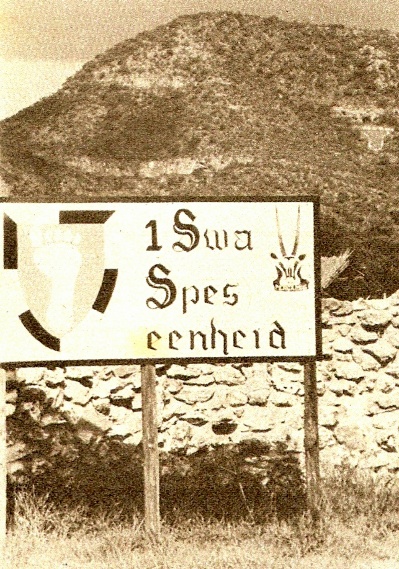
During June 1977 with the establishment of the South West Africa Territorial Force (SWATF), the Command in Windhoek identified an urgent need for horse mounted, motorbike mounted infantry units and dogs for the operational areas. A battalion-sized administrative unit named 1 South West Africa Specialist Unit (1 SWA Spes) was created at Oshivello in
Ovamboland on 01 June 1977as the 101 Specialist Unit at Oshivelo. It became 1 SWASpes in 1978 after expanding into bikes, tracking, and dogs. to control and deploy these units after training at their home bases in South Africa. The small, specialised units were attached to the larger ‘modular’ infantry battalions that controlled specific areas of Ovamboland: 51 Battalion at Ruacana in the west; 52 at Ogongo; 53 at Ondangwa; and 54 at Eenhana in the east.
The conclusions reached was for a unit organisation such as 101 (Ovambo) 202 (Kavango) Battalions to be adjusted so as to accommodate horse and dog units for operational use, and specifically, the urgent need for the acquisition of two platoons of mounted infantry. This included the furnishing of horses and equine related equipment, as well as the training and appointing of a qualified platoon commanding officer, full-time veterinarian and farriers.
The Equestrian Centre in Potchefstroom became involved in the first purpose built frontline horse and motorcycle mounted infantry base in the Operational Area.
By 1978, SWA Spes had diversified from mounted into the application of motorcycles, trackers and later the introduction of tracking and explosives detection dogs with a total of
force of 60 dogs. 1 SWA Spes was among the first to combine conventional infantry forces on the ground with the skills of trackers, the abilities of dogs and the quick reaction abilities afforded by horses and motorcycle units.
Equestrian platoons were detached to bases across the Operational Area, though the main equestrian unit in South West Africa was stationed at Oshivelo. Boerperd/Basuto pony crosses were used.
1 SWA Spes introduced to counter insurgency, the application of the “Pack hound”; using dogs to track, run down, and corner quarry for infantry or mounted soldiers to interdict. These packs could keep a speed of 15 km for over 4 hours, peaking at 30 km for 15 minutes.
Organization
By 1978, it comprised two companies of mounted infantry, two platoons of trackers and two platoons of motorcyclists, and a force of 60 dogs.
Size of the unit was battalion-size at most.
1 SWATF Special Forces (SWA Spes) Unit Mounted infantry:
SWATF’s own Special Operations Forces (SOF) unit consisted of local Ovambo and Herero troops, no South African conscripts from the South African Defence Force (SADF).
Bases:
Main base at Oshivelo, moving later to Otavi, Omaruku, and Omathoni.
Operational area:
Owambo, Kavango, Caprivi Strip, cross-border into Angola.
Mounted Infantry Tactic:
“Spoor & Stop”. SWA Spes copied SADF’s mounted units tactics, horses for silent mobility and fight on foot.
Phase 1:
• Cut spoor mounted:
• Scout element: 2-3 best riders and trackers move 200-300m ahead.
• Main body: 8-12 men, staggered column 500m back. Horses mounted infantry carried R1 & G3 rifles, ammunition, water, radio & rations
• Goal: Find SWAPO terrorists’ spoor at waterholes/oshana trails. Horse reads ground faster than foot patrol. 40km/day vs 20km/day on foot.
Phase 2:
• Contact drill – Dismount to fight
• SWA Spes did not charge on horseback. Standard Operational Procedure (SOP) was:
• Hot spoor/fresh tracks: Hand signal, halt
• Dismount 100-150m out: Tie horses to picket line in cover. 1 man = “horse holder” for 6-8 horses
• Assault on foot: 10-15min sprint to contact R1/G3 battle rifle & grenades. Horse = transport, not weapons platform. Too unstable + noisy to shoot from saddle
• Fire & manoeuvre: Standard SADF “contact drill” — base of fire + flanking group
Phase 3: Mounted pursuit:
If SWAPO broke contact, remount and follow spoor at 15-20km/h through bush where Casspir could not go.
Why horses worked for SWA Spes in Owambo:
• Mounted infantry could move silently and quickly less chance that SWAPO could detect them earlier thus the mounted solution. Vehicle noise carries 5km trotting horses = 500m detection. Night ambushes worked
• No fuel at remote bases as horse eats grass & drinks at oshanas. “Diesel that grows”
• Mopane bush stops Buffel/Casspir APCs. Horses slips through where vehicle gets stuck
• 3–5-day tracker patrol. The horse carries 120kg gear vs 25kg on foot = double patrol range
• Heat casualties on foot mounted rider had more shade, less water needed
SWA Spes 1 – SWATF Special Forces Dog Unit
Introduction
Dog unit’s operational tactics:
Canine capabilities formed a core specialization, with approximately 60 dogs by 1978 employed for scent-based tracking, mine detection, and direct apprehension of fleeing insurgents. Dogs pursued and cornered quarry in dense bush, holding positions until supported by infantry or mounted troops, thereby compensating for the limitations of mechanized forces in rugged environments. This approach negated visibility penalties in rapid advances and enhanced detection rates in operations against SWAPO guerrillas.
By 1977, amid escalating threats, it expanded with a dedicated tracking section and a dog section trained at the SADF’s Army Dog Training Centre, enhancing detection and pursuit skills for pseudo-operations and patrols.
Background:
In common with most specialist troops, the dog handlers begin their military career with basic National Service training. Following completion of Phase One, they will undergo selection and specialist training with a six-week basic dog handling course first at the SA Army Dog Training Centre and later at the SWA Spes base at Otavi, before continuing to COIN operational study and platoon-level weapons training. Assuming successful completion of this sequence, they become dog handlers and join the Operational Wing, where they may further specialise. Given the latter, they have a three-fold choice: tracker section, patrol section, or mine-sniffing and detection section – all of which will be undertaken at the Army Dog Training Centre/and later at the Otavi base. Only now, given evaluation and acceptance, will the dogs and their handlers be transferred to 1 SWA Specialist Unit, whose dog section was formed in 1977, for final deployment. With their specialist training and battalion destination determining their final role, the handlers and their dogs will find themselves operating at platoon level, tracking, sensing and sniffing, or patrolling – providing for the platoon a unique early warning system. Many breeds of dogs were used, with others constantly being tested, but it is probable that the Alsatian and Labrador were most commonly encountered in this demanding role. Approximately 60 tracker dogs were originally employed.
1 SWA Spes – SWATF Special Forces Motorcycle unit
The first motorcycle platoon was formed at 1 SWA Spes soon after its establishment at Okatope in Ovamboland under command of Major Dawid Mentz.
Far from logistic and technical support, and too small to exist on its own, a motorcycle home unit was established at Equestrian Centre at Potchefstroom. Known by most as ‘Berede’ (an abbreviation of it’s its Afrikaans name, Berede Sentrum) the unit was composed of three Wings, the equivalent of companies in infantry units. Operational Wing, as the horse platoons were officially known, usually had four mounted platoons in training and Motorcycle Wing one or two. Equestrian Wing, the horsemanship and competitive component, was roughly the size of the motorcycle wing. The horse and motorcycle platoons were numbered sequentially. Motorcycle platoons numbered 1 to 14 became known as “bike squad” during the eight years of their existence and deployment as mechanised cavalry.
Bike squad volunteers were a mix of experienced riders and total novices. Those who made it through two years in the unit were invariably expert riders by the end of their National Service. Bike squad created many life-long motorcycle riders and racers.
The SADF’s bike squad was known to have deliberately ridden into contact like cavalry of old. German motorcycle-mounted infantry units on the Eastern front in the Second World War came closest to the tactics used by the SWA Spes bikes, but they did not ride into direct combat either. No other unit had specific formation, ambush, and contact drills as bike squad did.
The 14 bike squad platoons from 1977-1989 formed a unique specialist unit the likes of which will never be seen again on the African savannah, or anywhere else. Of the hundreds of thousands of young South African men who did compulsory military service in the SADF from the 1970s to the 1990s, approximately 450 rode motorcycles into action with bike squad
Problems SWA Spes learned/experienced:
• Landmines from1985-88: Anti Personnel Mine (PMN) vs horse could result in a dead horse and rider. This killed mounted operations in Angola when Angola became a mine war
• Vetenarian support: Cracked hooves meant mission had to be aborted. Each troop needed farrier kit & horse medication
• Noise discipline: Tack jingles, horses snort. For night ops they wrapped tack in cloth/tape
Comment
The establishment of the SWATF must be understood in the context of South West Africa’s (SWA) unique status. At the time, SWA was a disputed United Nations “C” Mandate Territory that had been granted a degree of internal self-government by South Africa. Ten years prior to independence, SWA/Namibia already possessed its own “country-owned” defence force — a “ländereigene” force. SWATF was a true multi-ethnical defence force seen against the historical background of SWA/N.
Epilogue
1 South West African Specialist Unit (1 SWASpes) of the South West Africa Territory Force (SWATF), was a unique elite reconnaissance, military tracking and reaction force. It combined mounted horse infantry, motorcycle platoons, human trackers, and specialized war dogs. They specialised in small teams, deep penetration and tracker skilled operations.
1 SWASpes was among the first to combine conventional infantry forces on the ground with the skills of trackers, the abilities of dogs and the quick reaction abilities afforded by horses and motorcycle units.
References
https://en.wikipedia.org/wiki/1_SWA_Specialist_Unit
https://en.wikipedia.org/wiki/South_West_Africa_Territorial_Force
https://www.bobshop.co.za/1-swaspes-south-west-african-specialist-unit-cloth_badoe-rare/p/622114116
Book:
Die Südwestafrikanischen Territorialstreitkräfte: SWATF: 1980-1989
Wolfgang Reith
Chapter 4: Pages: 29-30.


Muito útil. Text-to-image: Nano Banana 2 (). Nano Banana 2