Nongqai Vol 17 No 8 – Spioenkop
Abstract
This chapter examines the Battle of Spioenkop (23–24 January 1900), one of the most decisive and tragic engagements of the Second Boer War. It outlines the British capture and subsequent loss of the summit due to poor reconnaissance, miscommunication, and tactical confusion. The narrative highlights key figures such as General Edward Woodgate, Dr Frederick Treves, General Joachim Christoffel Fourie, Captain Hendrik Frederik Slegtkamp, and international volunteers including Joseph and August Hammar and John Costas. The chapter integrates battlefield descriptions, personal accounts, medical details, and cultural artefacts to illustrate the human dimension of the conflict. It also traces how Boer tactical ingenuity, including actions at Aloe Knoll/Alwynkoppie, contributed to the British defeat. The legacy of Spioenkop is presented through graves, memorials, and later artistic depictions, underscoring its enduring place in South African and international military history.
Keywords
Spioenkop, Second Boer War, Ladysmith, Redvers Buller, Edward Woodgate, Frederick Treves, Louis Botha, Hendrik Prinsloo, Joachim Christoffel Fourie, Aloe Knoll, Alwynkoppie, Middelburg Commando, Hendrik Frederik Slegtkamp, Jack Hindon, Transvaal Vierkleur, Joseph Hammar, August Hammar, John Costas, Boer commandos, British Army, battlefield graves, military medicine, Pablo Picasso, Natal campaign, guerrilla warfare, international volunteers, South African military history.
CHAPTER 11 – SPIOENKOP
Jennifer Bosch
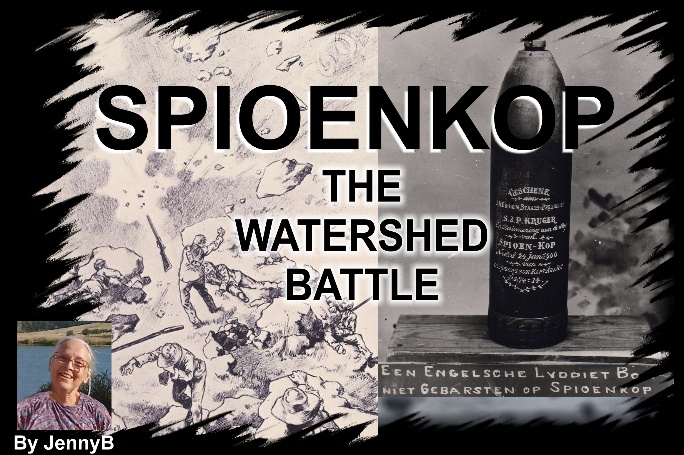
The Battle of Spion Kop was fought from 23–24 January 1900 during the Second Boer War. It formed part of British General Sir Redvers Buller’s attempt to relieve the besieged town of Ladysmith.
British forces captured the summit of Spion Kop before dawn on 24 January but, due to darkness, poor visibility, and inaccurate maps, they mistakenly occupied a lower part of the hill instead of its highest point. Boer forces under Louis Botha and Hendrik Prinsloo quickly surrounded the position and subjected the British to intense rifle and artillery fire. Throughout the day, fierce fighting took place at close range in shallow trenches under extreme heat and with little water.
Confusion over command, mounting casualties, and uncertainty about the tactical situation led the British to abandon the summit during the night. Ironically, the Boers initially believed the British were still holding the position and were surprised to find it deserted the following morning.
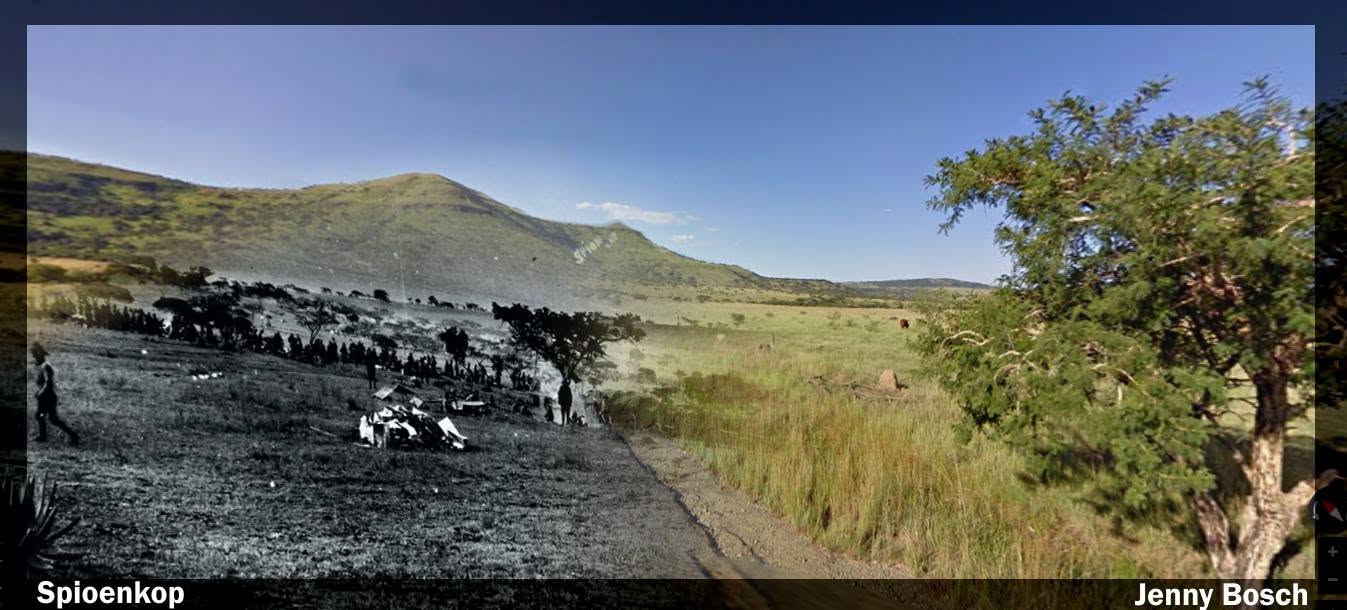
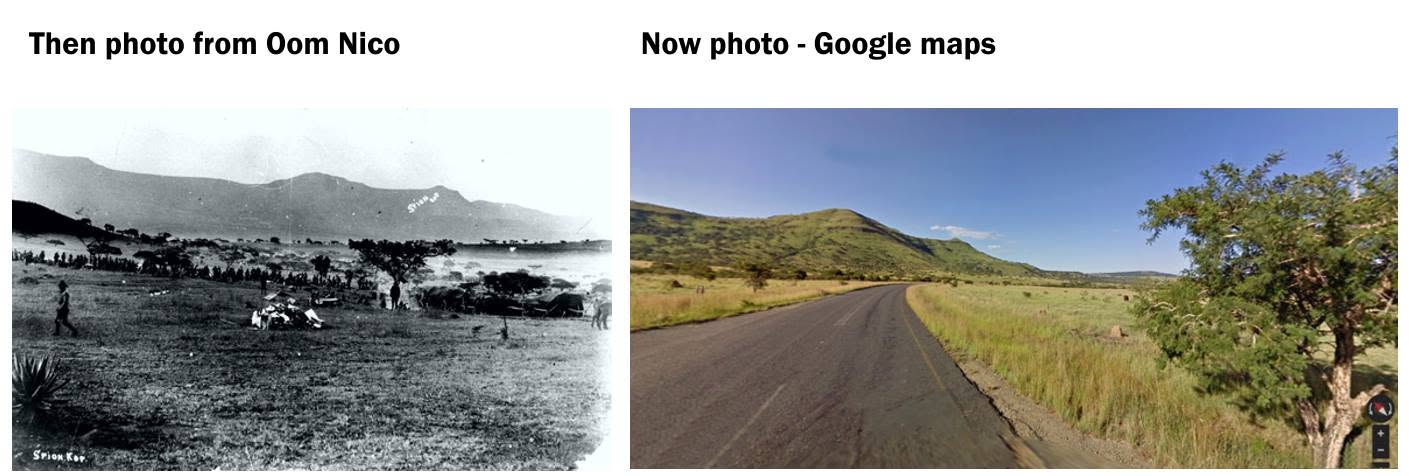
The battle ended in a Boer victory. British losses were about 1,700 killed, wounded, and captured, while Boer casualties were approximately 300. The defeat was one of several British setbacks during “Black Week” and the following Natal campaign, highlighting failures in reconnaissance, leadership, and communication. Although the British eventually relieved Ladysmith a month later, Spion Kop became one of the most famous and costly battles of the war, remembered for the bravery of both sides and the tragic consequences of tactical errors.
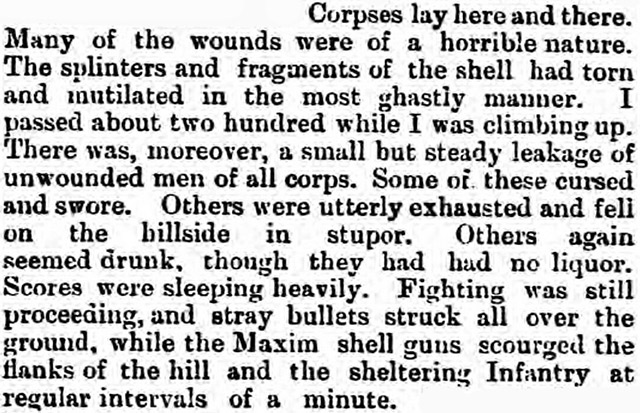
Churchill reports on Spioenkop Morning Post on 17 February 1900
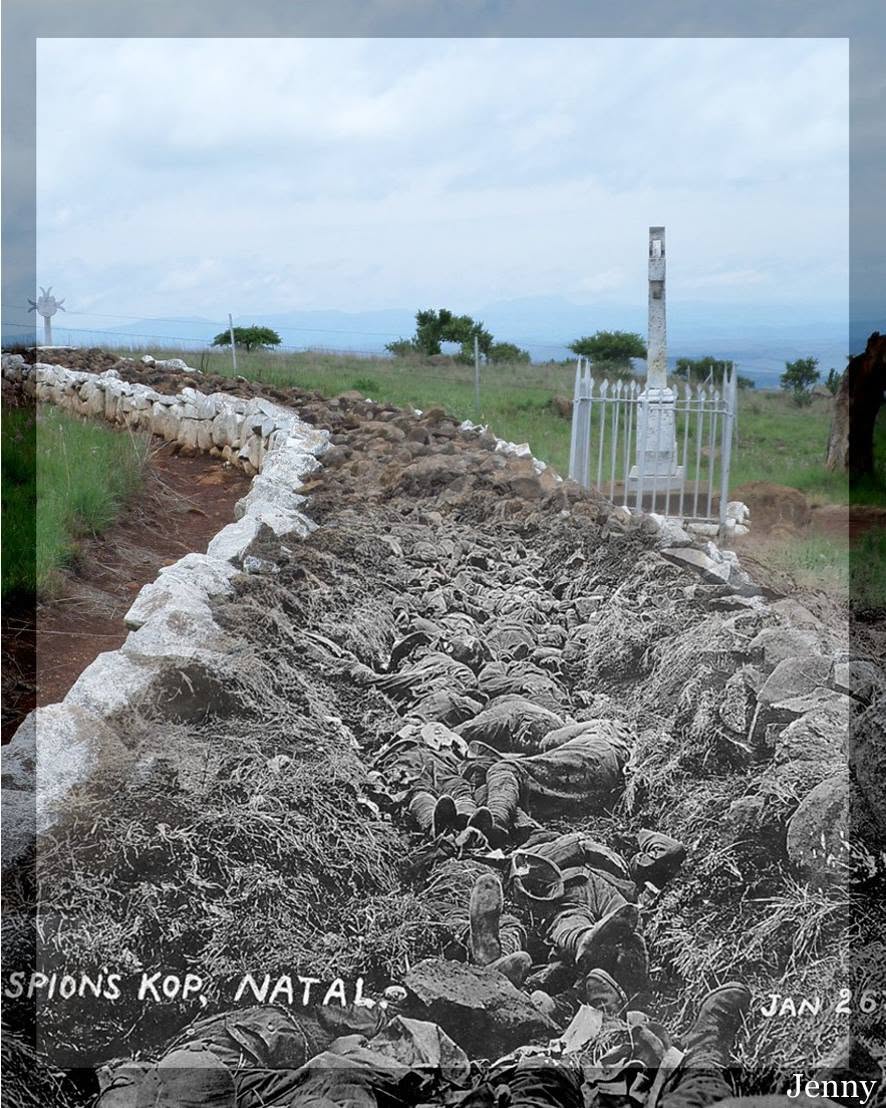
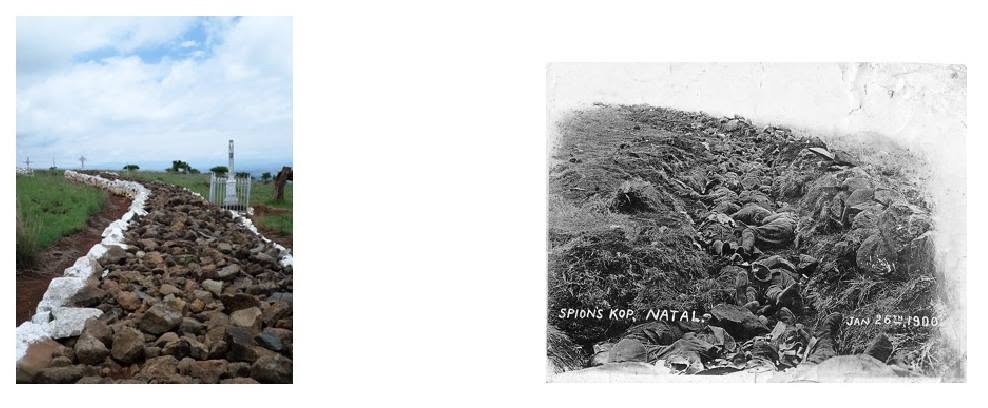
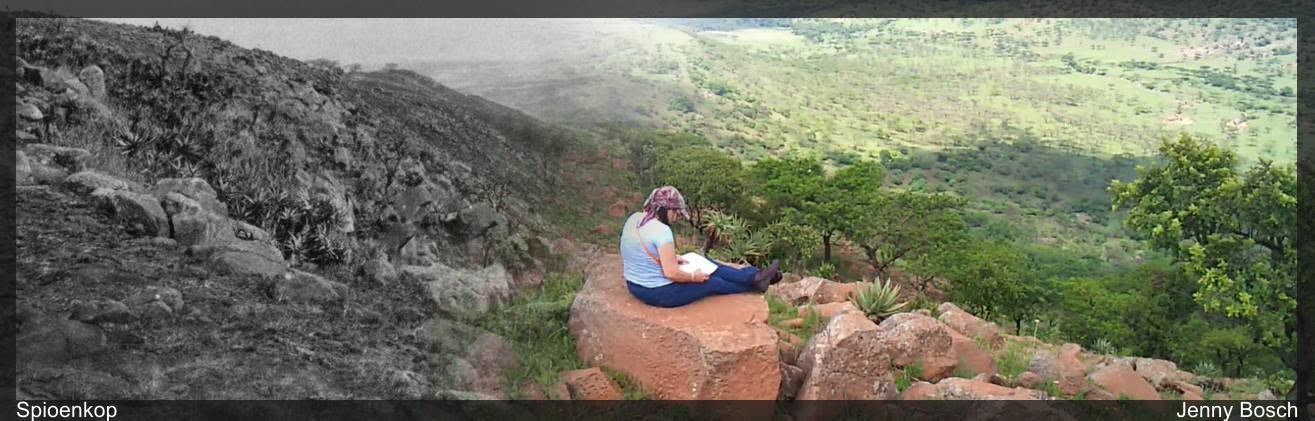
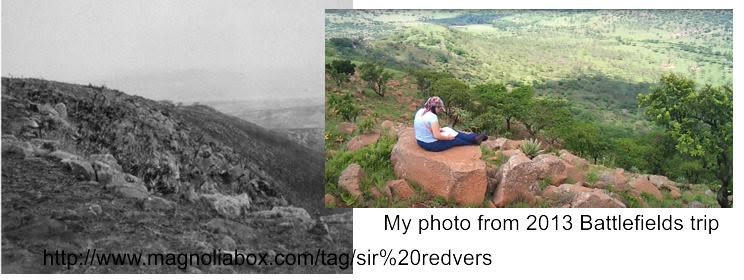
-Src: My photo (Now) and Nico Moolman’s (Then)-
After the Battle of Spioenkop, many of the fallen soldiers were buried in the shallow trenches where they died. These graves therefore give an indication of where the trenches were located at the time of the battle. On the mass graves are also private memorials and headstones. – tracesofwar.com –
GEN. EDWARD ROBERT PREVOST WOODGATE & DR. FREDERICK TREVES
Arriving at Durban in December 1899, General Woodgate crossed the Tugela with Sir Charles Warren at Wagon Drift on January 16-17, and on the night of the 23rd he occupied Spioenkop. In the fighting which ensued on the following day General Woodgate was so dangerously wounded in the head as to necessitate his being relieved in the command of the troops on Spioenkop, and subsequently in that of his brigade.
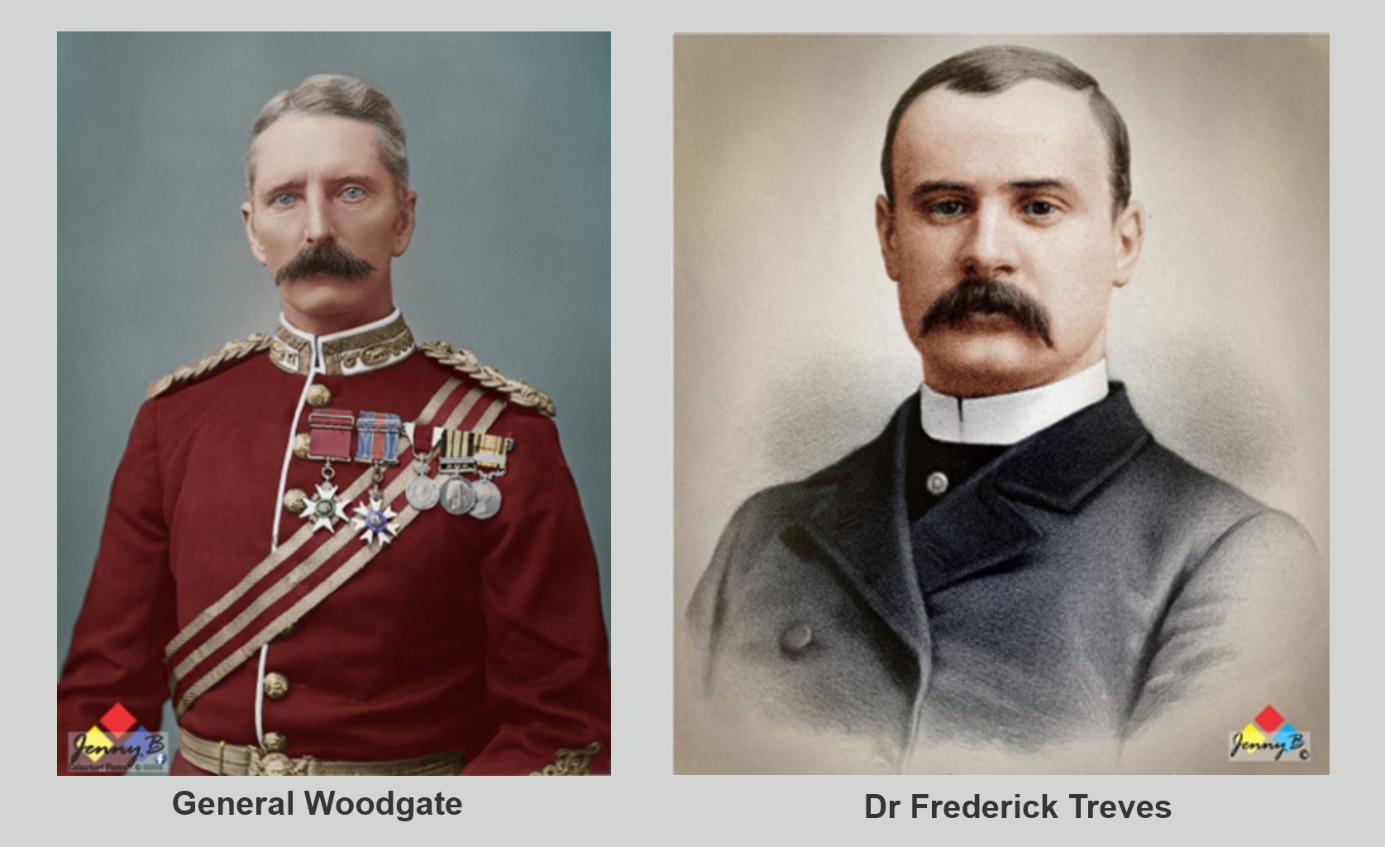
A shell splinter struck his head above the right eye. He suffered injury to the brain associated with a shattered orbit. It is documented that while being carried down the hill to hospital on a stretcher, he struggled to rejoin his men and had to be forcibly restrained. As a result of the trauma he lost all recent memory and had no recollection of the war.
Dr Treves was the surgeon who operated on General Woodgate who fell mortally injured while commanding the attack on Spioenkop. Treves was also Royal Surgeon to Edward VII and performed an appendectomy 2 days prior to his coronation which was then postponed to 9th August 1902. He also cared for the ‘Elephant Man’.
Woodgate later fell into a coma and died at Mooi River Natal on 23 March 1900, aged 54. His grave is in the churchyard of St John’s Anglican Church just outside Mooi River. He left a fiancée, Gladys Newbolt. In addition to a memorial on the Spioenkop battlefield there is also a memorial to him in the Belbroughton Holy Trinity Church yard. Sources:(https://radleyarchive.blog/obituary-edward-robert-prevost-woodgate-1855/)
(https://military.wikia.org/wiki/Edward_Woodgate)
“The roasting hot day came to a close and Warren began to organise reliefs and supplies for the hard pressed infantry on the summit of Spioenkop. Still under artillery fire Thorneycroft and his men were at the end of their tether. Warren had sent Thorneycroft no orders of any sort during the day, other than his appointment in command, and he now sent no message to inform Thorneycroft that substantial reinforcements were on their way. Not until 9pm did the reliefs begin to climb the hill.”
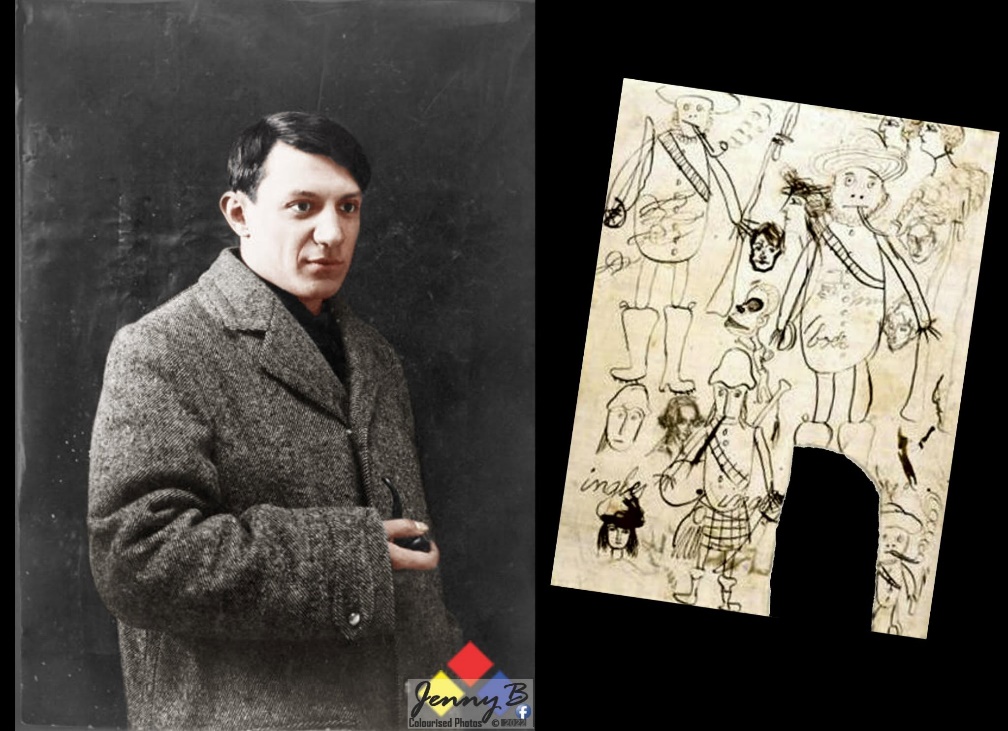
Pablo Picasso made some drawings, doodles really, about the Anglo-Boer War. This is what’s left of one of them depicting the Boers and the ‘Ingles’.
General Joachim Christoffel Fourie of the Carolina commando
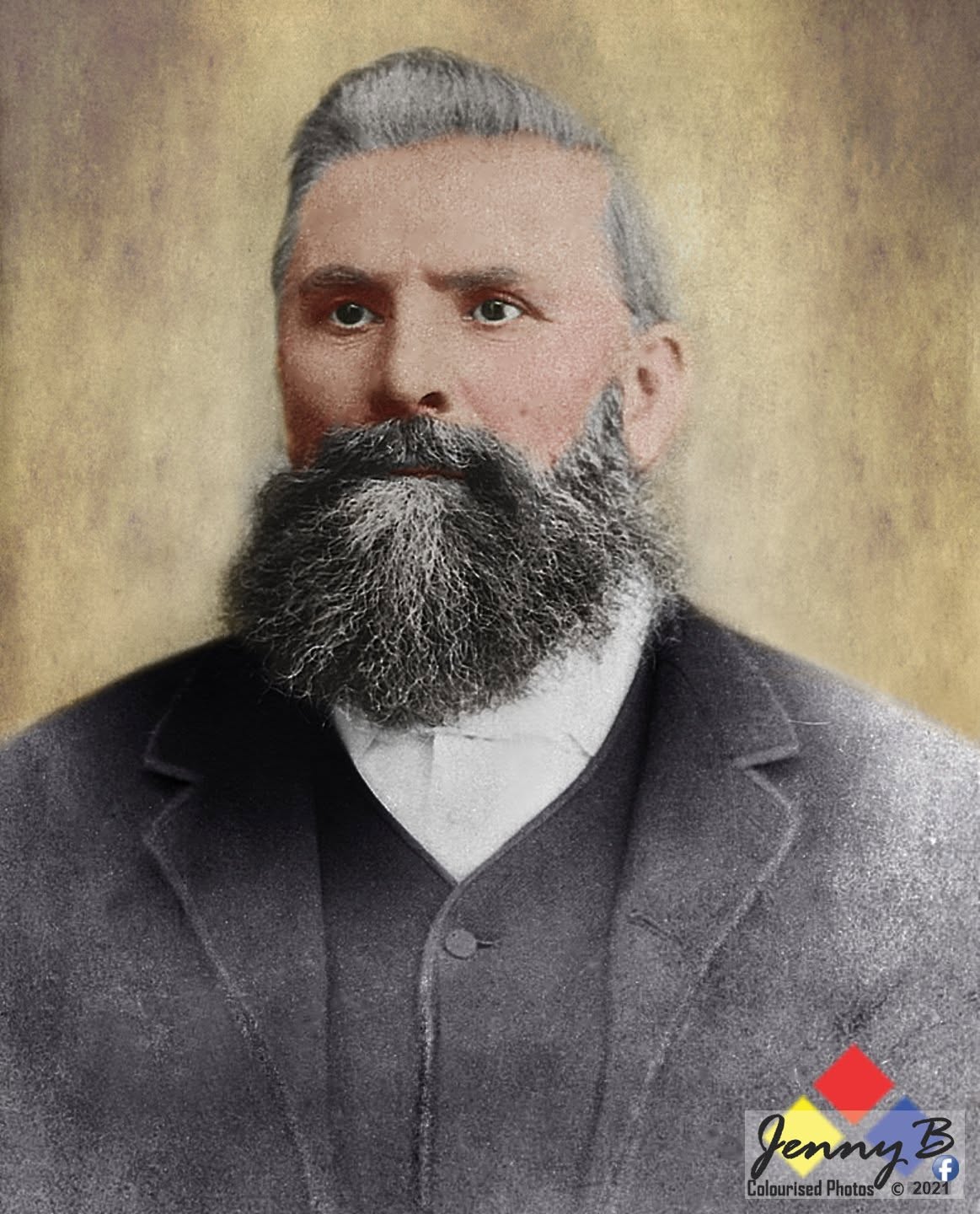
General Joachim Christoffel Fourie
He was born around Feb 1850 in Grahamstown in the Cape Colony.
*When the war broke out, Fourie left for the Natal front as an ordinary citizen. He took part in several battles there. During the battle at Spioenkop on January 24, he made a name for himself when he, along with HF Prinsloo and others, won the tactical Aloe Knoll / Alwynkoppie for the Boers. From there, they made the British position on Spioenkop’s crest untenable for the British and thus swung the battle in the Republics’ favour.
In March, the citizens elected him assistant general even though he was still an ordinary citizen up to that point. Two months later, Gen. Louis Botha promoted him to assistant commander-in-chief. Fourie was involved in the vain attempt to stop Buller’s march out of Natal and after that his battlefield was the Eastern Transvaal. He has shown his mettle in numerous battles. In the guerrilla phase, he focused on disrupting the British communications structure and on raids on British units.*
-Roughly translated from http://www.onsboeresetrotsegeskiedenis.co.za/new-page-79.htm-
Joseph and August Hammar.
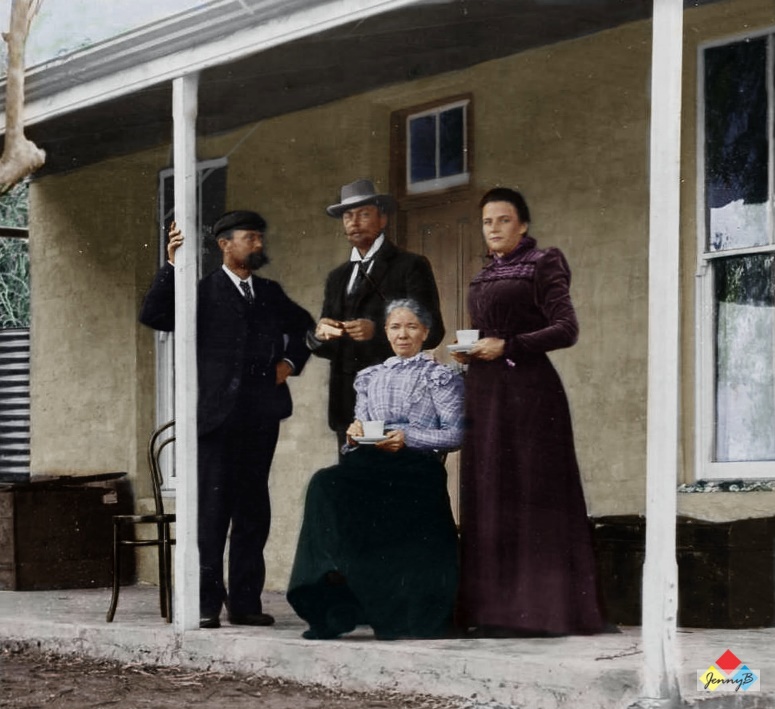
Photo credit: wikimedia.org
2 Brothers from Sweden, each on the opposite side, one a Doctor for the Boer cause and the other a surveyor/adventurer/painter living under the British flag. On his way home to Sweden, Josef stops over at his brother August’s house. He has returned from the field working as the doctor with the Utrecht commando having seen service at Ladysmith, Spioenkop and Colenso.
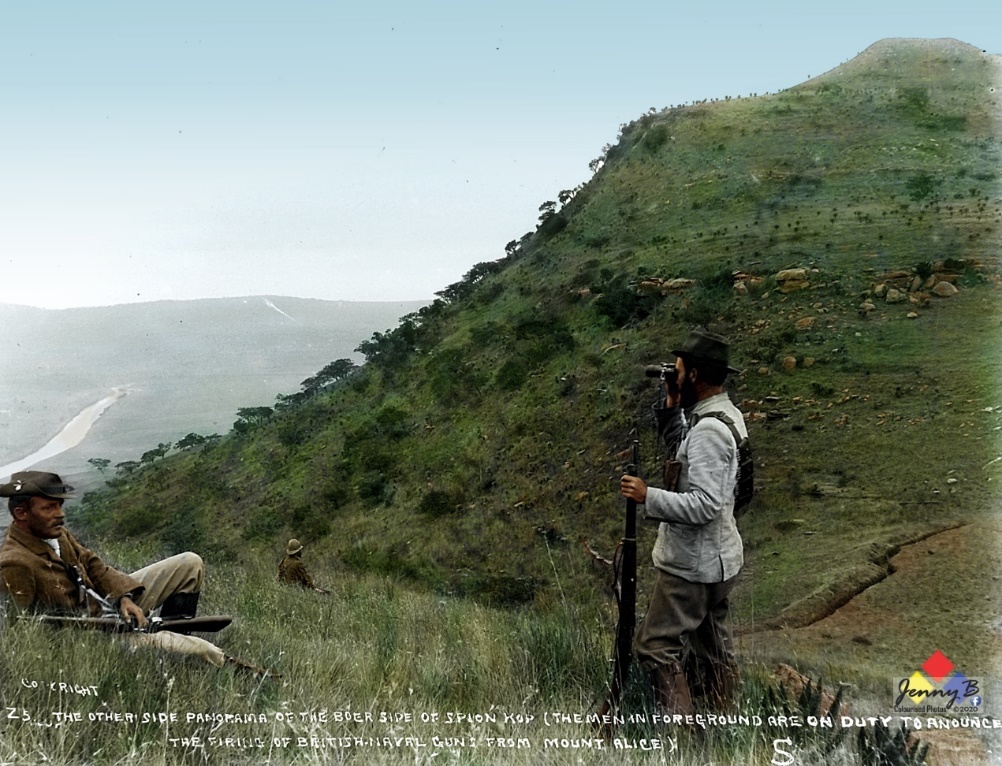
The other side – Panorama of the Boer Side of Spioenkop. (The men in foreground are on duty to announce the firing of British Naval gun from Mount Alice) – Photo Source: Nico Moolman –
Captain Hendrik Frederik Slegtkamp.
He was in the force that stopped the Jameson invasion. At the beginning of the war, he joined the Middelburg Commando and went to Natal. During the Battle of Spioenkop, Slegtkamp and Jack Hindon became heroes when they tricked the British into believing a large commando was present by continuously firing on the British left flank from their elevated position. They famously raised the Transvaal Vierkleur flag on the hill’s summit under heavy enemy fire and caused the English forces to delay their attack.
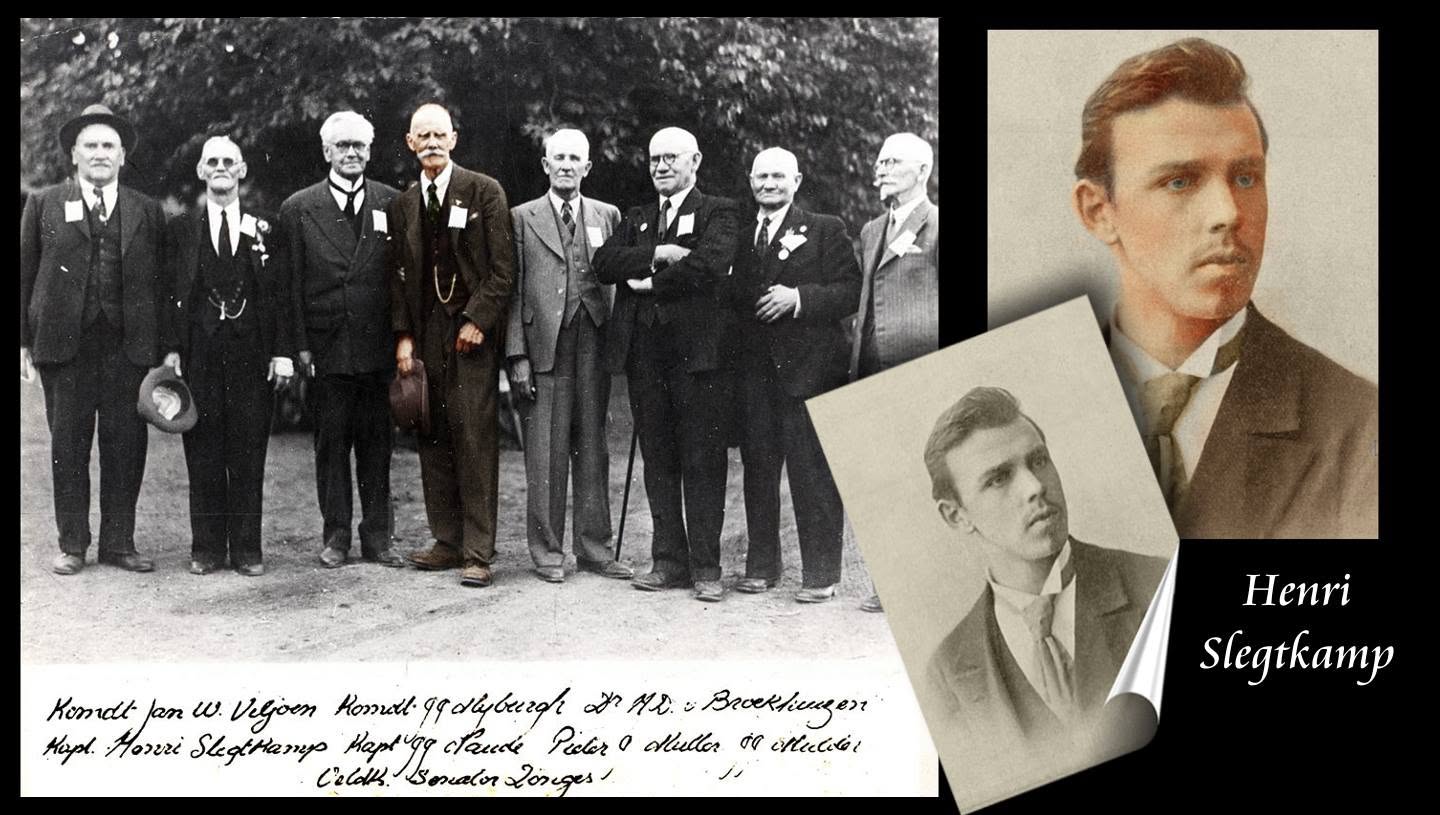
Photo of veterans with coloured Slegtkamp credited to Nico Moolman
John Costas, (Ioannis Papakostas)
John Costas was born in the Greek village of Lias in 1868, was raised in a family of priests and inspired by his father’s devotion to freedom before his death at the hands of the Ottoman Turks. After working in Australia and on the Dar es Salaam railway in East Africa, he settled in South Africa in 1898.
When the Anglo-Boer War broke out, he volunteered to fight for the Boer forces, earning the nickname “The Hero of Modder River” for his bravery. He also fought at Spioenkop and Paardeberg before being captured by the British and interned in Ceylon and later St Helena.
Returning to Stellenbosch in 1903, Costas opened a café and helped establish the local Greek community.
He later returned to Greece, where he fought in the First Balkan War and served with the forces of the Autonomous Republic of Northern Epirus, eventually receiving the rank of captain and a military decoration. After returning to South Africa in 1920, he spent his final years in Stellenbosch, where he died in 1932. He is buried in the Greek Orthodox Cemetery in Cape Town, and his legacy is honoured by a bust in his birthplace of Lias and by his generous support of the local community.
-“Greeks and the Anglo-Boer War”. bloemhc.co.za.-

