FROM SWAZILAND TO THE SOMME: PETRUS JACOBUS KOSTER AND THE FIRST WORLD WAR
René Geyer  https://orcid.org/0000-0002-3748-7284
Abstract
This article reconstructs the First World War service of Private Petrus Jacobus (Piet) Koster, my great-grandfather, and places his experiences within the wider campaigns of the 1st South African Infantry Brigade. It outlines his journey from enlisting in 1915, through training in England, deployment to Egypt during the Senussi uprising and subsequent service on the Western Front. Particular focus is placed on his participation in the Battle of Delville Wood during the Somme offensive and the Battle of Arras, where he was twice severely wounded. By following his movements throughout the war, the article highlights both the personal cost of war and the broader contribution of South African forces.
Keywords: South Africa; South African Overseas Expeditionary Force; First World War; Battle of Delville Wood; Battle of the Somme; 1st South African Infantry Brigade; 3rd South African Infantry Regiment; Senussi Campaign; Battle of Arras; British Expeditionary Force; 9th Scottish Division.
Introduction
The figure of my great-grandfather holds a significant place in my family’s history, particularly in my childhood recollections. The adults often spoke of him with great reverence, especially regarding his participation in the Battle of Delville Wood during the First World War. It was only later in life that I fully appreciated the significance of his wartime experiences.
Driven by curiosity, I began researching Delville Wood and the contributions of the South African forces. This interest deepened during my time as a military historian at the Military Archive, where I had the opportunity to access my great-grandfather’s personnel file. This allowed me to uncover detailed information about a man I had never met, yet whose life had profoundly shaped my understanding of our family history.
In paying tribute to his memory, I have sought to recount the details of his military service during the First World War and his participation in this battle, a pivotal moment when he was wounded. His service reflects not only personal courage and commitment but also highlights the broader sacrifices made by so many soldiers during the war.
To piece his story together, I draw on his personnel file in the Department of Defence Personnel Archives, supplemented by contemporary unit histories and selected works on South Africa’s role in the war.
First World War Attestation
Petrus Jacobus (Piet) Koster was born on 21 June 1893 in Swaziland. He died on 16 December 1966 in Pietermaritzburg, Natal, South Africa, aged 73. His father, Johannes Marthinus Koster, was from Hlatikulu, Swaziland, and a veteran of the Anglo-Boer War, while his mother, Susanna Jacoba Janse van Vuuren, was from the Free State.
During the First World War, he enlisted in the South African Infantry on 4 September 1915, aged 22, beginning his service as a Private in Potchefstroom. At the time, he recorded his occupation as a driver and was unmarried. He was assigned to the 3rd South African Infantry Regiment (3 SAI) on 9 September 1915.1
Off to war
In October of that year, his battalion departed for England, where it was initially expected to join the 16th Irish Division on the Western Front. At the time, the 1st South African Infantry Brigade comprised 160 officers and 5 648 other ranks and was stationed at Bordon Camp in Hampshire, where it underwent training and inspections. By the end of December 1915, however, the plan had changed, and the 3 SAI was reassigned to the Egyptian Expeditionary Force. On 1 January 1916, Private Koster boarded the troopship SS Corsican at Devonport, England, and arrived in Alexandria, Egypt, on 14 January 1916, where his unit remained until April 1916.2
In December 1915, the 1st South African Infantry Brigade, commanded by Brigadier General H.T. Lukin, was redirected to Egypt instead of proceeding directly to Europe. The 3 SAI under Lieutenant Colonel (Lt Col) E.F. Thackeray formed part of this brigade. The Senussi tribe, allied with Ottoman-German forces, posed a threat to British-occupied Egypt as it sought independence. This situation necessitated deploying South Africans to help quell the uprising, and the campaign would be their baptism of fire. They participated in the Battle of Agagia in February 1916 and succeeded in overcoming the entrenched positions of the Senussi. After their defeat, the Senussi retreated, and their commander was captured.3
Following this campaign, the 1st South African Infantry Brigade was redeployed to the Western Front in France. On 12 April 1916, Private Koster and the 3 SAI boarded the troopship SS Megantic in Alexandria and arrived in Marseille, France, eight days later. Incorporated into the British Expeditionary Force and attached to the 9th Scottish Division, they remained in reserve until July 1916, when they were called upon to take part in the defence of Delville Wood. This battle is widely regarded as one of the most devastating episodes of the First World War, particularly for the South African forces, and stands as a powerful symbol of their courage and sacrifice.4
The Battle of Delville Wood
The Battle of the Somme began on 1 July 1916. Delville Wood, in particular, became the site of extraordinary sacrifice by South African troops. As Ian Uys notes in his study Delville Wood, this engagement was the most violent confrontation experienced by the South African forces in 1916, and within the depths of Delville Wood, they sustained their heaviest losses. On 14 July 1916, 121 South African officers and approximately 3 052 other ranks marched into the battle; six days later, only two wounded officers and 140 other ranks remained able to march out.5
As part of the corps reserve under General Sir Henry Rawlinson’s Fourth Army and Major General William Furse’s 9th Scottish Division, the 1st South African Infantry Brigade reached Marseille on 20 April 1916. From there, it advanced north to Le Bizet, near the front-line trenches, to acclimatise to the harsh conditions of the Western Front. Although this sector was relatively quiet compared with the front-line, the troops were still exposed to destructive German 8-inch shellfire. By the end of the month, the brigade had marched to the village of Enguingatte, where it underwent intensive training in preparation for the Franco-British Somme offensive against the Germans. The assault began on 1 July 1916, after a week of heavy Allied artillery bombardment. However, German troops had taken shelter in deep dugouts and shell-holes, enabling them to survive the barrage and mount a fierce response once it lifted. The result was catastrophic for the British, who suffered unprecedented losses on the opening day of the Somme, with more than 54 000 casualties, including over 19 000 killed.6
The Allied objective was to prevent German reinforcements from regrouping and establishing a new fortified defensive line. Securing the village of Longueval and Delville Wood therefore became a critical strategic goal, since control of the wood was crucial for holding the village and pushing north towards Flers. On 14 July 1916, the 2nd Battalion of the 16th (Bavarian) Infantry Regiment of the German Army was dug in within the village. As elsewhere on the Somme, Longueval and the adjoining wood had been turned into strongholds, with reinforced cellars, underground tunnels, and machine-gun posts manned by German soldiers under orders to hold every inch of ground.
In the early hours of 14 July, Allied forces launched an assault on German positions. The 1st South African Infantry Brigade was initially held in reserve, but intense fighting soon erupted in Longueval and around Waterlot Farm, inflicting heavy Allied casualties. Subsequently, the 1st South African Infantry Regiment (1 SAI) was deployed to clear the southern part of Longueval, while the remaining three South African regiments, including Private Koster’s, were ordered to advance into Delville Wood. However, this move was delayed until the next morning.
At dawn on Saturday, 15 July, Lieutenant Colonel W.E.C. Tanner led the first South African troops into the woods. Their advance was slow, impeded by dense debris from shattered trees left by earlier bombardments and heavy German fire. By midday, most of the forest was under South African control, except for its heavily fortified north-western section. The rough terrain and thick underbrush complicated entrenchment. The German forces launched three counterattacks, all of which were repelled. The South African soldiers’ exceptional marksmanship was vital to their defence. Intense German shelling, reportedly reaching 400 shells per minute in various calibres, caused casualties to mount rapidly. The brigade’s only reserve consisted of three companies.
On the night of 15 July, South African troops, including Private Koster’s regiment, dug in under relentless enemy shelling. Lukin was ordered to seize the remaining part of the forest held by the enemy. Nonetheless, due to insufficient artillery support, the assault by the Royal Scots from the village and the 1st SAI from Princes Street failed, leading to a retreat.7
By 16 July, German bombardment had intensified, and supplying food and water had become even more difficult. Often called “Bloody Sunday”, the day marked a horrific turning point in the battle, as South African troops suffered catastrophic casualties while trying to survive the onslaught. Evacuating the wounded grew increasingly dangerous. Lieutenant Colonel F.S. Dawson, commanding 1 SAI, requested reinforcements, but none were available. The Divisional HQ ordered the troops to defend Delville Wood at all costs, with a further attack on the north-west corner planned for the following morning. Throughout the day, the Germans launched relentless bombardments against Allied positions. Largely immobilised by artillery, machine-gun, and sniper fire, the South African troops were unable to manoeuvre and suffered heavy casualties.
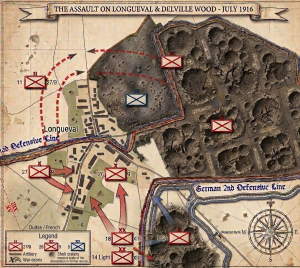
Figure 1: Map of the Battlefield on 16 July 1916 (AI generated)
Despite the intense artillery barrage that preceded it, the assault launched shortly before dawn on 17 July by the 1 and 2 SAI failed to achieve its objective, as German resistance remained steadfast and effective. Later that day, Lukin visited the wood and voiced concern over his men’s exhausted condition; none had been out of action for at least 48 hours. Fighting in dense woods was exceptionally draining, and the South African troops had endured relentless machine-gun and artillery fire. On returning to headquarters, Lukin reported the situation to General Furse, commander of the 9th Scottish Division, but there was little prospect of relief or reinforcements. Orders from the XIII Corps required that Delville Wood be held at all costs, effectively turning the position into a deadly trap. German shelling intensified, snipers became more active, and poison gas shells worsened the suffering of the trapped and exhausted troops. Toxic clouds caused severe respiratory distress, blistering, temporary blindness and immense confusion. That evening, Lt Col Tanner was wounded, after which Lt Col Thackeray assumed command. Throughout the night, the Germans launched fierce attacks, resulting in heavy casualties for the South Africans.8
After losing the western ridges, the Germans focused on retaking Longueval and Delville Wood. Bombardment began on the morning of 18 July and continued for seven-and-a-half hours, reducing the wood to rubble and obliterating perimeter defences. By around 14h00, an SOS signal from the woods alerted headquarters to the men’s dire situation. Approximately 150 men of the 1 SAI entered the wood to help evacuate the many wounded. Surviving troops were forced back to Thackeray’s headquarters on Buchanan Street, where they established a final defensive line to prevent the Germans from taking Delville Wood and threatening the British offensive flank. German troops later broke through Princes Street and moved toward the southern edge of Delville Wood, but their advance was stopped by British heavy artillery and machine-gun fire from Montauban and Longueval. As fresh German reinforcements arrived, the South Africans faced assaults from both the front and the rear. Overnight, three coordinated attacks on Thackeray’s headquarters were thwarted, but only at the cost of substantial South African casualties.
On 19 July 1916, the survivors of 3 SAI on the eastern and southern sides of Delville Wood had to surrender after running out of ammunition. Thackeray’s remaining force was confronted by German regiments along an S-shaped front that stretched around Princes and Buchanan Streets. Despite immense pressure, Thackeray and his remaining men held the south-west corner of the wood. German bombers, infantrymen tasked with throwing hand grenades in the trenches, and snipers advanced, followed by repeated assault from three sides. Two wounded officers of 3 SAI stayed with Thackeray, while the small group faced constant shelling and sniper fire all day. Through his personal example, Thackeray sustained his men’s morale. Although exhausted and weakened by prolonged fighting, they continued to rally whenever he called them to action and repeatedly repelled the enemy’s attacks.
The expected relief didn’t arrive overnight. On 20 July, German forces launched repeated assaults on Thackeray’s position but failed to overwhelm the remaining South African troops. Thackeray actively participated in the defence, throwing Mills bombs and firing a rifle from the parapet. His bravery and leadership served as a powerful example to his exhausted men, encouraging them to continue resisting under extreme conditions. Their firm defence likely helped maintain the integrity of the broader British line. At noon, the British Commander-in-Chief, General Douglas Haig, requested an update on the situation at Delville Wood. Orders were subsequently issued for XIII Corps to secure Longueval and Delville Wood, and British forces moved forward to relieve the South Africans. Later that afternoon, Major Mitchell-Baker, the 1st South African Infantry Brigade Major, urgently appealed to high command, which ultimately led to the British 3rd Division relieving Thackeray’s force at 18h00.9
When the South Africans were finally relieved, the human cost was devastating. The wood had been reduced to splintered stumps, and the brigade had been effectively decimated. Although sources differ slightly on the exact figures, of the approximately 3 153 men who entered Delville Wood on the morning of 14 July, Thackeray emerged with only two officers and 140 other ranks. Only about 750 men could answer the final roll call a few days later. In total, the brigade suffered approximately 2 536 casualties during the horrific engagement. The heroic resistance of the 1st South African Infantry Brigade against relentless German attacks played a significant role in securing the southern sector of the British line. Delville Wood remained contested until early September, with German forces finally relinquishing their positions following the surrender of Ginchy on 9 September.10
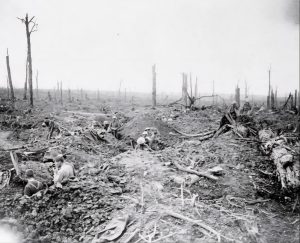
Figure 2: Delville Wood aftermath (Copyright Imperial War Museum)
Wounded in action
Private Koster was wounded in action at Delville Wood on 16 July 1916, during one of the heaviest days of the German onslaught. Wounded soldiers were transported from the battlefield via a structured medical chain, beginning with regimental aid posts and proceeding through advanced dressing stations and casualty clearing stations before ultimately reaching field hospitals. He was initially treated at the 8th General Hospital near Rouen for what were believed to be gunshot wounds to both thighs.11 He was transferred to England from Rouen on 22 July 1916 aboard a General Hospital ship. It was later determined that these injuries were, in fact, severe shrapnel wounds. Thereafter, he was admitted to the 2nd London General Hospital in Chelsea, where he convalesced until November 1916. He was discharged on 11 September 1916 and assigned to H Company, 2nd Reserve Battalion, South African Infantry.
He was reposted to France from November 1916 until April 1917, embarking at Southampton on 6 November 1916 and arriving at the 2nd Infantry Base Depot in Rouen on 7 November 1916. The depot functioned as the primary transit and holding camp for the South African Infantry Brigade, through which reinforcements and recovering soldiers from South Africa passed before redeployment to the brutal front lines. Private Koster rejoined his unit, 3 SAI, in the field on 20 November 1916 and was assigned to D Company, 3 SAI on 3 December 1916.12
The Battle of Arras
In November 1916, South African troops stationed near Arras in northern France strengthened the city’s defences through intensive training, road-building and the construction of cable trenches in preparation for the forthcoming massive offensive against the Germans, the Battle of Arras.
In December, the 9th Division took over the Arras front, with the 1st South African Infantry Brigade’s sector extending approximately 1 800 yards northward. The brigade remained there for three months, enduring one of the severest winters France had experienced in many years. For most of December, persistent rainfall rendered conditions extremely challenging, while in January and February heavy snow and severe frost prevailed. This period was largely devoted to preparations for the major spring offensive. On 8 March 1917, Private Koster was admitted to the South African Field Ambulance suffering from trench fever, attributed to the arduous trench conditions, and he rejoined his unit on 23 March 1917.
The Battle of Arras, fought between April and May 1917 as part of a broader Allied campaign on the Western Front, placed substantial demands on the 1st South African Infantry Brigade. On 9 April 1917, amid intense cold and wet weather, South African troops launched an assault on heavily fortified German front-line positions. As 3 SAI crossed the parapet and advanced across No Man’s Land, it came under heavy machine-gun fire on its right flank and suffered heavy casualties. In April alone at Arras, South African forces incurred 549 men wounded or missing and 145 killed in action. From an operational perspective, the battle was a strategic failure for the British, who were unable to achieve a decisive breakthrough of the German defensive line, and the Western Front consequently remained in a stalemate.13
Private Koster was wounded in action on 9 April 1917 during the Battle of Arras and was subsequently transferred to Camiers in northern France, a major British military hub that hosted the 18th British General Hospital, a critical medical clearing centre behind the Western Front. Owing to its strategic location on the railway network, Camiers was used to triage and treat wounded soldiers before their evacuation to coastal facilities and eventual transfer back to Britain.14
Service, 1917-1919
On 14 April 1917, he was evacuated to England with gunshot wounds to the right hand and face. He sustained severe injuries during the April 1917 engagements and was admitted to Southwark Military Hospital on East Dulwich Grove in London. He later transferred to Eastbourne Community Hospital, a convalescent facility that treated more than 150 000 soldiers for shell shock and battle wounds, where he remained until 31 July 1917.
Subsequently, he was reposted to the British Expeditionary Force, where he joined K Company, 1st Reserve Battalion, South African Infantry. Throughout 1918, he served on reserve and was stationed at Bordon Camp in Hampshire, a major training ground for British and Dominion forces. Due to the lasting effects of his injuries, he was assigned to a labour company engaged in agricultural work because of the drastic shortage of farm workers in England, and he did not return to front-line combat.7
The 1st South African Infantry Brigade continued to fight on the Western Front in 1917 and 1918, participated in the Battle of Passchendaele (Ypres) in September 1917, and was tasked with holding defensive positions during the advance on the Hindenburg Line near Cambrai in 1918. South Africans also fought in the Middle East, East Africa and German South West Africa during the war.15
Following the signing of the armistice on 11 November 1918, the South African Overseas Expeditionary Force was disbanded, and the 1st South African Infantry Brigade returned home in 1919. Private Koster embarked for South Africa on 16 March 1919 and disembarked at Cape Town on 5 April 1919. He was demobilised on 6 May 1919 at Maitland Depot, where he received both war gratuity pay and casualty pay. His military character was recorded as “very good”, and his total period of service amounted to three years and 345 days.16
Conclusion
Private Petrus Jacobus Koster’s story highlights the immense human toll and lasting impact of the First World War. His journey from Swaziland to the battlefields of Delville Wood and Arras reflects the experiences of many South Africans who endured harsh conditions, severe injuries, and long-term effects. By tracing his movements during these campaigns, this article seeks to honour not only his bravery and sacrifice but also the broader efforts of the 1st South African Infantry Brigade. Remembering his story and those of his comrades helps ensure their experiences are not forgotten.
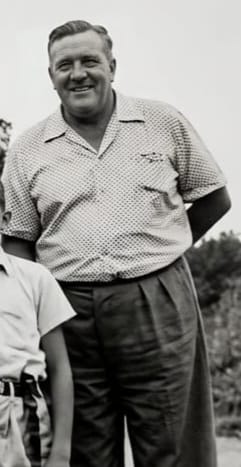
Figure 3: Petrus Jacobus Koster circa early 1950s (Photo is part of the author’s private collection)
References:
Baker, C. “British Base Hospitals in France”, The Long, Long Trail, Researching soldiers of the British Army in the Great War of 1914-1918. Available at https://www.longlongtrail.co.uk/army/regiments-and-corps/british-base-hospitals-in-france/ (accessed July 2026)
Buchan, J. The history of the South African forces in France. London: T. Nelson and Sons, 1920. Available at: https://www.gutenberg.org/cache/epub/76673/pg76673-images.html (accessed 10 July 2026).
Delville Wood Trust, ‘The Battle of Delville Wood’. Available at: https://delvillewoodtrust.org.za/the-battle-of-delville-wood/ (accessed June 2026).
Samson, Anne. “South Africans in WW1 Egypt”, The Samsonsed Historian (blog), 6 May 2019. Available at: https://thesamsonsedhistorian.wordpress.com/2019/05/06/south-africans-in-ww1-egypt.
South African Department of Defence: Personnel Archives. Service Record Private PJ Koster – Personnel Number 5182, 1915-1919.
Stapleton, T.J. “Union of South Africa”, 1914-1918 Online International Encyclopedia of the First World War. Berlin: Freie Universität Berlin, (2016). Available at: https://encyclopedia.1914-1918-online.net/article/union-of-south-africa/
Uys, Ian. Delville Wood. Johannesburg: Uys Publishers, 1983.

René Geyer is affiliated with the University of South Africa’s Department of Information Science and holds a post-graduate MA in History. Her background includes extensive experience in military historical and archival contexts, particularly with the Department of Defence Archives, as well as in the field of higher education. Her primary research interests include the initial deployment of the Union Defence Force, 1914, and social military history, both of which form part of a broader study of conflict and society. She also focuses on nuclear military history research and archival and records management studies.

- DOD: Personnel Archives, Service Record Private PJ Koster – Personnel Number 5182, Attestation Form, 1915. [↩]
- DOD: Personnel Archives, Service Record Private PJ Koster – Personnel Number 5182, 1915-1916; and Buchan, The history of the South African forces in France, pp. 23-42. [↩]
- Samson, ‘South Africans in WW1 Egypt’. [↩]
- DOD: Personnel Archives, Service Record Private PJ Koster – Personnel Number 5182, 1916; and Buchan, The history of the South African forces in France, pp. 43-78. [↩]
- Uys, Delville Wood, pp. x-xi. [↩]
- Delville Wood Trust, ‘The Battle of Delville Wood’; and Buchan, The history of the South African forces in France, pp. 43-78. [↩]
- Ibid. [↩] [↩]
- Buchan, The history of the South African forces in France, pp. 43-78; and Delville Wood Trust, ‘The Battle of Delville Wood’. [↩]
- Delville Wood Trust, ‘The Battle of Delville Wood’; and Uys, Delville Wood, pp. 205-211 [↩]
- Buchan, The history of the South African forces in France, pp.43-78; and Uys, Delville Wood, pp. 212-231. [↩]
- Baker, C. “British Base Hospitals in France”; and DOD: Personnel Archives, Service Record Private PJ Koster – Personnel Number 5182, Casualty Form, 1916. [↩]
- DOD: Personnel Archives, Service Record Private PJ Koster – Personnel Number 5182, Casualty Form, 1916. [↩]
- Buchan, The History of the South African forces in France, pp.104-127. [↩]
- DOD: Personnel Archives, Service Record Private PJ Koster – Personnel Number 5182, Casualty Form, 1917. [↩]
- Stapleton, T.J., “Union of South Africa”. [↩]
- DOD: Personnel Archives, Service Record Private PJ Koster – Personnel Number 5182, Discharge,1919; and Buchan, The history of the South African forces in France, pp. 128, 148-149. [↩]