Nongqai Vol 17 No 6 – ABW Platrand 1900
ABSTRACT
This chapter examines the Battle of Platrand (Wagon Hill) on 6 January 1900, one of the decisive engagements during the Siege of Ladysmith in the Second Boer War. It outlines the strategic importance of the Platrand ridge, the coordinated Boer assaults under Generals Schalk Burger and C. J. de Villiers, and the British defence directed by Colonel Ian Hamilton. The narrative highlights the intense close‑quarter fighting at Wagon Hill and Caesar’s Camp, the temporary Boer breakthroughs, and the eventual British counter‑attack by the Devonshire Regiment in a violent storm. Special attention is given to acts of exceptional bravery, including those of Trooper Herman Albrecht and Lieutenant R. J. T. Digby‑Jones—both posthumously awarded the Victoria Cross—and Lieutenant J. E. I. Masterson. The chapter also records the humanitarian role of Rev. J. D. Kestell, the death of Lord Ava, and the remarkable civilian contribution of Parbhoo Singh during the siege. Through these accounts, the chapter provides a detailed and humanised portrayal of the battle, its leadership, its failures, and its enduring legacy in South African and British military history.
KEYWORDS
Platrand, Wagon Hill, Caesar’s Camp, Ladysmith Siege, Second Boer War, Imperial Light Horse, Devonshire Regiment, Staffordshire Regiment, Piet Joubert, Schalk Burger, Ian Hamilton, George White, Herman Albrecht, Robert Digby‑Jones, James Masterson, Lord Ava, Rev. J. D. Kestell, Parbhoo Singh, Victoria Cross, Boer commandos, British defences, Natal, 6 January 1900
Chapter 9 – The Battle of Platrand (Wagon Hill) – 6 January 1900
Platrand, aka Wagon Hill is a long hill which forms the southern boundary of Ladysmith – a critical section in the town’s defences. The soldiers christened the east end Caesar’s Camp and the West end Wagon Hill after features at Aldershot. The British built a number of defensive features all along the mainly north (rear slope) of the Hill the largest being Manchester fort about midway along.
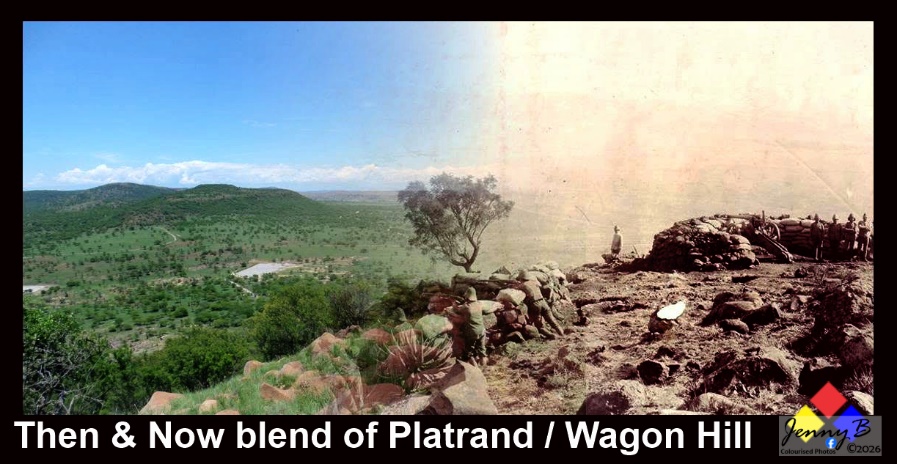
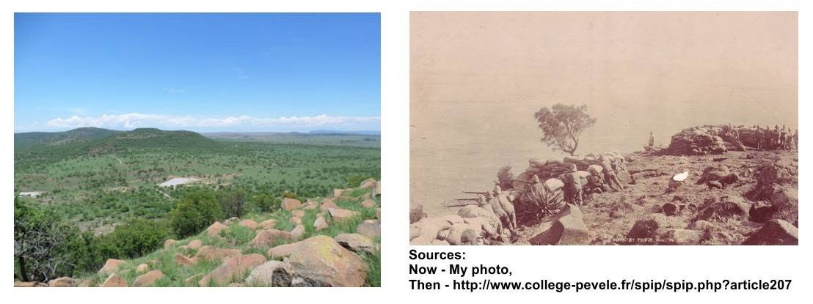
In the early hours of the 6th January 1900 the Boers mounted attacks at both Caesar’s Camp and Wagon Hill and a desperate battle ensued until around 17h00 when in a blinding rain and hail storm the Devons mounted a bayonet charge over almost 100m of open ground to finally dislodge the Boers from Wagon Hill”
-battlefieldsroute.co.za/place/platrand-
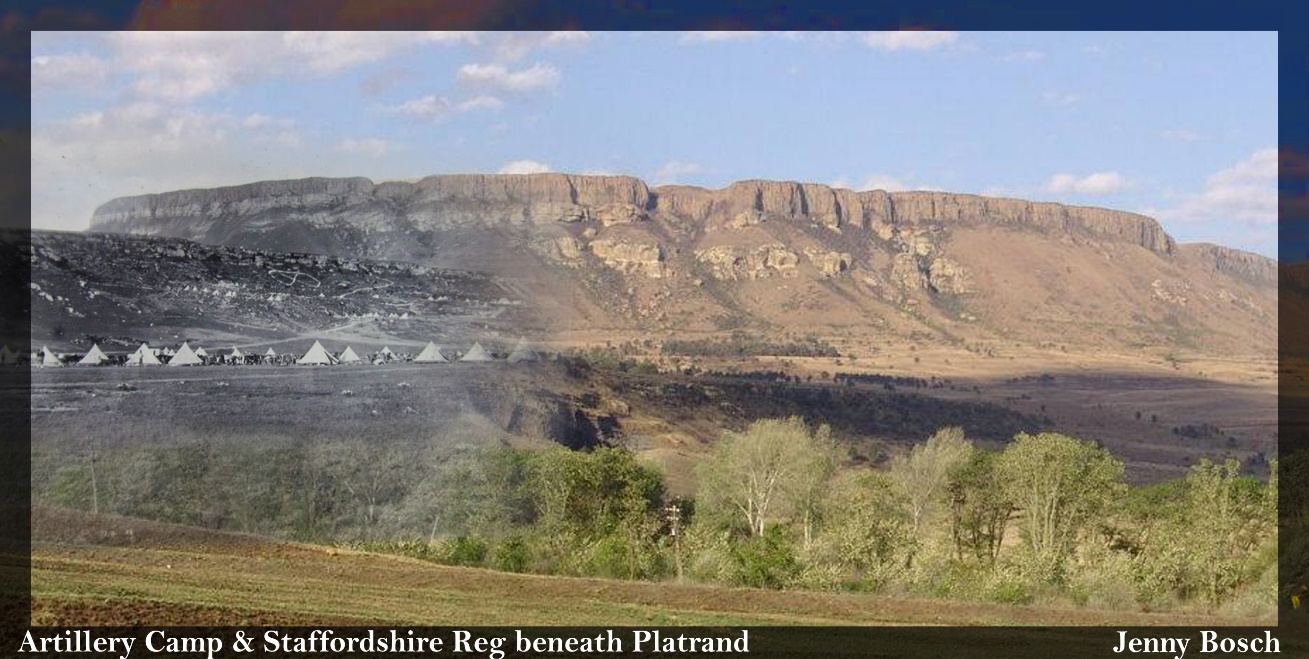
During the battle, the 1st Bat, S Staffordshire Reg served in the 7th Brigade under Colonel Ian Hamilton and was heavily engaged . The famous bayonet is historically credited to the Devons and the S Staffords were used as essential support enduring a full day of heavy artillery and rifle fire to hold the position. – warwick and warwick –
In early January 1900, General Piet Joubert ordered an attack on Ladysmith in an effort to capture the town before General Buller could attempt another relief operation. At dawn on 6 January, Boer forces assaulted the British positions along the Platrand ridge south of Ladysmith, including Wagon Point, Wagon Hill, and Caesar’s Camp. These defences were commanded by Col. Ian Hamilton, with the Wagon Hill sector held by the Imperial Light Horse.
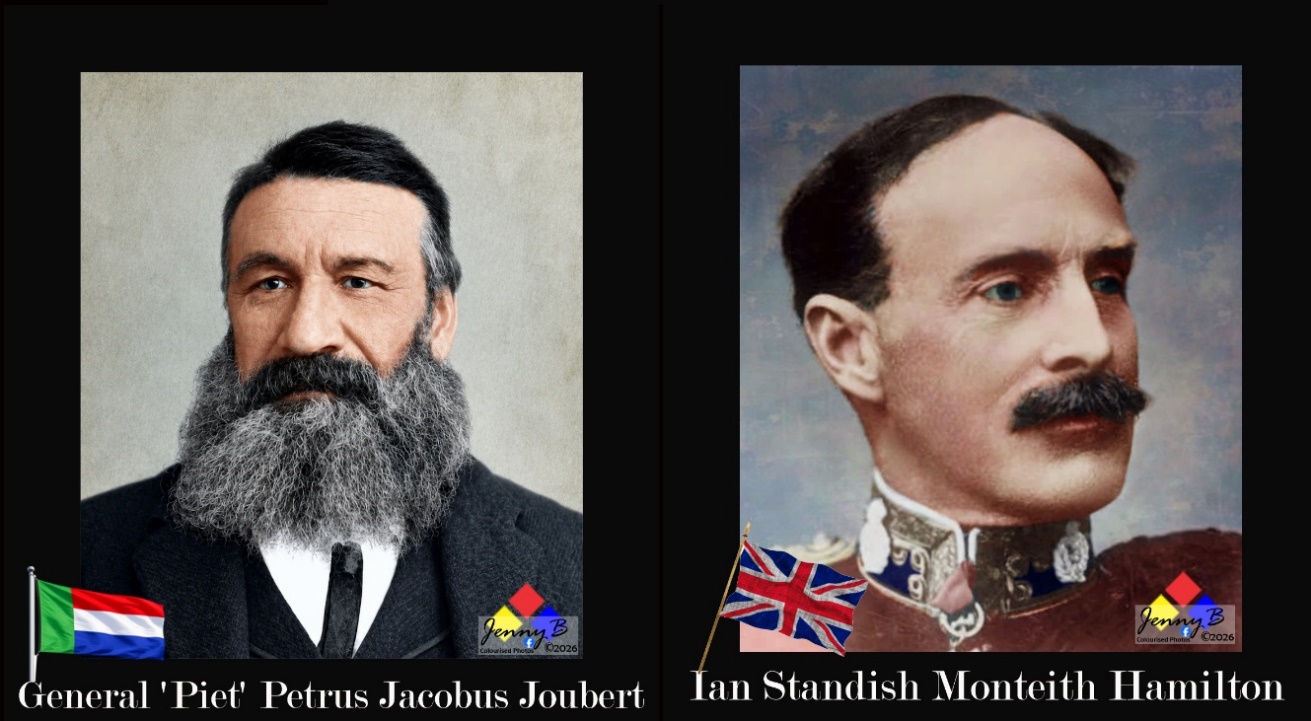
At 1pm there was a lull in the fighting but a small party of Boers succeeded in breasting the western end of the ridge. Taken by surprise, the British defenders abandoned their positions. Fortunately, Hamilton and others managed to check the retreat and then, with others, including Trooper H Albrecht, raced for the abandoned gun pits. In the fierce fighting that followed, Albrecht and Lieutenant R J T Digby-Jones were killed but the gun pits were reoccupied.
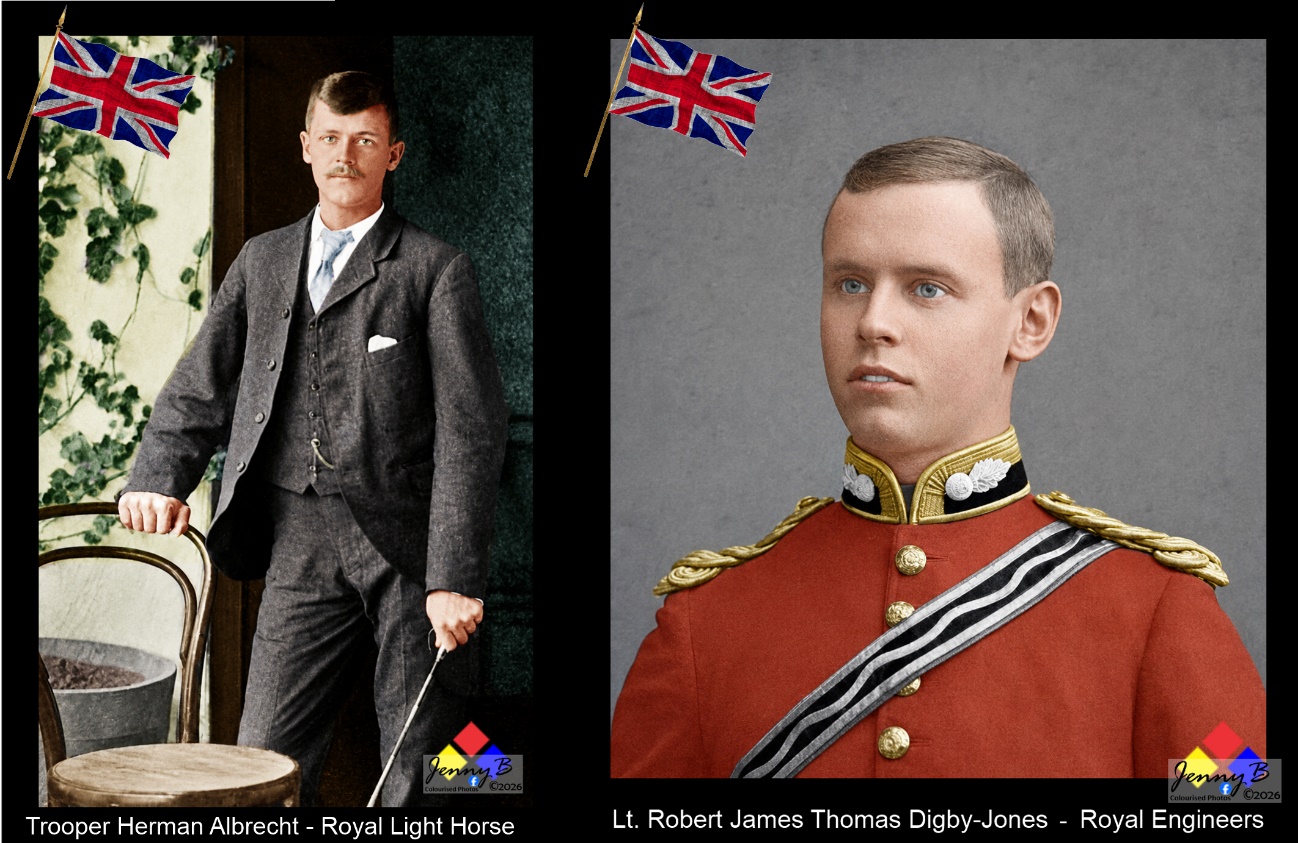
Trooper Herman Albrecht (1876–1900)
Birth: 1876 Burghersdorp, Aliwal North, Cape Colony, S Africa
Educated: Burghersdorp Sch.
Career: aged 17 drove post-cart and four horses and made additional money by buying horses, breaking and reselling them; lived in Johannesburg, Transvaal until outbreak of Boer War; late 1899 travelled to Pietermaritzburg, Natal and joined the ILH.
Died: 6 Jan 1900 Ladysmith, Natal, S Africa.
Buried: in mass grave on Wagon Hill, Ladysmith; later reinterred in Wagon Hill Cem.
Commemoration: name on Roll of Honour, All Saints’ Anglican Church, Ladysmith; name on ILH memorial, Wagon Hill. Other awards: Queen’s South Africa Medal 1899-1902 with clasps Elandslaagte, Defence of Ladysmith. VC
Investiture: 30 Apr 1902 VC sent to his next of kin. VC location: S African Museum of Mil History, Johannesburg.
Trooper Albrecht was a South African soldier who posthumously received the Victoria Cross (VC), the highest military award for gallantry in the British and Commonwealth forces. He was recognized for his bravery during the Second Boer War . Albrecht served with the Imperial Light Horse during the defence of Ladysmith . On January 6, 1900, Boer forces attacked Wagon Hill , a strategic defensive position . At a critical moment, Albrecht and Lieutenant Robert Digby-Jones led a small group forward to re-occupy the hill and raced to abandoned gun pits to prevent the enemy from turning British artillery on their own troops.
During this fierce action, Albrecht was killed in combat at the age of 24 . Because he died in the assault, he could not be officially recommended for the VC during his lifetime, but King Edward VII subsequently approved the posthumous award .
– VC GC Ass –
Robert James Thomas Digby-Jones
Birth: 27 Sep 1876 – Edinburgh, City of Edinburgh, Scotland
Death: 6 Jan 1900 (aged 23) – Ladysmith, uThukela District Municipality, KZN, SA.
Burial: Ladysmith Cemetery – Ladysmith, uThukela District Municipality, KZN, SA.
Second Boer War Victoria Cross Recipient. A native of Scotland, he was posthumously gazetted for the award on August 8, 1902 for his actions as a lieutenant in the British Army Corps of Engineers, 23rd Field Company, at the Battle of Waggon Hill (Ladysmith), South Africa on January 6, 1900 during the Second Boer War. Born in Edinburgh, Scotland, educated at Alnmouth, Northumberland, Scotland and later at Sedbergh School in Yorkshire, England. He excelled at mathematics and sports. In August 1896, he received his commission as a lieutenant in the Royal Engineering Division of the British Army and was assigned to the 23rd Field Company after receiving his course of instruction. In June 1899, he was sent with his unit to Ladysmith in Natal, South Africa where he was involved with the construction of the camp hospital and afterwards the defences of the town when the 2nd Boer War broke out. When the Boers attacked and besieged the British garrison at Ladysmith, he took command after all the senior officers were either killed or wounded and was himself killed in action at the age of 23, successfully defending the town. His Victoria Cross citation reads: “Lieutenant R. J. T. Digby Jones, Royal Engineers, and No. 459 Trooper H. Albrecht, Imperial Light Horse, Would have been recommended for the Victoria Cross had they survived, on account of their having during the attack on Waggon Hill (Ladysmith) of 6th January, 1900, displayed conspicuous bravery, and gallant conduct in leading the force which re-occupied the top of the hill at a critical moment just as the three foremost attacking Boers reached it, the leader being shot by Lieutenant Jones, and the two others by Trooper Albrecht.” His family received the award. His Victoria Cross is on display at the Royal Engineers Museum in Chatham, Kent, England. A memorial in his honour resides at the Sedbergh School in Yorkshire. Bio by: William Bjornstad – Find A Grave –
James Edward Ignatius Masterson (1862–1935)
Lieutenant J. E. I. Masterson of the 1st Battalion, Devonshire Regiment, displayed exceptional bravery during the fighting at Wagon Hill on 6 January 1900. He led one of the companies that successfully captured a Boer-held ridge and then volunteered to carry a message to the Imperial Light Horse under intense crossfire.
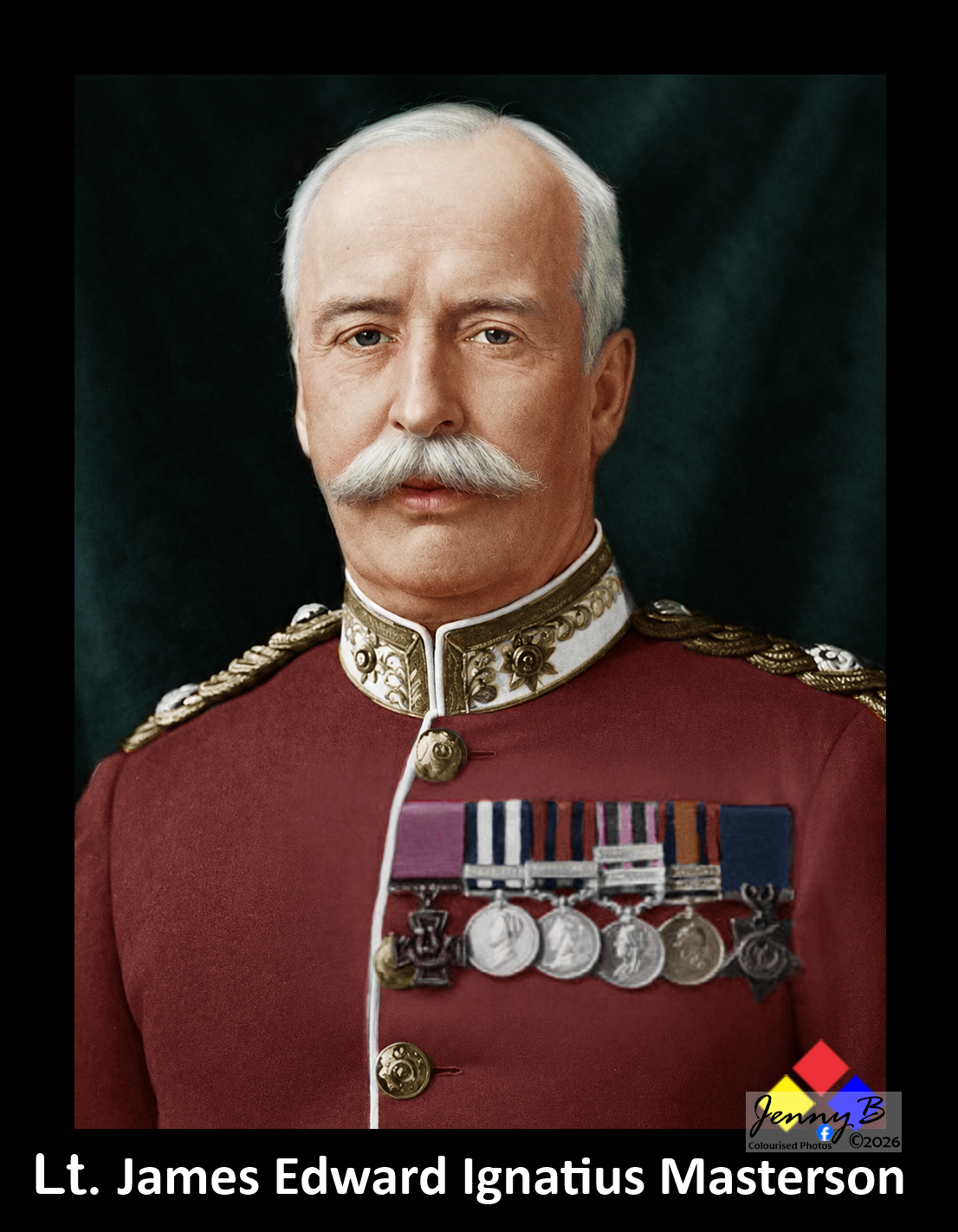
Despite being severely wounded in both thighs, he crawled to his destination and delivered the message, an act that helped save many lives and earned him the Victoria Cross.
Masterson later recovered from his wounds, was promoted to captain and then brevet major, and remained in South Africa until the end of the war in 1902 before re-joining his battalion in India.
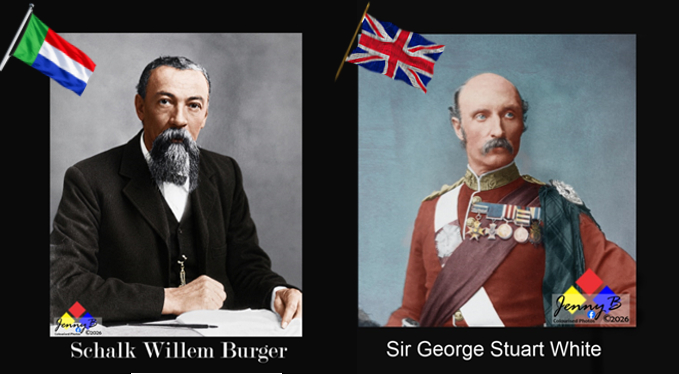
Gen Schalk Willem Burger & Lt-Gen. Sir George Stuart White.
General Schalk Willem Burger played a central role in the Boer assault on the Platrand ridge during the Battle of Wagon Hill on 6 January 1900. Acting under the overall authority of the ailing Commandant-General Piet Joubert, Burger was given operational command of the attack against the British positions on Wagon Hill and Caesar’s Camp. Approximately 4,000 Boer burghers from the Transvaal and the Orange Free State were assigned to the operation, with Burger responsible for coordinating their movements and supporting artillery.
Burger’s own Transvaal commandos attacked the eastern sector at Caesar’s Camp, while Free State forces under General C. J. de Villiers assaulted Wagon Hill itself. Although Boer storming parties gained parts of the crest before dawn and fought stubbornly throughout the day, the attack suffered from poor coordination, inadequate reconnaissance, and the failure of diversionary attacks elsewhere around Ladysmith. This allowed British commander George White to concentrate reinforcements against the threatened sectors. By late afternoon, British counter-attacks forced the exhausted Boer forces to withdraw, ending the last serious Boer attempt to capture Ladysmith. Contemporary and later historians have generally criticised Burger’s handling of the battle, arguing that his leadership lacked decisiveness and that opportunities gained by the initial assault troops were not fully exploited. – anglo boer warforum-
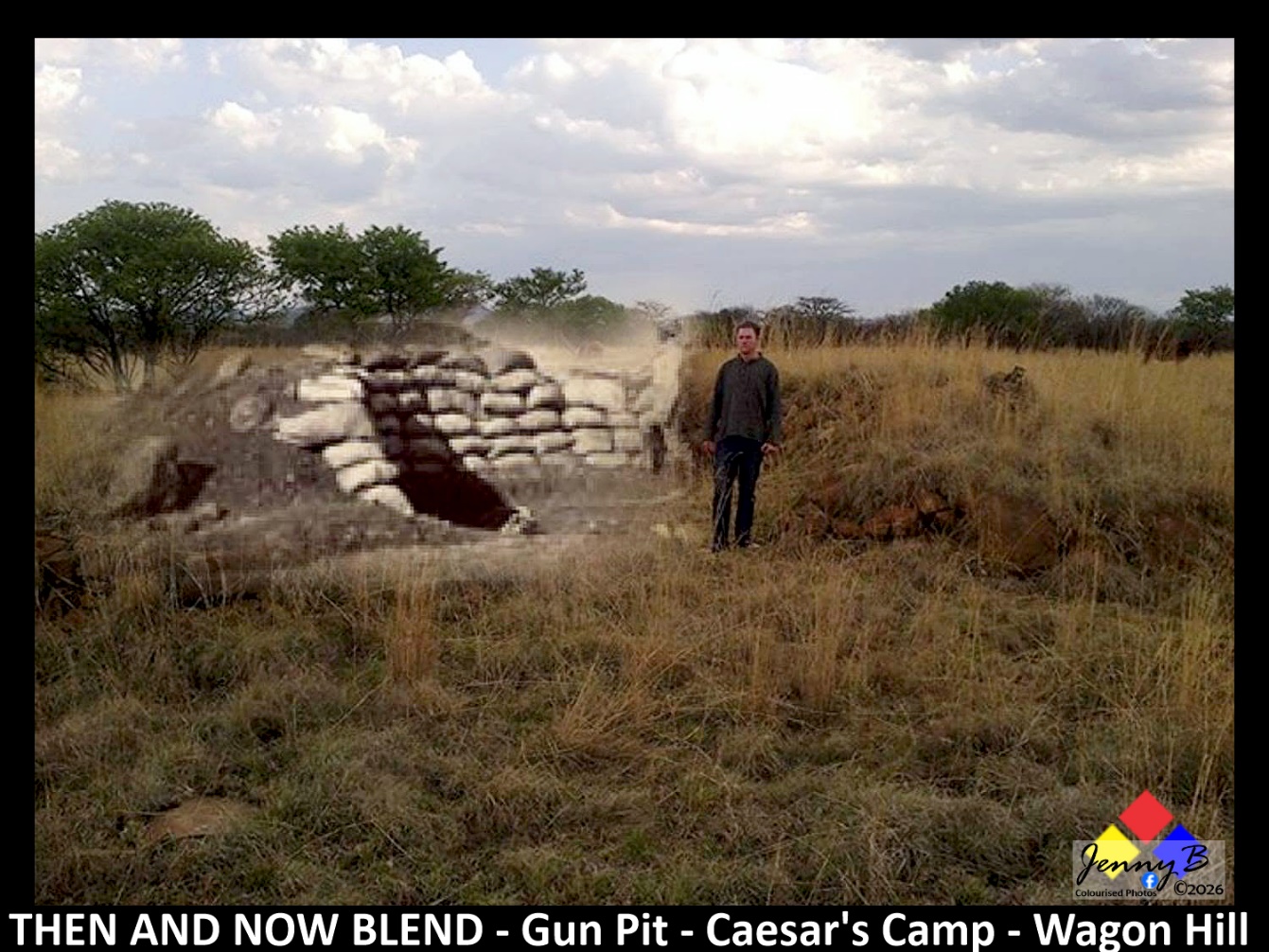
Caesar’s Camp Then and Now
On Caesars Camp, there were 560 Manchester’s, in 5 sandbagged and stone redoubts, the largest being Manchester Fort, was capable of holding 400 men with underground magazines and gun redoubts ranged along the northern crest. The artillery consisted of the 42ndBattery Royal Field Artillery under Major Goldblom and a 12 pound naval gun. Supporting the Manchester’s was the Natal Naval Volunteers.
General Schalk Burger’s original plan was for some four thousand burghers to attack the southern slopes of Platrand, however in reality less than a thousand “made themselves available”. By ten o’clock Saturday evening 5th January 1900, the Boers, under the leadership of General de Villiers, moved out from Mounted Infantry Hill towards Wagon Hill.
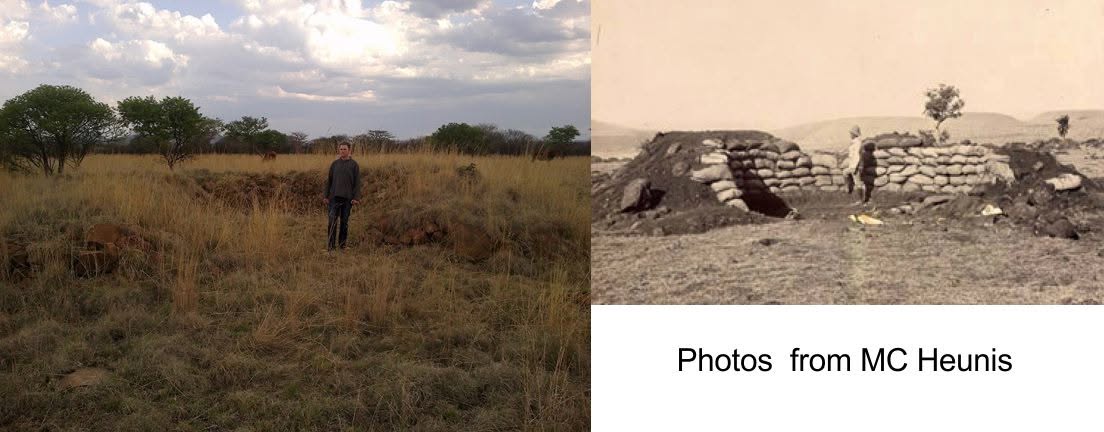
Source Photos:
Drummer Bouldo(e)n, described the action:
‘… with dear old Captain Lafone leading on in front we charged up over the hill and the Boers were only 15 yards away from us and I sounded the charge with another drummer and then we joined the charge, I was nearly mad, in fact all of us was.’
Parbha (Parbhoo) Singh
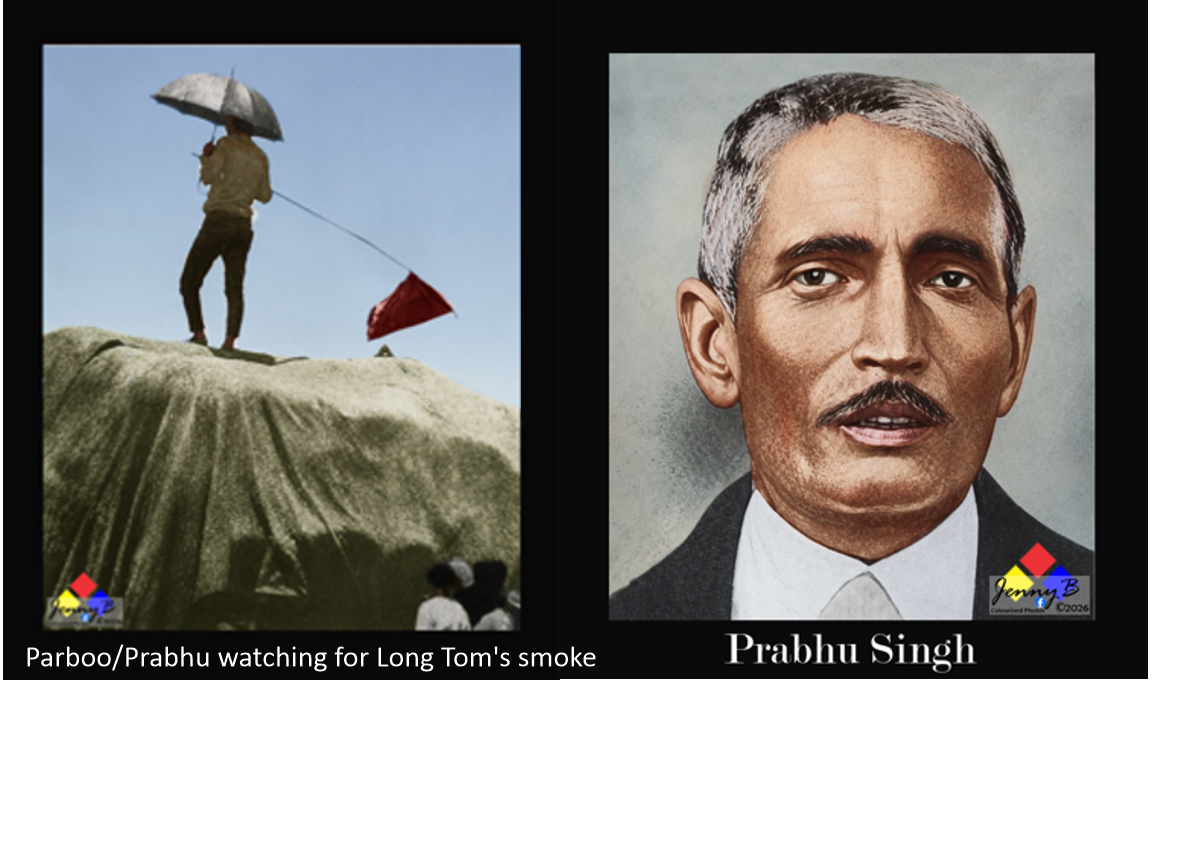
An Indian Rajput soldier, Prabhu Singh, who was trapped in Ladysmith during the siege and, after the offer of his services to the army in Ladysmith had been rejected, he made it his duty to help the residents of Ladysmith. He achieved this by exposing himself to harm by standing, for many hours every day, on top of a large pile of stores, which had been covered by canvas. Whenever he observed smoke from the Boer guns, he would vigorously wave a flag and shout. A friend would vigorously ring the Town hall bell to alert the residence to the danger of an incoming shell and thereby contributed to the saving of many lives.
The wife of the Viceroy of India, Lady Curzon, commissioned the manufacture of an embroidered, ceremonial robe of honour for this plucky Indian and this robe plus money, medals and a return ticket to India were dispatched to Durban. These were all collected at the harbour by a DLI escort-detail and delivered to the Mayor’s parlour. On 11th October 1900, the Mayor of Durban, Mr J Nicol, robed Parbhodum Singh and he was presented with the medals and money – the letter was augmented by local contributions. He never used the return ticket to India, for he took a job with the railways to inspect the railway line and he was stationed near Ennersdale, living in a wooden shack next to the line. He would travel to Ladysmith at the end of each month in his uniform, to collect his war pension as well as his award of a bottle of brandy, after which he invariably played cards and gambled. After returning home after one of these sessions, he was surprised by the arrival at his shack of a young woman and a 7-year-old girl – the woman had been sent to him by her husband to honour a gambling debt to Parbhu. Although instantly amused but nonetheless shocked.
- boerwardeaths.com/#!pioneers-indian/cup8 –
- NATAL’S INDIANS, THE EMPIRE & THE SOUTH AFRICAN WAR, 1899-1902 By G. Vahed –
The battle of Wagon Hills and Caesar’s Camp by Martin- angloboerwar.com-
Archibald James L. Temple Hamilton-Temple-Blackwood, Earl of Ava
Lord Ava was a popular man. Galloper for Col. Ian Hamilton, he commanded the defences on Wagon Hill on the 6th January 1900. Lord Ava was killed early in the day (around 06h00) when asked to deliver a message to the ILH. As he peered over a rock through binoculars, he was shot through the head. “You’d never taken him for a lord,” said an Irish sergeant, “he seems quite a nice gentleman.”
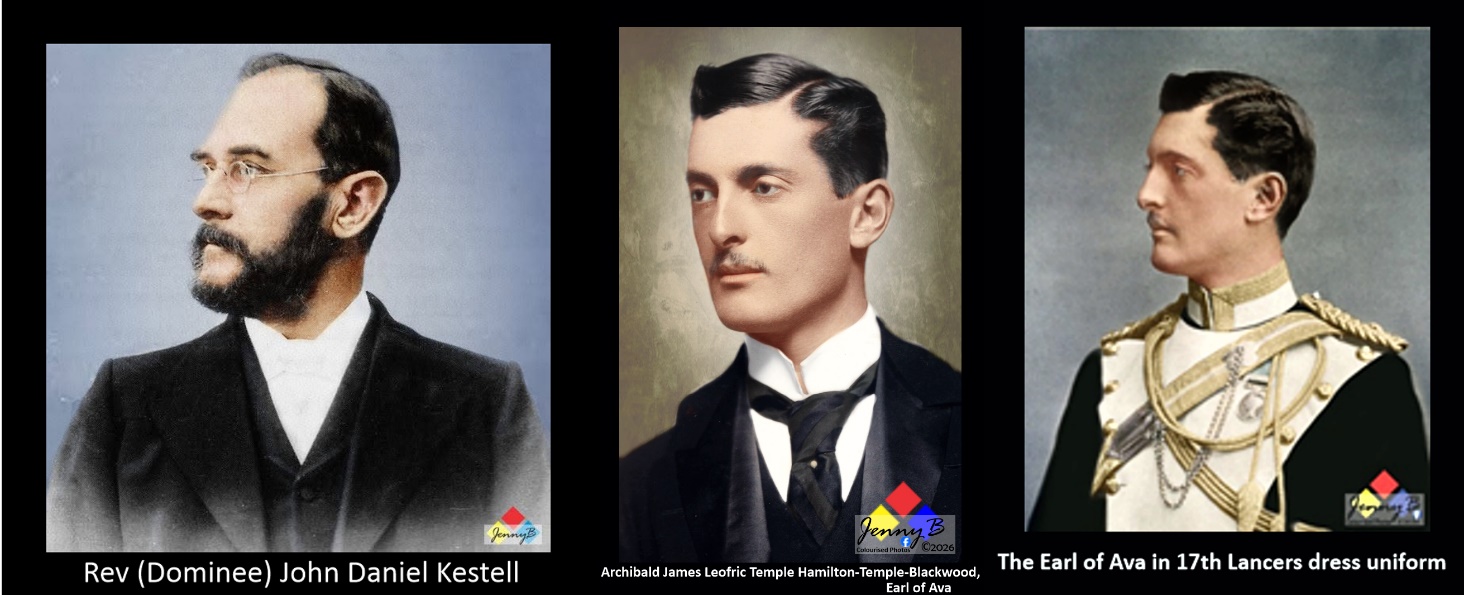
Rev (Dominee) John Daniel Kestell
A granite monument was erected at the request of British Soldiers to honour Rev (Dominee) John Daniel Kestell. On the 6th January 1900 during the Battle of Wagon Hill, Rev. Kestell moved between the dying and wounded of both sides, giving comfort and first aid for 16 hours. His young son Charles, a prisoner of war, died of enteric fever in Tin Town Camp in 1901 at the age of seventeen. Rev Kestell died on 9th February 1941 and is buried in the Women’s Memorial in Bloemfontein.
– battlefields route-
During the war, Kestell was offered the rank of combat general by President Steyn. It was a surprising offer to him that he pondered deeply. Ultimately, he decided that he could neither accept it nor actively participate in the battle by acting as a combat general. He would constantly dedicate himself to caring for civilians, and the enemy, on the battlefield (Strauss 2017). – litnet –