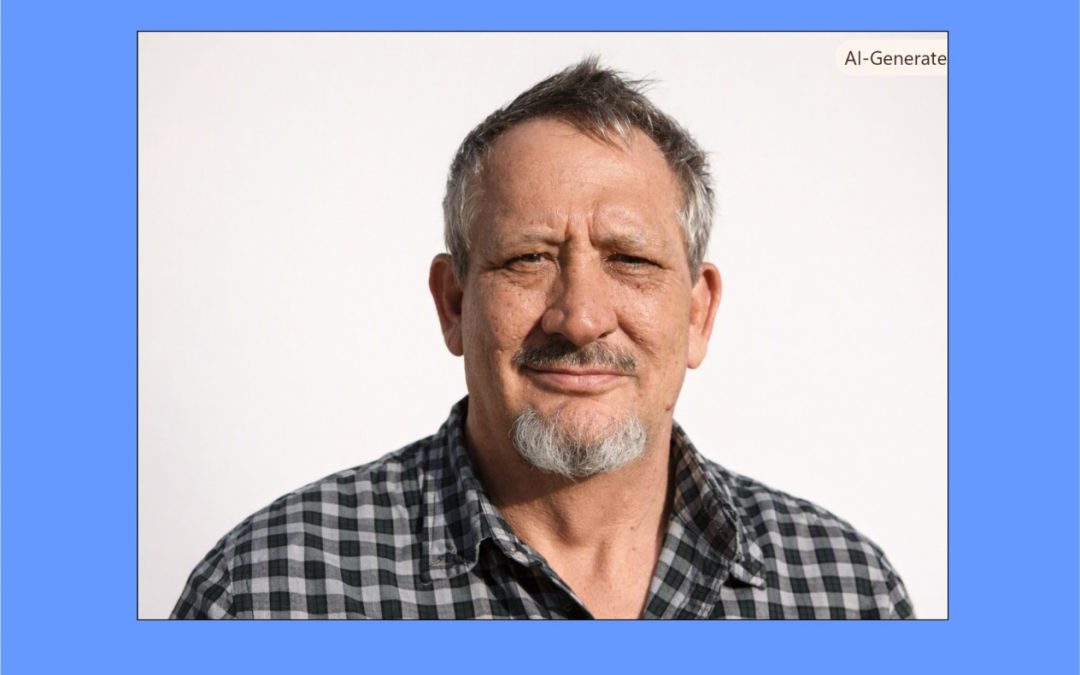
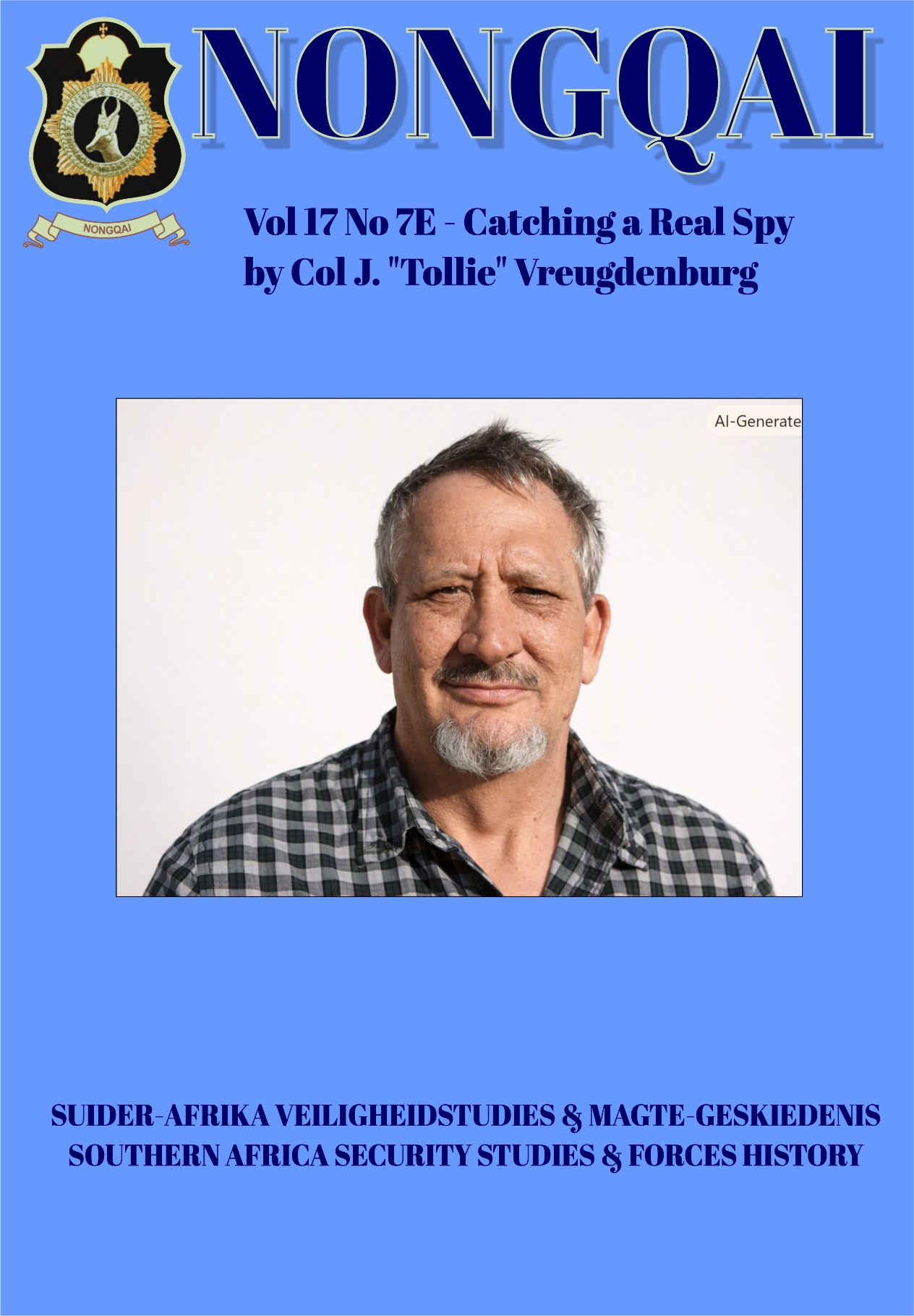
Nongqai Vol 17 No 7E – Col J “Tollie” Vreugdenburg
Short Summary of the Case
Bradley Stanford Morris, a South African Navy Captain serving within Defence Intelligence, was convicted for illegally disclosing classified military information. He pleaded guilty to violating the Protection of Information Act after admitting that he had shared restricted defence intelligence documents with:
- foreign intelligence contacts,
- defence‑industry individuals, and
- certain journalists.
The court found that Morris had no lawful authority to distribute the information. He received:
- a fine (reported as R10,000),
- a suspended sentence (10 months, suspended for 5 years), and
- an order to pay the state’s legal costs.
The South African National Defence Force (SANDF) stated that the conviction demonstrated that rank does not protect members from prosecution when classified information is mishandled.
⭐ Short Background on Bradley Stanford Morris
- Rank: Captain (SA Navy)
- Age: Approximately 62 at the time of conviction
- Service: Senior officer within Defence Intelligence, the SANDF’s military intelligence division
- Role: He had access to classified operational and strategic documents, including sensitive defence communications
- Reputation: Described in reporting as a long‑serving officer with extensive experience in intelligence‑related duties
- Downfall: His unauthorized sharing of classified information — reportedly over a period of time — led to an internal investigation and eventual criminal prosecution.
Abstract
This chapter provides a detailed account of one of South Africa’s most significant modern counter‑espionage investigations: the case of Navy Captain Bradley Stanford Morris. It contextualises espionage in South Africa by outlining historical examples of foreign intelligence penetration during the apartheid era, including the Kozloff and Wierzba cases, and the high‑profile treason conviction of Dieter Gerhardt.
The chapter then documents the operational process followed by South African security structures—State Security Agency, Defence Intelligence, Crime Intelligence, and the Hawks—in identifying, infiltrating, and prosecuting Morris for unlawfully possessing and distributing highly classified military information.
Through undercover operations, forensic searches, and extensive document analysis, investigators uncovered 43 sensitive documents and multiple security breaches. The chapter concludes with Morris’s conviction under the Protection of Information Act and reflects on the broader implications for national security, intelligence oversight, and the enforcement of Minimum Information Security Standards in South Africa.
KEY WORDS
Espionage, South Africa, Counter‑intelligence, Defence Intelligence, State Security Agency, Hawks, Undercover operation, Classified information, Protection of Information Act, Military security, Intelligence breaches, Bradley Stanford Morris, MISS policy, National security, Prosecution, Spy investigation
CATCHING A REAL SPY
Col Johannes “Tollie” Vreugdenburg the Investigating Officer
Espionage in South Africa is not really heard of much. That is not to say that it did or is not happening. To most countries it is a huge embarrassment when their systems fail, and they become a victim of espionage. That is applicable to South Africa, both old and new regimes
During the years of apartheid, the rest of the world was worried about South Africa’s nuclear capacity. Every intelligence service around the world from the CIA, MI 6, SIS, Mossad, KGB, Stasi and many others tried and successfully infiltrate South Africa’s intelligence services over the years.
South Africa however had also just a good counter espionage capacity to the sense that most of our espionage cases were dealt without court cased in the public.
A good example is the KGB agent Major Aleksei Kozloff that was arrested by South African authorities for Espionage in 1981. After his debriefing and al the diplomatic action were taken, he was used in the exchange for Sapper Johan van der Mescht who were taken as a prisoner of war by SWAPO in the northern parts of Namibia in November 1978. This exchange involved a lot of other persons being sent back to their countries and was a win-win for everyone.
In his book “Geheime revolusie, Memoires van ‘n Spioenbaas” (Page 81-83)
reveals Niël Barnard, the Head of South Africa’ secret service, the National Intelligence Service (NIS) the story of Polish spy Colonel Jan Wierzba.
Wierzba was a qualified engineer that was send to South Africa to gather intelligence on our nuclear capability. For 15 years he worked at Eskom power plants and engineering companies. He eventually builds up such a good reputation that he applied and got a job at Krygkor, South Africa main military weapons developer and manufacturer.
As South Africa was isolated by sanctions, Krygkor developed excellent military armaments that was well sought after by other countries. His contact to smuggle out secrets was to use personnel of the Polish Airways as couriers.
Once NIS found out that he is involved in espionage, they worked for four years intensively on him to establish his whole network.
In the mid-1980’s he was arrested and debriefed. As Niël Barnard said: “there was not much that we had to debrief him on, because we already know everything he done”.
Jan was quietly handed back to his Polish intelligence service.
The most prominent espionage case in South African history is the well-known case of Dieter Gerhardt and his wife Ruth. He was a naval officer that was spying for the KGB. He was arrested in New York by the FBI in January 1983. They were tried in South Africa, convicted on a charge of High Treason and in December 1983 Judge George Munnik sentenced him to life imprisonment. His wife Ruth received a 10-year sentence for acting as his courier. The judge said that he would have passed the death sentence on Gerhardt had the prosecution sought it and if the information he had passed to the Soviet Union had led to the death of a South African soldier.
During May 2015 I was called to a meeting at the State Security Agency (SSA) highly secret compound just outside Pretoria. I visited the complex frequently for all kind of meetings but was always allowed only to a certain area.
On this day, to my big surprise I was allowed into heart of the complex and taken to a boardroom.
In the boardroom I was met by a surprisingly all white group of men and women. One of them was a senior officer in the Crime Intelligence officer I worked with on the Boeremag-case.
After signing a form named “oath of secrecy” they started introducing themselves to me. There were representatives of SSA, Defence Intelligence and more Crime Intelligence members. Also present were a legal adviser of SSA.
All of them were stakeholders / partners in the ‘Counter Espionage Functional Committee’. This was a committee equal to the ‘Counter Terrorism Functional Committee’ I formed part of.
I was briefed that they were working on an individual that they suspected to be involve in espionage. He was providing South African military secrets to other countries secret services.
They have gathered a huge amount of intelligence on the person and his contacts but all of that gathering was done in under the “intelligence gathering act” that do not make provision that the intelligence can be used as evidence in a court of law.
I asked them bluntly what I was doing here. Although espionage is part of my section’s mandate, I am focusing on terrorism and the first signs of ISIS that are surfacing in the country.
I am not mentioning any other person’s names as can be understood. All of them are still working in this very secret area.
I was told that there was not anyone else they can trust with such a sensitive investigation and after smearing more jam around my mouth of how good a detective I am, I agreed to do the investigation for them.
I, however had some conditions. Firstly, the case must go to court if I found prima facie evidence from my investigation. Secondly, I do not want to see any of the intelligence they already gathered. The reason was that I must go into the investigation with a clear mind and have no prejudice against the suspect. Thirdly once the suspect’s profile is handed to me, they must withdraw all their actions and not involve themselves any more.
Strangely all agree and the profile was handed to me with an affidavit by a senior officer as the “complainant” in the case.
The person involved was Captain (SAN) Bradley Langford Morris. He is attached to the Defence Intelligence’s Directorate for Technological Intelligence. He was the Senior Staff Officer: Naval Technology and responsible for research on new naval technology.
Just to clarify his rank of Captain (Navy) means his rank is equal to a Colonel in the military but the Navy’s rank system has its own unique form.
From the profile I established that his office is in the Pretoria city centre and frequently visited the Sunnyside bowling club after work. From there he travels to his house in Sunninghill, Sandton.
I discussed the matter with the Head of the Priority Crimes Litigation Unit (PCLU) at National Prosecution Authority (NPA), Shauwn Abrahams and between us we decided that the best is to do a legal undercover operation in terms of section 252A of the Criminal Procedure act.
To conduct such an operation, I needed two undercover agents, but within the DPCI (HAWKS) we did not have that capacity.
After discussing the matter with a senior colleague, I suggested that we use two agents from Crime Intelligence with whom I worked before and I trusted.
As they are also working in the dark world of intelligence gathering I will not mention their names, but revere to them as Jay and Pay.
I contacted Jay and Pay and set up a meeting with them. At the meeting the senior officer and I explained to the matter to them and what our needs were. Both immediately agreed to take part in the operation.
I went through the lengthy administrative process to apply for authorization for the project that we code named “Piranha”.
I also applied for the section 252A authorization with Shaun Abrahams. Both applications were approved and we had the go ahead.
As previously stated, this kind of operation do not happen overnight. It is a gradual infiltration process that takes time. For that reason, Jay and Pay had to start visiting the bar at the Sunnyside bowling club and become regular patrons. The “Bowling” in the name “Sunnyside Bowling Club” was an oxymoron. Although there was a well-kept bowling green, nobody ever used it. The bar was the most important future of the club. One problem was that Pay is a teetotaller, so while Jay was sipping on a beer, Pay had to order a coffee or a soft drink. As all the patrons of the club were heavy drinkers, it took time for them to be accepted amongst the crowd.
Wednesdays was always and still is considered sports afternoons in the Defence Forces and Morris sport was visiting the sports facility “Sunnyside Bowling Club” although he never picked up a single bowl. Jay and Pay started concentrating on Wednesday’s and soon saw Morris there.
The requirements were that they record everything on visual and audio. For that one of their undercover surveillance vans had to be parked close by to record and store all the conversations, as they were using very small recording devises.
They also had to submit a report to me after every visit to the club with the supporting recordings in sealed exhibit bags.
After the fourth or fifth visit they saw Morris arriving in full Naval ceremonial attire with medals and everything attached. Morris drew much attention from everyone, and Jay and Pay also used the opportunity to engage with him. They openly declared that they were policemen that also using the Wednesday sports afternoon to have a few drinks at the club. They expressed their dissatisfaction with the police command structure and that they are just waiting their time until retirement.
Morris felt for that and he started complaining down the same lane, criticizing the Defence Force’s command structure.
The next Wednesday it was easy for them to engage with Morris as they were now “brothers in arms”. War stories and other incidents became the topic of their conversations. Morris revealed that he served on the Navy’s ship, the SAS Drakensberg. After that he was transferred to the Defence Intelligence due to the skills he learned on the SAS Drakensberg.
He suggested to them that he was working on highly classified projects for DI and that most will not be concluded once he retires in a few years.
Now, it is important that an undercover agent with a Section 252A authorization do not provoke, entice or coerce any person into committing a crime.
They left the discussion hanging when they left that afternoon.
During the next meeting Morris suddenly started talking about certain very sensitive naval capabilities he was involved in acquiring for Special Forces operations. He said he have documents he wants to show them on another very secretive capacity the country has.
The following Wednesday they met again. I was in the surveillance van that was parked close by and was monitoring the life audio and visual footage from the recording devices. I saw Morris taking out a thick document from his briefcase and handing it to Jay and Pay. One of the two used the video device to scan over the first few pages and it was recorded.
Morris took the document back and left with it.
I called a senior officer and told him what I saw on the video footage. An urgent meeting was called at SSA for the next morning, and I informed the committee about what transpired the previous day. I showed them the footage of the document and they became very excited.
They confirmed that the document is one with TOP SECRET classification and more than it did not relate to the Navy at all. Morris had no reason to have insight into that document never the less to have it in his possession.
We knew that we were on the right track. I briefed Jay and Pay about the importance of the document and asked them to try and get their hand on it in all legal way.
During the next visit to the club Johan mentioned the document again and said to Morris that he would like to read through it in depth as it is a very interesting field. Morris undertook to bring him a copy of the document the next Wednesday.
The next Wednesday I was in the observation van again and the two agents in the clubhouse. Morris did not pitch. My first thought was that he got cold feet or we were exposed.
I inquired from my contact if he knows where Morris is and after a while he came back to me and said he was at a function at Defence head office.
The next Wednesday we were ready again and Morris pitched at the club. Jay and Pay were waiting a few blocks away and follow him into the club. After some chit chat Morris handed Jay an envelope and said he can read it, but he must be very careful with it. He wanted it back the next Wednesday.
I nearly jumped out of the surveillance van in excitement. We met with Jay and Pay after they left the club and Jay handed me the envelope. I immediately placed it into a forensic bag and sealed it. Again, we had an urgent meeting the next day at SSA, and everyone wanted me to arrest Morris immediately. They were overeager because they were not detectives that know about the small requirements of proving a case in court.
We did not even know what is in the envelope that was sealed in the exhibit bag. I explained to the group that I must open the bag in the presence of someone that will be able to identify the document, the sensitivity of it, the classification of it and if Morris was rightful in possession of it. The most important requirement was that that person must testify in court.
The last requirement had all of them lost their appetite to touch the exhibit bag
The consensus was that it can only be done by Morris’s direct commander, Brigadier General Dirk van Rensburg.
What I did not tell the group is that I was going to do a full search of Morris’s house and office when I arrest him. My reason for that was that if Morris has one document in his possession that he was not allowed to have, surely there must be more. Why I did not inform the group about my plan is that I know what embarrassment it will be to them if I find more evidence.
Brig Gen van Rensburg and I met at the PCLU office the next morning. I opened the exhibit bag in his presence, and he meticulously opened the envelope. I could see I was in the presence of an experienced intelligence gatherer. He paged through the document and said: “You have got him. This is one of our most secretive military capacities that the country has and more, it is completely out of his scope of work”
It was quite a thick document that was stapled together, but Gen Van Rensburg was not an amateur. He took it apart, photocopied it and re assembled it in such a way that no one could see it was tampered with. We paced it back into the envelope and the next day I handed it back to Jay.
I applied for an arrest warrant as well as search warrants for his house in Sunninghill, Sandton and his office in Pretoria at Defence Intelligence Head Office.
I arranged with Andre Neethling and Ollie Olivier, members of the Johannesburg Crimes Against the State Unit (CATS UNIT) of the NPA to assist me with the arrest, search and seizure. I also arrange one of the DPCI’s legal section members, Captain Koos de Klerk, to accompany us on the operation.
Early on the morning of 20 November 2015 were waiting close to the security gate of the complex in Sunninghill. We knew that he leaves at about 06:00 and we did not want to alert him by trying to get forced access to the complex. When he drove out of the complex with his Isuzu bakkie. Ollie blocked him with marked HAWKS Volkswagen GTI’s. I arrested him there in the street and we all drove back to his house in the complex.
Arriving at the townhouse we found his sleepy wife.
I sat down with Morris at the dining room table and explained to him the search warrant and the pursues of the search. He was calm and accepted the explanation. My observation of the house was that although it was very clean, it showed thawed signs of that of a hoarder. Stacks and stacks of paper was places on neat heaps on the floor all over the house.
I realized that this papers are important and all of it must be confiscated. It was a huge job that laid ahead for us.
The groups of DFI members arrived, and they started searching the house for electronic devises. Apart from finding various external hard drives and USB memory sticks, they also found a laptop inside his Isuzu.
At about 10 I left the scene in the hands of Andre Neethling and his team. They will continue with the search while Koos and I proceed to Morris’s office in Pretoria.
When we arrived at the Defence Intelligence head office, I found Brig Gen Van Rensburg waiting for me at the security entrance. He was the only person that was aware that we will be searching Morris’s office as well.
We had quite a struggle with the security personnel to get past them but eventually we got to his office. Morris had the only key to the office and he unlocked it.
The inside of the office looked the same as his residence with stacks of paper all over the floor. The difference was that it was covered by a thick layer of dust. Apparently, he never allowed the cleaners to enter his office, but it was clear that he also never cleaned it himself.
I allowed Rennette Coetzee of the Digital Forensic Laboratory Unit (DFLU) to do her search for electronic devices, and she recovered again a lot of it. We did not tough his desktop computer because it was not linked to the internet, but to a server in the building that had all the military intelligence communication on it.
Then it was the job for Brig Gen van Rensburg and I to start combing through all the documents. Brig Gen Van Rensburg would study a document and decide if it had any relevance to the job description of that of Morris.
That process took us most of the day and by early evening we finished. I had a large amount of sealed exhibit bags filled with documents when we left the building.
We went to my office in Visagie Street where I interviewed Morris and obtained his warning statement. He immediately causes to be represented by legal counsel. By now Andre and Ollie arrived with another lot of exhibit bags from the house. It all was locked into our exhibit safe, and we detained Morris at the Pretoria Moot police station.
As it was Friday, he spent the weekend in the police cells. On Monday, 23 November he appeared in the regional court in Pretoria. The court room was filled with journalist and military personnel.
I did not oppose bail, to the astonishment of everyone and he was released on R 50 000.00 bail. The case was postponed to January 2016.
The explanation why I did not oppose bail is to explain the purpose of arresting a person. When a person is arrested for any crime, his punishment does not start there. He must be convicted after a proper trial by a court and the punished the court sees it fit. It is not for me as the investigation officer to decide whether he is guilty of a crime or not. It is my job to prove to the court that I have enough evidenced to convince the court that he indeed committed the crime I arrested him for.
But there are many factors that must be considered before you take a bold step like I did. For me he was not a flight risk as he had handed his passport to me, he had a fixed address where I arrested him, the fact that his arrest is going to be all over the media will deter any foreign agency to try to contact him.
As he was already served by the Defence Force with suspension papers, I could ask the court to confine him to his house and report to the Sandton police station as a regular base.
As I had to be in Cape Town the same afternoon for Cape Town on another urgent matter, I had to rush the OR Tambo for my flight. I did not had time to meet with the team at SSA for a debriefing.
I did, however, request the DFLU to start with the downloading all the electronic devises with their “EnCase” investigative tool. From previous experience I knew it is going to take a while before I receive a report from them.
I met with the team at SSA the next week. I took along all the exhibit bags full of documents. They were very surprised to see the number of documents. I told them that it is their job now to go through all the documents and identify those that they consider as to be transgressions of the “Protection of information Act” and the “Defence Act” as there is no criminal law offence as “Espionage” in South Africa.
There is no way that I can declare a documents as one that that was illegally in possession of Morris.
A week later I received an external hard drive from Renette Coetzee with 4-terabyte of information on it. This was the result of the downloads of his electronic devises. Again, I took it to the group with the same instruction. At first, they thought it will be an easy job, until they realized how much information is 4-terabyte.
It took the committee a few months to go through the downloads and documents and eventually the identified 43 documents that that they consider as ones that Morris had no reason to have in his possession and was of such a sensitive nature that it endangers the security of South Africa.
Now began my part of the job.
Brig Gen Van Rensburg and I moved into an office at the PCLU in Silverton where we evaluated the documents and traced the origin of it.
His contribution to this part was invaluable to me. Once he identified the authors and origin, we called the person in to our office. The person then had to summit a statement on how the document ended up in the hands of Morris. I obtained 75 statements in the process and between Brig Gen Van Rensburg and I, we identified various loopholes in the Minimum Information Security Standards (“MISS”) policy as approved by Cabinet in December 1996. Brig Gen Van Rensburg immediately took action to rectify it.
Apart from the assistance of Brig Gen Van Rensburg, I conducted this investigation all by myself due to the sensitivity of it.
Adv Susan Bukau was appointed to handle the prosecution, and she compiled a lengthy indictment.
The case was set for court 27 September 2019 and we started preparing for a lengthy trial. The trial would he heard “in camera” due to the sensitivity of the contents of the documents. That meant that no person other than the court officials, prosecutor, defence team and the accused will be allowed inside the court room for the duration of trial.
Two months before the trial was to commence, I was called to a meeting again at the SSA compound. The group express their surprise by the comprehensives investigation I have done. They did not expect that I will dig so deep into their dark world of intelligence gathering.
They explained and asked me if I would consider having the case dropped / withdrawn against Morris as it would be better for them to convince him to cooperate with them and come clean about everyone, he had contact with. It became clear to me that my investigation had become an embarrassment for all their counter espionage strategies as I had exposed a lot of flaws in the implementation of their MISS strategy.
I know that it will be the best for the safety of the country, but they had no guarantee that he will be open and honest with them.
My counter suggestion was that he plead guilty to a lesser charge and receive a monetary sentence as well as a suspended sentence.
They could hold it as a sword over his head while debriefing him. The suggestion was accepted.
All the arrangements were made and Morris and his legal reprehensive sat with a team of intelligence interrogators for weeks before the trial date. I did not take part in that process as it was not part of my mandate.
At one stage I was told that it was the right avenue to follow as he tried bluffing them and they could threaten him that the plea arrangement is of the table if he continued with it.
Eventually I was notified that they are satisfied with his cooperation and on the trial date, 27 September, Bradley Stanford MORRIS agreed to a plea agreement according to Sec 105A of the Criminal Procedure Act, 1977 (Act 51 of 1977).
He was convicted for contravening section 4(1)(cc) of the Protection of Information Act,1982 (Act 84 of1982) and sentenced to a fine of R10 000.00- or 6-months imprisonment plus 5 years imprisonment which is wholly suspended for 5 years on condition that he does not contravene the provisions of section 4 of the protection of Information Act,1982(Act 84 of 1982)
For me it was a win-win outcome of another lengthy investigation.
The impact of the conviction was that the internal security of the Republic of South Africa is protected from acts of espionage, as it sounds a clear warning to persons in senior positions to protect information trusted to them.
For the next meetings with the different police legal attaches, I was questioned about the case as they saw many of their “friends” in the Embassy’s intelligence departments being send back home. I just smiled. I knew that was one of the results of the investigation and the outcome of the debriefing with Morris.
BIOGRAPHICAL DATA OF COL JOHANNES “TOLLIE” VREUGDENBURG, PCFS & BAR
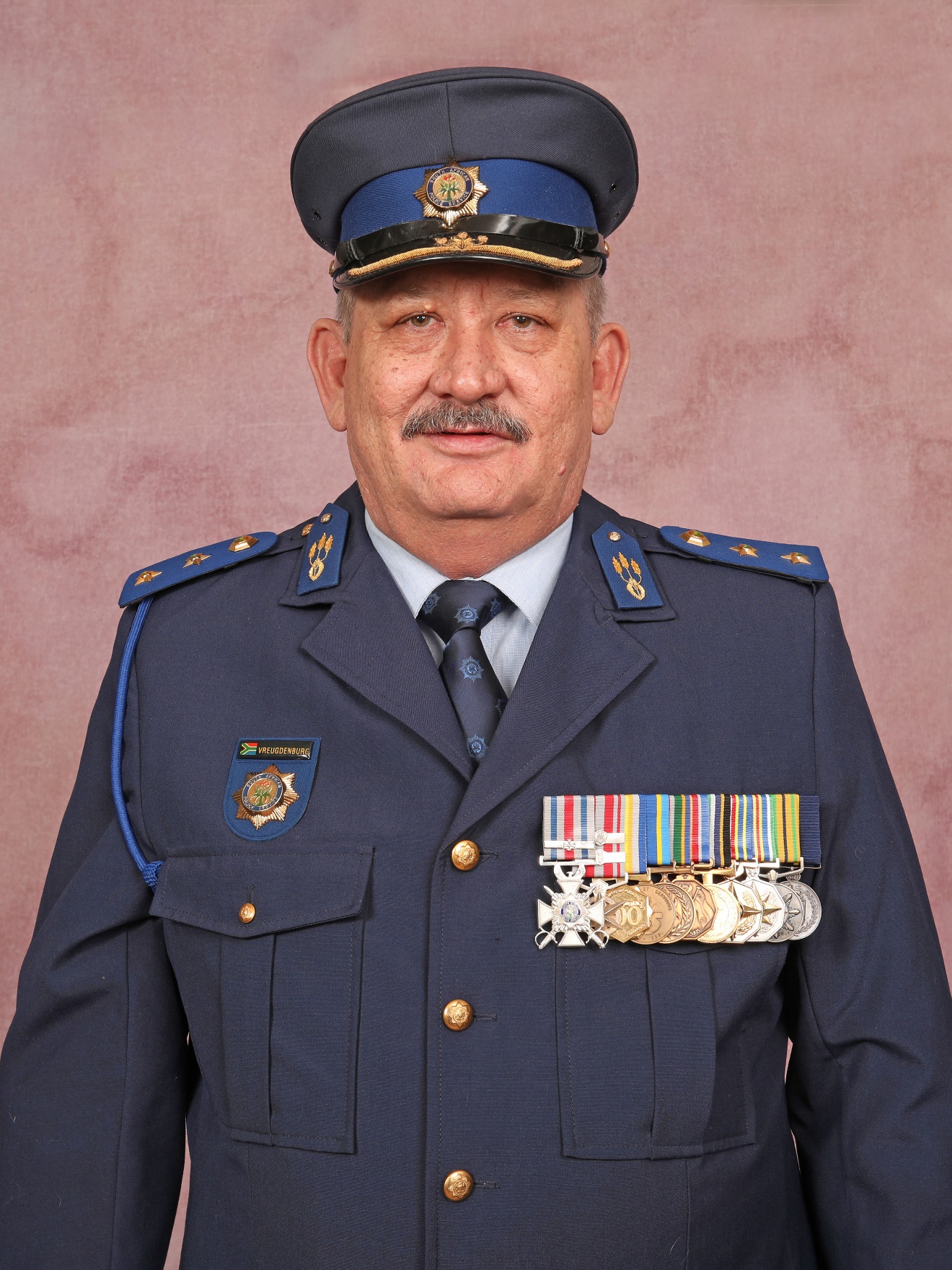
Tollie is a retired 42-year veteran in the South African Police Service. He served over 40 of those years as a Detective, 20 years in the General Detectives and Murder and Robbery units and 22 years in the SAPS Counter Terrorism Section. At the time of his retirement, he was attached to the Directorate for Priority Crimes Investigation, also known as the HAWKS and was the National Section Commander for Counter Terrorism Investigations.
Murder and Robbery Unit
During his early career in the Murder and Robbery Unit he investigated and oversaw investigations into numerous murders such as farm murders and farm attacks with great success, having a 95% solving rate and 100% conviction rate in court. As a result of these successes, he was requested to be a member of the “Mandela Committee of Inquiry into Farm attacks” in 2001. The findings of the committee were published on 31 July 2003 in the document “Report of the Committee of Inquiry into Farm Attacks”.
Psychologically Motivated Crimes
In the late 1990s He was one of the first detectives to be trained in the field of Psychologically Motivated Crimes by Dr Micki Pistorius. His training led to his team solving the well-known “Lovers Lane” Serial murder case within a record breaking seven days. David Mmbengwa was convicted on 7 counts of murder and various other charges. He was sentenced to 7 terms of life and an additional 470-year imprisonment.
Counter Terrorism
In 2002 his career shifted to the field of Counter Terrorism.
He worked on right wing extremist investigations like the Boeremag case, Mangaung case where an attempt to blow up the ANC’s elective conference, attended by 4500 people, was thwarted, and the Crusaders National Resistance Movement case where a group if right wingers planned to attack police stations and military bases in 2019 but were thwarted by the investigation he coordinated. These were all right-wing groups that wanted to over through the Government of South Africa my means off an armed conflict and a racial war. Again, he had a 100% solving rate and a 100% conviction rate.
Police Silver Cross for Bravery
For his efforts in preventing these major terrorist attacks and unnecessary bloodshed in South Africa he was bestowed the Police Silver Cross for Bravery twice for terrorism related investigations.
In terms of ISIS-inspired extremists, his investigations lead to the arrest of the well-known Thulsie Twins, convicted of planning terrorist attacks in South Africa. He was also the lead investigator in the Del Vecchio/Patel case where and Islamic State (IS) cell kidnapped, robbed and murdered an elderly British couple in northern KwaZulu-Natal for terrorism financing purposes.