Nongqai Vol 17 No 6B – Employment of Armoured Trains in Mozambique
WORK IN PROGRESS
Employment of Armoured Trains in Mozambique
Gerhard van Tonder
The Front for the Liberation of Mozambique, FRELIMO, initiated a guerrilla campaign against Portuguese rule in September 1964. After ten years of sporadic warfare and Portugal’s return to democracy through a leftist military coup in Lisbon, which replaced Portugal’s Estado Novo regime with a military junta (the Carnation Revolution of April 1974), FRELIMO took control of the territory which became independent from Portugal on 25 June 1975.
Soon thereafter, RENAMO (from the Portuguese Resistência Nacional Moçambicana), a Mozambican political party and militant anti-communist group opposed to Mozambique’s ruling FRELIMO, was formed through Rhodesian sponsorship. RENAMO targeted infrastructure, including railways, power lines, bridges and oil storage depots to cripple the economy.
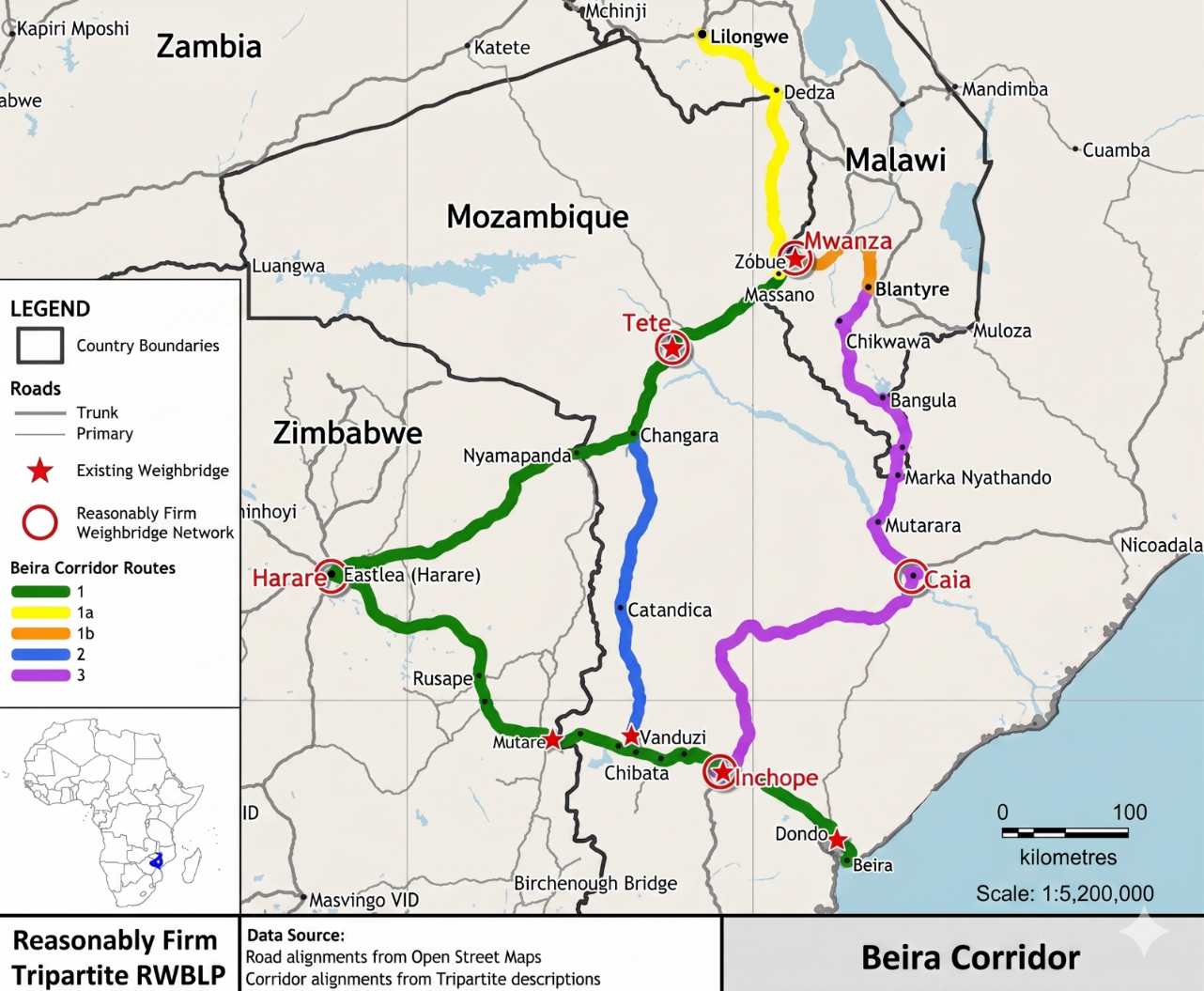
Mozambique’s railway system is critical to its economic development, acting as a vital logistical corridor for landlocked neighbouring countries and a key driver of national industrial growth. The rail network acts as the primary gateway for landlocked neighbours such as South Africa, Zimbabwe, Malawi and Zambia to access the Indian Ocean. (see map below) In addition, railways are crucial for exporting coal from the Moatize region.
Tensions remain between the ruling FRELIMO party and the former rebel movement RENAMO. Since RENAMO became active, the FRELIMO government has implemented various measures to protect its commercially vital rail network and the locomotives and rolling stock that operate on the system. These measures were specific to three periods in independent Mozambique’s history:
1. The Civil War
The Mozambique conflict has roots in the independence movement launched by the Mozambique Liberation Front, FRELIMO, against Portuguese colonisation. Despite the insurgency, independence only came a year after a military coup d’état in Lisbon overthrew the longstanding “Estado Novo” dictatorship. Nonetheless, FRELIMO installed itself as the ruling party and officially became a Marxist-Leninist party in 1977. Fierce fighting broke out in the Cold War context, between Soviet-supported FRELIMO and the anti-communist Mozambique National Resistance (RENAMO) movement, which received funding from neighbouring “white” governments in Rhodesia and later on, South Africa. As a result of the Mozambican civil war from 1977 to 1992, the Mozambique railway was severely restricted.
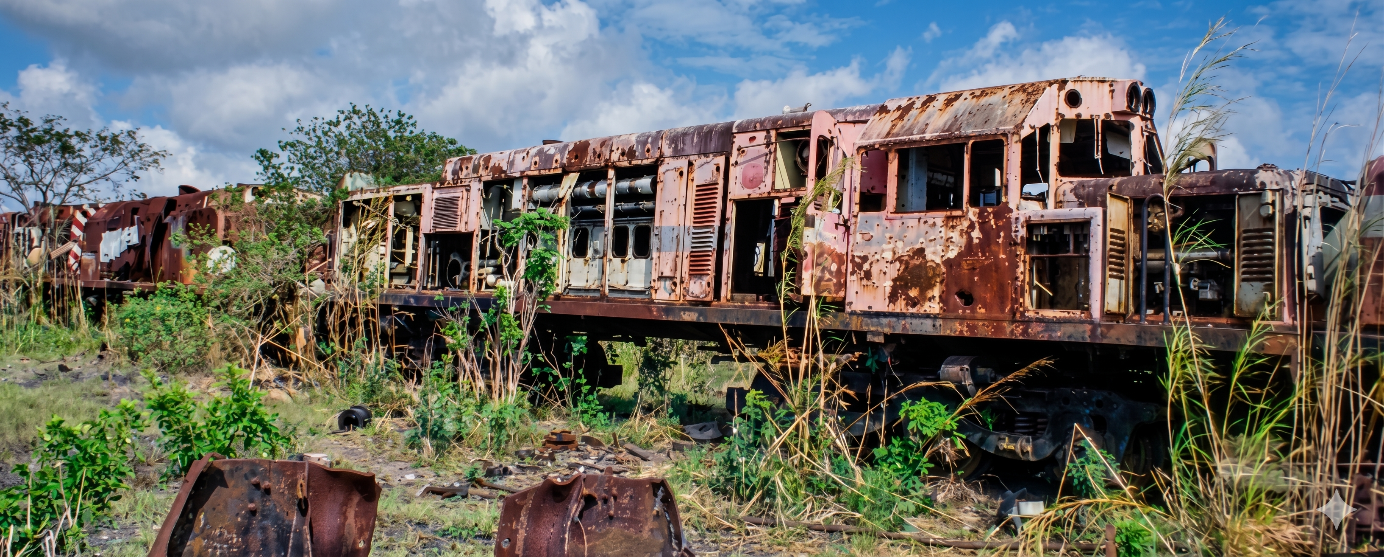
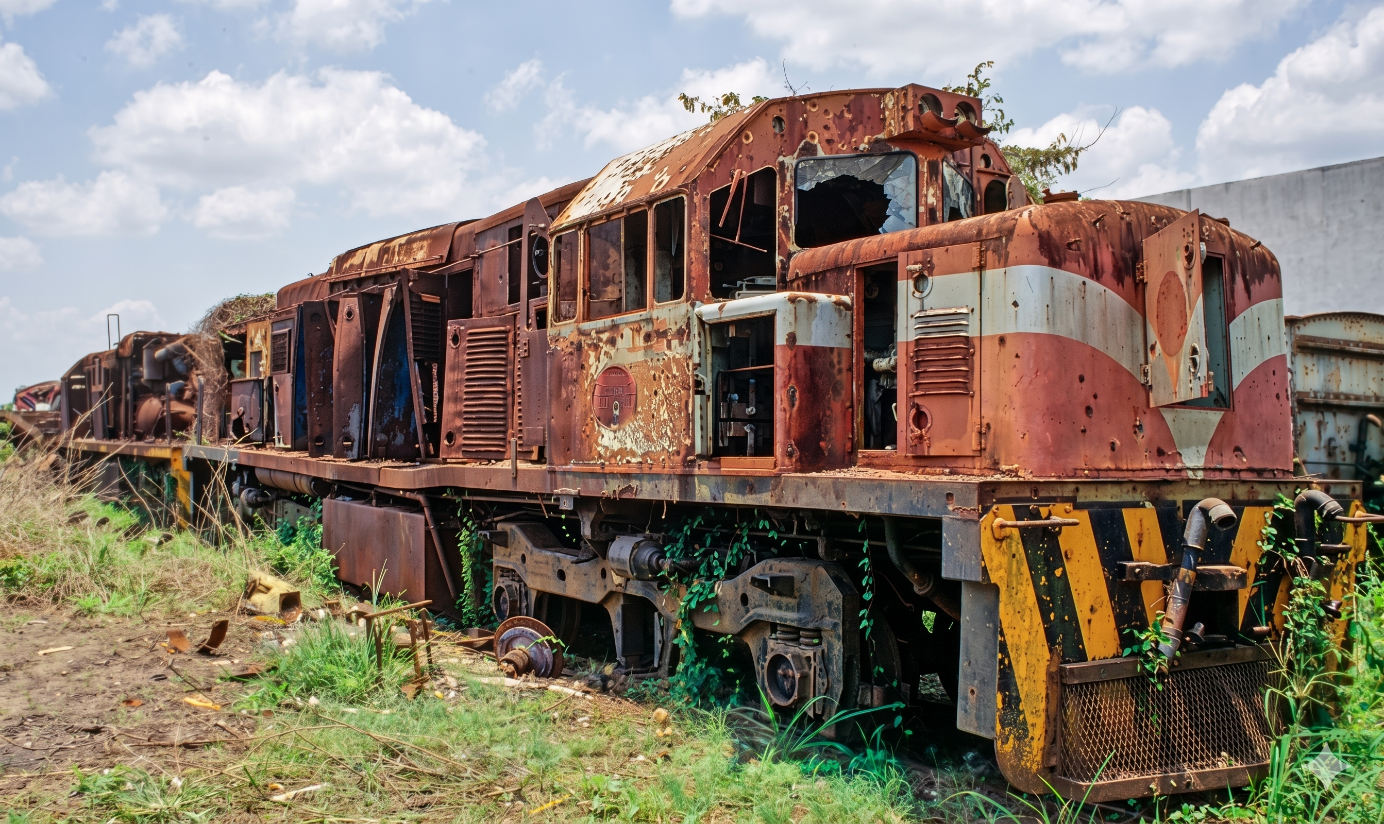
Mozambique railways locomotives show the scars of destruction at the hands of RENAMO rebels.
Various sources indicate that armoured trains were utilised during the conflict and in subsequent conflicts by government forces (FRELIMO) to protect vital logistics links, specifically the rail lines connecting inland areas to the coast, from attacks by RENAMO rebels. These trains were not the standardised, heavily armoured machines of World War Two, but rather locally modified locomotives and carriages designed to withstand landmines and small-arms ambushes.
They acted as armed escorts for supply convoys, often placed at the front to clear tracks of landmines and prevent ambushes, or as mobile protection for transport corridors like the Beira Corridor. These trains often featured reinforced steel plating and sandbags, and were equipped with mounted machine guns, automatic cannon, or even tanks on flatcars to return fire. RENAMO rebels frequently targeted these rail lines, forcing the government to use armoured trains to keep food and goods moving to the capital, Maputo. However, there is a dearth of supporting literature and images to illustrate the measures taken to protect trains.
2. The Beira Corridor
The Beira Corridor is a critical 300km logistical route in Mozambique connecting the Indian Ocean port of Beira to Zimbabwe, serving as a vital import/export outlet for landlocked nations including Zimbabwe, Zambia, Malawi and Botswana. It includes a railway, road and oil pipeline designed to facilitate trade for central Mozambique and its neighbours.
Armoured trains and fortified carriages were used to protect the route, primarily during the 1980s. This was necessary due to sabotage and attacks by RENAMO rebels which severely affected the railway and pipeline to Zimbabwe. Of significance was the major role Zimbabwe Defence Forces (ZDF) in securing the Beira Corridor linking landlocked Zimbabwe to the Indian Ocean in Mozambique. Between 10,000 and 20,000 troops were deployed in Mozambique to protect this link from attacks by RENAMO rebels.
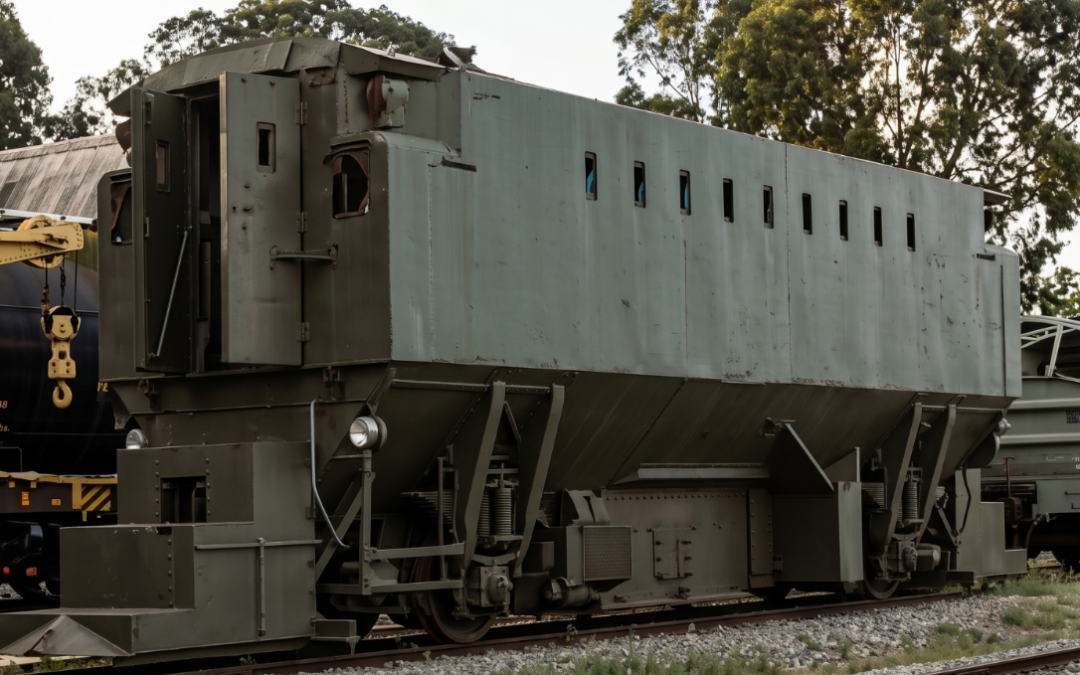
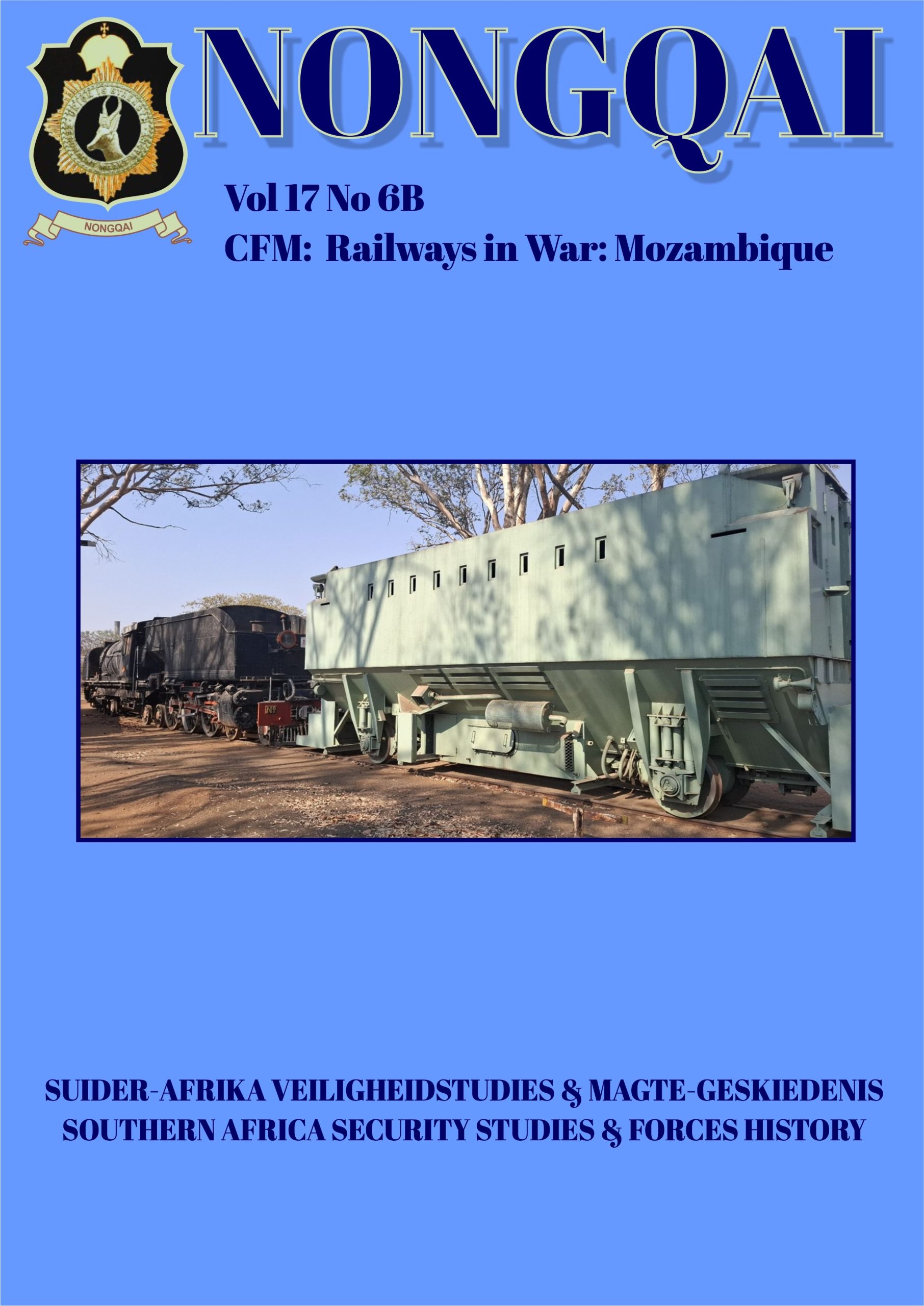
In terms of armoured protection in support of the ZDF operations along the corridor, an armoured carriage known as the “Jackal” was employed in the 1980s. (images below). The railway line was often overgrown and unused, littered with destroyed equipment, requiring armoured protection for patrols and fuel transport. In 1987 in particular, the region was in a state of high insecurity due to the war, making the corridor a key focus for military protection.
Fierce battles occurred along the railway, with soldiers often in “battle posture” to protect logistical supplies, such as fuel, from being stolen.
Regionally, the Malawi Defence Force (MDF) also participated in protecting rail lines, with specific operations, such as Operation Kwaeni, focusing on defending trains against rebel attacks. It was a key, early expeditionary deployment for the MDF, often associated with operations to protect the Nacala railway corridor.
The Beira–Bulawayo railway, often called the Machipanda railway, was being upgraded and rehabilitated, with modern security systems focusing on efficiency rather than armoured protection.
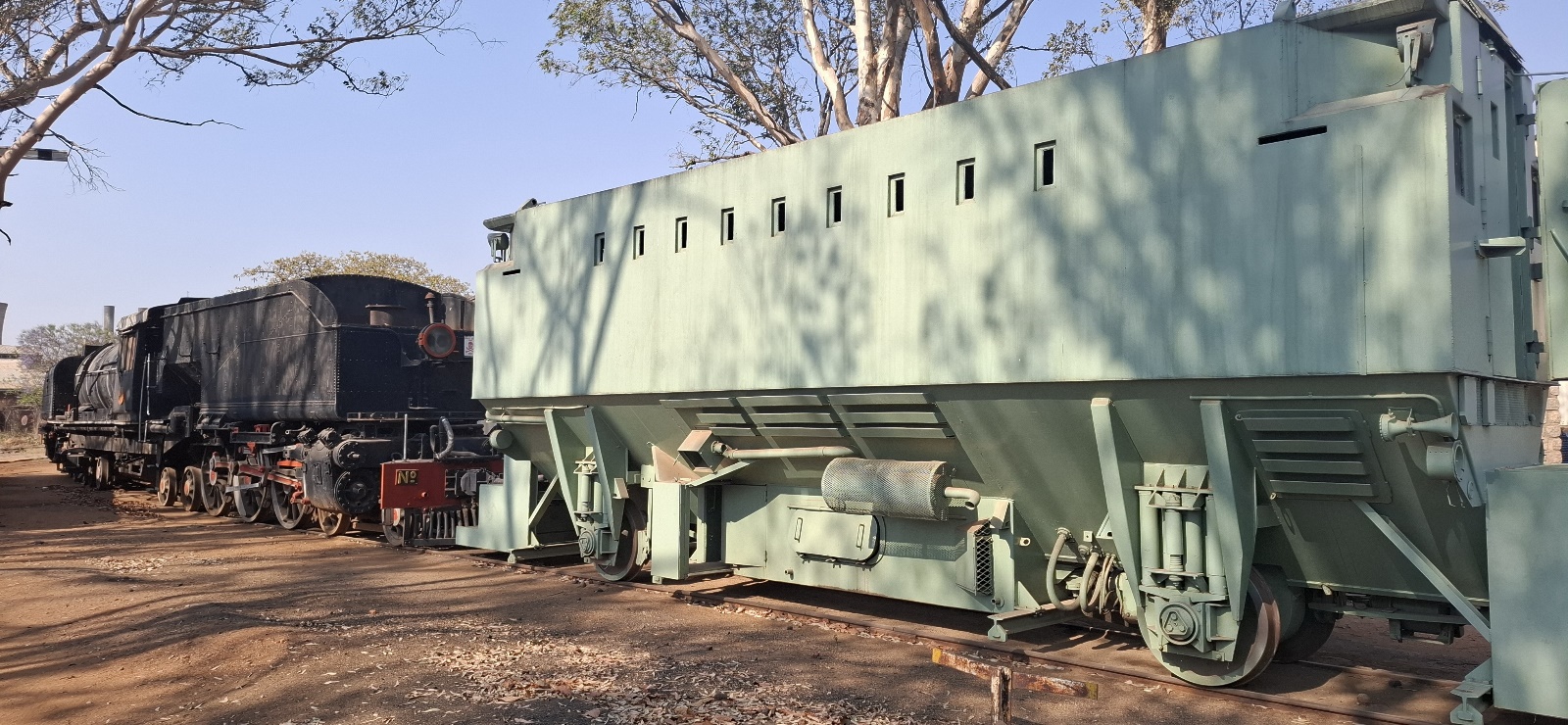
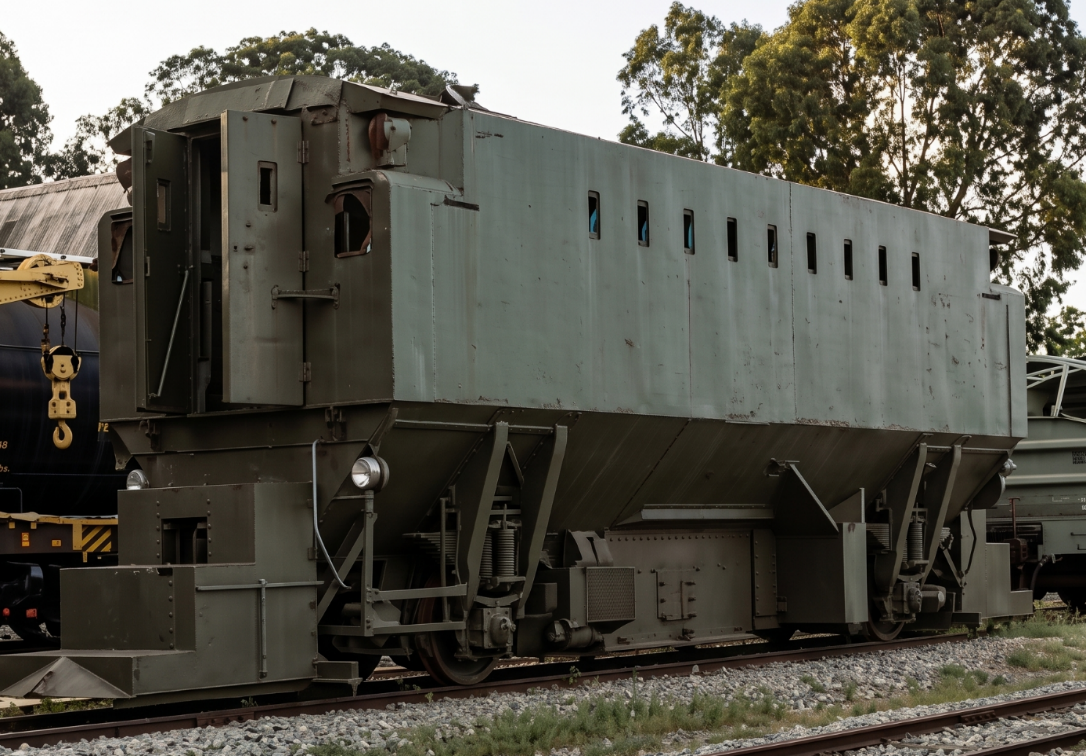
The “Jackal”.
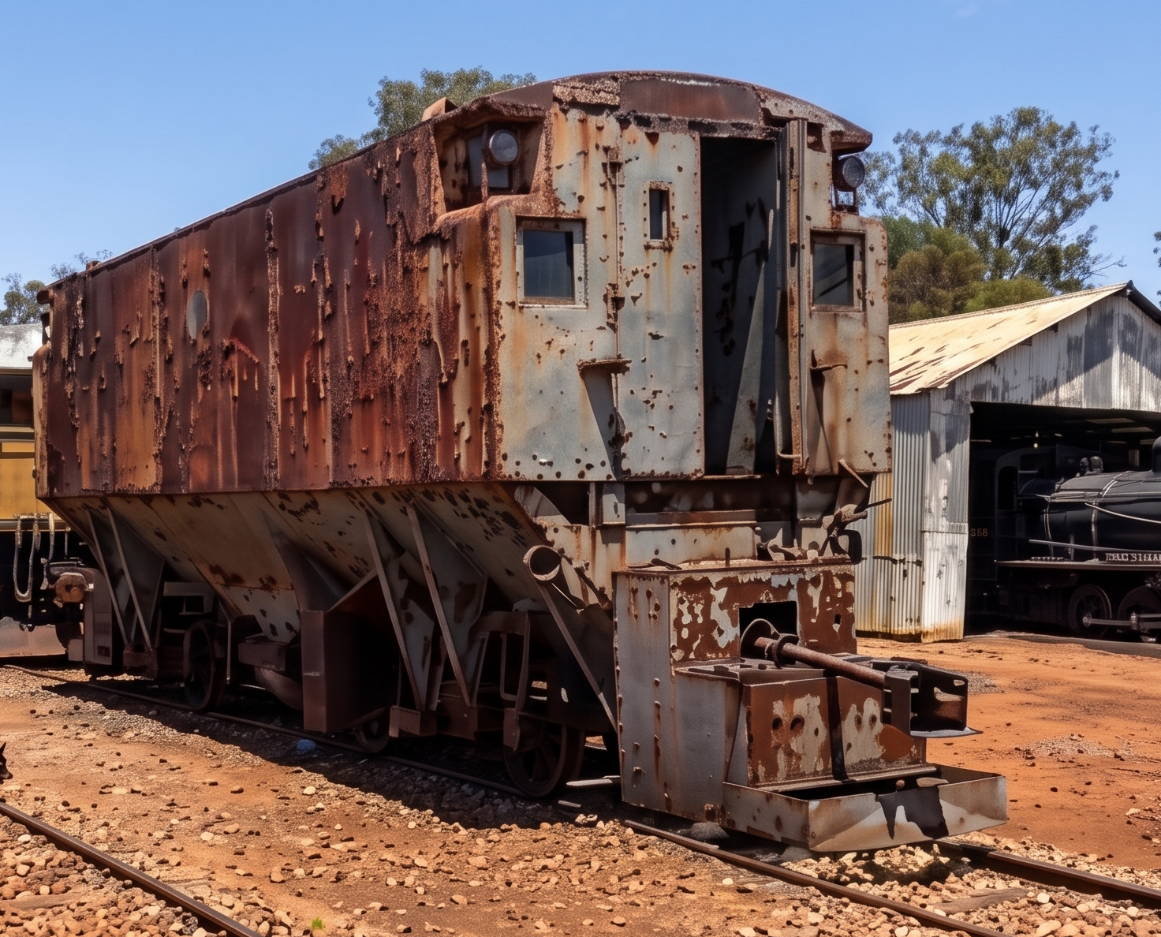
The historically significant armoured carriage “Jackal” was returned to Zimbabwe in 2019 and delivered to the Bulawayo Railway Museum, a rusting relic.
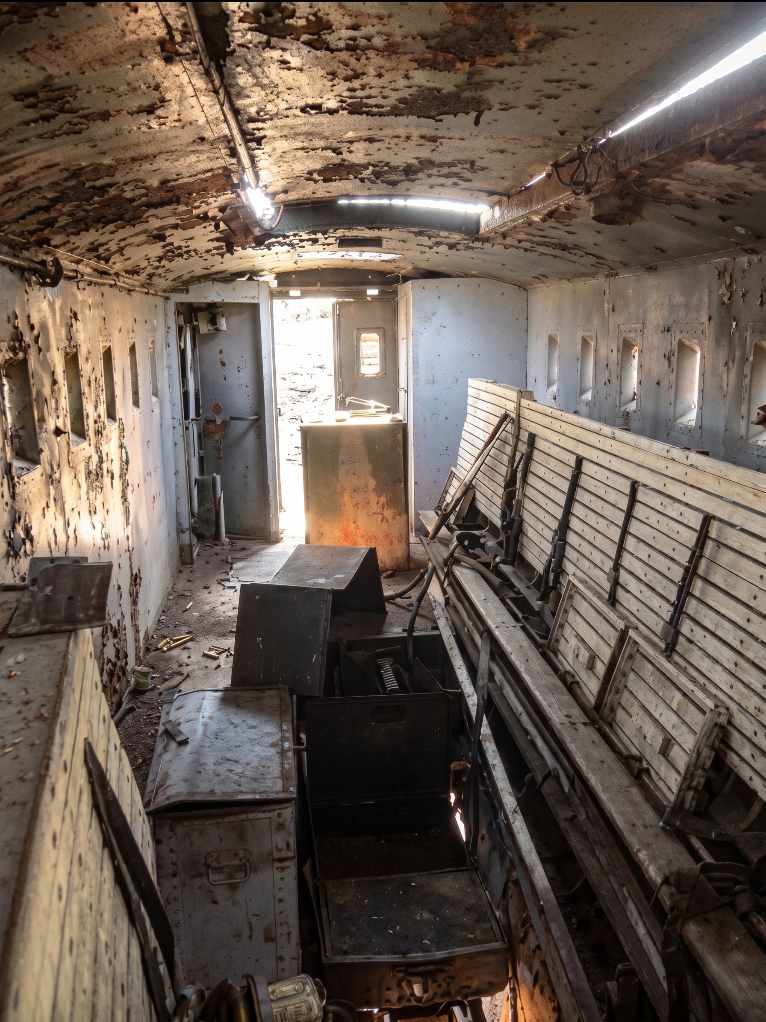
Despite its derelict state, the internal layout of the “Jackal” is discernible.
3. Post Turn of the Century
The use of armoured vehicles on railway lines re-emerged in the 2010s during renewed tensions between Renamo and Frelimo, specifically to protect coal trains running from the centre of the country to the coast. In response to attacks on trains along the Sena railway line, which transports coal to the port of Beira, Mozambican rail operates armour-plated locomotives.
According to Jaco de Kock, director at South African armoured product specialist SVI Engineering, the company bid for a tender from Mozambique and was awarded a contract at the beginning of 2017 to protect 110 locomotives for Vale (the Brazilian mining and logistics company), CLN (Corredor Logístico Integrado do Norteand) and CDN (Corredor de Desenvolvimento do Norte). The locomotives are owned by VALE and operated by CLN.
CLN is a rail and port concession-holder for the Nacala Corridor, the main route for transporting coal from the Moatize coal basin in Tete. The company is owned by Vale and Japanese Trader Mitsui as the main shareholders, and also by the Mozambican state port and rail company Portos e Caminhos de Ferro de Moçambique (CFM).
SVI Engineering was involved in fitting armour protection to over 100 locomotives to protect crews and machinery from small-arms fire. The fitment of armour plating and armoured glass kits to the locomotives was due to be completed by the third quarter of 2017. They were fitted on site and in a single shift in order to minimise disruptions to operations.
The kits are designed in such a way that the locomotive appears as standard as possible from both the inside and outside, with things like opening windows. The glass was supplied by American Glass Products (AGP) and incorporates all the features of the standard glass including heating elements. De Kock said at the time the focus was on armouring the driver’s compartment, but there is scope for other parts of the locomotives to be protected.
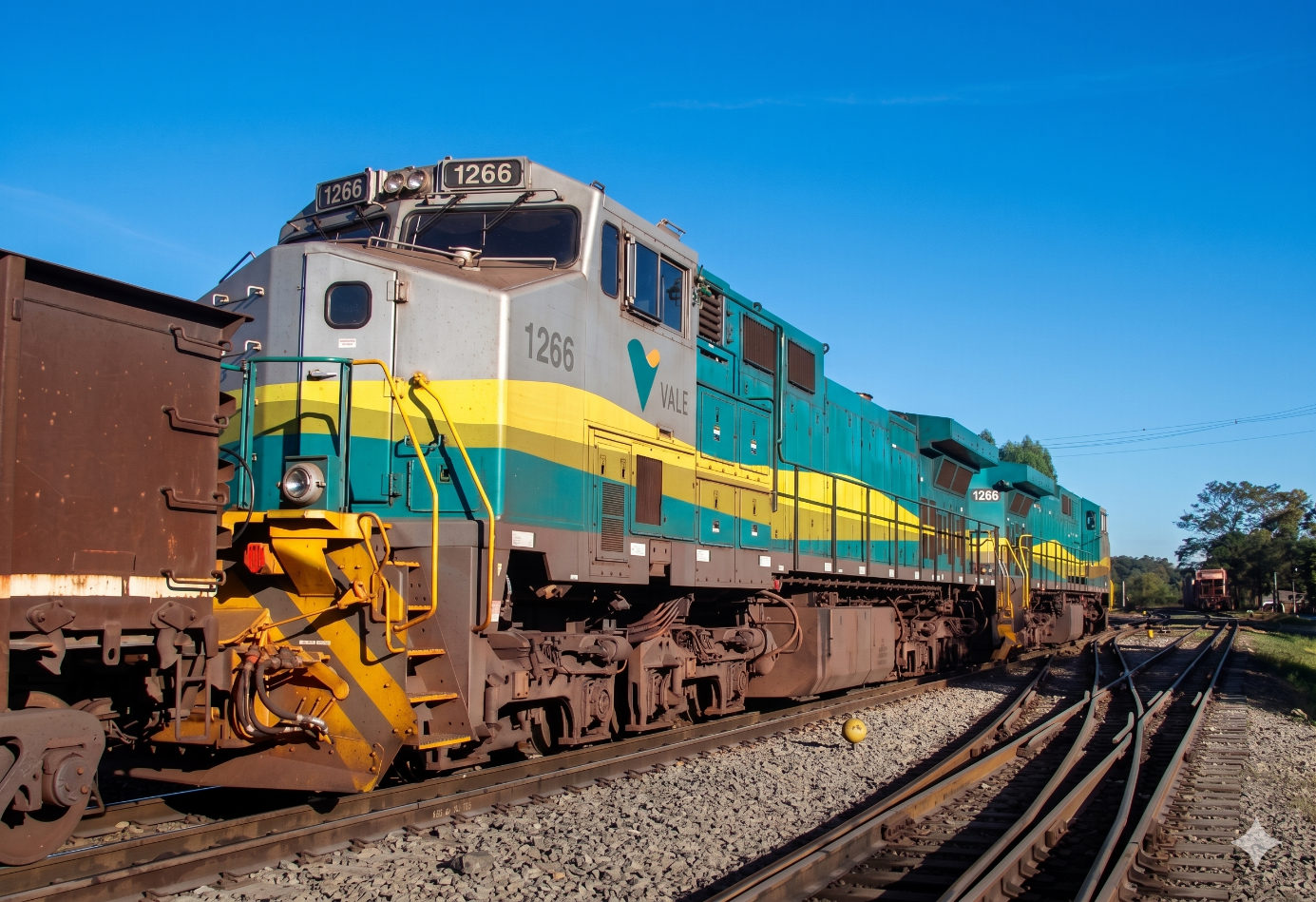
A Vale locomotive in Mozambique with armoured cab.
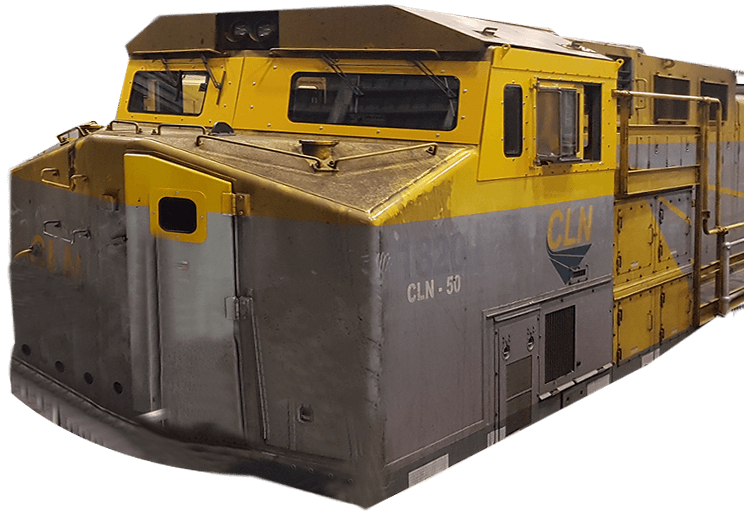
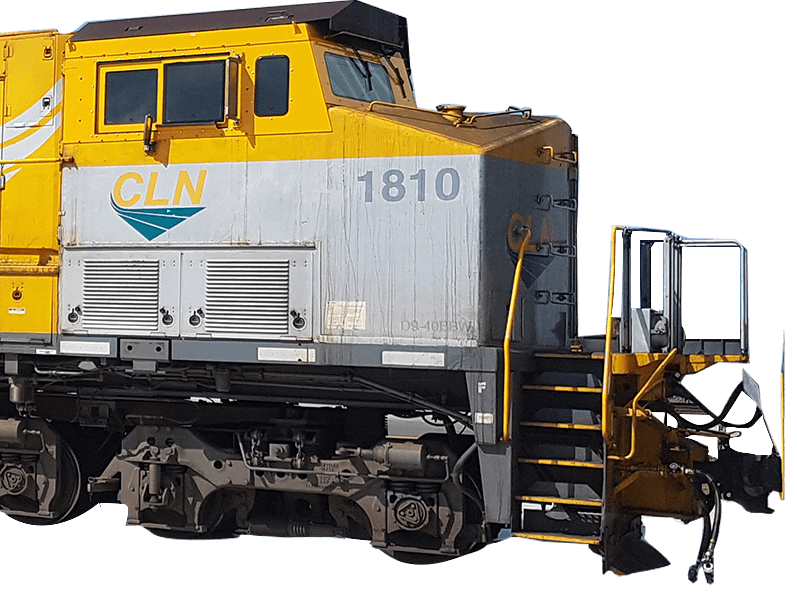
Mozambique CLN armour-protected locomotives. (SVI Engineering)
PLEASE SEND FURTHER INFORMATION TO:
Hennie Heymans – heymanshb@gmail.com