Nongqai Vol 17 No 10 – (54) Anglo Boer War: – Bethulie and the Bridges
Excerpt
This chapter examines the strategic importance of Bethulie and its railway and road bridges during the Anglo-Boer War. It recounts the destruction of the railway bridge by Boer forces, the dramatic efforts of British troops to save the wagon bridge, and the crucial role of the Imperial Military Railways in maintaining military supply lines. The narrative highlights the actions of Major Nolan-Neylan, Captain P. G. Grant, and Lieutenant R. S. Popham, whose interventions preserved a key crossing over the Orange River.
Abstract
Bethulie occupied a critical position during the Anglo-Boer War due to its location on the Orange River and its vital railway and road bridges linking the Cape Colony with the Orange Free State. This article explores the military significance of these crossings, detailing the Boer demolition of the railway bridge in March 1900 and the unsuccessful attempts to destroy the wagon bridge. It examines the contributions of British officers and Cape Police personnel who risked their lives to prevent the destruction of the remaining crossing, thereby safeguarding an essential route for British military operations. The chapter further discusses the role of the Imperial Military Railways under Sir Percy Girouard in restoring damaged transport infrastructure and sustaining the British advance. Drawing on contemporary accounts, official histories, and personal correspondence, the article provides insight into the strategic, engineering, and human dimensions of the conflict at Bethulie.
Keywords
Bethulie, Orange River, Anglo-Boer War, Second Boer War, Bethulie Railway Bridge, Wagon Bridge, Imperial Military Railways, Sir Percy Girouard, Lieutenant R. S. Popham, Captain P. G. Grant, Major Nolan-Neylan, Cape Police, Royal Engineers, Boer Commandos, Railway Demolition, Military Engineering, British Army Logistics, Orange Free State, Military Transport, South African Military History.
Chapter 15 – Bethulie and the Bridges
Jennifer Bosch
Bethulie played a strategically important role during the Anglo-Boer War because of its position on the Orange River and its vital railway and road bridges. At the outbreak of hostilities in 1899, approximately 1,200 Boer troops assembled in the area, and on 1 November, the Smithfield and Bethulie commandos crossed the river to invade the Cape Colony. When British forces advanced north in March 1900, the Boers destroyed five spans of the railway bridge, but a daring operation by Lieutenant Popham and four volunteers, supported by Captain P. G. Grant of the Royal Engineers, saved the road bridge from demolition.
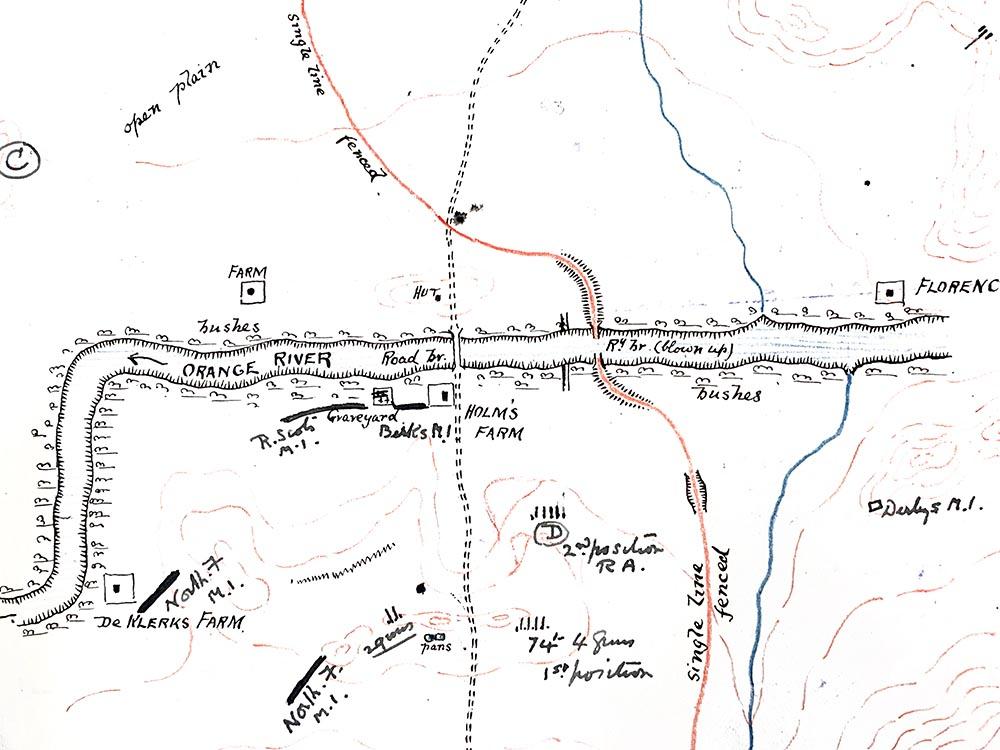
General Gatacre crossed the bridge on 15 March and occupied Bethulie, enabling the British to establish an improvised railway crossing that became a crucial supply route for Lord Roberts’s army at Bloemfontein. Bethulie remained a strategic target during the guerrilla phase of the war, as Boer commandants hoped to destroy the crossing and disrupt British supplies. The town later witnessed a different tragedy when a concentration camp was established for displaced Boer families, where overcrowding and outbreaks of enteric fever caused considerable suffering.
Bethulie Rail Bridge
The railway bridge at Bethulie was a strategically important crossing over the Orange River, linking the Cape Colony with the Orange Free State. As British forces advanced northwards in March 1900, retreating Boer forces destroyed the bridge to disrupt British communications and delay the movement of troops and supplies. The demolition took place on 10 March 1900, leaving several spans collapsed into the river. A contemporary account by Frederick Smith, written on 18 March 1900, described the wreckage as five sections of the iron bridge having been blown out.
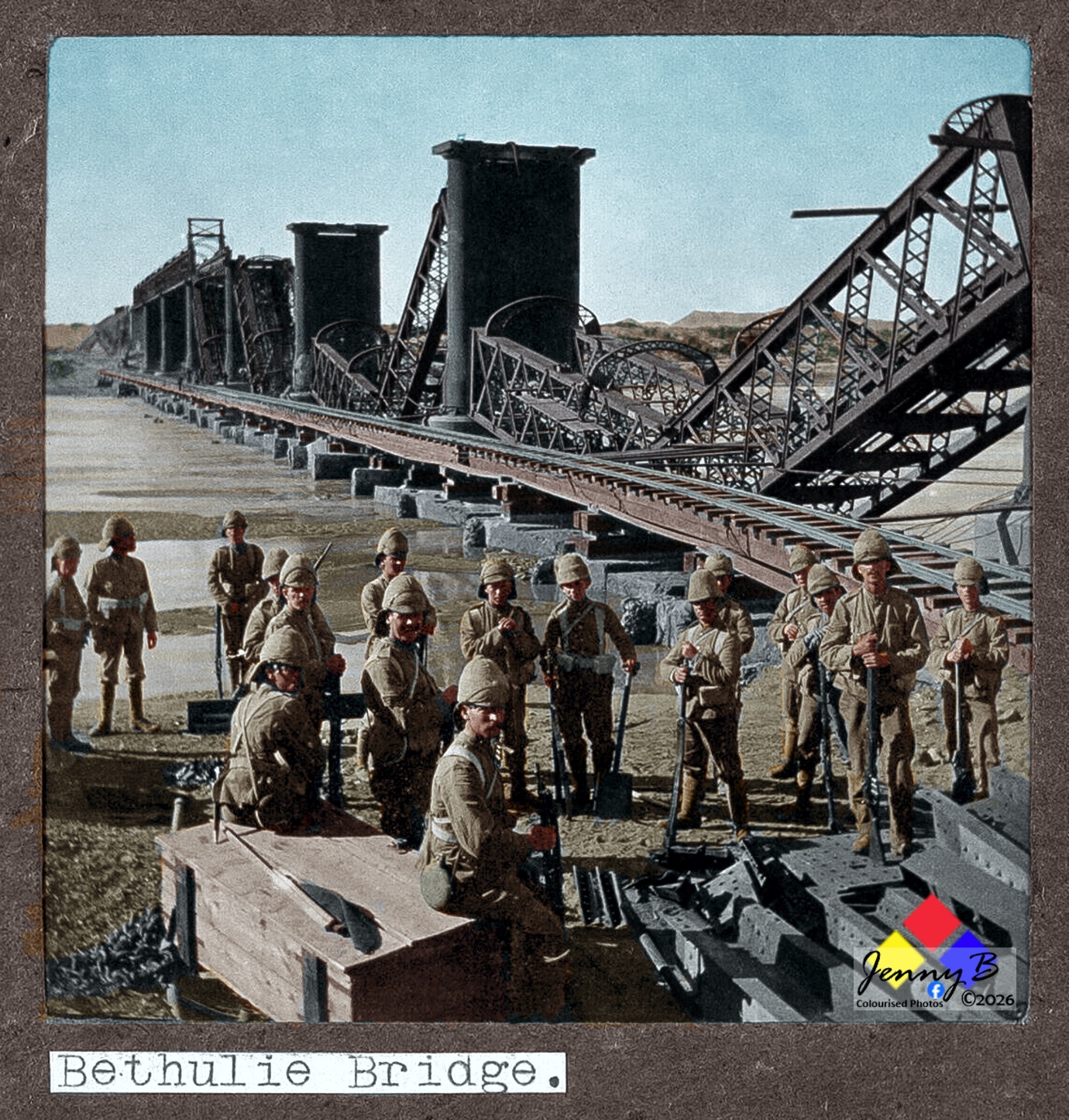
The Bethulie Bridge, destroyed by the Boers on 10 March 1900
How The Demolition Was Carried Out
Historical accounts indicate that the Boers prepared explosive charges beneath the railway bridge’s supporting structure, using electrical wiring and fuses to detonate them. The operation was part of the Boer retreat as British troops under General Sir William Gatacre advanced towards the Orange River. The rail bridge’s destruction was successful.
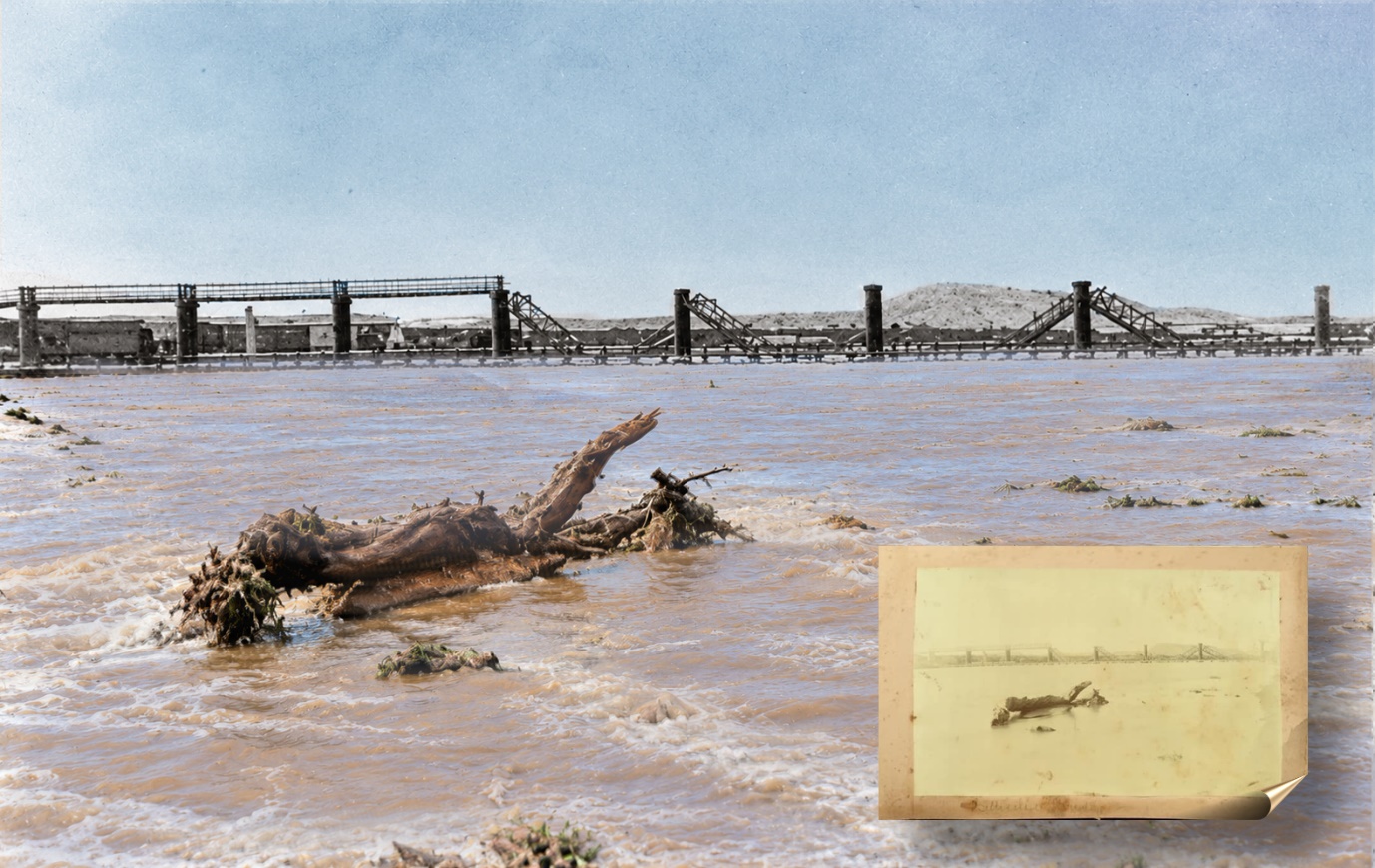
A different view of the bridge – Src: Andries Strydom
Bethulie Wagon Bridge: 9–12 March 1900
On 9 March 1900, preparations began to demolish Bethulie’s wagon bridge. Holes were drilled into the bridge piers to accommodate dynamite, but an urgent telegram from President Steyn interrupted the operation. He ordered that the railway bridge be destroyed first, followed by the wagon bridge. The demolition party abandoned its work on the wagon bridge and turned its attention to the railway crossing.
Smink laid the electrical cables and fuses beneath the railway bridge. However, the party was surprised by a British patrol led by Major Neylan of the Cape Police. The Boers managed to drive off the patrol and continued their preparations. On 10 March, at approximately 4:30 pm, four piers of the railway bridge were demolished, after which the men returned to the wagon bridge.
By 6 pm, two piers of the wagon bridge were ready for demolition. However, Commandant Grobbelaar refused to authorise the explosion until he had consulted Commandant J. F. Potgieter. Smink waited until 11 pm before leaving the site.
On 11 March, approximately ten men returned to the bridge, where they came under heavy fire from several directions. British forces, including Major Neylan’s Cape Police and McNeill’s Scouts, brought six field guns to bear on the position. Taking cover under fire, the demolition party witnessed three of their men being killed on the bridge. By 2 pm, Smink, Brand and Erlee had managed to escape to the railway station.
Ordered to make another attempt that night, the men returned to the wagon bridge, only to encounter a strong British patrol that kept up a continuous barrage of rifle fire. Their efforts to destroy the crossing were once again thwarted. Forced to retreat under shell and rifle fire, they made their way back to the station.
Following another unsuccessful attempt on 12 March, Smink and his party abandoned the operation and left Bethulie for Johannesburg.
Lieutenant R. S. Popham of the Derbyshire Regiment cut the electrical wire, while Captain P. G. Grant of the Royal Engineers and other British personnel subsequently removed explosives. The wagon bridge had survived repeated attempts at demolition, despite the destruction of the railway bridge and the increasingly dangerous conditions faced by the Boer demolition party.
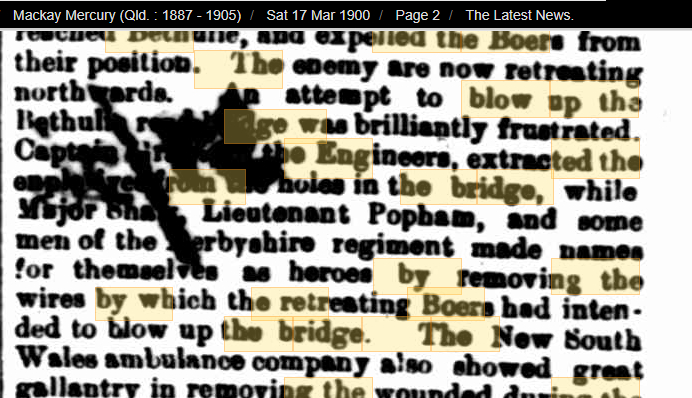
Queensland Newspaper clip
The Imperial Military Railways
The Imperial Military Railways (IMR) were established during the Anglo-Boer War through the amalgamation of the Orange Free State Government Railways, the Netherlands-South African Railway Company and the Pretoria–Pietersburg Railway. In October 1899, a Department of Military Railways was created under Major E. Percy C. Girouard of the Royal Engineers, later Sir Percy Girouard, who became responsible for its administration and operation.
The department served as the link between the British Army and the technical management of the railway system. Its primary purpose was to ensure that railway operations met the military’s needs while maintaining the efficient functioning of the network as a whole. This involved prioritising the movement of troops, equipment and supplies, coordinating the Army’s competing demands, repairing railway lines damaged by Boer forces, and taking control of railway lines in captured Boer territory.
The IMR played a crucial role in supporting British military operations by keeping vital transport routes functioning throughout the conflict. Following the signing of the peace treaty in 1902, its military responsibilities were transferred to the civilian authorities, and the railway system became known as the Central South African Railways (CSAR).
Percy Girouard and The Imperial Military Railways (IMR)
In October 1899, Percy Girouard was sent to South Africa by the British War Office to advise on the Cape Colony’s railway system. With the outbreak of the Anglo-Boer War, he was appointed Director of the Imperial Military Railways (IMR), responsible for railway lines in the Cape Colony and those captured from the Boers in the Orange Free State and Transvaal.
Girouard played a vital role in restoring railway services damaged during the conflict. He organised the rapid repair of damaged lines and introduced temporary, low-level deviations around destroyed bridges, allowing trains to cross rivers while permanent repairs were undertaken. These measures helped British forces move troops, equipment and supplies swiftly during Lord Roberts’s advance towards Pretoria in 1900.
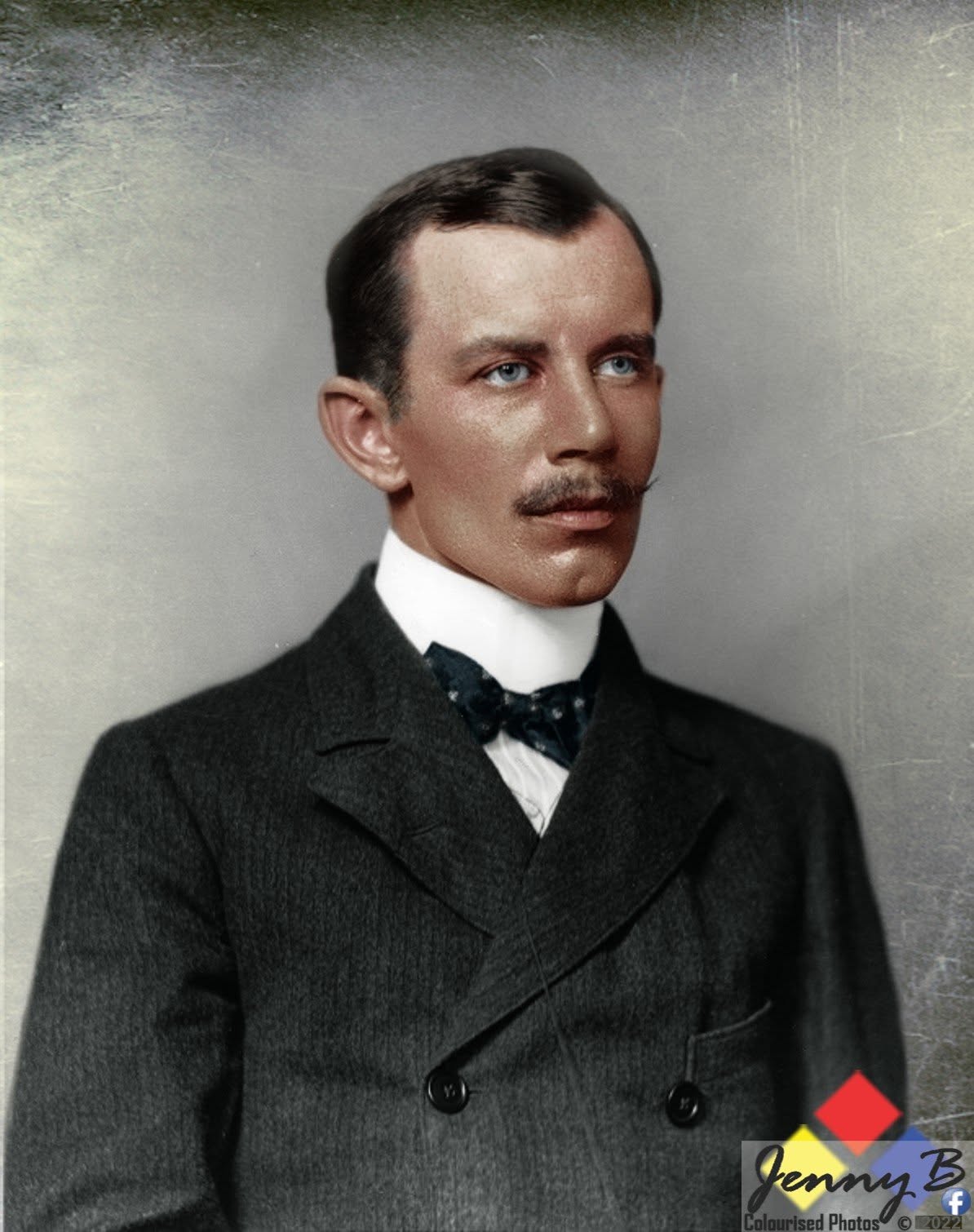
Montreal-born Sir Percy Girouard 1867-1932
His achievements earned him recognition in military despatches and, in November 1900, a knighthood as a Knight Commander of the Order of St Michael and St George (KCMG). Lord Kitchener praised Girouard as his principal adviser on the complex problems of railway administration in South Africa, describing him as an officer of brilliant ability.
Following the war, the Imperial Military Railways became the Central South African Railways in July 1902. Girouard remained in South Africa as Commissioner of Railways for the Transvaal and Orange River Colony until 1904, when pressure from Johannesburg’s mining interests to reduce railway expenditure contributed to his resignation.
Major Nolan-Neylan, Captain P.G Grant and Lieutenant Popham
Major Nolan-Neylan ‘s Role.
Major Nolan-Neylan of the Cape Police played a pivotal role in preventing the Boers from destroying the Bethulie road bridge during the Second Anglo-Boer War in March 1900. Leading a small detachment of Cape Police, he arrived with his men late on 9 March, joining Captain McNeill’s Scouts near the bridge. At daybreak on 10 March, his men and the scouts occupied a farm commanding the bridge approaches and held their position under heavy Boer rifle and artillery fire. Their determined resistance prevented the Boers from reaching the explosives and completing the electrical connections needed to detonate the charges. This bought vital time for British reinforcements to arrive.
Captain P. G. Grant’s Role.
Grant completed the operation begun by Lieutenant R. S. Popham of the Derbyshire Regiment. On the night of 13 March, Grant went beneath the bridge, lowered by a rope around his waist through openings in the roadway. Accompanied by men of the 2nd Royal Irish Rifles, he removed the remaining dynamite charges lodged among the bridge girders.
The explosives were removed and thrown into the river, preventing the Boers from demolishing the road bridge. This preserved an important crossing for the British advance into the Orange Free State.
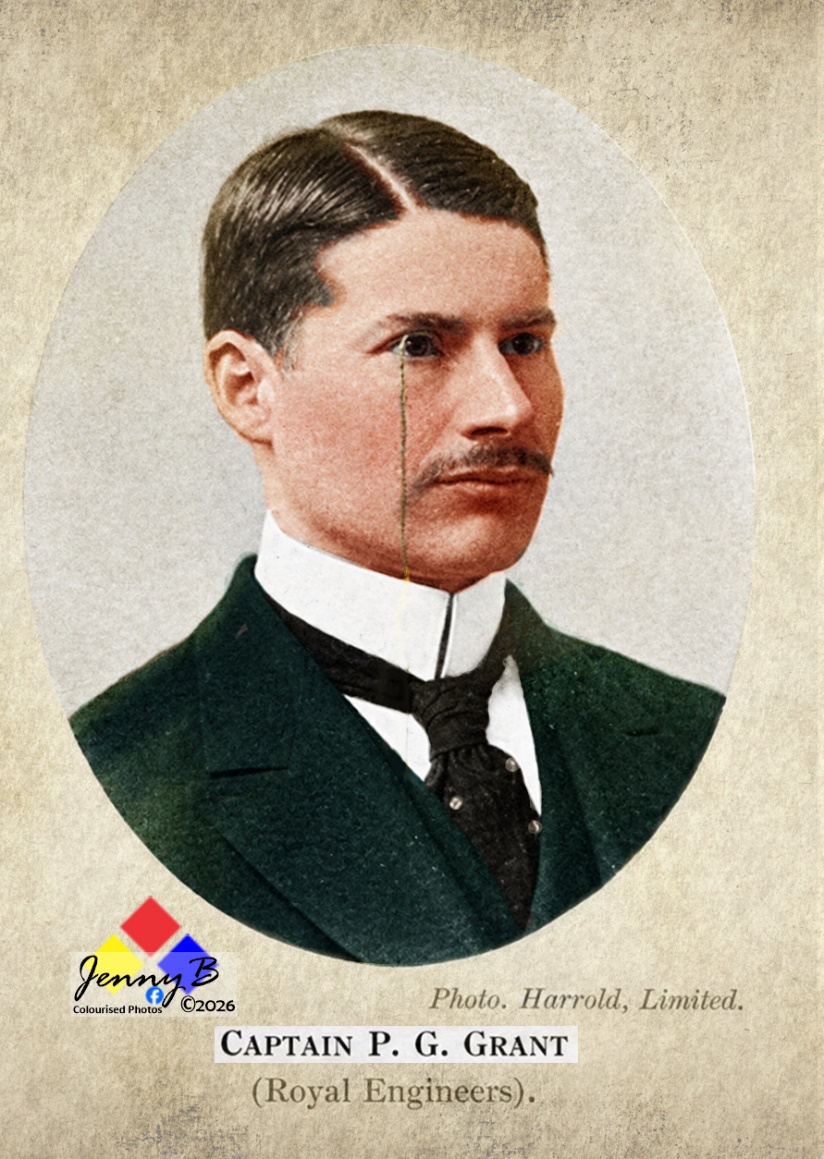
Lieutenant Popham’s Role.
On the night of 12 March 1900, Popham and a small party crossed the bridge under fire. They disconnected the wires leading to the mines and removed boxes of dynamite.
Popham and his four men were reportedly not rewarded for their courageous action, despite its considerable military importance. The history of the Sherwood Foresters later highlighted the significance of their achievement.
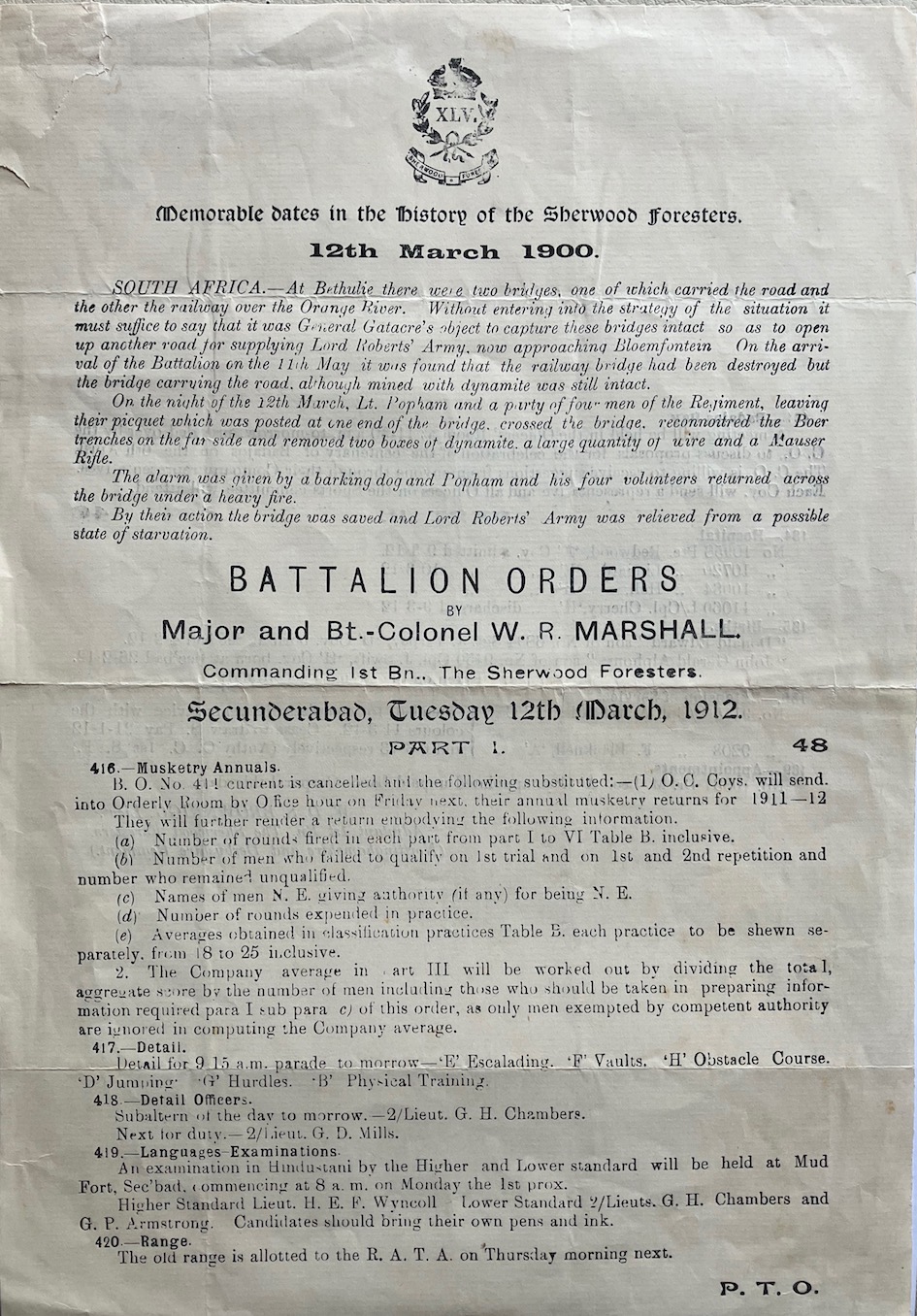
Sherwood Forester’s newsletter for March 12, 1912. – Source: Boer War Forum
Extracts from a Letter to Mary Ann Smith from Frederick Smith,18 Mar 1900
………….At Bethulie Camp there is no station I tumbled not in the direction of the tents & soon found a man who directed me to the Transport offices, here I found [word redacted] A.V.O who gave me some breakfast which I greatly appreciated & after I had done my work I went & saw Bethulie Railway Bridge which the Boers had just destroyed. It is a sad sight, a fine iron bridge with five of its spars blown out some lying in the water others drooping like a faded flower. Two miles away is the iron waggon[sic] bridge connected Cape Colony with the Free State, they tried to blow this up but failed. [1 word redacted] in the course of conversation dwelt so incessantly on the hard work that he had performed that I was compelled to remind him that I had heard differently of him at Cape Town where he was in bad odour, for not putting his shoulder to the wheel & ‘bucking’ up a bit. I fear I gave him rather a shock, but I dont’[sic] suppose it will do him any good.
……… Well, I left Craddock the night before last, & though so late in life I really seem to make friends, the fellows appeared to be very sorry at my leaving & the Colonel particularly so as he & I have been on most friendly terms[,] a most cordial farewell at the station occurred, & that night
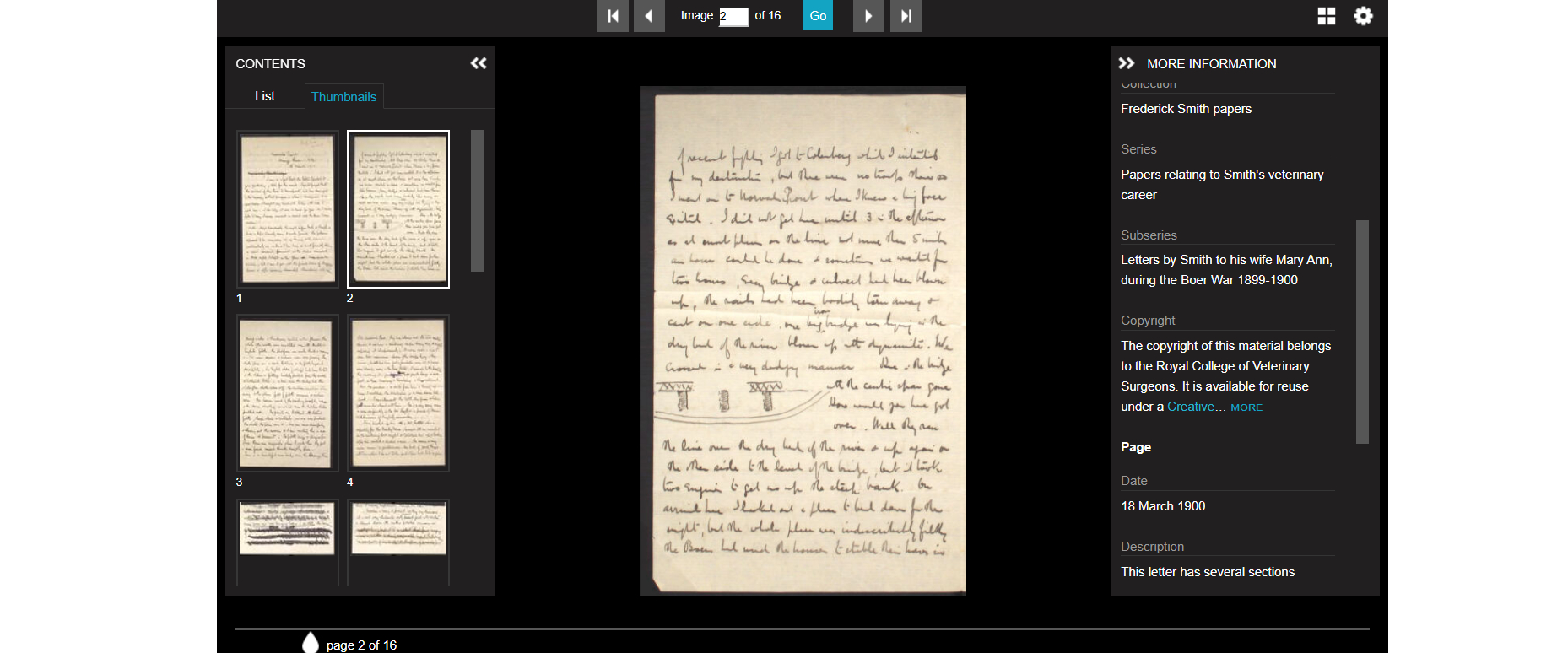
Frederick Smith’s sketch in his letter describing the wrecked Norvalspont Bridge
I slept on the floor at Naaupoort station. At 5 am I got into the guards van of a luggage train & after passing Arundel, Reusberg[?] all scenes
[[2]] of recent fighting I got to Colesberg which I intended for my destination, but there were no troops there so I went on to Norvals Pont[sic] where I knew a big force existed. I did not get here until 3 in the afternoon as at most places on the line not more than 5 miles an hour could be done & sometimes we waited for two hours, every bridge & culvert had been blown up, the rails had been bodily torn away & cast on one side, one big iron bridge was lying in the dry bed of the river blown up with dynamite. We crossed in a very dodgy manner. Here is the bridge with the centre spar gone[3] [illustration] How would you have got over. Well they ran the line over the dry bed of the river & up again on the other side to the level of the bridge, but it took two engines to get us up the steep bank. On arrival here I looked out a place to bed down for the night, but the whole place was indescribably filthy the Boers had used the houses to stable their horses in
[[3]] Dung inches in thickness existed on the floors, the whole of the walls were scribbled over with Dutch & English filth, the platform was inches thick in manure & in this mess onions & indian[sic] corn were growing. The whole place was a vast latrine & the filth beyond description. An English store (or shop) had been looted & the shelves & fittings bodily pulled from the wall a billiard table in a bar near the station had the whole of the cloth torn off the rubber cushions torn away & the place full of filth manure & indian[sic] corn. The houses used by the railway people were in the same shocking condition even the kitchen stoves pulled out. The ground was littered with straw[,] filth, sheep skin & entrails, no one can picture the state the place was in. We are now disinfecting & cleaning out the rooms & I am writing this in one of them at present. The filth brings a plague of flies there are myriads where I write this, they get in ones food meat drink everything flies.
There is a beautiful iron bridge over the Orange River
[[4]] At Norvals Pont[sic], they have blown out the two centre spars & we have a railway corps busy day & night repairing it temporarily. It seems such a sin to see two immense spars of this bridge lying in the river, but we have got a pontoon over it & have our troops now in the Free State I crossed by the pontoon this morning it is just under 400 yards long & set foot in the enemy’s territory & then returned.
But the pontoon is 4 miles from here & having no horse I walked the distance in a sun none too cool. I saw Clements the G.O.C this force & had a five minute chat with him. He is a very young man & was originally in the 24th Regt & a friend of Miss Wilkinsons [sic] if I rightly remember.
……….. At 3am on the 22nd we proceeded to Bethulie on the Banks of the Orange River, only a Guards van was obtainable & several of us were packed in there with the mails. We got to Bethulie Camp just south of the river by 9am progress very slow wit owing to the bridges being all blown up, even the signal posts had been shot at part of their arms being cut off which the lamps & coloured glasses were smashed by bullets[.]
At Bethulie Camp there is no station I tumbled not in the direction of the tents & soon found a man who directed me to the Transport offices, here I found [word redacted] A.V.O who gave me some breakfast which I greatly appreciated & after I had done my work I went & saw Bethulie Railway Bridge which the Boers had just destroyed. It is a sad sight, a fine iron bridge with five of its spars blown out some lying in the water others drooping like a faded flower. Two miles away is the iron waggon[sic] bridge connected Cape Colony with the Free State, they tried to blow this up but failed.
Sources:
1. RCVS Knowledge
2. Jan Johannes Rudolph van Zyl — Bethulie 1896–1907, met spesifieke verwysing na die Anglo-Boereoorlog (2019) – University of the Free State doctoral thesis3. Frederick Smith — letter to Mary Ann Smith, 18 March 1900 – Royal College of Veterinary Surgeons.
4. RCVS Knowledge historical archive
5. Frederick Maurice— History of the War in South Africa, 1899–1902, Vol II
6. Arthur Conan Doyle — The Great Boer War, Chapter 21
7. Venter, 2011-Karoo Development Foundation and National Heritage Foundation.
8. Artefacts.co.za.
9. Boer War forum
10. gutenberg.net.au
11. The Great Boer War
12. History of the War in South Africa, 1899–1902, Volume II (official-history account of Gatacre’s advance and the bridge operation.)

