Nongqai Vol 17 No 10 – (8) Confrontation: 1981: SAP and AWB Ventersdorp
NONGQAI
THE VENTERSDORP CONFRONTATION — 9 AUGUST 1991
A reconstruction of the events surrounding the AWB–police confrontation
Ida Steyn
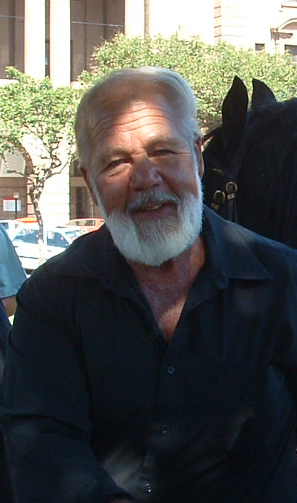
Eugene Terreblanche (Photo: Hennie Heymans)
Editorial note
This article reconstructs the events of 9 August 1991 from the record of the Truth and Reconciliation Commission (TRC), South African historical material and contemporary reporting. Where accounts differ, the wording reflects that uncertainty rather than presenting a disputed detail as settled fact.
Excerpt
A tense political standoff in Ventersdorp on 9 August 1991 escalated into armed confrontation between the AWB and the South African Police, leaving three AWB members dead and dozens injured.
Abstract
This article reconstructs the events of the Ventersdorp confrontation of 9 August 1991, when approximately 2,000-armed AWB supporters attempted to challenge President F.W. de Klerk at a National Party meeting. A major police operation was deployed, and the initial tear‑gas exchanges rapidly escalated into gunfire. Civilians were also affected, including the shooting of Ali Jones in Tshing. Three AWB members were killed and 58 people injured. The article draws on TRC records and historical reporting to present a balanced account of the political tensions, armed mobilisation, police response, and subsequent amnesty granted to Eugène Terre’Blanche and Piet Rudolph.
Keywords
Ventersdorp, AWB, South African Police, political violence, F.W. de Klerk, Eugène Terre’Blanche, Piet Rudolph, TRC, 1991, transition period, public order, armed confrontation
Background
On Friday, 9 August 1991, Ventersdorp in the then Transvaal became the scene of one of the most significant confrontations of South Africa’s transition from apartheid to constitutional negotiations.
State President F.W. de Klerk was scheduled to address a National Party meeting at the Commando Hall in Ventersdorp. The town was regarded as a strong Conservative Party area, and the Afrikaner Weerstandsbeweging (AWB), led by Eugène Terre’Blanche, strongly opposed the political direction being taken by the government.
The AWB objected to the exclusion of its supporters from the meeting and wanted an opportunity to confront the President over what it regarded as fundamental political issues. The organisation mobilised approximately 2,000 supporters, many of whom arrived armed.
The security operation
The authorities anticipated serious unrest and deployed a very large police contingent to protect the meeting and maintain public order.
According to historical accounts, the AWB supporters approached the Commando Hall and attempted to penetrate the police cordon. The confrontation developed rapidly. Contemporary material records that the crowd and police exchanged tear gas during the initial phase of the confrontation.
The situation was particularly dangerous because a significant number of the AWB demonstrators were armed with pistols and hunting rifles. The combination of a large armed crowd, a heavily deployed police force and intense political tension created conditions in which a relatively contained protest rapidly escalated into violence.
The attack on vehicles
An important and sometimes overlooked part of the Ventersdorp story occurred away from the immediate police cordon.
Historical reporting records that AWB supporters attacked two minibuses and fired on at least one of them. Other contemporary accounts refer to the vehicle as a taxi. Black civilians travelling through the area were caught up in the violence.
The Truth and Reconciliation Commission records the case of Ali Jones, who was shot by AWB members in Tshing, Ventersdorp, on 9 August 1991. This is significant because it demonstrates that the consequences of the confrontation extended beyond the political gathering itself and affected civilians who were not participants in the dispute.
The confrontation turns deadly
The confrontation eventually became a deadly exchange of gunfire.
The TRC records that three AWB members were killed and that 58 people were injured. South African History Online records that two of the AWB deaths resulted from gunshot wounds and that one man was killed after being struck by a vehicle.
The precise sequence of individual shots and deaths has been the subject of differing contemporary accounts. The historical record does, however, establish that the confrontation involved firearms, that police used live ammunition, and that people on both sides of the confrontation were killed or injured.
The role of the AWB leadership
Eugène Terre’Blanche, the AWB leader, and Petrus Johannes “Piet Skiet” Rudolph, then a senior AWB figure, were central figures in the mobilisation.
At the later TRC amnesty proceedings, Rudolph testified that he and Terre’Blanche had been at the forefront of the procession of armed AWB members moving towards the meeting. He also testified that he was arrested before the major part of the confrontation with police took place.
The Amnesty Committee recorded that both applicants acknowledged the high level of political tension and the possibility of conflict. Terre’Blanche described the AWB’s political objective as the establishment of a Volkstaat for Afrikaners and testified to the organisation’s willingness to fight for that objective.
Arrests and legal proceedings
Following the violence, almost the entire AWB leadership was arrested on charges of public violence.
Terre’Blanche and Rudolph were later convicted of public violence and applied to the TRC Amnesty Committee. The Committee did not make a finding on the immediate or “proximate” cause of the violence. Its task was instead to determine whether the statutory requirements for amnesty had been met, including whether the acts were politically motivated and whether there had been full disclosure.
In its 1999 decision, the Amnesty Committee concluded that the relevant acts had been committed with a political objective in the context of the political struggle of the time and that the applicants had made the required disclosure. Amnesty was therefore granted to Rudolph and Terre’Blanche in respect of the public violence in Ventersdorp on 9 August 1991.
Why 9 August 1991 matters in South African Police history
For the South African Police, the Ventersdorp confrontation was an extraordinary moment. Police officers were confronted by an armed right-wing crowd whose political ideology was, in broad terms, hostile to the reform process being pursued by the government.
The event is historically important because it demonstrated that political violence during the transition period was not confined to conflict between the state and anti-apartheid organisations. It could also erupt between the state and sections of the white right wing.
The incident further illustrates the difficult position of police officers during the transition: they were required to maintain public order while operating in an environment of intense political division, armed mobilisation and rapidly changing political authority.
A balanced historical assessment
The Ventersdorp events should be remembered neither as a simple story of one side against another nor as an isolated riot. They were the product of an exceptionally tense political period.
The AWB mobilisation was political and armed. The police operation was conducted to protect a state president and maintain public order. The confrontation escalated into violence, firearms were used, civilians were caught in the conflict, and lives were lost.
The later TRC process is particularly valuable because it separates the historical facts from the competing political interpretations of responsibility. The Amnesty Committee expressly declined to determine the proximate cause of the violence. Instead, it made a legal finding concerning the political nature of the acts and the disclosure made by the applicants.
For the historical record, the most important lesson is that 9 August 1991 was a moment when South Africa’s political transition was visibly at risk of descending into armed confrontation — and when members of the police were placed directly between competing political forces.
Conclusion
The Ventersdorp confrontation of 9 August 1991 remains an important chapter in the history of South Africa and of the South African Police.
Approximately 2,000 AWB supporters converged on Ventersdorp. A major police operation was mounted around the National Party meeting. The initial confrontation included the use of tear gas, followed by escalating violence and gunfire. Vehicles carrying civilians were attacked, people were injured, and three AWB members were killed. The TRC recorded 58 injured.
The subsequent arrest of AWB leaders and the later TRC amnesty proceedings placed the event firmly within the political history of the transition period.
For NONGQAI, the Ventersdorp story is also a reminder of the men and women in uniform who were required to face an armed and politically charged crowd during one of the most uncertain periods in South African history.
Key facts at a glance
| Item | Record |
| Date | 9 August 1991 |
| Place | Ventersdorp, then Transvaal |
| Political event | F.W. de Klerk was scheduled to address a National Party meeting at the Commando Hall |
| AWB mobilisation | Approximately 2,000 supporters, according to the TRC |
| Security response | A large police deployment to protect the meeting and maintain public order |
| Initial escalation | Confrontation at the police cordon, including exchanges of tear gas |
| Civilian impact | Vehicles carrying civilians were attacked; the TRC records Ali Jones as having been shot by AWB members |
| Deaths | Three AWB members were killed; the TRC recorded 58 injured |
| Later legal outcome | Amnesty was granted in 1999 to Piet Rudolph and Eugène Terre’Blanche for public violence at Ventersdorp |
Sources and further reading
- Truth and Reconciliation Commission of South Africa, Final Report, Volume 6, Section 3, Chapter 6, “Ventersdorp incident”, paragraphs 242–249.
- Truth and Reconciliation Commission, Amnesty Committee Decision AC/99/0221, Petrus Johannes Rudolph and Eugene Ney Terre’Blanche.
- Truth and Reconciliation Commission, Final Report, Volume 2, Chapter 7, “Political Violence in the era of Negotiations & Transition 1990–94”, paragraph 370.
- South African History Online, “Eugène Ney Terre’Blanche” and archival material concerning the Ventersdorp confrontation.
- Contemporary and historical reporting consulted for the chronology and vehicle/taxi incident. Where sources differ, the article retains cautious wording.
Primary online references
- https://sabctrc.saha.org.za/reports/volume6/section3/chapter6/subsection21.htm
- https://sabctrc.saha.org.za/documents/decisions/58899.htm
- https://sabctrc.saha.org.za/originals/finalreport/volume2/html/BMvolume2_s1ch7_pg81.htm
- https://sahistory.org.za/people/eugene-ney-terreblanche
Editorial disclaimer This article is intended as historical documentation. It does not endorse any political organisation, ideology or individual. The terminology used reflects the historical sources and the period being described.


Die Redaksie by Nongqai sal graag van u wil hoor as u daar diens gedoen het tydens die gebeure wat by Ventersdorp gedurende 1991 daar afgespeel het. Het u dalk dokumentasie oor die voorval – indien wel sal dit baie waardeer word indien u ‘n afskrif kan aanstuur. Baie dankie,
Hennie Heymans