Nongqai Vol 17 No 10 – (5) History of the BSAP from 1903 – 1923
COLONIAL CONSTABULARY
Rhodesia’s British South Africa Police
Formalisation and War Service
1903–1923
Excerpt
The BSAP evolved from a militarised frontier force into a structured colonial constabulary, later earning distinction for its arduous East Africa war service.
Abstract
Between 1903 and 1923 the British South Africa Police (BSAP) underwent a profound transformation from a charter-company paramilitary border guard into a disciplined, centrally organised colonial police force. The 1903 amalgamation, boundary realignments, and the creation of district-based policing laid the foundation for professionalisation, including the establishment of a fingerprint bureau and CID. Leadership reforms under Major‑General A.H.M. Edwards modernised command structures and reduced the force’s military profile, although the BSAP remained Rhodesia’s primary defence arm. During World War I, BSAP Special Reserve Companies formed the backbone of mobile pursuit columns in German East Africa, enduring extreme conditions while “relentlessly tracking General Paul von Lettow‑Vorbeck’s forces” and earning the exclusive battle honour East Africa 1915–18. Post‑war, the BSAP faced recruitment challenges and constitutional change as Southern Rhodesia moved to responsible government in 1923, shifting control of the force from the BSA Company to the colonial administration.
Key Words
British South Africa Police, Rhodesia, colonial constabulary, reorganisation, district policing, Major‑General Edwards, World War One, East Africa Campaign, Murray’s Column, von Lettow‑Vorbeck, Special Reserve Companies, German East Africa, policing modernisation, Southern Rhodesia, responsible government
COLONIAL CONSTABULARY
Rhodesia’s British South Africa Police
Formalisation and War Service
1903–1923
By Gerhard van Tonder
Between 1903 and 1923, the British South Africa Police (BSAP) transitioned from a heavily militarised charter company border guard into a highly professionalised colonial constabulary. Following the Second Boer War, the BSAP underwent significant boundary adjustments and structural standardisation. On October 5, 1903, the Commandant General’s Orders formally amalgamated its regional forces into a combined unit.
Boundary splits saw the Bechuanaland Division formally detached to form the Bechuanaland Protectorate Police, while the North Zambezi Division separated to eventually become the Northern Rhodesia Police. The remaining force within the official Southern Rhodesian boundaries established eleven distinct “Troops”, with one troop assigned to each existing Magisterial District to ground the force in civil geography. The 1903 reorganisation allowed for systematic local recruitment, establishing an initial capability of 500 “African Native Police”.
By 1904 Rhodesia’s towns had an urban white population of 7,000. There would have been a similar number of black people, but with their traditional homes being in the “reserves” they were regarded as migrants. Typically, in a still largely frontier scenario where two-thirds of the white population were men, there was a disproportionate number of “less worthy citizens” who were prosecuted in police courts and the High Court for a colourful range of offences.
A report in a 1903 Chronicle tells of a Mr P. Cohen who was fined five shillings, or 24 hours jail, for “riding a bicycle at a greater speed than 8 mph to the danger of the public in Wilson Street.” In another, three cyclists were stopped for venturing out after dark without lamps. One of them, a small boy, was fined one shilling. But fraud, embezzlement, forgery, robbery, murder, theft, incest, illicit gold dealing, running brothels and selling liquor to “natives” were routine cases attended to by the police.
Early in 1904 BSAP Headquarters moved from Bulawayo to Salisbury. Since his Imperial appointment in 1896, Colonel John Sanctuary Nicholson had not moved from Bulawayo when he was appointed Commandant-General. At that time Lieutenant-Colonel William Bodle became the BSAP’s first Commissioner, a position he held until 1909.
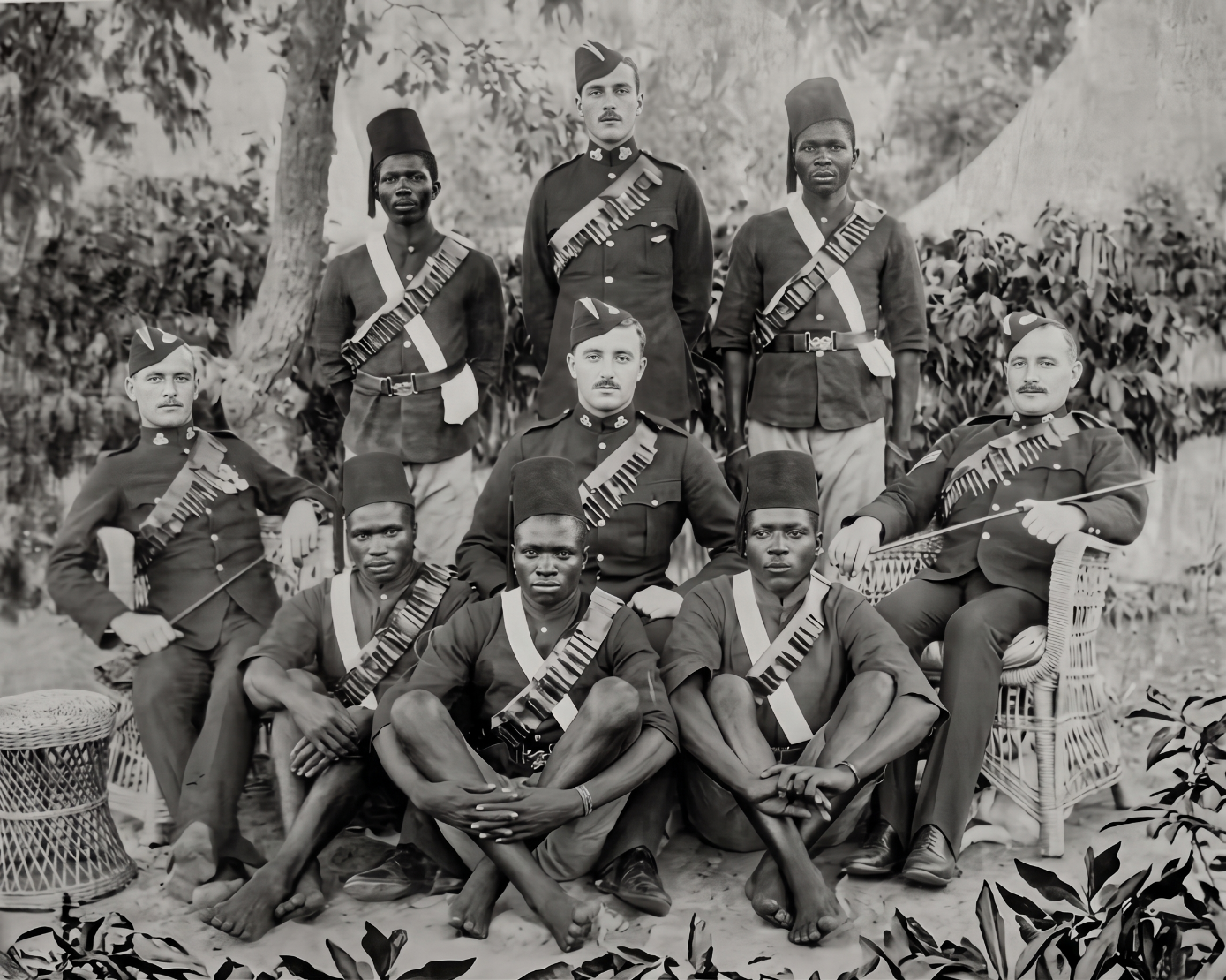
Taken at Victoria Falls in 1908, this group photo of BSAP personnel shows the recent introduction of white-topped caps and collar badges.
The landmark promulgation of BSAP Force Orders of February 16, 1906, proved unpopular with many whites in the country. The orders laid down that the 450 “district native police” appointed in 1903, “Will carry native arms only (knobkerries) and rifles will only be issued for purposes of drill or carrying out armed duties in company with or in charge of a European member.” In addition, 150 “Angoni Native Police” reservists “are required to be trained as part of the military force which might conceivably be called on to protect white settlers against natives in Southern Rhodesia.” They would be issued with Martini-Henry rifles and five rounds for target practice.
What with horse sickness and rinderpest, which had all but eliminated the oxen in the country, the problem of transport away from the railway line pre-occupied Rhodesians. Lieutenant-Colonel J. Flint, an old Indian Army man who had commanded the Mashonaland Division from 1899 until amalgamation with the Matabeleland Division in 1903, came forward with a proposal to import camels. The Administrator took his advice and the first consignment of camels, complete with their Sikh attendants, was introduced to Southern Rhodesia in 1903. These were nine male and eleven female baggage animals, and ten male and four female riding camels.
After a fortnight’s rest they were set to work. Trials were carried out over a 40-mile stretch of country, six miles of which were especially rough and heavy going. Each male was given 600 lbs of mealies and each female 400 lbs to carry, and they were expected to cover 20 to 25 miles a day. As a result of these experiments, the system was adopted whereby some of the camels were used to carry packs over the worst country, when their burdens were transferred to a wagon drawn by a team of eight camels, capable of pulling a load of 8,000 lbs. Although domestic complications ensued as the females came into calf, eight camels proved they could do the work of sixteen oxen and go further and faster.
Colonel Flint also enthusiastically claimed that for riding they were better than the horse: they could carry a month’s rations, bedding and equipment and cover 50 miles a day. A great advantage, of course, was that they could do with less water, although they were fond of it. Camels, it was believed, would feed well off the veld grass and local shrubs and trees, and would prove immune to the diseases playing havoc with other forms of stock. Contrary to popular theory, Colonel Flint insisted that camels are docile and that it is easy to learn to drive and manage them.
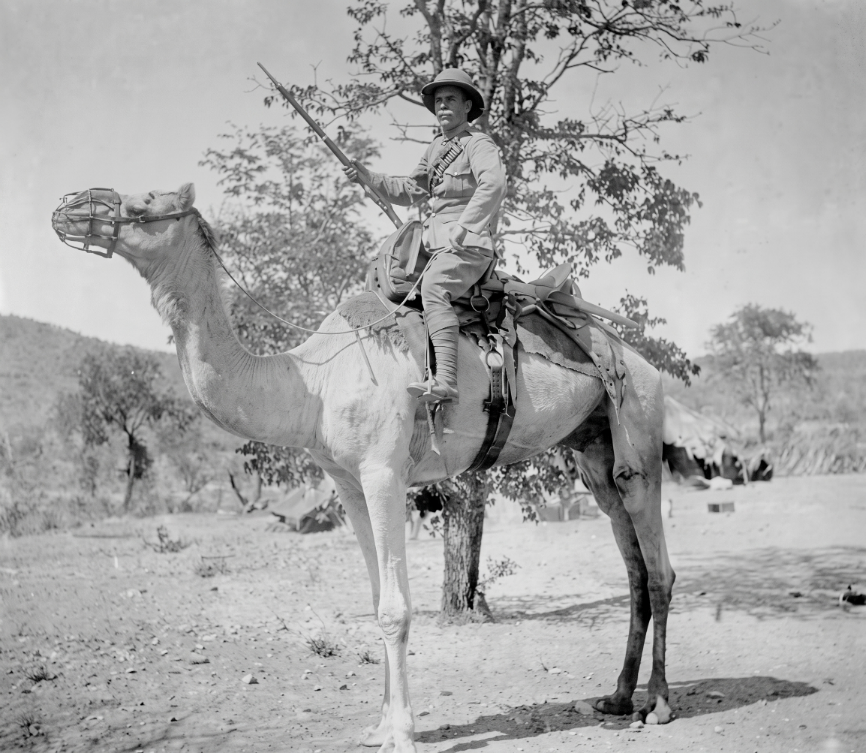
The colonel’s idea, however, never quite came off. One camel died before the end of the year from what was quite a common complaint in Rhodesia in those days, cirrhosis of the liver, and later foot and mouth disease broke out among the others. Although the picture is not clear, this disease perhaps proved their undoing. As late as 1908 camels were quoted as being on offer at £40, rather more than the price of a good horse, but the internal combustion engine was ready to take the place of both, and the camel never became more than a temporary civil servant in this country. There seems to be little reference made to the ultimate fate of the Rhodesian camels, the last record being 1915.
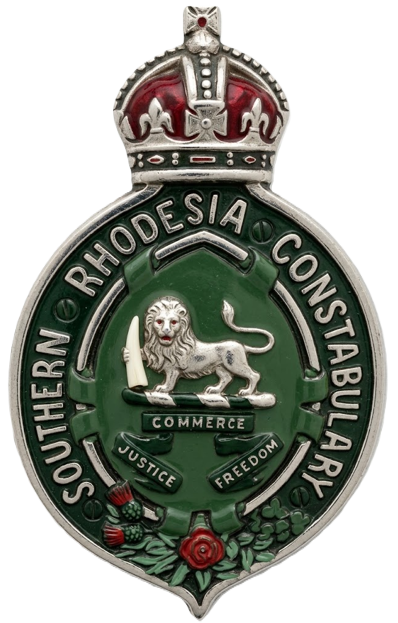
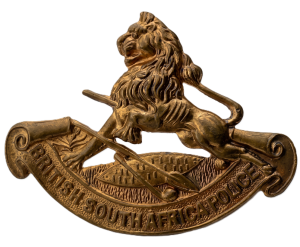
In February 1909 control of the BSAP was transferred from the British High Commissioner in Cape Town to the BSA Company’s administrator in Salisbury, Sir William Henry Milton. During the year, the BSAP started absorbing the town constabularies, titled the Southern Rhodesia Constabulary (badge photo above).
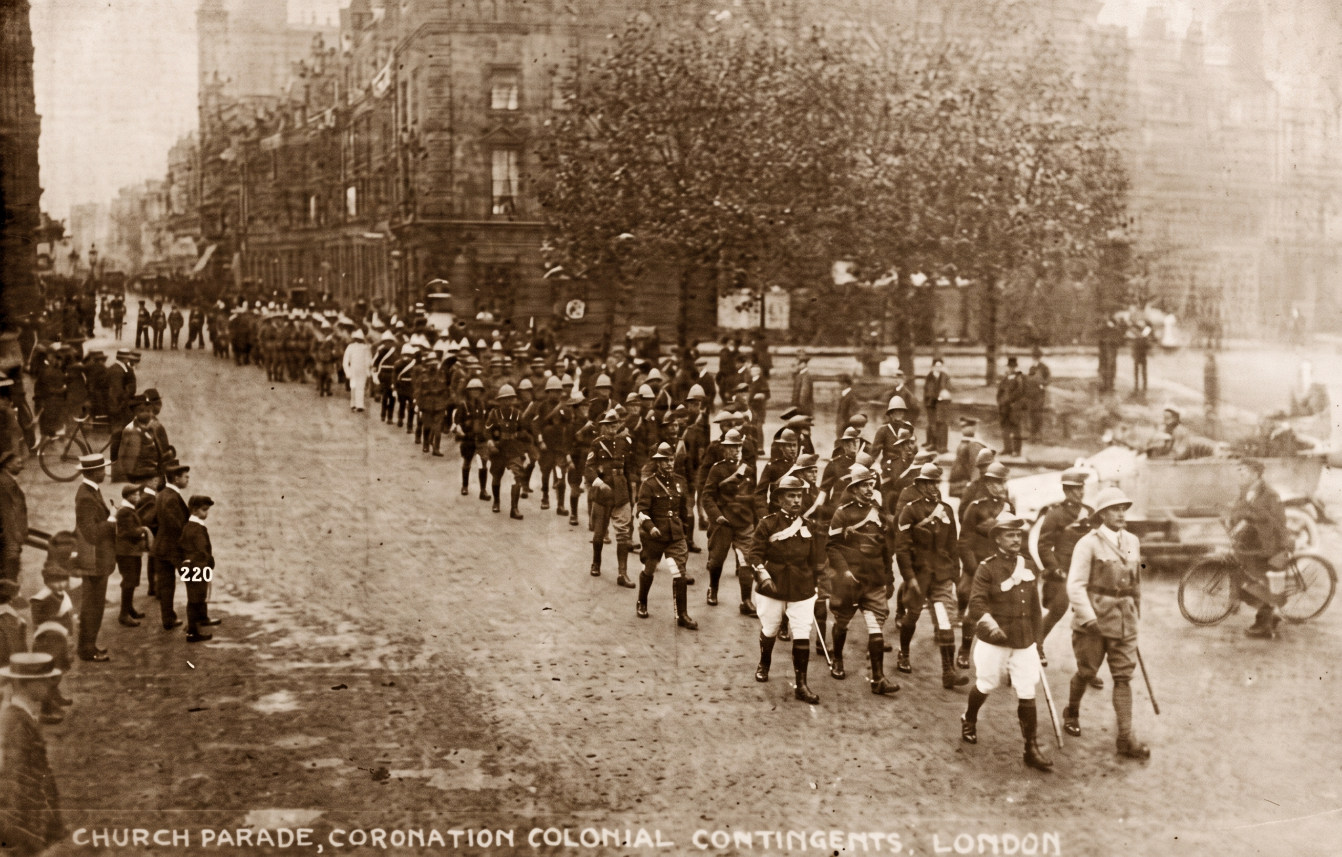
A BSAP contingent represented Southern Rhodesia at the 1911 coronation of King George V.
In June Bodle stepped down from the command of the BSAP and retired to the UK. Major J.H. Fuller was promoted to Lieutenant-Colonel and appointed “Acting Commissioner”. He became the first Commissioner of the amalgamated BSAP, serving in this top leadership role from April 18, 1909, to April 1, 1911. It is noteworthy that the officer commanding the BSAP reverted to the title of Commandant.
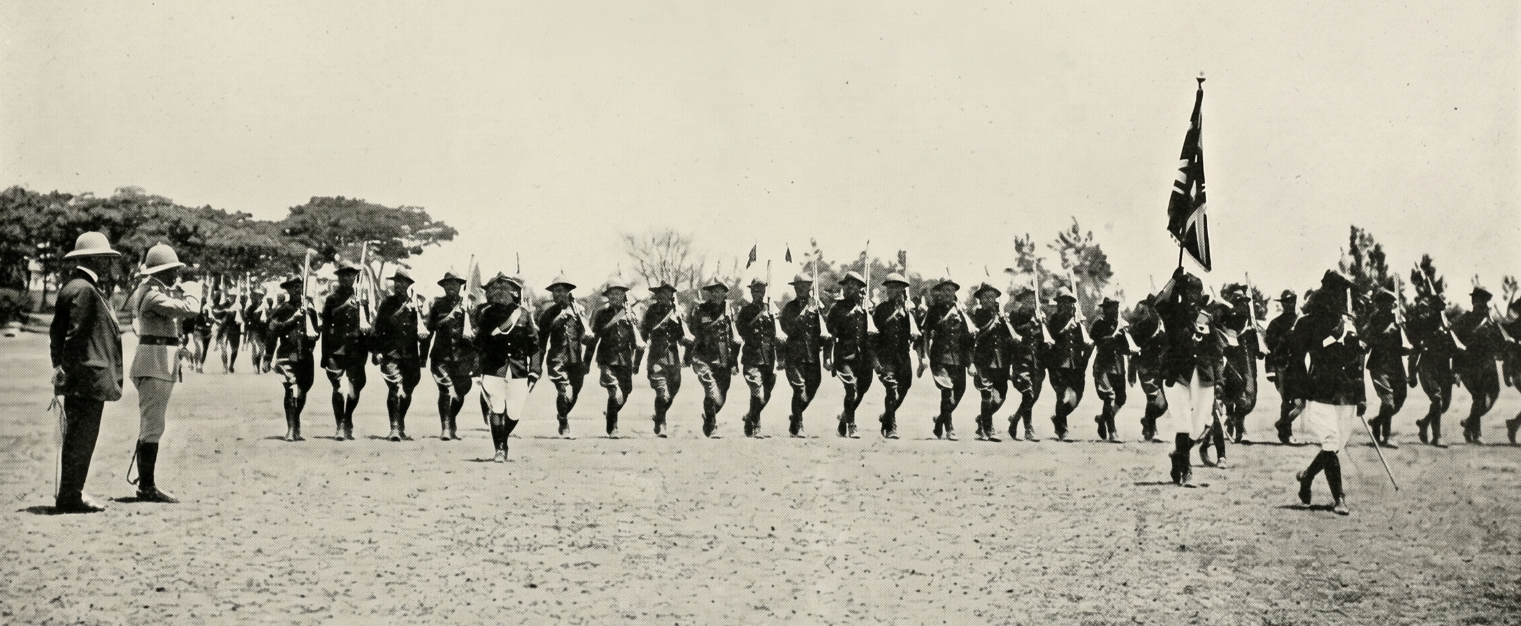
Inspection of the BSAP by the Duke of Connaught, Salisbury, 1910. (Police Review)
At this time a fair number of white BSAP men accepted commissions in the Barotse Native Police in Northwest Rhodesia in what would become part of Northern Rhodesia then Zambia.
A centralised training depot was now established in Salisbury — later famously known as Morris Depot — to enforce strict discipline and rigorous policing conventions, protocols and routines. During this period successive BSAP Commissioners oversaw the introduction of modern criminal investigation tactics, including the formal establishment of a Criminal Investigation Department (CID) and biometric fingerprinting systems. In September 1907, the first BSAP fingerprint bureau was opened in Bulawayo.
Fuller was succeeded by Major Gordon Vallancy Drury, who served until January 28, 1913. After serving with the Royal Marines and the 11th Hussars, with the rank if inspector Drury had transferred from the Botswana Border Police to D Troop, Matabeleland Mounted Police in 1895 and had accompanied Dr Leander Starr Jameson on the infamous Jameson Raid. Subsequently appointed a lieutenant in the BSAP, he participated in the Matabeleland War of 1893 and Matabele Rebellion of 1896. He was then appointed to the command of the Barotse Native Police. He served in the Second Boer War as a captain in No. II Division, Bulawayo, BSAP, in the siege of Mafeking. Despite his experience, however, Drury was not meant for higher command.
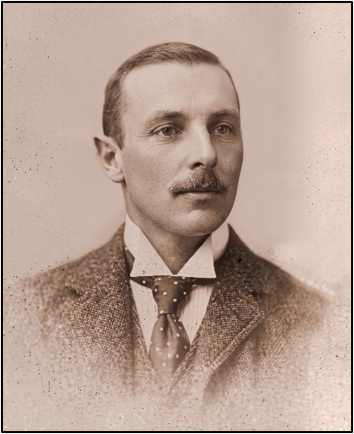
Major Drury.
In 1913 the British Government’s Inspector-General of Overseas Forces, a post created to review and report on the training and efficiency of units of the British Army under the control of the Home Government, reported that the state of the BSAP was “unsatisfactory.” The incumbent, General Ian Hamilton, identified the weakness as stemming from the appointment over the last ten years of three BSAP commanders from serving members, a practice introduced by the Imperial authorities. Hamilton now opted to return to appointing a senior officer brought in from the outside.
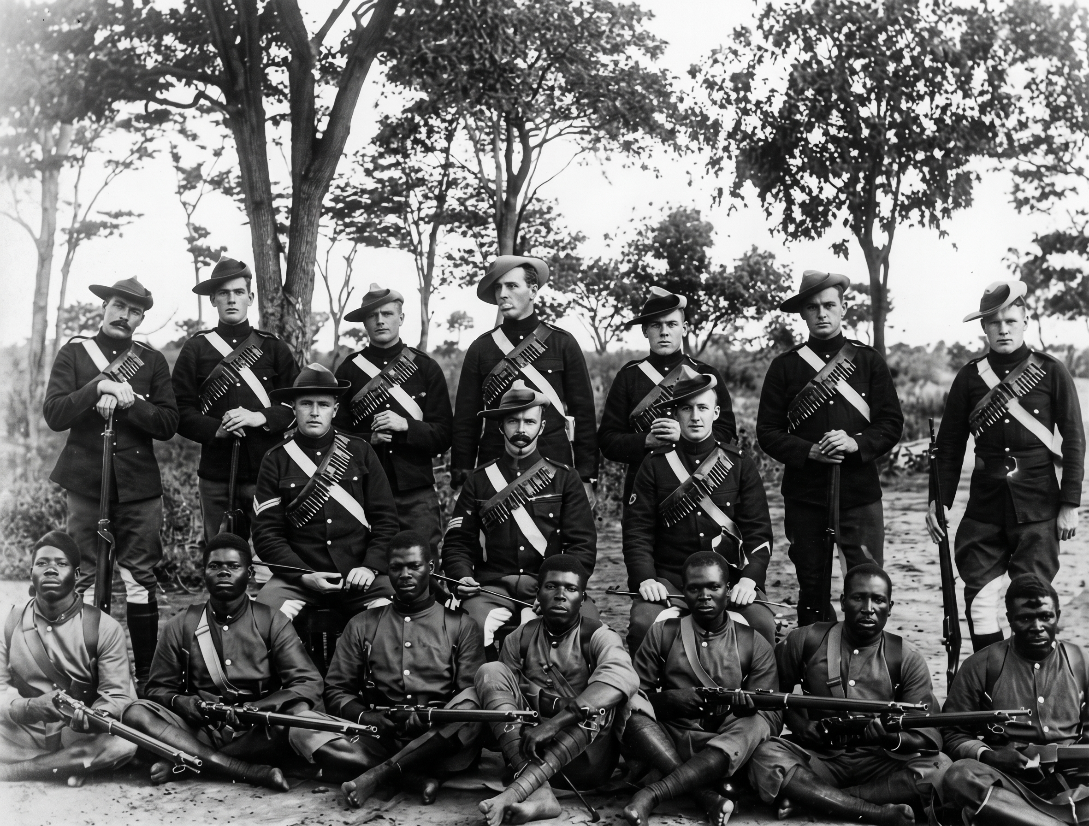
White BSAP NCOs and troopers and armed Angoni Native Police.
This decision was primarily based on Britain accepting that war in Europe was looming and there was a requirement to mobilise colonial forces, particularly in Africa, to defend British interests from German colonial expansion. Until the High Commissioner declares the BSAP to be “on active service”, the force would remain under the control of the BSA Company.
Therefore, only if Drury’s successor was an employee of the company could he legitimately be responsible for the force’s command and training before an active service declaration was made. But the new BSAP Commissioner would, in the event of war, also take on command of all Southern Rhodesian military forces, including the Rhodesia Regiment and the Southern Rhodesia Volunteers, and the forces in Northern Rhodesia. The man selected for the job was Major-General Alfred Hamilton Mackenzie Edwards.
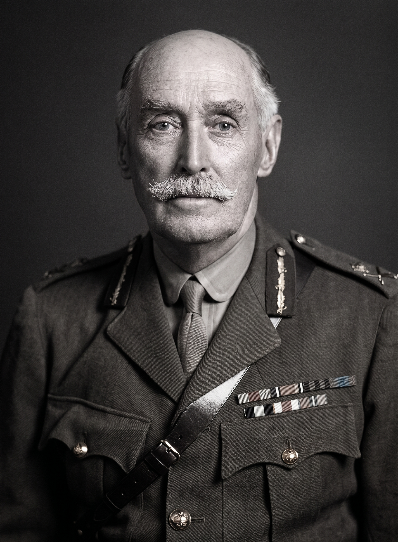
General Edwards.
Edwards was commissioned into the Seaforth Highlanders in 1881 before transferring to the 1st Dragoon Guards Regiment (ex 3rd Battalion Seaforth Highlanders). He served in Hazara in 1888 and was in the Imperial Light Horse during the Second Boer War, taking part in the relief of Mafeking alongside elements of the BSAP. He was promoted to Colonel in 1905, and he was at one time Military Secretary to the Viceroy of India, Assistant Adjutant-General, Transvaal Volunteers, and also commanded the A Division of the South African Constabulary. He retired from the British Army in May 1907. He was Chief Constable of the London Metropolitan Police before his appointment as Commissioner of the BSAP and soon thereafter as Commandant-General of Rhodesian Forces.
Edwards’s designs for the BSAP were swift and often radical. He informed the BSA Company directors that “The force has suffered in the past from dual control,” inferring that the Administrator was meddling with the force’s senior command. Edwards was damning as he continued,
The Administrator has had no confidence in the Assistant Commissioner [Drury]. Consequently, the Acting Commissioner had lost heart and had no confidence in himself and the force had no acknowledged head to who it could appeal for support or instruction. When I took over the state of affairs appeared chaotic. I could approach no subject without detecting ignorance and want of supervision. Those who had their heart in the Corps were in the last stages of despondency while many, I fear, owing to lack of support, lapsed into a state bordering on degeneracy.
[Peter Gibbs & Hugh Phillips, The History of the British South Africa Police 1889-1980 (Something of Value Pty Ltd, Melbourne, 2000)]
BSAP Victoria Falls, c. 1908.
Edwards immediately expanded recruitment criteria, which was only attracting former public-school boys. With a strength of only 516 white men, for the previous three years the average annual wastage had been 135, mainly from the rank and file. Colonel Bodle was later appointed recruiting officer in England, where he would attract young men outside of the elite public-school catchment.
On May 26, 1913, only three months after taking office, Edwards introduced a far-reaching reorganisation of the BSAP, abolishing the Troop concept and introducing what he referred to as a district structure of policing. For Edwards, the biggest flaw was the eleven national Troop specified operational areas did not match those of the eight legally delineated magisterial districts covering Southern Rhodesia: Salisbury, Umtali, Hartley, Charter, Victoria, Gwelo, Bulawayo and Gwanda.
With the objective of reducing the BSAP’s military profile and creating a civil law-enforcement authority that dovetailed with the magistracy, Edwards proposed:
- each of the 8 magisterial districts will have a responsible police District Superintendent stationed at district headquarters;
- there would be 25 sub-districts, corresponding to assistant magisterial districts each with an Assistant Superintendent in charge who reports to the District Superintendent;
- sub-districts would be divided into sections (42 posts and detachments) and sections into patrol areas, each commanded by a Sub-Inspector, NCO or Trooper;
- the rank of Chief Inspector, second-in-charge to the Commandant (Commissioner), would be retitled Assistant Commissioner;
- Inspectors would become the 8 District Superintendents, and the 16 Sub-Inspectors would be titled Assistant District Superintendents;
- Warrant Officers would become Inspectors and Troop Sergeant Majors and First Sergeants retitled Sub-Inspectors;
- On war service mobilisation an Assistant Commissioner would take on the rank of Major, a District Superintendent a Captain and an Assistant District Superintendent a Lieutenant.
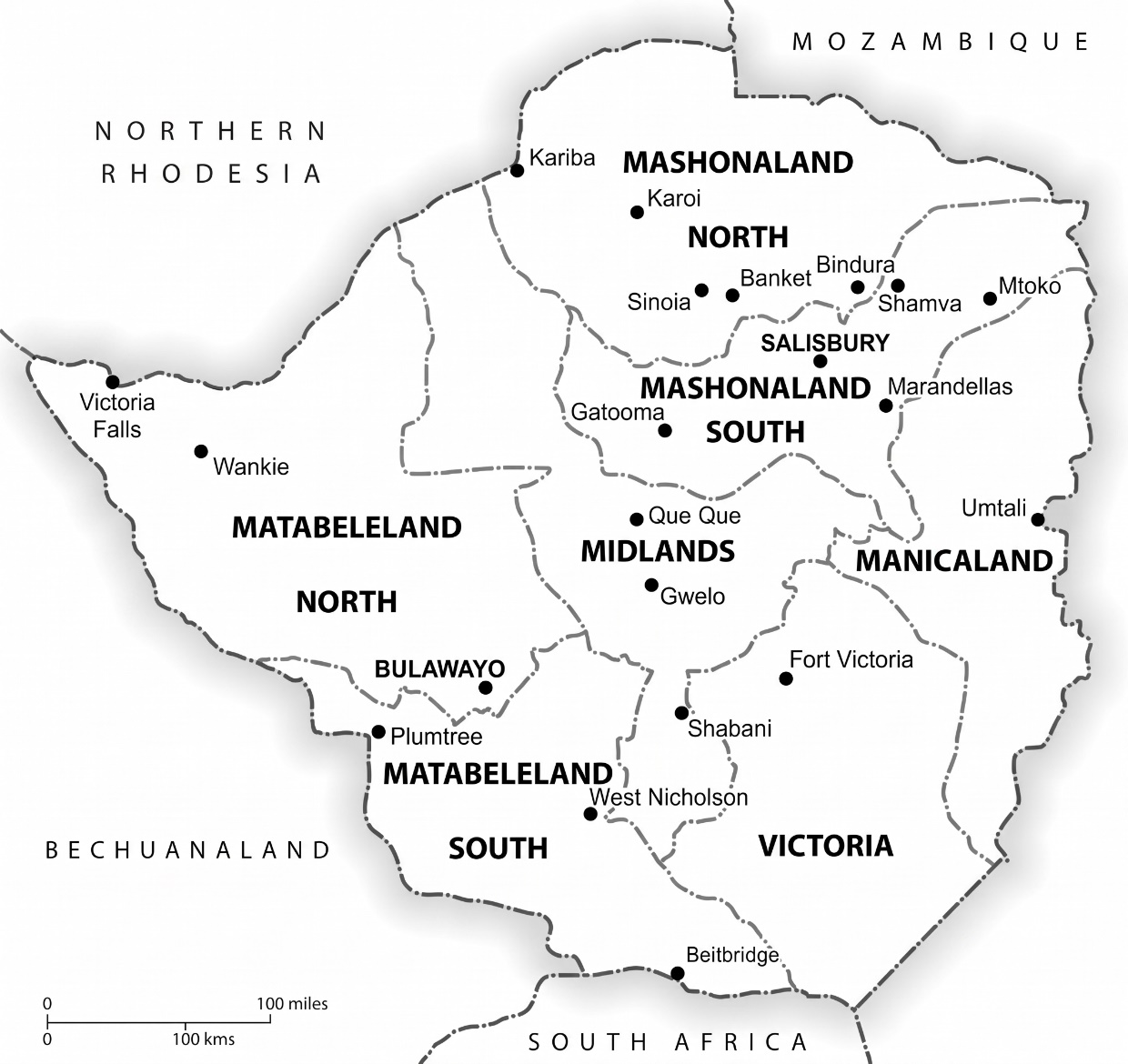
Southern Rhodesia.
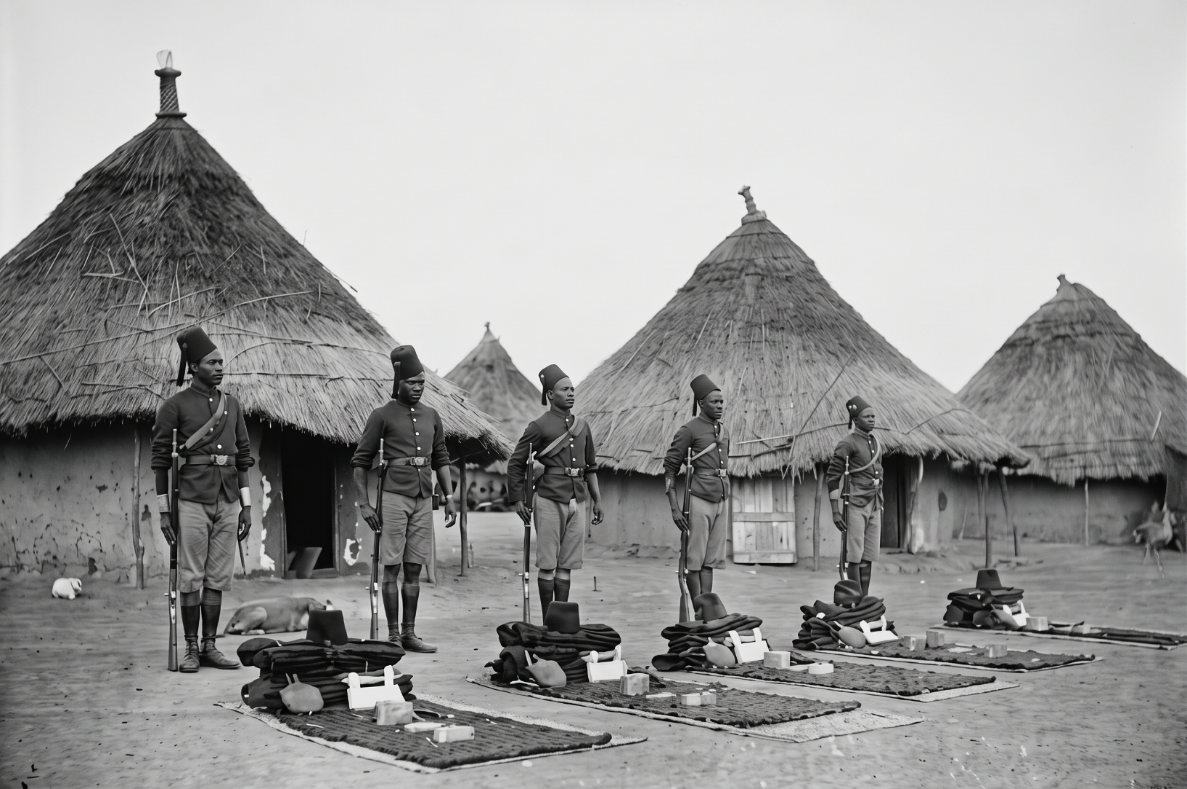
BSAP “Native” Police on inspection parade, c. 1909.
In August Edwards introduced the Occurrence Book to be kept at every station, with “every occurrence, no matter how trivial” to be entered. However, a setback for the ambitious new Commissioner was the Administrator’s rejection of his request for 50 more horses which he deemed very necessary to maintain effective rural patrol cover. Approval was granted for the purchase of two motorcycles, but there are no records that these ever went into BSAP service at that time.
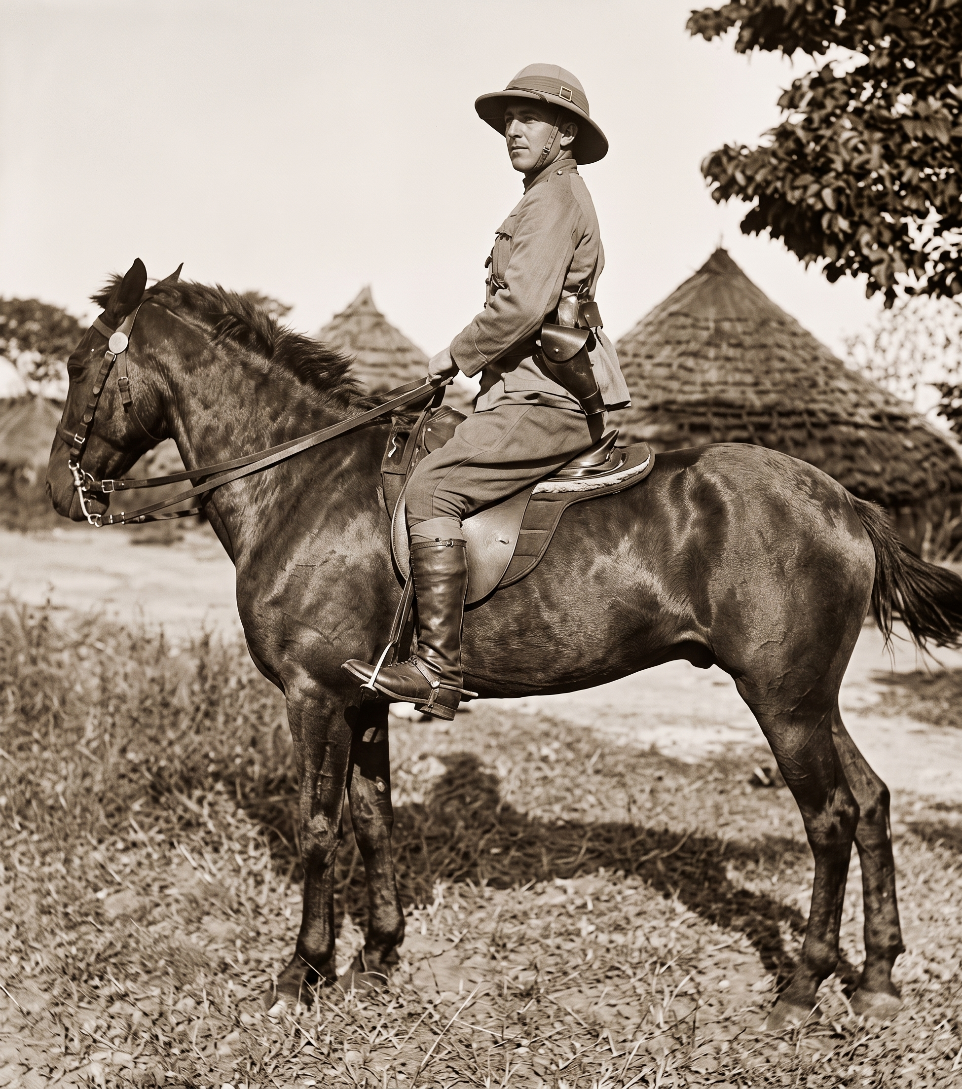
The horse on patrol or for ceremonial duties remained integral throughout its history until the regiment’s disbandment in 1980.
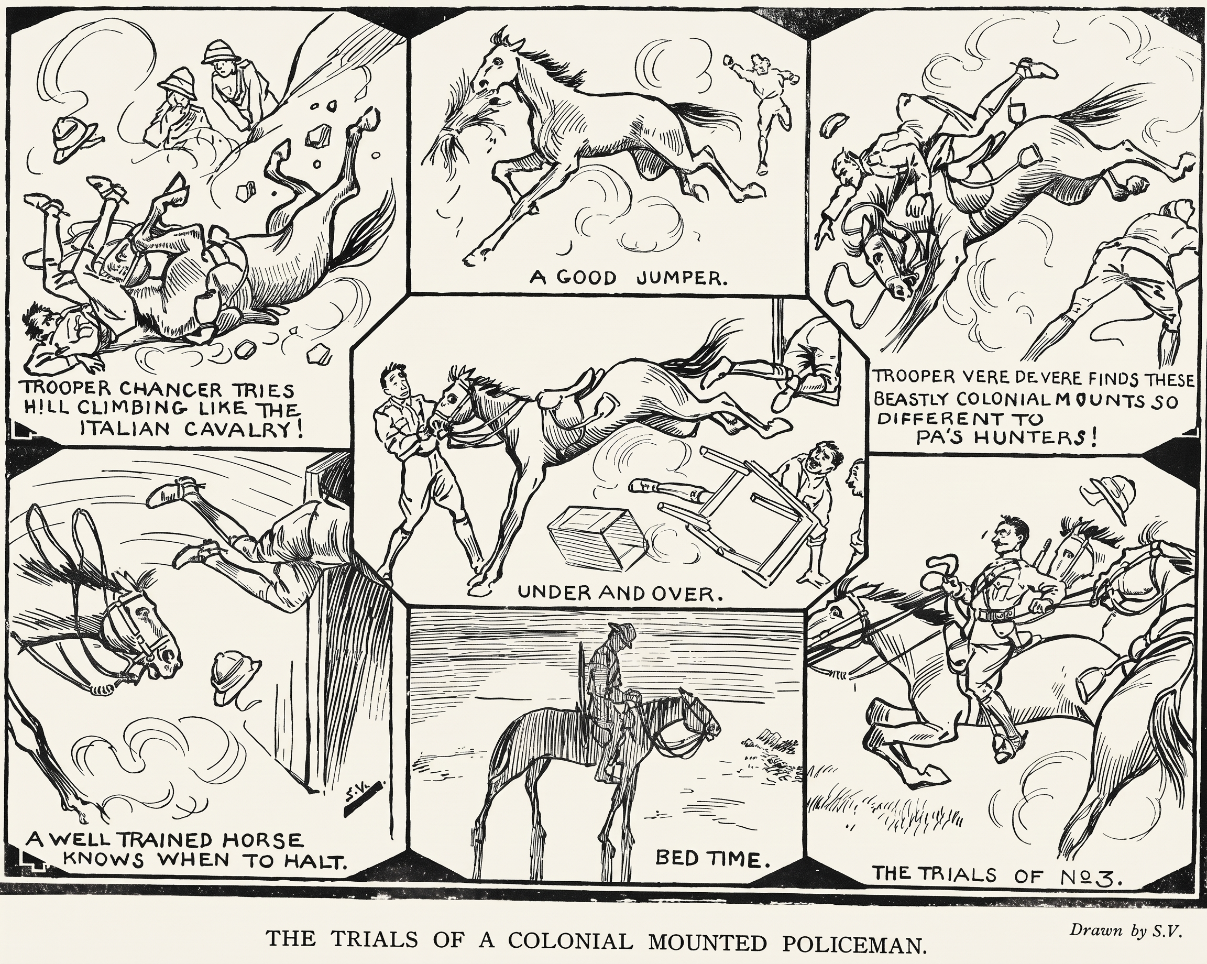
Meanwhile out in the districts several District Superintendents voiced their concern about an influx of “Dutch families from the Transvaal.” Victoria District reported, “They seem to have nothing but their animals, wagons, carts and some food”, while Umtali said they did not have the means to purchase land to settle on. Bulawayo said the presence of 15 wagons and 84 “Dutch immigrants” between West Nicholson and Tuli was undesirable.
The more pragmatic Administrator responded, “I doubt if we can keep these people out or eject those already in.” These Afrikaner migrants went on to successfully integrate themselves as worthy members of the Rhodesian community, settling in towns such as Enkeldoorn, Melsetter, Rusape and Matabeleland.
When World War One broke out on August 4, 1914, the BSAP was still considered to be Southern Rhodesia’s first line of defence. As intended at the time of Edwards’s appointment as Commissioner, when the High Commissioner placed the BSAP on active serve Edwards assumed the role of Commandant-General of all armed forces in Southern and Northern Rhodesia. Major Algernon Essex Capell, who had been sent from England the previous year, became second in command of the BSAP.
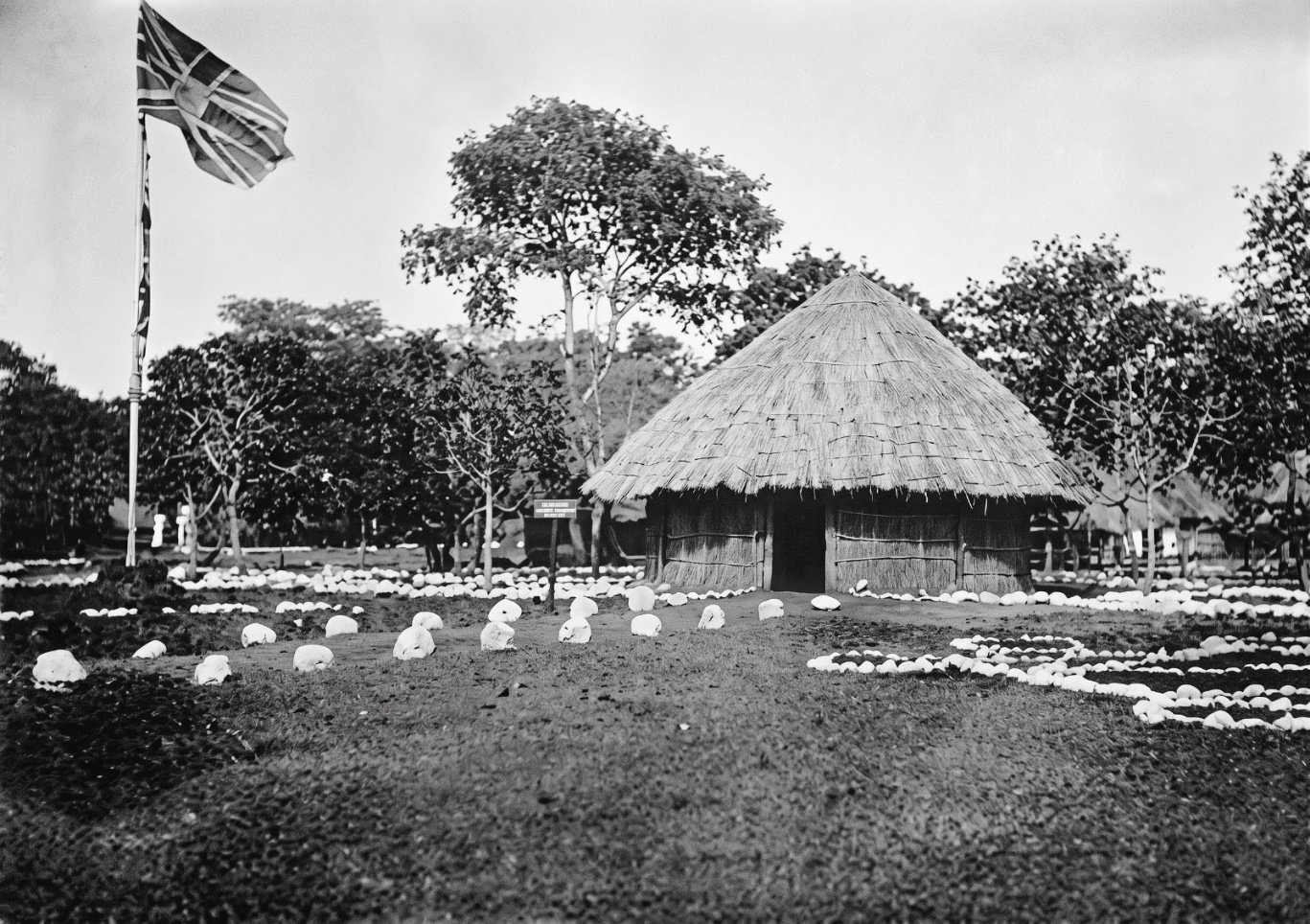
As early as July that year, Edwards initiated the formation of “Mobile Troops” in the BSAP, as “precautionary measures in anticipation of war with Germany.” The strength at the Victoria Falls post was increased to one officer, 10 other ranks, a machine-gun detachment and 25-armed black police from the ranks of the Angoni reserves. In Bulawayo, the 80-strong No. 4 Mobile Troop, commanded by Lieutenant George Parson, was mobilised for deployment to Victoria Falls. Arriving there on August 10, No. 4 Mobile Troop was instructed to assist in securing the contiguous Caprivi Zipfel of German South West Africa.
In command of BSAP forces at Victoria Falls was Major Algernon Capell, future commanding officer of 2nd Rhodesia Regiment during the East Africa campaign. But after only two days, Bulawayo ordered Parson’s troop to return as it had been decided that the 100-strong No. 1 Mobile Troop was strong enough to capture the German town of Schuckmannsburg in the Caprivi. The village, in fact, fell without any resistance from the Germans.
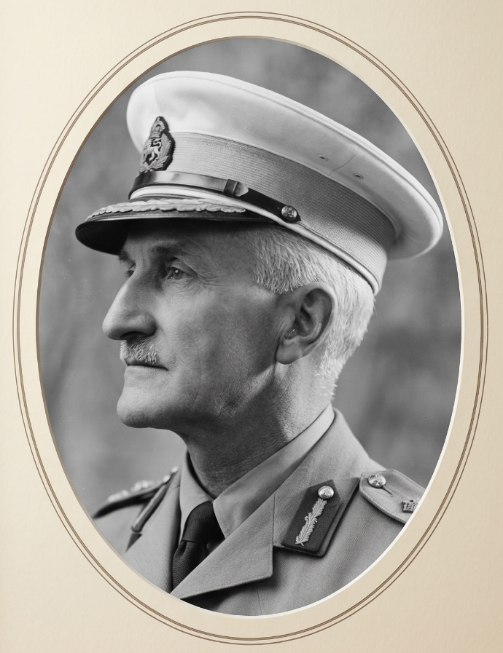
In later years: Colonel Capell (above)and below Colonel Parson.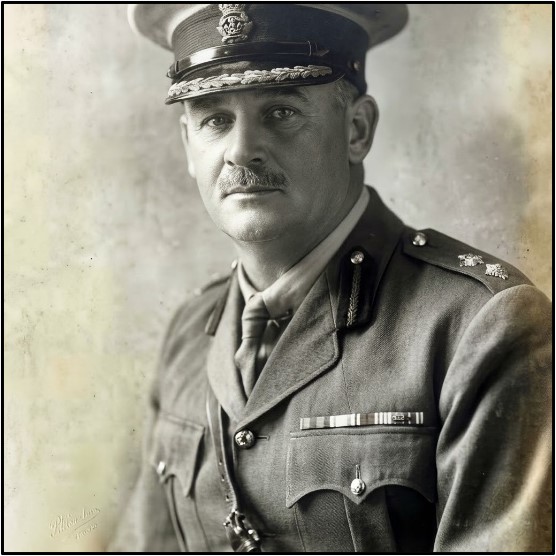
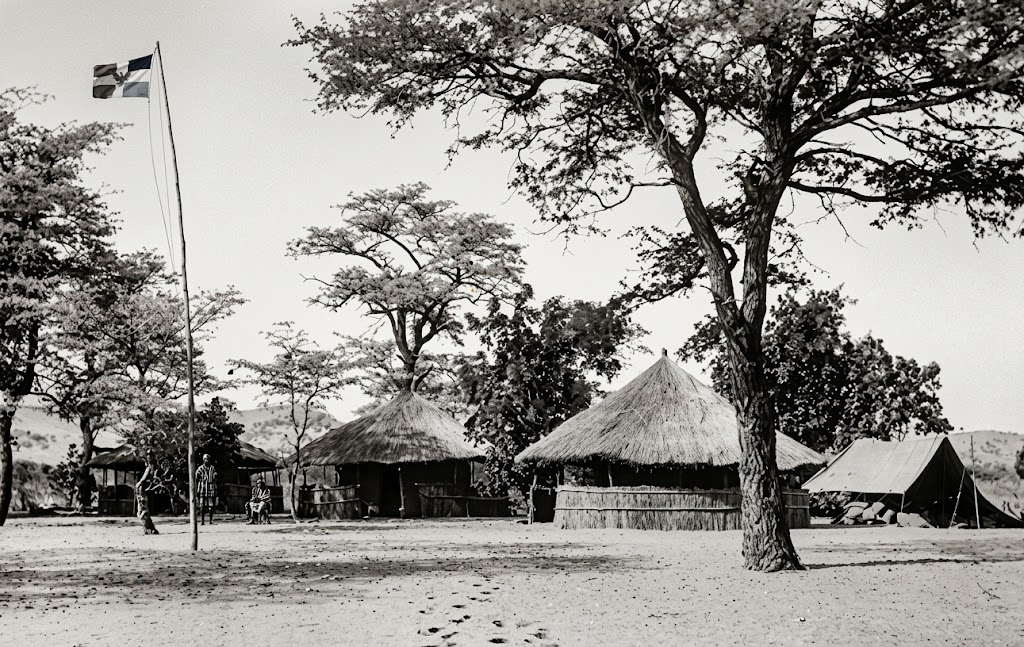
Schuckmannsburg. (Rainer Buchmann)
Meanwhile, to the northeast the small forces of Northern Rhodesia, another BSACo-administered territory, had, since September 1914, been fighting defiantly, with the assistance of Belgian Congolese troops, against German aggression. By August 1915 the Northern Rhodesia border with German East Africa (Tanzania), known to the British living south of it as the Northern Border, urgently needed reinforcing due to the impending withdrawal of the Belgian troops.
On August 12, the High Commissioner endorsed the principle of deploying two BSAP infantry companies to north-eastern Northern Rhodesia. Within a week, 137 permanent members of the BSAP had volunteered for enlistment in these companies. However, concern that such an offtake would weaken the force’s civic policing responsibilities, the BSAP restricted the number of volunteers to two per troop.
Each company was to have an establishment of 125 men, and be a self-sufficient unit, including artillery and medical staff. Both companies would include a small number of BSAP, the other recruits being reservists who transferred from the Southern Rhodesia Volunteers, some men from 1st Rhodesia Regiment with recent service in German South West Africa, and men recruited from the civilian population. The recruits were enlisted under the Police Ordinance for the duration of hostilities. The two units were titled A and B Special Reserve Companies, British South Africa Police.
As the companies were needed on the northern border as soon as possible, training consisted of drill and a shooting test. The men received five shillings pay per day, five times more than the pay of recruits in the British Army. Uniforms comprised khaki shorts and jacket, with a BSAP shoulder flash in blue cotton the only insignia. Mounted infantry-pattern boots and dark brown puttees protected feet and lower legs. Kit provided included cavalry water bottles and cloaks, mess tins, haversacks and two bandoliers, one of which could be worn as a belt. Later all men received British 1908–pattern webbing equipment with ammunition pouches. Various patterns of sun helmet were issued. The rifle was the standard BSAP issue, the SMLE (Short Magazine Lee Enfield) No. 1, Mark III, with an 18-inch bayonet.
A Company, commanded by Jameson Raid veteran Major John Seager Ingham, BSAP, left Salisbury by train for Victoria Falls on August 17, 1915. The force was made up of two officers, a sergeant-major and 142 other ranks. At Bulawayo, Major Ronald Ernest Murray, BSAP, met the train in Bulawayo, yet unaware that in the near future he would command both companies.
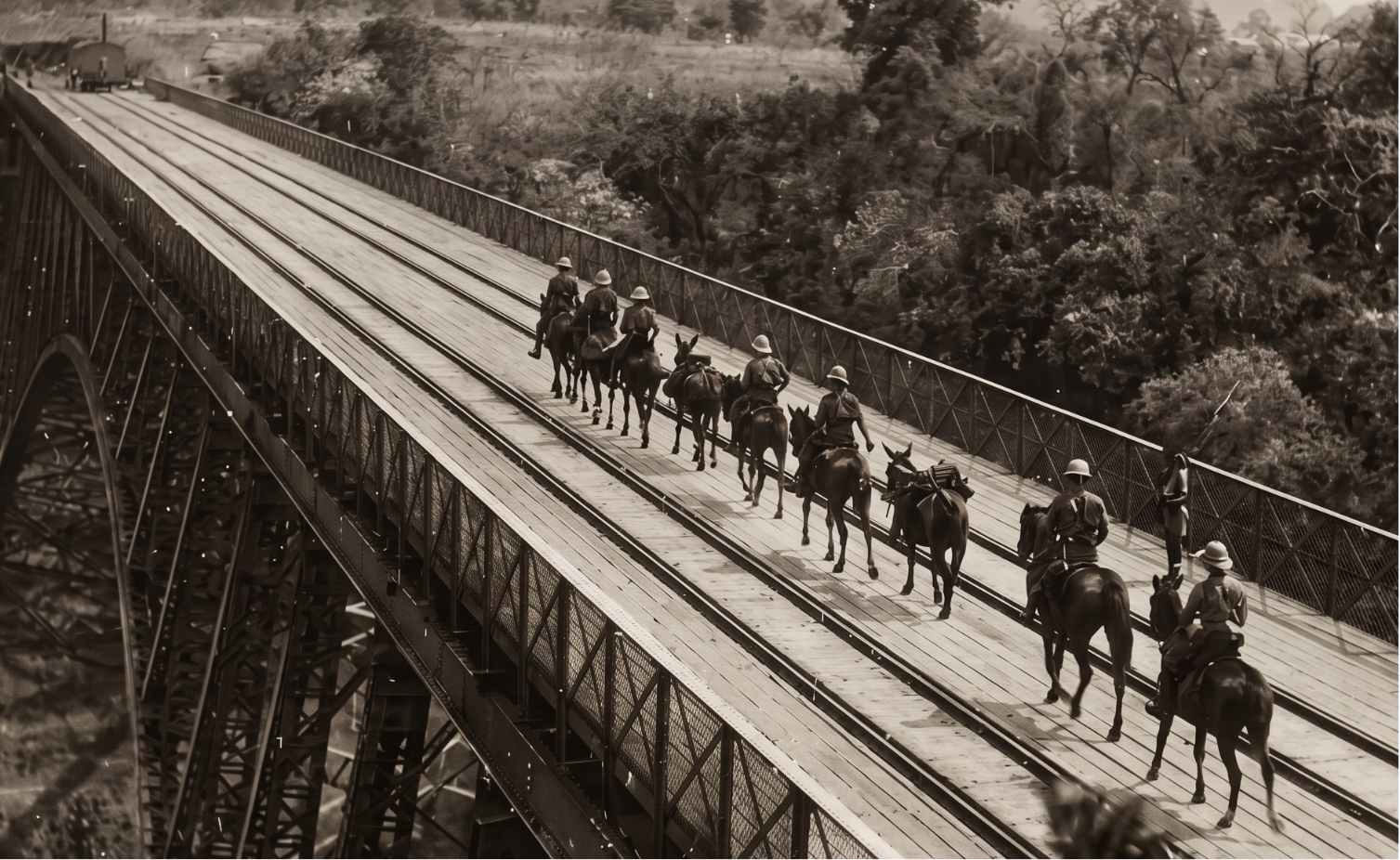
A BSAP Maxim machine gun section crosses the Victoria Falls bridge into Northern Rhodesia. (NAZ)
Now with a strength of 165, the company was split into two halves; Parson and Stephen each commanding a half-company. They travelled together by train to Broken Hill, where Ingham and his men detrained and set off on foot for the arduous march to Abercorn on the border with German East Africa (see map below).
Parson and his half-company continued on with the train to Ndola on the Belgian Congo border. From there they marched cross-country, passing through Fort Rosebery to the west of Lake Bangweulu, and then in a north-easterly direction to Abercorn. Parson arrived at Abercorn on October 4, a day after Ingham’s arrival and six weeks after leaving Livingstone.
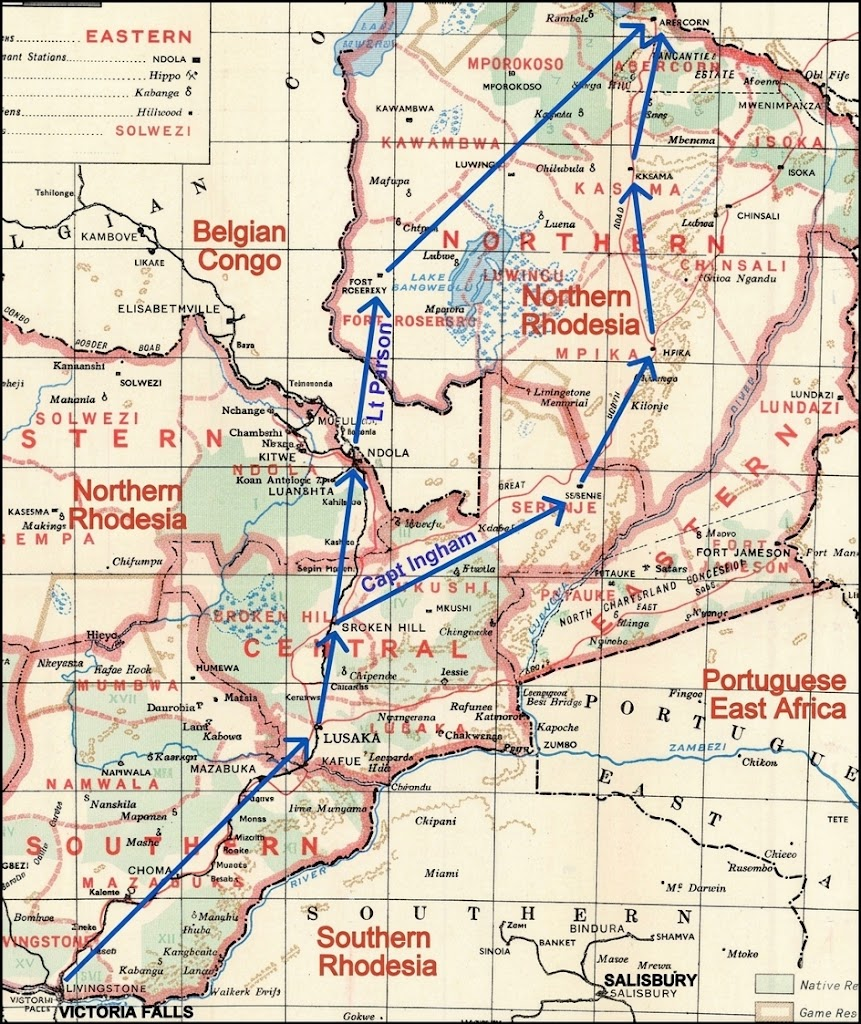
Parson and his half-company continued on with the train to Ndola on the Belgian Congo border. From there they marched cross-country, passing through Fort Rosebery to the west of Lake Bangweulu, and then in a north-easterly direction to Abercorn. Parson arrived at Abercorn on October 4, a day after Ingham’s arrival and six weeks after leaving Livingstone.
On arrival at Abercorn, the two exhausted half-company men were massively disappointed with the conditions there. It was the rainy season, but whilst there were barbed-wire and trench defences, there was no accommodation. In the absence of local labour, the men had to set aside their military duties to build mud huts. Accustomed to African “servants” performing such manual-labour tasks, many grumbled at having to clear a large area of grass and trees for a parade ground.
Adding to their woes was the poor quality and selection of food. On the few occasions that meat was available, it was flyblown. For lunch one day, beef in such a state was served, resulting in the men objecting by having one man from each section standing up with his plate of “food” in his hand, refusing to eat the meat in protest. Ingham and Surgeon-Captain Kinghorn immediately addressed the situation.
Bully-beef rations were increased to one and a third tins a day, and a whole tin of jam instead of only half a tin. The most popular improvement was whisky, at the rate of a bottle per 12 men instead of 15. Slaughter cattle would be sourced and brick ovens constructed. A BSAP 12.5-pounder quick-firing Maxim-Nordenfelt field gun and detachment joined A Company later, while a 7-pounder muzzle-loading mountain gun, named “May Jackson” after a Salisbury barmaid, moved to Abercorn after seeing action during an enemy siege of the post at Saisi.
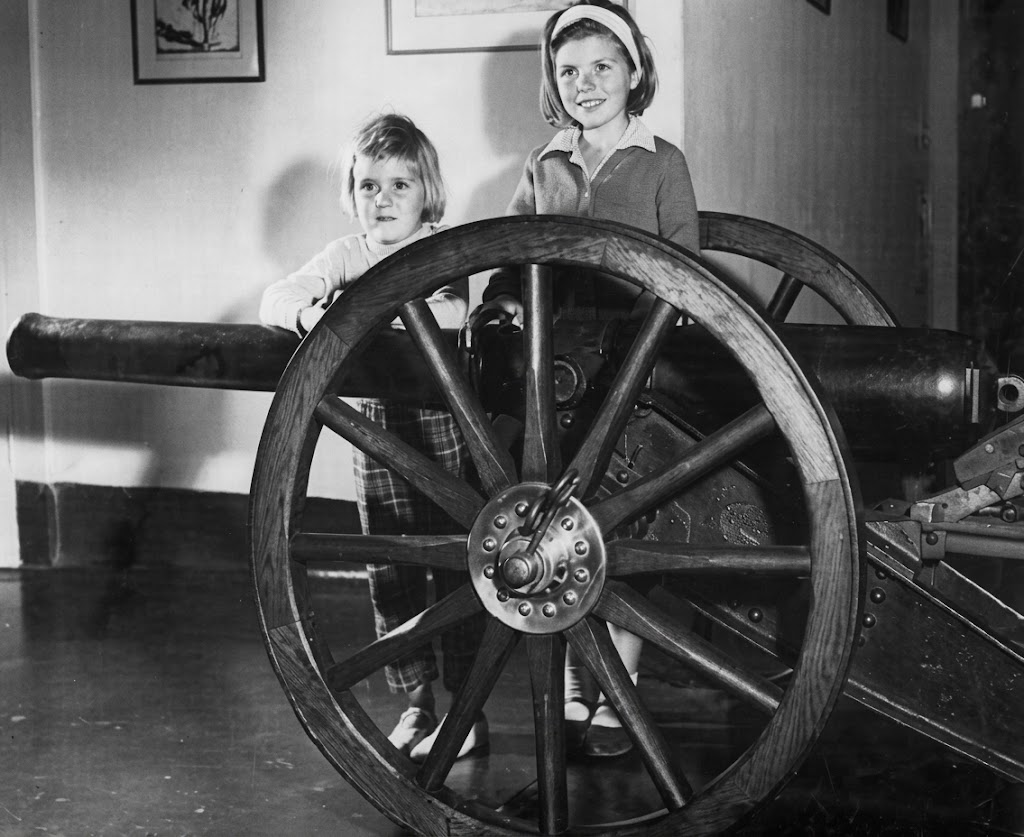
“May Jackson”, the 2.5-inch Armstrong Mountain Gun on display in the Police and Army Museum, Lusaka, Zambia, in the early 1960s. The whereabouts of this gun is now unknown.
(AngloBoerWar.com)
B Company, commanded by erstwhile Bulawayo mayor (1904-06), Major Walter Baxendale, Southern Rhodesia Volunteers (KIA October 23, 1916), took a completely different and less arduous route. They travelled by train to the Indian Ocean port of Beira in Portuguese East Africa (now Mozambique), and then travelled by ship, river steamer, rail, road and lake steamer up to Karonga near the head of Lake Nyasa. From there they marched to Fife on the Northern Rhodesian border, arriving there on October 18. Major Murray accompanied the unit. At Abercorn, A Company settled into a regular routine of long marches, musketry and drill, but disappointment grew at the absence of any Germans with whom to do battle.
In November 1915, former 1st King’s Royal Rifle Corps commander, Brigadier-General Edward Northey, was appointed to command all forces on the Nyasaland/Northern Rhodesia border. Northey, his command titled Norforce, drew up plans for an advance into German territory. His force strength included elements of the 1st and 2nd South African Rifles, Nyasaland King’s African Rifles, Northern Rhodesia Police (NRP) and the BSAP.
On February 18, 1916, Murray was given command of the Rhodesian Northern Border forces and promoted to lieutenant-colonel. In April, together with four companies of the NRP and B Company, BSAP, were moved from Fife to join A Company at Abercorn. This meant Murray now had all Abercorn forces under his immediate command: the two BSAP Service Companies and those of the NRP. Officially, it was titled the Southern Rhodesia Column, generally referred to as “Murray’s Column.”
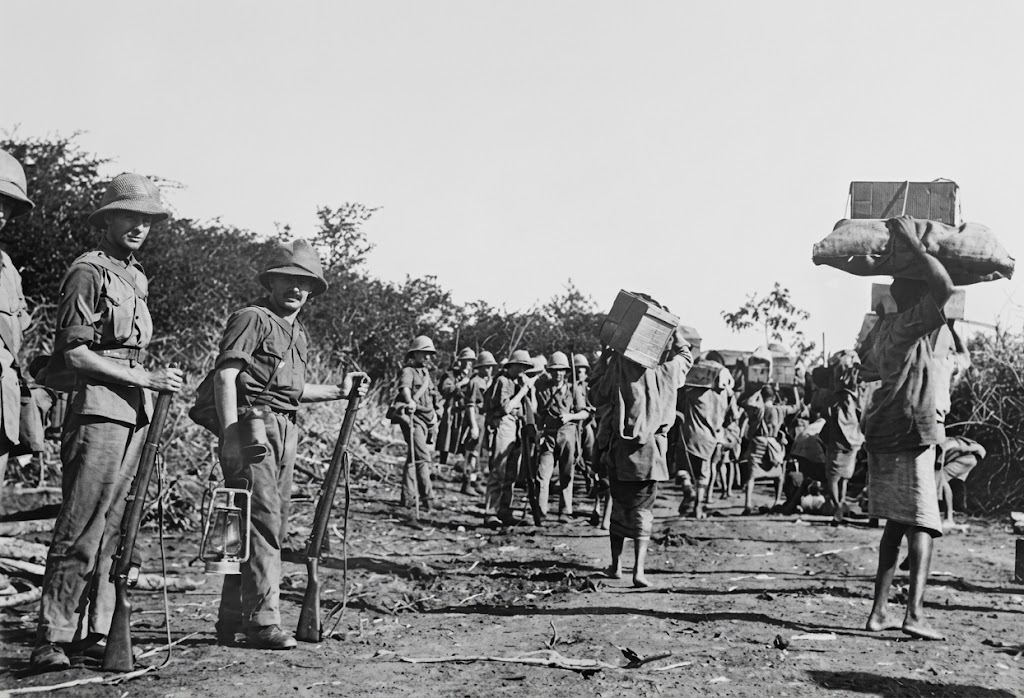
Southern Rhodesian column on the march. (IWM)
In the last week of May 1916 Northey had four columns poised to attack three fortified enemy locations just across the border in German East Africa: Ipiana, Mwembe and Namema. Murray’s Column was the westernmost one and was tasked with attacking the German position at Namema, 26 miles northeast of Abercorn. The stronghold consisted of two forts, 35 yards apart, on commanding ground. Murray’s first task was to be an attack on the German post at Namema.
The position was manned by the German 29th Field Company with an estimated strength of 200 Schutztruppe (colonial troops) and 30 white officers and non-commissioned officers. Well-constructed underground stores ensured that British artillery fire could not destroy ammunition, food and water stocks. Murray divided his column into four sub-units:
A Force under Captain Charles Henry Fair, NRP: A Company, NRP, and half of A Company, BSAP, with two machine guns.
B Force under Captain George Parson, BSAP: D Company, NRP, and half of A Company, BSAP, with two machine guns.
C Force under Captain Harry Clement Ingles, NRP: C Company, NRP, and half B Company, BSAP, with two machine guns.
Reserve under Captain F.S. James, NRP: half B Company NRP, a section of B Company BSAP, with two machine guns, the 12-pounder BSAP artillery gun and a section of two 75mm mountain guns manned by the 5th Battery, South African Mounted Rifles.
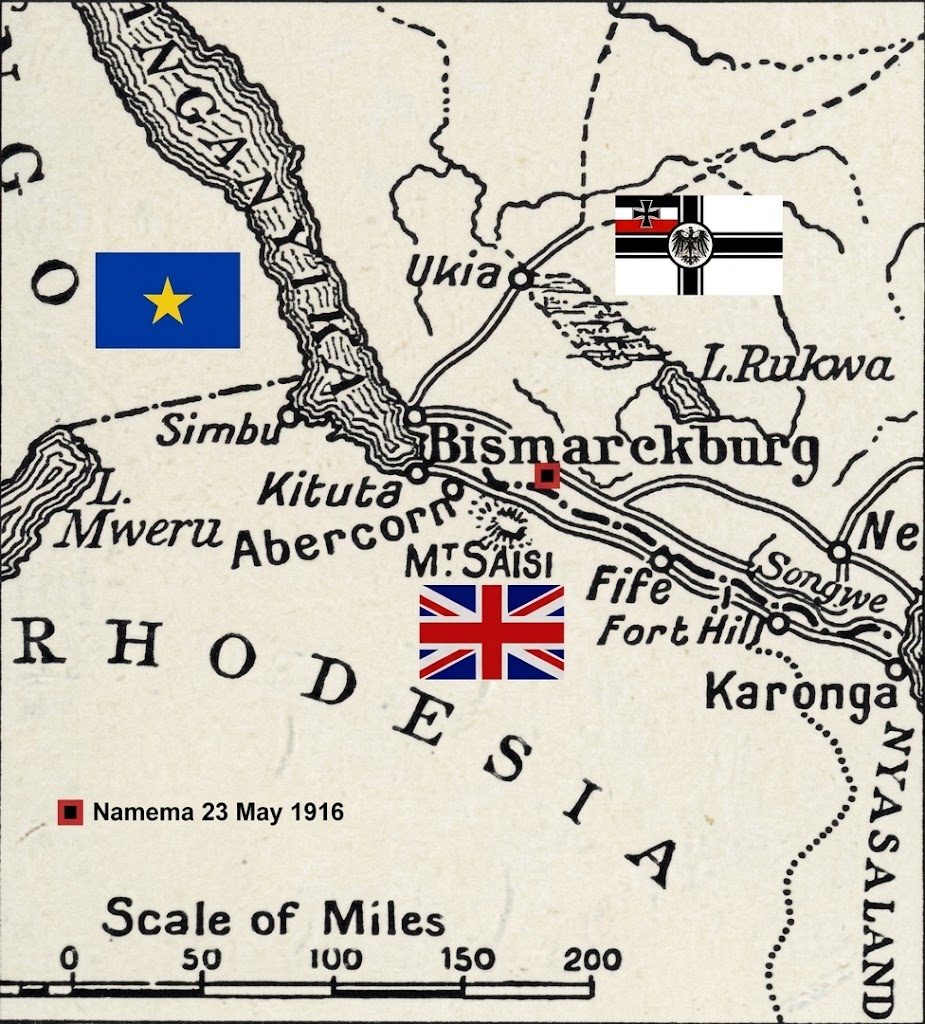
(The Times History of the War/Gerry van Tonder)
When Murray organised his column for the advance on Namema (map above), the 7-pounder Armstrong mountain screw gun “May Jackson”, mentioned earlier, was to be left at Abercorn. However, Captain Langham later claimed to have seen “May Jackson” in action at Namema. The gun may well have been brought up between May 23 and June 2, 1916.
Seven-pounders (perhaps the pre-1880 pattern) came to Rhodesia with the Pioneer Column in 1890 and remained in the British South Africa Company’s armoury, seeing action in the Matabele War of 1893. Two of these, together with a 12.5-pounder, were lost in the Jameson Raid. They were recovered by British troops at Rustenburg on June 14, 1900, and four days later at Klip Kop. According to War Office records both guns were, “Handed over to the B.S.A.P.” Up until the 1960s “May Jackson” was on display in the Police and Army Museum, Lusaka, Zambia.
Notwithstanding the uncertainty about “May Jackson” being deployed against Namema, only a 12-pounder and two 75mm mountain guns were to accompany the Reserve Force. The 12-pounder was a British naval gun fitted to a bespoke field carriages in the Salt River railway workshops, Cape Town (photo below).
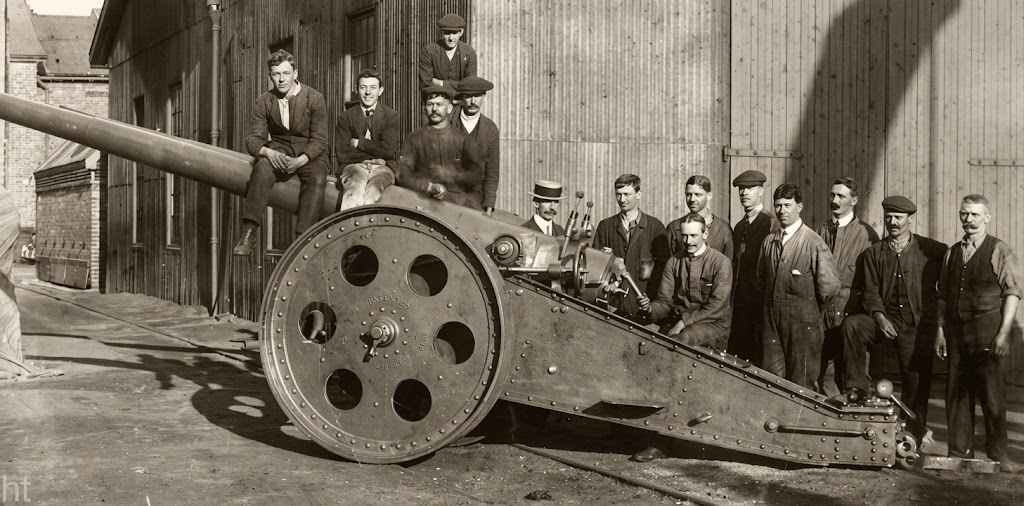
(HiltonT)
The 75mm guns were newly arrived modern Krupp Gebirgskanone-13, breech-loading howitzers (photo below) captured in German South West Africa and manned by 5th Battery, South African Mounted Rifles.
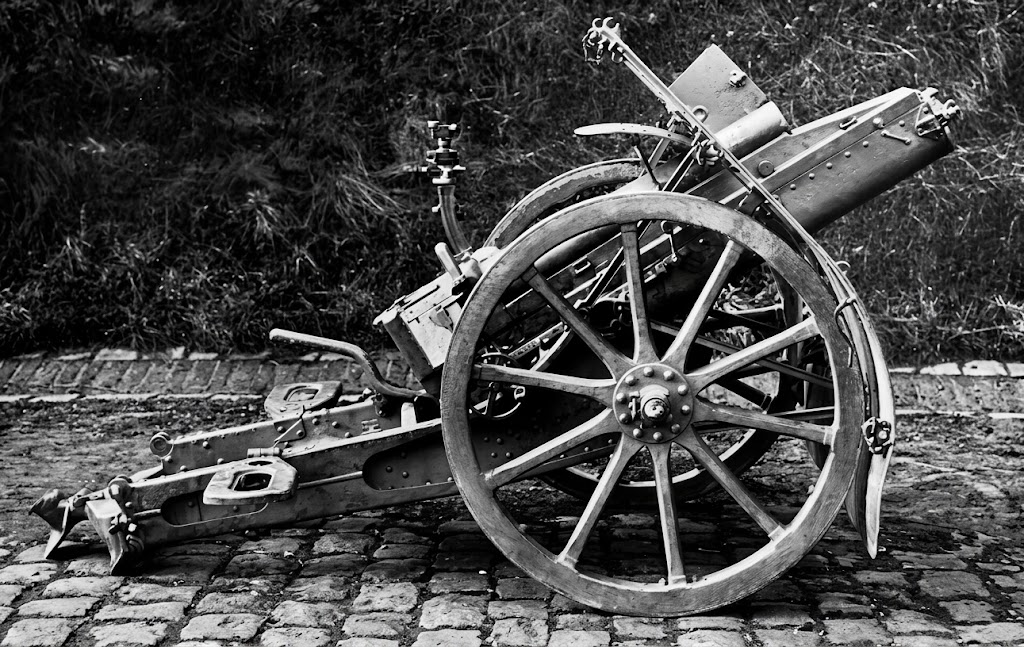
(Krupp Arms Company)
The column departed from Abercorn at 2.00 p.m. on May 23, 1916. The Lumi River, which acted as the border, was crossed busing portable boats and an advanced base camp was established six miles west of Namema. A section of the reserve manned the base camp with a machine gun. At 2.00 p.m. on the next day A and C Forces marched out to the southwest, followed an hour later Parson and B Force, heading through the Liambi Hills to the northeast.
When Namema came in sight Murray realised that it was too strong to attack, so he dispositioned his three force commanders to surround and besiege the enemy. The guns, under Captain Chalmers, were placed on high ground to the northwest, while the infantry moved to within 200 yards of the forts, from where they sniped at the defenders. Parson, with three sections of A Company, BSAP, and C Company of the NRP, closed in from the north.
Just before first light on the 28th, German fort commander Leutnant von Francken led a group of schutztruppe out on a counterattack. In the ensuing clash four BSAP men were killed: Corporal Francis Hoal was shot in the head when he challenged the Germans; Private John Short shot in the neck; Private H.J. Kemp shot in the face; Private Hugh Malcolm Steele shot by a sniper.
Lieutenant John Hendrie, BSAP, had a one-on-one shoot-out with Francken during which a bullet fired by Hendrie raked the German officer’s skull. He was taken prisoner and hospitalised, but he died two days later.
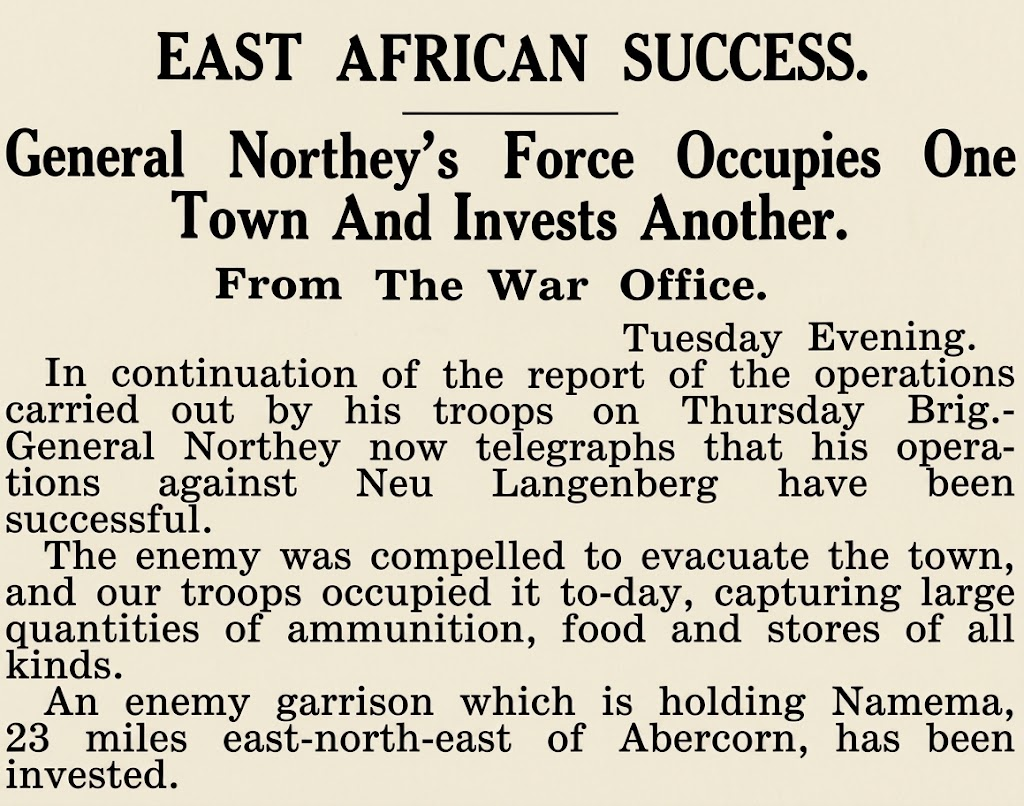
(Daily Sketch, May 31, 1916)
The siege finally ended on June 4 when the Germans hoisted a white flag over the fort. Frustratingly for Murray, the Germans had evacuated the post, leaving only a few of their wounded behind. After sending his artillery pieces back to Abercorn, Murray set off in pursuit at a brisk pace. At Mwazi Mission, finding the fleeing Germans had already moved on, Murray decided to turn his attentions on the German town of Bismarckburg to the west. Situated at the southern tip of Lake Tanganyika, the German stronghold was a brutal 40 miles away.
Increasing numbers of his men had developed badly blistered and swollen feet and had to continue at a much slower pace. After a bout of fruitless exchanges of words and rifle fire between the two rivals at Bismarckburg, on the night of June 8/9 the Germans vacated the post by boat.
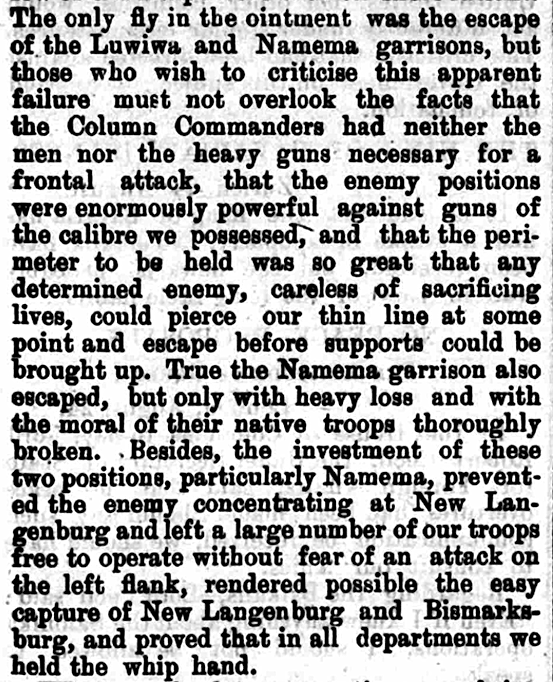
(Daily Malta Chronicle and Garrison Gazette, August 30, 1916)
Over the next few weeks, Parson endured severe hardships as Murray led his column east to Neu Langenburg, and from there north-eastwards towards Iringa where, it had been reported, a 700-strong German force held the road to Kilossa. However, the enemy remained elusive, and on August 28 Murray’s companies, formed into columns of four, marched into Iringa unchallenged. Murray immediately set off after the Germans, encountering stiff resistance from a strong rearguard.
Eventually, in the last week of October, the two sides clashed at Mkapira, south of Iringa, on the Ruhudje River. Arriving at this settlement, Murray joined up with Major George Hawthorn who was in command of three companies of the 1st King’s African Rifles. The combined force set about strengthening defences and apportioning positions. Parson’s B Company and A Company, BSAP, faced south and southeast, a KAR company the southwest, the NRP the west and the rest of the KAR the north and northeast.
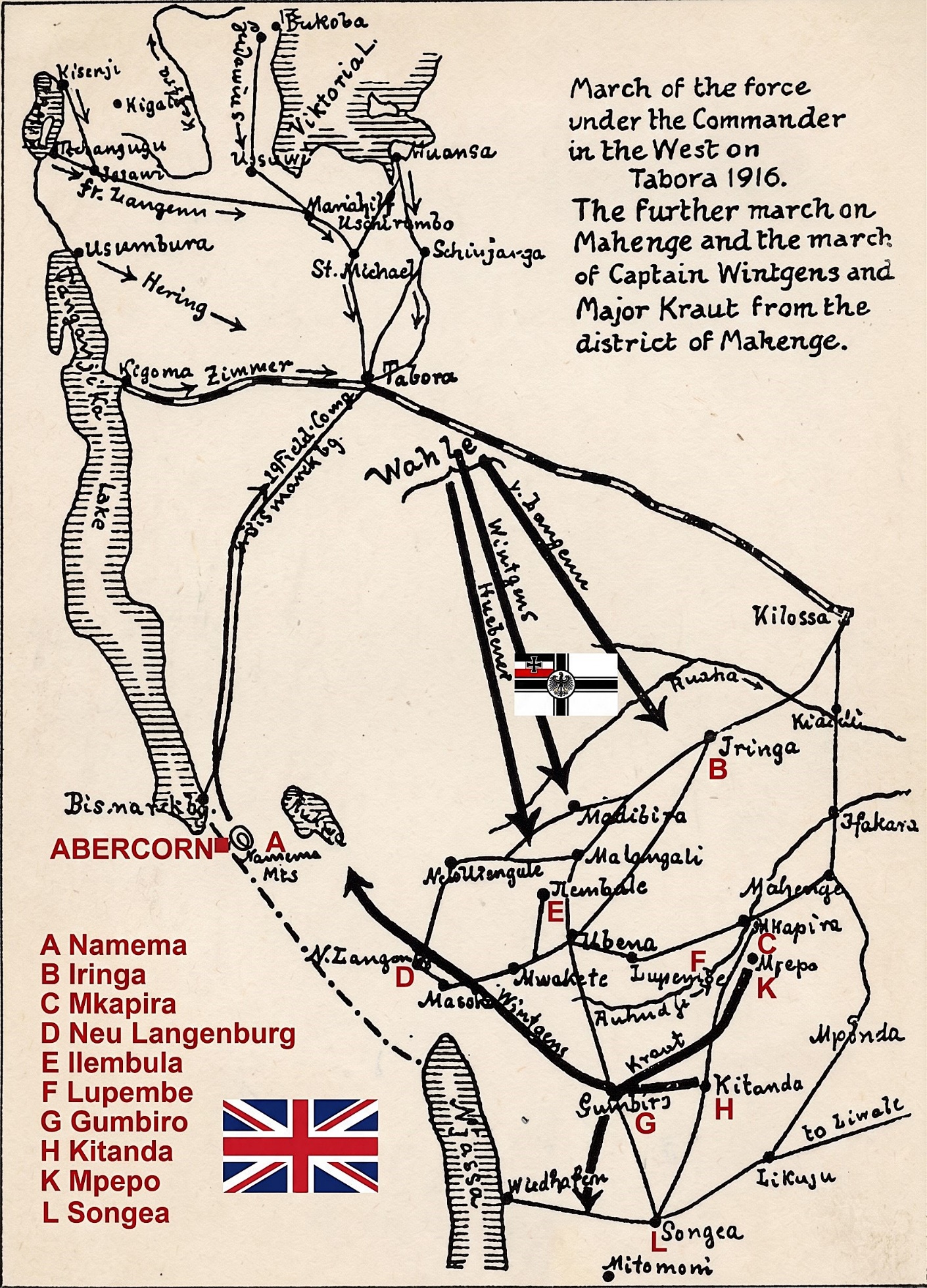
Von Lettow-Vorbeck’s map of his troop movements to the southeast from May 1916.
The author has marked the sites where Murray’s units had moved to confront the enemy.
(Annotations Gerry van Tonder)
In what became known as the Battle of Iringa, on October 22, 1916, Oberstleutnant Georg Kraut and around 2,000 men of the Southwestern Group commenced hostilities by firing 60mm gun shells into the British encampment. Fortuitously, a ration convoy had reached Mkapira the day before which, together with stocks of dried elephant meat, ensured the camp was well-provisioned.
An artillery duel followed, with Kraut believing he could starve the British into capitulating. When the guns fell silent at night, Rhodesian scouting parties ventured out to plot the German positions. With this intelligence to hand, Hawthorne chose 5.30 a.m. on the morning of October 30 to break out and take the fight to the enemy. The Rhodesians attacked across the open ground while the KAR broke out through the swamp to the north and east that Kraut believed was impassable.
Facing the German 10th Field Company, Murray drew up two sections to bayonet charge the German trenches. By 8.30 a.m. the ground, hitherto occupied by the Germans, had been cleared, leaving 35 dead and 82 taken prisoner.
The BSAP lost four men killed: Private Arthur Leonard Bradbury, Private James Curran, Private Felix Joseph Hampson and Private Jack William Judson. They are buried in the CWGC cemetery at Iringa, Tanzania.
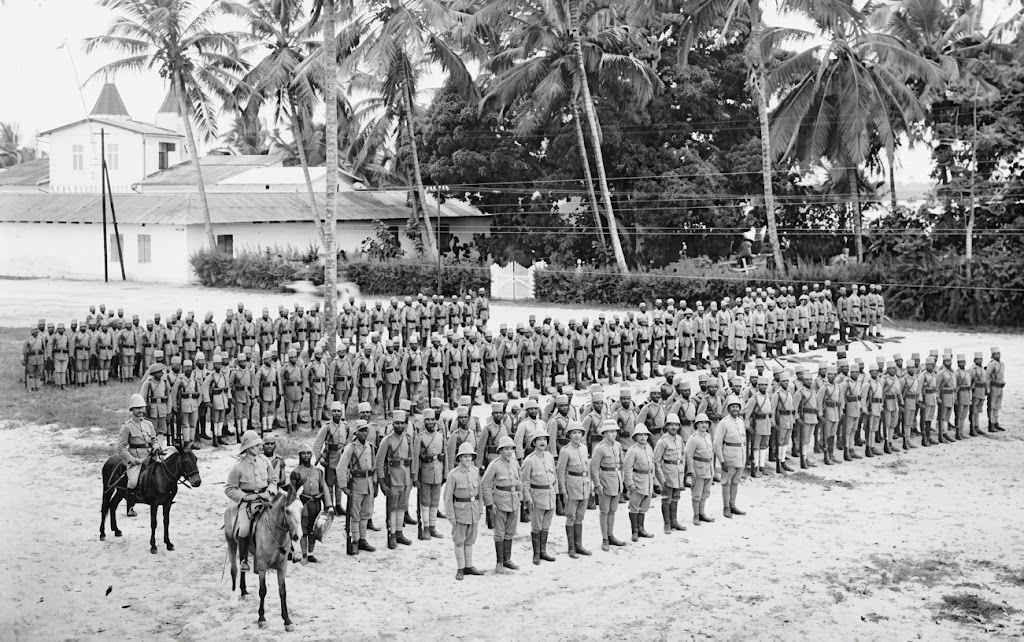
A company of schutztruppe on parade, German East Africa, 1916.
(Bundesarchiv)
On November 1, Parson moved his B Company to Kasinga, seven miles off, where he was joined by A Company. Throughout the month Parson continued to be engaged in fights with the retreating Germans. Despite constant pressure from the enemy, Murray’s BSAP companies were able to repeatedly repel German attacks on the Lupembe garrison.
For the BSAP and Rhodesia Native Regiment (RNR), the capture of the German garrison at Ilembula at the end of November was a highlight of the campaign. Commanded by Leutnant Huebener, the German stronghold comprised 290 white and black soldiers, a 4.1-inch howitzer, originally from the German battleship, Königsberg, three Maxim machine guns and substantial stocks of food and ammunition.
Christmas 1916 found the BSAP force at Lupembe, but there was no respite in Northey’s pursuit of Major Kraut south of the camp. Finding Kraut at Msalala, , commander of this sector of the Nyasa-Rhodesia Field Force, instructed Murray’s BSAP companies to attack the enemy position from the south on New Year’s Day. But once more, in actions that continually frustrated the Allies in the whole campaign in German East Africa, on January 6 the Rhodesians were left to contend with the German rearguard as Kraut slipped away.
By the end of the month, Kraut had arrived at Gumbiro on his way to intersect the Wiedhaven–Songea road. Already at the position was Captain Max Wintgens, reportedly with a force of 500 men, 15 Maxims and 2 field pieces. The two German leaders decided to go their own way, and Wintgens marched west in the direction of Lake Rukwa. Murray and the RNR under Colonel Tomlinson were tasked to pursue Wintgens. However, upon reaching Ipale on May 29 word was received that Wintgens had died of typhoid in a Belgian field hospital.
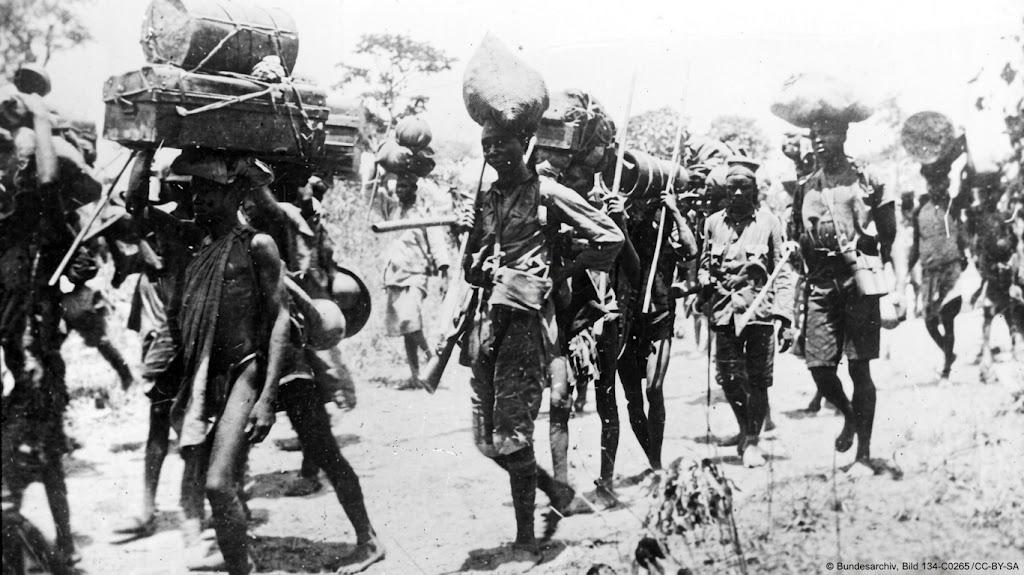
Porters with Captain Wintgen’s column approach Gumbiro.
(Bundesarchiv)
In January 1917, commander of Allied forces in East Africa, South African General Jan Smuts, left for London to assist the British War Cabinet in its prosecution of the war in Europe. Despite Smuts believing the war in East Africa was over, his replacement, Lieutenant-General Arthur Reginald Hoskins, KAR, did not share the former Boer War general’s optimism, and called for reinforcements and vast amounts of extra war matériel. London failed to understand Hoskins’s difficulties, and after only four months, he was replaced by another erstwhile Boer War general, Jacob “Jaap” van Deventer.
In May, as the dry season began to grip, Murray was nearing Tabora in the far north, where he hoped his men could rest and recover in the largest town in German East Africa. But such a luxury remained as delusory as the very enemy they were trying to catch – they were ordered to march back south to Rungwe. They had relentlessly dogged Wintgens ever northwards, only to have to march away. One of his men said, “Every bone in my body aches from the continued marching and my feet I can hardly put to the ground they are so sore.” Regardless, Murray turned his men around for the 60-mile slog to Kitanda, for which he had been given three days to reach.
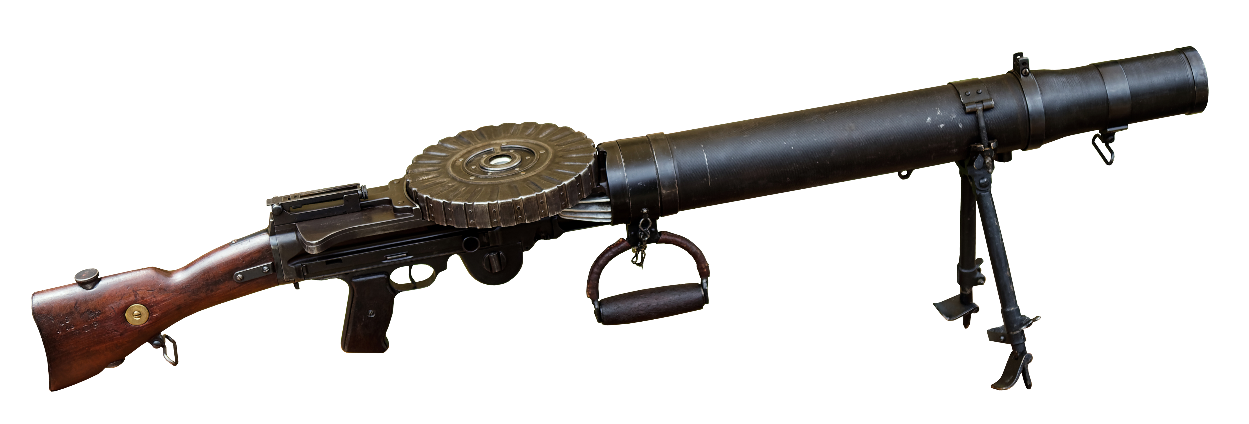
In June Murray was tasked with driving the Germans back to Mpepo, while the Belgians struck out from Iringa and the NRP along the west bank of the Ruhudje. At British-held Songea to the south, large stocks of supplies had been accumulated and an airstrip built. Quantities of the new Lewis machine gun (photo by Acabashi below) were received, and several members from the BSAP companies were promoted to NCOs as instructors in the weapon.
By this time, many of Murray’s white officers and NCOs were hospitalised in Songea, suffering from exhaustion and fever. Murray, however, believed these men should be back in the front line as soon as they have recovered sufficiently. In this, he was at odds with medical staff, who referred Murray to an order from Northey that column medical officers could recommend a maximum of three months convalescent leave. Responding in writing to a letter from Murray in which the BSAP commander objected to the number of his men on recuperative leave, Assistant Director of Medical Services, Major Allan Kinghorn, wrote,
The point arises as to whether any useful purpose is served by keeping men up here [Songea] whom the Medical Officers consider unfit and who, as often has happened, go sick again within a very few days of their discharge from hospital.
It must be recognised that Europeans cannot remain indefinitely in the Tropics without impairment of their physical and mental health. . . The Rhodesian troops, since they arrived on the border, have had a much more strenuous time of it than any other troops in the field, and during this time they have been continuously exposed to all weathers, including two wet seasons, and while rations have been as good as could possibly be expected under conditions inseparable from active service, there has been a lack of fresh food, a deficiency which, in time, is bound to affect a man’s general health and his resistance to disease.
When one takes into consideration that the bulk of the Rhodesians were recruited from men following sedentary occupations and that they were sent up with practically no preliminary training, one can only wonder that they have not started giving in much sooner. . . Every Rhodesian Medical Officer is unanimous in the statement that the Europeans taken as a whole, are now gone in and should be relieved.
[Murray’s Column, Tony Tanser, BSAP Regt. Assoc, UK, 2009]
This inflamed Murray, who accused the doctor of “insubordination and discourtesy.”
At this time Northey placed Murray in command of the Songea area, with the prime objective of neutralising Oberleutnant Heinrich Naumann’s forces. At his disposal Murray had six NRP companies, averaging 125 each, remnants of the BSAP service companies and 1RNR under Lieutenant-Colonel Clive Lancaster Carbutt. Around mid-August, Murray’s forces started to close in on Naumann’s base at Mpepo. However, several attempts to take the German position in the last few days of August failed and Naumann fled eastward.
Murray was beside himself at the slow progress and lack of results by Major Charles Henry Fair, commander of the NRP, demanding he “clear Aumann [sic] out of Mpepo, or destroy him. Your orders are to drive Aumann [sic] east, what have you done in this respect.” Soon thereafter Murray reported Fair to Northey, blaming him for allowing Naumann to get away, and requesting Fair be replaced by Major Harry March Stennett, NRP.
As the conflict in German East Africa drew to a close, the Commander-in-Chief of German forces, General Paul von Lettow-Vorbeck, crossed the Rovuma River into the relative safety of Portuguese East Africa (Mozambique). For Murray and the BSAP companies there was small consolation when Generalmajor Theodor Tafel surrendered before he could join von Lettow-Vorbeck.
At his headquarters in Songea, Murray started to retrieve his forces who were spread far and wide. Parson’s B Company was on the Rovuma River, patrolling south from Tunduru in extremely hot and humid conditions. On December 18, 1917, Parson arrived back in Songea.
Wounds, sickness and leave had so decimated the BSAP service companies that they could no longer be classed as such. In Murray’s report to Northey on January 21, 1918, he wrote,
The B.S.A.P. Service Company no longer exists; all the men having been absorbed into the machine and Lewis guns and other department units. I have been informed officially that European casualties can no longer be replaced from Salisbury and, in this respect, I would point out that 55 men have been sent south during the past three months, for three months recuperative leave, and that there is little or no chance of them returning. Medical boards are held on them, and they are nearly always discharged being unfit for further service up here.
(Murray’s Column, Tony Tanser, BSAP Regt. Assoc, UK, 2009)
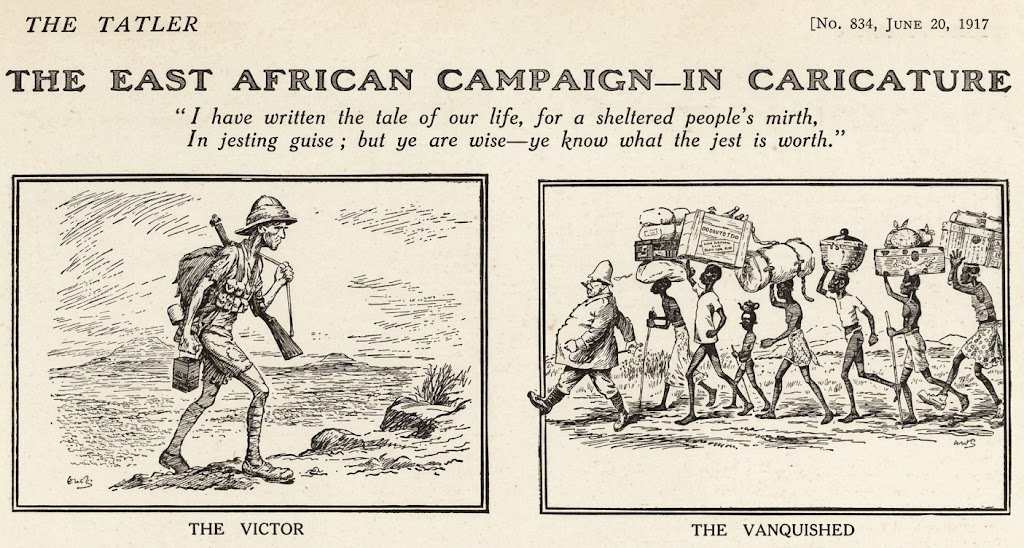
The tragic truth of the Rhodesians’ campaign: victory came at a great price.
On June 29, 1920, Murray himself paid the ultimate price, passing away in England of an aortic aneurism brought on from repeated bouts of malaria contracted during the East African Campaign. Von Lettow-Vorbeck was never captured, and only with the signing of the Armistice in Europe did he formally surrender at Abercorn.
Parson survived the conflict and inhospitable climatic conditions, returning to Rhodesia with an outstanding record of distinguished service in a theatre of war. In The London Gazette of June 4, 1917, he was appointed a Companion of the Distinguished Service Order (DSO) for “distinguished service in the field”. The DSO was awarded a second time (Bar) in The London Gazette of December 28, 1917.
On no fewer than three occasions during the campaign Parson was Mentioned in Despatches, once by General Hoskins (The London Gazette September 22, 1917), and twice by General van Deventer (The London Gazette March 13, 1918, and January 20, 1919).
In the East Africa Campaign, BSAP Service Companies formed the backbone of mobile pursuit columns in German East Africa. They spent years relentlessly tracking General Paul von Lettow-Vorbeck’s forces through unmapped, malaria-ridden bush. The force returned home having earned the exclusive battle honour “East Africa 1915–18”.
In the immediate aftermath of the war, the BSAP faced the challenges of returning to peace-time policing and the recruiting of 150 replacements for members due for discharge. In England, the now retired Brigadier-General Bodle was tasked with selecting “ex-soldiers and yeoman”, the latter inferring the exclusion of men from the British public-school establishment. Of the 150 recruits no fewer than 120 had to come from mounted corps.
The first group of recruits selected by Bodle arrived in Salisbury in mid-1919. They were very different to the younger pre-war recruits who were largely recent school leavers. They were blooded war veterans, and as mature civilians expressed concern at their initial exposure to the BSAP. It was claimed Bodle had misled them about their contact terms and the lack of “acceptable third-class passages” by ship to Cape Town.
However, virtually every district remained under strength, with Bulawayo reporting less than half the number of authorised personnel. Fortunately, things were quiet, but in his Christmas message Edwards felt the need to remind his force that peace did not mean complacency – they had to “not only prove themselves reliable Policemen, but thoroughly efficient soldiers.” The force’s military complexion remained, to a large extent, unaltered.
In August 1920 a novel responsibility was added to the BSAP: the introduction of a 15-mph speed limit for motor vehicles. The checking system required three policemen, each armed with a stopwatch. On a selected road they were spaced a distance from each; the first two, in civilian clothes, would clock a suspected speeding vehicle as it passed their respective hidden positions. If they calculate that the car was “speeding”, the third policeman, dressed in uniform, would be signalled to step out and stop the vehicle. However, there were so few vehicles that many volunteered to take on the “easy” job.
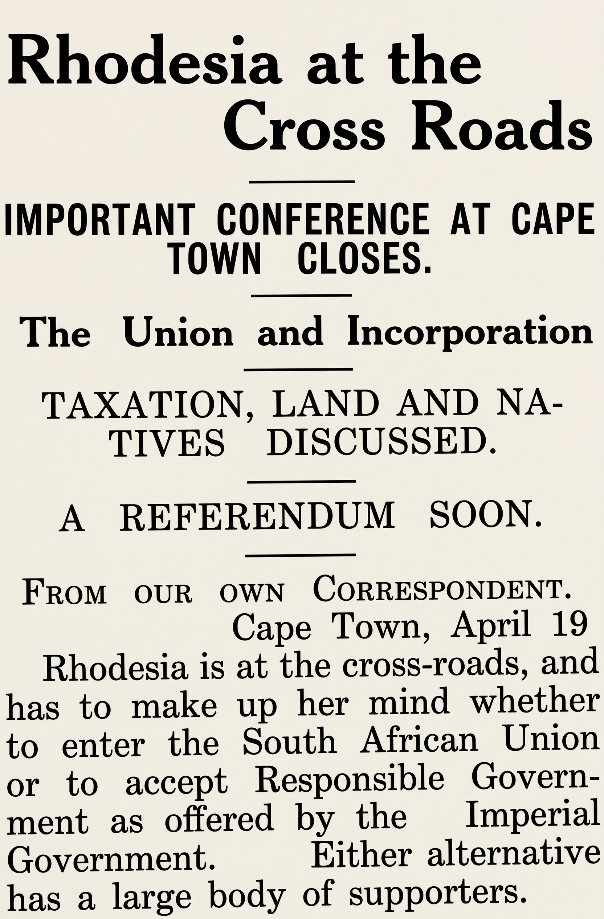
(East African Standard, April 22, 1922)
The era concluded with a massive constitutional shift for both the territory and the BSAO. In 1922, three-quarters of the country’s 19,000 white electorate voted in a referendum to decide if Southern Rhodesia should become part of the Union of South Africa or become a self-governing British colony. South African Prime Minister Jan Smuts had urged Rhodesians to opt for the former, but the independently minded Rhodesians voted by 8,774 votes to 5,089 for “responsible government”.
In September 1923, the British South Africa Company officially relinquished its commercial charter governance. Southern Rhodesia was annexed as a self-governing British colony. Control of the BSAP now shifted from a corporate entity directly to the Department of the Attorney General of the Southern Rhodesian Government. In theory, in terms of the new Police Act, the force was now subject to the legislative processes of parliament.
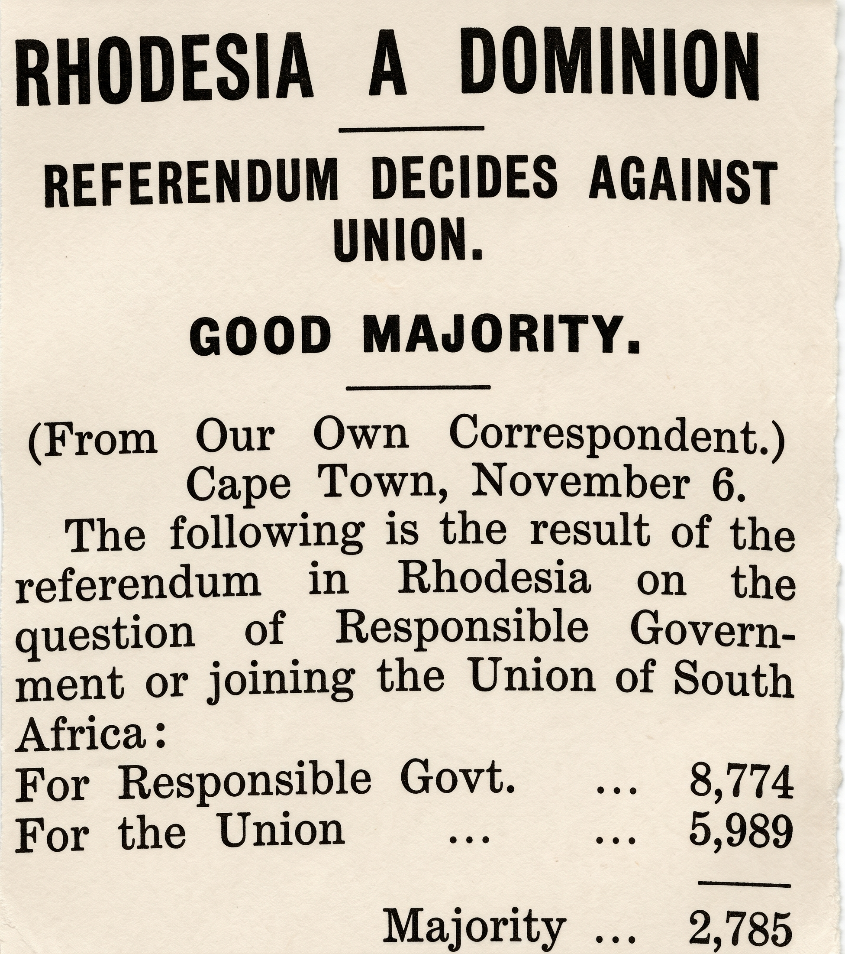
(East African Standard, November 11, 1922)
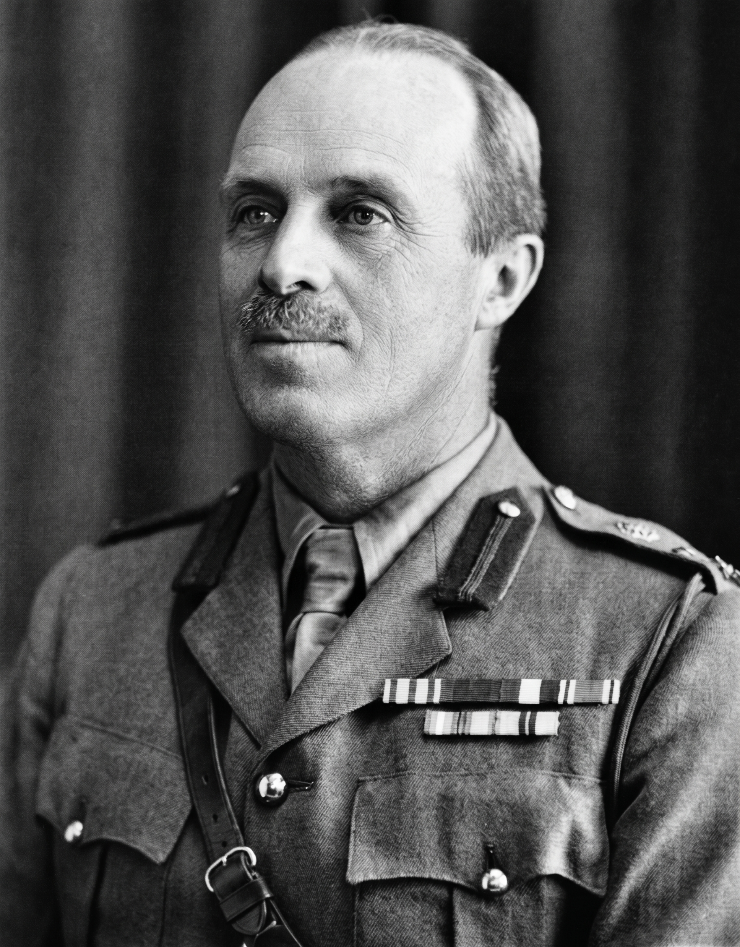
On January 31, 1923, the 61-year-old Edwards retired as Commissioner of the BSAP and he was replaced by Colonel Capell as Acting Commissioner. Major Alfred James Tomlinson (above) was appointed Assistant Commissioner. The positions of Commandant-General and Chief Staff Officer ceased to exist, and Major Parson was appointed BSAP Staff Officer. In December the country’s local newspapers carried recruiting advertisements for the first time, with the worded suggestion that only Rhodesians should apply.


My pa was in die Tweede Wêreld oorlog. Hy het van Zonderwater tot bo in Noord Afrika met n voertuig gery. Hy het tot die dag van sy dood in 1995 nog steeds gepraat van Noord en Suid Rhodesië. En dan ook van die ander lande se ou name. Hy het al die lande waardeur hy gereis het op sy Aluminium waterbottel ge “sandblast”. Ek is vandag in besit van sy waterbottel. My pa sou Augustus 2026 n 110 jaar oud geword het. Ek is ook in besit van sommige van sy seil uitrusting en sy .303 se bayonet.
Thank you for this. Logan