Nongqai Vol 17 No 8 – Sabotage at Koeberg
HISTORICAL FEATURE
The Man Who Sabotaged Koeberg and Disappeared: Rodney Wilkinson
Compiled by Wolfgang Witschas
Abstract
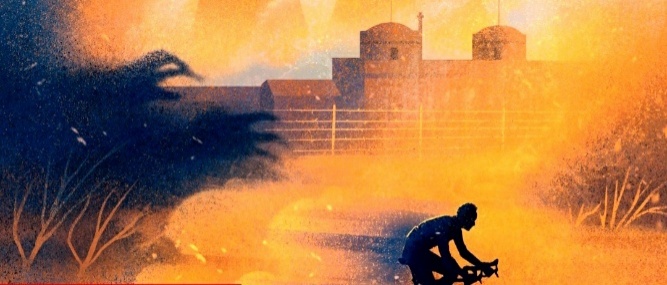
Rodney Wilkinson is a South African anti-apartheid activist and former national fencing champion who famously planted four bombs inside the Koeberg Nuclear Power Station near Cape Town on 16 December 1982. Operating as part of the ANC’s Umkhonto we Sizwe (MK), he escaped across the border on a bicycle before the devices detonated, causing major structural damage without any casualties.
Key Words
Koeberg Nuclear power station
Eskom
Rodney Wilkinson
Heather Gray
University of the Witwatersrand (Wits)
Fencing
International Olympics Committee (IOC)
South African Defence Force (SADF)
African National Congress (ANC)
Umkhonto we Sizwe (MK)
Mohammed ‘Farouk’ Timol
Oliver Tambo
Swaziland
Zimbabwe
Mozambique
Rodney Wilkinson
Personal Background:
Names: Rodney
Surname: Wilkinson
Date of birth: 1949
Place of birth: Park Town North,
Johannesburg
Parents:
Father:
Name unknown, born in Canada, served as an artillery officer in WWII. After the war he moved to South Africa. Politically, he had been in the Communist Party in Canada as a student but turned anti-Soviet after WWII. By the 1960s/70s he voted for Helen Suzman’s Progressive Party.
Mother:
Name unknown. South African She’s the one who came down hard on him when he used a racial slur at home after hearing it at Parkhurst Primary.
Home address:
Parkhurst, Johannesburg
Primary school:
Parkhurst Primary School a government school in Johannesburg’s northern suburbs.
High school:
St. Martin’s School, was formerly St. Peter’s. It had a left/liberal reputation –Trevor Huddleston was a founding member, and Oliver Tambo was an alumnus. That environment influenced him before he went to the University of the Witwatersrand in 1968.
They lived a “typically White middle class” life in Parktown North, Johannesburg. The family had a Zulu maid, Sophie, who worked for them 13 years and influenced Rodney a lot.
Wilkinson said he got a “romanticised understanding of warfare” and was “a little gung-ho” from his dad.
After School
Military service
In 1967 after finishing school at St. Martin’s, Wilkinson did his first 12 months national service stint when he was called up for one year. He said he was “just a guard in those towers around that ammunition dump; that was in 1967.
1968-1970: University and fencing
In 1968 he finished school at St. Martin’s/St. Peter’s in Johannesburg.
From 1968-1970, studied Building Science at the University of the Witwatersrand (Wits)
During this time he was a hippie/pacifist– hair all over the place… bell bottoms and flower power… anti-Vietnam.
Wilkinson started fencing at the age 9. By his late teens he was competing internationally. At 21 he was South Africa’s national champion in foil and sabre, 2nd in epee. He toured Europe and Argentina but missed the Olympics because South Africa was banned.
Wilkinson’s Fencing Career:
His fencing career ended because South Africa was banned from the Olympics and international sport in 1964. Wilkinson was 21 (1970) and at his peak right when the ban cut him off.
What happened:
Before the International Olympics Committee (IOC) ban:
Wilkinson started fencing at 9. By his teens he was the best in South Africa. He toured Europe and Argentina, competing in foil, sabre, and epee. He was winning national titles.
In 1964 the (IOC) suspended South Africa from the Olympics over apartheid. The ban was confirmed in 1970, and South Africa was expelled from most international federations.
The impact on Wilkinson:
No Olympics: At 21(1970) he was national champion in foil and sabre, 2nd in epee. He said he “had not stood on the Olympic podium, because South Africa was banned”.
No international competition: He could still compete domestically, but there was no path to the world championships, World Cups, or Olympics. For a sport like fencing, that kills a career.
No funding, no exposure: Without international competition, sponsors and selectors moved on.
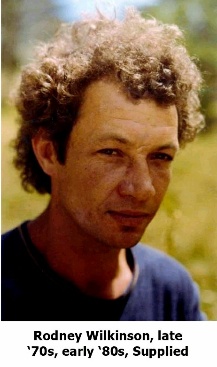 https://sahistory.org.za/sites/duefault/files/archive_files/Rodney%20Wilkinson.pdf
“The apartheid state had taken that from him, along with everything else it took from everyone.”_
What he did instead:
He kept fencing domestically and became an instructor in Johannesburg around 1973-1976. He took over the circuit from a British Olympic fencer who left the country.
But the elite, international path was closed. When his call-up came in 1976, he went into the army. He said later that the ban was one of the things that radicalized him – the state took away his chance to compete for his country, then conscripted him to fight its wars.
Bottom line:
The ban ended his elite career at 21. He went from touring Europe to teaching kids in Johannesburg.
1970-1973: Dropping out and odd jobs:
He dropped out of Wits after three years and then worked for six months at Toyota in Johannesburg as a clerk.
u. He was facing his coach Vincent Bonfil, a 25-year-old Englishman who had represented Britain as a reserve at the 1968 Mexico Olympics, and who was now in Johannesburg finishing a master’s thesis in metallurgy. In the accident Vincent Bonfil was mortally injured when a blade snapped.
He then went to England for 18 months with friends. Worked as a clerk for American Motors there.
1973 returned to South Africa worked six months and went back at Wits and became a fencing instructor. At Wits he studied for one year doing a BA in Sociology, Political Science, Anthropology. Ran out of money and dropped out again. He became a Fencing instructor in Johannesburg. He took over the circuit from a British Olympic fencer who died in a fencing accident.
In 1973 he and his girlfriend, Althea, lived together when we were students at Wits. In 1974 they moved to Cape Town and she went to UCT. He got a job as a draughtsman for an architect, Stegman. Then in 1975 Wilkinson went back to Johannesburg.
Then call up from the SADF in 1976
In 1976, at the age of 27, he got a call-up for doing “camps” as he was a member of the SADF reserve. He had been AWOL (absent without official leave) and address-less since about the 1970s and never corresponded with them. In 1976 my father got a phone call from a guy, claiming to be my friend, wanting my number. So, my father took him at his word and gave him my number. It was the sergeant in the Transvaal Scottish, a Sergeant Kemp. He phoned me and said either you pitch up on Thursday at Park station for a three-month camp or you go to jail. So, I asked my father what I should do, should I run away or hide or go to jail or…He said, ‘go to the army, young man’. So, he did, but he went with a bad spirit and wanting to sabotage it from inside, which I did to an extent.
In 1976 while in re-training he got a phone call from his girlfriend, Althea Gregoroski, saying she was pregnant. So, he applied for leave to go and marry her and they said he had 48 hours to go from Bloemfontein to East London, get married and be back. So, he went to East London and ten days later he came back. Because he had been a Springbok in fencing before, they’d given him two stripes – which they promptly tore off, because of him being AWOL. The lieutenant overheard him laughing about it with his mates. So, he was sort of side-lined from then on, which suited him just fine.
Except it halves your pay. So, what do you do in the army? The conscription army consists of training and active service.
We were sent to South West Africa (SWA) Ovamboland and taken in trucks to the Cunene River near Ruacana. The night before we crossed into Angola, we stayed near the Calueque dam inside Angola. The feeling of going into a hostile country with a rifle between your knees, illegally, with no recourse to authority or law was unforgettable and unnerving. Wilkinson was trained as an infantry signaller in 1967. In early 1976, after retraining, his unit manned a radio base on the Cunene River just inside Angola and the forward observation guys were on the radio to his little section at their base. Battalion headquarters was in SWA. So, the unit received messages from the forward base, and they had decode them and recode them and send them back to battalion headquarters who would then give them a reply, and they had decoded and recode it and send it on. Their unit were the middlemen.
They had the opportunity could with the messages, slow them down. The conscripts, especially older ones – their hearts were not in the job, they called it Naafi (no ambition and fuck all interest). For example, one day the message came “‘we’ve spotted a helicopter, it’s got no markings, must we shoot it down?’. So, we decode the message and send it back to battalion headquarters and half an hour later they respond, “shoot it down, shoot it down”. But after they had decoded and recoded that one, the helicopter was well away. In the Land Rover the troops could listen to Radio Moscow and Radio Freedom all night. Blue stone (which it is said was put by the South African Defence Force into food and drink to repress the sexual urges of the recruits) had ceased to have any effect. Other petty acts of defiance were hunting for pot, cutting telephone wires, a huge birthday bonfire and shots in the bush causing alarm in the camp. Whenever we liked we could wander back to the main camp and talk to their mates and drink around a braai fire.
The desertion:
The unit got tired waiting for their transport to take them for their leave period. So, twelve of them left the tented camp near Grootfontein in a stolen Unimog, a four-wheel drive troop carrier, a softy top Mercedes Benz, it was not armoured, and they filled it with crates of beer. The others all got out at Windhoek airport. They were going to fly home. He decided to take the truck and drive it till it ran out of fuel and then hitch-hike. But as he drove at about midnight, he fell asleep at the wheel and turned this thing over, right upside down, head over heels, over a culvert. He injured himself severely, had a hole in his forehead about an inch deep. He broke his skull and he was pinned underneath the vehicle, Upside down, with the steering wheel in his chest and feet up in the peddle well, no hot oil pouring out of the engine onto him, but he managed to wear the ground away with his shoulders and got out before it possibly exploded. It didn’t explode. He walked till dawn and found a farmhouse. He was covered in blood. The farmer called the cops and made him sit outside until they arrived. He gave him coffee. They were not the first – judging by the reaction of the farmer, it had happened before, and he was hundreds of kilometers south of the action.
Why it mattered:
That experience shifted him from pacifist to someone actively trying to sabotage the SADF. He’d gone in to undermine the system from inside, but the reality of the war pushed him further.
After deserting, he went underground for a while. He didn’t get caught, and the SADF was more concerned about being exposed for being in Angola than chasing AWOL troops who were spilling secrets.
In 1978 Rodney Wilkinson was living in a ‘hippy’ commune near Koeberg. The commune ran out of money and Rodney, a student of building science and UCT drop-out,
Then he bumped into a guy in Cape Town he had met in the army and he tells him about Rob Sacco, who had this farm near Paarl and they were growing stuff organically and they had cows and pigs. So, Althea, little Kayla and Wilkinson went and stayed in this commune. They later went back to a house in Salt River, Cape Town. One of his fencing pupils, Dennis Penalunal, in a pub, claimed to be a Communist, and he thought that the way to provoke the revolution was to behave like the oppressor, and suggested he contact his friend who was an engineer at Koeberg nuclear power station which was under construction, for a job. He got the job and worked there for 18 months as part of the permanent staff of Koeberg Civil Contractors, designing and drawing shuttering for concrete. Most of the bosses were French engineers. In the prefab site office where they worked, was a library of drawings of the concrete shapes to be moulded by the shuttering. There was a catalogue to identify the detailed drawing required. Each room had a description of the function of the room. A fat catalogue, A4 and 40 millimetres thick.
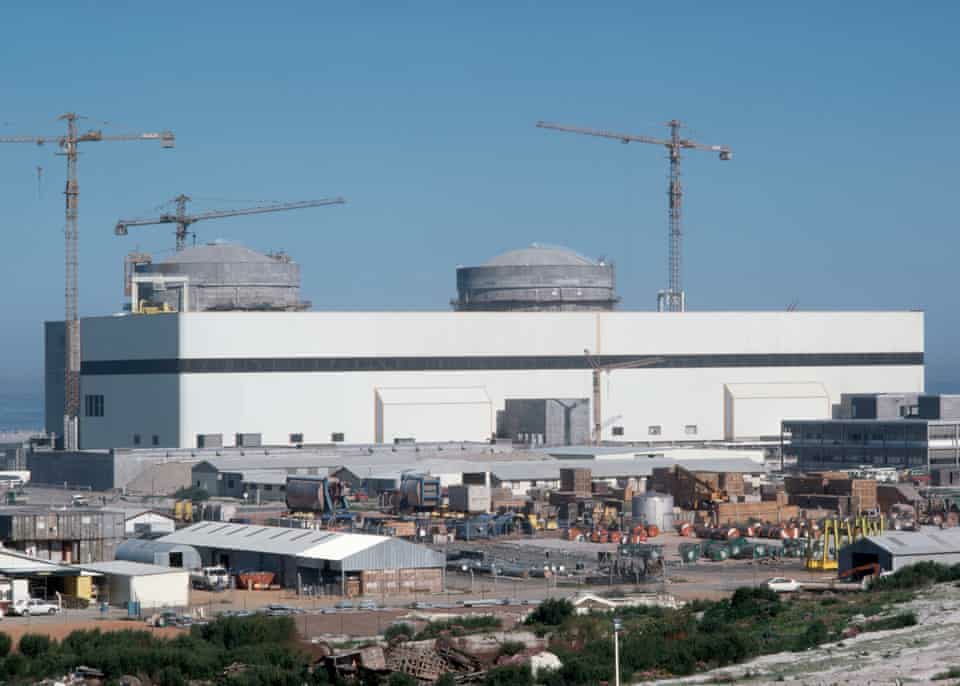
Koeberg Nuclear Power station
https://sahistory.org.za/sites/duefault/files/archive_files/Rodney%20Wilkinson.pdf
Whilst working at the plant for nearly two years he was privy to the building plans and blue prints. With a strong anti-Apartheid sentiment and liberal conviction, I was encouraged by my girlfriend Heather Grey to steal a set of them. But what to do with them?
They came up with an idea, give them to the African National Congress (ANC) so they might find them handy and conduct an attack on the nuclear power station. Buoyed up with this idea they both trekked off to the newly independent Zimbabwe to hand over the plans to the ANC in exile there, job done
1982: Zimbabwe:
Wilkinson went to Zimbabwe to meet the ANC in March 1982. He pitched up randomly on the doorstep of the ANC office. A Farouk aka “Mohammed Timol” an ANC leader who was based in Zimbabwe at that stage. Wilkinson told Farouk that he was in possession of plans to one of the most secure and secret facilities in South Africa, the Koeberg Nuclear Power station that was being built in Cape Town.
Farouk took one look at the hapless hippy in front of them and dismissed him out of hand as a government spy.
The ANC were very circumspect of him, but Rodney was persistent, so they agreed to take the plans from him and have them authenticated first. After many delays with Rodney hanging about, during which time the stolen plans were shown to Soviet nuclear scientists and an investigation into Rodney Wilkinson himself was done. Eventually the ANC reverted. Great news – all vetted, job done, they’ll take the plans, Rodney and Heather figured they now could head off home.
Farouk told Wilkinson to go to Swaziland on the first Saturday in April 1982 and meet Rashid.
There was however one catch – the ANC then threw a curveball at Rodney and told him that the only way the job could really be done is if he carried out the attack himself. By his own admission he was initially taken aback by all this, as becoming a MK operative really wasn’t in his plans, however he pondered their proposal and eventually agreed. The operation was code-named Operation Mac (named after Mac Maharaj).
Comment:
The “Farouk” Wilkinson referred to was “Mohammed ‘Farouk’ Timol”, an ANC leader who was based in Zimbabwe in 1982, handling recruitment and initial contact for operations inside SA. He was the one who instructed Wilkinson to go to Swaziland to meet Aboobaker “Rashid” Ismail, who then ran the Koeberg operation.
The Koeberg plant was about 6 months from going live at the time, so he had access during the final construction/commissioning phase.
No military training required, luckily the South African Defence Force (SADF) had already provided all that when he was called up as National Servicemen conscript (1967) completed his one year of training and deployment and he was now serving out his Citizen Force commitments with the rank of Corporal.
Therein lies the hazard of conscription, not everyone agreed with the government of the day and moreover many didn’t buy into the ‘whites only’ Afrikaner Nationalist government’s program of conscription at all, especially many of the ‘English’ conscripts and certainly not Rodney, but it did produce very proficient soldiers in any event.
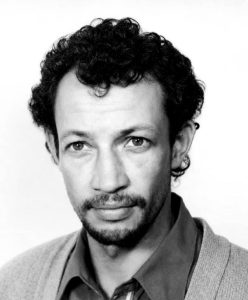
Rodney Wilkinson in the 1980s
https://sahistory.org.za/sites/duefault/files/archive_files/Rodney%20Wilkinson.pdf
Visits to Swaziland:
In April 1982 Wilkinson flew to Swaziland, booked into the Ezulwini Sun hotel, where he met with Aboobaker “Rashid” Ismail in his hotel room. This was the first meeting with Rashid in Swaziland. They talked security, morale, and created a “legend” cover story for returning to SA.
During May 1982 Wilkinson worked a month’s notice at his job in Zimbabwe. During mid-June 1982 he returned to Cape Town. First weekend in July he reported to Rashid that he was due to start work at Koeberg and the cover story was holding.
To Rodney’s own surprise, more luck, Koeberg Nuclear power station wanted him back at work on mapping emergency pipes and valves at the plant.
The ANC appointed a ‘Dolphin’ MK commander in Swaziland as Wilkinson’s ‘handler’, he was Aboobaker Ismail. So once a month Rodney and his girlfriend trekked off to Swaziland, the small independent kingdom which allowed gambling (banned under Apartheid South Africa), before Sun City was built, this was the premier destination for thousands of white South Africans to go gambling on weekend getaways and not unusual ‘movement’ of white people over a border at all.
Whilst in Swaziland, Rodney and his handler thrashed out the strategy, it was designed to maximise embarrassment to the South African government while minimising the risk to human life – this after all was a nuclear facility and required ‘careful’ thinking.
Aboobaker and Rodney then drilled down the targets onto which limpid mines would be placed. It was suspected at the time that Koeberg Nuclear plant would be used to produce plutonium for the construction of atomic bombs, so to avoid a radioactive fall-out, the attack had to happen before the plant went on-line.
Work at Koeberg:
He took the job on instruction from his ANC handler Aboobaker “Rashid” Ismail, who told him “go straight back to Cape Town and get a job”. The draughtsman role gave him the access he needed to map targets and smuggle in explosives before the attack on 17 December 1982.
In June 1982 Wilkinson left Zimbabwe, went back to Cape Town, and on 19 July 1982 he started work at Koeberg nuclear power station, 30km north of Cape Town as a Piping draughtsman. Wilkinson was a contract electrical engineer working on the control systems for Unit 1.
The plant was about six months from going live at the time, so he had access during the final construction/commissioning phase.
He was issued a Koeberg gate pass for his yellow Renault 5 on that day. His work contract was short-term, set to run until mid-December 1982.
How Rodney Wilkinson pulled it off to get the Bombs past Security:
He got the bombs in because he was already inside, and Kroeber’s security was built for external threats, not for a trusted engineer.
He had the access:
Wilkinson was a contract electrical engineer working on the control systems for Unit 1.
That meant:
Valid security clearance, he went through the main gate daily with a badge. Knowledge of blind spots, he knew which corridors had no cameras and when shift
changes rook place. He had a reason to carry toolboxes as engineers moving equipment around didn’t get stopped and searched.
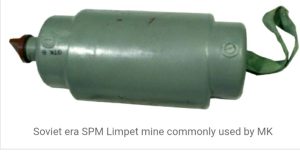 https://sahistory.org.za/sites/duefault/files/archive_files/Rodney%20Wilkinson.pdf
The Bombs:
The bombs were four Soviet SPM magnetic limpet mines which were applied by the ANC through his handler Aboobaker “Rashid” Ismail. Rashid retrieved them from a cache buried under a tree near Koeberg.
Comment:
“The SPM limped mine were standard MK issue at the time; Soviet-made, magnetic, designed to stick to metal and detonate with a timer or impact fuse. MK used them in several operations because they were
compact and effective against infrastructure”
Modifications:
Rashid opened the devices and packed thermite into the casings alongside the original explosive. Thermite burns at 2,200°C and cuts steel, so the mine didn’t just blast – it burned and spread fire through cabling.
How he smuggled them:
He practiced with whisky bottles the same size as the mines. Hidden under the dashboard of his yellow Renault 5 to get past the car gate. Stuffed into his overalls/crotch to get past guards and dogs.
To get past the reactor “clean area”, he passed the mines through a gap in a plywood dust shield, then went through the changing room and collected the mimes on the other side.
He smuggled them in over several weeks in a toolbox under tools and spare parts and in his bicycle pannier as he cycled to work most days to avoid car searches. He staged in a maintenance cupboard on the site over two weeks before the attack. Koeberg in 1982 was still under construction. Construction sites are chaotic. Contractors, sub-contractors, and deliveries came and went constantly. Security focused on preventing sabotage from outside, not an insider. Koeberg was designed to stop a military assault or ANC guerrilla raid. It wasn’t designed for an insider threat. No searches of staff on entry/exit
He knew the timing:
The plant wasn’t generating power yet. Most of the reactor building was empty at night and weekends. Wilkinson chose Friday 17 December 1982, around 22:00, as the night shift was skeleton staff. Security guards were doing external perimeter checks.
He set the timers for 02:00, when the building would be empty but before the morning shift arrived.
The security gaps:
Koeberg was designed to stop a military assault or ANC guerrilla raid. It wasn’t designed for an insider threat. No searches of staff on entry/exit
Construction phase protocols:
Too many people with temporary access. His
psychological profiling was “clean” as he had no prior record, and his anger at the Border War wasn’t flagged.
A series of mishaps
So on to the attack itself and it’s marred by a series of mishaps. It started with an unrelated accidental short-circuit which started a cable fire. The incident was reported in the local press. Now enter the ANC’s President-in-exile, Oliver Tambo, who had been made aware of the operation but not really the details of it, like timing. So, he released a statement immediately claiming the fire as an ANC victory. All this did was prompt a security scare and clamp down at the plant and gave the National Party some ammo to ridicule the ANC for unsubstantiated claims.
Then, in November the firm hiring Rodney informed him that they were laying him off at the end of the month, so much for timing. Luckily for Rodney they changed their minds and asked him to stay on for another month. As fortune would also have it, he turned the security scare to his advantage and told them he would stay on, but only till the 17 December 1982 thereby obtaining an official alibi and cover for his planned disappearance.
Here is where he missed the deadline of the 16th of December, as previously stated the limpet mines were old and unstable. Rodney placed the mines in the pre-determined targets setting 24-hour fuses on the 15th 15 December 1982 (a Friday) so they would blow on the public holiday (a Saturday), thereby assuring minimal casualties to his fellow contractors as nobody would be there.
Here’s the kicker, as his contract was ending, his fellow contractors and engineers liked this young man and decided to throw Rodney a farewell party at the plant on the Friday evening just after he had been busy planting the bombs. Rodney had to sit through his impromptu ‘going-away’ party stressing endlessly that the bombs would not go off prematurely.
He had no real need to worry, as said these limpet mines were old and they would not go off on the Saturday either in fact they eventually went off a day after the target date on the Sunday. The springs on the firing mechanism proved to have been brittle and the devices also exploded over a period of several hours instead of simultaneously
How the limpet mines were used:
Wilkinson smuggled the 4 limpet mines into Koeberg, two limpet mines on the reactor heads – the 110-ton steel reactor vessels and two in the cabling under the two control rooms. The idea was to cause maximum propaganda damage without causing a radiological release, since the plant hadn’t loaded fuel yet.
Where in the Control System did Wilkinson plant the mines
He targeted the electrical cabling and control systems for Unit 1’s turbine and feed water pumps. The goal was to wreck the plant’s ability to start up, not to breach the reactor vessel. Wilkinson planted 4 limpet mines in 3 areas of Unit 1, all below the reactor level:
• Turbine hall cable trays, the thick bundles of control and power cables running from the control room to the turbine-generator. Cutting these meant the turbine couldn’t be synchronized to the grid
• The feed water pump control cabinets these pumps feed water to the steam generators. Without them, the reactor cannot run at power
• The emergency diesel generator starting circuits to disable the backup power system too, to delay repairs
• He avoided the reactor containment building and the spent fuel pool. No fuel was in the reactor yet, so there was no radiological hazard
•
How the bombs were set:
Timers: All 4 were set for 02:00, 4 hours after he left. That gave him time to get off-site and gave the night shift time to clear out.
Explosive:
Plastic explosive, likely stolen from SADF stores during his Border War service. Limpet mines are designed to stick to metal surfaces with magnets.
Placement:
He stuck them to the inside of cable trays and electrical cabinets, where the blast would sever multiple cables at once. One bomb took out a 3m section of tray.
What got destroyed
The blasts didn’t cause a fire or a meltdown, but caused the following:
System Damage Effect
Main turbine Severed Turbine
control cabling couldn’t be
tested or
synced
Feed water Destroyed Couldn’t fee pump starters
water to steam
generators
Electrical Warped by Required full
bus bars blast replacement
overpressure
Control Damaged by False alarms,
room shockwave wiring faults
panels
The plant looked intact from the outside. Inside, it was a mess of cut cables and warped steel. Eskom estimated 18 months to re-wire and re-test everything.
Why it worked:
• Cable trays are vulnerable, one cut can disable multiple systems. It’s why modern plants now put critical cables in separate, armoured conduits
• No internal detection inside. In 1982 Koeberg had perimeter sensors and guards, but no motion detectors or cameras inside the turbine hall. Contractors worked there 24/7
• Construction chaos with 2000 contractors on site, a guy with a toolbox in the turbine hall at 10pm didn’t look suspicious
What did not happen:
• No reactor damage was done. Fuel loading was delayed until 1984, so the core was never at risk
• No radiation release … Zero. The IAEA confirmed it
• No injuries as the building was empty when the bombs detonated
The technical takeaway of Koeberg Wilkinson did understand that modern plants are controlled by miles of low-voltage cabling. Break that, and a billion-dollar plant becomes a very expensive warehouse.
After the Koeberg incident, nuclear plants worldwide split safety-critical cables into separate fire zones and added insider threat protocols. The US Nuclear Regulatory Commission (NRC) called it “the Koeberg lesson”.
The outcome:
He placed the limped mines on 17 December 1982, set 24-hour timers, and left. The mines detonated 18-19 December 1982, causing R500m damage and delaying Koeberg’s start-up by 18 months.
The escape:
He walked out through the main gate with everyone else at shift change, got on his bicycle, and rode to Knysna over the next 2 days. No one suspected him because he acted normal – even had that farewell drink with colleagues before leaving.
Rodney Wilkinson flew on to Maputo where he met Oliver Tambo, the two exchanged a warm and tearful embrace. Rodney’s girlfriend Heather Gray was already in Maputo having flown out a week beforehand. The two jumped on a flight to the United Kingdom and further into exile.
They married one another in Woodbridge, Suffolk, before returning home to South Africa following the general amnesty and unbanning of all ‘liberation’ movements.
The Investigation:
How Eskom figured out it was sabotage and not an accident?
Eskom figured it out within 48 hours that the blast pattern and the timing did not match any accident they had seen.
What the investigation reveal it was sabotage:
The blast pattern was wrong for an accident
Multiple, simultaneous blasts as the bombs went off within 30 seconds of each other in 3 separate rooms. Accidents do not synchronise like that.
Direction of the damage. The steel cable trays were bent outward and cut clean, like shaped charges. Electrical faults or pressure explosions bend metal inward and leave scorch marks. There was no ignition source there was no fire, no arcing, no overheated equipment. The cables were cut by blast, not burned.
Eskom’s chief engineer at the time, Chris Yelland, said later: “You don’t get three cable trays in three different buildings cut by a ‘fault’. That’s a signature of an explosion.
The timing was too convenient as the bombs went off at 2:00am on a Friday, when the night shift was minimal -Unit 1 was 6 weeks from fuel loading. If it had gone ahead on schedule, the damage would have been catastrophic thus
someone had to know the construction schedule to pick that window
Forensic evidence collected from explosive residue, Swabs from the cable trays tested positive for RDX and PETN – military-grade plastic explosive and not industrial blasting agent
Magnet marks foe found were the limpet mines left circular scrape marks where the magnets had been stuck to the steel. That’s not accidental
There was no electrical fault signatures found. There were no melted conductors, no short-circuit traces. The wires were severed mechanically.
Security gaps identified:
Eskom security found:
The maintenance cupboard where Wilkinson had staged the bombs over 2 weeks had no lock audit trail
His badge showed he’d swiped in/out at odd hours, but contractors did that all the time
No forced entry. He’d used his own access.
Eskom’s cover-up and the slip-up:
Eskom initially called it a “construction accident” publicly to avoid panic and to keep insurance pay-outs flowing. Privately, they told the SAPS Security Branch it was sabotage.
The slip-up came from Wilkinson himself. In his TRC testimony he admitted he’d left a farewell note in the control room logbook:
“Good luck with the start-up. You’ll need it.”
The note was removed before the police arrived, but two technicians saw it and reported it. That’s what turned the investigation from “accident” to “insider sabotage”.
Aftermath:
• Eskom spent R500m and 18 months rewiring Unit 1
• Security changed overnight: bag searches, CCTV inside buildings, psychological screening for contractors
• The case went cold because Wilkinson had no political links the police could trace. It wasn’t until the TRC amnesty process in 1995 that he came forward
The irony:
If he’d waited 6 more weeks, the reactor would have had fuel in it. The damage would have been 100x worse. He timed it specifically to avoid that.
That’s why nuclear plants now run “insider threat” drills. Koeberg was the case study.
Koeberg was built to withstand an aircraft crash. It wasn’t built to stop one of its own engineers walking in with a toolbox.
That’s why the case changed nuclear security worldwide. After Koeberg, the IAEA added “insider threat” protocols to every plant’s security audit.
After the bombing, security changed completely. Bag searches, CCTV
in all corridors, and psychological screening became standard.
Background on Heather Gray:
Heather Gray was Rodney Wilkinson’s partner and co-conspirator in the Koeberg bombing.
Grey Studied speech therapy at the University of Cape Town (UCT). Became anti-nuclear and politically active through her sister Diana, who was involved in the anti-Vietnam war movement and 1968 student protests.
She was no formal ANC MK operative initially, but she became Wilkinson’s operational partner. Mac Maharaj told ANC handlers to treat her as Wilkinson’s equal – he said she was the “stronger one” of the two.
Grey supplied security & cover as she managed the safe house while Wilkinson was planting mines. She kept curtains closed, lights off, and told everyone they’d gone away for the weekend.
She accompanied Wilkinson to dig up the 4 limpet mines from the dead letter box in the Karoo. They packed them into wine boxes and brought them back to Cape Town. They hid the mines and fuses in their garden in Claremont, Cape Town before smuggling them into Koeberg.
As a nuclear activist Grey insisted the operation must take place before radioactive fuel was loaded, on a weekend, in the early hours – to avoid a radioactive outfall and killing people.
After the bombing incident the ANC got them both out of SA immediately. They went to Swaziland, then Mozambique where they met Oliver Tambo. Eventually they went to the UK, were they got married in Woodbridge, Suffolk. They continued working actively for the ANC in the UK. In 1986 they worked on the “Africa Hinterland” ANC plan – using safari trucks to smuggle arms into SA under the guise of tourist safaris.
They returned to SA after Mandela’s release in 1990. After 1994 Wilkinson worked for the ANC government; Gray stayed out of the public eye.
Personality:
Wilkinson described Heather Grey as the calming, steadying presence. In her TRC testimony she said: “We had just committed a huge and highly secret act of sabotage – surely, we would be sought out by apartheid agents? It was so bloody scary. And, also, concerns about a whole new life opening for me … I think it was also the lying through my teeth to family and friends.” She never applied for amnesty herself – Wilkinson got amnesty in 1999 for the bombing and his role.
How Wilkinson and his wife evaded the Public Eye
On Friday 17 December 1982 after having planted the limped mines and activating the timers, he went to attend his farewell drinks with colleagues.
He had told them he was going to see his girlfriend in London. (That part was true: England was his final destination, though Gray was actually in Zimbabwe at this point.) Everyone wished Wilkinson well. He stood there with a glass in his hand, saying goodbye to colleagues who were standing on top of four ticking bombs, and none of them had the faintest idea, because the bomber looked like them and sounded like them and played squash with their boss.
Wilkinson got on his bicycle and rode out of Koeberg. His friend Shauna Westcott drove him to Cape Town international airport, bicycle in the back of the car. He handed her his work boots and overalls. The boots had left tracks in the dust near the devices. He asked her to get rid of them. She didn’t ask questions.
He took a flight to Johannesburg airport where his sister Cathy came to meet him. He got in her car. She looked at him and started crying. Neither of them moved.
What have you done?”
“I can’t really tell you.”
“Did you kill anybody?”
“I don’t think so.”
“Is it political or criminal?”
“It’s political.”
That calmed her down a little. She put the car in gear and they headed for the Swaziland border. Wilkinson couldn’t find the crossing. A herd boy eventually pointed him toward a run-down bit of barbed-wire fencing. That was the international border between apartheid South Africa and Swaziland.
The next day, Saturday,18 December, he took a bus to Manzini, Swaziland’s second-largest city and its commercial hub, then carried on to the Wimpy Bar in Mbabane, the capital, where Rashid had told him someone would come for him. He was to check on the hour, every hour. He did not know who would arrive. He did not know what they’d look like.
So he tried the backup: a phone number for Rashid in Maputo, Mozambique. He stood in the queue for the telephone booth. Twenty minutes. When he arrived at the front, he dialled Rashid’s number and got what sounded like an engaged tone. He hung up and went to the back of the queue. Twenty more minutes. Dialled. Engaged. Hung up. Back of the queue. The third time he reached the front of the queue, more than an hour in, he lost patience. He pretended the call had gone through and began a conversation with the engaged signal. He nodded. He murmured. He said uh-huh. Then, suddenly, to Wilkinson’s surprise, Rashid picked up.
Wilkinson was instructed to travel to Maputo which had been arranged for him.
The following evening, Sunday 19 December, Wilkinson took the 5pm flight from Mbabane to Maputo. Rashid met him on the other side with whisky and Soviet fish. It was here, in Maputo, that Wilkinson learned what had happened. All four limpets had detonated. Nobody had been hurt. Wilkinson drank and laughed. He was alive.
The ANC sent Wilkinson to England. From Zimbabwe Gray joined him there, and they married in December 1983. They settled in Woodbridge, Suffolk, pulling pints at the Mariner’s Arms while he waited for a work permit.
The ANC’s advice was to take the £1,500 bonus the ANC offered its operatives, and vanish. Wilkinson made a counter offer: he would take £150 and keep working for them. Maharaj said this was a mistake, but Wilkinson did not want to be a ghost. Wilkinson’s next idea was a tourist truck with a stash of weapons hidden beneath the passenger seats. Unwitting backpackers crossing into South Africa would provide the cover. The ANC, through a London-based front company called Africa Hinterland, run by Mannie Brown, an ANC exile and veteran communist, funded the project, owned it, and recruited drivers from the British and Dutch communist parties. Wilkinson designed the truck, a Bedford, and helped build it at a workshop outside Ipswich in 1986. He never went on a single trip. Africa Hinterland crossed the border about 40 times between 1986 and 1993 and was never compromised.
Wilkinson and Gray came back to South Africa in April 1991, a year the ANC was unbanned and Nelson Mandela was released. They settled in Knysna, the coastal town where Wilkinson would eventually live out his later years in obscurity. Wilkinson was still an ANC operative. With Mandela free and the movement legal for the first time in three decades, the ANC was opening offices across the country. In Knysna, Wilkinson was asked to run both the local ANC office and a Communist party office, the kind of dual posting handed to trusted former operatives.
The woman who runs the Hide-Away guest house in Knysna, a small coastal town on the Southern Cape coast claims to know everyone in the area. Her name is Colleen Harding. She is in her 60s, ex-airline industry, and she runs the place with the serene authority of a woman who has appointed herself the intelligence service of the suburb. At breakfast she used to grill visitors. What they are doing in Knysna? How long they intend to stay and who they are visiting?
A journalist from the UK newspaper “The Guardian”, Stephen Robert Morse, told her that he is here to see a man named Rodney Wilkinson: white, 76, no guest house, no website, no listing anywhere that would help a person like Harding locate him in her system. She has never heard of him. But the second he mentioned “Koeberg” her eyes light up. Her next-door neighbour worked at the nuclear power station for his entire career. He is in the Old Boys WhatsApp group. He apparently knows someone who was on shift the night the bombs went off.
The journalist contacted the number of the person who had worked at Koeberg and could know the person I was looking for. She had never heard of the man who bombed it. It turns out that he lives 20 minutes from her front door. He has been living there for decades. Most people achieve anonymity by being unremarkable. Wilkinson achieved it by being the most wanted saboteur in South African history and then, for more than 40 years, keeping a low profile.
He had help in staying below the radar. The house where he now lives in Knysna belongs to a woman named Matilda Knill, 49, a force of nature, and her husband, Greg Knill, a former game-reserve manager. Matilda first met Wilkinson years ago at a pub. They became friends. When her mother died, Wilkinson started turning up at the house uninvited, with soup and tranquillisers. He cooked for her, her father, her brother. Nobody had asked him to, and nobody asked him to leave. For most of those years Matilda had no idea who Wilkinson was or what he had done. Then a film producer called him. Wilkinson handed Matilda his phone and said: Google “Koeberg”. Her face changed. She moved him in permanently.
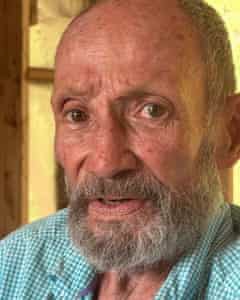
Rodney Wilkinson in 2026
https://sahistory.org.za/sites/duefault/files/archive_files/Rodney%20Wilkinson.pdf
Today, he is 76. His lungs are scarred from tuberculosis. Somewhere in the house where he lives there is a pennywhistle I sent him from a shop in Johannesburg, because I couldn’t find one in Knysna. Wilkinson learned to play as a child. The instrument belonged to the townships. In the 1950s a Black musician called Spokes Mashiyane, busking on the same Johannesburg streets where Wilkinson grew up, turned kwela street music into the biggest-selling sound of its era. It was music for the people apartheid was built to suppress. Wilkinson bombed a nuclear power station for that movement. Now, he plays kwela through scarred lungs, in a town that still doesn’t know who he is.
Sometimes the best disguise is being uninteresting.
He lived under his real name, had no fake ID, no aliases. He worked odd jobs as a handyman, electrician, and boat repairman around Knysna, Sedgefield, and Plettenberg Bay. “Rodney Wilkinson” was common enough that it didn’t ping.
He had no digital footprint as it was
pre-internet, pre-mobile phones. No bank accounts in his name, no registered business, no fixed address. He was paid in cash and lived in shacks, caravans, and back rooms. He’d been living 20km from where he is now, for 13 years, while the police were still checking border crossings.
Wilkinson’s TRC …….Reason Why
Wilkinson chose Koeberg because it was the apartheid state’s most visible symbol of “white technological superiority” – and because he knew he could hit it without killing people.
From his Truth and Reconciliation Commission testimony in 1996 , here’s why:
It was political, not personal. Wilkinson was not ANC. He acted alone. His motive was opposition to the Border War and apartheid’s nuclear program.
In his TRC statement he said Koeberg represented three things he hated:
• The Border War: He’d been conscripted in 1971, served in Angola, and came back believing the war was immoral. Koeberg was funded by the same state budget that paid for that war
• Nuclear apartheid: The government was selling Koeberg as proof that white South Africa could be a first-world, high-tech state despite sanctions. He wanted to puncture that image
• No accountability: The plant was built without a public referendum, in a whites-only decision, while black townships had no electricity
• He could do it with minimal risk to civilians. Koeberg was still in pre-commissioning in Dec 1982. Reactor fuel hadn’t been loaded yet. Unit 1 was mostly empty at night.
Wilkinson timed it for 02:00 on a Friday specifically so:
• The plant was staffed by 12 people, not 200
• No fuel in the core = no risk of radiological release
• Maximum economic damage, minimum human risk
He said in the interview: “If I’d wanted to kill people, I’d have done it differently. I wanted to break the myth, not the reactor.”
The bombs damaged electrical cabling, turbines, and control systems. Cost: R500m. Delay: 18 months. Radiation release: zero.
It was personal payback:
Wilkinson was a national fencing champion in 1970. He’d been selected for the Munich Olympics. South Africa’s ban over apartheid meant he never got to compete.
He publicly proclaimed: “They took my Olympics. I took 18 months of their nuclear program.”
He knew the plant:
• As a contract engineer on the control systems, he knew
• Where the security gaps were
• Which cables would shut down the plant longest
• That the building was still a construction site with lax internal checks
He didn’t pick a military base or the Union Buildings because he wanted an attack that would hurt the state’s prestige but not justify a full military response.
The TRC ruling:
The TRC granted him amnesty in 1996. Their finding: it was a politically motivated act against apartheid, no gross human rights violations, no intent to kill.
That’s why he walked free and why the case is public now.
It is one of the only successful sabotage attacks on a nuclear plant in history that did not cause a meltdown or casualties. The incident is considered one of the ANC’s most successful sabotage actions during the liberation struggle.
References:
https://sahistory.org.za/sites/duefault/files/archive_files/Rodney%20Wilkinson.pdf

