 Nongqai Vol 17 No 7D – Sergeant’s Ranks
Brigadier Hennie Heymans
Special Edition Nongqai please !
Thank you.
Logan
Cover page
Key Words
- South African Police,
- Subramonia Pillai,
- JR David, VR Moodley,
- Soobramoney Govender,
- Sergeant ranks,
- Non-White members,
- Police history,
- Promotion and rank structure,
Abstract
The research explains the different Sergeant ranks used in the South African Police during the 1960s and 1970s. It focuses on the ranks held by Non-White members and how these changed over time. It also describes the promotion system and the challenges faced because of racial discrimination. It highlights the service and achievements of several dedicated police members. The research aims to preserve an important part of South African policing history.
SOUTH AFRICAN POLICE
THE VARIOUS CATEGORIES OF SERGEANTS
PARTICULARLY AMONGST NON-WHITE MEMBERS DURING THE 1960’s 1970’s
By Col Logan Govender
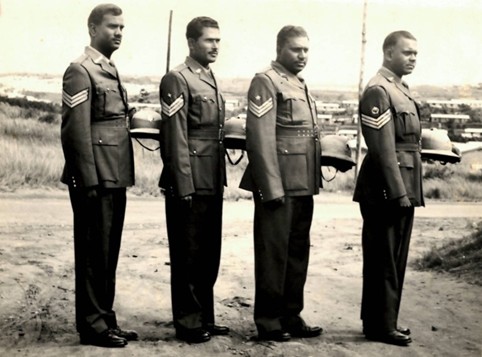
From, L-R, Lance Sergeant DJ Lamech, late (Captain); Second Class Sergeant K (Chris) Naidu, (Lieutenant-Colonel); Senior Sergeant Govindsamy Reddy, late (Captain); Special Grade Chief Sergeant S Pillai, late (Lieutenant-Colonel)
(This photograph was probably taken between 1967-1969. Lieutenant-Colonel S Pillai was promoted to Special Grade Chief Sergeant on 1967-09-01 and thereafter to one of the first Indian Lieutenants in South Africa in 1970. – [LG])
(Courtesy family of Lieutenant-Colonel S Pillai)
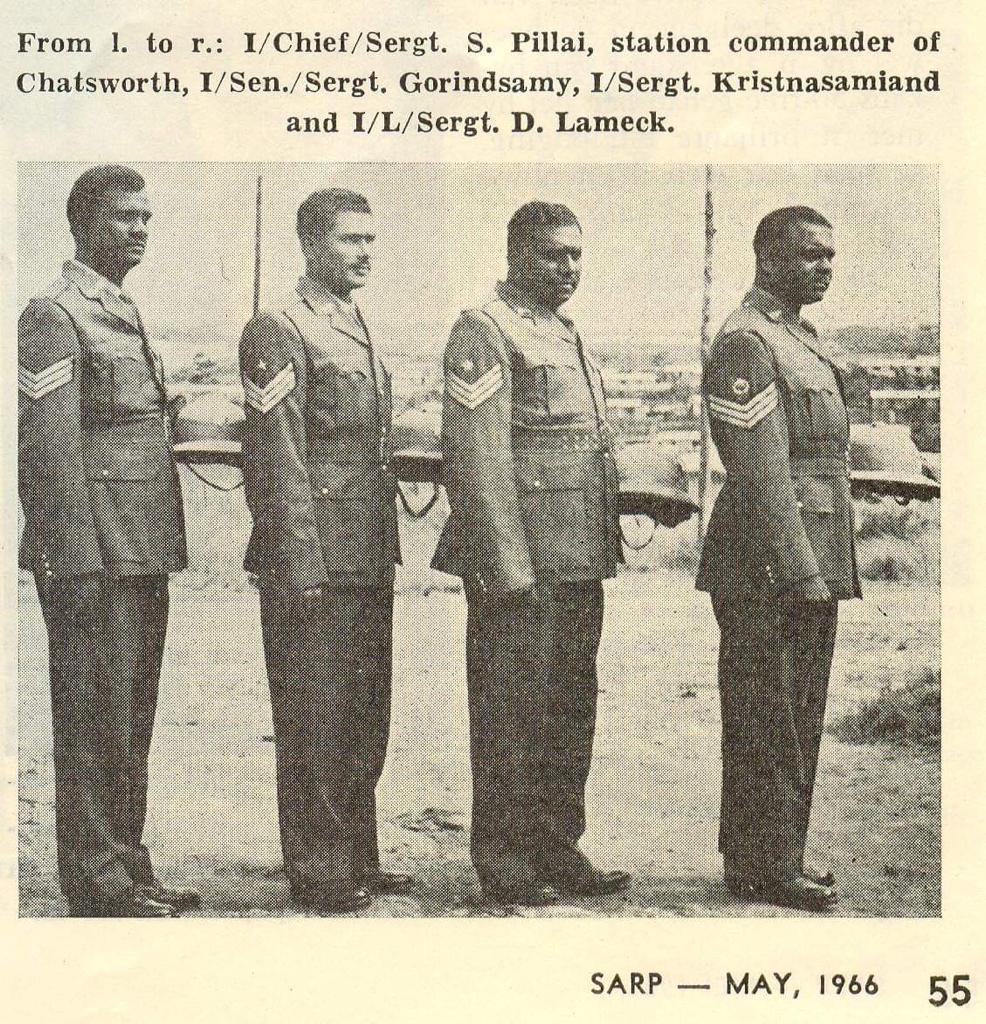
(Courtesy Brigadier Hennie Heymans / SARP)
(Researched, authored, edited and prepared for publication by Logan Govender – [LG]. Based on information provided by various sources.
AUTHOR’S NOTE
In my view, a brief description of the different categories of Sergeants among Non-White members of the South African Police during the 1960s would not do justice to this important part of our history. For this reason, I decided to compile this Special Edition of Nongqai. The ranks and categories are presented in ascending order, from the lowest to the highest.
This work was inspired while I was researching a Special Edition of Nongqai, which was dedicated to Warrant Officer JR David and Special Grade Chief Sergeant Vengadasalem Rajarathnam Moodley.
Throughout his career, JR David progressed through the non-commissioned ranks, starting as a Second Class Sergeant and eventually rising to the rank of Special Grade Chief Sergeant. By the early 1970s, he had earned promotion to the rank of Warrant Officer.
Chief Sergeant Moodley, on the other hand, was the first Indian Branch Commander of the Criminal Investigation Department of the South African Police, Unit 02, Chatsworth.
Chief Sergeant Moodley was a true pioneer, a trailblazer and one of the finest detectives of his time. He served with distinction from the 1940’s onwards. His late father, Constable Pavadai Venkatachalam Moodley, also served as a detective in Pietermaritzburg. Together, father and son gave more than sixty years of dedicated service to the South African Police.
While it is not my intention to revisit the injustices of the past, it is important that history records events accurately. When researching and documenting the achievements of Indian members of the South African Police, one cannot ignore the unfortunate circumstances that affected the distinguished careers of these two outstanding men.
In the mid-1970’s, the South African Government decided to extend commissioned ranks to Black, Coloured and Indian members. By every measure, both men deserved to be part of this pioneering group. Their experience, leadership, service records and reputations made them obvious candidates. However, fate dealt them a difficult hand.
Although they appeared to be natural choices for this historic step, however they were overlooked. I do not wish to speculate on the reasons why this happened, and it would not be fair to blame any particular system without knowing all the facts. Whatever the reasons, the full truth may never be known. As a result of circumstances, whether within or beyond their control, they missed the opportunity to become among the first Indian commissioned officers.
Only two Indian members were selected in that first group, while these other two highly respected and deserving officers were left behind.
During my research, what troubled me deeply was the fact that Special Grade Chief Sergeant Moodley only retired in 1972, while JR David retired in 1981. For reasons that remain unknown, neither of them was commissioned in July 1970 alongside men such as Lieutenants Subramonia Pillai and Kabalamurthi Nelson Nayager.
This was a matter that saddened me greatly, and I recorded it carefully. It also encouraged me to better understand and explain the different ranks and categories that existed for Non-White members of the South African Police during that period.
It is well known that my father served as a Sergeant in the South African Police. Through him, I was exposed to the stories, discussions and painful realities experienced by many members. I heard first-hand accounts of the disappointment, sadness and deep sense of injustice felt by many loyal and capable Non-White policemen.
Despite their years of service, experience and sacrifice, many were unable to achieve promotion to the rank of Warrant Officer, unlike their White counterparts.
This unequal treatment left lasting scars. Some believed that one reason for this injustice was that a Warrant Officer was traditionally addressed as “Meneer” or “Sir”, and that the carrying of the cane, which represented authority and status, was considered unacceptable for Non-White members under the discriminatory laws of the time.
Whether this was the actual reason or not, the outcome was the same: deserving men were denied the recognition, status and dignity that their service had earned.
It was only on 1 July 1970 that the first Non-White officers in the South African Police were finally commissioned. Although this was an important historic milestone, it cannot erase the years of unfairness and missed opportunities experienced by those who served alongside them.
I trust that this explanation provides a better understanding of this difficult chapter in our history. Perhaps, one day, surviving predecessors or senior officers may be able to provide further clarity and insight into these events.
[LG]
[LG]
SOUTH AFRICAN POLICE
THE VARIOUS CATEGORIES OF SERGEANTS
PARTICULARLY AMONGST NON-WHITE MEMBERS DURING THE 1960’s 1970’s
“The Nation which forgets its defenders will itself be forgotten.”
– Calvin Coolidge
It is important to record, document and attempt to explain the different categories of Sergeant ranks in the South African Police during its earlier years. The South African Police created several Sergeant ranks, beginning with Lance, Second Class Sergeant and then First Class Sergeant, each with its own rank insignia. These categories applied to all racial groups until probably the 1950’s early 1960’s. During the early 1950’s and 1960s, the structure changed to include only Lance Sergeant, Sergeant and Senior Sergeant. While this cannot be confirmed with complete certainty, it appears that this distinction applied mainly to non-White members. White members were generally designated simply as Sergeants without further category, whilst the rank of Senior Sergeant for non-White members was considered as “equivalent”. Remember right until the mid 1980’s EVERY White member was considered senior to any Non-White member
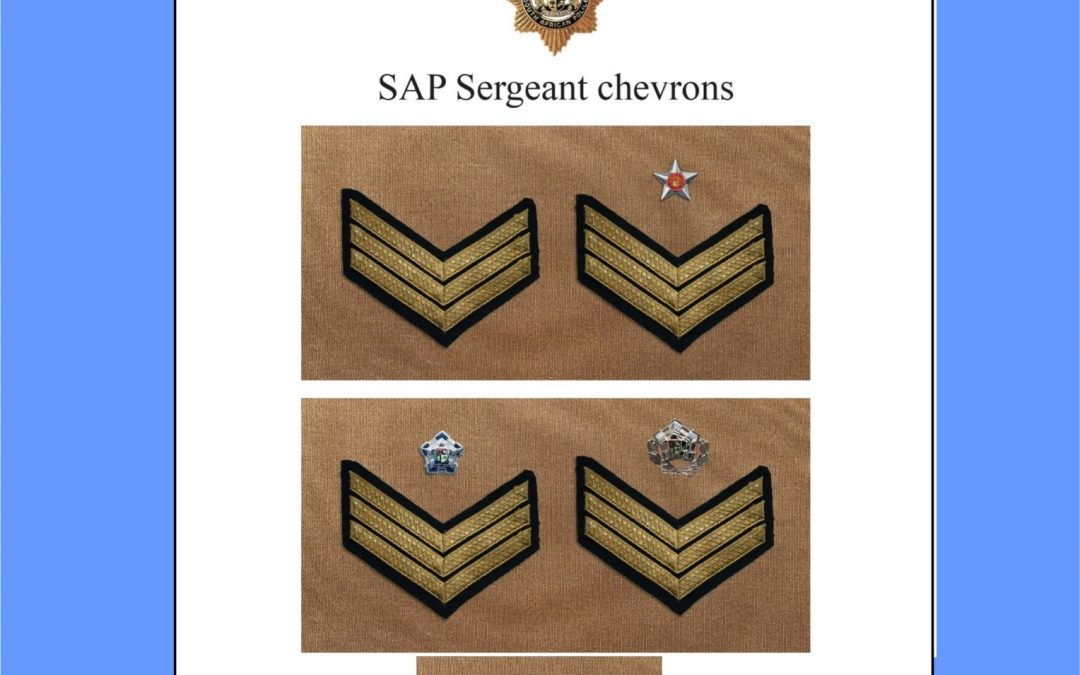
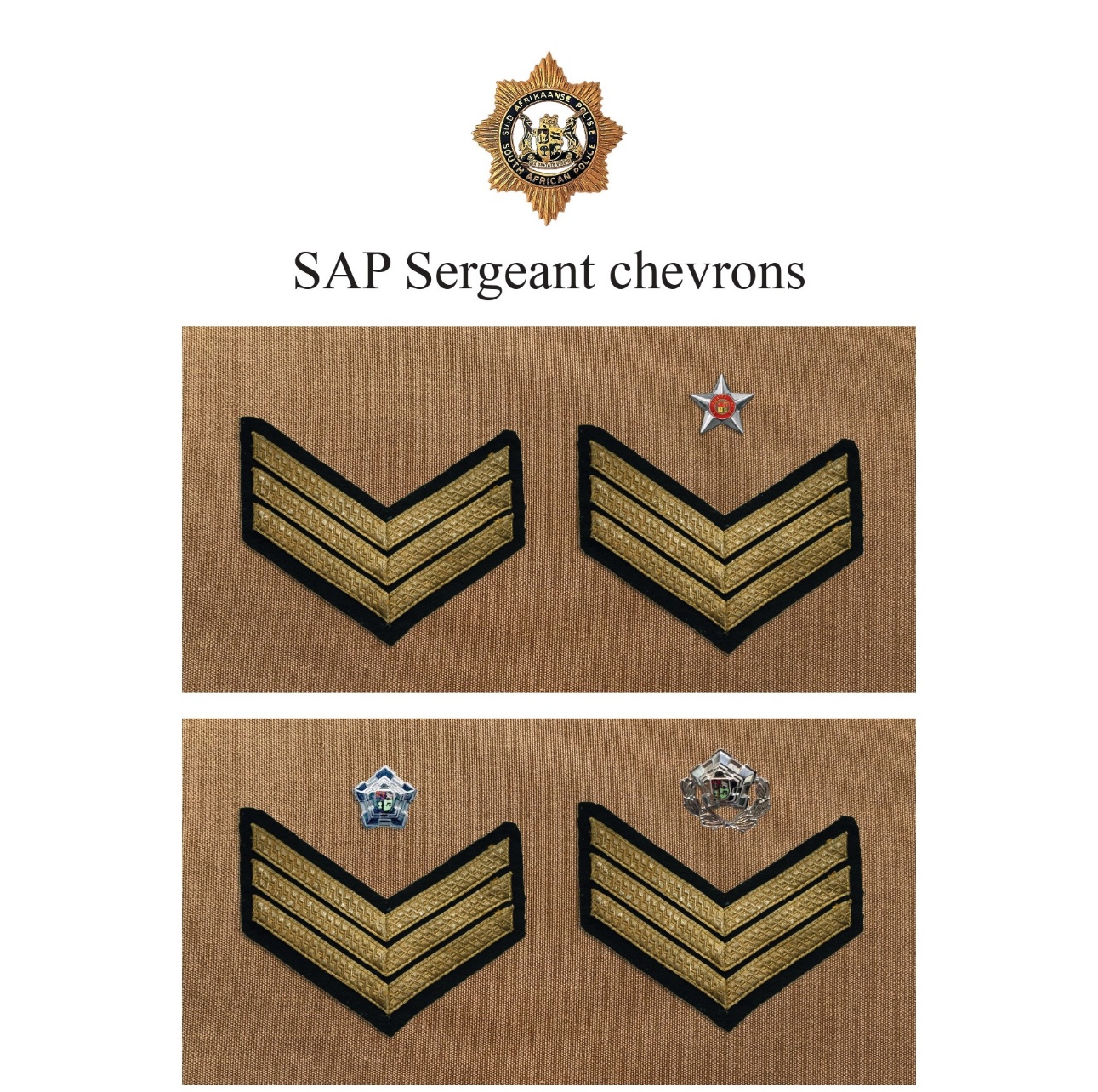
LANCE SERGEANTS
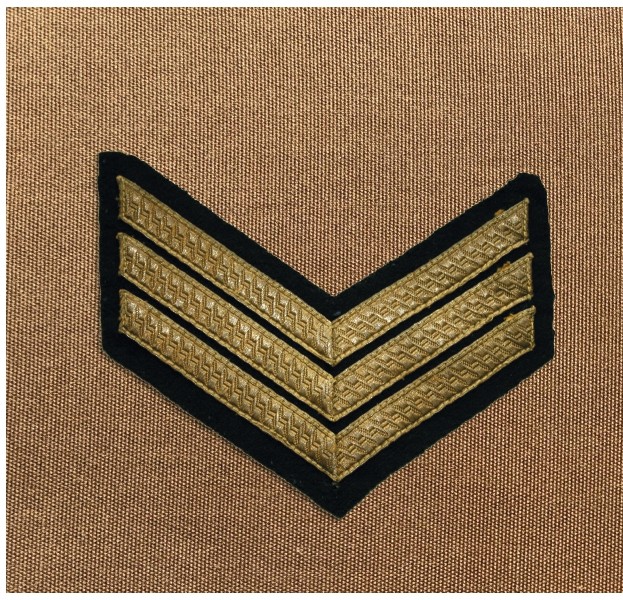
Lance Sergeant rank mainly Training Institutions and where there was an absence of Sergeants for Disciplinary purposes
Three bar chevron only worn on the right shoulder
(Courtesy Mr Michael Huxtable)
(While I was Station Commander at SA Police, Mountain, I found that many senior constables had more than ten years of service, yet their experience and seniority were not being properly recognised and there was an extreme lack of sergeants at the station. This was affecting supervision, control, discipline, and the good order of the station.
I raised the matter with Colonel WF Vorster, the District Commandant, and his deputy, Lieutenant-Colonel SE Gillham. At first, the District Commandant did not support the idea, as he believed the rank of Lance Sergeant was only used at training institutions. However, his deputy convinced him to approve it on a trial basis so that its value in strengthening supervision, control, and discipline could be properly assessed.
Nearly ten members were nominated, but not all were finally approved. These Lance Sergeants were then placed in key positions across each relief, including as charge office commanders, van drivers, and in administrative and crime prevention duties, where they helped improve leadership, accountability, and discipline within the station. In my personal opinion it was very successful. – [LG])
SECOND CLASS SERGEANTS
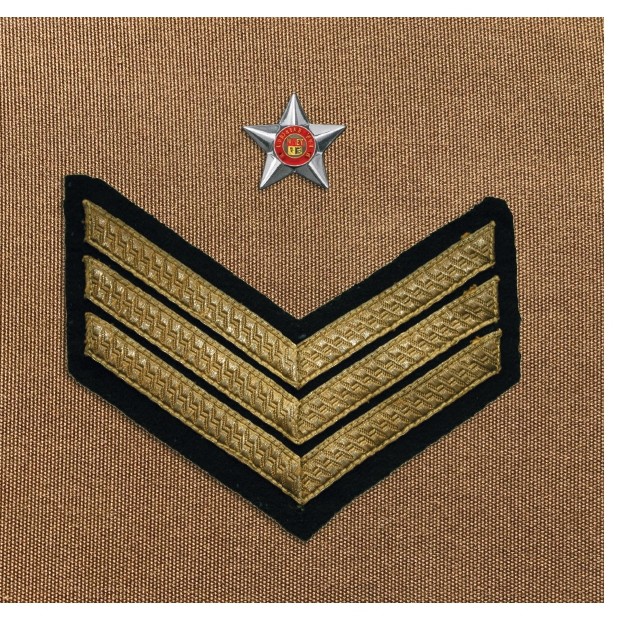
Second Class Sergeant
Three bar chevron with a 5 point star above it worn on the right shoulder
(Courtesy Mr Michael Huxtable)
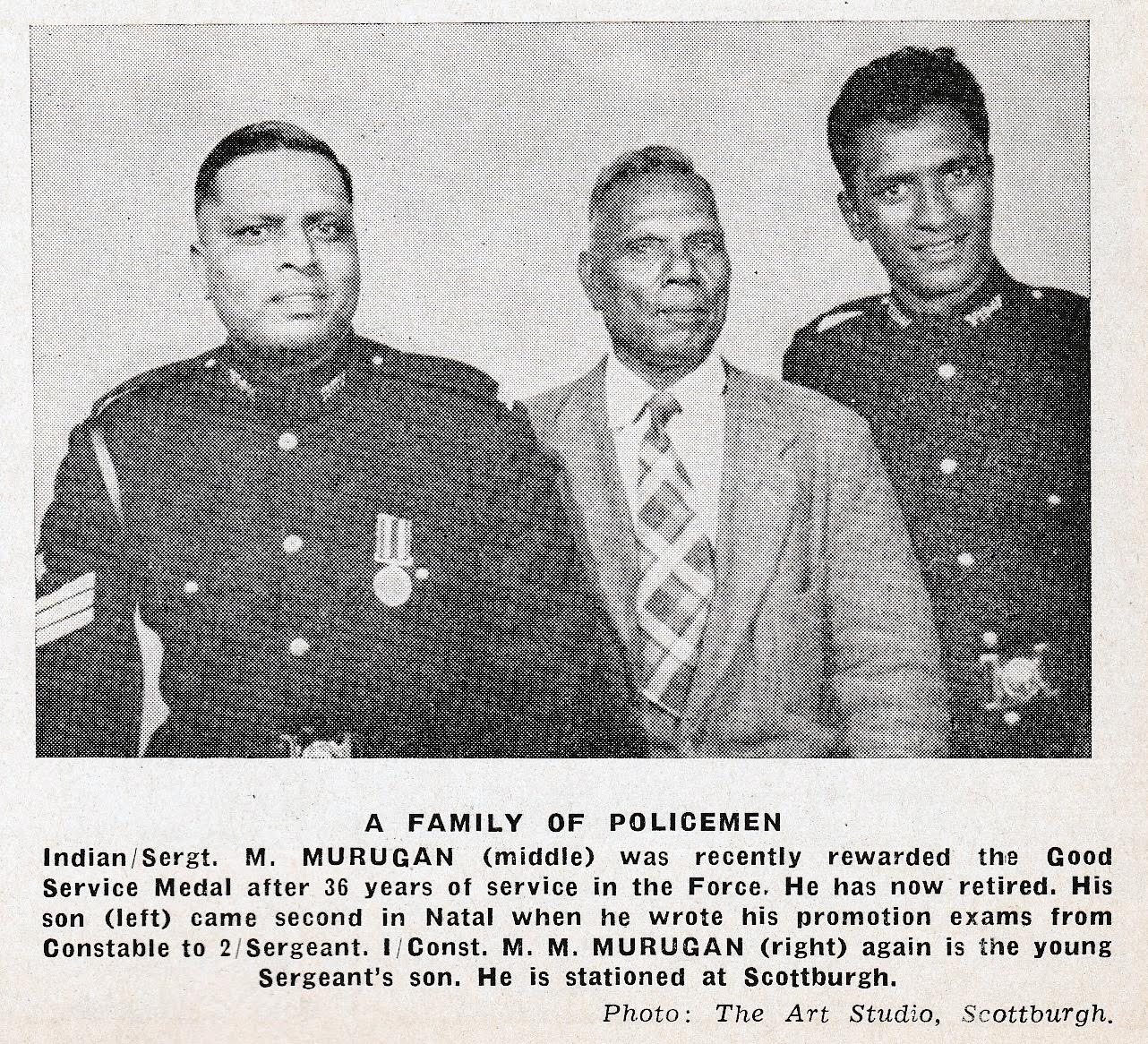
(Courtesy Brigadier Hennie Heymans / Nongqai)
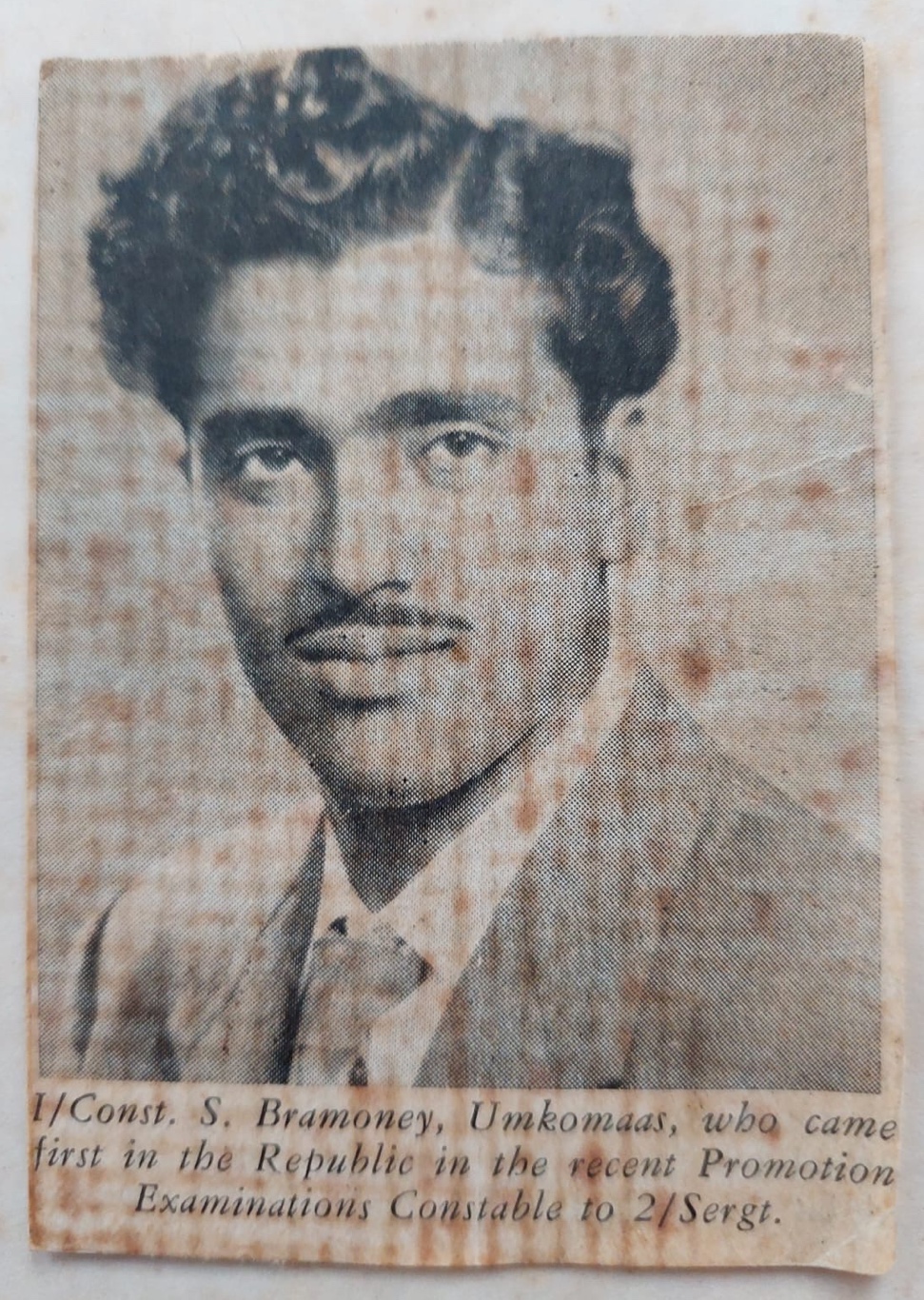
(Courtesy family of Lieutenant-Colonel Soobramoney Govender)
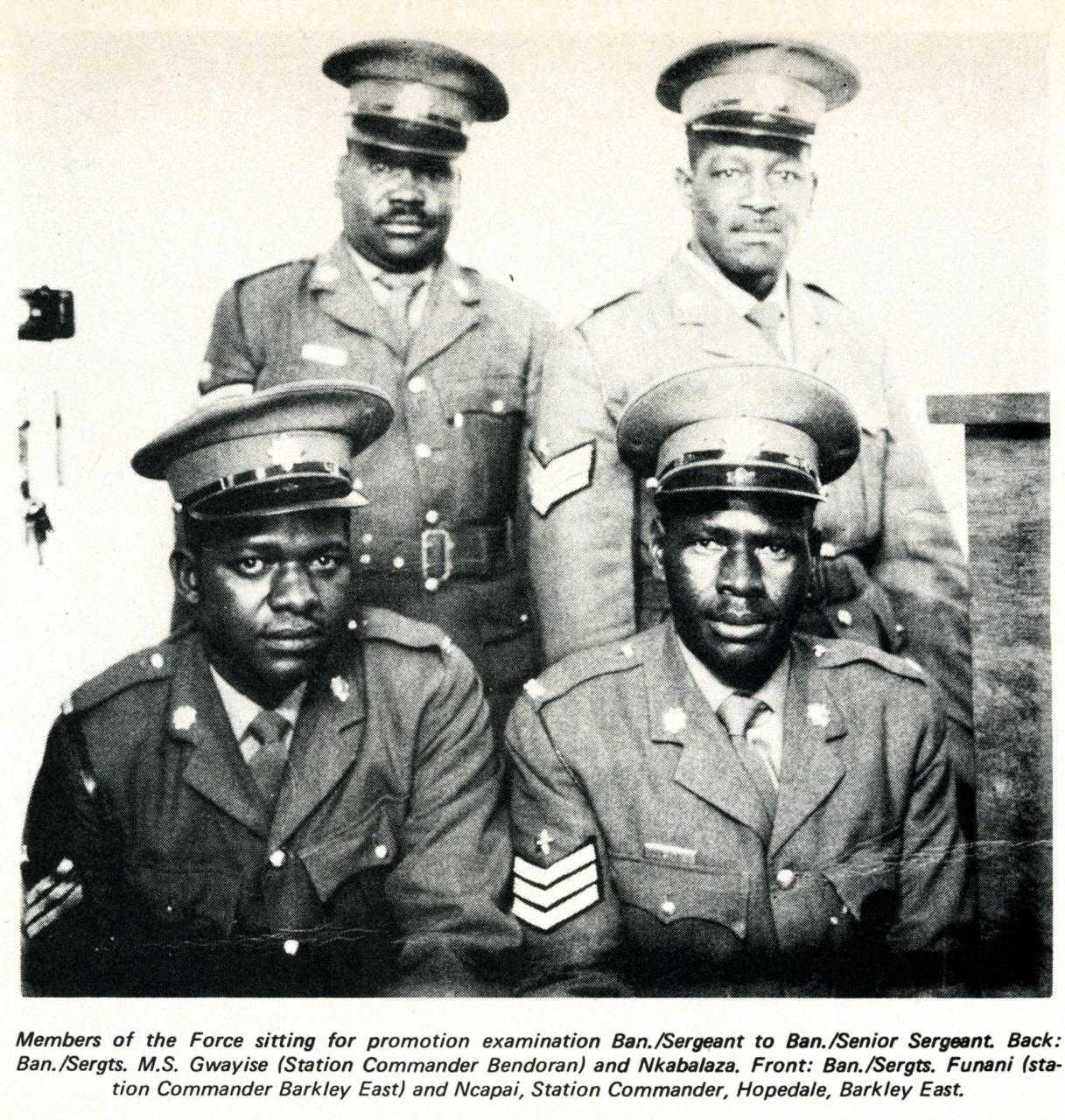
(Courtesy Brigadier Hennie Heymans / SARP)
FIRST CLSS / SENIOR SERGEANTS LATER JUST SERGEANTS
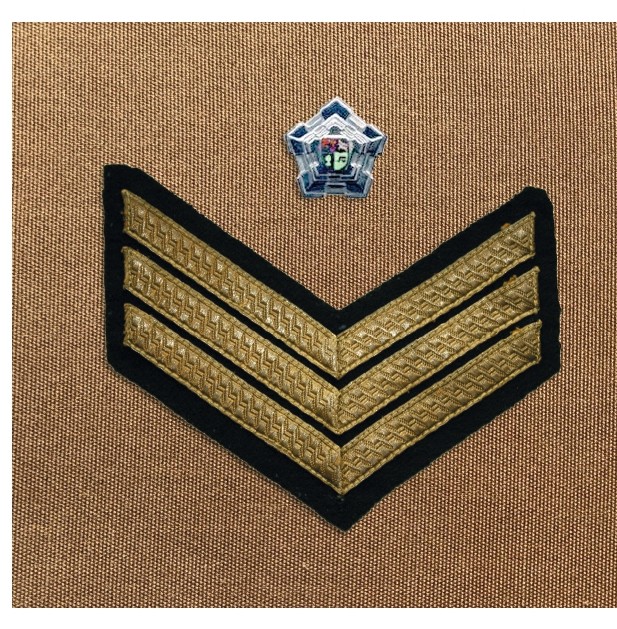
First Class Sergeant later Senior Sergeant later just Sergeant
Three bar chevron with a castle above it worn on the right shoulder
(Courtesy Mr Michael Huxtable)
CHIEF SERGEANTS
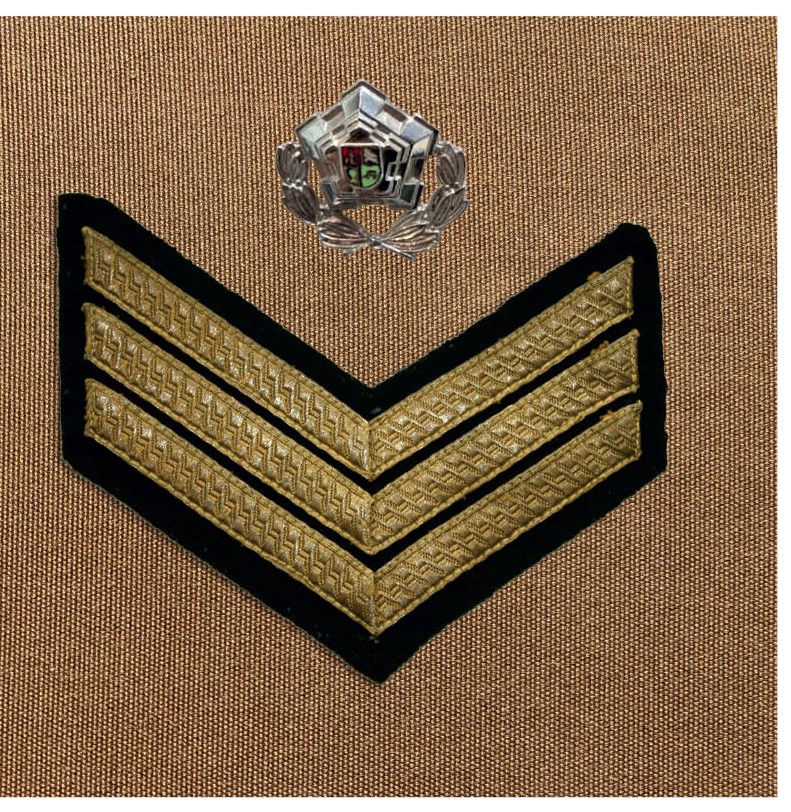
Chief Sergeant only for Non-White members
Three bar chevron with a castle surrounded by half a laurel wreath around it worn on the right shoulder
(Courtesy Mr Michael Huxtable)
During 1964 S Pillai was one of the first few Indian members to be promoted to the rank of Chief Sergeant. – (Information obtained from his Autobiography, this occurred whilst he was based at Sydenham and upon promotion was transferred to Bellair. – [LG])
The rank of Chief Sergeant was introduced specifically for non-White members. Only a handful of Indian members from Durban and (Only recently just before publication. Information from Lieutenant-Colonel Pipes Y Haffajee. – [LG]) two from Pietermaritzburg qualified for this rank, JR David and GV Govender. Among them were S Pillai, K Nayager, VR Moodley, K Rajgopaul, Vally, Soobramoney, SD Subramoney and M Moodley. From the Pietermaritzburg District (No. 45), the only two members to attain this rank was JR David and GV Govender.
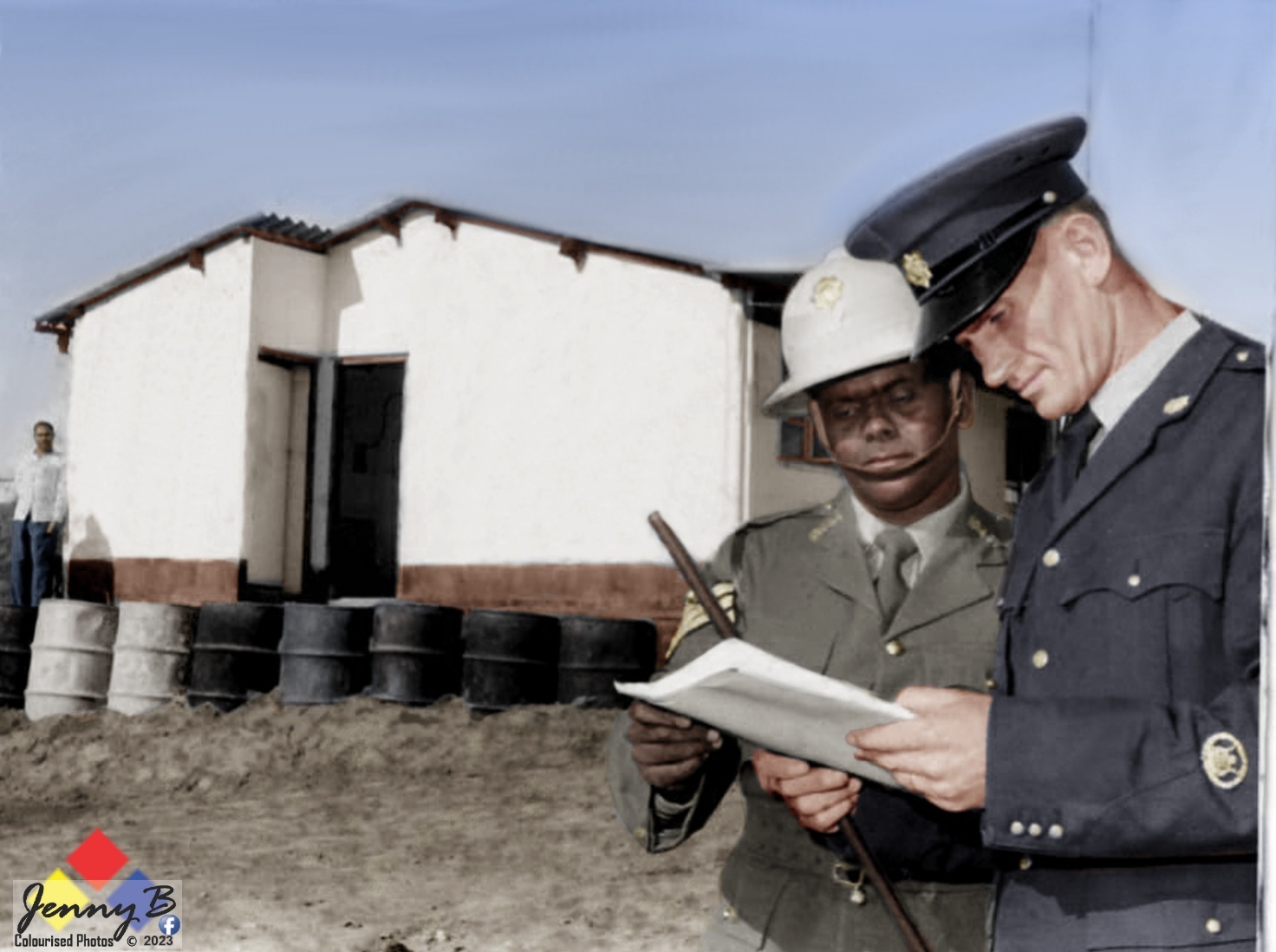
Chief Sergeant Subramoni Pillai and Warrant Officer G Smit discuss plans for the new Chatsworth Police Station – the first entirely Indian-Staffed station in South Africa. In the background a section of the temporary police station can be seen
(Courtesy of the Pillai family. The original black and white photograph was kindly colourised by Ms Jenny Bosch.)
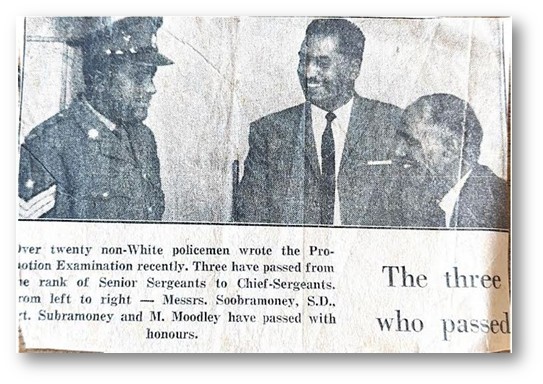
The three Indians who had passed the promotion examinations to the rank of Chief Sergeant
From, L-R, Messrs Soobramoney, SD Subramoney and M Moodley
(Courtesy family of Lieutenant-Colonel Soobramoney Govender)
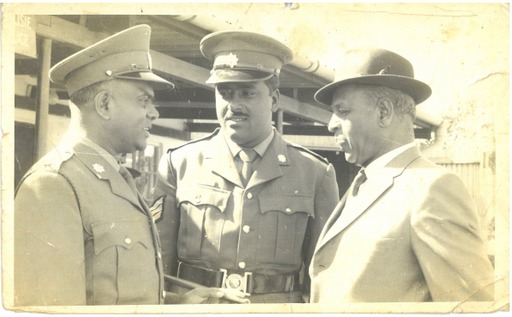
Lieutenant Subramonia, Station Commander of SA Police, Unit 02, Chatsworth after his arrival from the First Candidate Officer’s Course for Non-White members in August 1970
(Courtesy family of Lieutenant-Colonel Soobramoney Govender)
From, L-R, Lieutenant S Pillai; Chief Sergeant Soobramoney Govender, Acting Station Commander, Unit 02, Chatsworth and Special Grade Chief Sergeant VR Moodley, Branch Commander of CID, Unit 02, Chatsworth
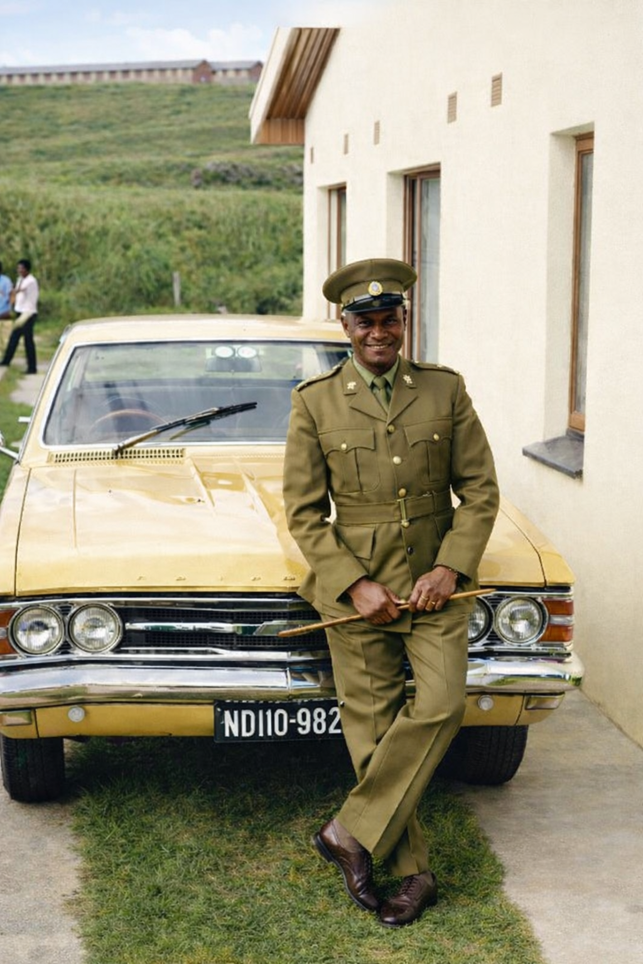
Captain Nelson K Nayager
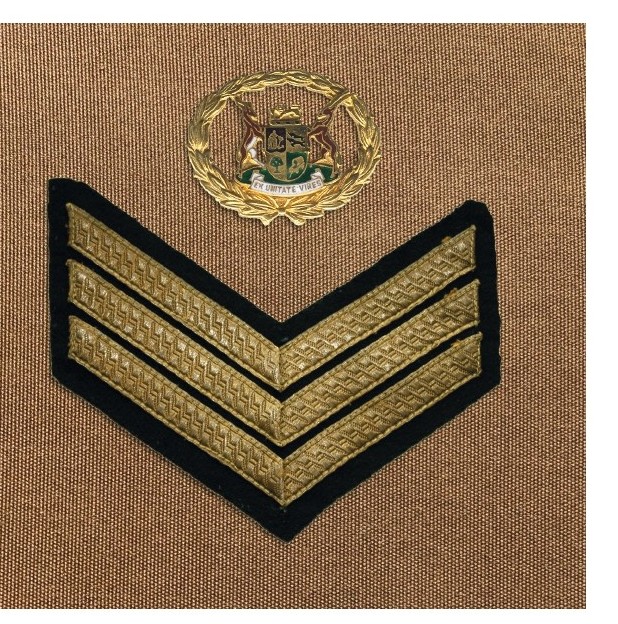
In 1967, another rank Special Grade Chief Sergeant was created, again only for non-White members. Various reasons were given at the time for its introduction, though these are not detailed here. Once again, only a small number of Indian members reached this level, including S Pillai; VR Moodley; K Nayager from Durban, and JR David from Pietermaritzburg.
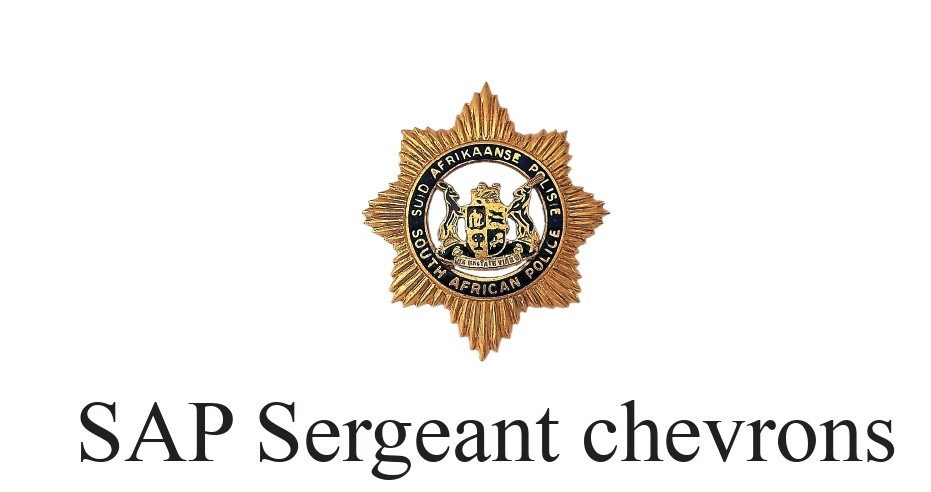
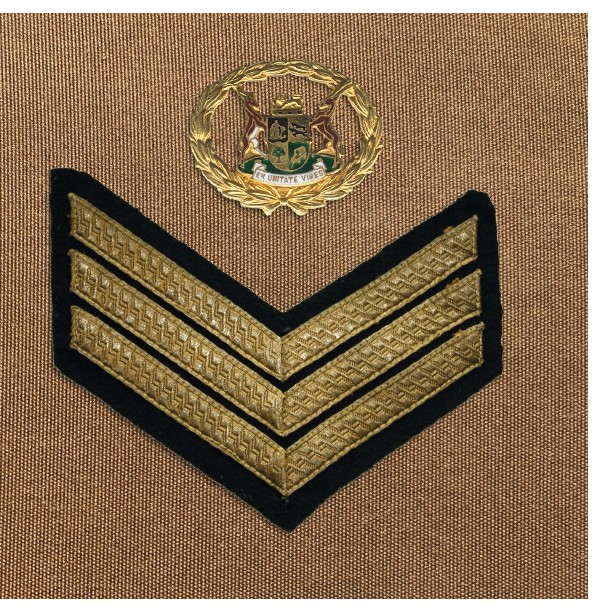
Special Grade Chief Sergeant
Three bar chevron with the coat of arms surrounded by a laurel wreath around it worn on the right shoulder
(Courtesy Mr Michael Huxtable)
CANDIDATES COURSE FOR PROMOTION TO SPECIAL GRADE CHIEF SERGEANT
SA POLICE BANTU TRAINING COLLEGE NEW MODDER
MARCH / APRIL 1967
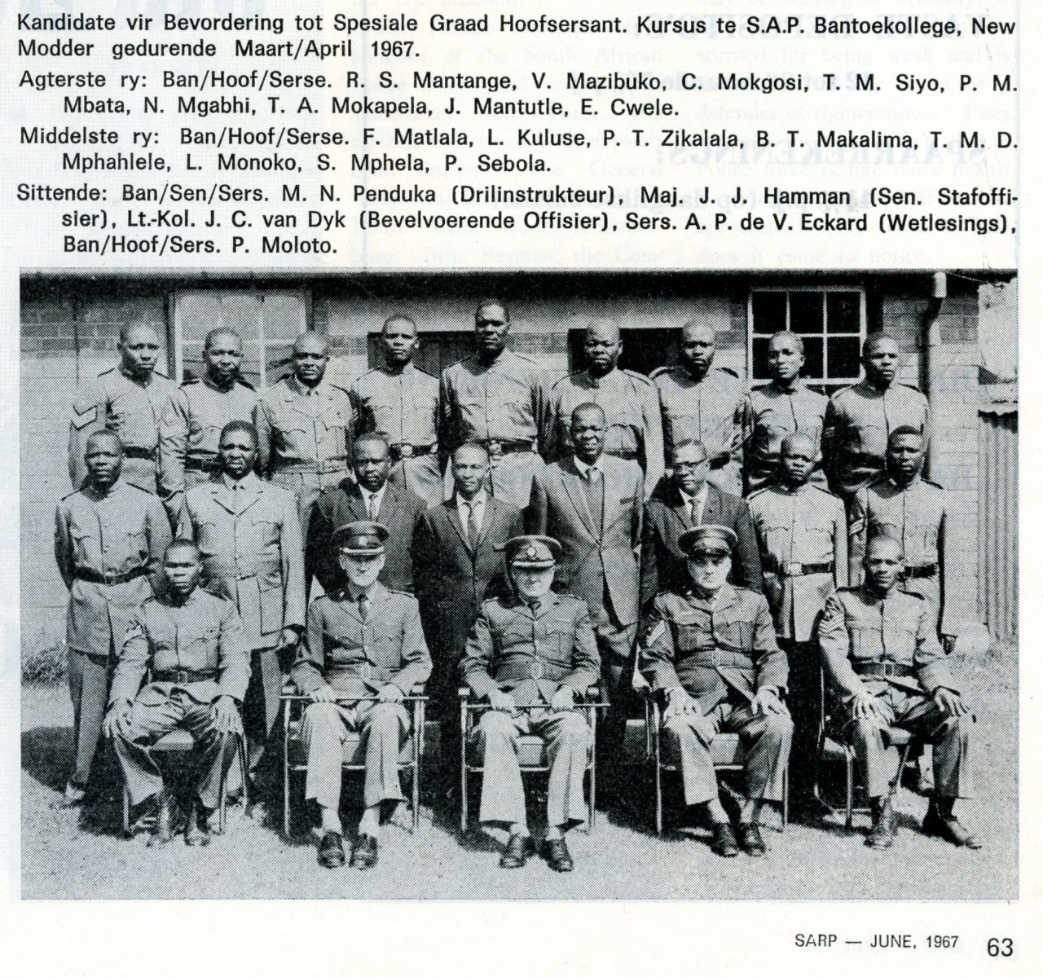
(Courtesy Brigadier Hennie Heymans / SARP)
CANDIDATES PROMOTED TO THE RANK OF SPECIAL GRADE CHIEF SERGEANT
SA POLICE BANTU TRAINING COLLEGE NEW MODDER
MARCH / APRIL 1967
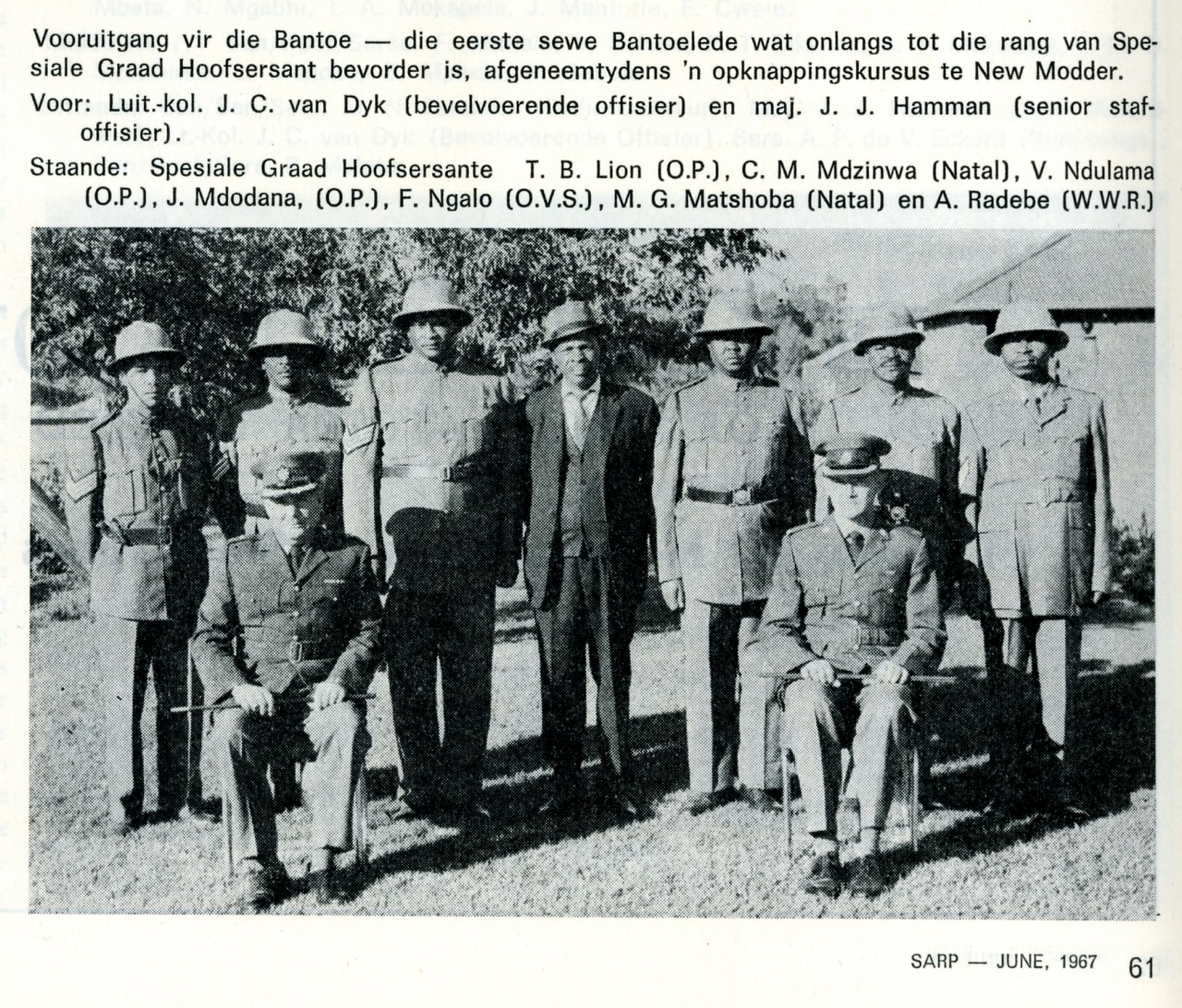
(Courtesy Brigadier Hennie Heymans / SARP)
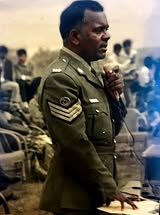
Special Grade Chief Sergeant S Pillai addressing a gathering
(Courtesy of the family of Lieutenant-Colonel S Pillai)
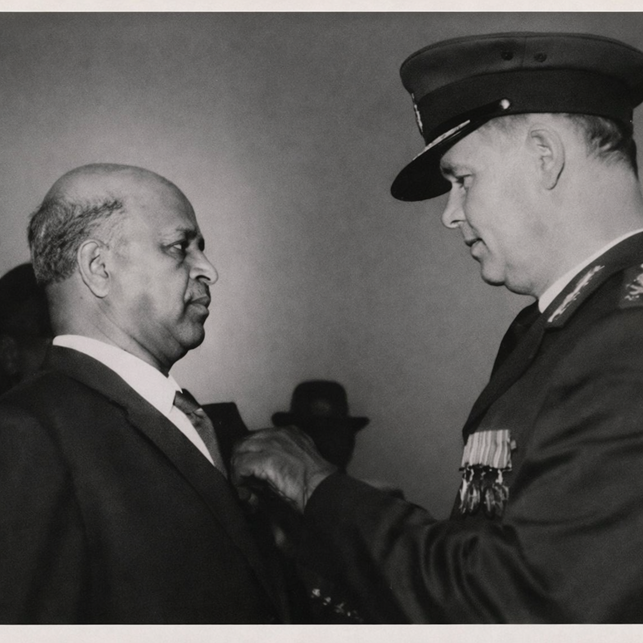
Special Grade Chief Sergeant VR Moodley receiving The South African Police Star for Merit, 30 years of loyal service and exemplary conduct from the Commissioner of The South Africa Police, General JM Keevy
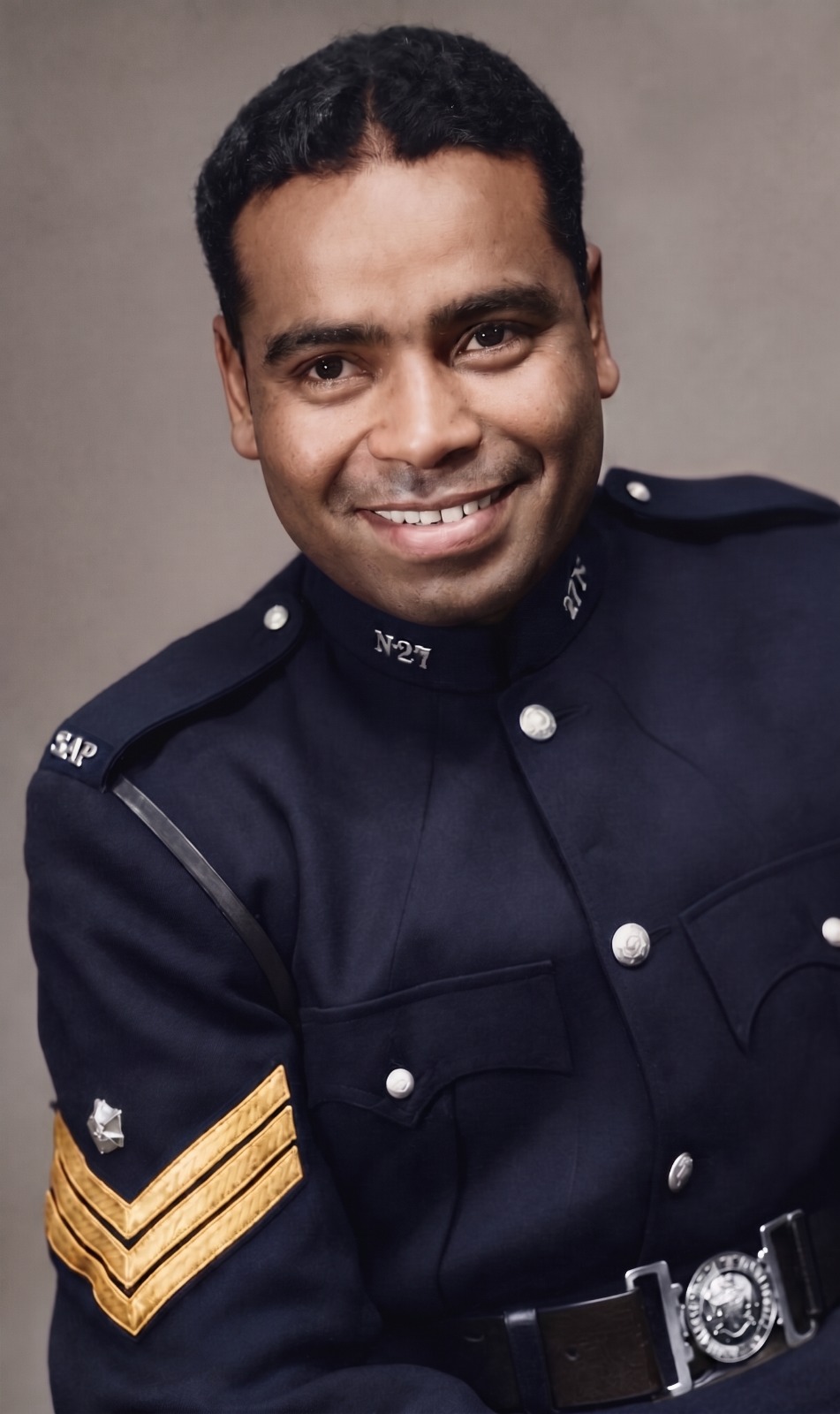 Warrant Officer JR David
This rank was abolished in mid-1970, when the first Candidate Officer’s Course for non-White members was introduced. Following this development, non-White Sergeants were placed on the “same level” as their White counterparts and could be promoted to the rank of Warrant Officer depending on educational qualifications; years of experience; recommendation by the District Commandant.
These rank distinctions reflect the broader system of racial segregation that existed at the time, where opportunities and recognition were often determined by race rather than merit. Such policies limited career progression for non-White officers and highlight the inequalities within the police force during that period.
Acknowledgement
I wish to recognise and thank the Editor in Chief of Nongqai, Brigadier Hennie Heymans for his tireless, often unseen efforts in helping with the creation and publication of this magazine.
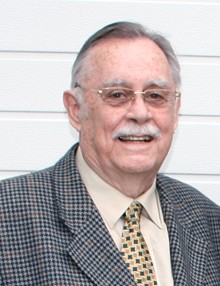
Brigadier Hennie Heymans, Editor in Chief of Nongqai
An experienced and highly skilled officer with an exceptional memory. His Dad was stationed at Somtseu Road and Mount Edgecombe during the 1940’s. Brigadier holds a Master’s degree in Strategy. Was stationed with Lieutenant-Colonel (Ray) Mathura Munilall at Wentworth. He was also based at King’s Rest (Brighton Beach); and amongst others, Soweto Region, The Public Relations Officer at Head Office and later a District Commandant at Welkom in the Free State Province.
I must also acknowledge the outstanding contributions and enduring commitment of those who strive to preserve our policing heritage.
My sincere thanks go to:
- Mr Michael Huxtable and Mrs Jennifer Bosch for their respective contributions;
- And finally, to my family, for their patience, encouragement, and understanding throughout the journey of researching, compiling and refining this tribute.
“Each day, millions of police officers do the selfless work of putting their lives on the line to protect civilians, frequently responding to or preventing crises completely with no recognition.” – Letitia James
“agnoscere et honorare servientibus” –
“to acknowledge and honour those who served”
Logan Govender

Those ranks bring back memories, pride and commitment. Ranks that were earned. Thank you to the editors for calling back the past. I member the sergeant and warrant officers rank that made me who I became in the organisation, although I retired as a brigadier.