Nongqai Vol 17 No 7 – SAP Camou
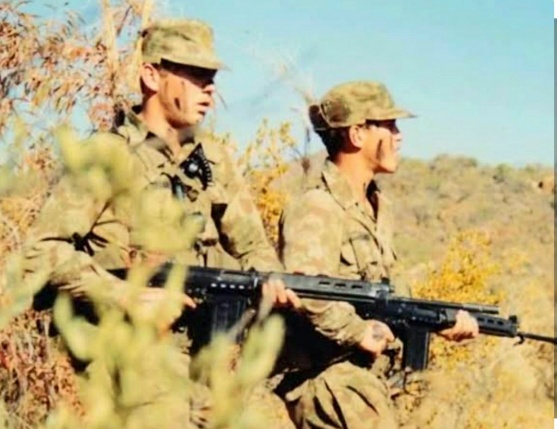 South African Police (SAP): Camouflage Uniform: 1968-1994
Compiled by Wolfgang Witschas
Abstract
From 1968 to 1994 the South African Police (SAP) Counter Insurgency Unit (COIN) and the SAP Special Task Force used distinct camouflage uniforms. First the SAP Pattern 1 and later the SAP Pattern 2, from 1970 to1994.
With the SA Police Service (SAPS) only the Special Task Force still use camouflage uniforms.
Key Words
South African Police (SAP),
SAP Counter Insurgency Unit (COIN),
SAP Special Task Force,
SA Police Service (SAPS) the Special Task Force,
Camouflage uniforms,
Camouflage uniforms SAP 1st Pattern,
Camouflage uniforms SAP 2ndPattern,
Introduction
In South Africa very few uniforms earned as much respect as the South African Police (SAP) camouflage uniform.
It was designed for the Southern African environment, its camouflage pattern blended remarkably well into bush, grassland and many other natural settings. In the field, it could be incredibly difficult to spot an officer wearing it—a testament to how effective the design was.
History
With the commencement of the 23-year Border War in South West Africa (SWA) on 26 August 1966, the SAP was deployed rapidly and, in many aspects, was unprepared for counter-insurgency operations. At that time no formal unit existed that was trained or equipped for COIN operations, and all structures, training and equipment had to be developed from the outset.
Furthermore, no dedicated field uniform existed and SAP members wore standard khaki overalls and felt bush hats during COIN training as well as when operationally deployed on the border of South West Africa (SWA) now Namibia.
Creation of an indigenous camouflage uniform
Background
The SAP senior management soon realised that the COIN unit was in urgent need to be issued with a suited bush uniform providing maximum cover in the bush by blending into the environment.
At that stage the Rhodesian Security Forces also were fighting a counter insurgency war.
and they needed camouflage uniforms for the mopane, thornveld and bushveld and Di Cameron at David Whitehead Textiles in Salisbury designed the “Brushstroke” pattern.
It had large, high-contrast organic shapes for a 3D effect. The SAP saw that it worked well
Design
The SAP wanted something that worked for the police — not just military. Different cut, different colours. It was a police logistics project, not a commercial designer – developed in house by the SAP Quartermaster/Logistics and made first by a Rhodesian and later by a local contractors like Ensign Ltd.
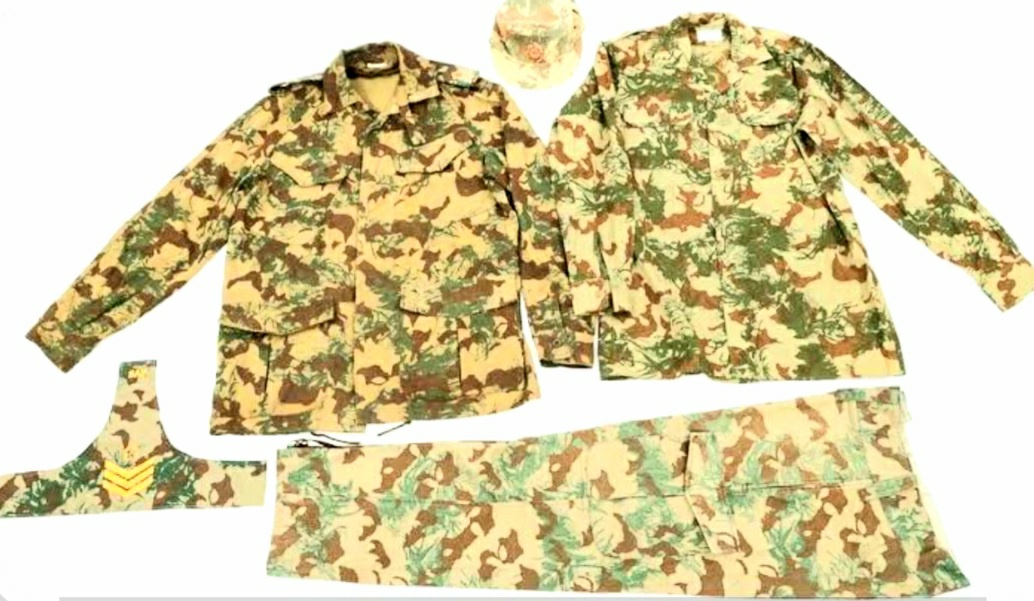
The design of the uniforms were the same for both patterns. It was not just practical it was a sharp-looking uniform that represented professionalism, discipline and the demanding work carried out by those who served in some of Southern Africa’s toughest environments.
SAP 1st Pattern (Brushstroke) ∼1970-1972
• Design: Spot-like or “frog-skin” frog design, “brushstroke” blotches, sometimes referred to as the Rhodesian “vertical lizard” pattern
• Colours: Grass green and russet foliage shapes overlaid on a khaki background
• Historical Context: The 1st pattern camouflage uniforms were extensively manufactured by John Rowett & Sons (Pvt) Ltd a “home-grown Rhodesian clothing manufacturer” based in Salisbury, Rhodesia in the early 1970s and deployed during early Border War in SWA and In Rhodesia, were the SAP were also deployed from 1968.
https://keepsakes.co.za/product/old-sap-camo-uniforms
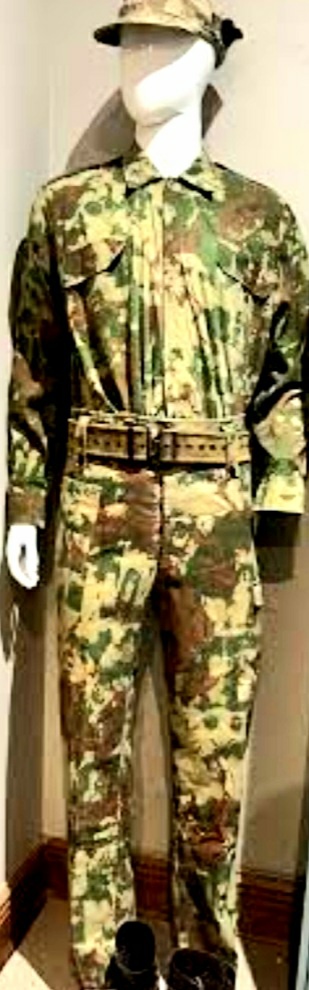 https://keepsakes.co.za/product/old-sap-camo-uniforms
SAP 2nd Pattern / Bush Pattern
Issued from 1973 to mid-1990s
• Design: A distinct brushstroke-style pattern optimized for the Southern African bush
• Colours: Features bold, elongated, jagged strokes of dark green and brown foliage blotches over lighter khaki or tan. Designed specifically for SA bushveld and grassland. Much more disruptive than the 1st pattern
• Usage: Became the standard camouflage uniform for SAP COIN unit from the early 1970s through the early 1990s.
Both 1st & 2nd camouflage patterns of earthy tones and broken foliage shapes broke up the outline incredibly well and blended remarkably well into bush, grassland and semi-desert and many other natural settings. In the field it could be incredibly difficult to spot an officer wearing it—a testament to how effective the design was. Veterans often say you could be 10m from a guy in a SAP camouflage uniform and not see him, especially with the 2nd pattern.
Shirts:
Long-sleeve shirts with butterscotch coloured plastic buttons. With time some officers often converted the long sleeved to short- sleeved shirts.
Trousers:
Trouser with butterscotch coloured plastic button fly, multiple large “cargo” pockets with flaps on the outside of the legs at thigh level with inverted box plea & drawstring cuffs. Belt loops around the waist, all fastened with those same plastic buttons.
Bush jacked:
The bush jackets even had a button-in winter liner with butterscotch coloured plastic buttons. Buttons in the 1980s were camouflage coloured to match the colour of the uniform.
Headgear:
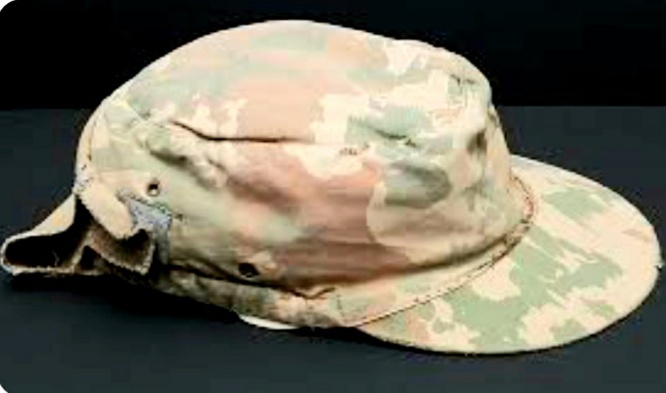
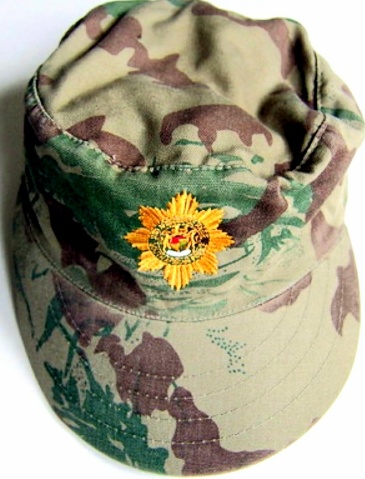
Camouflage cap:
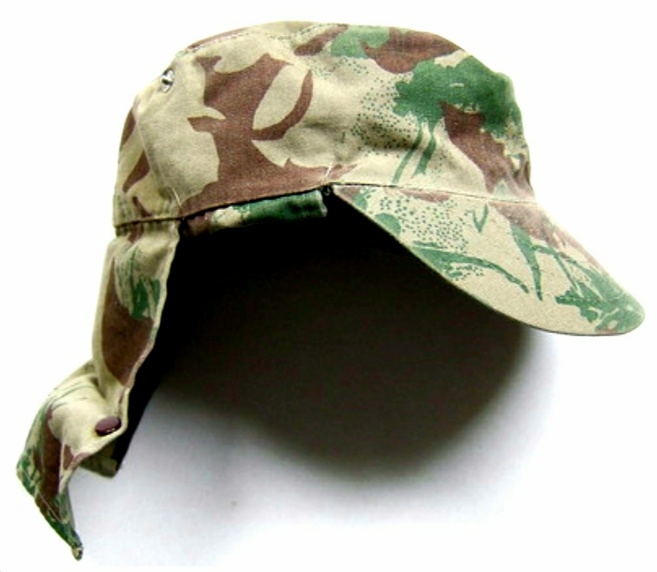
Khaki background with russet and green foliage shapes, with stowable rear neck flap
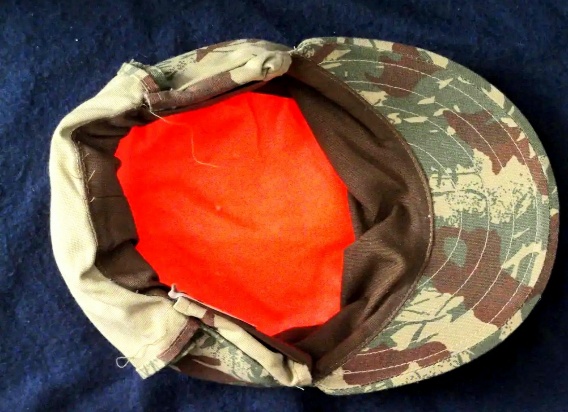
foldable, buttons-on flap neck protector. Buttons were butterscotch coloured plastic buttons. Some later issues were fitted with Velcro patches and during the 1980s with metal studs. Later issues had a” visibility patch or “orange safety liner” sewn into the crown on the inside of the cap.(From the
air it’s highly visible against bush and camouflage. Helicopters and fixed wing could spot it easily from above). A cloth badge resembling the SAP star was sewn to the front of the cap.
https://keepsakes.co.za/product/old-sap-camo-uniforms
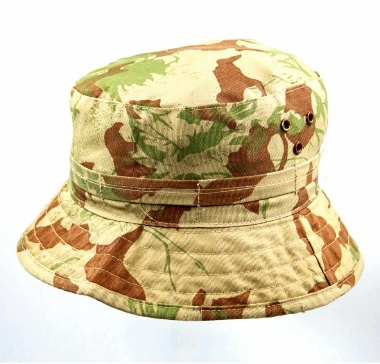
Camouflage bush hat:
Khaki background with russet and green foliage shapes. A “visibility patch or orange safety liner” was sewn into the crown on the inside of the hat. A cloth badge resembling the SAP star was sewn to the front of the hat.
https://keepsakes.co.za/product/old-sap-camo-uniforms
SAP Webbing Set: 1970-1989
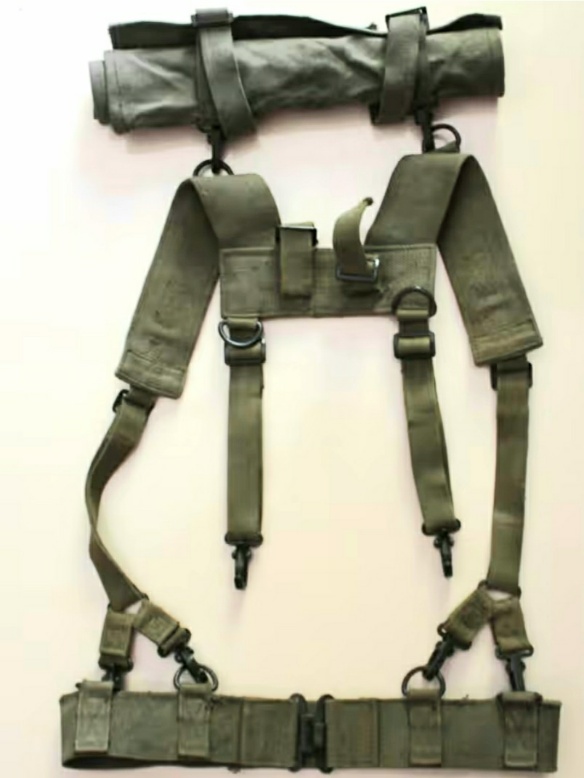
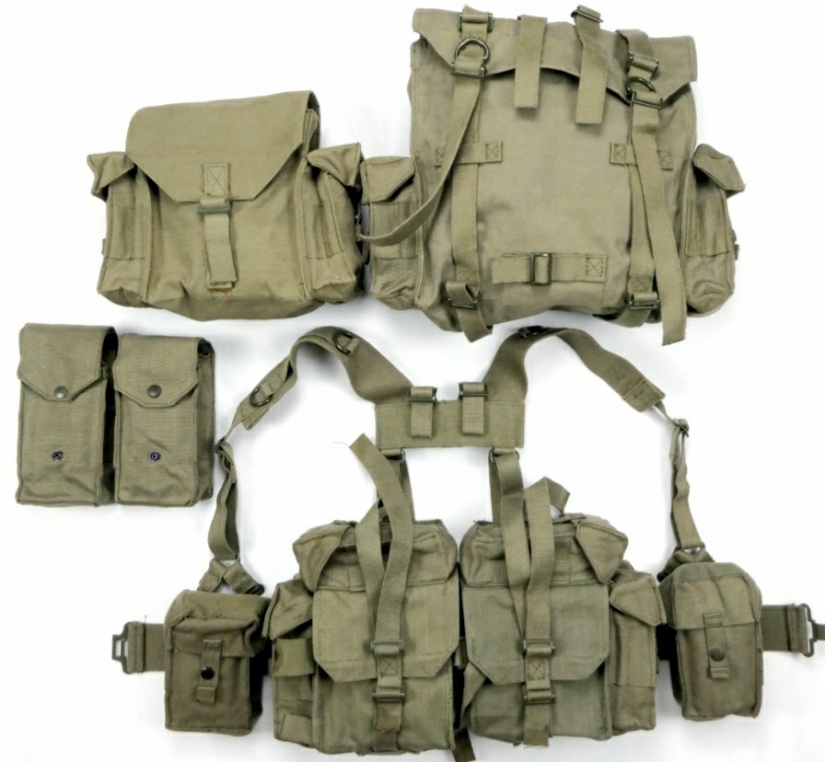
The SAP webbing set was the basic 73-pattern style set of the South African Defence Force (SADF). It was made in light green durable canvas and consisted of:
• Belt
• Yoke
• Rucksack
• FN FAL/R1 Ammunition Pouches
• Kidney Pouches
• Water bottle and carrier
• Poncho roll
Core Belt Kit:
Waist belt: 5 cm light green canvas belt with a green metal buckle
Yoke / Shoulder braces: H-type braces to take weight off the hips
Ammunition pouches: 4 x magazine pouches.
Each held 2 x FN FAL/R1 magazines with Button flap closure
Canteen pouch: 1L plastic canteen in canvas pouch
https://keepsakes.co.za/product/old-sap-camo-uniforms
General purpose pouch/Kidney pouch:
2 x on the belt for rations, grenades, with 2 ammunition pouch on each side of the “kidney pouch”
https://keepsakes.co.za/product/old-sap-camo-uniforms
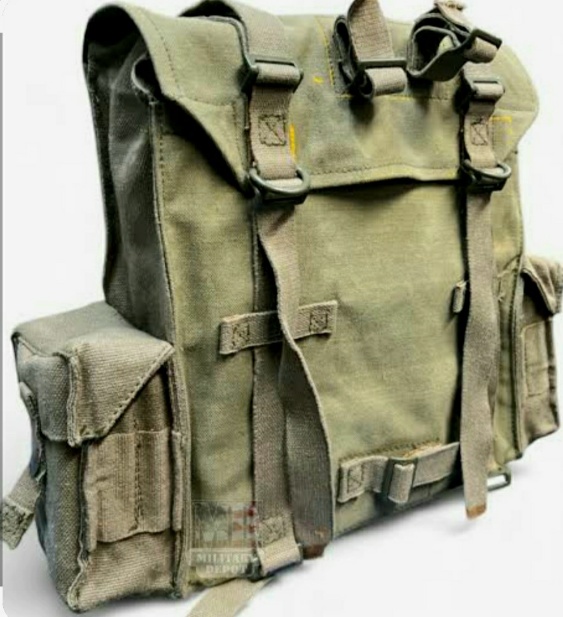
Rucksack
Made of light green heavy duty cotton canvas, very durable, with green metal fittings. Capacity was 40-50L. Soft pack with internal stiffener.
Straps: Padded shoulder straps + waist strap to clip onto the webbing belt
Pockets: 1 large main compartment + 2 side pouches and small top lid pocket
Closures: Drawstring top and canvas flap with buckles
https://keepsakes.co.za/product/old-sap-camo-uniforms
Rucksack adds:
Groundsheet,
From 1968 to the mid 1970s a rolled up grey wool blanked strapped to the top of the rucksack, was carried. From the mid 1970s SADF nutria brown sleeping bags were issued.
Attachment points: D-rings and straps to lash sleeping bag, groundsheet, poncho, extra ammunition, etc. to the outside
The whole idea of the webbing was modular — you could strip it down for patrols or add pouches and the rucksack for long patrols.
The camouflage uniform was worn on in Rhodesia, Border War operations in SWA, internal security, and by specialized units. For many, it became a symbol of the tough fieldwork done in remote areas.
During the late 1980s early 1990s SAP Riot Units / Internal Stability Division (ISD) also started wearing camouflage uniforms.
References:
https://www.camoepedia.org/index.php/South_Africa
https://hatchfive.wordpress.com/2020/04/29/south-africa-70pattrn-webbing-overview/
Meta IA: July 2026


Well done 👏
Hello, I am the owner of the camo on the mannequin. Could you please credit me somehow? Many thanks.