
Thai – Nongqai Vol 17 No 5
LETTER FROM THAILAND
Lt Barry Taylor
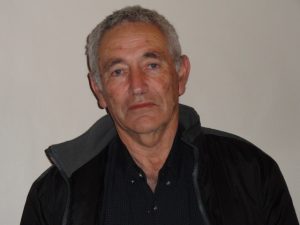
I have been living in Thailand since January 2014, and one of the main reasons that attracted me to this country was the low crime rate compared to South Africa.
I have been visiting the East since 2001, when Europe became too expensive to visit due to the ANC’s corrupt policies such as BBBEE. Over the years I travelled to Vietnam, China, Malaysia and Thailand, and eventually decided to spend the rest of my retirement here.
As an ex‑cop and detective, I was always interested in the crime rates of the countries I visited, especially violent and bodily crimes affecting ordinary people.
In China it is more difficult to obtain reliable statistics, but crime seemed almost non‑existent, at least the type that affects individuals. In the larger cities you are warned about pickpockets, and in Chinatown I often saw large placards with the faces of known pickpockets, warning people to be careful.
Eventually I decided on Thailand and bought a Thai‑style house in a small village. No foreigner may own land here, but you may own the house on the land, usually on a 30‑year lease, extendable for another 60 years.
Malaysia and Vietnam have virtually no violent crime, but in Thailand one crime that is fairly common is stabbing, as Thais love knives. A drunk Thai and his friend can get into an argument, and out come the knives.
However, in more than 12 years of living here, and reading the three daily English newspapers, I have never read about an expat being stabbed or robbed with a knife.
In places like Pattaya and Phuket, which are now overrun with tourists and semi‑permanent residents — mostly Russians, Ukrainians, Arabs, Indians and Chinese — there are constant late‑night bar fights where knives and broken bottles are used. But one must understand the quality of the tourists and residents involved. In Phuket alone there are about 50,000 Russians, thousands of Ukrainians and Chinese, all competing for the same criminal jobs, often in cooperation with the police.
Here the Police and Immigration function as one large department, and corruption is widespread. Thailand ranks around 108 on the Corruption Index, while South Africa is around 84, and trying hard to catch up.
According to the latest statistics, Thailand’s violent crime rate is very low compared to South Africa. One unusual statistic is rape: about 60% of rapes involve university students. I have my suspicions about this but prefer not to mention them here.
The police often try to mediate between two people fighting, and one pays the other compensation — no case is registered.
Burglaries mostly occur in big cities, and suspects are usually caught through CCTV footage, as this is the only effective investigative tool the police have.
In the 12 years I’ve lived here, I have read of only one store robbery — a gold shop in a village. The suspect wore a mask and stole gold worth about 2 million Baht (±R1 million). He shot and killed one person, was arrested a few days later at his workplace (he was a vice‑principal at a school), and was sentenced to death. He intended to pay off gambling debts.
In my own village (population ±5,000), the only crime I know of was when a woman — a former bargirl — had her motorbike stolen. She was drunk, left it in the main road with the key in the ignition.
My car has been standing in the carport since I arrived, and I have never taken the key out. Even today it still feels strange.
Thailand has bad air pollution at certain times of the year, as farmers burn rice and sugarcane fields instead of ploughing them. Although illegal, nothing is ever done about it.
Even though I am the only European in the village, I have never been stopped by police asking for a driver’s licence or passport. They simply ignore me.
Domestic violence is, in my opinion, a serious problem here. Women in my village are assaulted by drunk husbands, and when they report it, the police do nothing.
In Pattaya — a truly filthy nest — there have been murders among expat gangs like the Hells Angels, and bodies end up in the Mekong River with concrete feet. They are usually caught and enjoy the hospitality of the Thai prison system until they can bribe their way out.
The Hells Angels members were not so lucky — they are awaiting execution. Here they simply call your name and take you for execution by lethal injection. No last meal, no warning.
Since 2009, three people have been executed: one in 2018 for a robbery‑murder, and two in 2009 for unknown offences.
Thailand’s criminal justice code is completely different from European, UK or South African systems. They are supposed to provide an interpreter for foreigners in court, but that never happens. All charge sheets are in Thai — and that’s that.
I have an accident policy from a local insurance company. It is entirely in Thai, and they do not have an English version. If I complain too much, they simply cancel the policy — and at my age I cannot take out a new one.
Traffic rules being enforced is the biggest joke in Thailand. In 12 years I have never seen a traffic rule enforced. Children as young as 8 years old ride motorbikes with two passengers and no helmets.
A few years ago, three Constitutional Court judges were fired for accepting kickbacks — but they simply retired on pension.
Of the ±21 million motorbike riders in Thailand, about 10 million have no licence, let alone insurance. Comprehensive insurance is not compulsory, and very few people insure their motorbikes or salangs (motorbike with sidecar).
70–80% of road deaths are motorbike riders. The main reasons: reckless driving and no helmets.
Research has shown that the 30×30 cm reinforced concrete poles along the roads are more than sufficient to stop a child with no licence and no helmet — with his head — at any speed. These deaths are simply part of life here.
One Sunday afternoon I sat in my wife’s restaurant and counted the motorbikes passing. Out of 117 bikes in 45 minutes, only 10 drivers wore helmets.
Many times I’ve seen a husband, wife and two children on a bike — and only the husband wears a helmet.
And then the old Vietnamese joke:
Before the Vietnam War escalated, a young reporter visited a rural village. He saw a man riding a donkey while his wife walked behind him, holding an umbrella and carrying a heavy bag of groceries.
The reporter asked why she was carrying everything.
The man replied: “Vietnamese custom.”
Years later, during the height of the war, the reporter returned. He saw the same couple. This time the man was still on the donkey, but he was carrying the groceries and the umbrella.
His wife was walking five metres ahead of the donkey.
The reporter asked why things had changed.
The man replied with one word:
“Landmines.”
Cheers.


Sounds like a fascinating read, I’m always interested in hearing from folks serving overseas.