Nongqai Vol 17 No 10E – The Legacy of the Non-European Police Training Depot Wentworth – A Historical Biography
Key Words
Wentworth Nono-European Police Training Depot, Established in 1952, Durban, South Africa, Police recruits and training, Apartheid and racial segregation
Extract
The Wentworth Police, Non-European, Training Depot was established in 1952. It trained Black and Indian police recruits. Recruits learnt discipline, drill, physical training and law. Training took place under apartheid and racial segregation. The college helped train police officers and future leaders.
SPECIAL EDITION NONGQAI 10 E
SOUTH AFRICAN POLICE
THE LEGACY OF THE NON-EUROPEAN POLICE TRAINING DEPOT WENTWORTH
A HISTORICAL BIOGRAPHY
VOLUME 01A
1952 – 1955
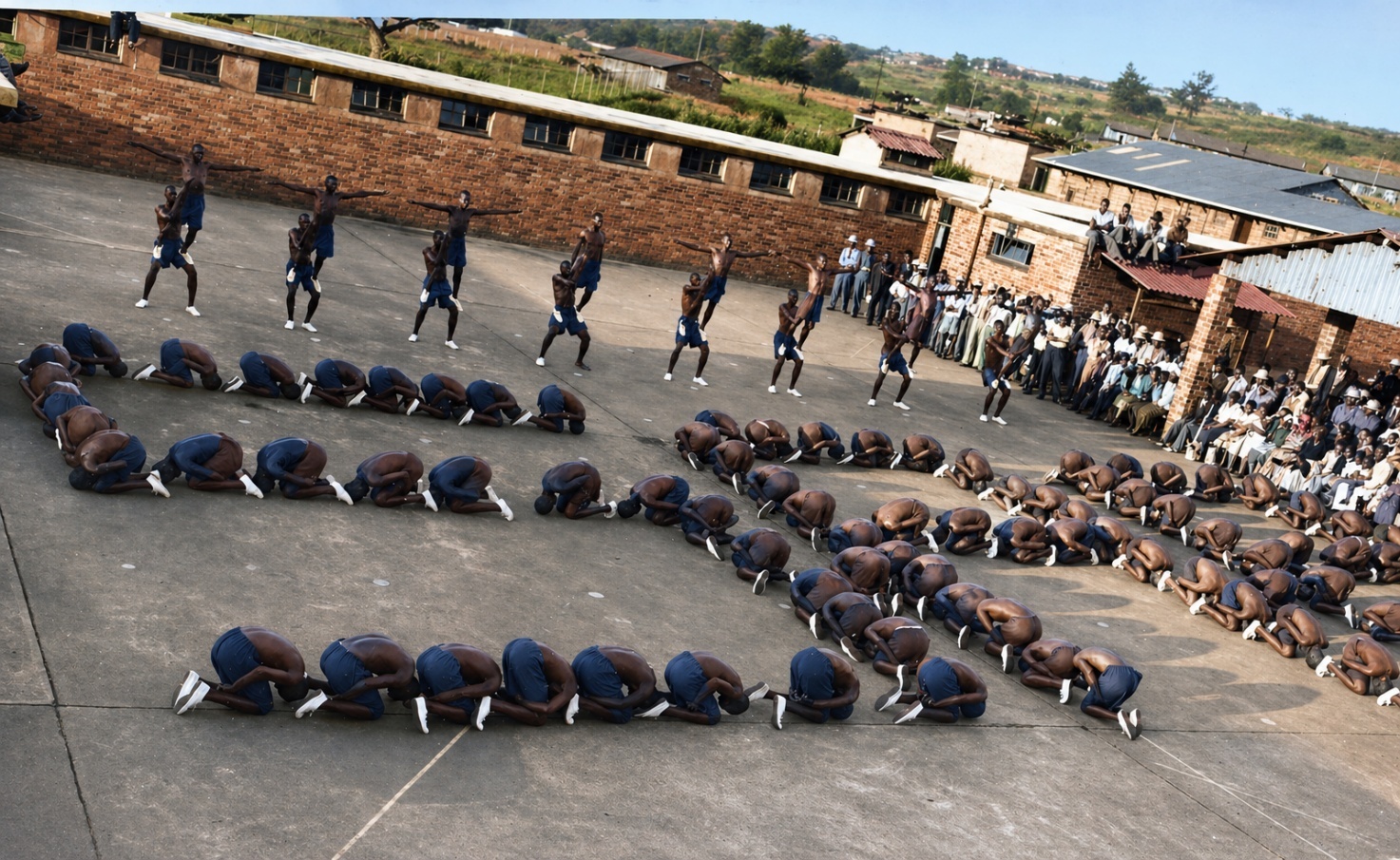
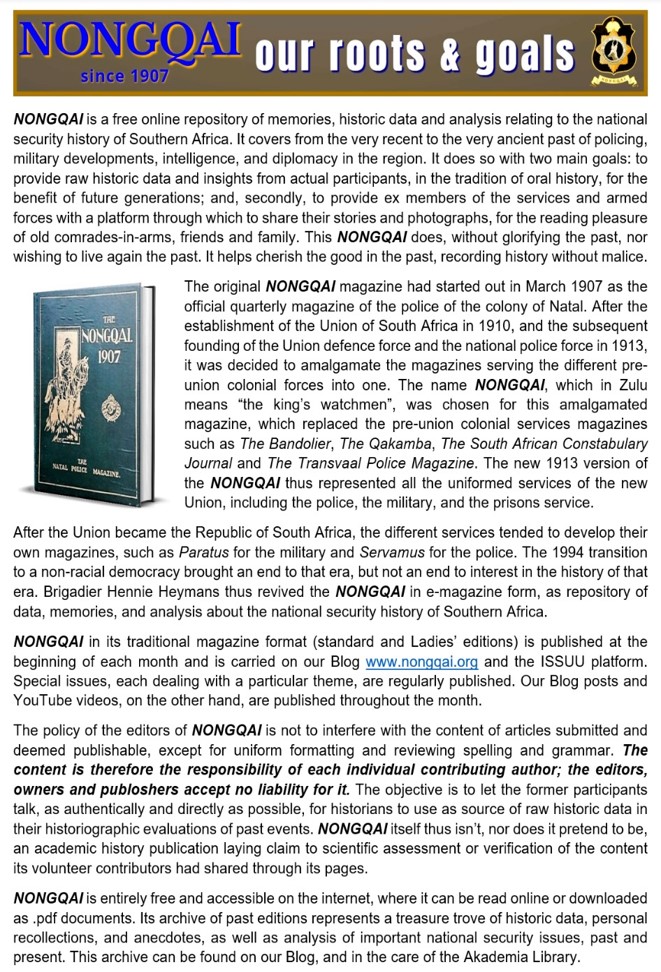
Recruits form the letters “SAP” in a coordinated human display during a Passing Out Parade, likely held after 1952. The event takes place on the parade ground also known as the “Holy Ground” of the South African Police Non-European Training Depot in Wentworth, Durban. Families, visitors, and invited guests are gathered under the shelter of the garage, while police members stand alongside the wash trough
(This detailed description is intended to highlight that nearly fifty years later, in 1990, much of the setting and infrastructure remained unchanged. – LG)
SOUTH AFRICAN POLICE
THE LEGACY OF THE NON-EUROPEAN POLICE TRAINING DEPOT WENTWORTH
A HISTORICAL BIOGRAPHY
VOLUME 01A
1952 – 1955
FOREWORD
MAJOR GENERAL (PROFESSOR) GEORGE D GOVENDER
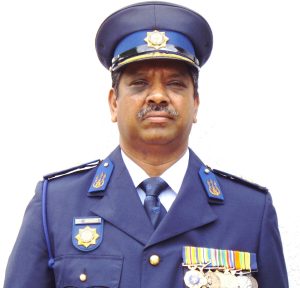
Major General (Professor) George D Govender
(Source Major General Govender)
The legacy of the Wentworth non-white training centre started in 1952. Before, 1952 non-white recruits for the South African Police Force (SAP) used to be trained in Umtata. Due to the increase in number of non-white recruits, police management decided to train non-white recruits at temporary training centres in Cape Town, Port Elizabeth, Durban, Johannesburg and Pretoria. This meant that the three non-white population groups who were previously trained together were moved to separate training centres, Coloureds were sent to Woltemade Training Centre, while Indians were sent to receive training at Wentworth in Durban. While waiting for their own training centre in New Modderfontein black recruits joined other non- white members at their New respective training centres such as Wentworth and Woltemade Training Centre, awaiting the opening of training centre in New Modderfontein, which opened in 1955 (SA Police Commemorative album, 1913:1988).
When thinking about writing a foreword in respect of the Wentworth
Training Centre, my thought immediately went many decades back to 1953, when the Annual Report of the South African Police Force (SAP) Commissioner remarked as follows;
“The training of non- Europeans to replace Europeans at stations in
non-European areas takes time and demands patience”.
In the mid 70’s, I was the appointed by the SARP magazine as a reporter for the Indian sector in the Port Natal Division to write on activities and events taking place among Indian members of the South African Police Force (SAP) working in the Port Natal Division.
At one of the passing out parades held at the Wentworth Training Centre, College Grounds, the keynote speaker, Divisional Commissioner, Port Natal Division, mentioned to the members on parade and the public that one day one of you will become the Commissioner of Police. The following month when the print appeared in the SARP magazine, I was paraded at Divisional Headquarters before the Divisional Commissioner, Port Natal Division. He asked me to forward an erratum to the SARP magazine, stating that I as the reporter had misquoted the speaker.
In later years in 2000, this statement turned out to be true when the first black National Commissioner was appointed to lead South African Police Service (SAPS).
Although experience had shown that non-white members of the force could be trained to perform the necessary duties, no proof existed at that time that supervision by white officers could be entirely terminated. It was true of police stations established in some non-white townships. Nevertheless, non-white commissioned officers at some police stations had proved that they could deal with the position of Station Commander and were able to control their staff within the framework set by the SAPF rules and regulations. In this respect the SAPF was indeed making history (SA Police Commemorative album, 1913:1988).
In this edition, the co-editor Colonel Logan Govender, brought to light the rich history of the Wentworth Non-European Training Centre (Depot) since its inception in 1952. Following from this rich history, the Wentworth Training College underwent major transformation, including having its first non-white commanding officer of Indian descent, namely; Lieut Colonel S Pillai, Lieutenant General M Chetty and others that followed. In the 1980s, the first female members were recruited to join the SAPF. Their commanding officer was Brigadier Indira Chetty. The women trainees were trained at Cato Manor and at Wentworth Training
College. During its existence the Wentworth Training College produced trainees who later became lieutenant Generals, Major Generals, Brigadiers, Colonels, Lieutenant Colonels, Majors, Captains and Lieutenants, many of whom held positions of Deputy National Commissioners, Provincial Commissioners, Divisional Commissioners, Deputy Divisional Commissioners, Area Commissioners, District Commandants, District Detective Officers, Station Commanders, Detective Branch Commanders and various other positions of authority, irrespective of colour.
Major General (Prof) George D Govender, DLitt et Phil, SOE, F.I.S
(SA). Professor in Criminal Justice Studies University of South
Africa.
SOUTH AFRICAN POLICE
THE LEGACY OF THE NON-EUROPEAN POLICE TRAINING DEPOT WENTWORTH
A HISTORICAL BIOGRAPHY
VOLUME 01A
1952 – 1955
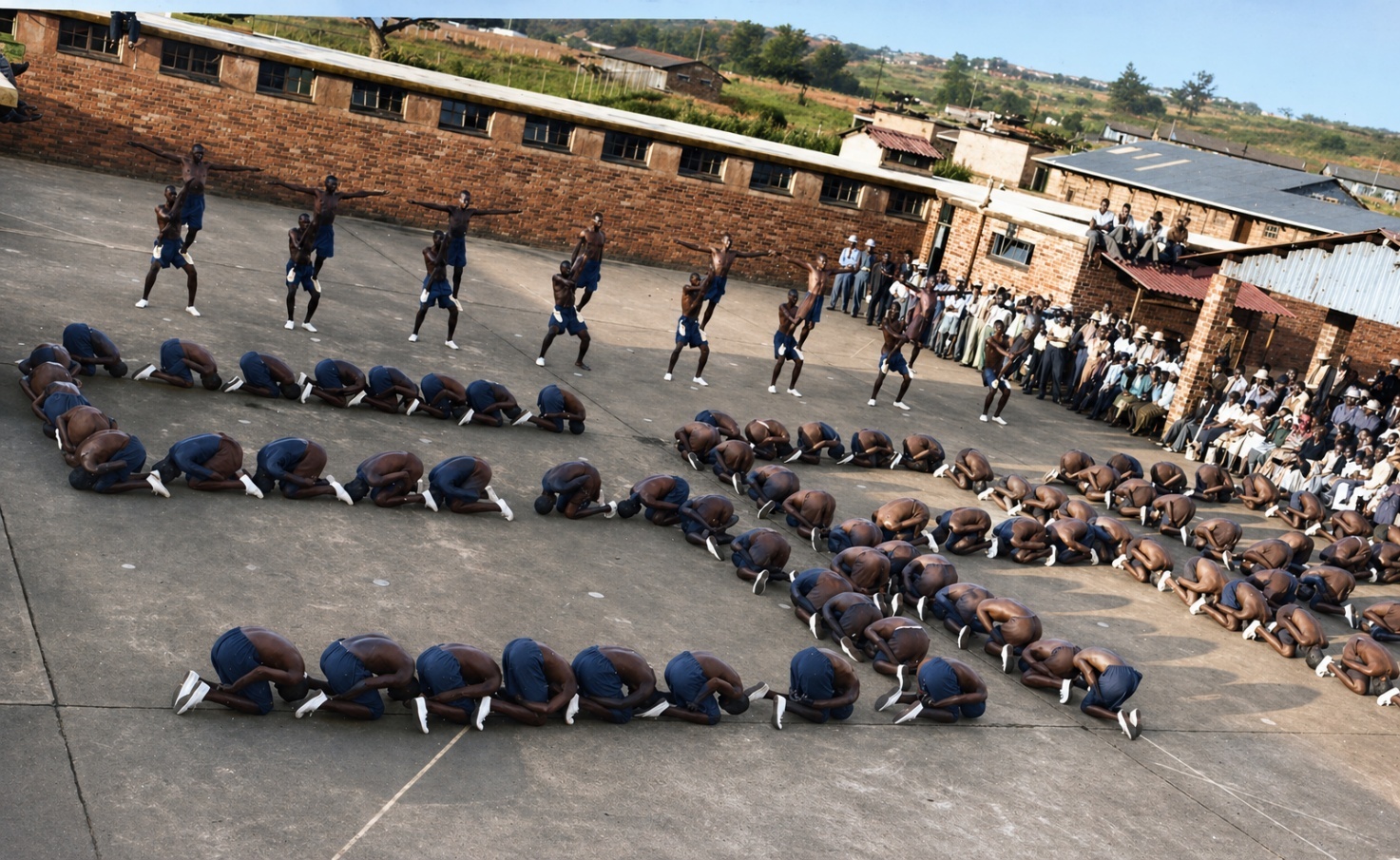
Recruits form the letters “SAP” in a coordinated human display during a Passing Out Parade, likely held after 1952. The event takes place on the parade ground also known as the “Holy Ground” at the South African Police Non-European Training Depot in Wentworth, Durban. Families, visitors, and invited guests are gathered under the shelter of the garage, while police members stand alongside the wash trough
(This detailed description is intended to highlight that nearly fifty years later, in 1990, much of the setting and infrastructure remained unchanged. – LG)
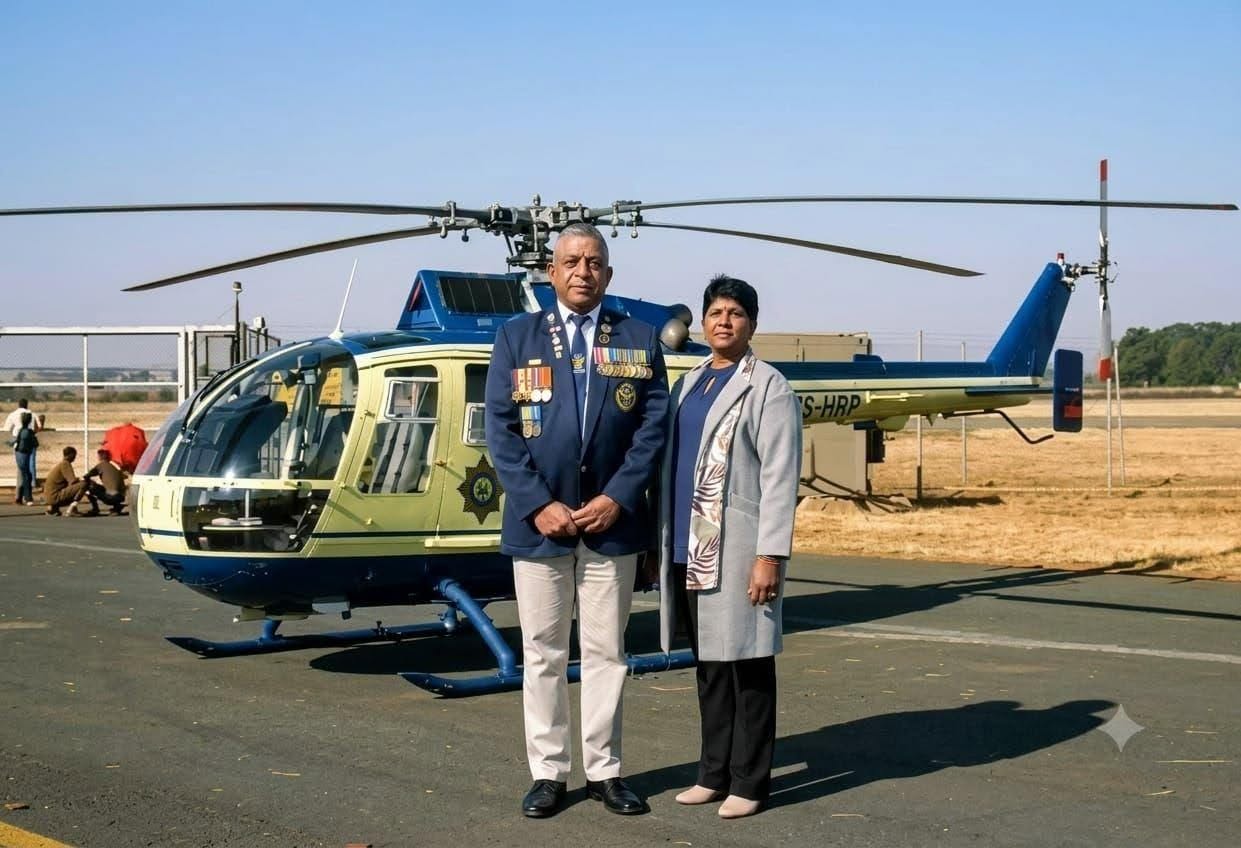
Colonel Aurry T Pillay and his wife Des
(Source Colonel Aurry Pillay)
CONTRIBUTION BY COLONEL AURRY T PILLAY
The Wentworth Police Training College for South African Police cadets was a vestige of an old Military facility. The location and design of the facility has a stark history associated with it, first serving as a Boer prison camp, mostly for woman and older men. It is located in an area Wentworth, in the south of Durban, that was established by the colonial government during the apartheid era, designated for the placement and segregation of non-whites. The Training College, was an edifice of concrete a square facility, completely closed on all sides with a huge metal gate that allowed for controlled access, at the main entrance, like most prison facilities.
When one walks around this Citadel, one is reminded of a Soviet Gulag of yore. It was never built to appeal but to serve its purpose- as a prison. It had meagre facilities, viz, open shower facilities with cold water supply, open toilets that were later renovated with doors and cell- like individual rooms, with metal doors. It had multiple coal stoves in the kitchen facility. that had to be stoked in the morning.
Post 1950’s, the government designated the prison-facility in Wentworth to be used as a training facility for Non- European (Non-White) police officials, predominantly Blacks at first and later the Indians.
Over the years, it was constantly renovated but could not compare to the standards of the more modern training facilities located in Pretoria, Hammanskraal and Bishop Lavis. These training Institutions were designated for the other race groups, White, Blacks and Coloureds, respectively and promoted segregation among the population as promoted by the apartheid government.
I am reminded, that the Wentworth Police Training College, had a central courtyard with rooms / facilities which were later turned into administration offices, canteens / dining areas, dormitories, and lecture halls for the cadets in training.
For those who undertook their Basic Police training at SAP Wentworth Training College, they would remember vividly, the confined spaces, and the harsh conditions they had to endure for the duration of their training.
In 1989, the Wentworth Police Training College was vacated and deemed inconducive for continued use. The buildings lay abandoned for a few years and later the newly elected democratic government, handed the buildings to the Community of Wentworth to be used in posterity as a home for Invalids, Indigents and the like. It is now a part of the adjunct building used by the NGO next door and is full of life, hope and happiness. The surrounding area of Wentworth bears a rich history carved during the apartheid revolution and the Police Training College, will be remembered by many as a landmark site that not only produced highly trained police officials but contributed to building a greater democratic South Africa.
Colonel Aurry Pillay
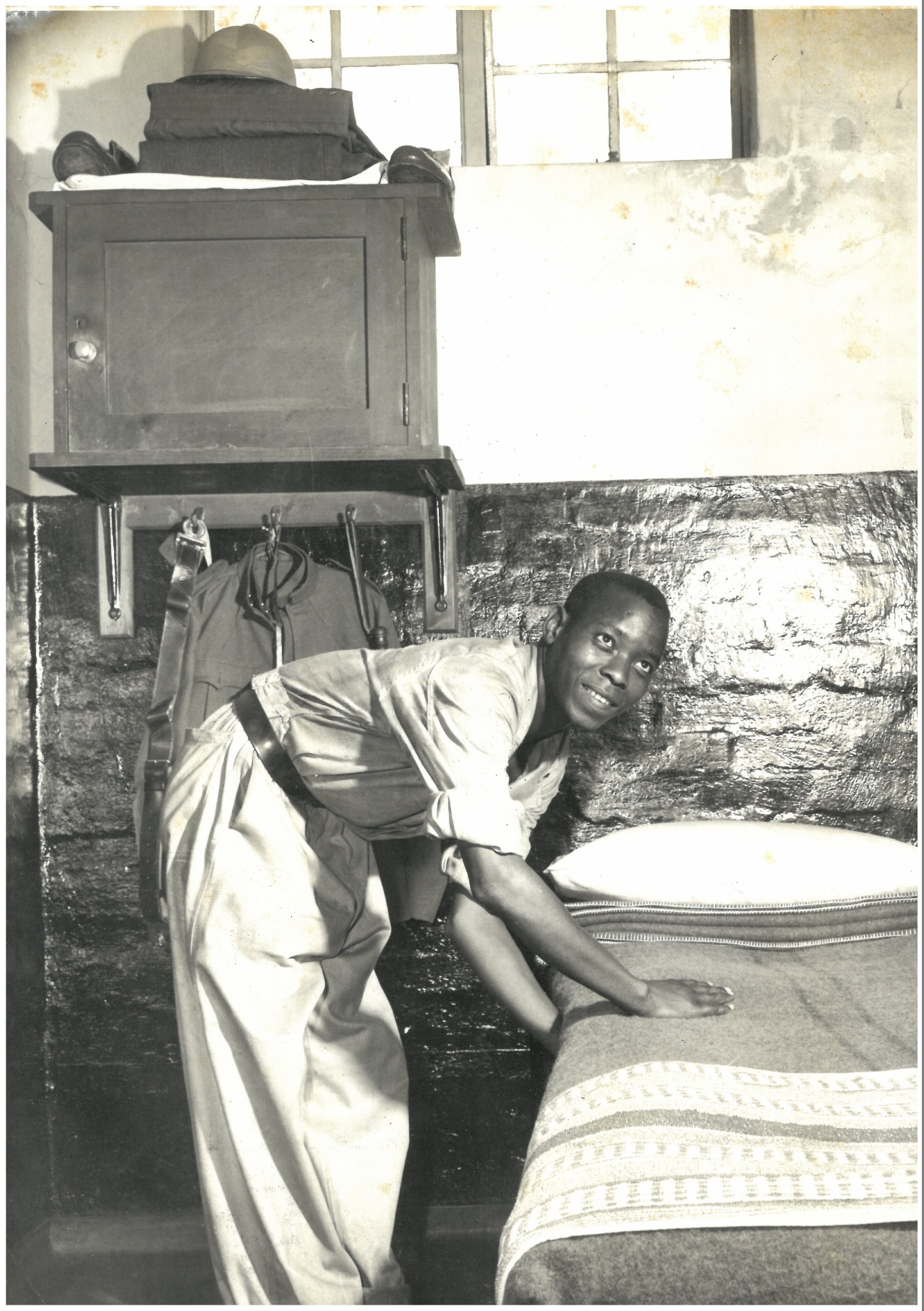
A recruit is preparing for barracks inspection during the early 1950’s
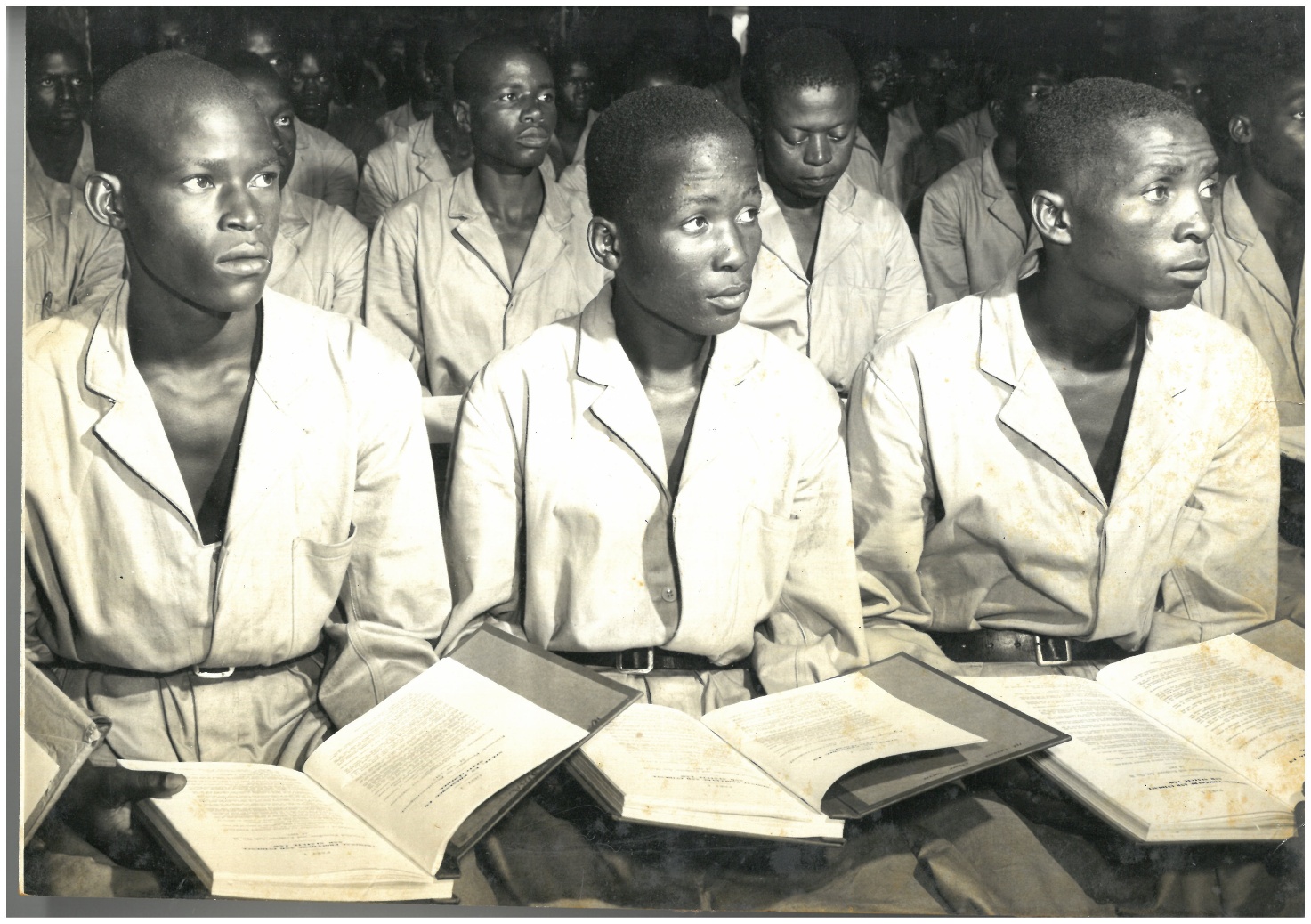
Attentive recruits with lecture open books
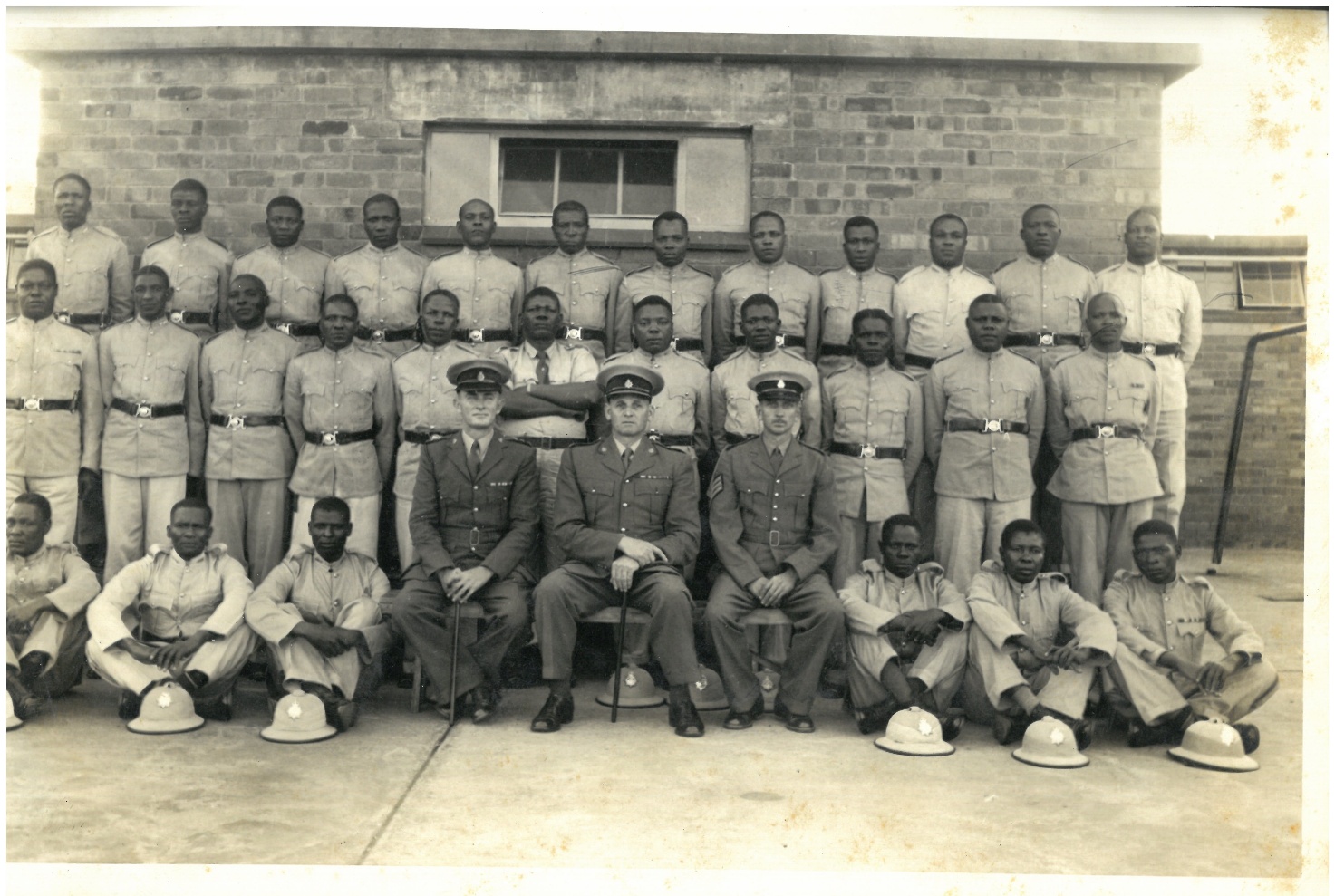
A platoon of recruits during the 1950’s
(Note the uniform in the day for Black members. – [LG])
Researched, authored compiled, edited, and submitted for publication by Logan Govender [LG], drawing on information provided by Mr Rian Vorster, son of Sergeant Hendrik Adrian Vorster, Warrant Officer and Warrant Officer Odin Audley Moorcroft and other contributors.
] 
Logan Govender – [LG]
(Source – [LG])
Media Clipping
(Courtesy Nongqai Archives)
Durban, November 1952
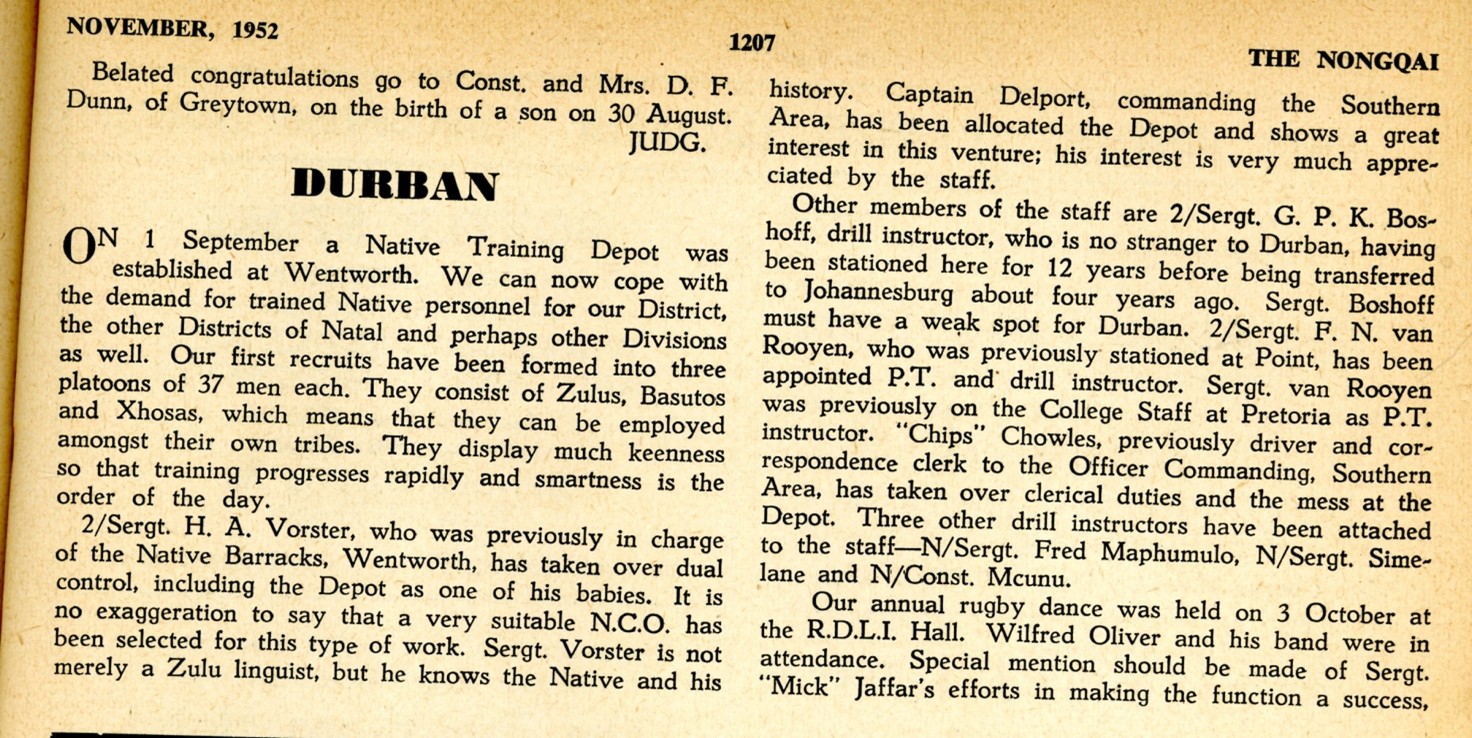
Durban, The Nongqai November 1952
(Source Nongqai Archives)
Transcript
“DURBAN ON 1 September a Native Training Depot was established at Wentworth. We can now cope with the demand for trained Native (African –[LG]) personnel for our District, the other Districts of Natal and perhaps other Divisions as well. Our first recruits have been formed into three platoons of 37 men each. They consist of Zulus, Basutos and Xhosas, which means that they can be employed amongst their own tribes. They display much keenness so that training progresses rapidly and smartness is the order of the day. Second Class Sergeant HA Vorster, who was previously in charge of the Native (African –[LG]) Barracks, Wentworth, has taken over dual control, including the Depot as one of his babies. It is no exaggeration to say that a very suitable NCO has been selected for this type of work. Sergeant Vorster is not merely a Zulu linguist, but he knows the Native and his history. Captain Delport, commanding the Southern Area, has been allocated the Depot and shows a great interest in this venture; his interest is very much appreciated by the staff. Other members of the staff are Second Class Sergeant GPK Boshoff, drill instructor, who is no stranger to Durban, having been stationed here for 12 years before being transferred to Johannesburg about four years ago. Sergeant Boshoff must have a weak spot for Durban. Second Class Sergeant. FN van Rooyen, who was previously stationed at Point, has been appointed PT and drill instructor. Sergeant van Rooyen was previously on the College Staff at Pretoria as PT instructor. “Chips” Chowles, previously driver and correspondence clerk to the Officer Commanding, Southern Area, has taken over clerical duties and the mess at the Depot. Three other drill instructors have been attached to the staff- -N/Sergeant Fred Maphumulo, N/Sergeant Simelane and N/Constable Mcunu.”
– The Nongqai, November 1952
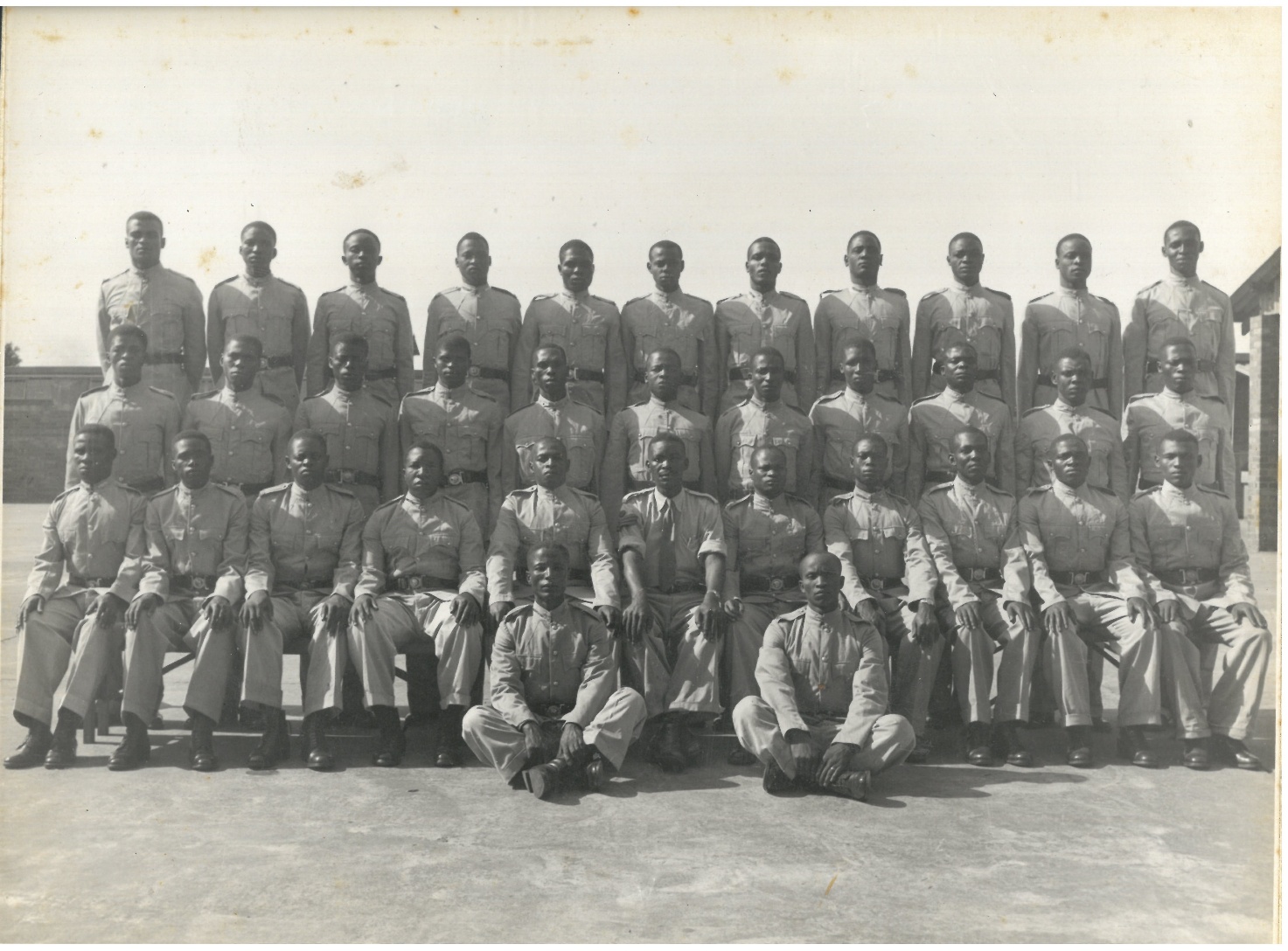
A platoon of recruits during the 1950’s
AUTHOR’S NOTE
“The Nation which forgets its defenders will itself be forgotten” – Calvin Coolidge
THE LEGACY OF THE SOUTH AFRICAN POLICE, NON-EUROPEAN TRAINING DEPOT, WENTWORTH – AN HISTORICAL OVERVIEW
For many years, the Editor-in-Chief of Nongqai, Brigadier HB “Hennie” Heymans [HBH], and I discussed the prospect of capturing an historical biography of the South African Police, Non-European (Black later included Indians) Training Depot, known as the Training College after its transformation in the 1970’s. From the outset, however, the magnitude of the task, coupled with the scarcity of reliable information, made it an arduous and seemingly insurmountable undertaking.
In my view, allowing such an important chapter of our policing history to remain undocumented would be a grave injustice to the hundreds if not thousands of South African policemen and women, both Black and Indian members and those who contributed to their training and development. As the years passed, I felt an increasing sense of duty to engage with those who had been associated with the Depot and to record their recollections before they were lost in time.
“Each day, millions of police officers do the selfless work of putting their lives on the line to protect civilians, frequently responding to or preventing crises completely with no recognition.” – Letitia James
Due to the importance of this legacy, hopefully we shall attempt to commence by covering the period from its establishment in 1952 until 1955, during which the facility was shared by both Black and Indian members.
(I underwent my basic police training from September to November 1958, Platoon 15. We shared the same premises with our Black colleagues, however the ablution, sleeping, dining and training facilities were segregated. In 1958, Sergeant Odin Audley Moorcroft was based at the depot. – Late Captain Bob Sewpersad).
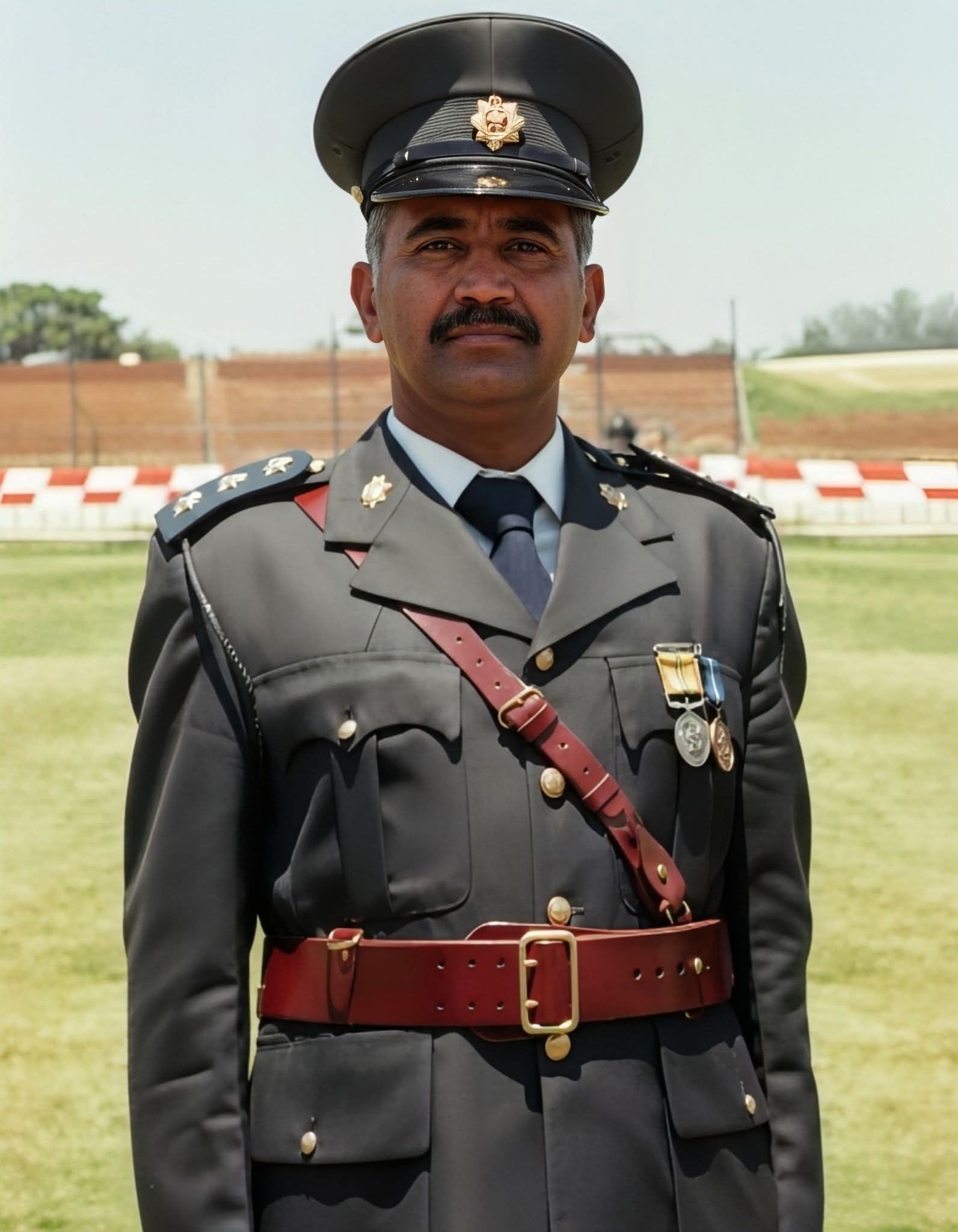
Captain Bob Sewpersad
(Source Captain Bob Sewpersad)
We shall hopefully then continue from 1956.
The South African Police (Non-European) Training Depot, established in 1952 at Wentworth, Durban, was created to train Black recruits later joined by Indian recruits for service within the South African Police Force (SAP). The purpose of the depot was to prepare these men to serve and protect their own communities during a period when policing and social structures were strictly segregated under apartheid. Initially, only Black recruits were accepted, with one platoon trained at a time.
Proper training of the Indian members was only commenced on the 1st of May 1953, when a 21-day course was conducted for 30 senior serving Indian members of the Force. Ninety-three Indian members attended the next course a year later.
(My dad, Sergeant Mariemuthu, told me that he joined the South African Police in January 1937. When I was a young boy in the 1960s, he also told me that he later completed a refresher course at the Wentworth Training Depot. He never said exactly when he took that course, but I believe it was sometime after May 1952. – [LG])
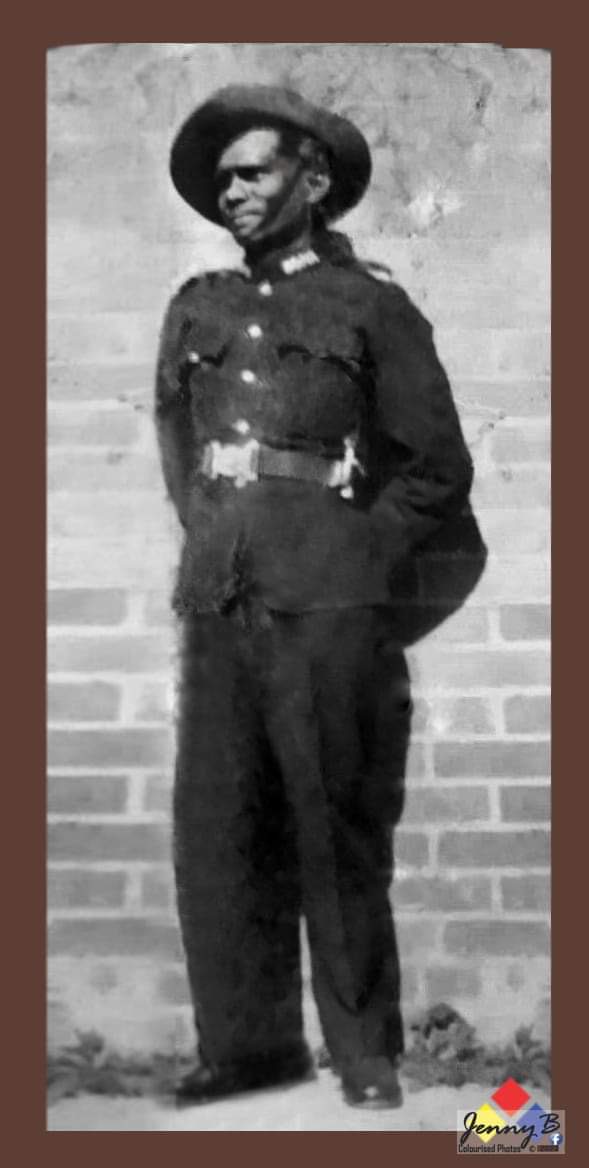
My Dad, Sergeant Mariemuthu
(Source – [LG]. Kindly restored by Ms Jenny Bosch)
Brigadier Heymans put me in touch with Mr Rian Vorster the son of Second-Class Sergeant Hendrik Adrian Vorster, the first Station Commander of the Depot (a title used in those days for senior non-commissioned officers, who held the ranks of Sergeant, Head Constable, or later, Warrant Officer in command of Police Institutions – [LG])
The training programme emphasised physical endurance, discipline, drill and ideological instruction aligned with the state’s anti-communistic policies. Recruits received instruction in physical training (PT), drill, and law and order principles, reflecting both the policing priorities and political atmosphere of the time.
Information obtained from my numerous conversations with Mr Rian Vorster, (Rian was a Captain in the SA Army) the elderly son of then Sergeant later Warrant Officer Hendrik Adrian Vorster
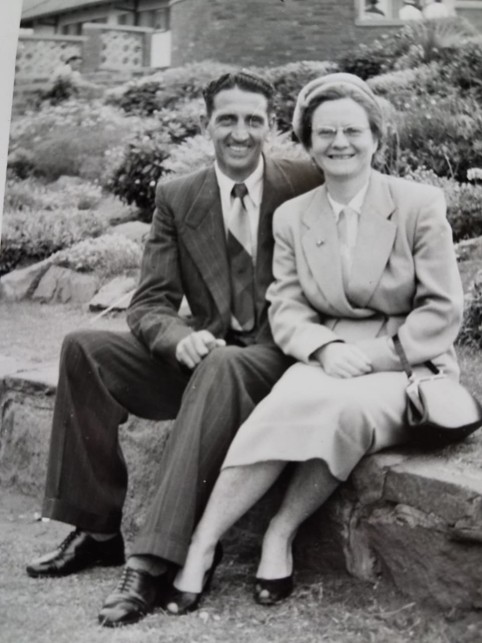
Sergeant Hendrik Adrian Vorster, Warrant Officer, the first Station Commander and his dear wife Cupie
The depot’s first Station Commander (Commanding Officer) was Sergeant Hendrik Adrian Vorster. Vorster was born at Tarkastad in the Cape. Tarkastad is a Karoo semi-urban settlement situated on the banks of Tarka River in the Eastern Cape Province of South Africa between Cradock and Queenstown. At the age of 21 he joined the SA Police. He went to Police College in Pretoria and trained in the Mounted Unit.
Little incidents that Rian recalled as a young lad. Rian was 76 years old, at the time of the interview, residing in East London when I made contact with him.
Sergeant Vorster was later affectionately nicknamed “Ossie Dageni” by the Zulu recruits. His leadership style combined strict discipline but with compassion. This earned him respect amongst his subordinates, who viewed him as a fair and understanding commander. (A compassionate gesture. Commendable for a Commander to stand up for the men. – [LG])
Vorster was a drill and law Instructor tutoring the recruits. Rian recalls in those early days the lectures were about anti-Communism.
Daily training routines were physically demanding. Recruits paraded at 6am before changing into blue shorts and sand shoes for a cross-country run to Brighton Beach and back. Vorster also facilitated practical improvements to camp life, such as arranging for a local hawker from Jacobs to sell brasso, polish, and cleaning materials on site.
“When the first Indian recruits arrived by train at Durban Station, he attempted to organize Indian cuisine at the mess for them, though the recruits later indicated they were equally comfortable with traditional South African “boere kos.’”– said Rian Vorster
The depot was located near the single and married quarters of white SA Police members, as well as the South African Navy barracks and the Austerville Flats. Permanent white members were served with their meals at the Wentworth Police Station and District Headquarters, where amenities included a hairdresser for white officers.
After roughly a decade at Wentworth, Sergeant Vorster was promoted to the rank of Warrant Officer, transferred and appointed Station Commander of the Wentworth Police Station. His tenure at the depot was remembered for fostering discipline while maintaining empathy toward his men under his leadership.
The story of its early years, and of members like Sergeant HA “Ossie Dageni” Vorster, illustrates the complexities of duty, leadership, and humanity within the rigid framework of apartheid era South Africa.
Initially only one platoon of 37 black members were trained at any one time.
(Mr Rian Vorster kindly couriered his father’s original scrapbook, which contains a collage of photographs of recruits from around 1953/1954. I am indeed deeply grateful to Rian for his generous gesture. Unfortunately, space constraints do not allow for the inclusion of them all at this time; however, they may be incorporated at a later stage in another publication. – [LG])
A few of these facts was derived from personal recollections shared with me by my late Dad during the 1960s. In the absence of official records, these recollections constitute a valuable historical reference to the practices of that period. They provide the only surviving insight into these early arrangements. In the absence of official records, these personal accounts remain an important link to that period.
Unfortunately, a few photographs of only some of these individuals are attached below for reference. Sadly, precise documentary evidence is no longer available.
“If you knew how quickly people forget the dead, you will stop living to impress people” – Christopher Walken
– [LG]
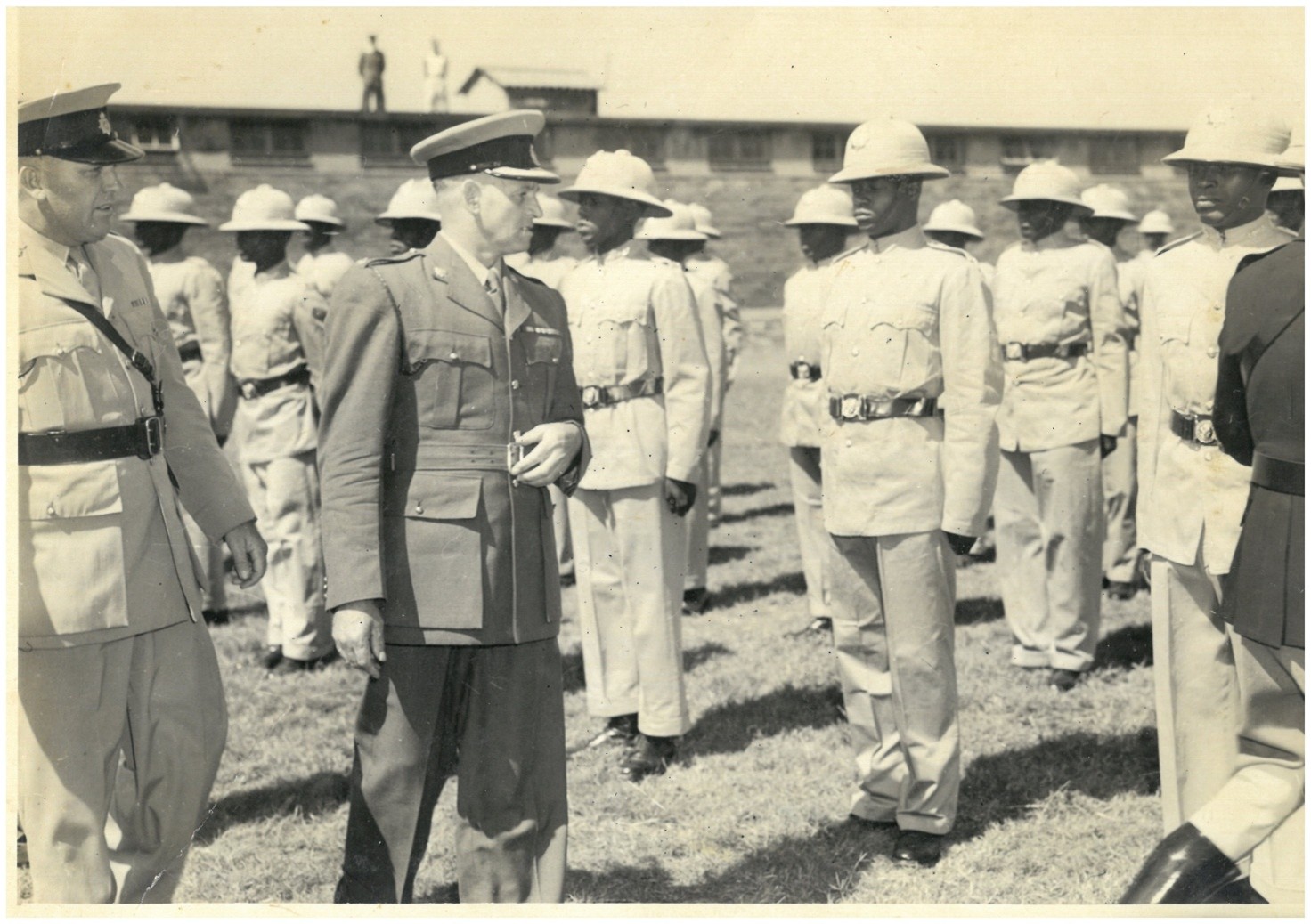
This appears to depict the inspection of the parade by the guest of honour, presumably the then District Commandant of Durban South. Note the contrast in uniforms between the white officer and the white member: the officer is wearing summer uniform
(In the background figures standing on the rooftop serve as a reminder to me of our dear Lieutenant General Morgan Chetty, Captain DJ Lamech, and other training staff who oversaw rehearsals during my basic police training. They had a sharp eye for detail. – [LG])
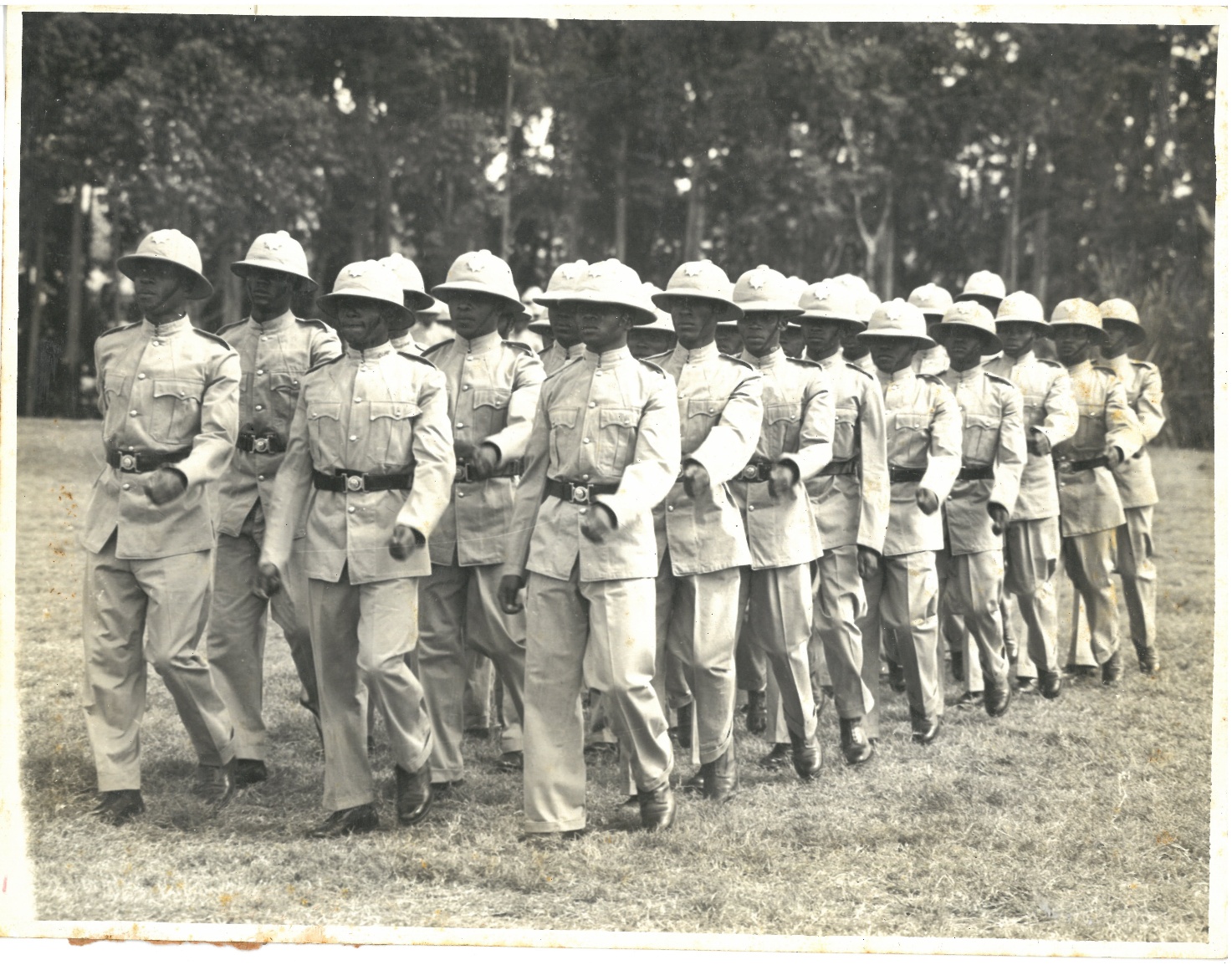
Recruits marching in step for their passing out parade during the 195’s
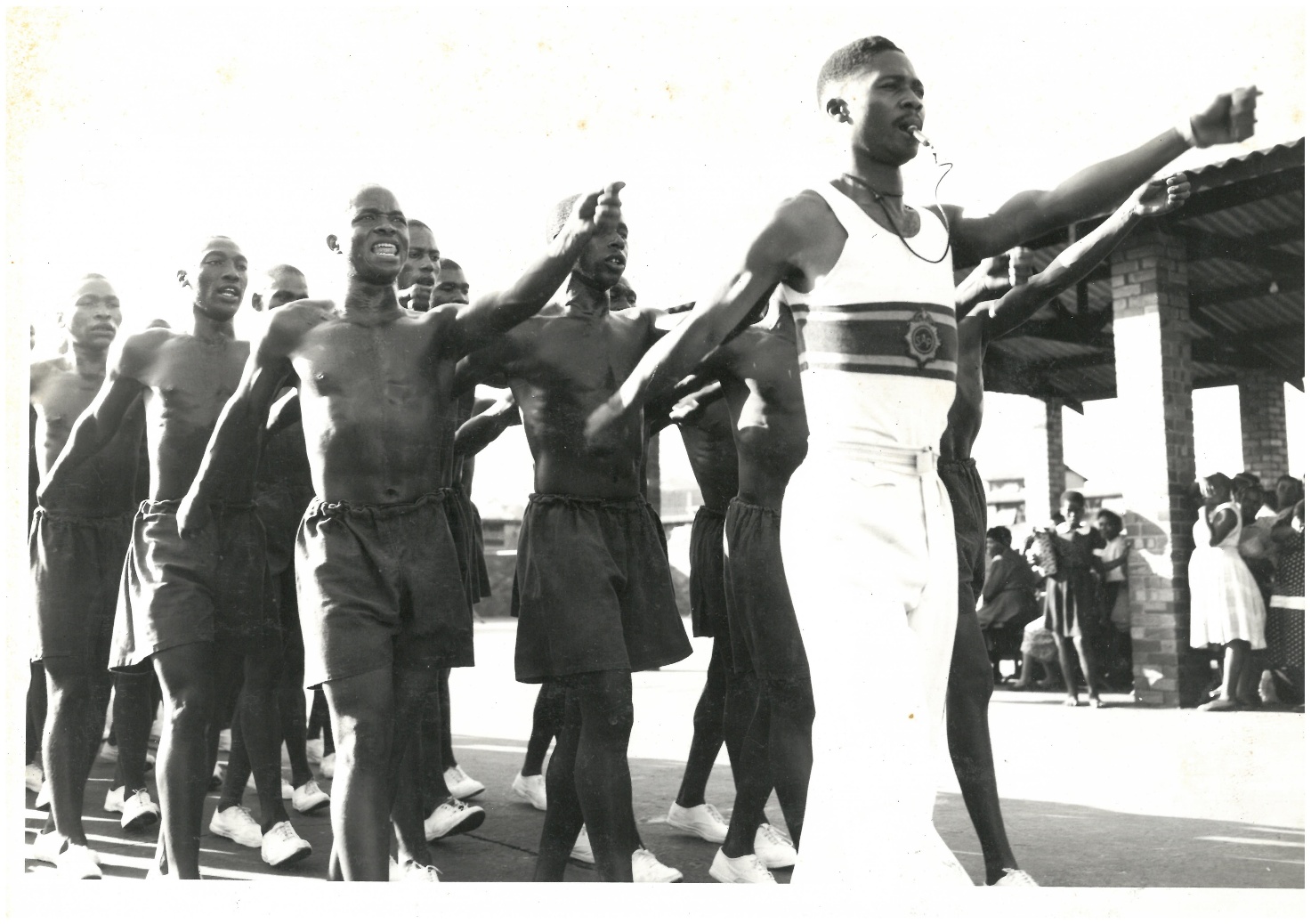
Recruits in PT outfit being led by an instructor
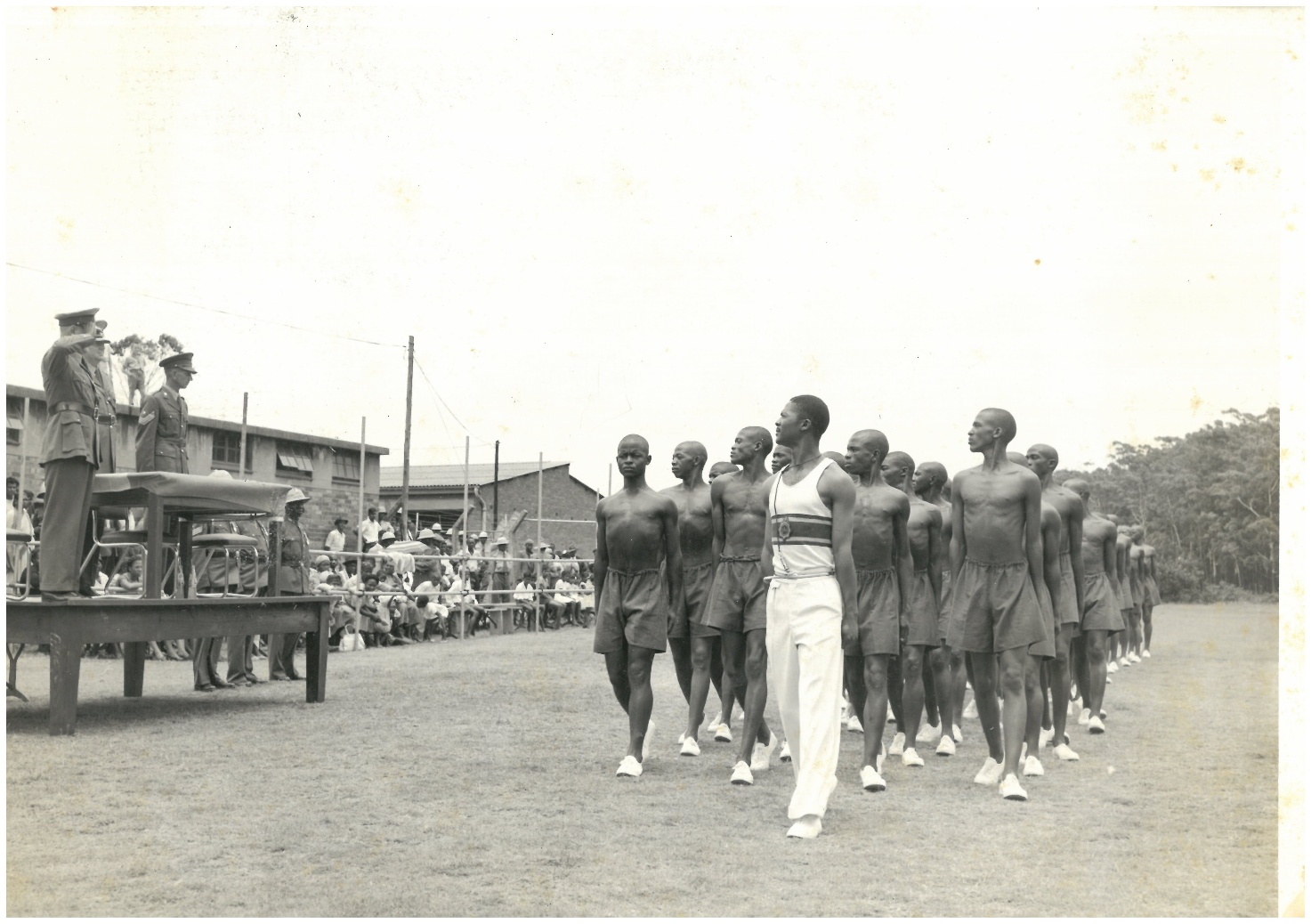
Recruits in PT outfit being led by an instructor acknowledged by the dignitary
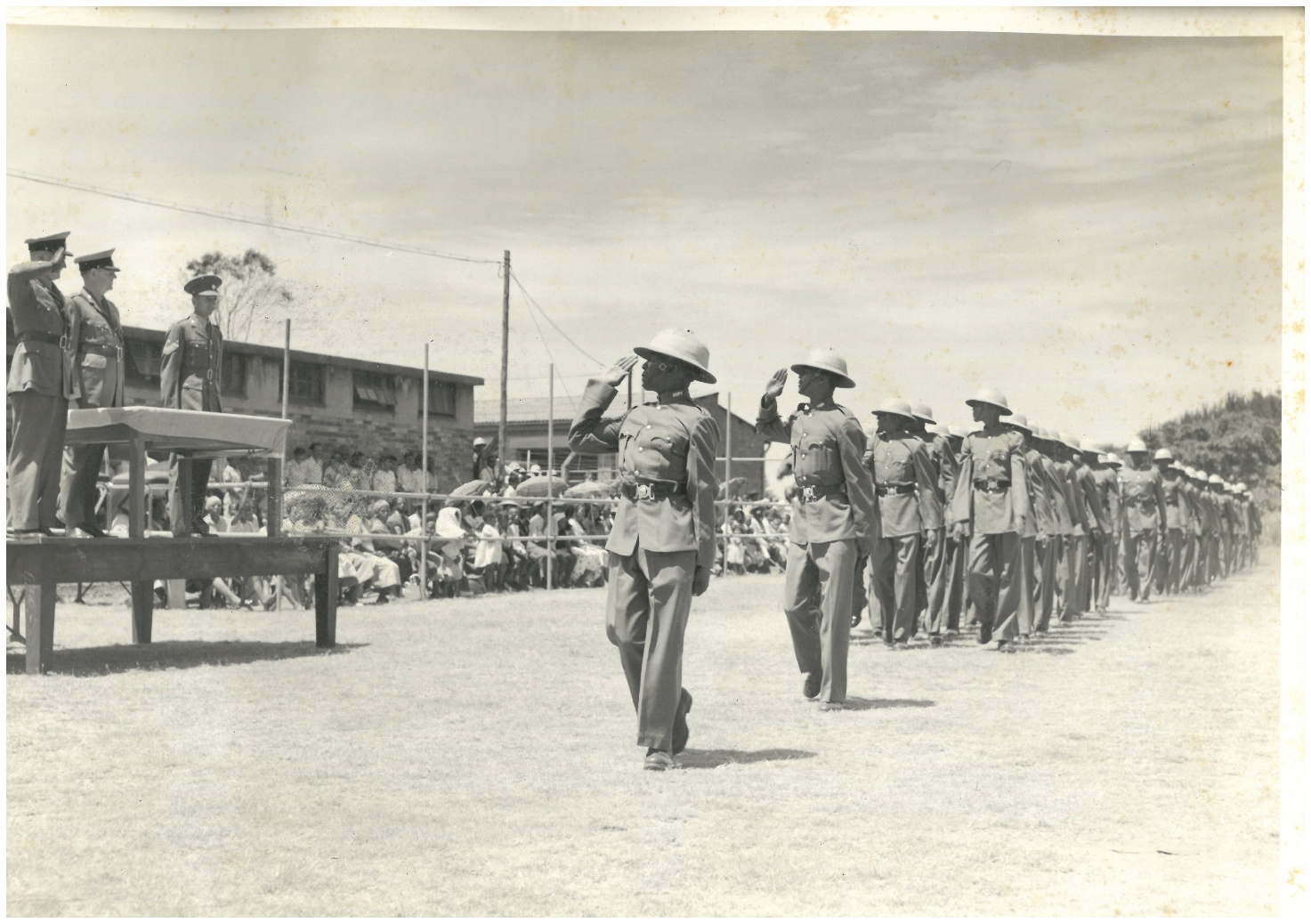
March past by recruits, salute acknowledged by the dignitary
Please find below a collection of photographs depicting Indian members who are believed to have completed either the 21-day Refresher Course or the three-month training programme. Unfortunately, precise records and individual details are not available at this time.
In the absence of definitive information, the photographs have not all been arranged chronologically according to the year of training, based on the best available knowledge. While every effort has been made to ensure accuracy, this ordering should be regarded as approximate.
Should any additional information or clarification become available, the records will be updated accordingly to reflect a more accurate historical account.
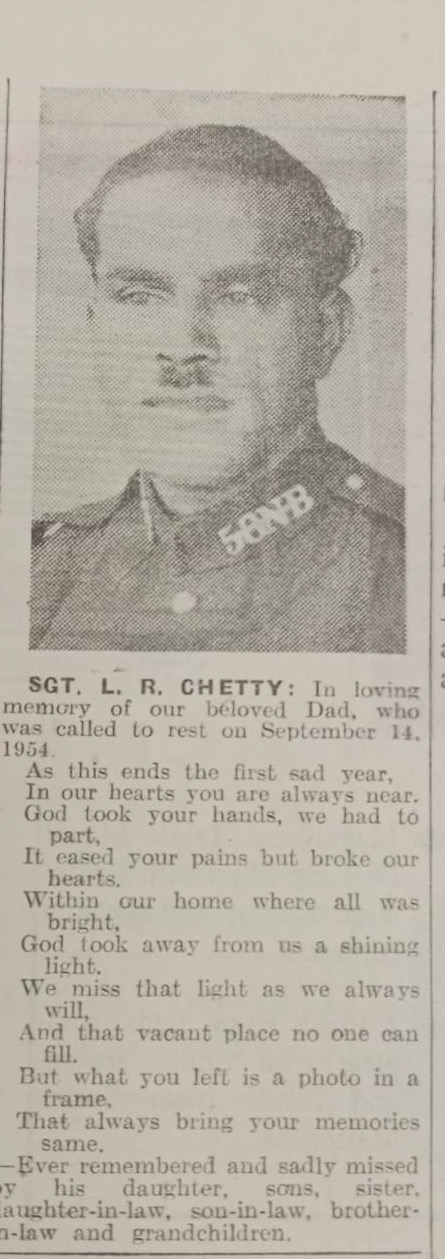
Sergeant LR Chetty
Unfortunately, no further information is available
Probably joined during the 1920’s
(Source UKZN Special Collections, Gandhi-Luthuli Documentation Centre. Courtesy of Mr T Munsamy, Senior Librarian, University of Kwa-Zulu Natal (UKZN), Westville Campus)
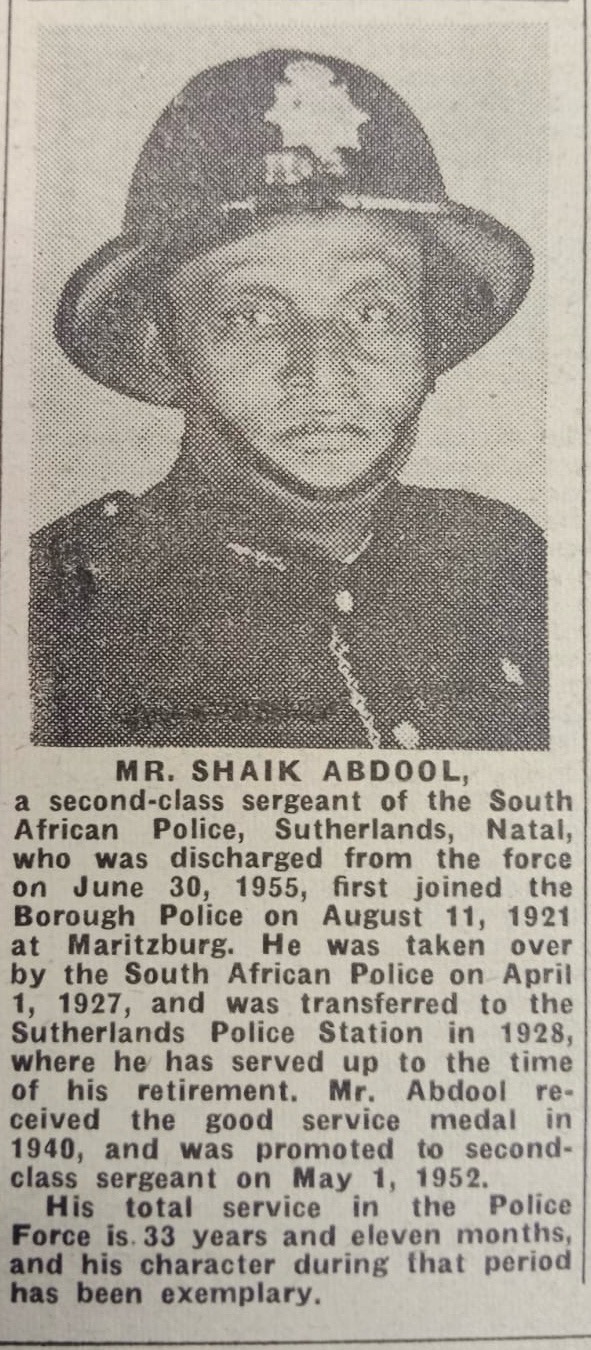
Second Class Sergeant Shaik Abdool
Enlisted 1st April 1927
(Source UKZN Special Collections, Gandhi-Luthuli Documentation Centre. Courtesy of Mr T Munsamy, Senior Librarian, University of Kwa-Zulu Natal (UKZN), Westville Campus)
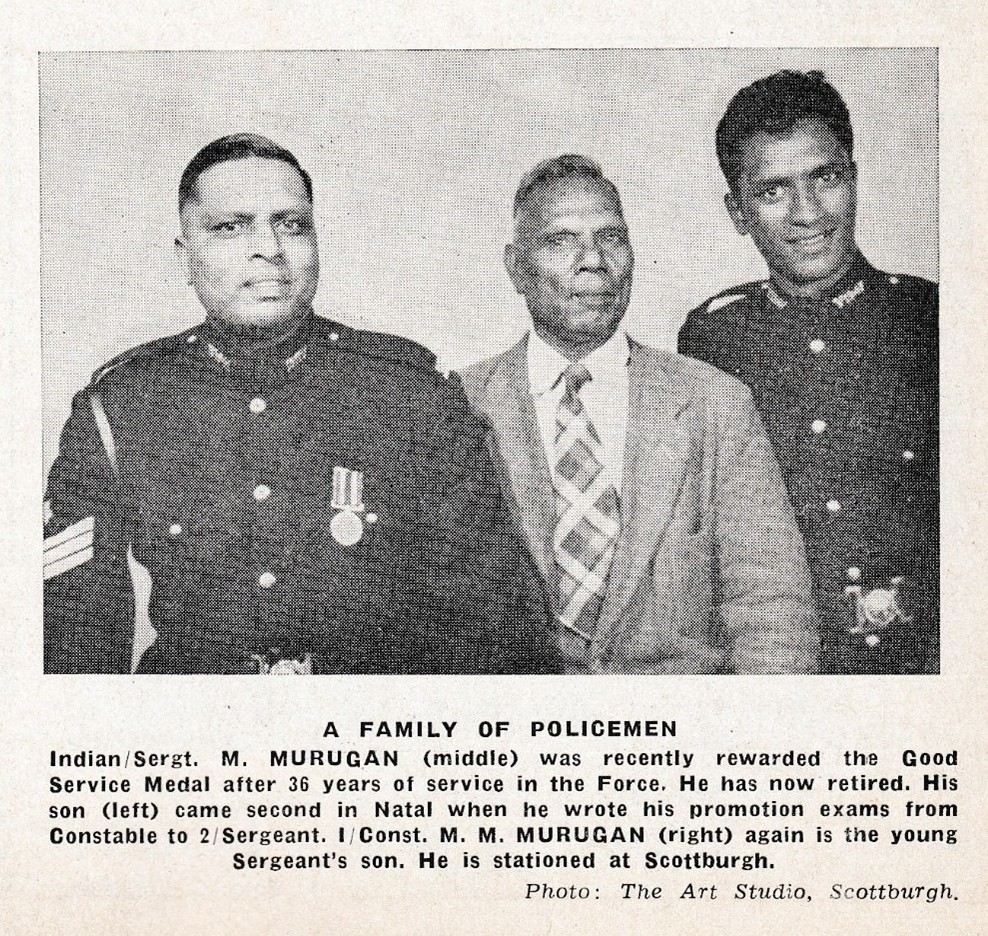
A family of Police Officers
Transcript
Indian Sergeant M Murugan (middle) was recently awarded the Good Service Medal after 36 years of service in the force. He has now retired. His son (left) came second in Natal when he wrote his promotion exams from Constable to Second Class Sergeant. Indian Constable MM Murugan (right) again is the young Sergeant’s son. He is stationed at Scottburgh.
Photo : The Art Studio, Scottburgh.
(Source Nongqai June 1956.)
(This was published in 1956 and Sergeant M Murugan was awarded a service medal for 18 years of Good Service and a cumulative service of 36 years; he presumably joined the South African Police during 1920 or a little earlier. With the kind assistance of the South Coast Herald I traced their families, however, sadly, no information was forthcoming from their respective families. – [LG])
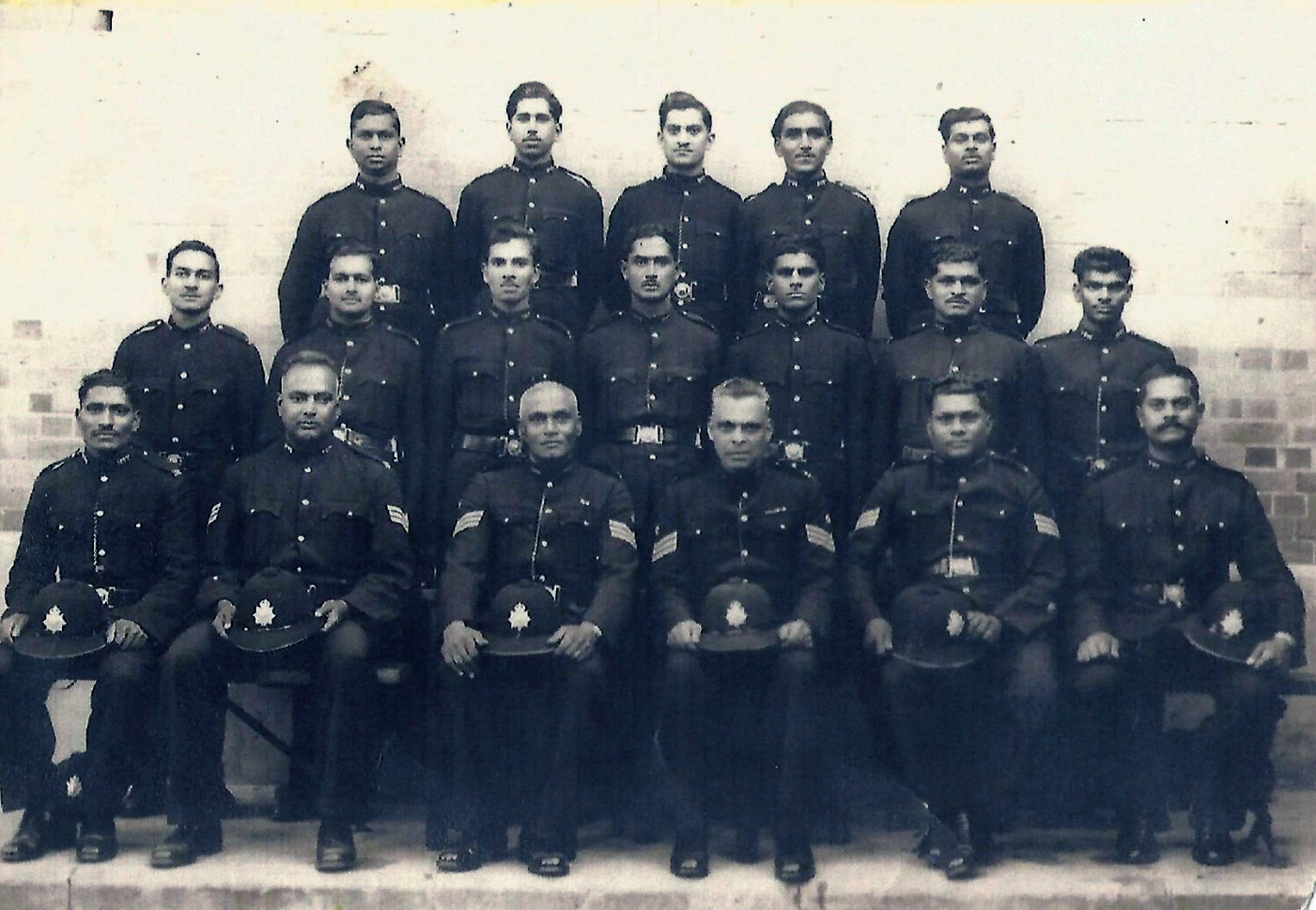
Historic group photograph of our some of our predecessors. All the members were stationed in and around the Pietermaritzburg District, presumably between 1952 and 1954
Front row, L-R, 1st Constable CT Pillay, Dad late Warrant Officer Mariappa Pillay; 2nd Sergeant Budhram, Dad Colonel Henry Budhram; 5th Sergeant Mariemuthu, My Dad, [LG].
Second row, L-R, 2nd Constables Ramsumer; 7th Cattigan (prominent police family based in Pietermaritzburg. A number of brothers were members, followed by their children. – [LG]).
Rear row, L-R, 1st Constable David; 5th Warrant Officer Abbay (Pappa) Naidu.
(Source Colonel Henry Budhram. The names were also furnished by him)
Vengadasalem Rajarathnam Moodley, Special Grade Chief Sergeant
Attested 1934
(Source his daughter Ms Ranji Mudeliar)
SOUTH AFRICAN POLICE
Indian Members of the Criminal Investigation Department, Durban Central
Photograph taken on the retirement of Detective Head Constable Kroukamp
19th May 1950
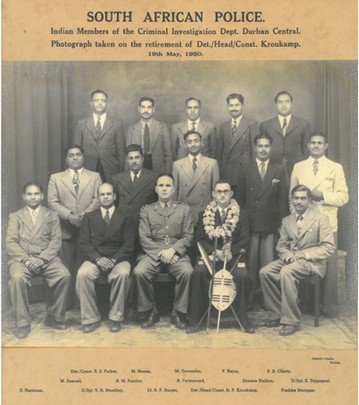
(Source family of Lieutenant K Rajgopaul)
Rear row, from left to right, Detective Constables RS Pather; M Moosa; M Govender; P Rajoo; PR Chetty.
Middle row, from left to right, M Samuel: AM Panday; A Parmanand; Samson Naidoo; Detective Sergeant K Rajgopaul (My Dad – Ms Poonie Rajgopaul)
Front row seated, from left to right, S Narainan; Detective Sergeant VR Moodley; Lieutenant AP Burger; Detective Head Constable HP Kroucamp; Freddie Moorgas.
(The names on the scanned photograph were indistinct. The names provided by the daughter of K Rajgopaul, Ms Poonie Rajgopaul from the original photograph. –[LG])
(I presume many of these Indian members would have joined the SAP circa 1930’s. – [LG])
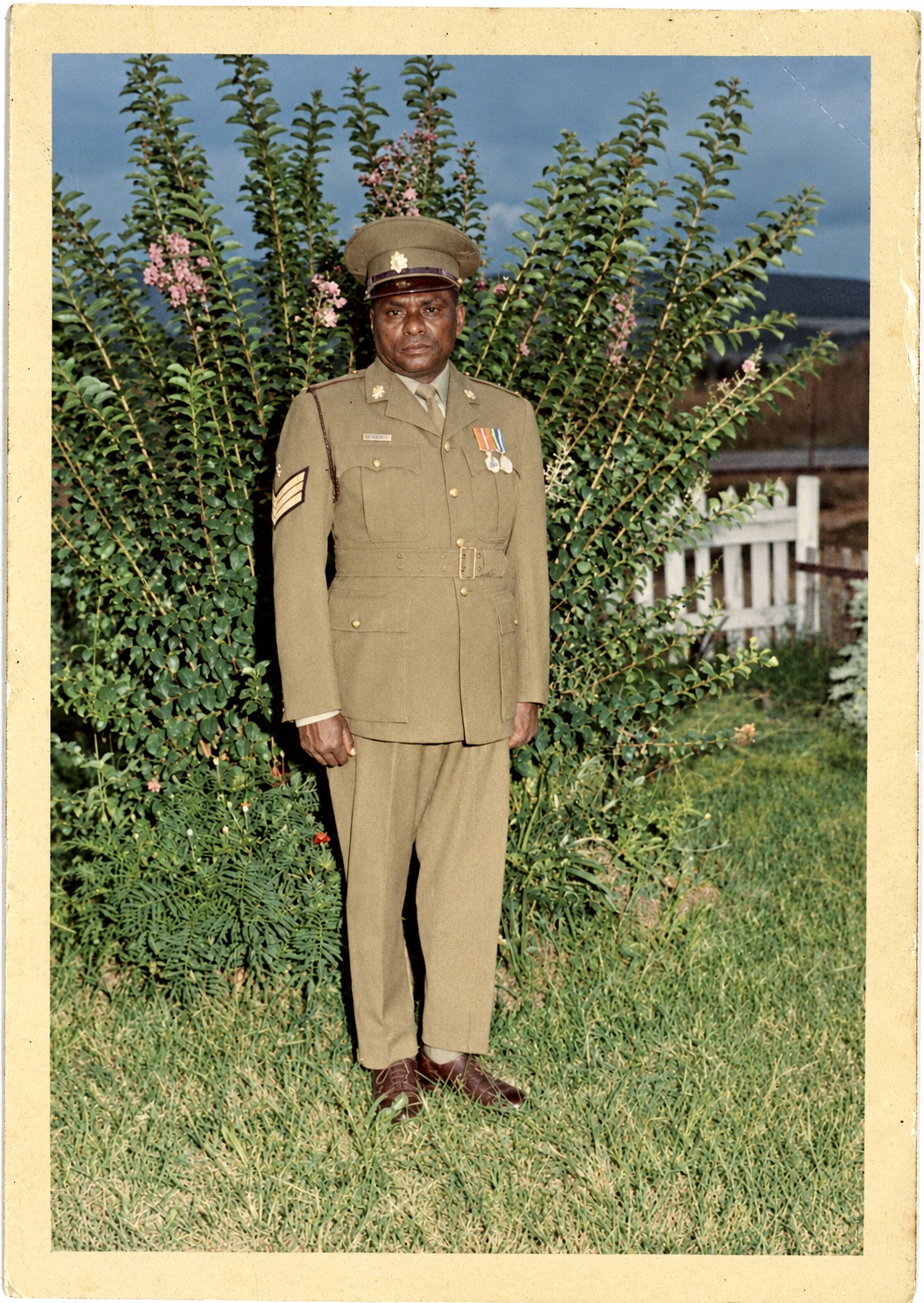
My Dad, Mariemuthu, Sergeant
Attested 1st January 1937
(Source – [LG]. Kindly restored by Ms Jennifer Bosch)
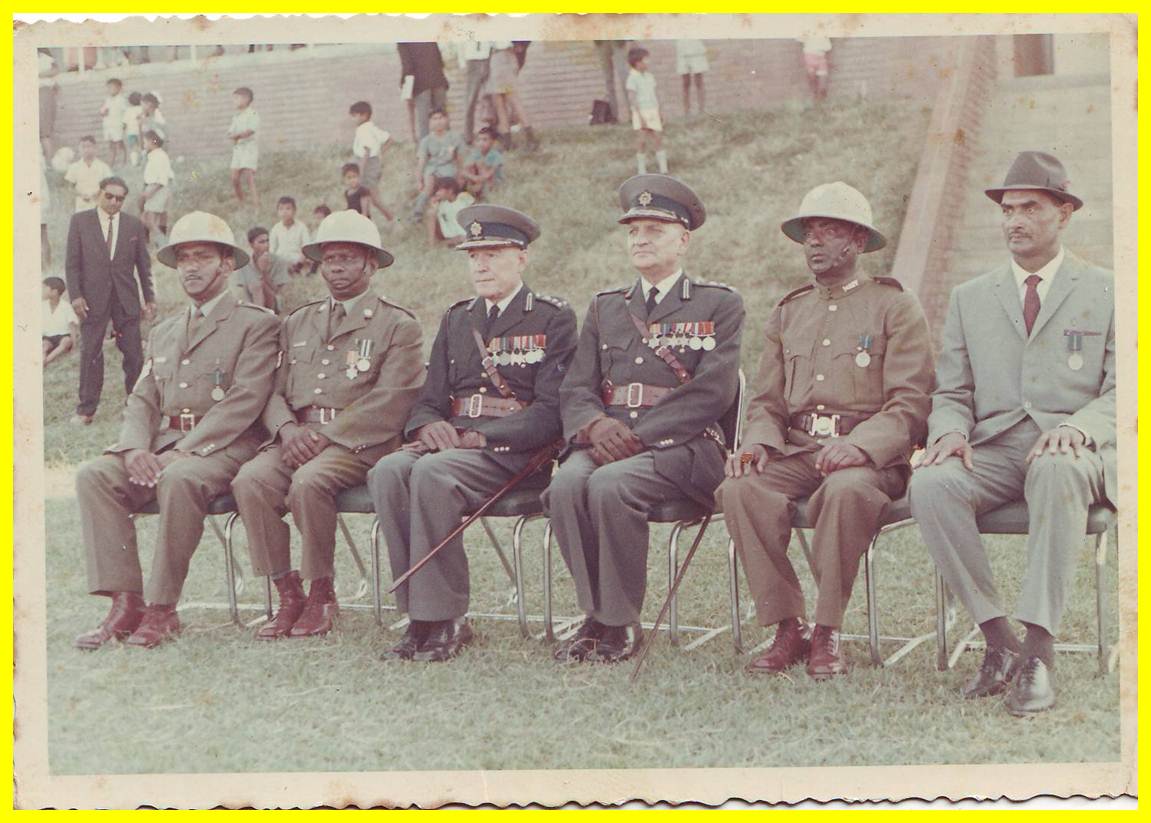
Medal Parade held at the Northdale Stadium during 1968
(Source – [LG].)
In the background Sergeant Narainsamy Naidoo, wearing sunglasses;
Seated from left Sergeant Abay (Pappa) Naidu; Sergeant Mariemuthu (my Dad); Brigadier Piet Kemp, Divisional Inspector Natal Inland Division – (Major General Dirk Schoeman); Brigadier WT Murray, Divisional Commissioner, Natal Inland Division; Constable Budhoo (Greytown); Detective Pakiry.
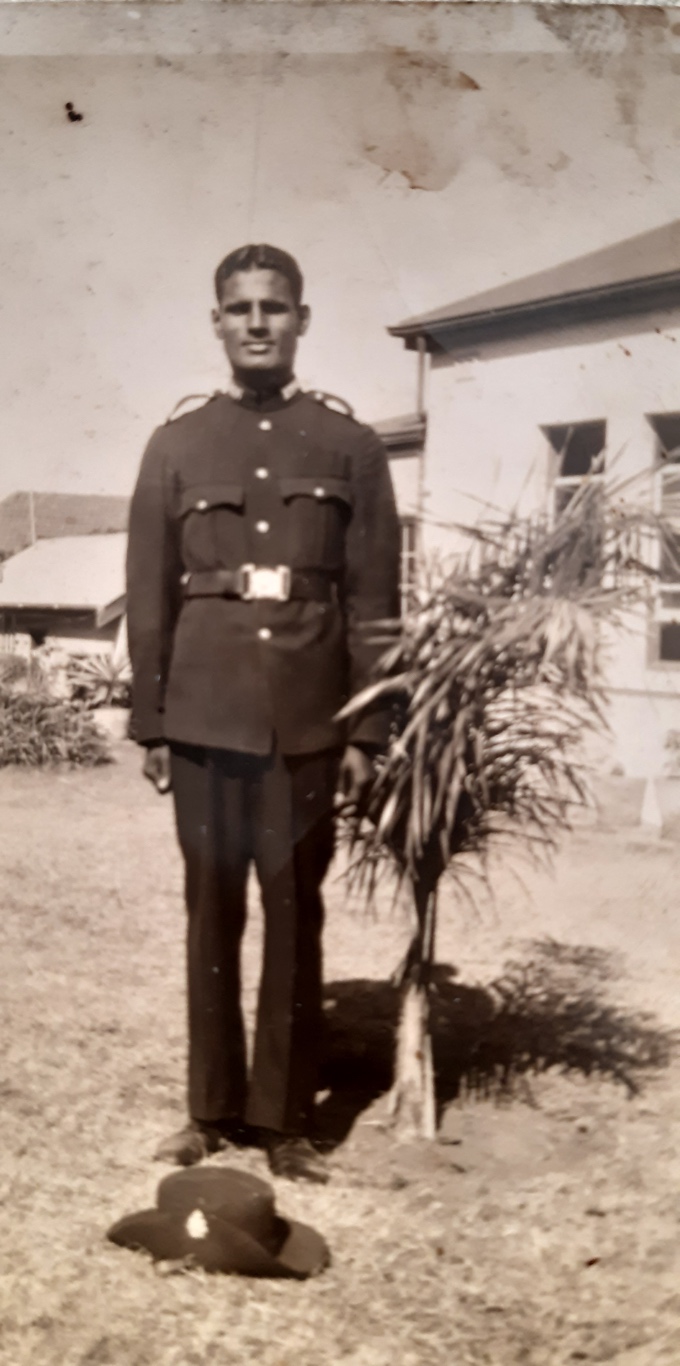
Kathavarayen Rajgopaul, Lieutenant
Attested 02nd July 1937
(Source family of Lieutenant K Rajgopaul)
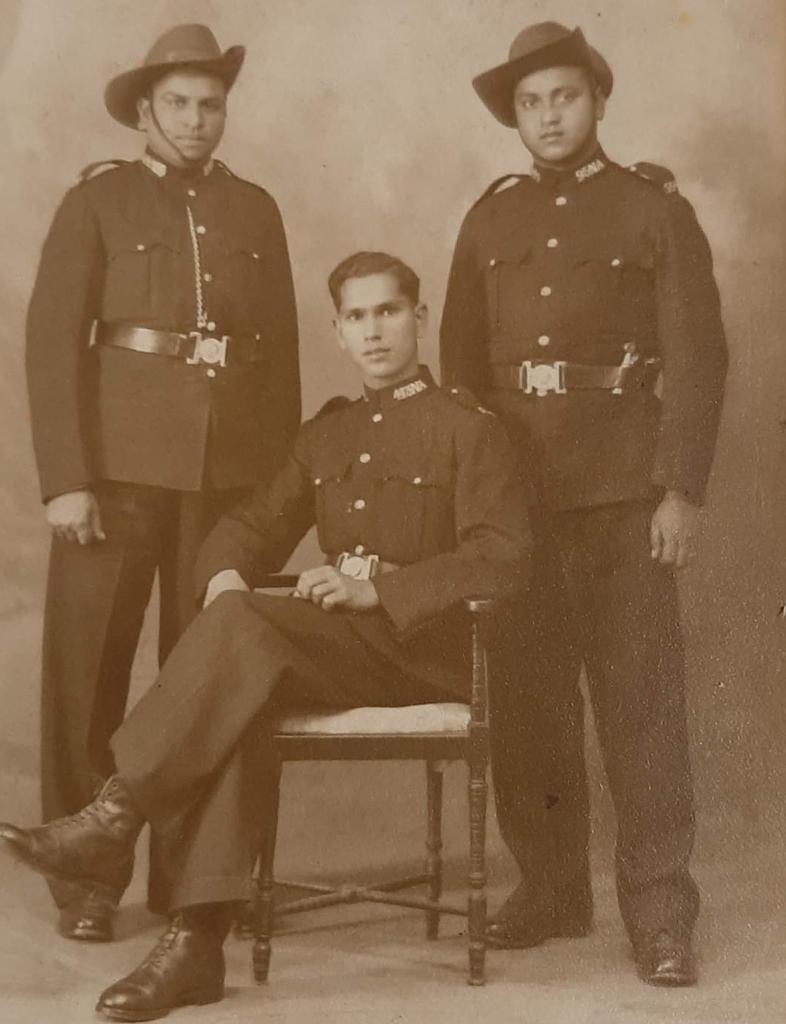
Two members standing. Seated Sergeant Naidu. Apparently joined and at served at Durban Central
(Source Son, Deena of Sergeant Naidu)
Unfortunately, no further information is available about the two members standing. Seated Sergeant Naidu. Apparently joined and at served at Durban Central.
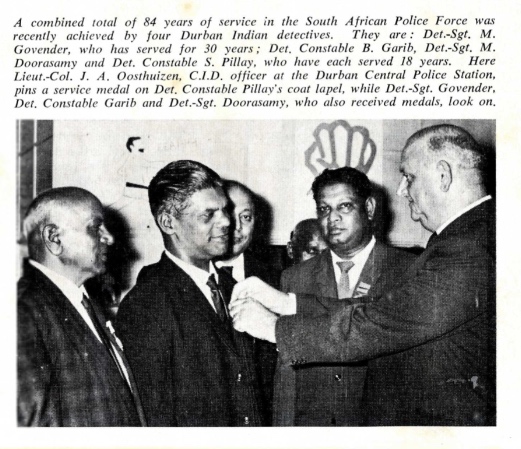
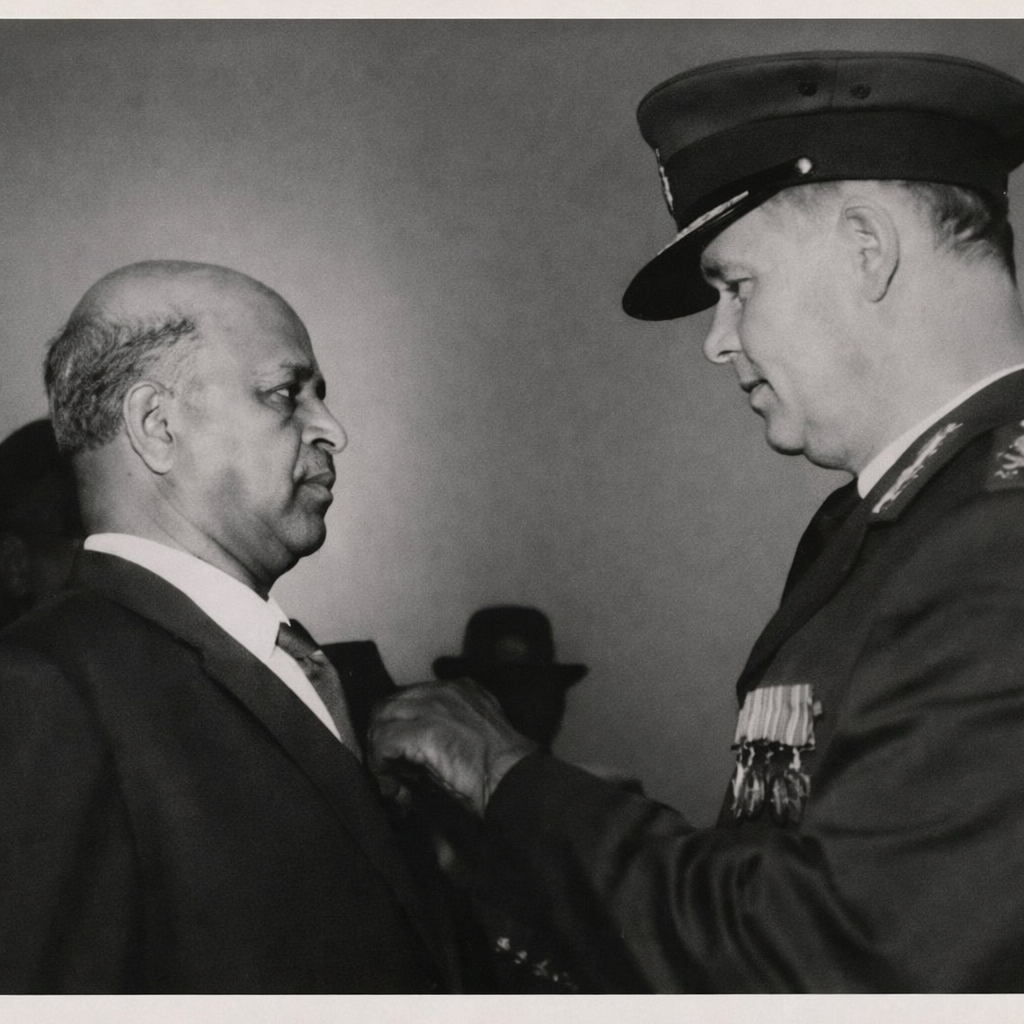
Detective Sergeant M Govender; Detective Constable M Garib; Detective Sergeant M Doorasamy; Detective Constable S Pillay; Lieutenat-Colonel JA Oosthuizen, CI Chief of Durban Central pinning the medals onto their lapels
(Source UKZN Special Collections, Gandhi-Luthuli Documentation Centre. Courtesy of Mr T Munsamy, Senior Librarian, University of Kwa-Zulu Natal (UKZN), Westville Campus
No further information is available about any of these members except what is mentioned in the caption.
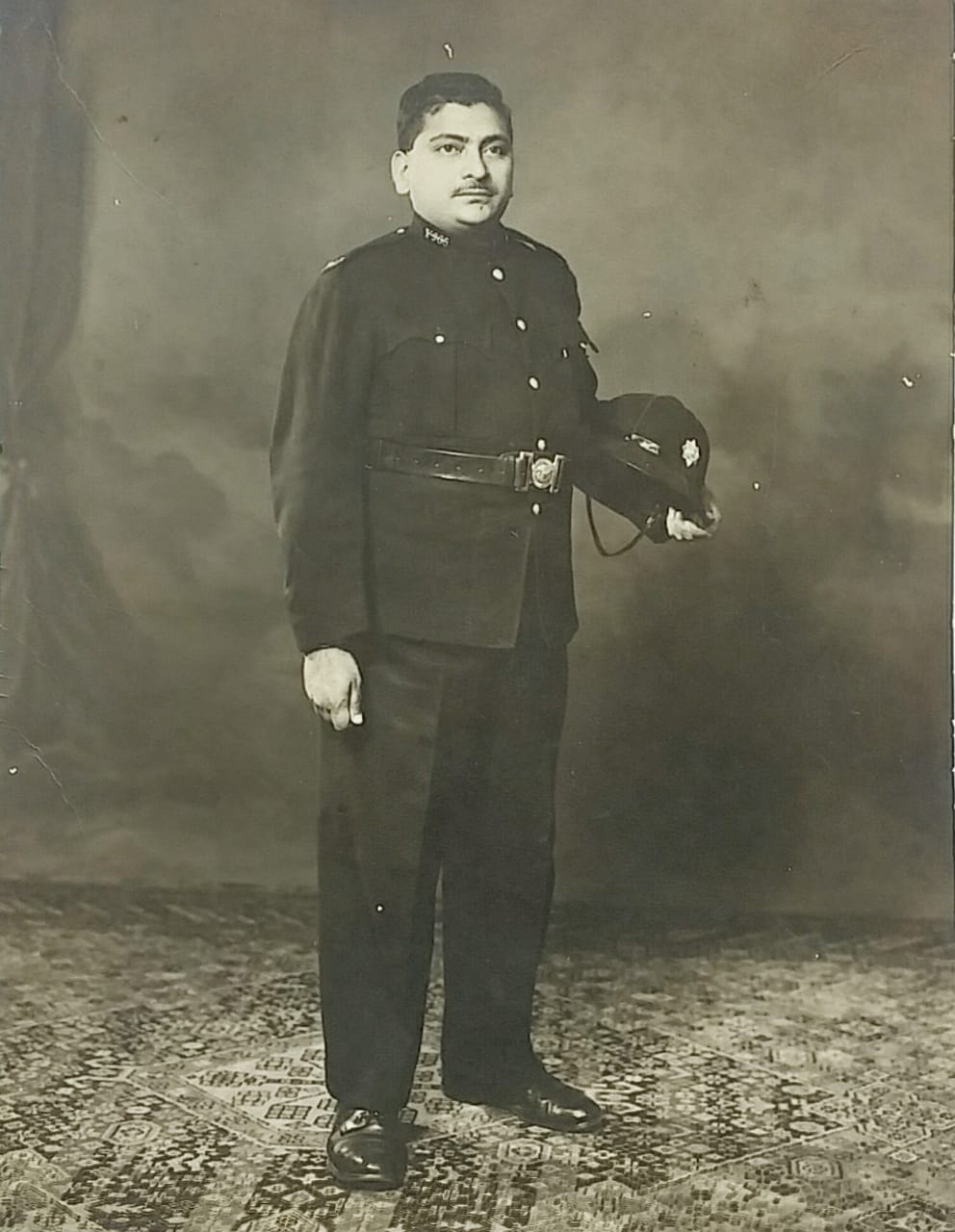
Sergeant Bhaul Haripersad
Dad of Brigadier Anesh Haripersad
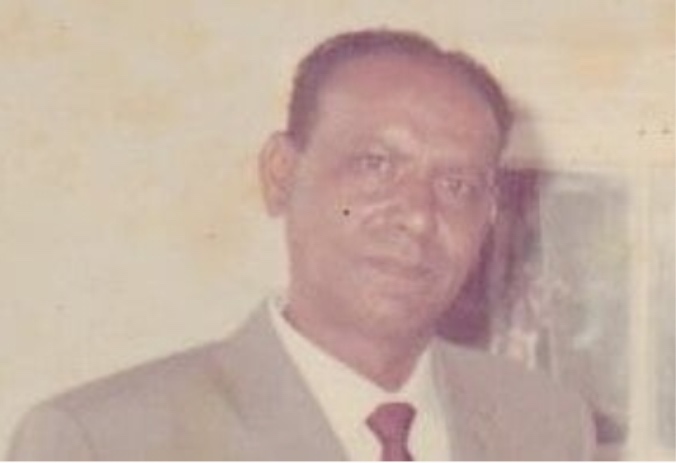
Ramkarran Maharaj
(Dad of Lieutenant General DS (Sharma) Maharaj. – [LG])
(Source family of Lieutenant General Sharma DS Maharaj)
Born Unknown
Enlisted Unknown
Retired Unknown
DETECTIVE SERGEANT RAMKARAN MAHARAJ
(Dad of Lieutenant General (Sharma) DS Maharaj
He enlisted into the SA Police during the 1940’s in Richmond(N) Also Pietermaritzburg Central (Loop Street), Scottsville, Topham Road and Alexandra Road.
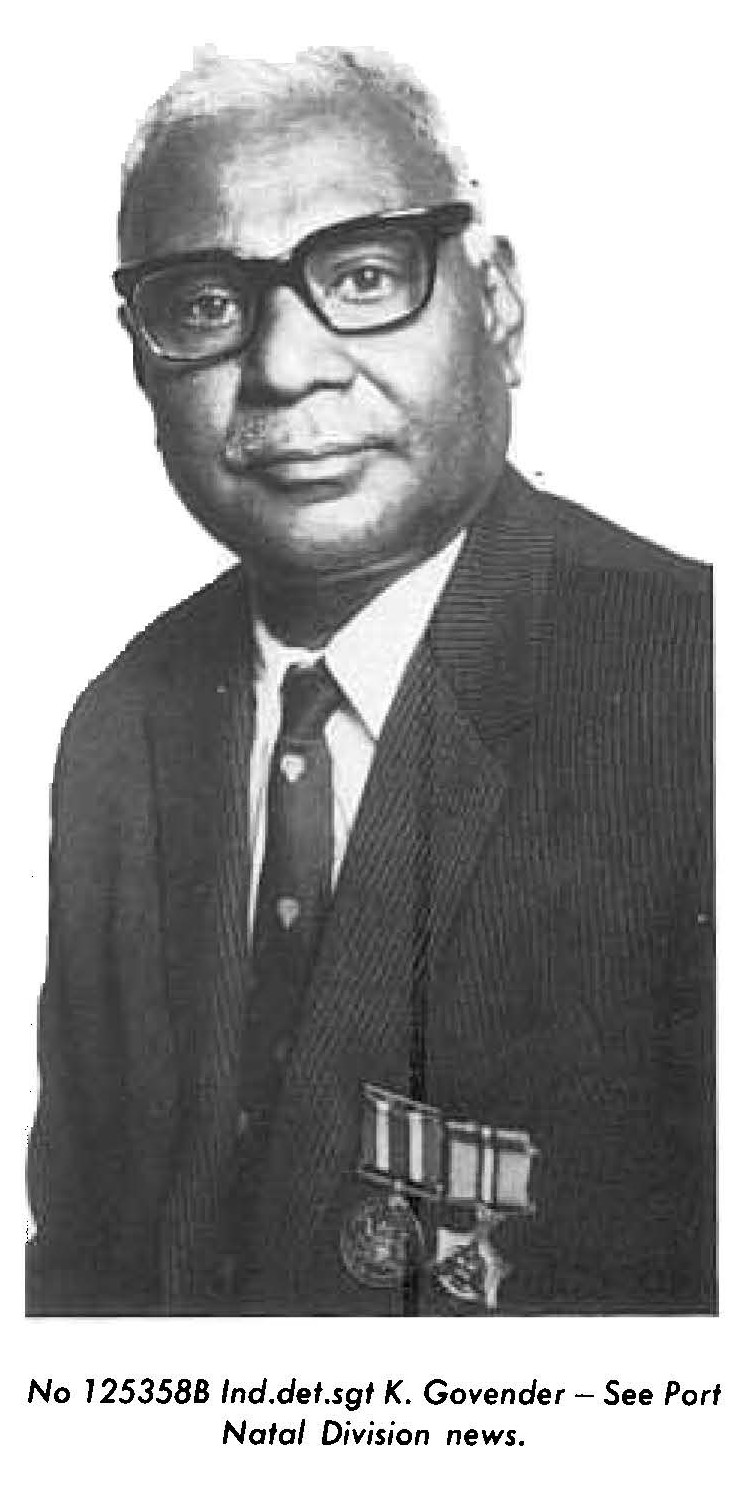
Attested 4th March 1944
(Source SARP)
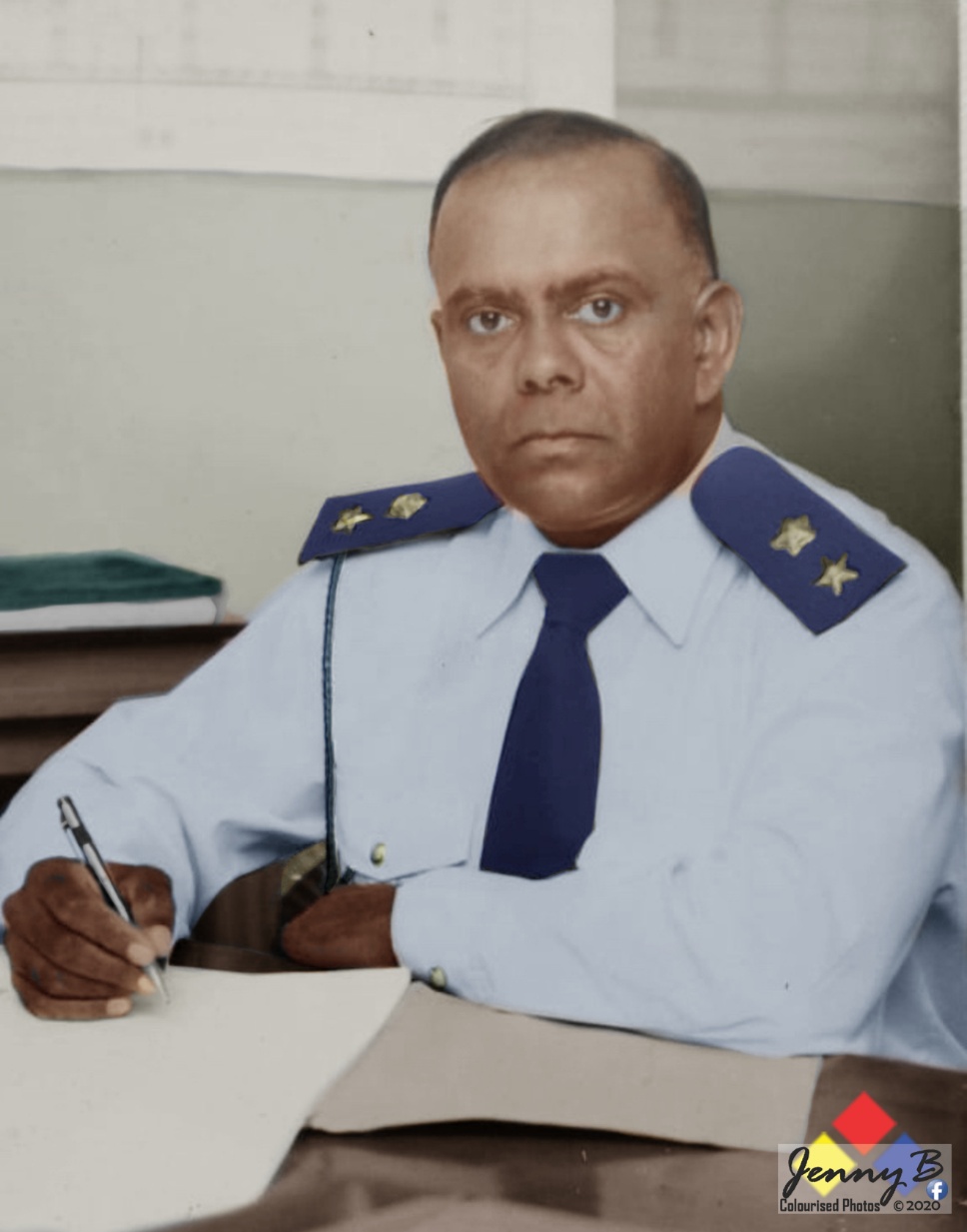
Subramonia Pillai
(Source of Black and White Photograph Brigadier NG Govender, kindly colourised by Ms Jenny Bosch)
Born 1927-02-10
Enlisted 1949-07-13
Retired 1982-12-09
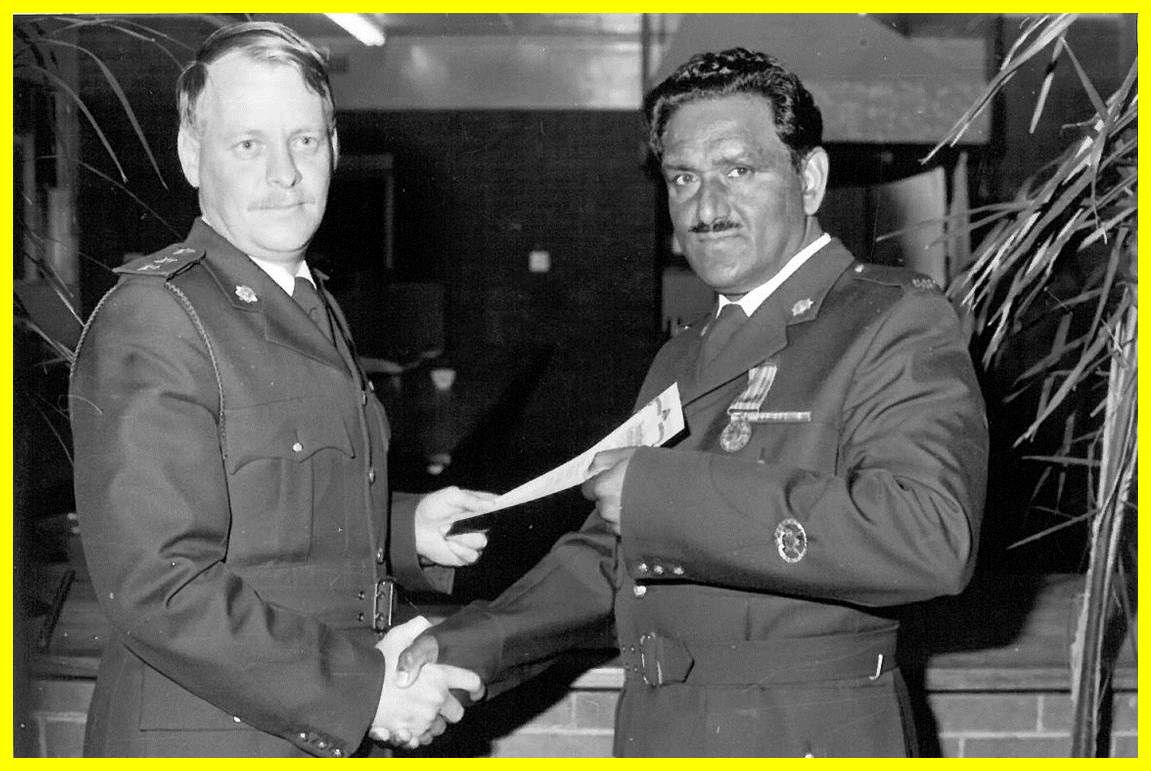
Major General Dirk Schoeman handing over service certificate to Warrant Officer Pappa Naidu upon retirement
(Source family of Warrant Officer Naidu)
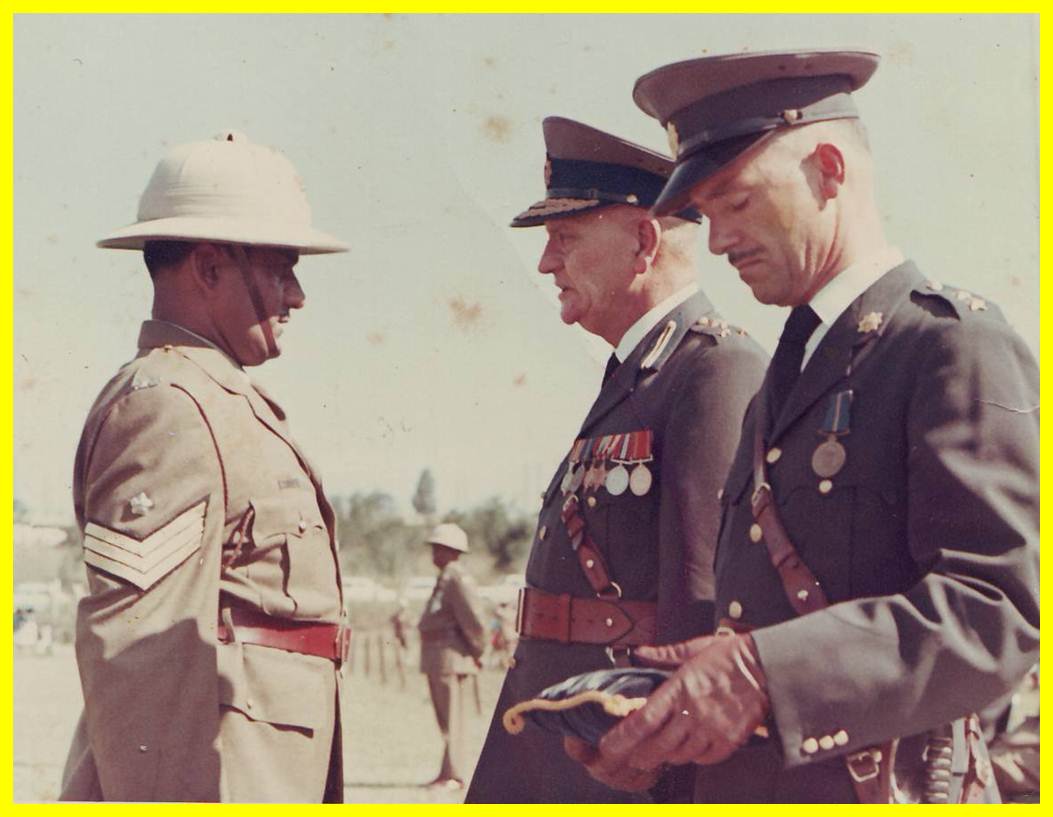
Warrant Officer Abbay Naidu receiving a Medal from the Divisional Commissioner, Natal Inland Divion, during 1968 Northdale Stadium Pietermaritzburg. Captain JM Fontini on right
(Source family of Warrant Officer Naidu)
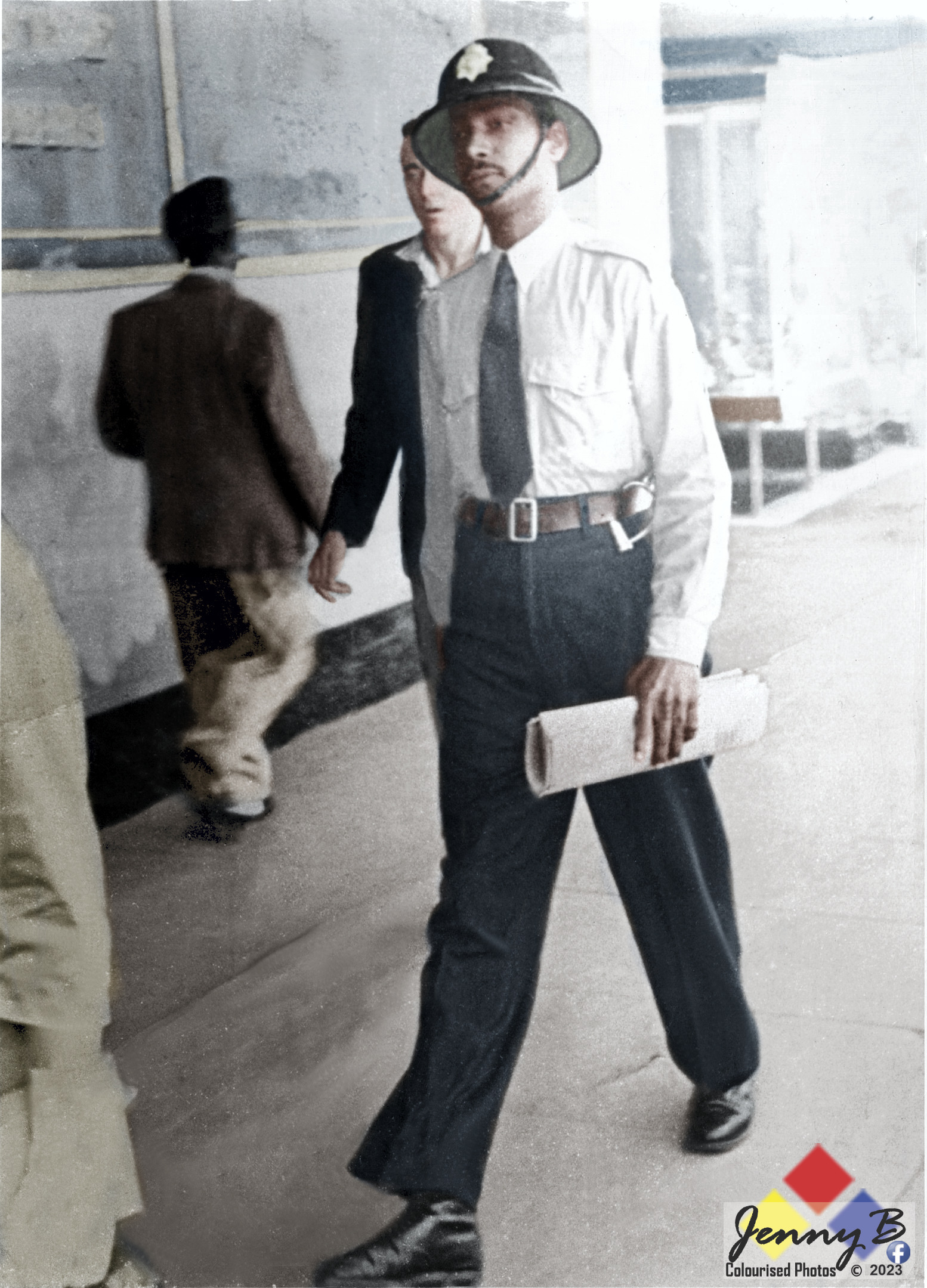
Arumugam William Moodley in black uniform during 1952
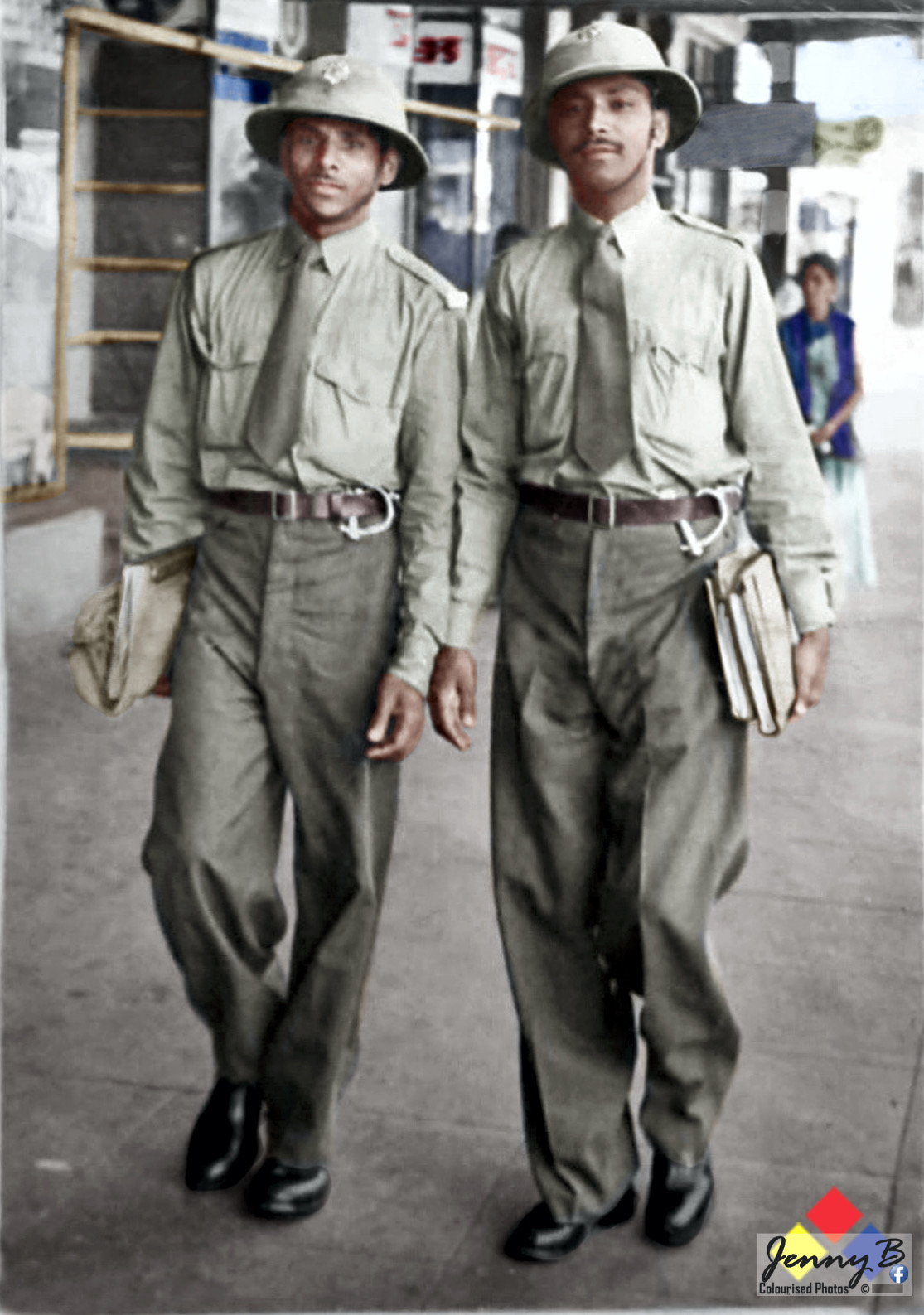
Constables Khandi and Arumugam William Moodley – Joined circa 1953
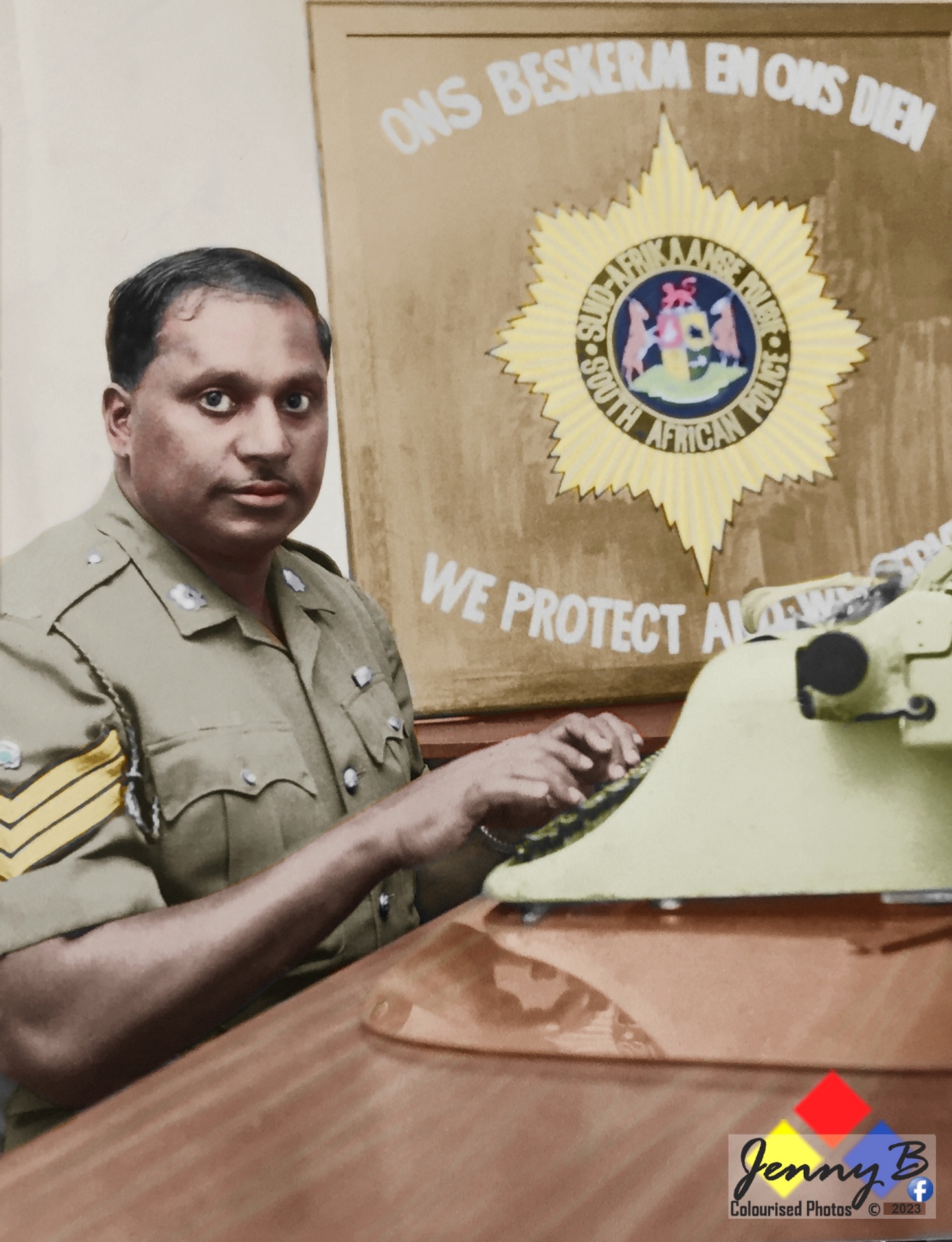
Govindsamy Reddy
Born 1931-10-10
Enlisted 1953-08-06
Retired 1988-09-30
(Source family of Captain Reddy. Kindly colourised by Ms Jennifer Bosch)
AFTERWORD
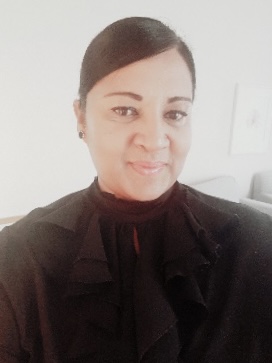
Advocate Karen Pillay, daughter of Colonel (Dickey) Rungasamy Munsamy
Poem
Police Drill as Police Cadets by Paul Warren Poetry,
“Standing on the parade ground
We are 17 years young all around
In khaki uniforms pressed so well
Chests pumped out we were such swells
With trouser with creases so fine
And spit and polished shoes done with shine
So we learnt how to drill in squad formation time
And marched around the parade ground so sublime
We did this for three years honing the skill
Standing tall as coppers in the drill
We made the grade in what we were
Graduating as a constable in quite a stir”
The Non-European Police Training College in Wentworth was used specifically to train police recruits of colour (Indians and blacks), when the demand and use of non-white police officers increased in the country, in the early 1950s. The apartheid government enforced segregation and therefore institutions and facilities with mediocre standards were acquired by the government, for the housing and training of these police recruits. The psyche for the training of the recruits was to produce disciplined officials who were well-trained in policing skills, in order to enforce the laws of the land which was then a rigid system of racial segregation- ‘apartheid’. The classification of the population by race forced racial segregation, even in the realms of training. These training academies such as the Wentworth Police Training College, were initially established and led by white police officers, and later the non-white officials were trained to lead and support certain training faculties, until it eventually became recognised as the Indian Police Training College.
This expressive compilation of information and pictures by Colonel Logan Govender and other writers and contributors, provides an intense account of the evolution of training for non-whites in the South African Police (SAP), focusing on the Wentworth Training facility. Over the years the Wentworth Police Training College produced thousands of brave South African policemen, predominantly of black and Indian origin, who endured rigorous training programmes comprising of drill, physical training, sports, lectures in law and policing and the inculcating of strict discipline to support the policing culture. While many may have silently been resistant to the practices and methods adopted in training, they succumbed only because it provided employment, and an income for many families. The integration of non-whites in the police force was the catalyst for change that transformed the police force, over the years.
Delving into the antiquities of the Wentworth Police Training College, provides a prodigious opportunity to record its history relative to the country and policing, but more especially it serves to provide a reminiscent account of the history of policing involving the Black and Indian recruits. Many strong bonds between these officers was established as several of these recruits progressed into becoming celebrated, prominent leaders and stalwarts, that moulded and shaped the South African Police, namely, the first non-white commanding officer of Indian descent, was Lieut Colonel S Pillai, followed by Lieutenant General M Chetty and others. Several legendary Indian Instructors were also trained and produced at this Institution, to name but a few, namely retired Brigadier Beharie Ram, the late Captain DJ Lamech, retired Captain Tiger Ellappan, late W/Officer Saravana Govender. The first female members were recruited to join the SAP in the 1980s and the first Indian female commanding officer was Brigadier Indira Chetty, now retired.
As an ex-police officer and police instructor myself, I heard many interesting stories and accounts of how training was handled and managed in the past to produce resilient, competent and knowledgeable police officers at this specific training facility. Some of the best drill and physical training displays by the Indian police officers, were produced at the Wentworth facility and recognised the world over. A key story teller in this regard, was also my late- Dad, Colonel Rungasamy Munsamy, who graduated from the Wentworth facility after enduring a gruelling period of training- but he was proud of his achievements and being recognised as the ‘best student’ then, as he believed that the training provided, built character. Poignantly, in 1990, my Dad was appointed the Commanding Officer of the Chatsworth Police Training College in Durban, which incidentally was an off-spring of the Wentworth Police Training College.
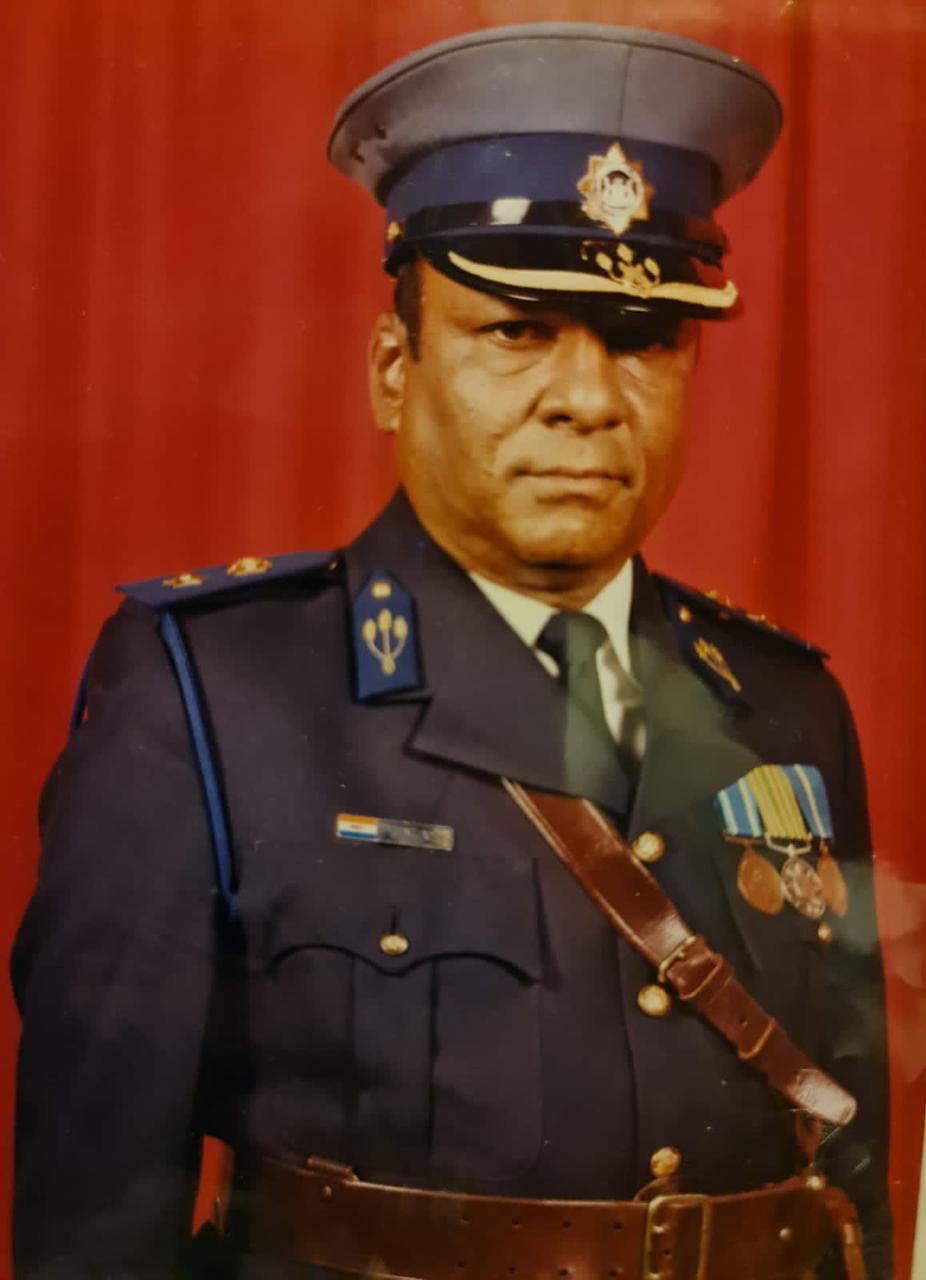
Colonel (Dickey) Rungasamy Munsamy
There is no doubt that many who passed out from the Wentworth Police Training College would have had a ‘love-hate’ relationship with the facility, but what they will not deny is the role the Institution played in fostering their careers, transforming the police, building leadership and most importantly contributing to the history of the land. It shall remain an unforgettable ‘alma mater’ to many- Servamus et Servimus.
Acknowledgement
I wish to recognise and thank the Editor in Chief of Nongqai, Brigadier Hennie Heymans for his tireless, often unseen efforts in helping with the creation and publication of this magazine.
An experienced and highly skilled officer with an exceptional memory. His father served in the South African Police, stationed at Mount Edgecombe during the 1940s and later at Durban Central, Somtseu Road, and Rossburgh. The Brigadier holds a Master’s degree in Strategy. In 1964, he was stationed at Wentworth alongside Lieutenant-Colonel (Ray) Mathura Munilall. He also served at King’s Rest (now Brighton Beach), later as Public Relations Officer at Head Office, District Commandant at Welkom in the Free State Province, in the Soweto Region, and at ISU Headquarters.
I thank the following contributors : –
- ALL photographs except for those otherwise mentioned were provided by Mr Rian Vorster, son of Warrant Officer HA Vorster; I am deeply indebted to Rian for his kind gesture in assisting to preserve the history of the SA Police, Non-European Training Depot;
- Major General (Professor) for the Foreword andhis keen interest, advice, inspiration, encouragement, contributions and professional assistance always;
- Advocate Karen Pillay, daughter of Colonel Rungasamy (Dickey) Munsamy for the Afterword, her interest, advice, inspiration and professional assistance always;
- Ms Jennifer Bosch, New Zealand for the colourisation of the photographs;
- Last but not least my family, for their patience, encouragement, and understanding throughout the journey of researching, compiling and refining this tribute.
“Each day, millions of police officers do the selfless work of putting their lives on the line to protect civilians, frequently responding to or preventing crises completely with no recognition.” – Letitia James
“agnoscere et honorare servientibus” –
“to acknowledge and honour those who served”
“Soli Deo Gloria” – “To God Alone Glory”
Logan Govender