
Nongqai Vol 17 No 10 – (32) Open letter: Dr L Max
Excerpt
Police leadership should be founded on professional qualifications, operational policing experience, integrity, and merit rather than primarily on executive or political considerations.
Abstract (English)
In this open letter to the Acting Minister of Police, Dr Lennit Max, a retired Lieutenant-General of the South African Police Service, argues for legislative reform to professionalise the appointment of the National Commissioner of Police and other senior operational leaders. He contends that the constitutional responsibilities of leading SAPS require specialised policing knowledge, operational experience, professional training, ethical leadership, and appropriate academic qualifications. Drawing on lessons from the Marikana Commission and comparing the statutory requirements for the National Director of Public Prosecutions with those applicable to the National Commissioner, he highlights a legislative gap in professional competency standards. The letter proposes amendments to the South African Police Service Act to establish transparent, merit-based eligibility criteria, including academic qualifications, operational policing experience, integrity assessments, and objective selection procedures. The overarching aim is to strengthen professionalism, accountability, operational effectiveness, public confidence, and the depoliticisation of senior police appointments in South Africa.
Keywords (English)
South African Police Service, SAPS, National Commissioner, police leadership, policing reform, professionalisation, operational policing, constitutional accountability, legislative reform, merit-based appointments, public confidence, police governance, criminal justice, integrity, law enforcement, senior management, depoliticisation, National Prosecuting Authority, Marikana Commission, police professionalism.
Kort opsomming (Afrikaans)
Dr. Lennit Max pleit vir wetswysigings om te verseker dat die Nasionale Kommissaris van Polisie en ander senior operasionele leiers volgens duidelike professionele standaarde aangestel word. Hy voer aan dat akademiese kwalifikasies, operasionele polisiëringservaring, integriteit en bewese leierskap noodsaaklik is vir die doeltreffende bestuur van SAPD. Die voorgestelde hervormings sal volgens hom professionaliteit versterk, politieke invloed beperk, openbare vertroue herstel en die doeltreffendheid van polisiëring in Suid-Afrika verbeter.
OPEN LETTER TO THE ACTING MINISTER OF POLICE
Dr Lennit Max, LLD
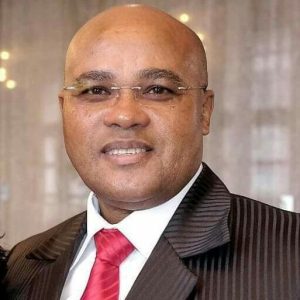
(Photo provided)
WHO SHOULD LEAD THE POLICE? WHY PROFESSIONAL QUALIFICATIONS MUST MATTER IN THE APPOINTMENT OF SOUTH AFRICA’S NATIONAL COMMISSIONER OF POLICE
To: The Honourable Firoz Cachalia
Acting Minister of Police
Republic of South Africa
From: Dr Lennit Max, LLD
Advocate | Retired Lieutenant-General, SAPS | Former Western Cape Police Commissioner
SUBJECT: PROPOSED LEGISLATIVE REFORM TO PROFESSIONALISE THE APPOINTMENT OF THE NATIONAL COMMISSIONER AND SENIOR OPERATIONAL LEADERSHIP OF SAPS
Dear Acting Minister Cachalia,
As a retired Lieutenant-General of the South African Police Service (SAPS), I write to you out of my enduring love for the police, but, most importantly, my love for South Africa and the people who live in it.
At the outset, I wish to acknowledge and commend the efforts you have initiated to restore SAPS’s compliance with its constitutional obligations and address the serious challenges confronting the organisation. I welcome these initiatives and offer this open letter as a constructive contribution towards building a professional, effective, disciplined and accountable police service.
My concern relates to the appointment of individuals to the highest operational leadership positions in SAPS without adequate practical policing experience or appropriate professional training.
South Africa has, at various times, appointed National Commissioners whose professional backgrounds did not include a conventional operational policing career. These appointments raise a fundamental question: whether general management experience, without sufficient operational policing knowledge, adequately prepares someone to command the country’s entire police service.
A person who has never worked in a Community Service Centre, historically known as the charge office, may have little or no practical operational understanding of the responsibilities of officers who receive complaints, register cases and attend to members of the public.
Similarly, the experience of serving as a shift sergeant, supervising warrant officers and constables, conducting patrols in a police vehicle, responding to crime scenes and managing public-order operations provides invaluable insight into the realities of frontline policing.
These are not minor operational details. They form the foundation on which effective police command, discipline, and accountability are built.
In my considered view, an inadequate understanding of these realities at the highest levels of leadership can undermine morale, weaken command and control, and compromise the organisation’s professional culture. Although leadership appointments alone cannot explain criminal conduct by individual police officers, effective leadership is indispensable to enforcing discipline, promoting ethical conduct and preventing misconduct.
This letter is not intended to unfairly criticise appointments made by the President on the recommendation of the Minister of Police. It aims to contribute constructively to the transformation of SAPS and to ensure that future appointments are guided by professional competence, integrity, and merit rather than political considerations.
The central argument is straightforward: SAPS leadership must be treated as a specialised professional responsibility, not merely an executive appointment.
1. THE CONSTITUTIONAL RESPONSIBILITY OF THE NATIONAL COMMISSIONER
Section 207(1) of the Constitution of the Republic of South Africa, 1996, provides that the President must appoint a woman or a man as National Commissioner of Police to control and manage the police service.
This is not an ordinary administrative appointment. The National Commissioner occupies one of the most consequential leadership positions in South Africa’s criminal justice system.
Section 205(3) of the Constitution defines the fundamental objectives of the police service: to prevent, combat and investigate crime; maintain public order; protect and secure the inhabitants of the Republic and their property; and uphold and enforce the law.
These constitutional responsibilities require specialised knowledge, operational understanding, practical experience, sound judgment, and the ability to lead a large, complex law enforcement organisation.
The National Commissioner must be capable of translating constitutional obligations into effective crime-prevention strategies, professional investigations, lawful operations, disciplined policing and measurable improvements in public safety.
The question is therefore not simply whether a person is legally eligible for appointment. It is whether that person possesses the professional competence necessary to discharge the responsibilities of the office.
Section 207(1) establishes the President’s appointment authority, but it does not expressly prescribe the academic qualifications, minimum operational experience or specialised training that the National Commissioner must possess. This is an important distinction.
I propose that Parliament consider establishing clear statutory requirements to ensure the exercise of the appointment power is informed by objectively defined professional standards.
2. THE LESSONS OF THE MARIKANA COMMISSION
The findings of the Marikana Commission of Inquiry must not be ignored when considering the professional requirements for police leadership.
The events surrounding the Marikana tragedy exposed serious weaknesses in operational decision-making, command structures, accountability and the management of complex police operations.
The Commission’s findings concerning former National Commissioner Riah Phiyega raised fundamental questions about the adequacy of her relevant training, skills and experience in dealing with the operational circumstances surrounding Marikana.
The Commission’s recommendations also emphasised that operational decisions during public-order policing situations should be made by an officer in overall command who possesses recent and relevant training, skills and experience in public-order policing.
The broader lesson is that police operational decisions, particularly those involving the potential loss of life, require appropriate training, practical experience and sound professional judgment.
The tragedy cannot be reduced to the qualifications of one individual, nor should it be used to suggest that every civilian appointee is inherently incapable of exercising leadership. However, it demonstrates why professional competence must be central to the appointment of those entrusted with operational command.
If specialised training and experience are necessary for officers making critical operational decisions at the scene, surely the same principle deserves serious consideration at the highest level of police command.
The highest office in SAPS should not be exempt from the professional standards expected of those who serve under its authority.
3. THE DISCREPANCY BETWEEN THE APPOINTMENT OF THE NATIONAL DIRECTOR OF PUBLIC PROSECUTIONS AND THE NATIONAL COMMISSIONER OF POLICE
Acting Minister, this is the central issue I wish to bring to your attention.
A striking difference exists between the statutory qualifications prescribed for the National Director of Public Prosecutions (NDPP) and the absence of an equivalent, comprehensive statutory framework prescribing academic and operational policing qualifications for the National Commissioner of Police.
Section 9 of the National Prosecuting Authority Act, 1998 (Act No. 32 of 1998), expressly requires a person appointed as NDPP to possess legal qualifications that would entitle that person to practise in all courts in the Republic. The appointee must also be a fit and proper person, with due regard to experience, conscientiousness and integrity. The NDPP must be a South African citizen.
These requirements recognise that the authority to direct prosecutions demands specialised legal competence, sound judgment and integrity. According to the NPA’s 2024/25 Annual Report, its total human-resource complement stands at 3,851 employees, including contract appointments.
The National Commissioner, on the other hand, is responsible for controlling and managing the police service and ensuring it discharges its constitutional responsibilities effectively. These include preventing crime, investigating offenses, maintaining public order and protecting the inhabitants of the Republic. In contrast with the NPA, the SAPS 2024/25 Annual Report reflects a total human-resource complement of 187,681 employees.
Yet the South African Police Service Act, 1995 (Act No. 68 of 1995), does not set out an equivalent, comprehensive set of statutory academic and operational policing qualifications for the National Commissioner.
The distinction is not that the NDPP’s work is more important than that of the National Commissioner, or that the two offices should have identical qualifications. They have different functions and require different areas of expertise.
The issue is that both offices exercise substantial authority within the criminal justice system, yet the statutory framework expressly identifies professional legal qualifications for the NDPP without providing a comparable, detailed professional competency framework for the head of SAPS.
This discrepancy deserves legislative attention.
3.1 The NDPP appointment process provides a further lesson
The importance of professional qualifications was also evident in the process leading to the appointment of Advocate Jan Lekgoa Mothibi as NDPP, effective from 1 February 2026. Adv Mothibi’s unilateral appointment follows an advisory panel that conducted an open and transparent selection process, interviewed candidates, and submitted its recommendations to the President. However, it recommended no suitable candidate.
Although Adv. Mothibi didn’t participate in the selection process, his appointment complied with sec. 9 of the NPA Act with respect to academic qualifications and practical experience. The example demonstrates the value of a structured selection process for a senior criminal justice appointment. It also supports a transparent, merit-based process for appointing the National Commissioner.
The appointment of the National Commissioner should not be left solely to an assessment of general management ability, political confidence or executive preference. Clearly defined professional criteria should inform it, including appropriate operational experience and a demonstrable record of integrity.
The President can retain constitutional appointment authority while Parliament establishes objective statutory eligibility requirements.
3.2 Why the distinction matters
The NPA prosecutes criminal cases, while SAPS prevents crime, protects the public, investigates offenses, and brings suspected offenders into the criminal justice process.
The police therefore perform both proactive and reactive functions. They must prevent harm before it occurs and respond effectively when offenses have been committed.
The police are also a primary entry point into the criminal justice system. Their performance directly affects the quality of investigations, the treatment of victims, the preservation of evidence, and prosecutors’ ability to pursue cases successfully.
It is therefore reasonable to ask:
If legislation requires the NDPP to possess appropriate professional legal qualifications and meet statutory standards of integrity, why should the National Commissioner not be required by law to possess appropriate legal and policing qualifications, operational experience, leadership competence and integrity?
The proposal is not to copy the NPA Act word for word. It is to adopt the underlying principle that the person appointed to lead a specialised institution must satisfy professional standards appropriate to the responsibilities of that office.
4. DISTINGUISHING CIVILIAN PROFESSIONAL EXPERTISE FROM OPERATIONAL POLICE COMMAND
I wish to make it clear that I do not advocate excluding civilians from senior positions within SAPS.
Modern policing requires expertise in finance, auditing, procurement, information technology, forensic science, human resources, governance, legal services and administration. Civilian professionals with the appropriate qualifications and experience make a valuable contribution to the organisation’s effective management.
For example, a qualified finance professional may be well suited to oversee SAPS’s financial affairs. Puleng Dimpane’s professional background in finance, auditing, governance and administration illustrates the importance of matching professional expertise to the responsibilities of a position. Her appointment as Acting National Commissioner in April 2026 makes it particularly important to distinguish between expertise in civilian management functions and the specialised experience required for operational police command.
The issue is not whether civilian expertise has a place in SAPS. It unquestionably does.
The issue is whether civilian expertise in one professional discipline should automatically be regarded as sufficient preparation for the operational command of the entire police service.
It should not.
An accountant’s expertise in financial management does not automatically make that person an operational policing specialist. Similarly, a legal qualification alone does not establish the practical experience required to command complex police operations.
A person does not become a police operational specialist simply by being appointed to a senior position within SAPS or being allocated a police rank.
Accountants should be appointed to manage accounting functions, legal practitioners to provide legal expertise, financial specialists to oversee financial management, and appropriately trained police professionals to exercise operational command.
These functions should complement one another. They should not be confused.
The National Commissioner must possess the leadership ability to oversee civilian specialists and operational police personnel alike. However, the person responsible for operational command should also have a demonstrable understanding of frontline policing and the professional competence required to direct police operations.
5. THE LEGISLATIVE GAP AND THE NEED FOR REFORM
Section 207 of the Constitution establishes the appointment and command framework for the National Commissioner. Section 6 of the South African Police Service Act addresses appointments to senior positions within SAPS.
However, the legislation should provide more explicit and comprehensive professional competency requirements for the National Commissioner and senior operational leadership.
The absence of an equivalent statutory framework to that governing the NDPP leaves considerable room for executive discretion without clearly prescribed minimum standards of operational policing competence.
Executive discretion is necessary in appointments to senior public offices, but it should not be unlimited or divorced from objective professional requirements.
I therefore propose amending the South African Police Service Act to establish transparent, merit-based, and legally enforceable eligibility criteria for the National Commissioner, Deputy National Commissioners, Divisional Commissioners, and Provincial Commissioners.
The criteria should include:
- South African citizenship and fitness and propriety for appointment.
- Recognised academic qualifications relevant to policing, criminal justice, law enforcement or a closely related discipline.
- Appropriate professional policing training and a sound understanding of the legislation governing police powers and conduct.
- Demonstrated operational policing competence and relevant senior management experience.
- A proven record of leadership, accountability, ethical conduct and sound judgment.
- A satisfactory professional disciplinary and performance record assessed fairly and in accordance with applicable law.
- A transparent selection process based on objective criteria rather than political loyalty or personal connections.
For the National Commissioner, I propose a minimum qualification at master’s degree level, or an equivalent recognised qualification relevant to policing, criminal justice or law enforcement, together with substantial senior operational policing experience.
I further propose a minimum of ten years’ service at an appropriate senior management level in SAPS or a comparable law enforcement environment, subject to clearly defined statutory requirements.
The precise qualifications and experience requirements should be determined through a proper legislative process. The framework should recognise relevant professional experience, avoid arbitrary exclusions and ensure that candidates are assessed according to the actual responsibilities of the position.
The requirements for other senior operational appointments should be proportionate to their respective responsibilities.
6. THE PURPOSE AND BENEFITS OF THE PROPOSED AMENDMENT
The proposed amendment would pursue five important objectives.
6.1 Professionalisation
Policing must be recognised and managed as a specialised profession.
Senior operational leaders should possess the knowledge, qualifications, practical experience and leadership ability required to command effectively. Political loyalty must never be a substitute for professional competence.
6.2 Constitutional compliance and accountability
The appointment process should give practical effect to SAPS’s constitutional responsibilities under sections 205 and 207 of the Constitution.
The proposed reform would not remove the President’s constitutional appointment authority. Rather, it would establish statutory standards to guide the exercise of that authority in the public interest.
The requirements should be drafted to operate consistently with the Constitution and the applicable legal framework.
6.3 Depoliticisation of senior appointments
The absence of detailed, objective professional requirements creates a risk that political considerations, rather than institutional needs, may influence senior appointments.
A transparent, criteria-based process would help reduce that risk, promote continuity and strengthen institutional stability.
It would also establish a common professional standard that applies irrespective of which political party governs the country.
6.4 Improved command, discipline and operational effectiveness
Leaders who understand policing at operational level are better positioned to evaluate performance, support frontline officers, identify weaknesses in investigations, implement appropriate crime-prevention strategies and enforce discipline.
Professional leadership is also essential to preventing abuse of police powers, improving investigative standards and restoring ethical conduct within the organisation.
6.5 Public confidence
The public must have confidence that those entrusted with protecting them are appointed on merit, possess appropriate qualifications and experience, and are fit and proper to lead. Public confidence in SAPS remains a significant concern. Public trust has fallen to an all-time low of 22%. Restoring confidence requires visible improvements in leadership, accountability, integrity and service delivery.
The proposed reforms would also align with the professionalisation objectives of Chapter 12 of the National Development Plan 2030, which emphasises the need for a professional, capable and accountable public service.
7. PROPOSED LEGISLATIVE WORDING
I respectfully recommend that consideration be given to inserting a provision along the following lines into the South African Police Service Act, 1995.
Proposed new provision: Eligibility for appointment to senior OPERATIONAL leadership positions.
“(1) A person may be appointed as National Commissioner, Deputy National Commissioner, Divisional Commissioner or Provincial Commissioner only if that person—
(a) is a South African citizen;
(b) is a fit and proper person, having regard to his or her integrity, conscientiousness, ethical conduct and professional record;
(c) possesses recognised academic qualifications relevant to policing, criminal justice, law enforcement or a related discipline, together with the prescribed professional policing training;
(d) has demonstrated operational policing competence, leadership ability and management experience; and
(e) has served in the South African Police Service or a comparable law enforcement environment at the prescribed senior management level for a minimum period determined by law.
(2) A person appointed as National Commissioner must, in addition to the requirements in subsection (1), possess a recognised master’s degree or equivalent qualification in policing, criminal justice, law enforcement or a related discipline, and must satisfy prescribed requirements relating to senior operational policing experience.
(3) The appointment of persons to the positions contemplated in this section must be based on objective, transparent and merit-based criteria, in accordance with the Constitution and applicable legislation.
(4) The requirements applicable to each position, including the nature of relevant experience, professional training and qualifications, must be prescribed by law.”
This is a proposed policy and legislative framework, rather than a final legislative text. Its precise wording, interaction with existing appointment provisions and constitutional implications would require detailed legal scrutiny before introduction.
The intention is not to create an inflexible system that unnecessarily excludes suitably qualified candidates. It is to ensure that the appointment of those entrusted with operational command is governed by standards that are transparent, defensible and appropriate to the responsibilities of the office.
8. MY APPEAL TO THE ACTING MINISTER OF POLICE
Acting Minister, South Africa needs a police service that is disciplined, professional, operationally competent and trusted by the people it serves.
The challenges facing SAPS cannot be resolved through legislation and additional resources alone. Effective policing also depends on the quality of leadership, the enforcement of ethical standards, proper accountability and the ability of senior managers to understand and support officers working on the ground.
As someone who served in SAPS and held senior leadership positions, I believe professionalising police command must be treated as a national priority.
I respectfully urge you to initiate a review of the statutory requirements governing senior operational appointments and to consider a legislative amendment that establishes clear professional qualifications, minimum operational experience, integrity standards and objective appointment criteria.
I further urge you to consider whether the appointment process for the National Commissioner should incorporate transparent assessment procedures and independent professional input, similar in principle to the structured selection process used in the appointment of the NDPP.
Such reform would not be directed against any individual or political administration. It would strengthen the institution beyond the tenure of any particular minister, President or commissioner.
The central question is not who wears the uniform or who has the authority to make an appointment. It is whether the person entrusted with commanding the police possesses the operational and professional competence required to fulfil that responsibility.
If we require specialised legal qualifications and standards of integrity for the person who directs prosecutions, we should equally insist on appropriate professional qualifications, operational experience and integrity for the person who commands the police responsible for preventing, investigating and detecting crime.
The National Commissioner must understand the law that SAPS is constitutionally required to uphold and enforce. That understanding must be accompanied by the practical policing experience and judgment necessary to translate the law into effective and lawful operations.
I trust that you will receive this proposal in the constructive spirit in which it is offered and consider championing this important reform in the interests of SAPS and the people of South Africa.
The future of policing cannot depend solely on who is appointed. It must also depend on the professional standards that every appointee is required to meet.
Yours sincerely,
Dr Lennit Max, LLD
Advocate
Retired Lieutenant-General, SAPS
