
Brigadier Hennie Heymans
Special Edition of Nongqai, please.
Thank you.
Logan
Keywords
Police investigations,
Justice and accountability,
Victims and families,
Dedication and sacrifice,
South African policing history,
Murder,
Major General (Professor) D George Govender,
Colonel Johnny Govender,
Lieutenant-Colonel Pipes Yusuf Haffajee,
Captain Derrick S Moodley,
Lieutenant Kathavarayen Rajgopaul,
Captain Noddy Deoraj,
Abstract
This publication records a selection of important criminal investigations conducted by dedicated police officers over many decades. It highlights their commitment, skill and determination in bringing offenders before the courts. It also recognises the long hours, personal sacrifices and teamwork required to solve serious crimes. Above all, it honours the officers who served with integrity and the families of victims who finally received answers and justice. It is a tribute to those who worked tirelessly in the pursuit of truth and justice.
SPECIAL EDITION OF NONGQAI
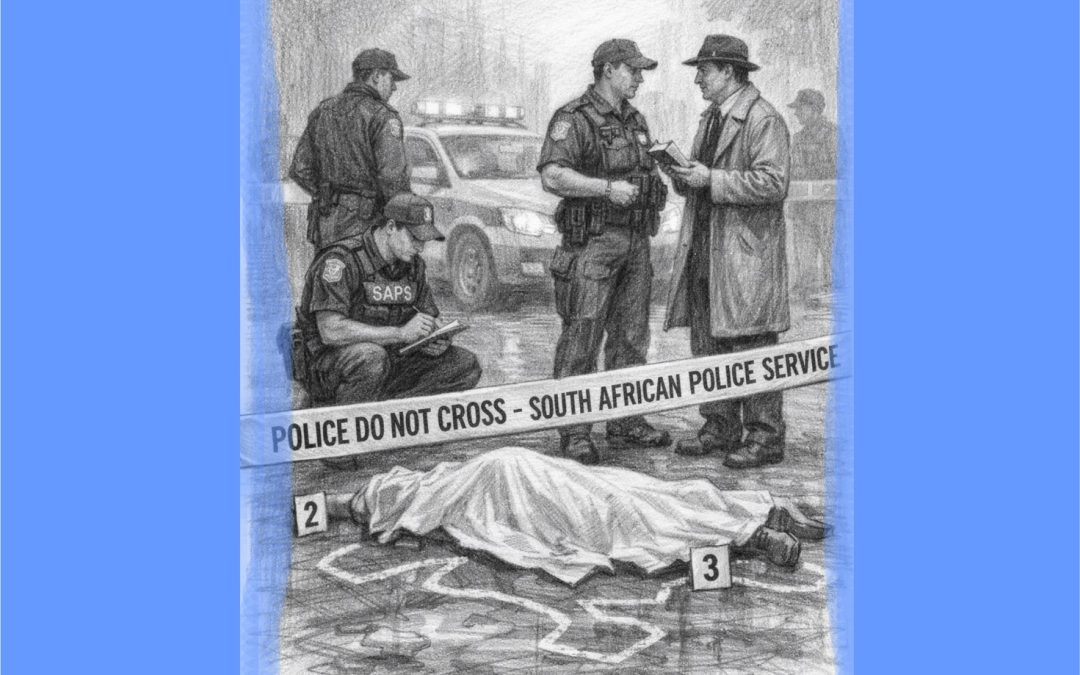
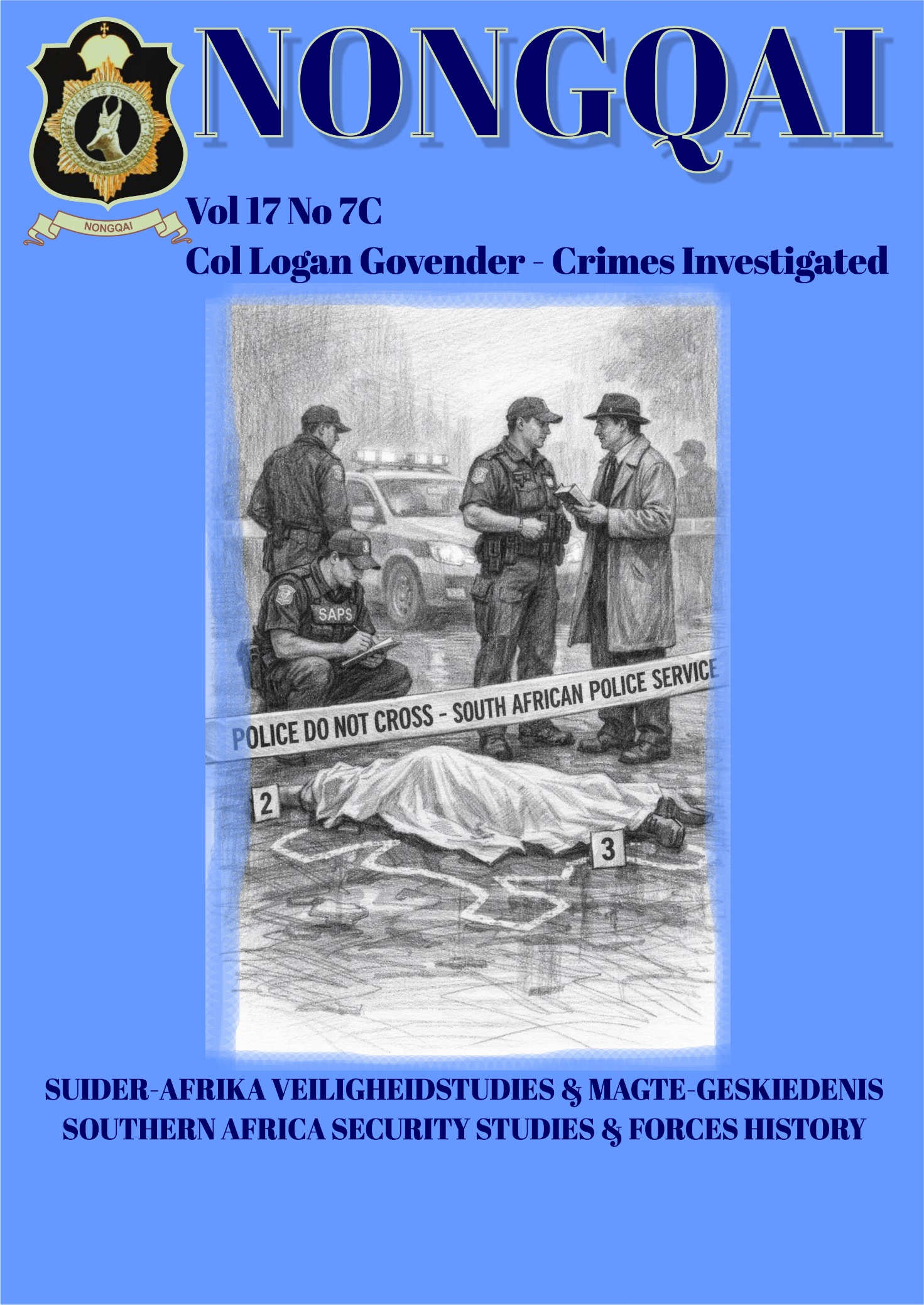
A RANDOM SELECTION OF CRIMES INVESTIGATED BY MEMBERS OF THE SOUTH AFRICAN POLICE
VOLUME 01
F O R E W O R D
Behind every successful criminal investigation are dedicated police officers who willingly give far more than what their duty requires. They work long hours, spend many nights away from their families and often sacrifice weekends, holidays and personal time in the pursuit of justice.
These cases remind us that solving serious crimes is never easy. Detectives must patiently gather evidence, interview witnesses, follow every possible lead and remain committed even when cases appear impossible to solve. Their determination has resulted in dangerous criminals being brought before the courts and many victims receiving the justice they deserved.
While no court judgment can erase the pain of losing a loved one, successful investigations often bring comfort and closure to grieving families. Knowing that every effort was made to uncover the truth helps families begin the difficult journey of healing.
We also acknowledge the sacrifices made by the families of these police officers. Their support, understanding and patience allowed these dedicated men and women to continue serving their communities, often under difficult and stressful circumstances. Their contribution, although largely unseen, is equally worthy of recognition.
This publication is therefore more than a collection of criminal investigations. It is a tribute to the professionalism, courage and perseverance of the investigating officers whose work protected society and upheld the rule of law. Their commitment serves as an inspiration to future generations of police officers and reminds us that justice is achieved through dedication, integrity and hard work.
May these stories preserve the legacy of those who faithfully served and encourage continued respect for the men and women who devote their lives to keeping our communities safe.
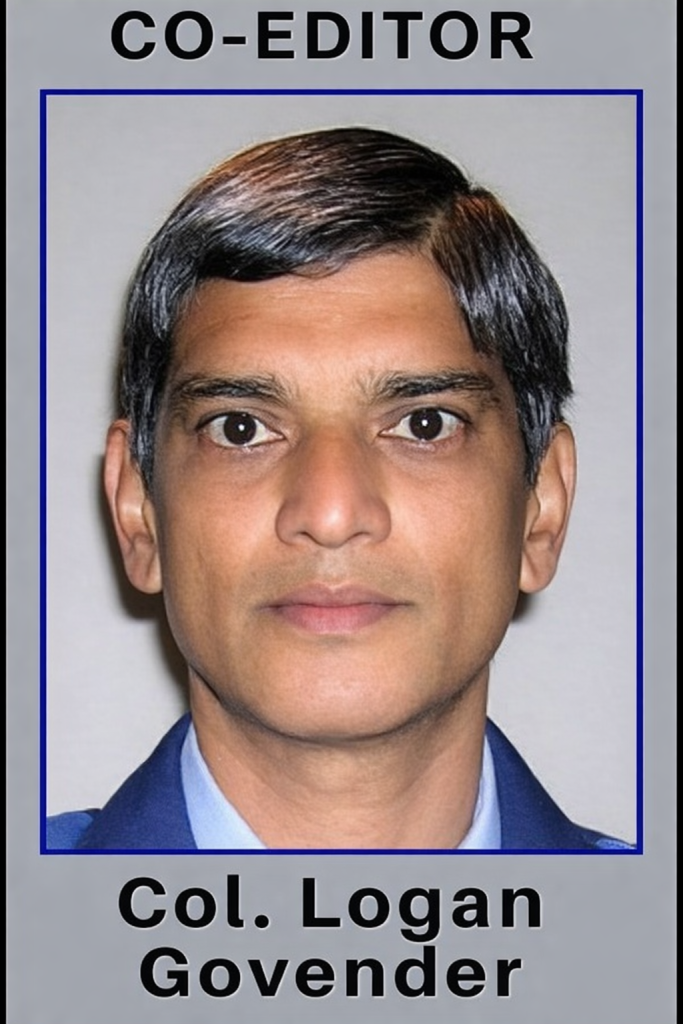
Logan Govender – [LG]
(Researched, authored, edited and prepared for publication by Logan Govender – [LG]. Based on information provided by the investigating officers and attending members.)
[LG]
AUTHOR’S NOTE
“The Nation which forgets its defenders will itself be forgotten.”
– Calvin Coolidge
This Special Edition highlights a random selection of criminal cases reported and investigated by Indian members of the South African Police. In earlier decades long before modern investigative technology was available, our detectives relied on the expertise and experiences of their predecessors, their own personal expertise, natural acumen, intuition, and diligence. They solved cases by carefully analysing clues at crime scenes, cultivating informers, applying self-taught methods, and conducting rigorous interrogation.
These members consistently went far beyond the call of duty. They worked long hours under extreme conditions, exposed themselves to dangerous criminals, and operated through harsh weather and difficult terrain. Many spent lengthy, uninterrupted periods away from home sacrificing precious time with their wives and children while pursuing leads, gathering evidence, and striving for swift arrests, court appearances, convictions, and sentences. Their dedication brought closure to the families of victims.
The officers featured in this selection performed commendable work. Their investigations, evidence gathering, and successful prosecutions bear testament to their professionalism and commitment. We gratefully acknowledge, honour, and salute them for their service. We equally thank their families, who supported them and shared in the sacrifice made for the safety and security of our communities and our nation. We acknowledge and salute them.
“Each day, millions of police officers do the selfless work of putting their lives on the line to protect civilians, frequently responding to or preventing crises completely with no recognition.” – Letitia James
– [LG]

SPECIAL EDITION OF NONGQAI
A RANDOM SELECTION OF CRIMES INVESTIGATED BY MEMBERS OF THE SOUTH AFRICAN POLICE
INVESTIGATING OFFICER 01
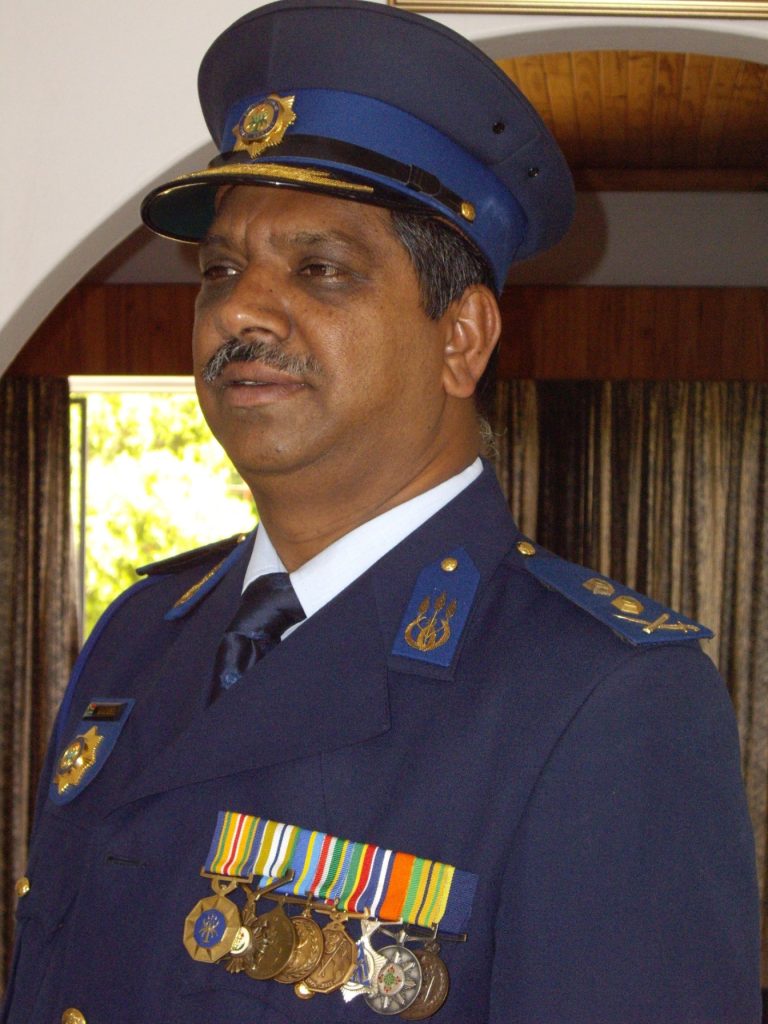
Major General (Professor) George D Govender
MAJOR GENERAL GEORGE D GOVENDER: CRIMINAL CASE FROM MY DETECTIVE ARCHIVE
Major General (Prof) George D Govender, DLitt et Phil, SOE, F.I.S (SA). Professor in Criminal Justice Studies University of South Africa.
“Telephone Booth Murder”
This Murder was investigated by then Detective Constable D Govender, 1978: Stationed at Chatsworth CID, Unit 2 Chatsworth.
It was a morning in 1978, I together with one other colleague, busy with investigations in the Chatsworth area when we received a radio call from the Chatsworth Charge Office to attend to a murder case in Unit 11, Chatsworth. My colleague and I drove along the road, when we were flagged down by a uniformed patrol van driver. When we got off the vehicle, we were briefed by the uniformed policeman that a body of an Indian female was discovered at the scene by a family member. The uniformed police man pointed out the body to me. The body was lying on the ground, fully dressed. Her dress was pulled up to her hip and her private parts exposed. There was bottle protruding from her private part. There was stab marks on her body and face. Since it was a rather hot morning, there was flies buzzing above the front of her body. The scene had been cordoned off by the uniformed police officials before our arrival. I immediately requested for a forensic expert and a photographer to visit the scene. There were signs of struggle on the ground, as the long grass showed signs of being flattened next to the body. There was no movement from the body, it was clear that the victim died the night before, or very early in the morning. I was informed by the uniformed policeman that the victim was from the Unit 11 neighbourhood. She was identified by her brother. The body was certified by a local doctor before our arrival. The forensic expert and the photographer arrived at the scene and did the necessary forensic investigations. The scene and the body were photographed. The body was moved to the government mortuary for further forensic examination for evidence. Extensive enquiries were conducted in the area around the telephone booth. Registered informers from the specific neighbourhood were engaged.
I attended the postmortem examination of the victim. I learnt from the pathologist that the victim was stabbed several times on the front of her body, one of the incised wounds penetrated her heart, which resulted in her death. A coke bottle was found forced into her private part (vagina) hence causing heavy bleeding from the private parts. It was also found that the victim was raped by the perpetrators. Swab and smear test were done by the pathologist. The victim had skin tissue and blood under the victim’s fingernails.
I managed to trace a witness who lived close to the scene of the crime. learnt from this witness, that in the evening of the day in question she heard several footsteps coming from the footpath leading to the telephone booth. Since the sun had set at that time, the footpath streetlight gave her a clear view from her kitchen window. She noticed three males walking down to the telephone booth. She knew one of the males to be living about two streets away from the telephone booth. I obtained more details of the street where the male lived. Another witness from an opposite home saw one male talking to a girl on the road opposite the footpath leading to the scene of crime. He identified the girl as the victim by her clothing. When we arrived at the scene the family of the victim was at the scene. The victim went to use the phone on in the afternoon. She did not return home that afternoon. The family became worried and contacted the police. In the early hours of the morning, the family eventually came across the body at the telephone booth and contacted the police.
A day later, the first suspect was arrested at his home in Chatsworth. He was a 17-year-old youth. He was the person seen talking to the victim on the road by a witness. He was identified on an identification parade. His clothing and shoes which was in the bathtub for washing was seized for examination. Bloodstains were found of the victim on his shirt and pants. This was later confirmed by the Forensic laboratory. He was arrested as a suspect and taken into custody for questioning.
The suspect decided to make a confession on his involvement in the Murder of the victim. He was taken before a magistrate, where his confession was reduced in writing. In his confession he implicated two other perpetrators. A follow up investigation was done to locate the outstanding two perpetrators. They had left their homes after the discovery of the body of the victim. Information was obtained from informers, which helped to locate one of them in Pietermaritzburg. He led the investigator to his brother in Phoenix, who was arrested. Their clothing worn the day of the murder was seized as exhibits. Blood stains of the victim were found on the clothing of all three perpetrators. Scratch marks were also observed on one of the perpetrators back. The skin tissue and blood found underneath the fingerprints of the victim, matched one of the perpetrators with the scratch mark on his back. This perpetrator also led the investigator to the murder weapon, which he hid outside his residential premises. The blood stains found on the murder weapon matched that of the victim.
According to the evidence before the Supreme Court, the youth met the victim while she was on her way to the telephone booth. It was still bright with the sun setting. He entered conversation with her. While she was busy making her call in the telephone booth, he left her only to return when the sun had set, and the streetlights were on. He smoked dagga with the other two perpetrators. When they were under the influence of drugs they came back to the telephone booth. The victim was still in the telephone booth busy on the telephone. When she was finished, they grabbed her from three sides and dragged to the bushy area behind the telephone booth. When she screamed, one of the perpetrators gagged her mouth with a cloth, so that no one can hear her screams. One of the perpetrators held both her legs apart and the other perpetrator held both her arms above her head. The eldest of the three perpetrators pulled down her underwear and had sexual intercourse with the victim. The other two perpetrators took turns to have sexual intercourse with the victim. The eldest perpetrator then stabbed the victim several times on her chest. The second perpetrator who found a coke bottle nearby inserted the coke bottle top into the victim’s private part. She was left for dead. All three perpetrators then left the scene. These three perpetrators were also pointed out on the identification parade by a neighbour, who saw the same three males walking on the footpath to the telephone booth.
This matter was heard in the Supreme Court of South Africa; the perpetrators were all found guilty as charged and given lengthy prison sentences ranging from 20 years to 25 years. The youth who took full responsibility for the murder, received 25years imprisonment. The presiding judge remarked that this murder was barbaric and that he would have been sentenced to death if he was not underage. The youth tried to exonerate the other two perpetrators, but the court still found sufficient evidence to place them on the scene.
“Bush knife (Panga) Murder”
The Chatsworth Criminal Investigation Department (CID) was allocated an office block on the corner of Road 224 and Road 221, Unit 2, Chatsworth (a three-bedroom house re-designed to suit the needs of the CID). This building was adjoined by a toilet, which toilet was for the use of the detectives, enquiry personnel and members of the public. The cell block was a wood and corrugated iron structure with about six separate cells, built at the rear of the police station charge office.
It was a day in 1979, I was on call duty waiting to attend to all reported cases for criminal investigation. Some of my colleagues were in the verandah area discussing some of our cold cases, when I received a call from the charge office of a murder in Unit 11 Chatsworth. I visited the murder scene together with a uniformed constable. It was alleged that a panga bush knife (Scythe) used for religious goat sacrifices, which was kept inside a private temple on the front yard of the premises, next to the home was used to commit the Murder. The panga bush knife from the temple was used to decapitate the victim, an Indian male aged 55 years old. According to an eyewitness three males arrived in a car and approached the victim who was seated at the entrance of his home. There was an argument over drug dealing money, one of the three males went into the temple, brought the panga bush knife and hacked off the victim’s head. On arrival at the scene, I found the body of the victim, (Indian male) on the ground with the head hanging from the neck. There were bloodstains all over the ground. The panga bus knife was on the ground about 100 meters on the left side of the body, full of bloodstains. The wife of the victim was in her kitchen at the time of the incident. The eyewitness ran into the victim’s home, locked the front door and ran upstairs and jumped out of the back-room window and ran away. The perpetrators continued to strike the door with the panga bush knife, thus causing intentional damage to the front door. After a while the perpetrators left the premises.
In cases where there is a single witness, or sometimes no witnesses; fingerprints, bloodstains, hair and skin tissue and other physical evidence, found at a scene tell a story. Based on this hypothesis, I immediately requested the assistance of a forensic expert to the scene. The forensic expert attended the scene, prepared a sketch plan, took photos of the scene from all angles including the position of the body, and the chopped marks on the front door. Bloodstain specimens were also taken from the ground and the panga, which was later compared to the blood group of the victim and later that of the suspect. The blood stains on the panga bush knife and on the ground positively linked the victim to the murder weapon (Panga)
The gang members and the person who attacked the victim were identified by names, provided by the eyewitness. Extensive enquiries were conducted within the area and the surrounding roads on the whereabouts of the suspects. The services of registered informers were used to locate the exact addresses of the suspects. These suspects had moved away from the Unit 11 area and went into hiding. They were keeping a low profile. Informers moved swiftly by providing information about specific places where they could be found. Several homes were searched in Unit 11, Unit 10, Chatsworth, Merebank and Durban areas. Night Clubs in Durban hot spot area of Point Road were visited during the night. One of the suspects was spotted in a vehicle belonging to a notorious drug dealer in Warwick Avenue, Durban. Detailed description of the vehicle and the owner of the vehicle was obtained through the licensing office. This vehicle was traced to a specific individual, who owns a panel beating business in Jacobs, Wentworth area. Mobile observation on this premises led to the arrest of one of the three suspects. The suspect was taken in for questioning. He admitted being at the scene with both his friends. The suspect also assisted in tracing the whereabouts of the other two suspects. The premises of the other two suspects were kept under static observation. On a Saturday afternoon, a second suspect was arrested at his home in Merebank. He was arrested and taken in for questioning. He admitted that he was in the company of the other two suspects when the victim was attacked. The motive for the killing was the non-payment of drug money for drugs supplied by a third suspect. The third suspect was the main suspect who attacked the victim with a panga bush knife. It was alleged that the third suspect normally hangs out at the Victoria Street, market and bus terminus. He sleeps on certain nights at a home in Chatsworth, which was pointed out by the second suspect. The second suspect accompanied me to the Victoria street market and bus terminus in search of the outstanding third suspect. In the meantime, static observation was kept at his home. About 02h00 morning on a Monday, the home in Chatsworth was searched. The outstanding suspect was pointed out by the eyewitness and arrested for questioning on a charge of Murder. The suspect alleged that the victim threatened to attack him with the panga bushknife from the private temple alongside the house. As the victim ran to the temple, the suspect ran after the victim into the private temple and managed to grab the panga bushknife before the victim. When the victim tried to run into his home, he struck the victim with the panga bushknife. The eyewitness ran into the house and locked the door from the inside. The suspect then struck the front door several times with the Panga bushknife, threatening the eyewitness.
The three suspects were charged and appeared before the local magistrate’s court in Chatsworth. They were subsequently arraigned in the Durban Supreme court before a Judge and two assessors. Both the first and second suspect were used as witnesses, and the charges against them were withdrawn by the then Attorney General of the Natal region. The main suspect was found guilty of murder and Malicious Injury to Property and sentenced to 21-year imprisonment.
“Nurse Murder’”
I had been working long hours for a month getting through most of my criminal cases under investigation, getting ready for my monthly inspection of my criminal case dockets by my District CID Commander.. Although I spend many hours on these criminal cases daily, the problem is the time to write up these cases before an inspection. Sitting at the Durban High Court and at other courts as an investigator of criminal cases at least thrice a week, requires of me to work these long hours before an inspection. About 2pm, on Wednesday the 31st of October 1980, I completed my case docket inspection and went out of my office to take a smoke break. As I got to light my cigarette, I received a call on my two-way radio that a passerby discovered the body of a woman lying at an adjoining area next to the Chatsworth cemetery. I arrived at the scene of the body, in the company of two other detective colleagues. I found a uniformed policeman at the scene where the body was lying on a vacant ground, situated next to the N2 Freeway and the Higginson highway. The uniformed policeman guarding the scene told me; ‘The woman seems to be murdered’. The body was of an Indian woman. She was dressed in a white nursing uniform, with brown shoes and stockings. Five buttons from the top of the uniform dress was open. This showed that the victim was wearing a black laced bra. The dress was lifted to her waist, her greenish laced pantie could be seen through her pantyhose stockings. The victim’s pantie and stockings were not forced down. Her bra was intact. The body was lying on the back with her head facing the sky, her legs and hands were stretched apart. The woman’s face was smothered with blood. I observed a deep cut wound running diagonally from left to right of the face, a stab wound on her right chin, a stab wound on her left wrist and a cut mark on her right wrist. There were blood clot marks around the woman’s neck. There was burn marks on her breast. There were several clean-cut marks on the ground next to the woman’s head. About five paces on the left side of the body of the woman, was a brown leather handbag, with personal documents, cosmetics and cash amounting to R3.33 cents. The grass on the right side of the woman’s body was flattened. The grass was stained with blood. There were fresh drag marks on the sand, as though there was a struggle at this spot. About three paces from the right side of the woman’s body, there was pieces of hair. They were lying about 15 centimetres apart. About 30 centimetres from the left side of the woman’s head, there was fresh tyre imprints. About four paces from the first tyre imprint was a second tyre imprint. All these observations were carefully sketched and recorded in my pocketbook. I cordoned off the scene of crime and contacted the Forensics section of the South African Police (SAP) to assist with the scene. I asked the uniformed policeman, ‘Did anyone identify the body?’ ‘Yes Detective, ‘the brother of the victim’. I introduced myself and my colleagues to the brother. ‘That is my sister, Shirley’, he exclaimed: ‘she left home for work yesterday morning’, ‘She did not return home, I went to the Chatsworth police station to report her missing, when I was told to accompany the uniformed police to this spot’. ‘Where did she work?’, ‘Shirley worked at the hospital in Chatsworth’. ‘How does she travel to and from work?’. ‘She usually gets a lift with me or my Dad and sometimes her colleagues give her a lift’. ‘When she finishes an afternoon shift, she usually gets a lift with the hospital combi, which drops her off at Mobeni Post Office from where we pick her up’.
The Forensic expert arrived at the scene shortly after being contacted. ‘Where is the body he asked? ‘I showed him the body and pointed out the tyre imprints on the ground. The forensic expert collected hair samples, nail clippings, blood, and the tyre imprints on the ground. The ground appeared to be wet due to overnight rain, this made the footprints and tyre marks much clearer. The scene was photographed by an official from the Local Criminal Record Centre from the SAP.
Shirley had graduated as a nurse and was posted at the Chatsworth Hospital. She lived with her retired principal father, mother, and her brother in Isipingo. Investigation conducted on the background of Shirley revealed that she was a staunch Catholic by religion. Her family did not know of any lovers or friends she was closely associated with.
However, during investigation, it was revealed, there had been very close friendly relationship…. of some kind with a doctor, a fellow colleague at the Chatsworth hospital. They had been good friends, nothing more. The said doctor provided for his siblings and a mother. He had not spoken of love or marriage directly to Shirley, which she would have discussed with her parents.
The brother and his colleague were colleagues teaching at a Chatsworth High School in the Township. They had known each for about five years as they both studied together and taught science subjects at the same school. They usually changed motor cars and helped each other as a close family friend. The colleague also had a yellow Toyota car, similar to the brother’s car. At the request of the victim’s father, the colleague once assisted in picking up Shirley from the Mobeni Post Office with his yellow Toyota car. A day before Shirley went missing, the brother asked his colleague to assist in picking up his father from the Isipingo High School and take his father to a funeral in Clairwood. The colleague picked up the father from Isipingo High School, brought him home to Isipingo. The colleague who was already well known to Shirley spoke to her. The colleague then left, taking her father to a funeral in Clairwood.
About 7:20 pm in October 1980, Shirley was dropped off by the hospital combi driver at the Mobeni Post Office. The other passengers in the combi included three other nursing staff. The driver and the three other nurses saw, Shirley getting into a yellow car (make cannot be confirmed) which was the only car parked on the parking bay. Since the place was well lit, the yellow car driver was clearly seen by the occupants of the hospital combi.
The Forensic Science expert could not assist with any direct forensic evidence with relation to the murder. The surgeon who conducted the postmortem, described the wounds to have been inflicted on the deceased by a sharp instrument, probably a knife. The deceased died of strangulation as the cause of death.
This was the case as it stood, with no striking feature, although there seemed to be doubtful peculiarities in many parts of it. However, there was several possibilities. The brother’s colleague may have arranged to offer a lift during his conversation with Shirley, a day before her death. The identification of the car and the driver by the passengers in the hospital combi on the night she was dropped off at the Mobeni Post Office, was not enough evidence to connect any person to Shirley’s murder. Since a sharp instrument was used, there was suspicion that the doctor may have something to do with the murder…. Or again, he may not be involved. There was no limit to the possibilities as we could see from the evidence thus far. When we got closer, we examined the possibilities for more detailed evidence.
My investigation partner, spoke of other cases of a similar nature, which he investigated at his previous police station. He mentioned, ‘The work was not always easy, primarily on the absence of an intelligible motive’. ‘The motive for intrafamilial murders is much easier to investigate’. ‘In this case of Shirley, there was no motive for Robbery, because her belongings appeared to be in order’. ‘Rape was not the motive, as Shirley’s panties and stockings were intact’. ‘It seems that the perpetrator tried to unbutton her nursing uniform from the top button, which she resisted’. ‘This is no ordinary murder case’. ‘The perpetrator in this case was personally known to Shirley’. ‘According to the available circumstantial evidence and the rejected confession during a trial within a trial, the perpetrator decided with the victim a day before when he went to leave her father at his Isipingo home, that he would pick her up at the Mobeni Post Office with his yellow motor car. He sat on the driver’s side of his yellow motor car which was parked under the streetlight on the post office parking area. When the victim alighted from the hospital combi, Shirley got into the yellow vehicle. The perpetrator drove the vehicle to a cul de sac next to the Mobeni cemetery. Shirley and perpetrator were chatting in the vehicle, when the perpetrator made advances which was resisted’. This led to the perpetrator pushing Shirley out of the vehicle, onto the grass next to the vehicle where he allegedly made advances while she was on the ground, which was resisted by Shirley. He held Shirley on the neck with his elbow and tried to undress her uniform buttons, hence spreading her legs with his other hand. The force he applied around her neck led to her being strangled with his elbow. When he realized she was not moving, he presumed the victim to be dead, he took out a big sharp instrument from his vehicle and struck the diagonal blow across her face and her chest. These sharp marks also appeared on the ground which were visible next to the body. He had borrowed the bush knife from the school caretaker, a few weeks back during the weekend for a sacrificial prayer at his home. He had forgotten to return it to the school caretaker. He tried to scare the victim with the bush knife by striking the ground. The bush knife accidentally struck her while he struck the ground. The perpetrator left the victim for dead and drove away.
The movements of the suspected doctor were checked, and his alibi was confirmed. The hospital combi was also combed for evidence and the movements of the driver of the combi was checked for evidence. His alibi was confirmed.
Within a few days, the brother’s colleague was arrested after, he was identified by the passengers of the hospital combi. He was placed on an identification parade, where he was pointed out as the driver of the yellow Toyota car by the passengers of the hospital combi. He made a confession and pointed out the scene of crime to an independent police officer. He also voluntarily took the investigator to the school from where he borrowed a bushknife (scythe) a few weeks ago for a goat prayer. He did not return it, the bushknife to the caretaker at the school. The bushknife was kept in the boot of his vehicle. He alleges in his confession to have used this bush knife on the victim. He returned it back on the morning when the body of the victim was found. Although the bushknife was washed, bloodstains of a primate were found on the bush knife and compared with the blood of the victim. The results were negative. He could not be linked to any physical evidence found at the scene and on the victim’s body by the Forensics expert. The district surgeon found a nail scratch mark on the suspects face. The victims’ nail clippings with scrapings could not be linked to the scratch mark on the face. No DNA expertise or capacity was available at that time of this case at the Forensic Laboratory of SAP to assist further with this case. At that time there were no CCTV cameras installed at the post office. The tyre marks on the ground were photographed by the Forensics expert. The prints of the tyre on the ground were matched the tyre prints on the suspects’ car. Because of the heavy rain after the perpetrator left the scene, the tyre prints were not that clear. The suspect was defended by senior counsel. After a marathon trial at the Supreme Court in Durban, the alleged perpetrator was found not guilty and discharged for the murder of Shirley by the judge and his assessors.
Major General (Prof) Dorival Govender, DLitt et Phil, SOE, F.I.S (SA). Professor in Criminal Justice Studies University of South Africa.
INVESTIGATING OFFICER 02
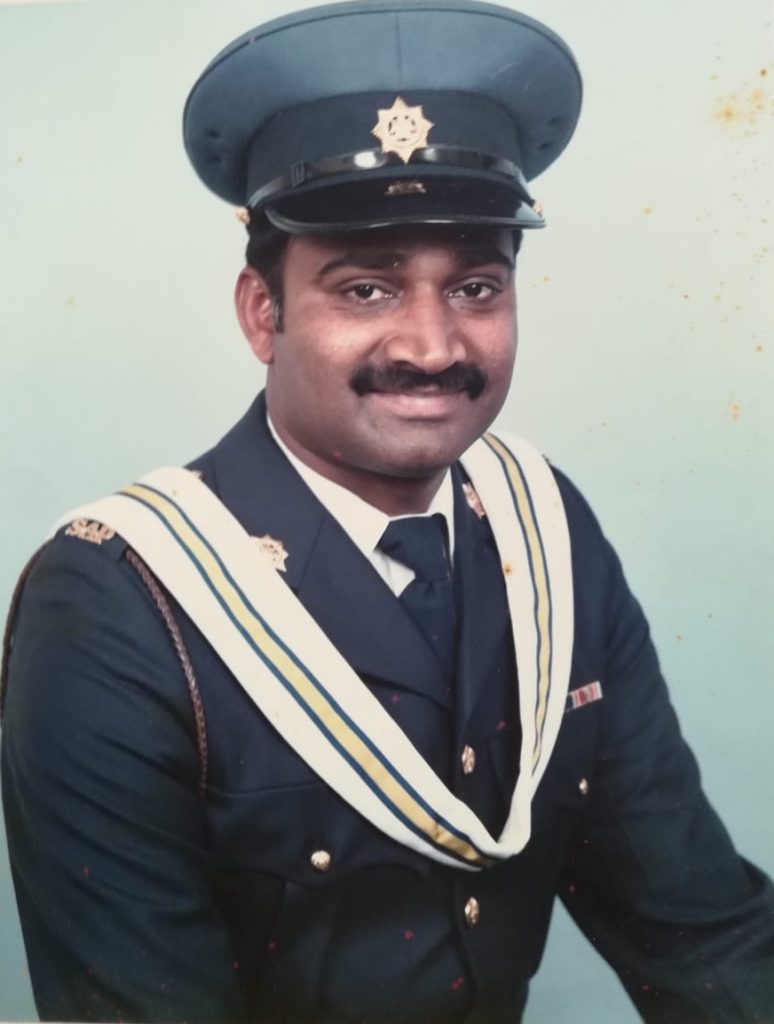
Colonel Johnny Govender
Johnny Govender whilst a Sergeant stationed at Mountain Rise during 1977 identified a particular case docket as a challenge and signed for the Culpable Homicide case docket.
An unknown person was dropped off at the entrance to the casualty section of Northdale Hospital in Pietermaritzburg. He was thereafter admitted to ICU whilst unconscious with severe multiple injuries and sadly never regained consciousness. The incident was suspicious from the onset. There was no evidence neither were there any clues.
Later after initial investigation it was established that he was a schoolteacher based at the ML Sultan Technical College now a High School which is situated alongside the North bound N3 freeway at the entrance to Church Street, Pietermaritzburg. At a year-end gathering of fellow teachers held where the Allandale Pharmacy and Supermarket now stand; it was then vacant land.
The deceased a teacher was run over by a fellow teacher, who then reversed over him again causing severe multiple injuries. The suspect would not co-operate, so the skills, experience and acumen of the Sergeant was left in an attempt to solve it.
After careful examination of the deceased’s clothing traces of rubberising were found on it. This was the only other information available other than circumstantial evidence which was far and few between. The samples of rubberising were dispatched to The Forensic Science Laboratory. The sample taken off the deceased’s clothing and that of the vehicle undercarriage were a positive match.
The suspect was arrested, and the case went to trial after 6 months of intensive investigation, all evidence was circumstantial expecting the Forensic Science Laboratory Report.
The accused was charged for Culpable Homicide and Obstructing or Attempting to Defeat the Course of Justice. The case was heard at the Pietermaritzburg Regional Court. The Magistrate was Mr Prinsloo, a former top detective from Loop Street who investigated Commercial Crimes. The prosecutor Mr Tate and the Defence Advocate was Colin White. White questioned and cross examined Govender, the investigating officer for 3 ½ hours. Unless this is in any decided case its best to delete
The accused was convicted on both counts, Culpable Homicide and Obstructing or Attempting to Defeat the Course of Justice and was hand a suspended sentence.
The case brought long-awaited closure to the victim’s family and firmly established Govender’s reputation as a meticulous, determined, and fair investigator.
INVESTIGATING OFFICER 03
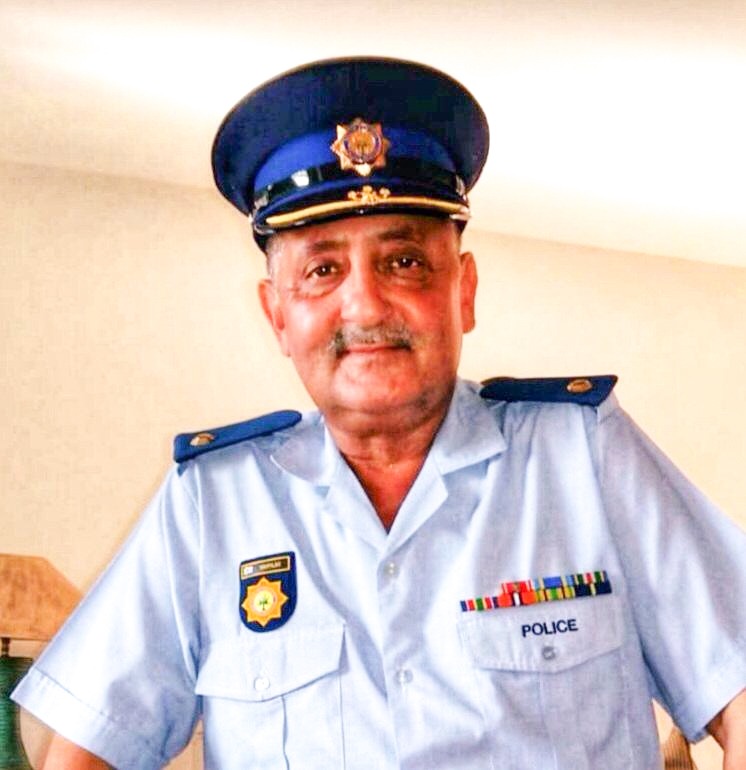
Lieutenant-Colonel Pipes Yusuf A Haffajee
THE HAMMER MURDER OF RAELIN & GRUESOME ATTEMPT ON THE LIFE OF HIS MOTHER PREDANTHA DEVNARIAN
Haffajee and his partner Captain Sizwe Makhathini just returned to the station from an out-of-town investigation. A mother and her seven-year-old son were bludgeoned on their heads with a hammer. The woman was rendered unconscious after a number of blows to her head and stab wounds to the chest. Her son did not survive the blows and was sadly declared dead on the scene. The incident was only discovered the following morning when the driver of her transport to work failed to receive a response from her. Her brother was summoned. He forced entry into the home after there was no response received after tapping her door.
Upon entering the home, he found his sister and her son both with severe injuries to the head. The sister was still alive and was rushed to hospital unconscious. This was a
Later that day employees of Edgar’s Clothing Store, Pietermaritzburg called the police informing them that a lady was in the process of paying for clothing with the card that had the injured lady’s name printed on it. The lady was arrested and taken in for questioning. She told police that the card was her boyfriends who resided in Swayimane location, Wartburg.
The girlfriend was then transported to Swayimane location to point out and arrest the second suspect. On their way members found the victim’s car abandoned at the roadside near the township.
The second “suspect” was arrested and brought to Pietermaritzburg. Upon their arrival to the station the suspect noticed his accomplice chatting with police members in a friendly manner. Presuming that his friend had “sold him out” he implicated his friend in the commission of the offences, he tendered a full admissible confession implicating his friend as an accomplice to the crime. His friend believing the same admitted to his contribution and also made a full confession.
With the two suspects and watertight evidence and confessions filed in the case docket, Haffajee hastened to place the matter on the Court Roll. The Magistrate remanded them to custody, as an early court date at the High Court could not easily be obtained.
Haffajee took the case docket to the Registrar of the High Court explained the circumstances to the Prosecutor of the High Court to secure a much earlier date. The Judge President, Justice Raymond Zondo of Kwa-Zulu Natal also intervened to ensure a earlier date for the case to proceed in the High Court. Haffajee did not delay, and hand delivered the application for pro bono defence. He chatted the defence Advocate. The case was set down within a few days. Both accused were found guilty and life sentences were imposed upon them for murder, including convictions for Robbery and attempted murder.
The combined experience of 70 years in the South African Police Service among a team of three policemen was the key to the speedy arrest, conviction and sentencing of the victim’ murderers, Zamo Eric Hadebe and Mzwakhe Lucky Zuma.
In two weeks, which is an extremely rapid time in which to wrap up a murder case, both accused admitted that they bludgeoned Raelin and his mother Predantha to silence their screams while the pair robbed them.
Haffajee said fingerprints lifted in the stolen car were a positive match to Zuma’s.
The “leg work”, according to Makhathini, had been properly done, leaving the suspects with no option but to confess.
“The key is to do the leg-work, remain transparent and fair to the accused. Our responsibility is to investigate the case and tell the suspect what happened in detail, and the suspect will confess voluntarily.”
Gathering evidence and presenting a “watertight case makes things easy going in court”, said Shabangu.
In the confession process, Haffajee said, the suspects are taken to the district surgeon before and after making a confession to prove that they were not forced. “We do our job, while making sure that the rights of the suspects are not compromised.”
Driven by passion and a love for the job, Haffajee, Makhathini and Shabangu said their satisfaction is realised when the sentence is handed down.”
Zamo Eric Hadebe and Mzwakhe Lucky Zuma, murderers of a promising, lively boy of six, Raelin Devnarain, and merciless attackers of his mother, Pradantha Devnarain, admitted that they bludgeoned them in order silence their screams. The men were afraid the mother and child would alert neighbours that they were being robbed. Jailing them both for life for the murder of Raelin, 20 years for the attempted murder of Pradantha, and 15 years for aggravated robbery, Judge Anton van Zyl said it is difficult to visualise more heinous acts than these crimes. The postmortem report on Raelin gives a long list of injuries to his head and body. There was bleeding on the left and right brain and oedema of the whole brain. In his guilty plea, Zuma said: “Hadebe and I bludgeoned a young child to death by hitting him with a hammer all over his body. “Hadebe and I also hit Pradantha all over her body with the same hammer. I stabbed her a number of times in the chest with a knife. “The attacks took place when Hadebe and I were robbing them of their belongings. We managed to steal the contents of her handbag including bank cards, a VW Golf and other items, all of which were recovered. “We acted unlawfully and intentionally … we knew very well that either or both of them could be seriously injured or die from our attack. “I admit that the attacks resulted in the death of Raelin and serious injury to Pradantha.”
Van Zyl said that although they pleaded guilty, which, the defence argued, was a sign of remorse, the pleas were only made in the face of overwhelming evidence pointing to their guilt. They did not come to the police to confess before they were arrested. Their claims of remorse were more akin to self-pity. He said that if the death of Raelin was not intended or desired, the ferocity of the attack on him took one’s breath away.
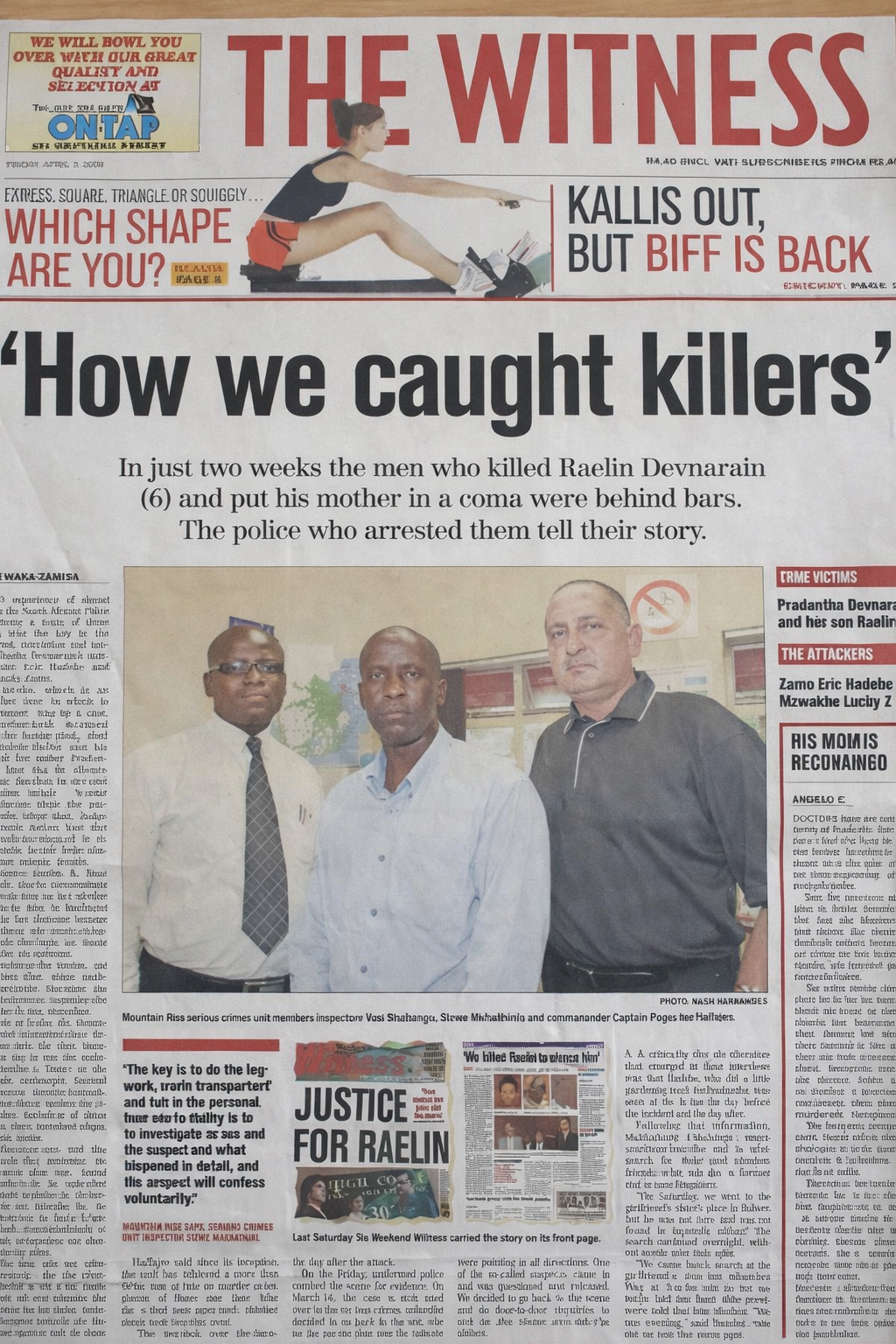
(Courtesy – The Witness; Ms Eshara Singh, Senior Librarian Periodicals Cataloguing, Bessie Head, Library, Pietermaritzburg)
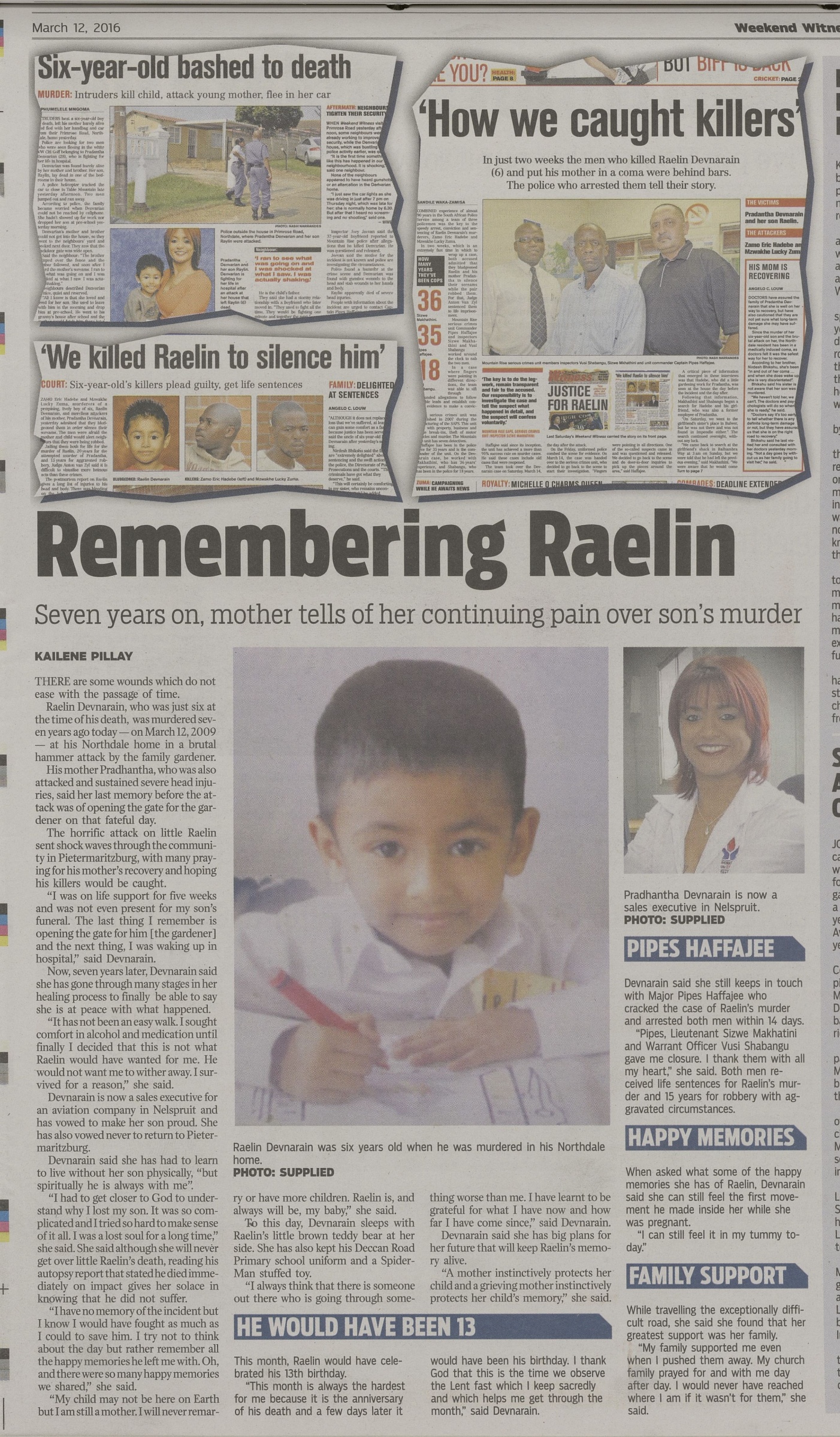
(Courtesy – The Witness; Ms Eshara Singh, Senior Librarian Periodicals Cataloguing, Bessie Head, Library, Pietermaritzburg)
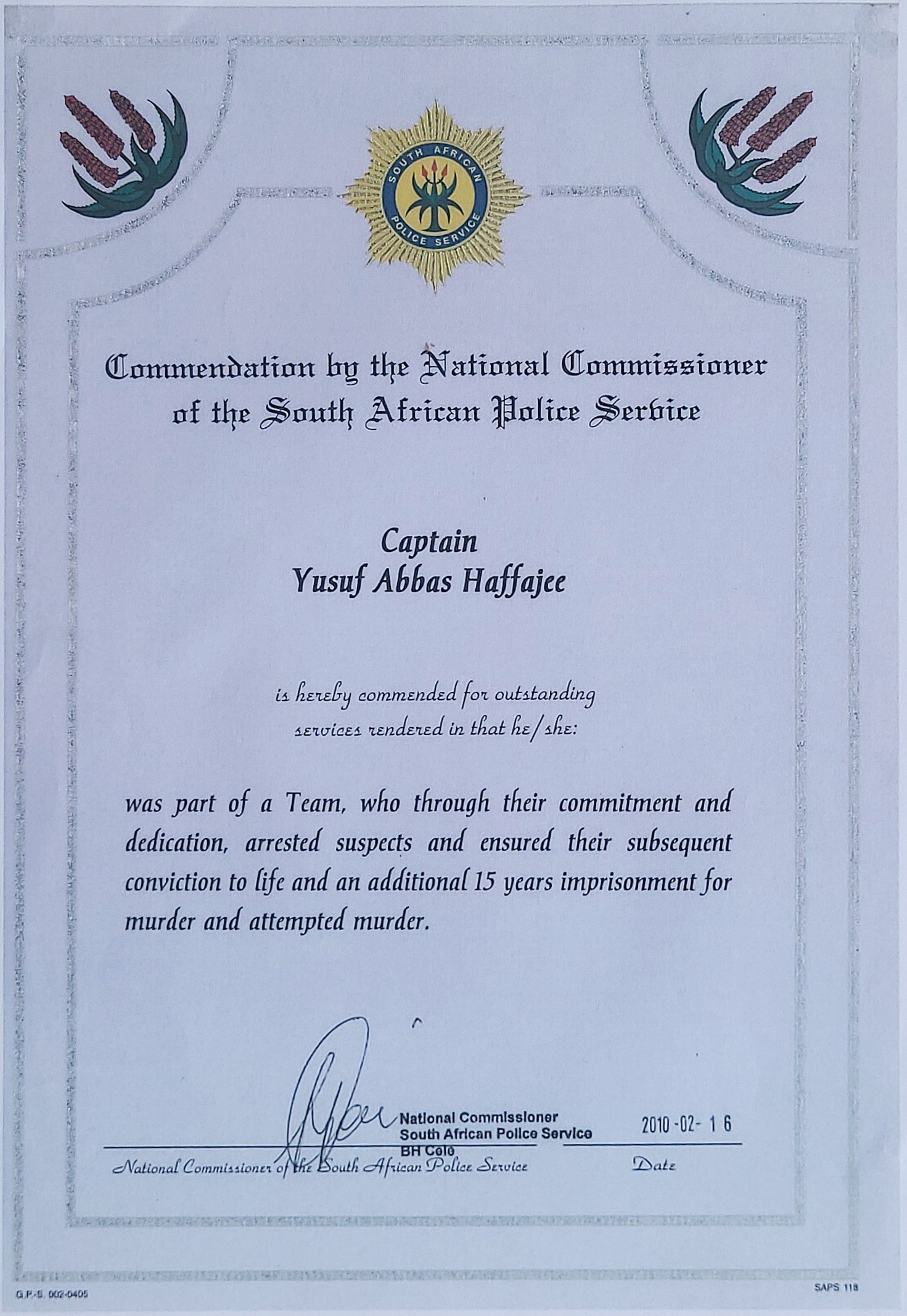
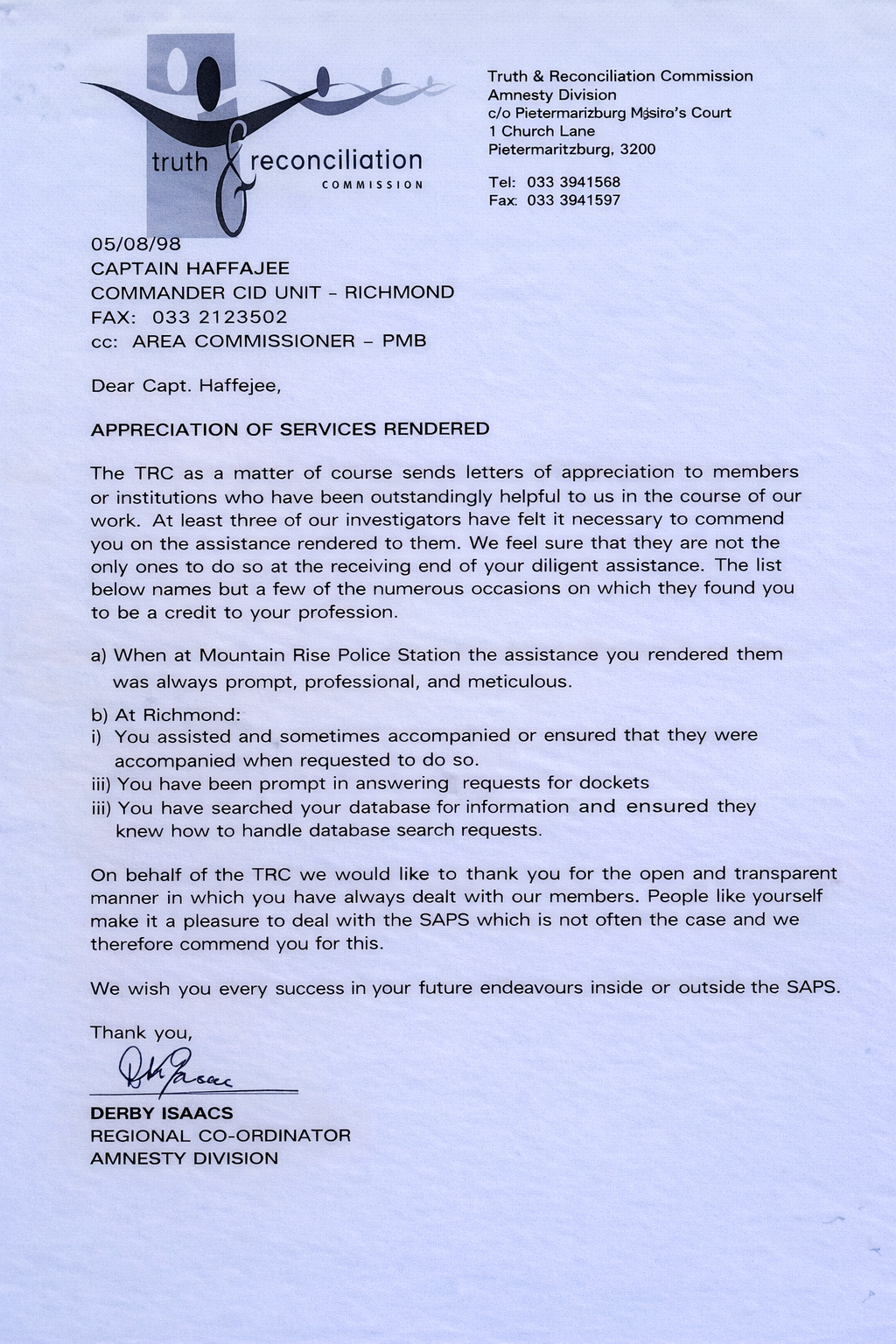
PROMINENT RETIRED FORMER NURSING SISTER FOUND DEAD WITH A KITCHEN KNIFE STILL STUCK IN HER HEAD
In 2011, police were called to a tragic scene where a well-known retired nursing sister, aged 65, was found dead. A kitchen knife was still lodged in her head, and a rope was found around her neck.
When YA Haffajee arrived, he found her lying in a pool of blood. The only witness was her daughter, who had been in the bathroom at the time. Whilst in the shower she heard a struggle and screamed.
During her interview, the daughter explained what had happened. Her mother was standing near the kitchen when a man approached her. At the same time, another man grabbed her from behind. She was stabbed with a kitchen knife and strangled with a rope. When the daughter screamed, the attackers ran into the house and tried to force open the bathroom door. It appeared they panicked or failed to break it down. The daughter was too traumatised to help compile an identikit of the men.
The attackers took the car keys, the victim’s mobile phone, and her gold chain. They tried to start her car but were unable to do so and fled on foot.
After questioning neighbours, detectives discovered that one of the suspects had previously worked for the victim as a casual gardener.
There were no clear clues at the scene. The police decided to trace the stolen mobile phone. The phone signal led them to Richmond, about 47 kilometres away, 55 minutes’ drive away. (I recall as a duty officer on call we were forced to drive around the sharp bends and curves to Richmond to attend to shootings or motor vehicle collisions where State Vehicles were involved.). -[LG]) There, they found a woman in possession of the phone. She said her boyfriend, who worked as a rubbish picker and lived in an informal settlement in Pietermaritzburg, had given it to her.
Police went to the settlement and arrested one suspect. He then led them to the second suspect, who was also arrested. The two men were kept apart during questioning.
One suspect admitted he had worked for the victim before. She had helped pay for his schooling. He said that he and his friend had been sitting outside her home discussing how to get money or work. He knew she lived alone, wore jewellery, and believed she had always had cash available.
He claimed their plan was to only threaten her into giving them money and not to kill her. However, events quickly turned violent. His friend hid behind the house. While he spoke to the victim, his friend grabbed her from behind. He then picked up a kitchen knife and stabbed her in the head. They heard someone screaming inside the house and tried to break into the bathroom but then panicked. They attempted to steal her car but failed and ran away. (My assumption it was one of those that the clutch had to be depressed before it would start.). –[LG])
Both accused later confessed.
In court, Prosecutor Dheelan Naidoo argued that although the men had no previous convictions, the court should consider the seriousness of the crime. The victim had been a retired nursing sister who worked part-time at St Anne’s Hospital. She supported her daughter and also helped people recovering from operations. Her daughter remains deeply traumatised.
The case was heard in the Pietermaritzburg High Court before Judge Esther Steyn. Both men pleaded guilty to all charges. Judge Steyn sentenced each of them to 15 years’ imprisonment for robbery with aggravating circumstances and life imprisonment for murder.
Judge Steyn described the crime as a senseless killing. She said that what the two men had done increased people’s fear of employing strangers from the street, as they cannot know what might happen. “Mjoli, you abused the position of trust as you were previously employed by her and you killed her in the comfort of her home where she felt safe,” said Steyn.
The postmortem report showed that the 13 cm blade of the pocket knife was embedded in Mownchan’s neck. There were four stab wounds.
Defence attorney Kelvin Singh applied for leave to appeal, but the court refused, saying no other court would impose a different sentence.
Later, Mownchan’s brother Freddy Mownchan told The Witness they are very happy that the killers are behind bars.
“We are happy that the suspects were speedily caught, appeared in court and sentenced for their wrongdoing.”
He also commended the police for working tirelessly to arrest Mjoli and Dlamini. He added that Mownchan’s daughter will be staying with family until she is brave enough to stay at the house.
Acting Pietermaritzburg Cluster Commander Brigadier Clifford Marion said the sentencing of Mjoli and Dlamini was the “effective, fast and furious type of justice” that the police are aiming for. He also commended the investigating officers for the sterling work in the apprehension and sentencing of the accused.”
Haffajee is a decorated officer
Lieutenant-Colonel Pipes Haffajee is a police officer with more than 38 years’ experience who lays claim to numerous high-profile arrests and convictions that made news headlines in Pietermaritzburg.
Some of these include the March 2009 murder of six-year-old Raelin Devnarain, who was bludgeoned to death with a hammer during a robbery; the murder of retired Northdale nurse Maalthie, Mownchan (65) in September 2011; the murder of Northdale widow Venotha Ince in April 2012; and the murder of Caroline Rajah, who was bludgeoned to death by her husband Madhan Maharaj, who was arrested in 2012 after almost seven years on the run.
The two men charged for Raelin’s murder and the attempted murder of his mother Pradantha were sentenced to life plus a total of 35 years’ in prison; Mownchan’s two killers were jailed for life plus 15 years; and Ince’s killer was jailed for life plus 15 years.
Madhan Maharaj was sentenced to 18 years in jail.
It was reported by The Witness that Haffajee and his team were awarded a trophy for the best performing detective unit at the Mountain Rise police station awards in December 2011.
In South African criminal law, confessions are only admissible if proven to be made freely, voluntarily, and while the accused was in their sound and sober senses, without undue influence. Governed by Section 217 of the Criminal Procedure Act 51 of 1977, confessions made to magistrates or reduced to writing in their presence are presumed valid unless proven otherwise.
Key Rules and Requirements
- Voluntariness: The core requirement is that the confession must not have been induced by threats, violence, or promises from a person in authority.
- Magistrate/Police: A confession made to a magistrate is easily admissible. A confession made to a police officer is generally inadmissible unless confirmed in writing before a magistrate.
- Trial-within-a-Trial: If an accused disputes the confession’s admissibility, a “trial-within-a-trial” is held to determine if it was made voluntarily.
- Onus of Proof: While the state must prove a confession was voluntary, if a confession appears ex facie (on its face) to be in order, the burden shifts to the accused to prove it was not voluntary.
- Co-accused: A confession made by one person is inadmissible against a co-accused, as per Section 219 of the Criminal Procedure Act.
- Sound and Sober Senses: The accused must have been in a sound and sober state of mind, not under the influence of drugs or alcohol, and not mentally tortured
The Judges’ Rules are guidelines used before a trial to make sure that any confession is given freely and voluntarily, as required by section 217 of the Criminal Procedure Act 51 of 1977.
A suspect must be cautioned about their right against self-incrimination and warned that anything they say may be used as evidence in court. Police officers must not use threats, force, torture or any improper pressure to obtain a confession.
For this reason, the investigating officer should have the suspect examined by a district surgeon for any injuries before the confession is taken. The J88 form must record whether the suspect reports any injuries or threats. After the confession, the suspect should be examined again by a district surgeon and a second J88 form completed.
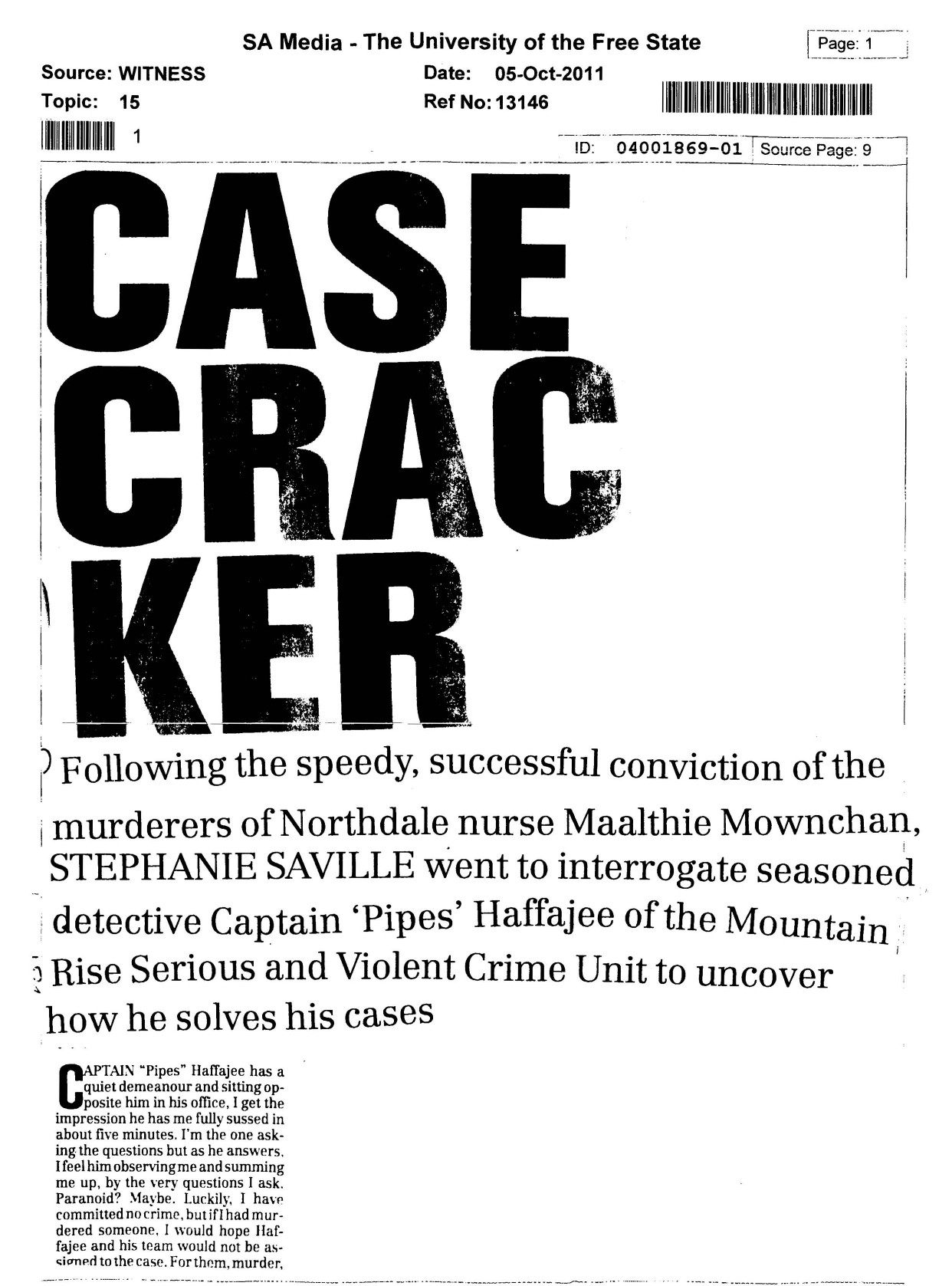
(Courtesy – The Witness; Ms Eshara Singh, Senior Librarian Periodicals Cataloguing, Bessie Head, Library, Pietermaritzburg)
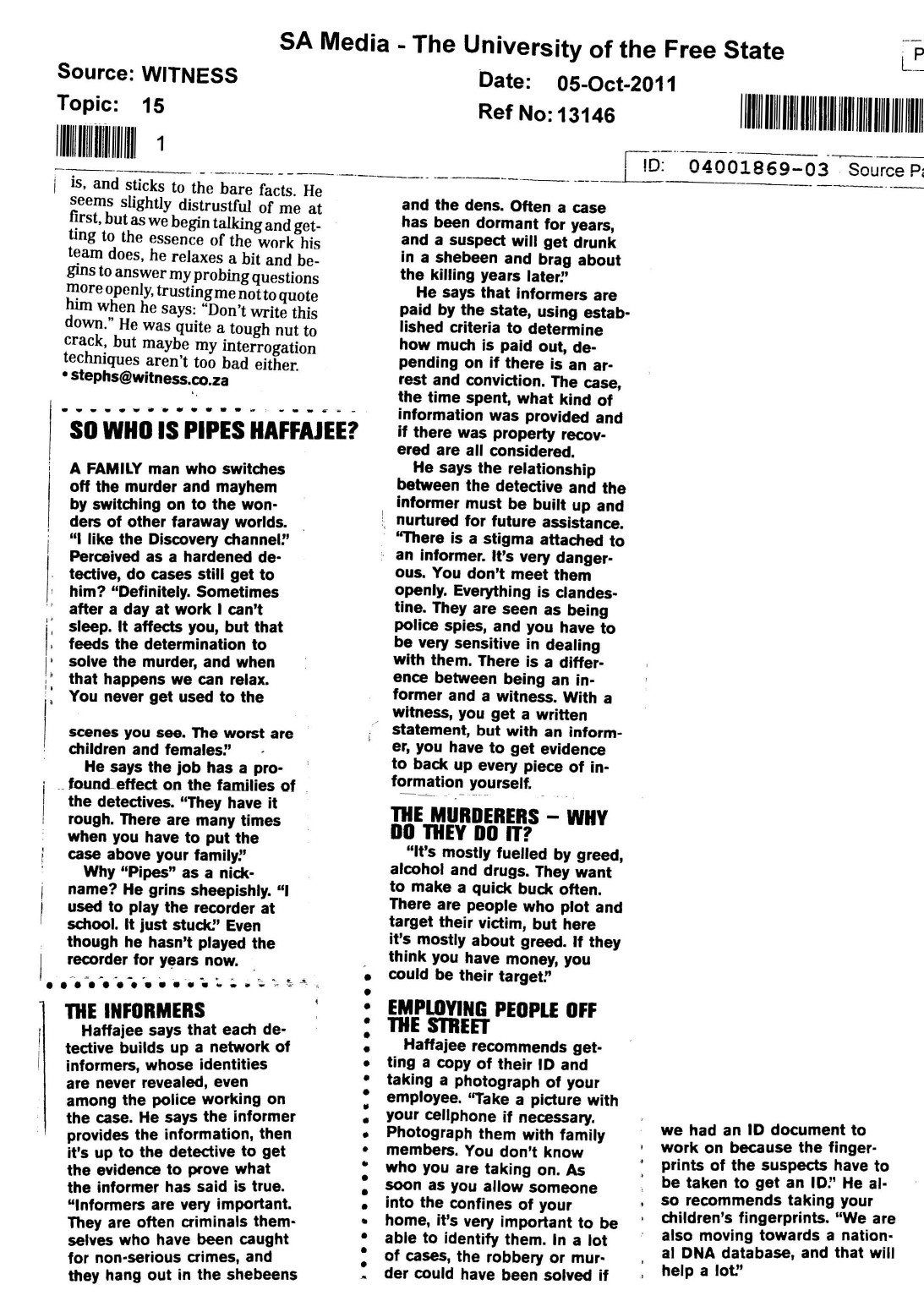
(Courtesy – The Witness; Ms Eshara Singh, Senior Librarian Periodicals Cataloguing, Bessie Head, Library, Pietermaritzburg)
CASE CRACKER
Transcript
“Following the speedy, successful conviction of the murderers of Northdale nurse Maalthie Mownchan, Stephanie Saville went to interrogate seasoned detective Captain “Pipes” Haffajee of the Mountain Rise Serious and Violent Crime Unit to uncover how he solves his cases.
Captain “Pipes” Haffajee has a quiet demeanour and sitting opposite him in his office, I get the impression he has me fully sussed in about five minutes. I’m the one asking the questions but as he answers, I feel him observing me and summing me up, by the very questions I ask. Paranoid? Maybe. Luckily, I have committed no crime, but if I had murdered someone, I would hope Haffajee and his team would not be assigned to the case.
He seems slightly distrustful of me at first, but as we begin talking and getting to the essence of the work his team does, he relaxes a bit and begins to answer my probing questions more openly, trusting me not to quote him when he says: “Don’t write this down.” He was quite a tough nut to crack, but maybe my interrogation techniques aren’t too bad either.
stephs@witness.co.za
So Who Is Pipes Haffajee?
A family man who switches off the murder and mayhem by switching on to the wonders of other faraway worlds. “I like the Discovery channel.”
Perceived as a hardened detective, do cases still get to him? “Definitely. Sometimes after a day at work I can’t sleep. It affects you, but that feeds the determination to solve the murder, and when that happens we can relax. You never get used to the scenes you see. The worst are children and females.”
He says the job has a profound effect on the families of the detectives. “They have it rough. There are many times when you have to put the case above your family.”
Why “Pipes” as a nickname? He grins sheepishly. “I used to play the recorder at school. It just stuck.” Even though he hasn’t played the recorder for years now.
The Informers
Haffajee says that each detective builds up a network of informers, whose identities are never revealed, even among the police working on the case. He says the informer provides the information, then it’s up to the detective to get the evidence to prove what the informer has said is true.
“Informers are very important. They are often criminals themselves who have been caught for non-serious crimes, and they hang out in the shebeens and the dens. Often a case has been dormant for years, and a suspect will get drunk in a shebeen and brag about the killing years later.”
He says that informers are paid by the state, using established criteria to determine how much is paid out, depending on if there is an arrest and conviction. The case, the time spent, what kind of information was provided and if there was property recovered are all considered.
He says the relationship between the detective and the informer must be built up and nurtured for future assistance. “There is a stigma attached to an informer. It’s very dangerous. You don’t meet them openly. Everything is clandestine. They are seen as being police spies, and you have to be very sensitive in dealing with them. There is a difference between being an informer and a witness. With a witness, you get a written statement, but with an informer, you have to get evidence to back up every piece of information yourself.”
The Murderers – Why Do They Do It?
“It’s mostly fuelled by greed, alcohol and drugs. They want to make a quick buck often. There are people who plot and target their victim, but here it’s mostly about greed. If they think you have money, you could be their target.”
Employing People Off the Street
Haffajee recommends getting a copy of their ID and taking a photograph of your employee. “Take a picture with your cellphone if necessary. Photograph them with family members. You don’t know who you are taking on. As soon as you allow someone into the confines of your home, it’s very important to be able to identify them. In a lot of cases, the robbery or murder could have been solved if we had an ID document to work on because the fingerprints of the suspects have to be taken to get an ID.”
He also recommends taking your children’s fingerprints. “We are also moving towards a national DNA database, and that will help a lot.
(Source: The Witness
Date: 05 October 2011
Author: Stephanie Saville)
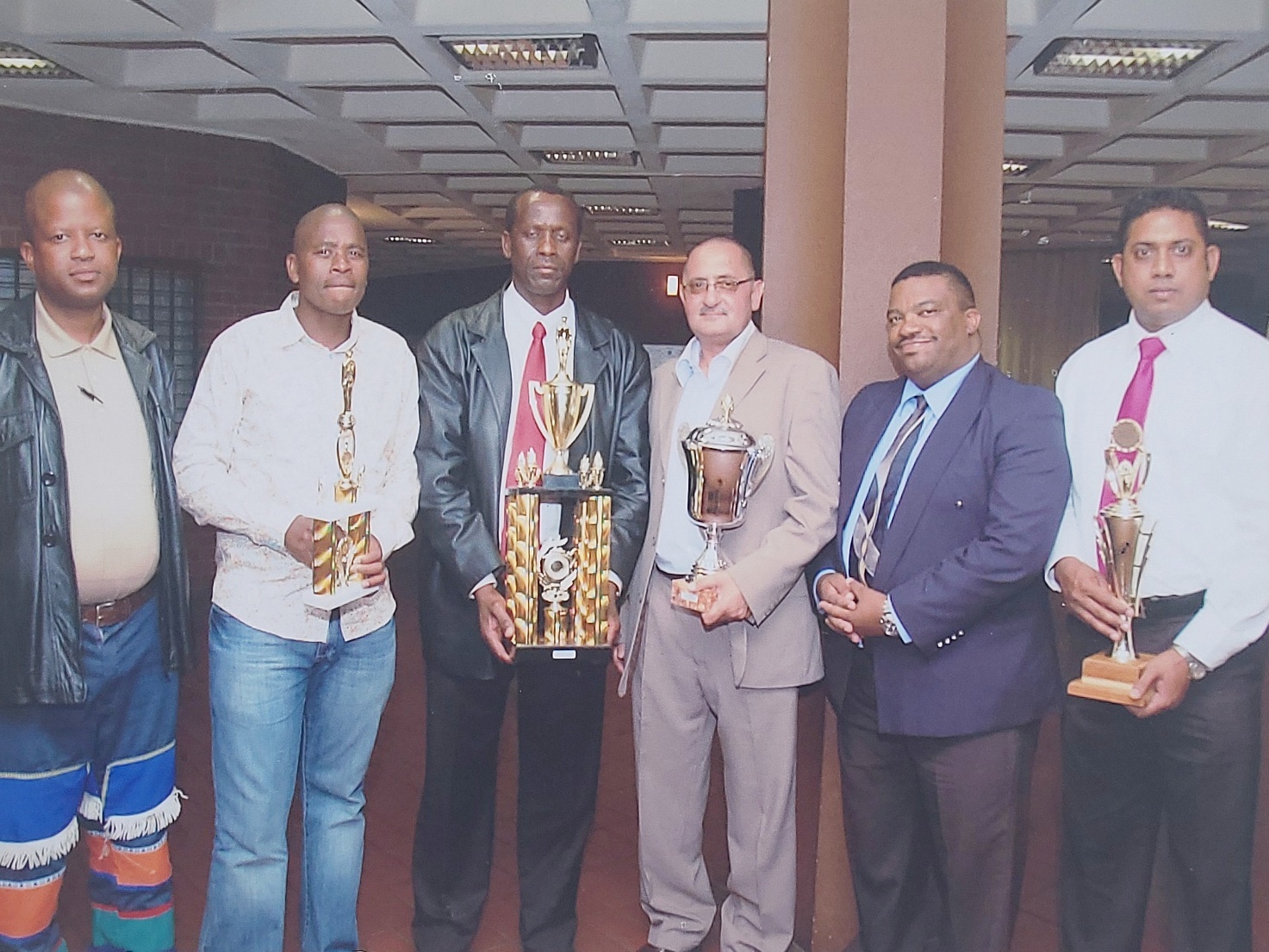
Awards evening held at the Truro Centre for investigators with the most successful cases 2013/14
L-R, S Ngcobo; Nzuza; Siswe Makathini; Haffajee; Wiles; Baldeo
INVESTIGATING OFFICER 04
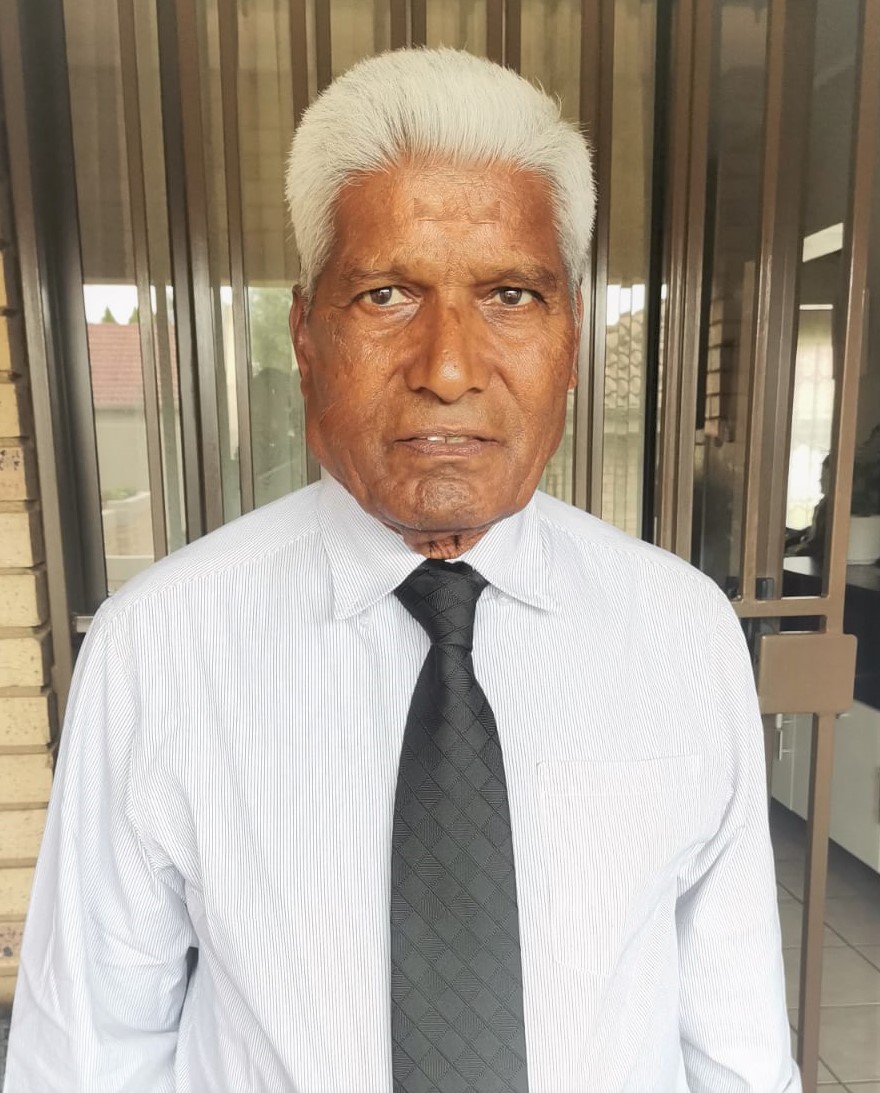
Captain Derrick S Moodley
GRUESOME RECOLLECTIONS
During his time in Sawoti, South Coast of KwaZulu-Natal he remembers two serious cases very vividly, because of the gruesome nature of it as well as the successful investigation and subsequent convictions of the perpetrators.
The first case was the rape of a young mother, whilst she was carrying her infant child on her back. The child was killed during the incident. Whilst at the scene, Moodley scanned the crowd that was forming at the scene behind the barricade. The suspect was amongst the crowd and suddenly started running away from the scene. The suspect managed to escape at the time, however with the help of the community he was eventually traced, arrested and convicted for the rape and murder.
The second incident was a very horrific culpable homicide scene as a result the foolishness of two drivers. A truck, carrying a load of timber had mechanical problems. The second truck stopped to assist. A decision was taken by both the drivers that one truck will push the other truck whilst the victim held a log between the two trucks. The log slipped and the person holding the log was crushed to death between the two trucks. Both the drivers were convicted of culpable homicide.
INVESTIGATING OFFICER 05
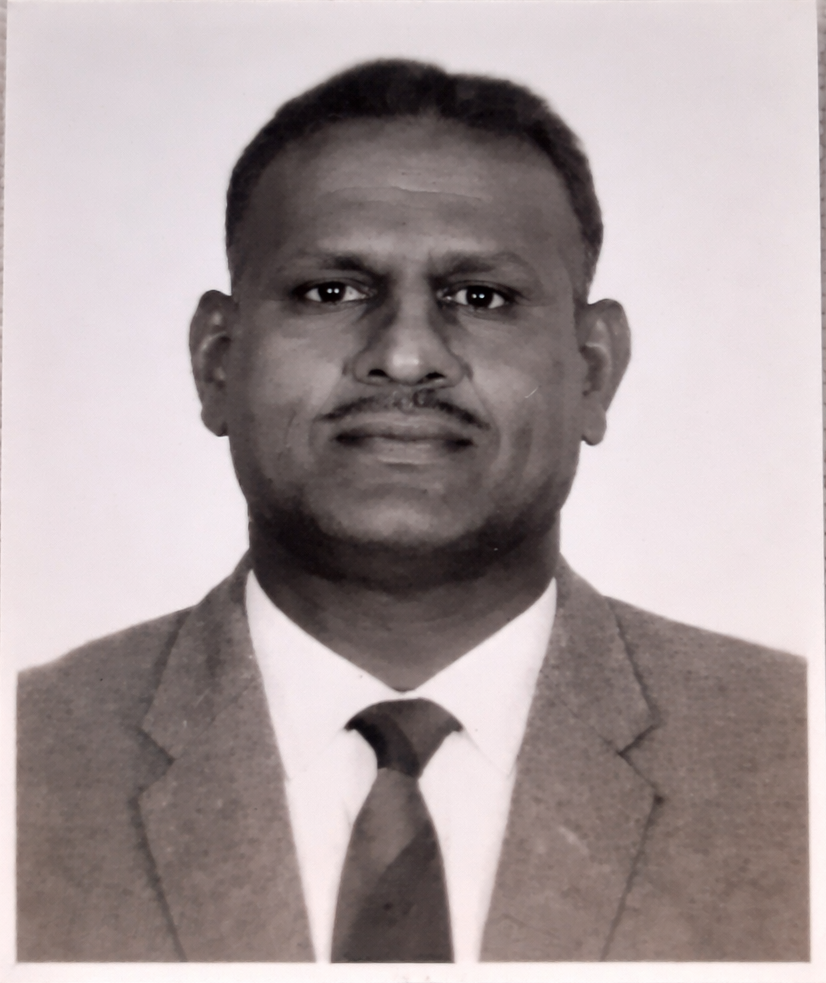
Lieutenant Kathavarayen Rajgopaul
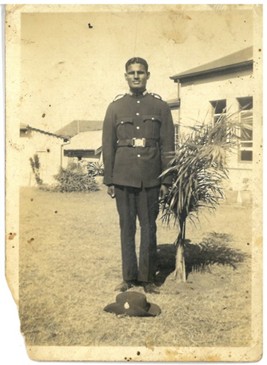
Kathavarayen Rajgopaul as a young constable
FAMOUS MURDER: HIS TOP CASE – “PASSING SHOW”
Transcript from an unidentified media clipping
“A significant chapter in South African legal history was revisited with the retirement of one of Durban’s most distinguished criminal investigators, Lieutenant Kathavarayen Rajgopaul, who steps down as head of the Chatsworth Criminal Investigation Department.
Lieutenant Rajgopaul was widely recognised for his role in a landmark case that marked the first time in South Africa that a white man was sentenced to death for the murder of a Non-White. His painstaking and disciplined investigative work brought clarity to a case that would go on to challenge prevailing racial dynamics within the justice system of the time. The case centred on Herbert Patrick Duncan, a white man, and Puther Hoosen Khan, an Indian man, both of whom were ultimately convicted and sentenced to death for the brutal killing of Moonsamy “Passing Show” Pillay. Pillay’s body was later recovered at the base of the Howick Falls, where it had been discarded to conceal the crime.
At the time, Lieutenant Rajgopaul had only recently been promoted to the rank of First Class Sergeant, a position then reserved exclusively for Indian policemen. Despite the limitations and challenges imposed by the era, he demonstrated exceptional skill and determination, solving the case within just a few days of receiving the investigation docket. His efficiency and attention to detail were instrumental in ensuring that justice was served.
Evidence presented during the trial at the Durban Supreme Court revealed that Duncan, Khan, and Pillay had all been involved in a housebreaking syndicate operating in and around Durban during the 1940s. Testimony outlined how Pillay was violently assaulted and killed by Duncan and Khan while travelling between Durban and Pietermaritzburg. In a calculated effort to evade detection, his body was thrown over the Howick Falls, a move that ultimately failed due to the thoroughness of the investigation led by Lieutenant Rajgopaul.
Now aged 60, Lieutenant Rajgopaul retires after more than 38 years of dedicated service in the South African Police. His career has been marked not only by professional excellence but also by historic achievement, as he becomes the first Non-White commissioned police officer to retire from the force. His legacy stands as a testament to perseverance, integrity, and the pursuit of justice in a deeply divided society.”
Caption:
Retiring Lieutenant Kathavarayen Rajgopaul (right) with Lieutenant Ray Manilall (36), another senior police officer and his successor as head of the Chatsworth CID.
Information of this murder from another source – Facebook page “The Kings of Durban” By Deepak Panday
“This article is about a well-known case called “The Howick Falls Murder.” The story focuses on the discovery of a human skull, which was used as a court exhibit during the trial of two men, Khan and Duncan. The skull was found near Howick Falls, a waterfall in South Africa. The article calls the victim “Passing Show,” which seems to have been a nickname used at the time.
The piece explains that after the body was discovered, the police began an investigation that eventually led to the arrest of the two suspects. The trial drew a lot of public attention because the crime was shocking and the location – Howick Falls – was already known for mystery and local stories. The article describes the court process, including how the skull was shown to the jury, but it doesn’t go into graphic detail.
The writer suggests that the case was seen as a sad and dramatic end to the life of the victim. It also highlights how the community reacted strongly to the news, as crimes like this were not common in the area. Overall, the article reports on the investigation, the trial, and the impact the event had on the local public.”
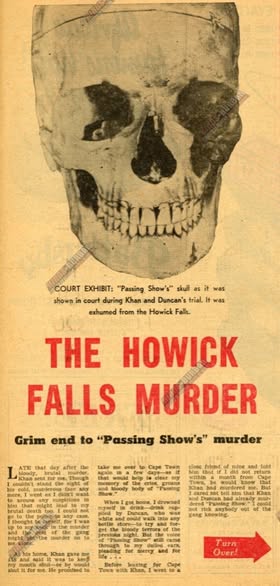
“The Infamous ‘Howick Falls’ Murder of Pro Thief Moonsamy ‘Passing Show’ Pillay
The full story is told in The Kings of Durban Part I
‘Started in Durban….Ended in Infamy’
Here is some of our research requested by the family of the late Passing Show (May his soul rest in eternal peace) who took his name from a lead gangster character in a movie, who wore dark glasses.
Was a very colourful figure and was hired by Sherief Khan for big jobs in Durban, like the Natal Liquor Run soon to be posted were Khan moved tons of liquor barrels into the Reef.
- at Howick Falls.”
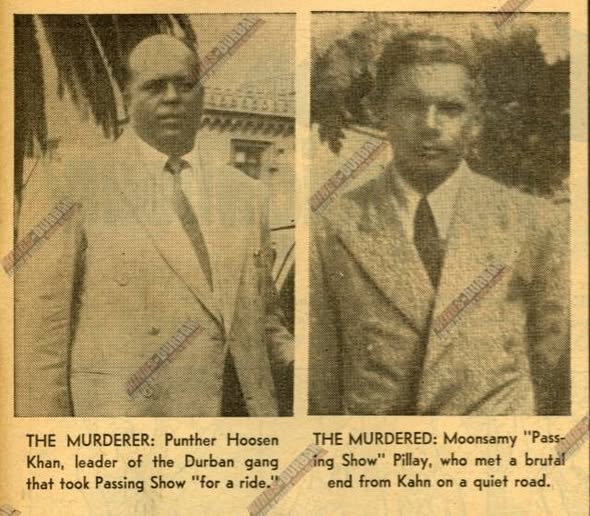
“Profile: The Howick Falls Murder
The Howick Falls Murder is a disturbing and tragic case that took place in South Africa many years ago. It centres around two men, one known as Puntner Hoosen Khan, and the other, his victim, Moonsamy “Passing Show” Pillay. The case became well known because of its brutality and the shocking evidence presented in court.
Background of the Case
Puntner Hoosen Khan was described as a leader of a Durban gang. He appeared to be a man of authority and influence within his group. On the other hand, Moonsamy Pillay, who was nicknamed “Passing Show,” seemed to be someone who was caught up in the dangerous environment around him. His nickname suggests he may have been known in social or local circles, possibly for his personality or lifestyle.
The two men were connected through this gang environment. At some point, Khan persuaded or allowed Pillay to join him on what was described as a “ride.” This decision would lead to tragic consequences.
The Crime
According to the report, Pillay met a brutal end at the hands of Khan. The murder took place on a quiet road, suggesting that it was planned in a location where there would be few witnesses. The description in the article highlights the violent nature of the act, though it does not go into excessive detail.
What makes this case especially chilling is what happened after the murder. Pillay’s body was disposed of at Howick Falls, a well-known waterfall. This location is both remote and powerful, making it a place where evidence could easily be hidden or lost.
However, despite these efforts, the remains were eventually discovered. The skull of Pillay was later recovered and used as a court exhibit during the trial. This physical evidence played a key role in proving the crime and linking it to Khan.
The Trial
The trial of Khan (and another individual named Duncan, mentioned briefly in the article) brought the full story to light. The recovered skull was presented in court as evidence, which would have made a strong impression on the jury and the public.
The case likely relied on a combination of witness statements, physical evidence, and possibly confessions or testimonies from those involved. The mention of fear, threats, and gang involvement suggests that witnesses may have been under pressure or afraid to speak out.
Despite these challenges, the justice system was able to piece together what had happened. The presence of the skull in court indicates that forensic examination was used to support the case, even though forensic science at the time would have been less advanced than today.
Psychological and Social Aspects
This case reflects the dangers of gang life and the influence of powerful individuals within such groups. Khan, as a gang leader, likely held significant control over others. This power may have allowed him to manipulate or intimidate those around him.
Pillay’s situation shows how vulnerable individuals can become when involved in risky environments. Whether he trusted Khan or felt pressured to go along, his decision to join him led to a tragic outcome.
The mention of fear and silence in the article also highlights how crime can thrive when people are too afraid to speak up. This is a common issue in organised crime situations, where loyalty and fear often prevent justice from being served quickly.
Public Reaction and Legacy
The Howick Falls Murder would have shocked the public at the time. The use of a real human skull in court, along with the story of betrayal and violence, made it a memorable and unsettling case.
It also likely raised awareness about gang activity and the need for stronger law enforcement. Cases like this often lead to discussions about safety, justice, and the protection of witnesses.
Today, the case stands as a reminder of how serious and far-reaching violent crime can be. It shows the importance of investigation, evidence, and courage in bringing criminals to justice.
Conclusion
The Howick Falls Murder is a tragic story of violence, betrayal, and eventual justice. Puntner Hoosen Khan’s actions led to the death of Moonsamy “Passing Show” Pillay, whose remains became key evidence in court.
While the case is disturbing, it also demonstrates the determination of the legal system to uncover the truth. It serves as a warning about the dangers of crime and the impact it has on individuals and communities.”
INVESTIGATING OFFICER 06
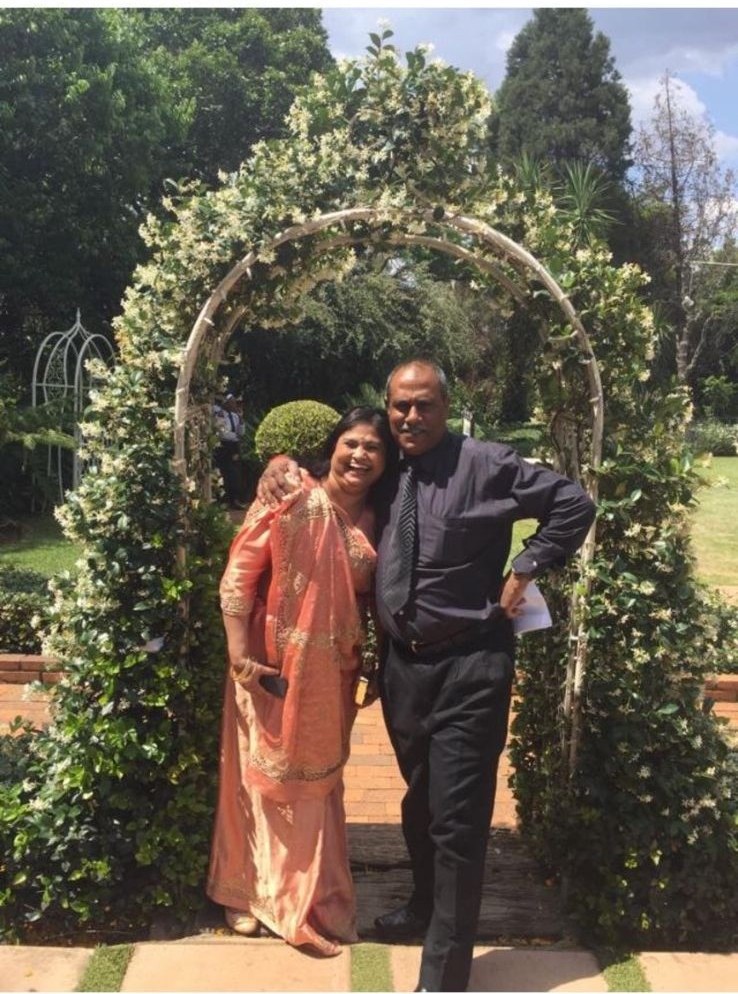
Captain Noddy Deoraj and his dear wife Daisy
An Incident That Still Haunts Him
Nearly sixty years later, one memory continues to trouble him deeply. In 1976/77, Sergeants Deoraj and Bob Moodley met an elderly woman who always kept her head covered with a scarf. She spoke fluent Tamil. Although Deoraj could not understand her because he spoke a different Indian dialect, Moodley was able to communicate with her.
The woman told them, with great sadness, that she had been taken away by an African man during the Durban Riots of 13–15 January 1949. She said she had been forced to live with him as his wife and had given birth to his children. She explained that she had been very young at the time and did not know who her parents were. Because of this, she was never able to discover her true identity in the years that followed.
Both officers were deeply affected by her story.
About a year later, they tried to check on her again, hoping to learn how she was coping, but they discovered that she had already passed away.
(I personally know of several similar cases. Sadly, very little can be done about events that took place so long ago. – [LG])
The Train Derailment
Deoraj also recalled another tragic event involving the derailment of a passenger train. A section of the railway line had given way while the train was crossing it. The train was extremely crowded, and when the tracks collapsed, the carriages derailed. The accident was severe, leading to many deaths and leaving many others badly injured.
After the tragedy, an official investigation, known as an inquest, was held. Its purpose was to discover what had caused the collapse and whether anyone could be held responsible. Officials examined the scene carefully and listened to detailed evidence about the event. However, the magistrate leading the inquiry was unable to determine who, if anyone, was to blame.
In the end, no person or organisation was held responsible for the loss of life and injuries. The tragedy therefore remained unresolved, with many unanswered questions about how such a disaster could occur without anyone being held accountable.
Afterword
Every investigation recorded in this publication represents countless hours of hard work, determination and professional commitment. Some cases were solved quickly, while others required months or even years of persistent investigation. Behind each successful outcome stood police officers who refused to give up in their search for the truth.
This honours not only the investigators but also remembers the victims whose stories deserve to be told and whose families sought justice and closure. It also recognises the quiet sacrifices made by the officers’ own families, who supported them through demanding careers.
May this publication preserve an important part of our policing history, inspire future investigators to serve with honesty and dedication, and remind us all that justice depends on the courage and commitment of those who faithfully uphold the law.
Acknowledgement
I wish to recognise and thank the Editor in Chief of Nongqai, Brigadier Hennie Heymans for his tireless, often unseen efforts in helping with the creation and publication of this magazine.
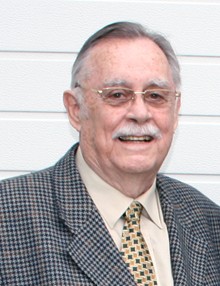
Brigadier Hennie Heymans, Editor in Chief of Nongqai
An experienced and highly skilled officer with an exceptional memory. His Dad was stationed at Somtseu Road and Mount Edgecombe during the 1940’s. Brigadier holds a Master’s degree in Strategy. Was stationed with Lieutenant-Colonel (Ray) Mathura Munilall at Wentworth. He was also based at King’s Rest (Brighton Beach); and amongst others, Soweto Region, The Public Relations Officer at Head Office and later a District Commandant at Welkom in the Free State Province.
I must also acknowledge the outstanding contributions and enduring commitment of those who strive to preserve our policing heritage.
My sincere thanks go to:
- Major General (Professor) George D Govender Colonel Johnny Govender; Lieutenant-Colonel Pipes Yusuf A Haffajee; Captain Noddy Deoraj; Captain Derrick S Moodley; Lieutenant Kathavarayen Rajgopaul;
- And finally, to my family, for their patience, encouragement, and understanding throughout the journey of researching, compiling and refining this tribute.
- Advocate (Lieutenant General) Sally Khan and Colonel (Advocate) Jay Govender for advising, reviewing and amending the manuscript before publication;
“Each day, millions of police officers do the selfless work of putting their lives on the line to protect civilians, frequently responding to or preventing crises completely with no recognition.” – Letitia James
“agnoscere et honorare servientibus” –
“to acknowledge and honour those who served”
“Soli Deo Gloria” – “To God Alone Glory”
Logan Govender

Many of these articles I used to read back in the day in the Post, Daily News and Sunday Tribune. To find a Police officer with such dedication, honesty and integrity in this day is like looking for a needle in a haystack. Thank you for the information and records kept in your archives, I too shall keep these records in our archives of the Verulam Heritage Centre for our future generation, whom I’m sure would appreciate the fine-tuning investigations you guys have done. Keep up the good work, you were the real Police Officers.
Such a marvelous record. This level of integrity and dedication is what all future police officers should strive towards