
Nongqai Vol 17 No 7 – Capt Jan Taillard (SA Police)
“Captain Jan Taillard has a special place in South African history.”
“Taillard patiently worked through his contacts until he found – and was introduced to – Leibbrandt.”
ABSTRACT
Captain Johannes “Jan” Taillard (1904–1987) was one of South Africa’s most effective and least‑known undercover policemen. Fluent in German and trusted across social divides, he played a decisive role in dismantling the Nazi Party in South West Africa in 1939, stealing the complete membership index and enabling the arrest of 2 284 members. In 1941 he infiltrated anti‑government networks in the Brits district, gained the confidence of Abwehr agent Robey Leibbrandt, and led him into a police ambush — an operation that prevented a planned assassination of Prime Minister Jan Smuts. Taillard’s long police career included senior command posts in Queenstown, Umtata, Johannesburg, and Cape Town, where he managed political unrest, labour strikes, and major security operations. Despite his contributions, his pension was severely affected by a break in service during undercover work, and his later life was marked by hardship. He died in 1987 without honours or police representation at his funeral. His story remains one of the most remarkable — and overlooked — chapters in South African policing history.
KEYWORDS
Captain Jan Taillard, Top Police Spy, South African Police history, Undercover operations, South West Africa Nazi Party, Robey Leibbrandt, Ossewabrandwag, Jan Smuts era, WWII intelligence operations, Political policing, Queenstown District Commandant, Johannesburg policing, Johannesburg Flying Squad history, Treason Trial 1957, South African security history, Nongqai archives, Family History & Heritage Research
THE VERY SECRET POLICEMAN
By Greig Stewart

The very secret policeman
Captain Jan Taillard has a special place in South African history. As an undercover policeman, he was instrumental in crushing the Nazi Party in South West Africa just before WWII, and later tracked down Robey Leibbrandt and led him into a police ambush. But not much is known about him …
Johannes ‘Jan’ Taillard was born on 2 December 1904, in Bredasdorp in the-then Cape Colony, to Herbert John Henry Taillard and Maria Magdelena (née de Jager). The family progenitor was Jacob Teilard (or Teiljard), who hailed from Tournai, in southern Belgium, and arriving at the Cape on 5 March 1749. Jan had four sisters, Mary, Margaret, Anna and Johanna. At some stage the family moved to Pretoria, where his father, described as a ‘clerk’ on his death certificate and as a ‘schoolteacher’ by his son, died on 27 June 1925, aged 45.
Jan Taillard joined the South African Police the year before, and was attested on 15 December 1924, with force number 11178. After completing has training as a constable, he was posted to the Pretoria central police station on 3 October 1925. On 5 March 1928, he married Anna Niebuhr in Pretoria. The best man was Ewald Esselen, the son of Louis Frangois Esselen.

Louis Esselen had served under Louis Botha during the Boer War and had long been Jan Smuts’ close confidante and eminence gris. The general secretary of the United Party, he was very influential behind the scenes, so much so that he was known as ‘the kingmaker’.
Two years later Ewald married Marie Niebuhr. Taillard’s connection to Esselen through his brother-in-law would have important consequences for his career. Esselen, who had his finger on a great many pulses, and an elephantine memory, would no doubt have followed his son’s friend’s career with interest. Taillard, who was bilingual and fluent in German, was a diligent policeman who progressed rapidly. He apparently had a very easy manner and could gain the confidence of people from all walks of life.
In April 1928, Taillard was promoted to lance-sergeant, and in June transferred to Potchefstroom. In January 1930, he was posted to Potgietersrust, and in November of that year back to Potchefstroom. His son, Johan Herburt, was born 13 January 1931. At the end of that month was Taillard promoted to sergeant.
In March 1932, Taillard was posted to Zeerust, and in February 1933 he returned to Pretoria depot. Here his extant official record ends. Around June 1935, a daughter, Sylvia, was born.
In February 1937, a newspaper report places Lieutenant Taillard at Harrismith. Around May 1938, Taillard was promoted to captain, and in January 1939 was district commandant at Queenstown. It was to here that Louis Esselen’s long arm reached …
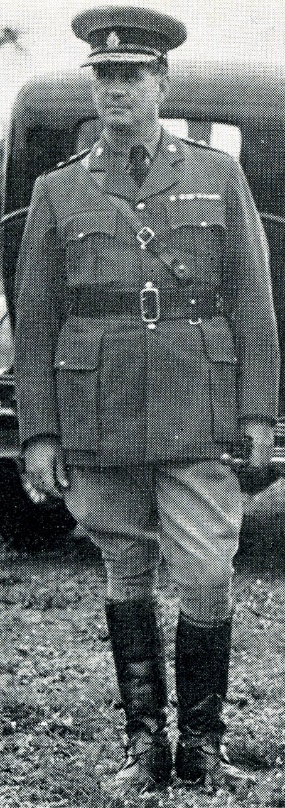
Col IP de Villiers – The Commissioner
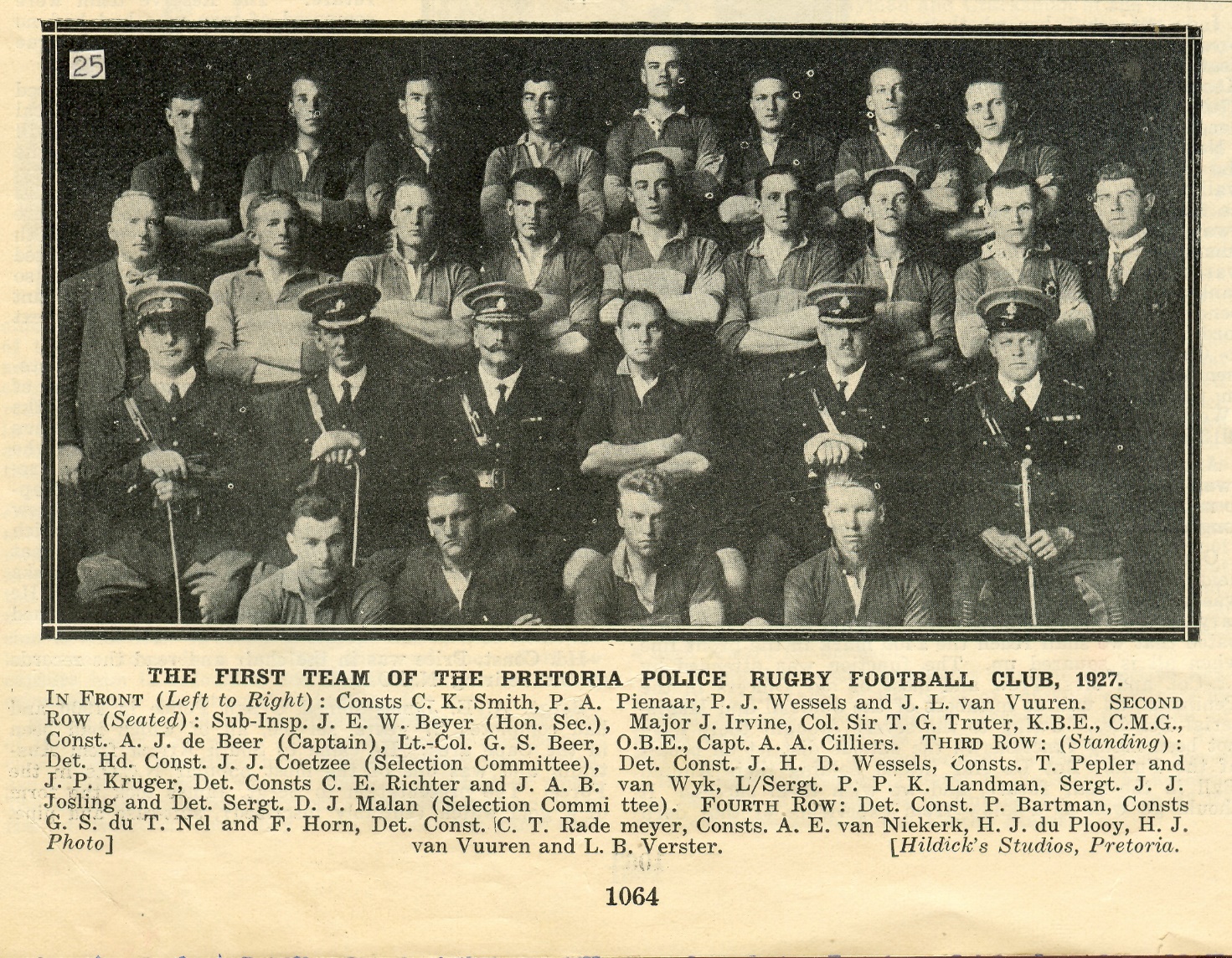
Photo: JAB “Toekoe” van Wyk – he became an officer during WW2.
On 23 January 1939, Taillard was ordered to report to Colonel IP de Villiers in Cape Town. He did and was instructed to go to South West Africa to investigate Nazi activities there (the SWA Nazi party was outlawed in February 1934). Sergeant J. A. B. ‘Tockoe’ van Wyk was also there, on a similar mission. Van Wyk, who spoke only passable German, played the role of the “obvious spy” and sent easily intercepted reports to the Commissioner of Police in the Union.
While Van Wyk attracted all the attention, Jan Taillard was sent to South-West Africa by road, in a battered old car, in the guise of a farmer disaffected with the Smuts government’s policies and exploring the possibility of moving to SWA. His mission was interrupted by the death of Sylvia Taillard, aged 4 years and 7 months, of rheumatic fever on 7 February in Queenstown. He went home by train for the funeral.

Returning to Windhoek by train, he gained the confidence of a pro-Nazi doctor, who gave him an introduction to a senior member of the Nazi Party in SWA, Hans Denk. Denk invited Taillard to a party on his farm outside Windhoek, where in the dead of night Taillard made off with the entire party membership card index.
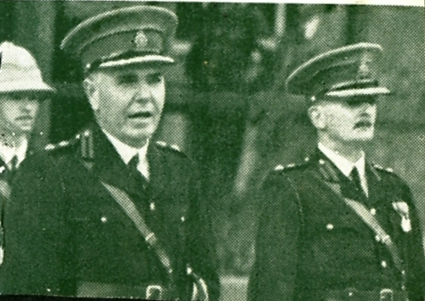
Col Frank Verster (left) & Col FW Cooper
Taillard and Van Wyk’s work, corroborated in April by SWA police Major HC ‘Manie’ du Preez and Detective-Sergeant Botha, led to Lieutenant-Colonel ‘Frank’ Verster, with 10 officers and 315 policemen, entering Windhoek by special train in the early morning of 20 April – Hitler’s birthday – and arresting the 2 284 Nazi party members listed in Taillard’s purloined index.
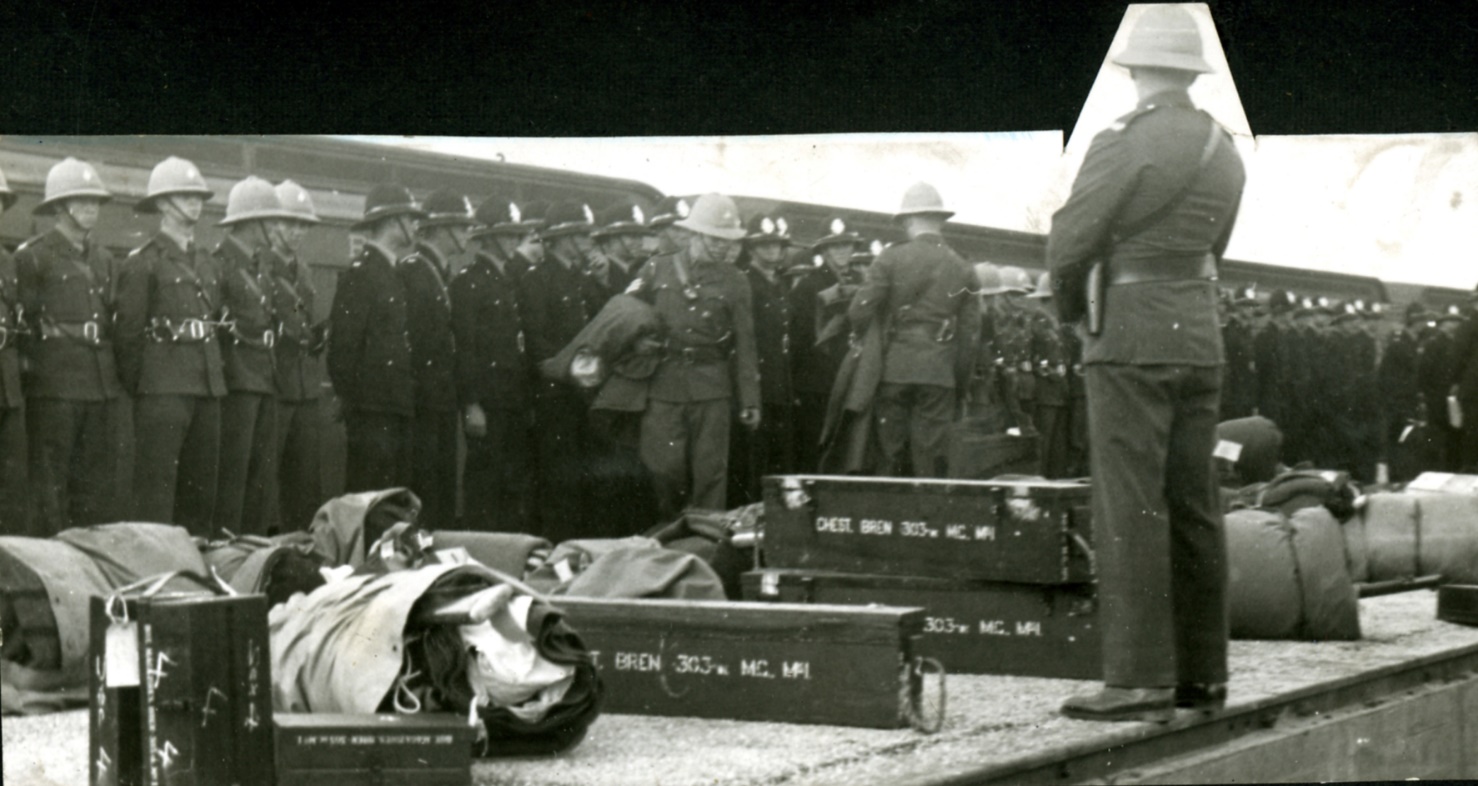
Col Verster and his men from South Africa arriving at Windhoek
Taillard presumably returned to rural policing at Queenstown, but later in 1939 or early in 1940 he was apparently posted to Pretoria and went on an unknown mission to SWA. At the end of October 1940, Louis Esselen asked him to resign from the police. In a reprise of 1939, Taillard, claiming to have left the force in disgust over the policies of the Smuts government, went undercover as a farmer in the Brits district, and began to cultivate relationships with members of anti-government organisations such as the Ossewabrandwag. He was paid out of secret funds and reported to Esselen though Ewald, on the neighbouring farm at De Wildt.
It was at Brits that he made a set of relationships that would lead him into contact with Robey Leibbrandt. Leibbrandt, a South African Olympic boxer turned Abwehr agent and saboteur, had been landed on the Namaqualand coast in July 1941 with a powerful radio transmitter, a small fortune in US dollars and timers and fuses. He had clashed with the leader of the Ossewabrandwag, JFJ ‘Hans’ van Rensburg, and formed his own National Socialist Rebels group, soon joined by renowned wrestler Johannes van der Walt. There was a nation-wide manhunt underway for Leibbrandt, who by then was claiming he would assassinate Smuts.
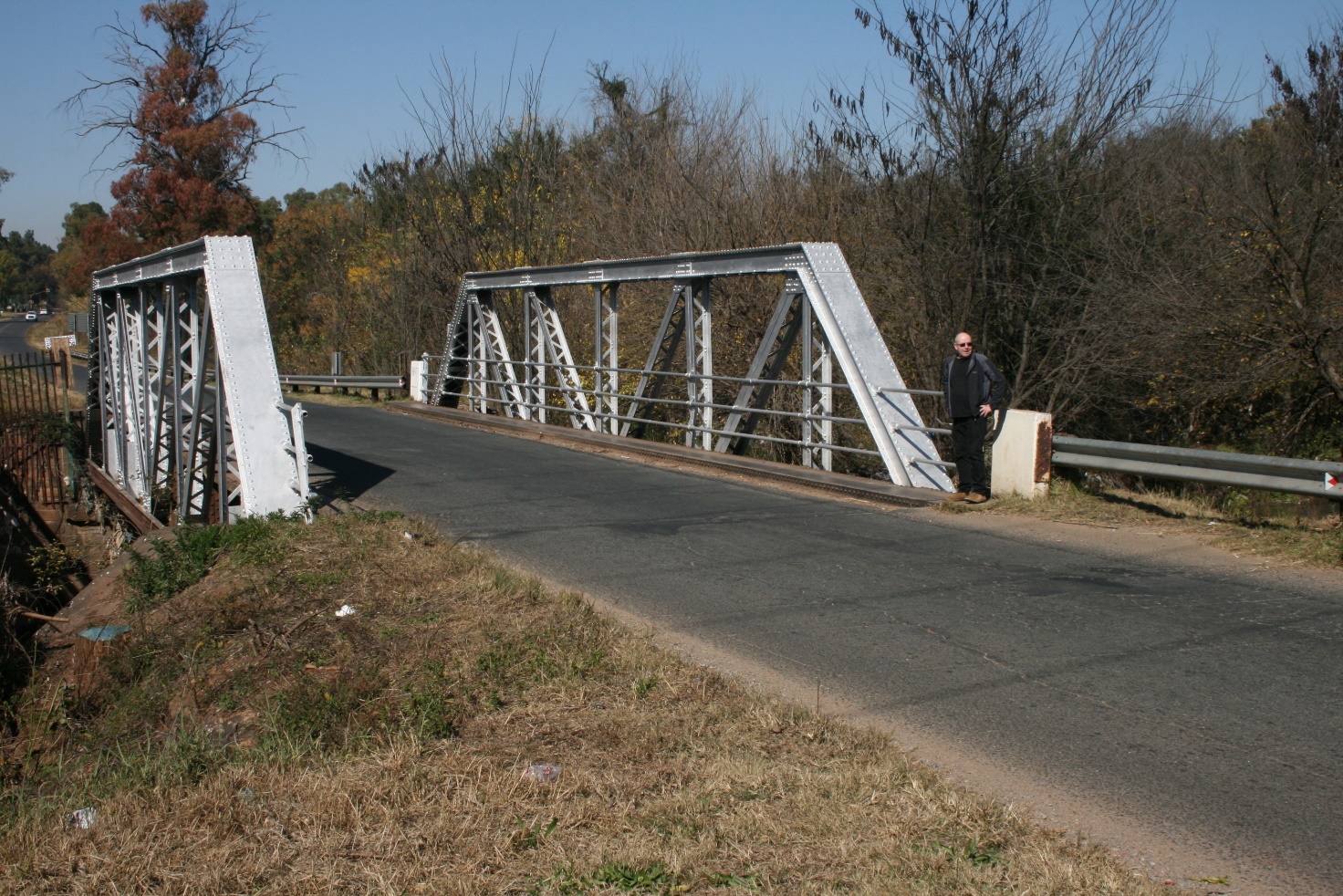
The author, Greig Stewart, at the bridge – photo Hennie Heymans
Taillard patiently worked though his contacts until he found – and was introduced to –Leibbrandt. He gained Leibbrandt’s confidence and led him into a police ambush at the Wierda Bridge over Sesmylspruit outside Pretoria on 24 December 1941. Taillard was mistaken for Leibbrandt and knocked unconscious with a gun barrel, requiring 18 stitches. After a marathon preparatory hearing and treason trial, Leibbrandt was sentenced to death on 11 March 1943. Jan Smuts commuted this sentence to life in December 1943.
Around the same time, Taillard was reinstated into the police and, possibly in April, was appointed District Commandant in Umtata. On 1 June 1943 Taillard was formally appointed inspector – or captain – and in August was posted to Johannesburg. In February 1944, Taillard was appointed Officer Commanding the Southern Area, Transvaal. On 31 August 1944, a daughter, Lorna was born.
In February 1946, Captain Taillard was at Marshall Square as staff officer to Major JC Kriek, the Johannesburg District Commandant. Taillard spend much of the rest of that year defusing clashes between Greyshirts and Communists and managing strikes and demonstrations by black mineworkers.
On 1 April 1948, Taillard was promoted to Major, and appointed Acting District Commissioner for Johannesburg. On 26 May, the Nationalist Party won the national elections, and on 12 June released Leibbrandt from prison. In July 1948 Taillard was transferred to Cape Town as District Commandant. On 15 June 1950 he dispersed the first large protest at Parliament.
On 1 December 1951 he took charge if the Flying Squad in Johannesburg, a post he left on 1 April 1952 when he again became District Commandant for Johannesburg. On 1 January 1953 he was transferred to Pretoria, and on 8 May 1954 promoted to Lieutenant-Colonel.
On 1 July 1954 Taillard was again appointed District Commandant for Johannesburg, a post he held until 1 January 1956. A month later he was transferred to Pretoria. In January 1957 Taillard was in charge of the 500 policemen at the Drill Hall treason trial in Johannesburg. On 30 September 1957 he took early retirement.
Taillard went farming at Britz, but did not prosper, and a severe drought broke him. In July 1962 he was forced into insolvency and rehabilitated only in January 1969. In August of that year his divorce from Anna was finalised. Taillard worked briefly for military intelligence, apparently, and later for a business that made kiln bricks and tiles in Olifantsfontein.
His police service was considered to be ‘broken’ due to his resignation in October 1940 and reinstatement in March 1943, which affected his pension severely. He had been concerned about this since his reinstatement, when he had written to the Commissioner about it from Umtata. Louis Esselen died in March 1945, without having sorted Taillard’s pension out, but urging Ewald to see that ‘Taillard is put right’.
In May 1947, the question of Taillard’s pension was referred to a parliamentary committee. Nothing came of that and the post-1948 parliament seemed to find reasons to overlook the matter. Finally, on 1 October 1981, the parliamentary committee on pensions rejected Taillard’s petition. His pension was R109 a month, at a time when milk cost 75c a litre, chicken R3/kg and pork R4/kg. Former colleagues who had been interned during the war had their break in service ‘condoned’ as a ‘special leave of absence’ (Shear).
Colonel Jan Taillard died in a shelter for indigent pensioners on 27 June 1987. There were no police representatives at his funeral. He had not received a single award or commendation.
- If any Nongqai readers know more about Jan Taillard, please get in touch with the editor.


Die Suid-Afrikaanse Polisie het drie uitstaande inligtingsmense opgelewer nl Kol Jan Taillard, Q018 A/O Gerard Ludi en RS 167 Majoor CM Williamson. Die Nazi’s in SWA wou ‘n putsch trek. (Putsch beteken in Afrikaans staatsgreep, regeringsomverwerping, of meer informeel ’n skielike magsgreep. Hulle wou SWA aan Adolf Hitler skenk op sy verjaarsdag.) Lt-genl HV Verster het my die hele storie van SWA en Robey Leibbrandt se arrestasie vertel – hy is die seun van kol Frank Verster. Oom (oud-hoof-konstabel) Claude Balfour Sterley was ook by en het tydens die arrestasie vir arme kapt Jan Taillard bewusteloos geslaan. Oom Claude is die enigste polisieman wat Robey Leibbrandt uitgeslaan het. In Durban het ek met Oom “Kippie” Geyser saam gewerk – hy word in die boek deur Greig Stewart genoem. Die oorlogsjare was baie interessante tye een ek vind dit vreeslik interessant! Thanks Greig let’s hope we find more info on Jan Taillard, Toekoe van Wyk, the Esselens & others. Hennie Heymans
‘n Baie interessante tydperk in ons geskiedenis. Toe broers teen broers geveg het. Afrikaners wat heftig gekant was om vir die “Engelse” teen Duitsland te gaan veg. En aan die ander kant weer in opstand teen die Smuts regering gekom het. Brugge en treinspore opgeblaas, ens.
Dankie Genl Ferreira – inderdaad interessante tye tydens 1939 – 1945 en 1948!