Kenya 1923: (Nongqai Vol 17 No 4)
1923: KENYA: SETTLER INSURRECTION
David Reeve
Abstract
Kenya: A fascinating article on the threatened settler insurrection of 1923 – and its leader, Brigadier-General (Retired) Philip Wheatley.
Keywords
Brigadier-General (Retired) Philip Wheatley,
Col HP Rice,
Indian Question (Kenya),
J.E. Coney,
Kenya Police,
Mr FD Thysen,
threatened settler insurrection of 1923,
Vigilance Committee,
Gentlemen,
A fascinating article hopefully, on the threatened settler insurrection of 1923 – and its leader, Brigadier-General (Retired) Philip Wheatley.
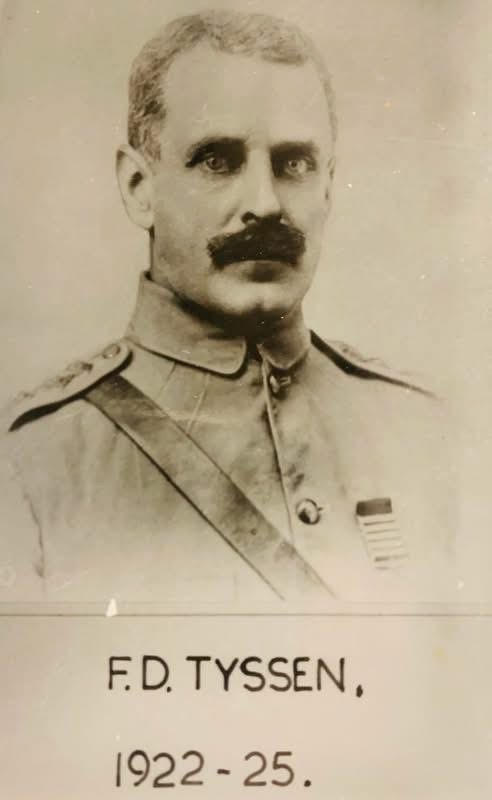
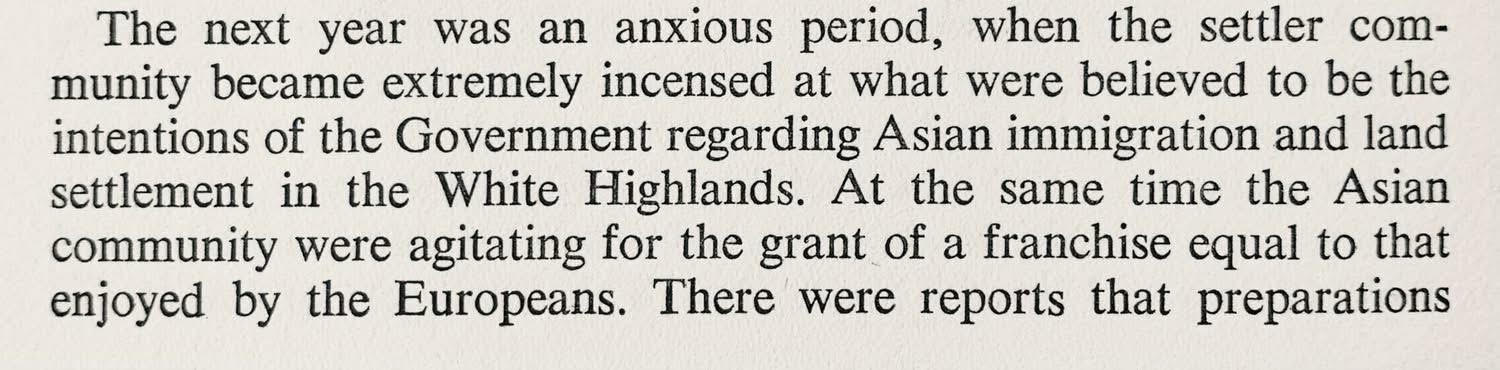
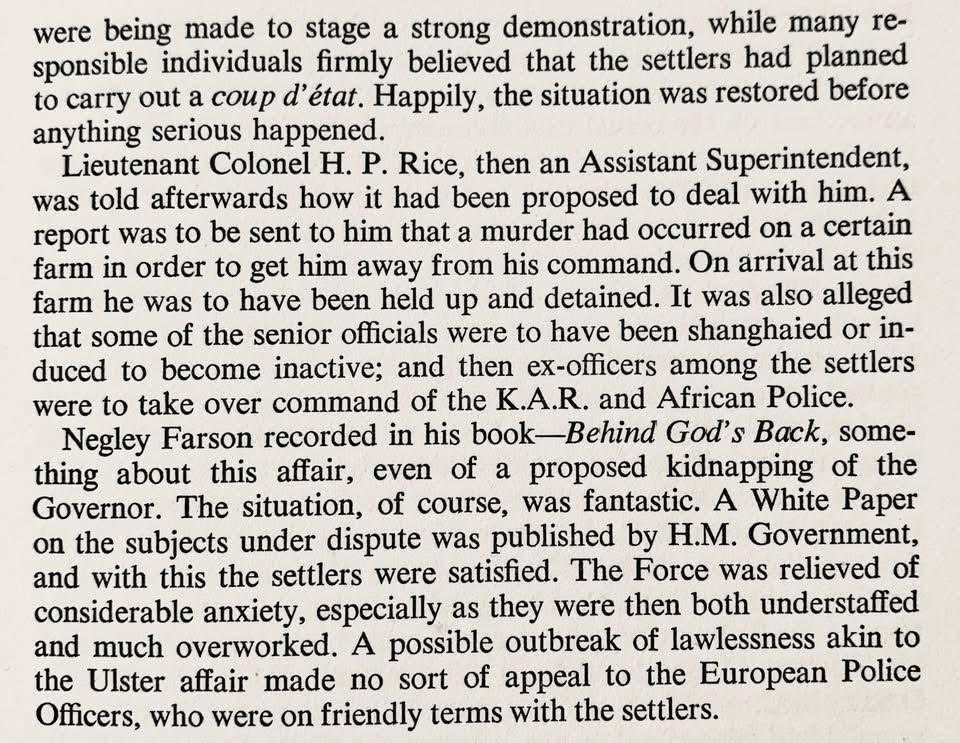
The police commissioner, Mr Tyssen also pictured here, was in post during the threatened settler revolt. Such an interesting period of early Kenyan history, which needs a little more research actually. Robert Foran in his police history, plays the threat down a little – see the attached excerpt. Other historical accounts meanwhile, paint a picture of more national seriousness. This was certainly an uncomfortable period of Kenyan history, but the police involvement must have been very interesting.
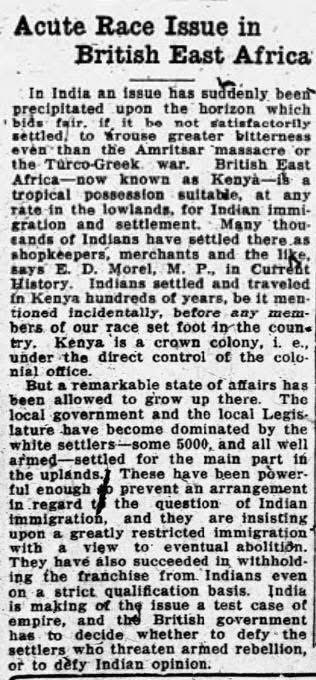
The Indian Question was certainly a huge political issue back in 1923. Details of this drama and the settlers’ Vigilance Committee, are covered in Elspeth Huxley’s ‘White Man’s Country’. Famously she reported:
“The Governor was to be kidnapped and taken to a lonely farm some sixty miles from Nairobi, where a guard had been detailed to look after him. (His comfort was carefully considered; his place of detention was selected on account of the excellent trout fishing available close by.)’
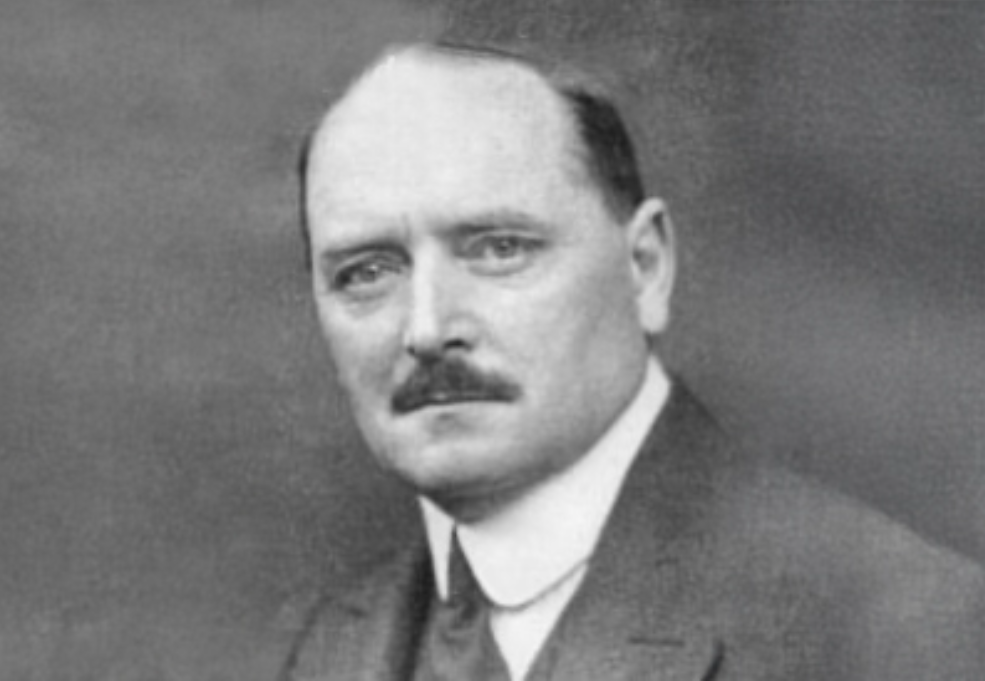
Negley Farson’s account reflects this curious plot too in his book ‘Behind God’s Back’. Christine Nicholls also recently published on the insurrection in her very informative article in December 1925, in ‘Old Africa’. (Credit Christine for the Wheatley portrait photograph.)
Anyway, the leader of the planned settler insurrection of 1923, was an interesting character and a retired brigadier. He is to be found in the excellent European Database:
‘Nicholls – General Philip Wheatley, a fiery former Indian army officer with a soldier-settler farm at Nanyuki…… Wheatley was told by a government official that they had got him as a marked man, and the intelligence department scrutinised his mail – ‘I couldn’t even order a case of whisky without the latter being considerably delayed, or even suppressed altogether, by some B.F., who in his muddled mind conceived that an order to enable me to alleviate my thirst, conveyed some cryptic information which might possibly be subversive of law and order.’
The highlands were apparently divided into 27 mustering districts, under 7 group leaders, who reported to Wheatley, the Commander-in-Chief. In fact, Wheatley was dangerously indiscreet, as was his colleague J.E. Coney at Kitale, who said hostilities would begin in a fortnight, giving a ‘wild and harmful distortion of the facts’.’
Funnily enough, having been a very unsuccessful farmer, Brigadier (Retired) Wheatley CB, CMG, DSO, actually achieved a great deal. This however, was only after the insurrection, that never really was – as it all fizzled out, with some political compromise.
More here from the database:
‘Nicholls – Nanyuki – a race course and polo ground. The two sports facilities were built on 70 acres of ground ‘commandeered’ by Brigadier Philip Wheatley, the soldier-settler in command of the rebellion of 1922-23, against Indian immigration.’
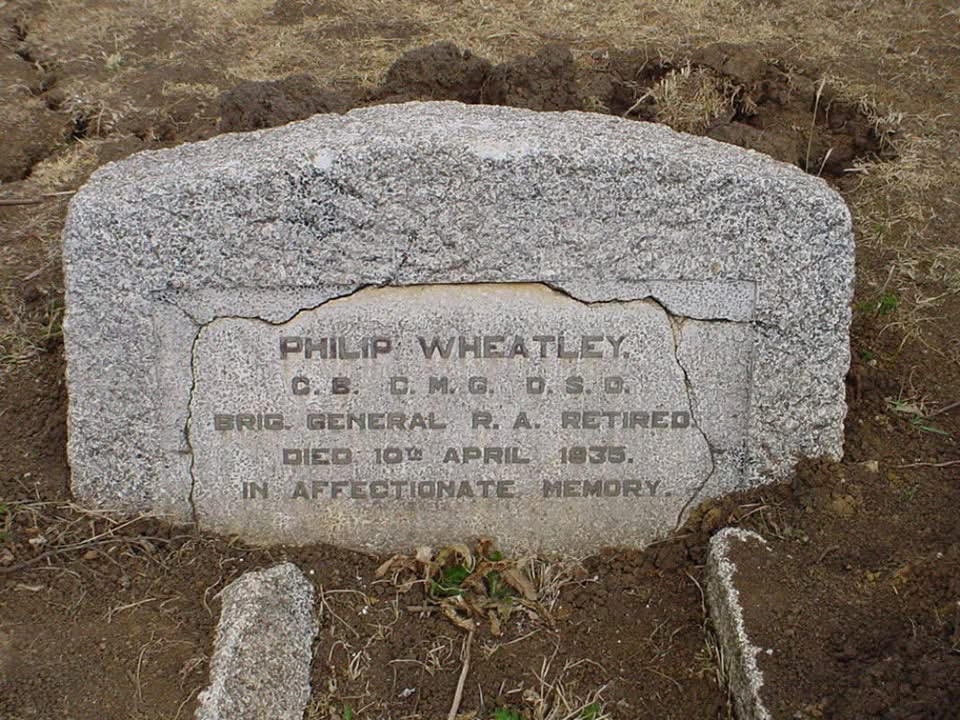
He was also a cofounder of the still busy and well known Nanyuki Cottage Hospital apparently, where he finally died in 1935. Philip Wheatley lies today in the rather overgrown European cemetery in Nanyuki. (Photograph courtesy of Bob Barnes.)
What fascinating history.
David
David also sent the following photographs and cuttings:
Comments by Hennie Heymans
During the days of the British Empire there were close links between the South African Police and Police Forces of the Empire & later the British Commonwealth. The SA Police also investigated the activities of the Mau-Mau. Some members of the SA Police also served in kenya.
Col HP Rice was a member of the South African Police in Brooklyn, Pretoria. He later moved to Kenya and ultimately to Palestine:
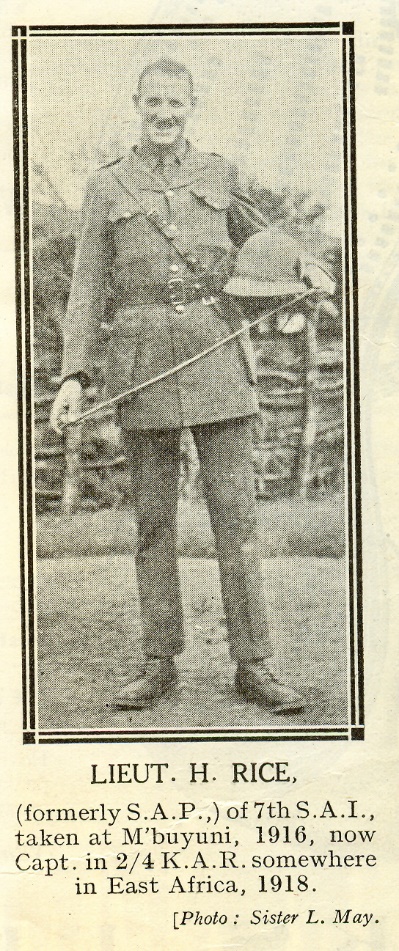
Nongqai: February 1918 page 80
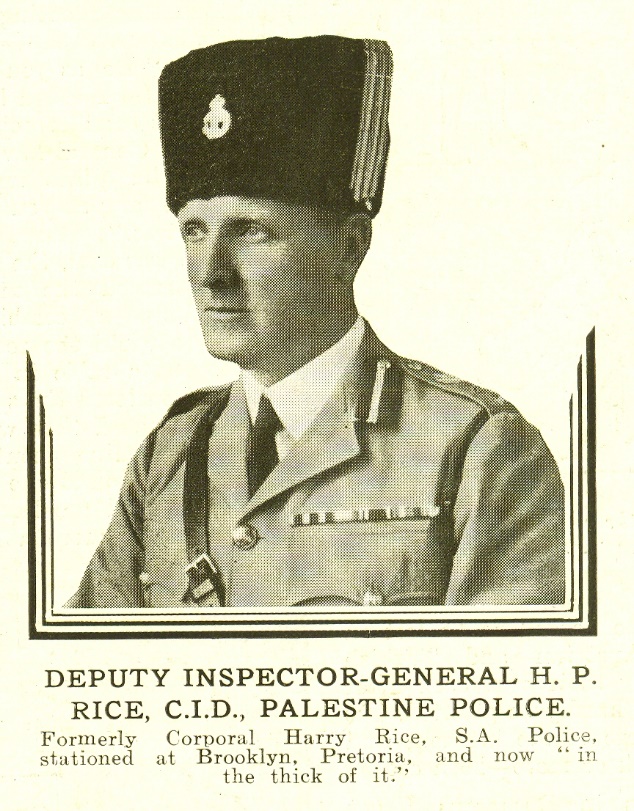
Nongqai March 1938
Any further information will be appreciated.

