Wolfgang Witschas
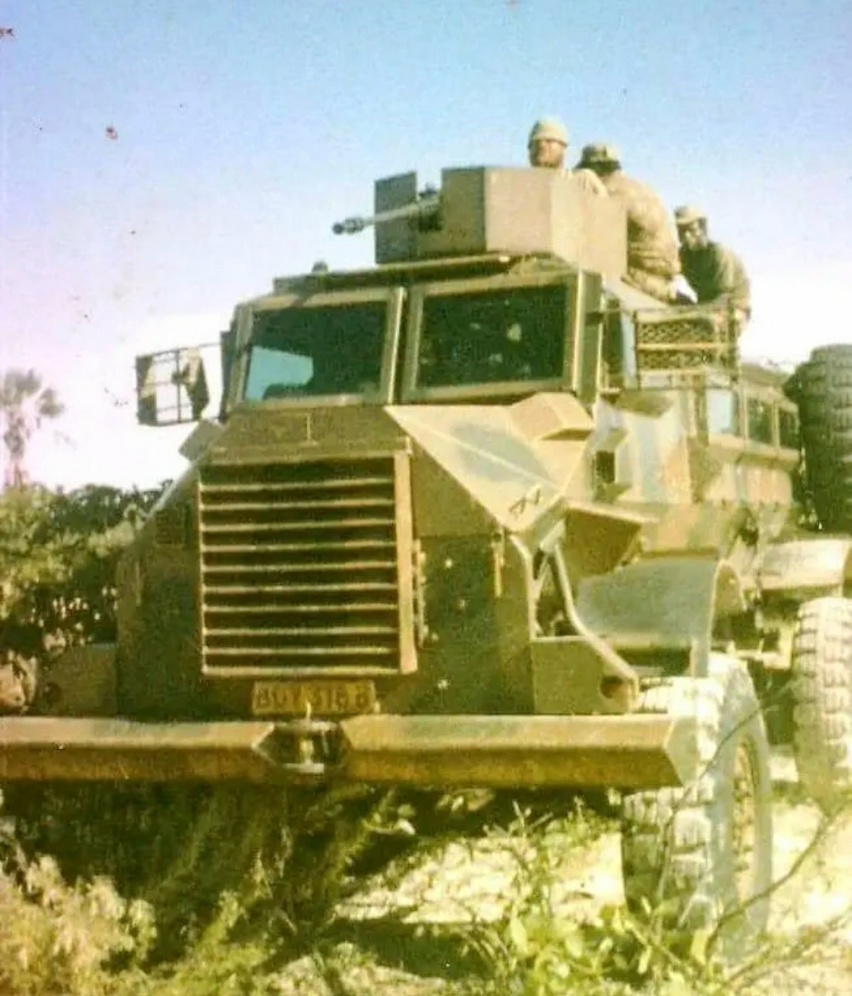
The South African Casspir Mk II B Mine Resistant Ambush Protected Vehicle (MRAP)
“The Swiss Army Knife of Combat Vehicles”
 https://en.m.wikepedia.org/wiki/Casspir
Abstract
The Casspir is a legendary South African 4×4 Mine-Resistant Ambush Protected (MRAP) vehicle, originally developed in the late 1970s. Its name is an anagram of its creators: the Council for Scientific and Industrial Research (CSIR) and the South African Police (SAP).
Key Words, Casspir, South African Police (SAP), Koevoet, SWAPOL COIN, Council for Scientific and Industrial Research (CSIR), Blesbok, Duiker, Gemsbok
Introduction
In the late 1970s the South African Police (SAP) was desperately looking for a replacement for the Hippo landmine protected vehicle for the Counterinsurgency Unit (COIN), which had been designed and buit by the Defence Research Unit of the Council for Scientific and Industrial Research (CSIR) on a Bedford chassis and engine. The Hippo had rendered good service to the SAP COIN unit, it had serious shortcomings in an off-road role because of instability, lack of power, limited fuel capacity and off-road mobility. The DRU were again tasked to develop a replacement based on the SAP’s experience with the Hyenas and Hippo and other landmine protected vehicles.
The SAP requested a vehicle with good off-road capability, mine protected, field repairable (if a mine is detonated), with sufficient armour against small arms fire and which could carry a sufficient number of counter-insurgency personnel.
“A partnership developed between the SAP, the requester/customer and the design and manufacture authority, the CSIR (DRU)”. The vehicle was named “CASSPIR” which is an anagram of the abbreviations of the “SAP and CSIR” and was first coined by Eddie Caromba, of the CSIR, in May 1979. The first prototype was ready in May 1979 and after a brief trial period, the Casspir Mk1 was accepted by the SAP who placed an order for 140 vehicles early in 1980. The Casspir is certified to protect its occupants against a triple TM-57 mine blast (equivalent to 21 kg of TNT) under a wheel, or a double blast (14 kg of TNT) under the hull. The Casspir has V-bottomed armoured monocoque hull, designed to deflect the force of an explosion outwards, to which a leaf-spring suspension is attached.
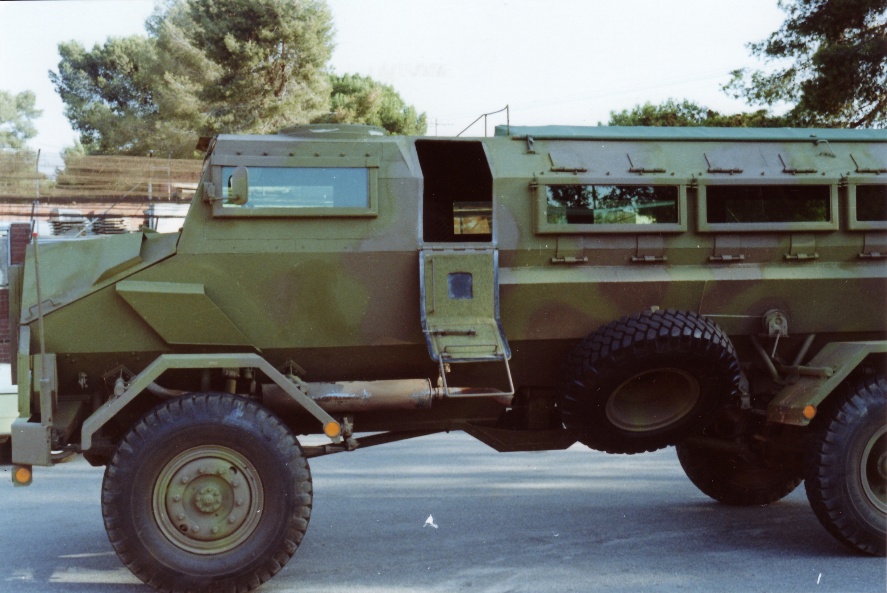
From 1981 production of the Casspir Mk2 B, which is an improved version of the original Casspir Mk1, was started by TFM Limited who designed the Mk2. On the outside, the Mk1 and Mk2B were very similar with the latter having the escape hatch located on the left side of the vehicle, removed.
https://en.m.wikepedia.org/wiki/Casspir
The spare wheels on the Mk1, that were located on the left and right hand side of the vehicle’s “V” body, were moved to the rear of the vehicle with the two spare wheels situated left and right. Various structural changes that were made were those learned from combat experience by “Koevoet”. A further difference between the Mk1 and Mk2 B are the diesel engines:
• The Mk1was fitted with an Atlantis Diesel Engine (ADE)
• The Mk1 made extensive use of Mercedes-Benz truck components.
• The Mk2 B was fitted with a Mercedes Benz OM352A 134 kW turbo-charged diesel engine
The CASSPIR Mk2 was more popularly known with Koevoet, as the “Turbo CASSPIR” to distinguish it from its predecessor (Mk1)
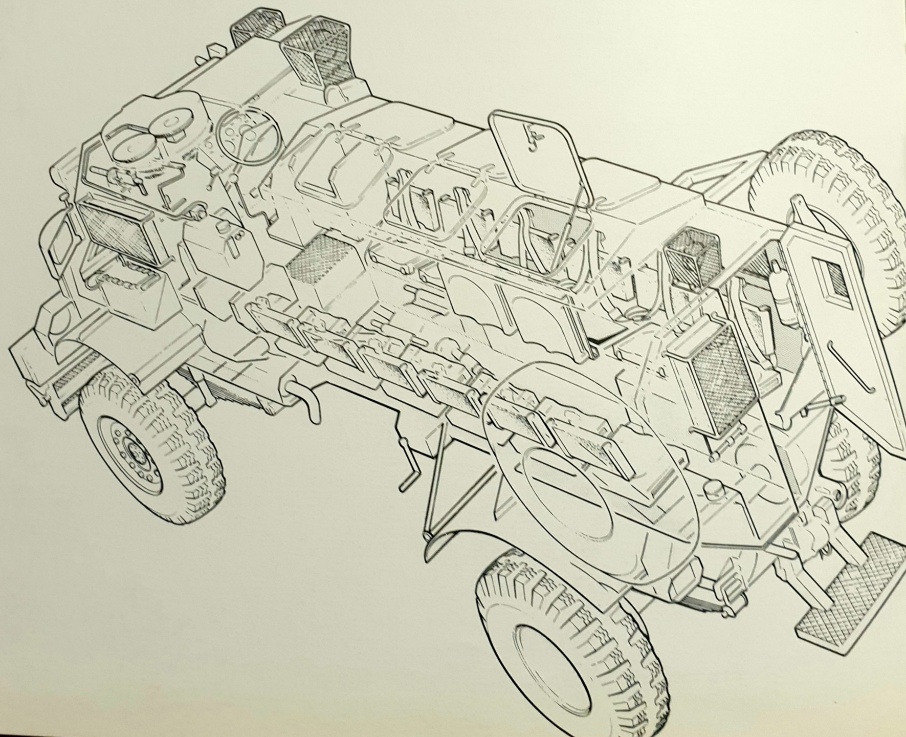
Diagram of a Casspir Mk2 with roof and hatches still in place:
Surviving the Ride: A Pictorial History of South African: Manufactured Mine Protected Vehicles
Steve Camp & Helmoed -Römer Heitman
Pages: 38 – 41
Additionally, TFM Limited designed a whole range of support vehicles in 1982 based on the Casspir APC hull:
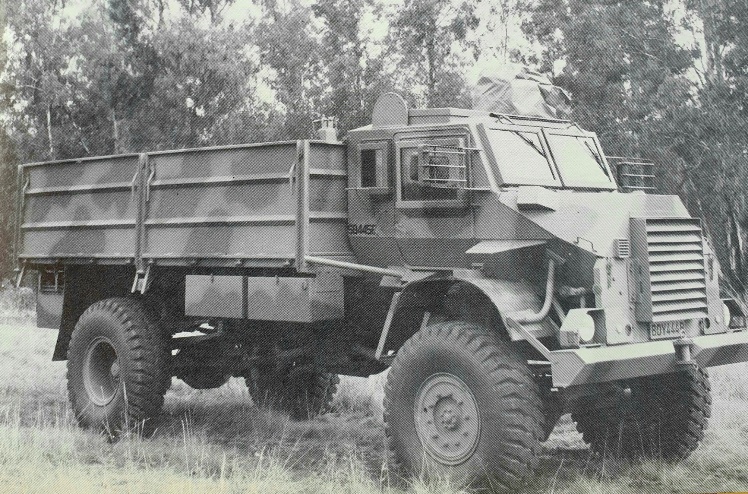
• Blesbok Logistics vehicle – with drop side rear cargo area for up to 5 tons. The Blesbok usually carried ammunition, rations, spares, fuel and camping equipment.(160 built) to allow the group to operate a week or two without resupply
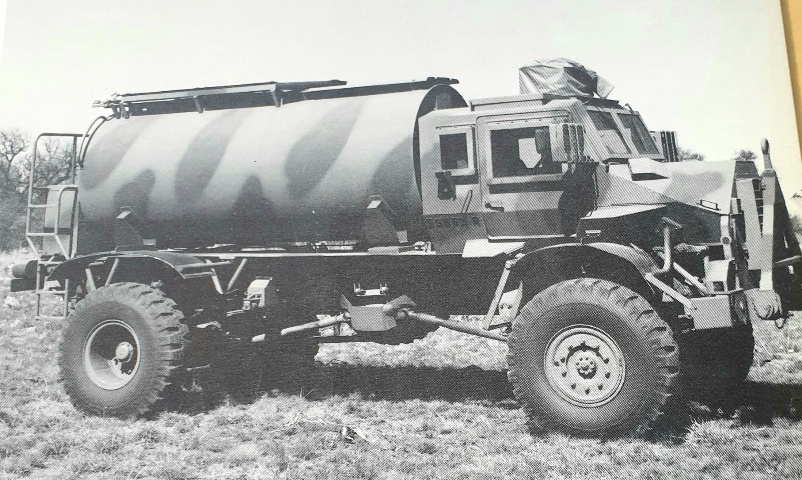
• Duiker Tanker – 5000 litre tank (30 built); originally with 3000 litre tank. The tank was fitted with a gravity feed system for dispensing fuel with an electric fuel pump as an option. The Duiker usually accompanied fighting groups on long-operations or to replenish them at selected points during operations
• Gemsbok Recovery vehicle – 15-ton capacity (30 built). It had a larger mine protected cab providing for a crew of five passengers
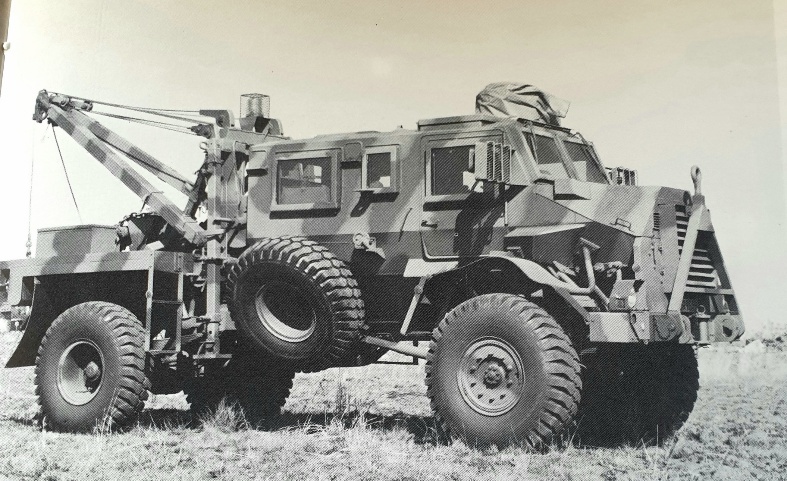
All three photographs from:
South African Arms & Armour:
A concise guide to armaments of the South African Army, Navy and Air Force
Helmoed -Römer Heitman
Pages: 57 to 63
The CASSPIR Mk1s and Mk 2Bs and the support vehicle “Blesbkok” logistics vehicle, were extensively used by the SAP “Koevoet” or Ops ‘K’ counterinsurgency unit later became SWAPOL -COIN.
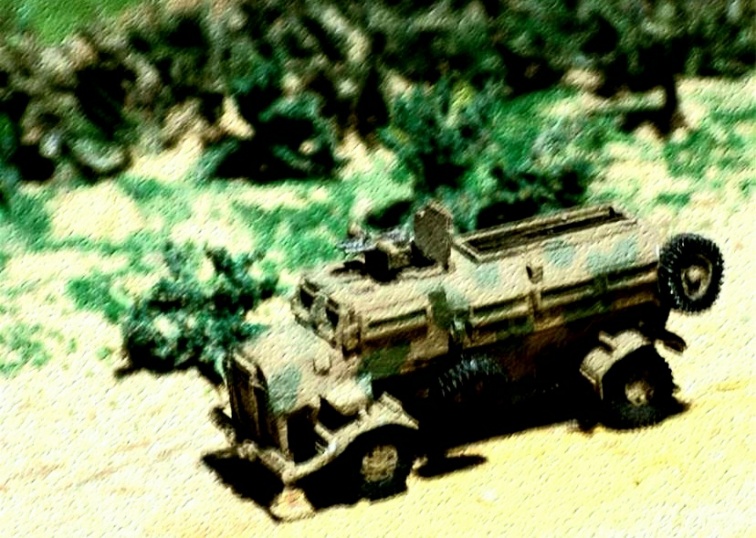
Once the CASSPIR was put into service, faults coming to light were rectified on a continuous basis and in all from 1980 until 1989 some 1200 modifications and improvements had been made to the original basic CASSPIR design, its variants and upgrades since it first entered service. Many modifications were done to improve the CASSPIRs due to the general abuse using it like a “Kalahari Ferrari” which eventually had made it the most rugged and effective (and most attractive looking) vehicle of its kind in the world. Its all over ruggedness and ease of handling has contributed to it becoming the most abused vehicle of its kind that had ever been devised. A major modification that was done on the insistence of the Koevoet members, was the open fighting compartment by permanently removing the roof with the six hatches. This open roof concept suited the way Koevoet operated perfectly i.e. “freedom of movement in mobility”
Koevoet Veterans League
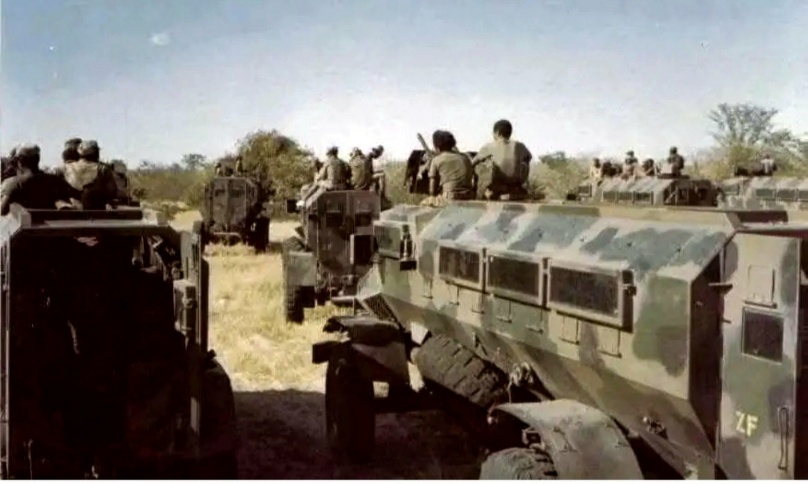
Top CASSPIR Mk2B and bottom Casspir Mk1, the “open roof concept” clearly visible : Koevoet Veterans League
Operational doctrine
Koevoet normally operated in fighting groups of four Casspirs with one Blesbok supply/logistics vehicle and one Duiker diesel fuel tanker in tow for a period of between five to seven days covering roughly 600 to 800km, which made the units “self-supporting”.
Each Casspir has a built in 200-litre fuel tank which grants it an operational range of 800 km (500 miles) via road and 400 km (250 miles) as well as a 200L water tank, and two spare tires mounted either side of the lower troop compartment or either side to the rear of the troop compartment.
The Casspir’s greatessed advantage when operating in thick bush conditions is its rugged cross-country capability – which soon became apparent to the crews. Its handling is excellent and it has a greater stability than the Buffel mine protected troop carrier of the South African Army and furthermore it has proved itself a far superior vehicle on operational conditions.
Vehicle layout
The engine and transmission are also located inside the armoured hull to reduce major damage if a mine was detonated. The Casspir has a crew of two which consists of a driver and vehicle commander/gunner and can accommodate 10-12 passengers. The crew compartment is located in the front of the vehicle, behind the engine with the troop compartment extending right to the rear. The troop compartment has three rectangle bullet resistant windows and six firing ports on either side of the hull. Passenger seats face inwards and are equipped with a four-point safety harness. Access to the troop compartment is provided via the air-operated rear doors which can be remotely opened by the driver. The doors are equipped with bullet-resistant window blocks.
The fighting compartment was permanently open by permanently removing the roof with the six hatches.
Protection
The Casspir is certified to protect its occupants against a triple TM-57 mine blast (equivalent to 21 kg of TNT) under a wheel, or a double blast (14 kg of TNT) under the hull. The Casspir has V-bottomed armoured monocoque hull, designed to deflect the force of an explosion outwards, to which a leaf-spring suspension is attached.
Add-on protection available against the effects of self-forming fragment mines (TMRP-6)
The fuel tank features a blast proof cap and is located on the inside of the armored hull to protect it from mine blasts thereby reducing the chances of a secondary explosion. The Casspir’s weight is generally sufficient to absorb the explosion of a single mine without injury to the crew, even if they are not strapped in.
Ballistic protection
The hull is rated to be B6 protection against 7.62x51mm NATO and 7.62x39mm AK-47 Ball and a variety of small arms fire and shrapnel.
Main armaments:
The Casspir Mk1s and later Mk2 Bs were not fitted with standardised weapons. The main armament of the Casspirs consisted of a variety of light, medium and heavy machine guns with different calibres and light cannons fitted mainly to the choice of the section leader and his men.
Individual units also often made use of captured weapons from SWAPO terrorists, which included Soviet made KPV and KPVT 14.5mm heavy machine guns:
KPV:
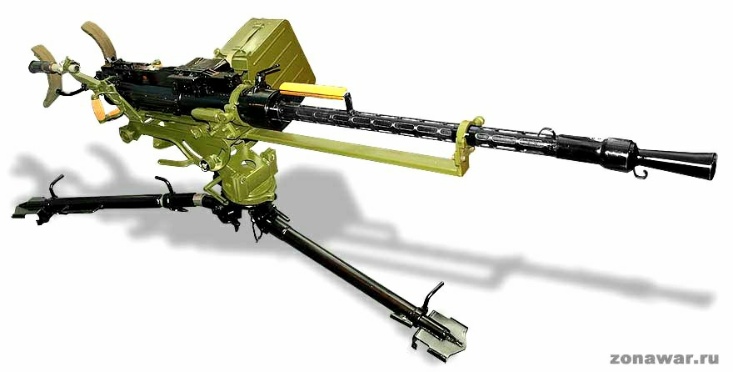
The KPV is a Soviet heavy machine gun used as anti-aircraft, tank, or a naval gun.
Koevoet Veterans League
KPVT:
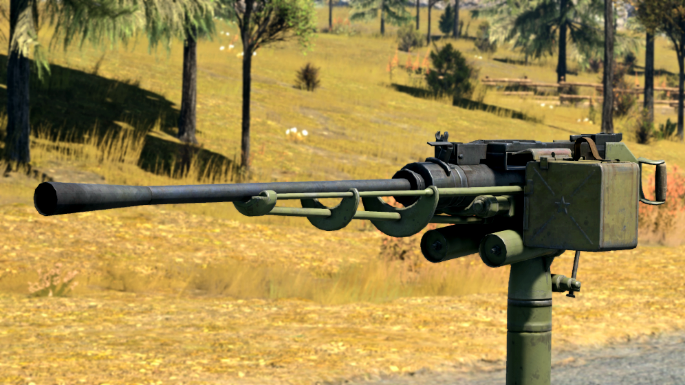
Koevoet Veterans League
The KPVT is used for armoured vehicle installations, boats, movable and stationary mounts and various antiaircraft mounts. It features a shorter receiver and a heavier barrel jacket. The KPVT also uses a 50-round belt instead of the original 40-round belt.
From early combat experience it was quickly realized that firepower must be concentrated to the front of the vehicle, that where the actions is.
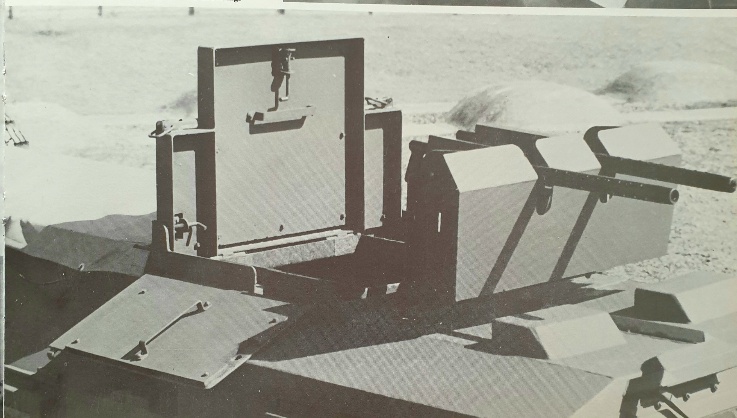
https://en.m.wikepedia.org/wiki/Casspir
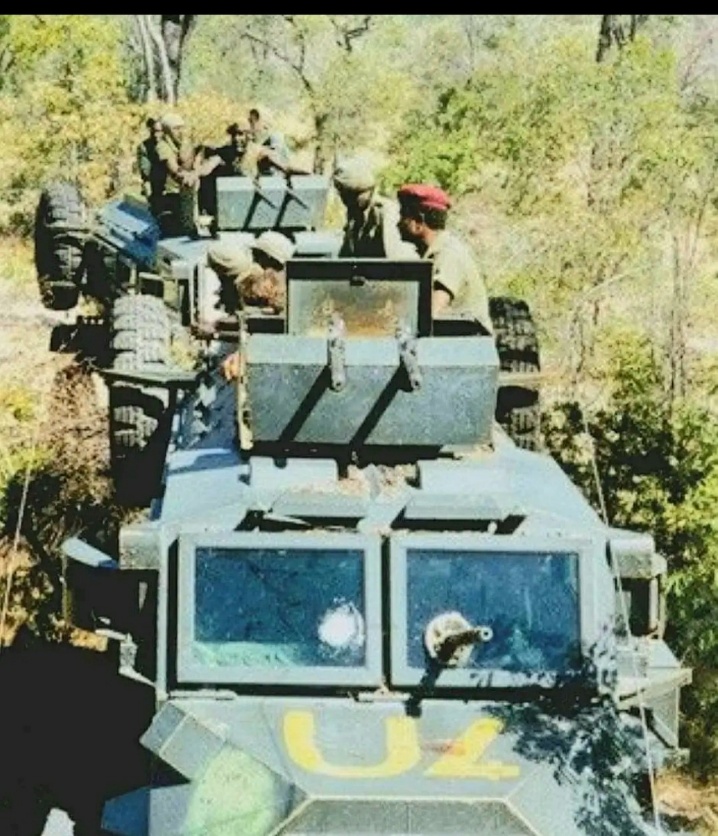
1 X Twin mounted 7,62 mm MG4s on a co-axial pintle mount behind the driver and co-driver position with protection shield
Koevoet Veterans League
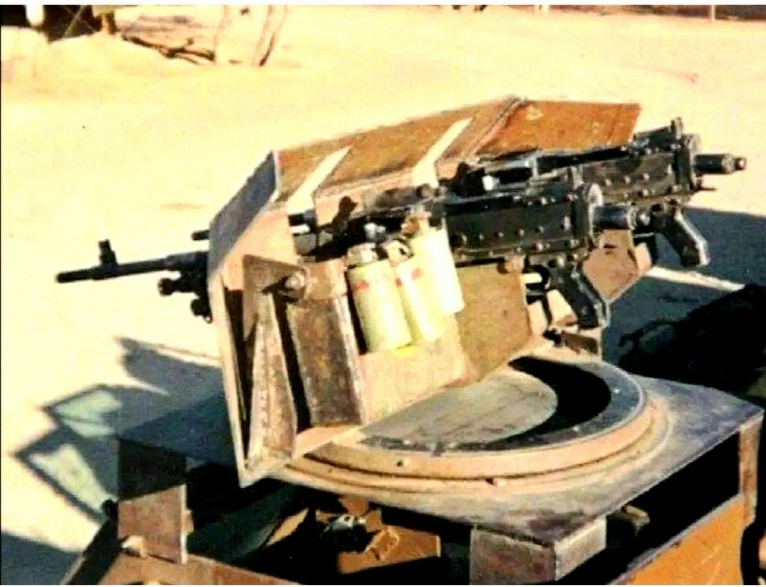
1 X Twin mounted 7,62 mm FN MAGs on a co-axial pintle mount behind the driver and co-driver position with protection shield
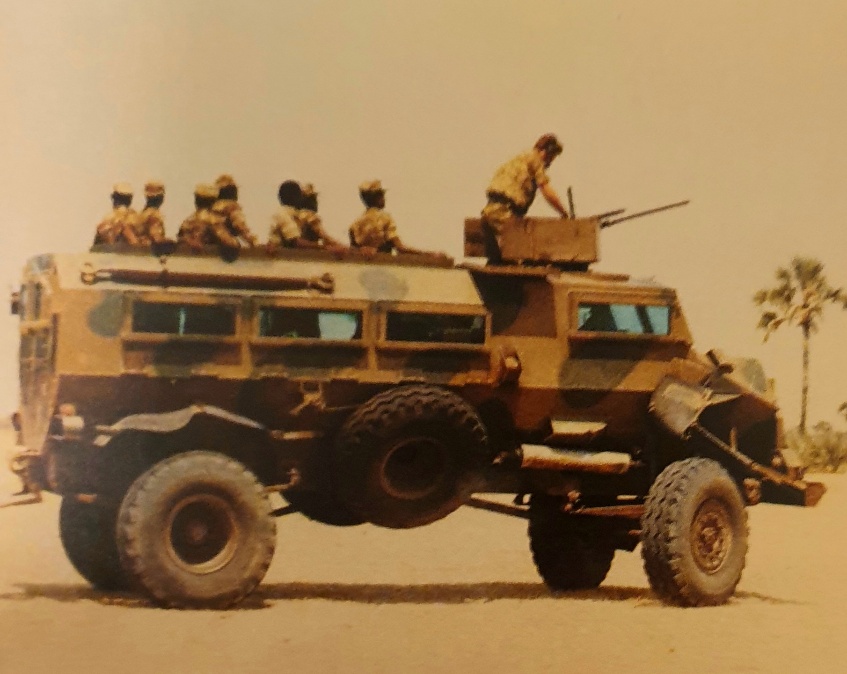
Koevoet Veterans League
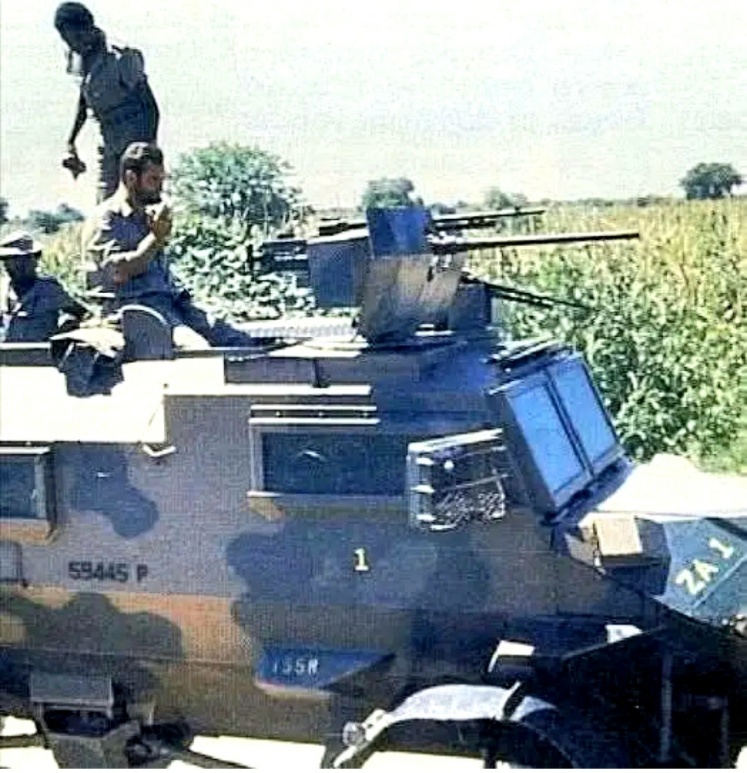
1 X 12.7×99 mm (.50 Browning) machine gun on a co-axial pintle mount behind the driver and co-driver position – or in combination with a 7,62 mm MG4, with protection shield
Koevoet Veterans League
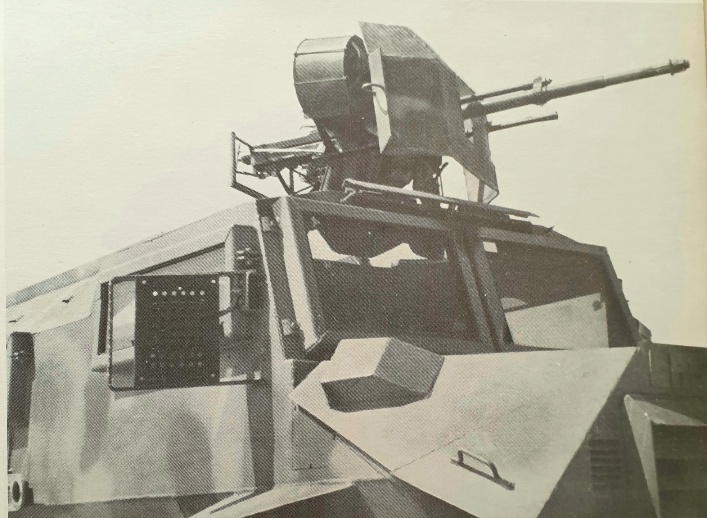
https://en.m.wikepedia.org/wiki/Casspir
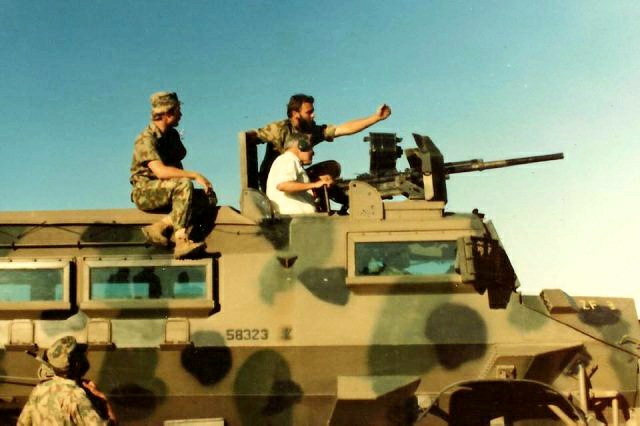
1 X 20 mm Hispano cannon on a co-axial pintle mount behind the driver and co-driver position with protection shield
Koevoet Veterans League
The 20mm Hispano cannons originating from retired South African Air Force (SAAF) fighter planes such as the DE Havilland Vampire jets.
Remark:
The Koevoet members affectionately referred to the Casspirs as their “Karre”, a Dutch word of origin for ‘carts or wagons’ that is still used as an Afrikaans word for cars, vehicles of all kinds.
Tactical utilisation of the Casspir
Most of Koevoet’s operational successes were as a result of how they tactically used the Casspirs. Koevoet’s tactics with the Casspir were all about speed, surprise, and firepower. They had typically operate in teams, using the Casspirs to rapidly deploy,
utilising the skills of the Ovambo trackers to pin down enemy. Here’s a rough breakdown:
• Reconnaissance & Intelligence collection:
Koevoet teams would gather intelligence of insurgent movements, often using local recruited informants or tracking skills
• Rapid Deployment:
The Casspirs of a group transported
teams to the target area, using their
mobility to cover vast distances quickly
• Firepower Support:
The Casspir’s machine guns and accompanying Sud Aviation Alouette lll
helicopter gunships – (armed with a 20mm Vector cannons), provided intense firepower to suppress enemy positions or flush them from cover
• Troop Deployment:
Koevoet operators would dismount and
engage the enemy on foot, often using
the terrain to their advantage
This combination of mobility, firepower, and tactical deployment made Koevoet the ultimate fighting force for mobility and firepower in the African Bush at that time – loved by the Policemen and feared by the enemy.
Comments on Koevoet
Koevoet, Ops “K” and later SWAPLO COIN were definitely an unconventional and the most effective counter insurgency force during the SWA Border War (1966 – 1989) and throughout the world.
Ovambo members often posed as PLAN insurgents, using captured gear and tactics to infiltrate and gather intelligence. This “pseudo-guerrilla” approach allowed them to get close to their targets. They had also used the tracking skills and the local knowledge of the Ovambo members and “technical operatives” (someone skilled in tracking, surveillance, or intelligence gathering) to hunt down PLAN operatives. Their tactics were a mix of traditional policing and guerrilla warfare, making them a formidable force in the bush.
“Koevoet, their Casspirs and the Alouette lll gunships were considered the “Law in Ovambo”
Conclusion
The Casspir Mine Resistant Ambush Protected Vehicle (MRAP) is considered by many to be the “father of all modern enclosed V-shaped monocoque hull design provides excellent protection against landmines and improvised explosive devices (IEDs), and its enclosed design provides a safe and secure environment for crew and passengers.
Mine-Resistant Ambush Protected (MRAP) vehicles” which have been developed and deployed by many Western armies, the Casspir’s legacy can be seen in many modern MRAP vehicles, such as the US military’s MRAP All-Terrain Vehicle (M-ATV) and the UK’s Mastiff 2, which have similar V-shaped hull designs and enclosed cabins.
The Legacy of SAP Lieutenant – General JG “Sterkhans” Dreyer and Operation “K” or Koevoet
“Cometh the Hour …. Cometh the Man”
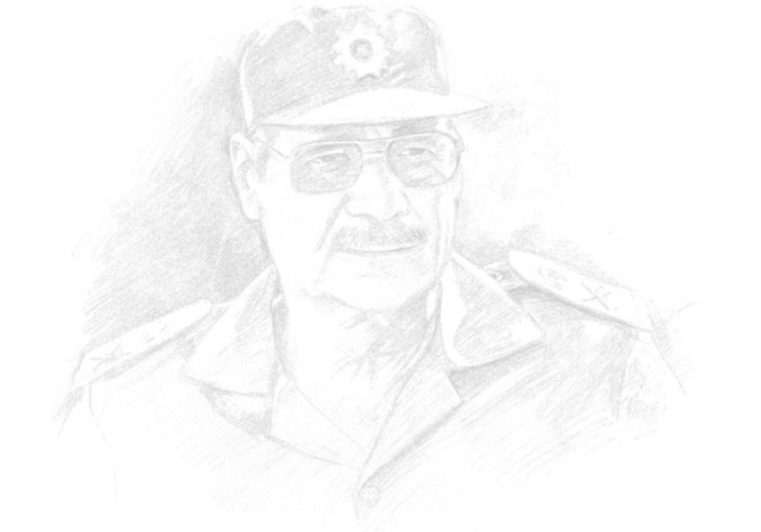
The year was 1978, the Border war was already raging for twelve years. Dark clouds had gathered over Ovamboland and it was realised at the highest level of the country’s security command that something had to be done about the situation in Ovamboland where SWAPO had started to make deep inroads.
The security command of South Africa requested the Intelligence Section of the South African Police Security Branch via the then Commissioner of the SAP, to set up an irregular type / paramilitary unit of
operation in the operational area to work closely with 5 Reconnaissance Commando “Recces” of the SADF to counter the threat.
The then Colonel “Sterk Hans” Dreyer, of the SAP Security Branch in Natal was appointed to establish the special police unit. Right from the founding, Dreyer had his doubts of this way of operating. He strongly believed that, “that this Unit” cannot operate on the “conventional” military counter insurgency strategies but should operate like policemen when investigating crime i.e. combine both the intelligence gathering, following up of the information, tracking ability and a highly mobile reaction force capability with the emphasis of armed mobility to neutralise the target … thus highly unconventional in terms of South African Counterinsurgency thinking General Dreyer continued to press his view, eventually he got the go-ahead and the new reaction force, named “KOEVOET/ Ops K” was born ….
…. a tremendous success …. and the rest is history as from 1979 to 1989.
References:
Google:/https://en.m.wikepedia.org/wiki/Casspir
Google:/https://tanks-encyclopedia.com/coldwar/south_africa/casspir
Books:
Surviving the Ride
A Pictorial History of South African: Manufactured Mine Protected Vehicles
Steve Camp & Helmoed -Römer Heitman
Pages: 38 – 41
Taming the Landmine
Peter Stiff 1986
Chapter 11 “The Casspir”: Pages: 112 to 117
South African Arms & Armour:
A concise guide to armaments of the South African Army, Navy and Air Force
Helmoed -Römer Heitman
Pages: 57 to 63
Photos and Information obtained from numerous Koevoet Veterans from 2019 to 2025.
Author is a “Friend” of the Koevoet Veterans League.
Wolfgang Witschas
