Photo album – Railways ABW (1)
RAILWAYS DURING THE ANGLO BOER WAR
Hennie Heymans

Flag of the Orange Free State
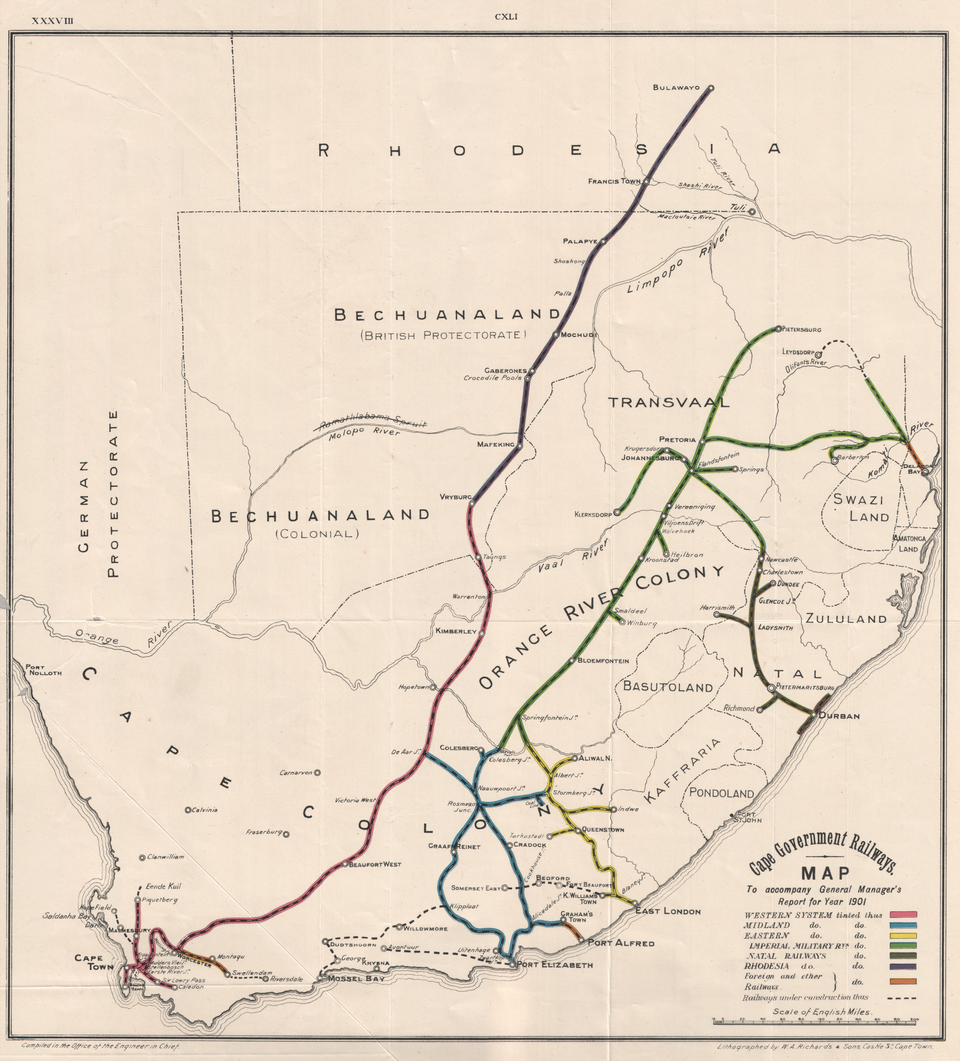
https://commons.wikimedia.org/wiki/File:SouthernAfricaRailwayMap_1901.png
Introduction
During the Anglo-Boer War the railways were of critical national‑security importance throughout Southern Africa. Strategic railway corridors linked Cape Town with Rhodesia, Delagoa Bay with Pretoria and Johannesburg, and the Pretoria–Pietersburg Railway connected the northern Transvaal to the capital. The harbours at Durban, Port Elizabeth, East London and Beira formed essential supply gateways, enabling the rapid movement of troops, ammunition, food, horses and equipment.
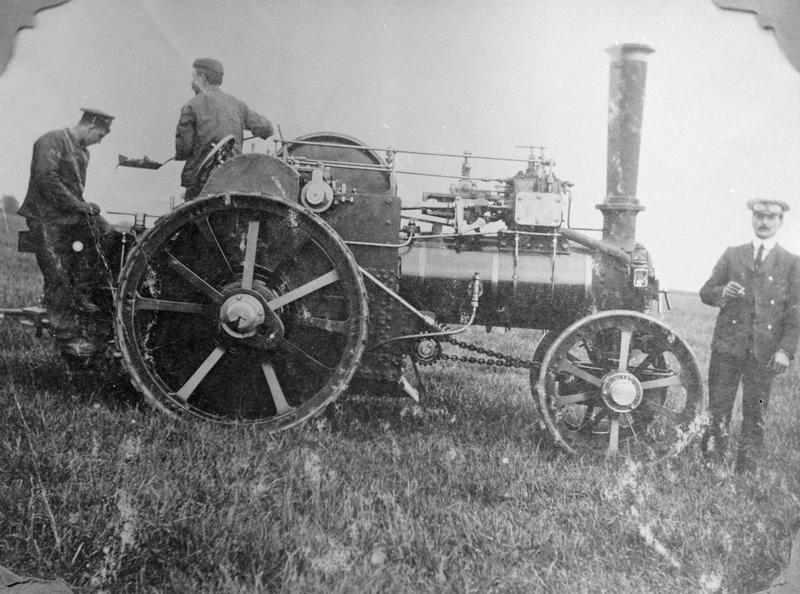
Aveling and Porter steam tractor. This was employed in the Second Boer War in 1901 and covered some 20000 miles in that year. The officer shown in front of the tractor is thought to be Captain Lyon who was attached to the ASC between 1902 and 1909. https://commons.wikimedia.org/wiki/File:The_British_Army_Tractors_Prior_To_the_First_World_War_Q72856.jpg
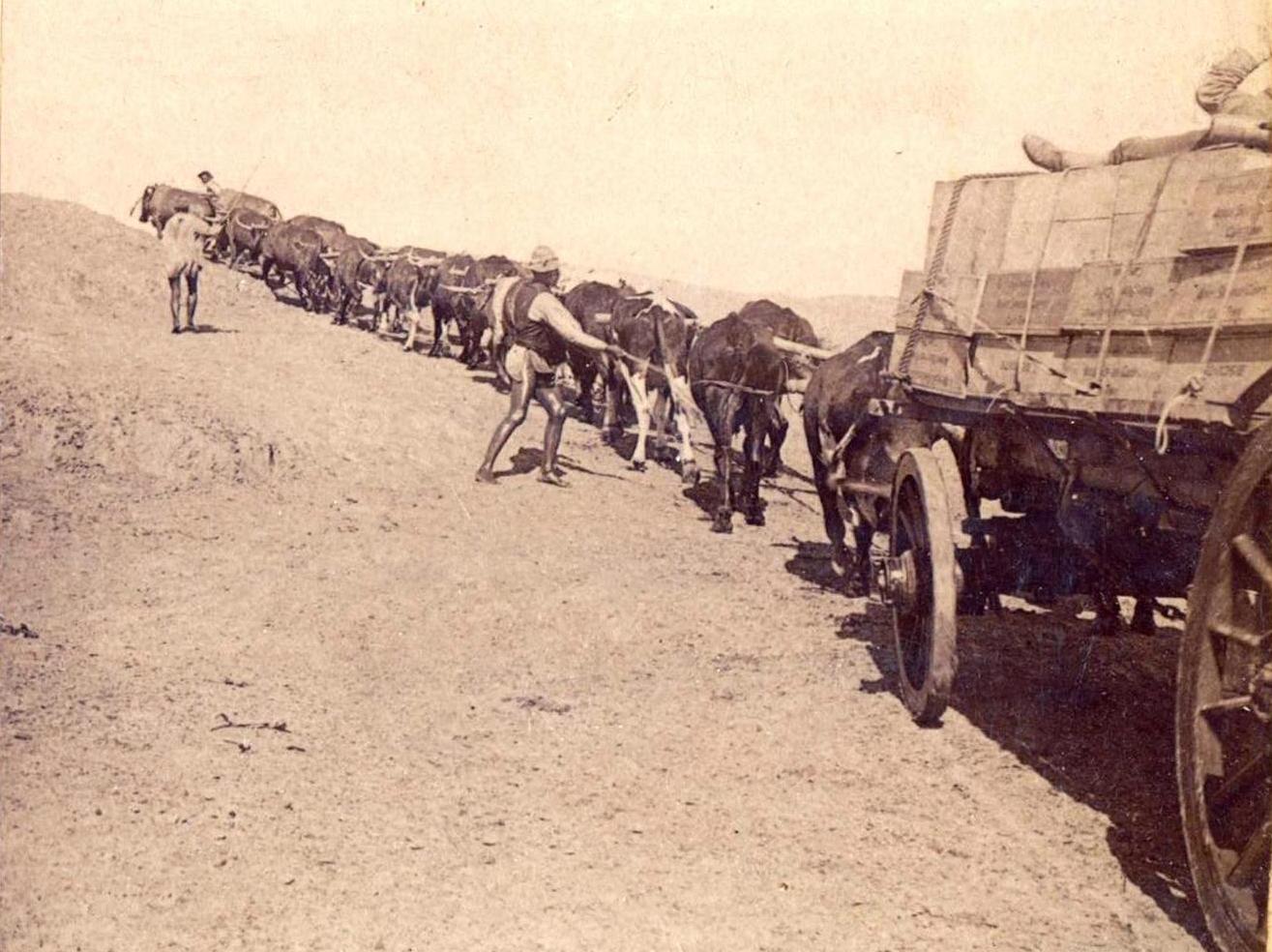
A wide variety of trains operated during the conflict: supply trains, troop trains, hospital trains, and several forms of armoured trains. By contrast, the alternative to rail transport remained slow and vulnerable — steam tractors over bad roads, ox wagons drawn by spans of up to sixteen oxen, Scotch carts, and horse‑ or mule‑drawn wagons.
Railway stations were linked by military telegraph lines, providing a secure alternative to the civilian telegraph network. The heliograph was also widely used, particularly by the Cape Police, who could communicate across vast distances with remarkable speed under favourable conditions.
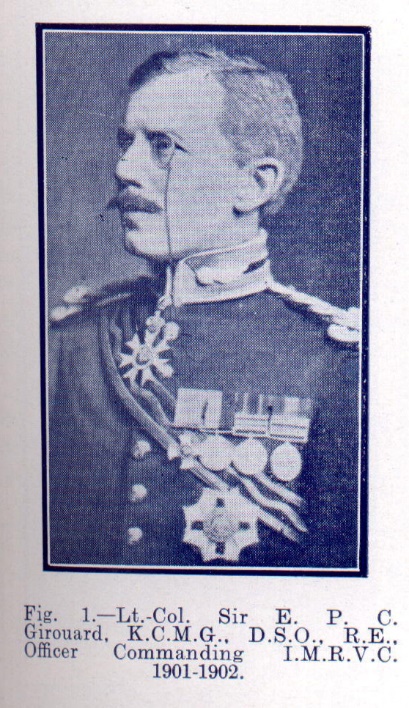
The Nongqai January 1945 page 9.
On the Boer side, railway resources were limited. They operated a small number of hospital trains and only one true armoured train, improvised from available rolling stock. The British, however, possessed extensive railway assets. After the occupation of the Orange Free State and the Zuid-Afrikaansche Republiek, the captured lines were reorganised as the Imperial Military Railways (IMR) under the command of Colonel Sir Percy Girouard. Later, the IMR evolved into the Central South African Railways, operating alongside the Cape Government Railways and Natal Government Railways. The Rhodesian railways were likewise placed at the disposal of British military operations.
Because the Boers frequently sabotaged the lines — especially during the guerrilla phase — the British were forced to patrol hundreds of kilometres of track. Blockhouses, armoured trains, and mounted patrols became essential to protect the network. Without the railways, the British would have been forced to rely on slow animal‑drawn transport and a handful of early steam traction engines, which were unreliable in rough terrain.
In short, the railway system became the arterial lifeline of the British war effort and one of the most strategically contested assets of the entire conflict
Boer Trains
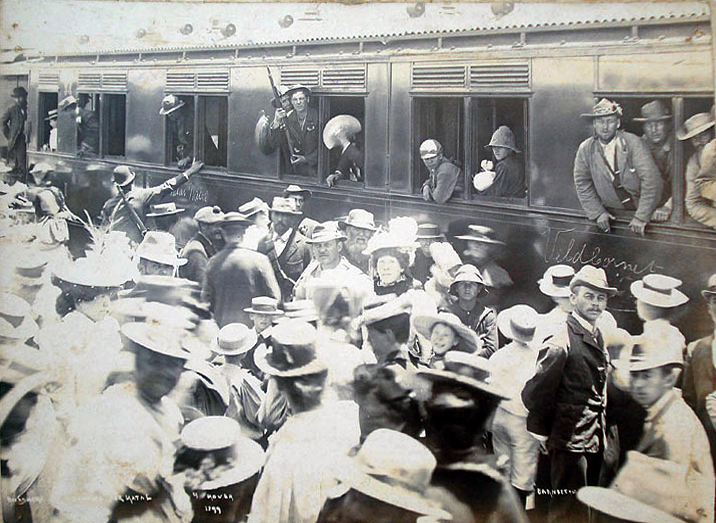
Boers to the Natal Front
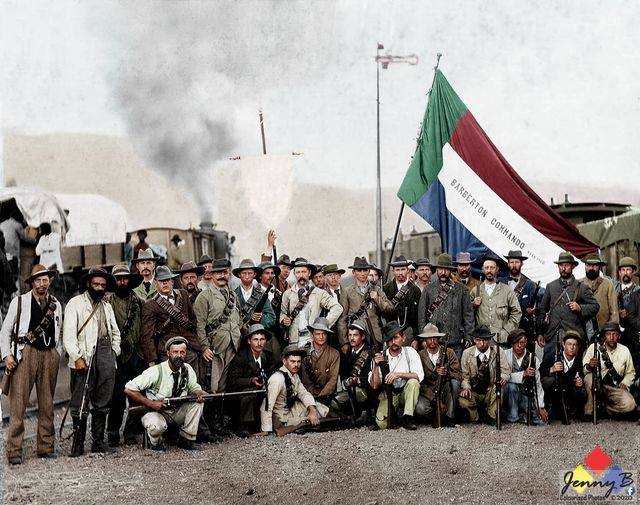
Barberton Commando at railway station – colourised by Jennifer Bosch
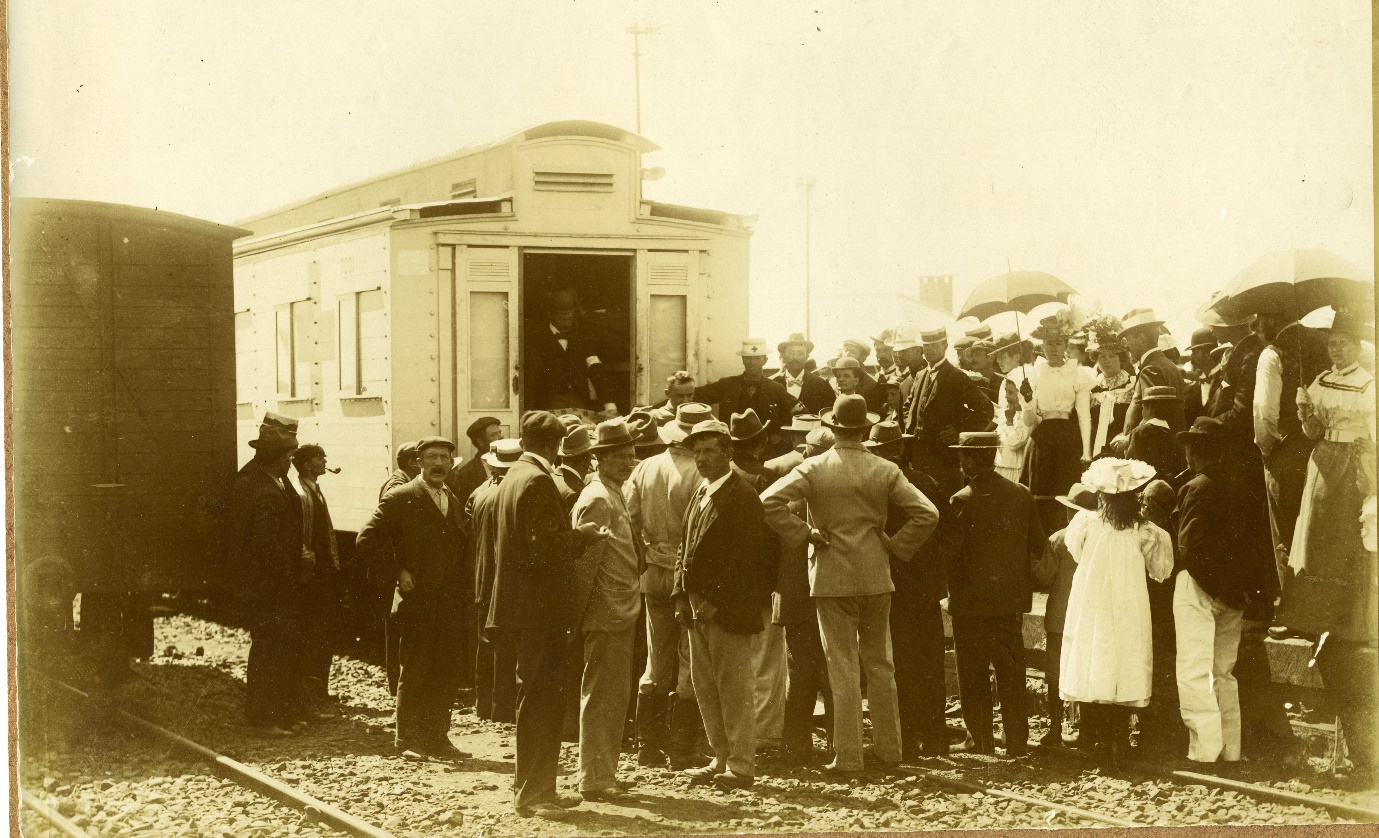
Boer Hospital/Ambulance train
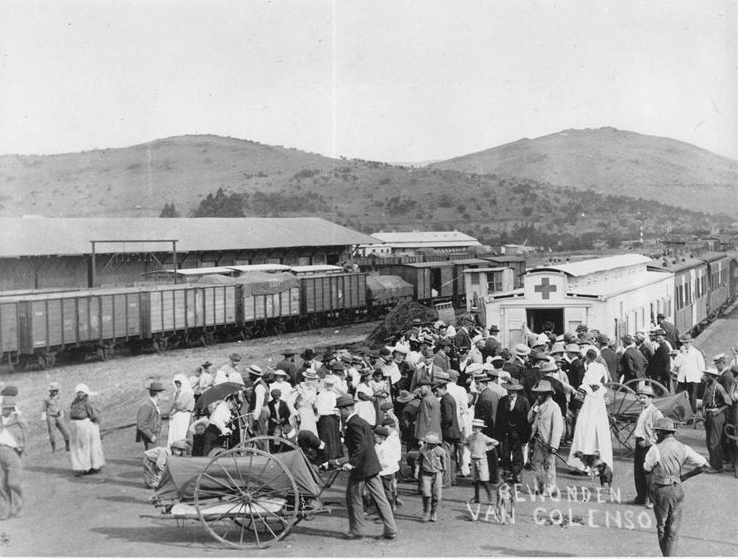
Boer Hospital/Ambulance train
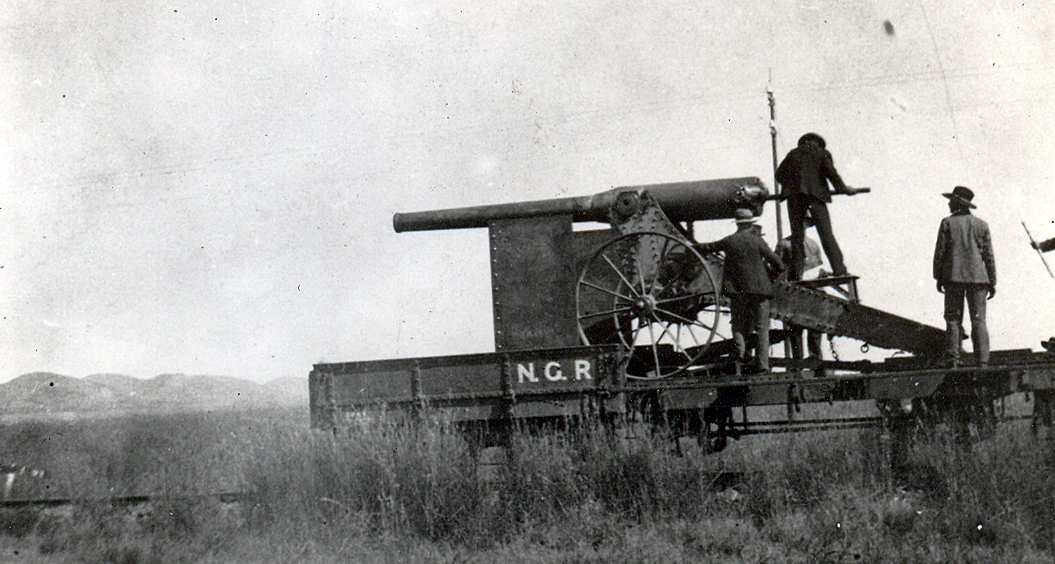
Boer armoured train in Natal
British Trains
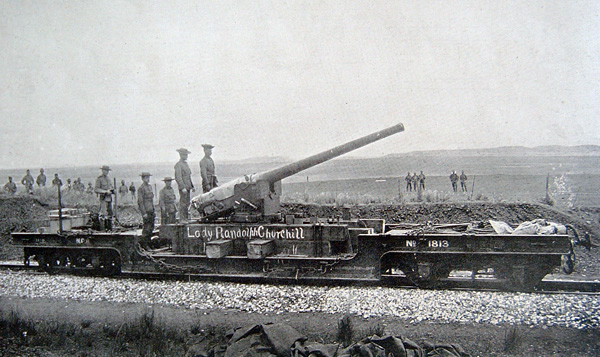
4.7-inch gun mounted on a truck
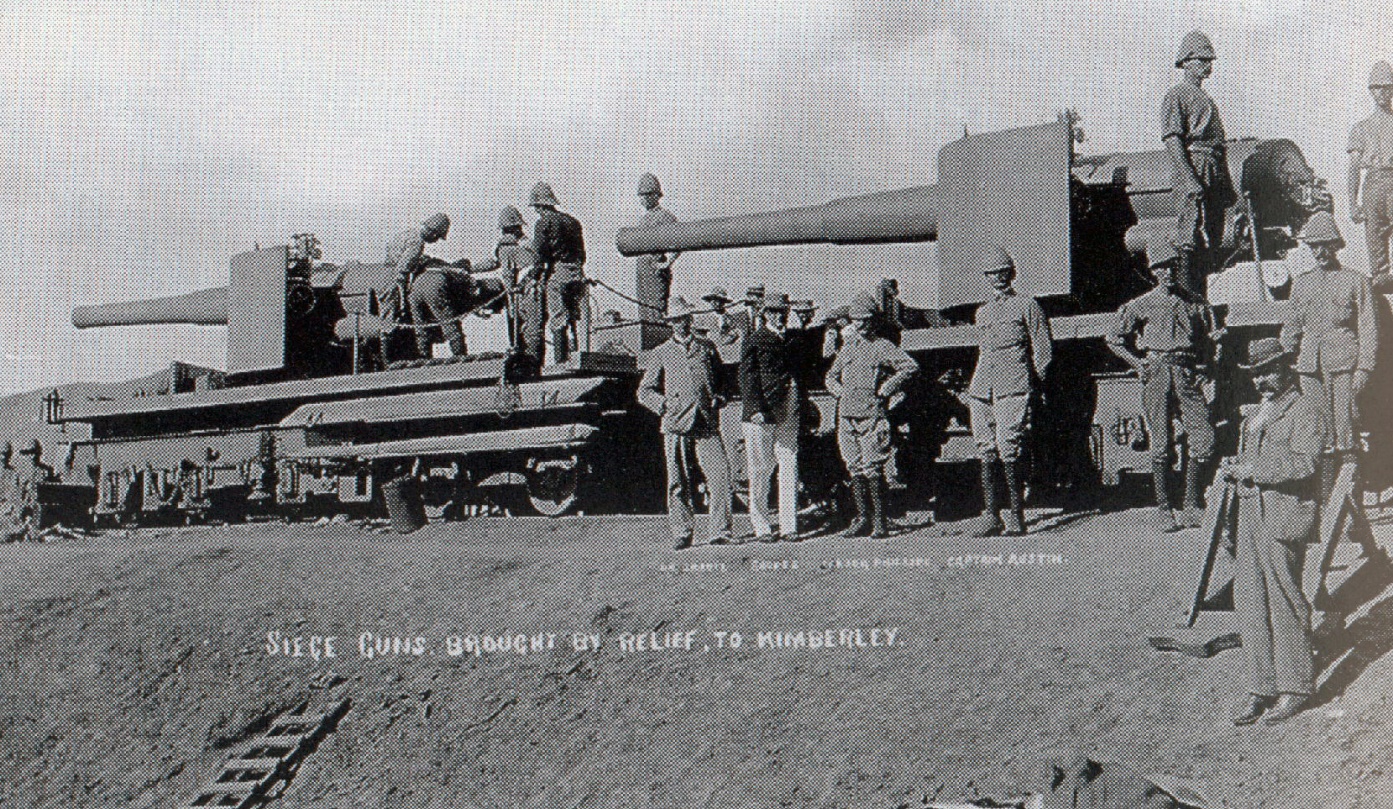
6” Siege Guns Kimberley fltr Dr Smart, DJ Rhodes, Maj Phillips and Capt Austin
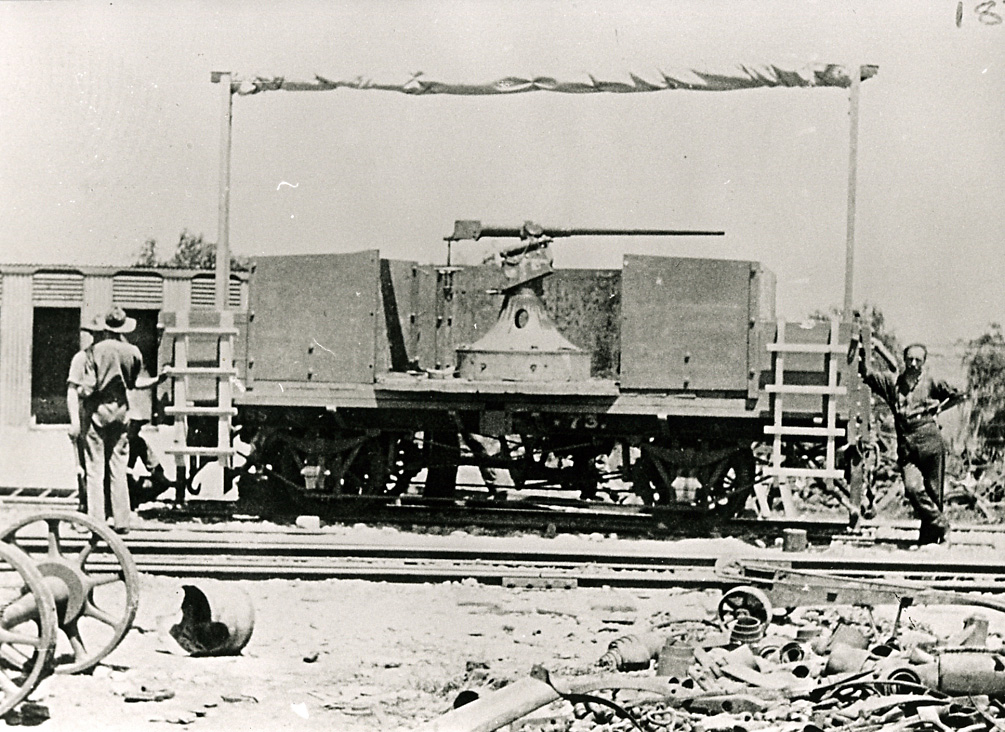
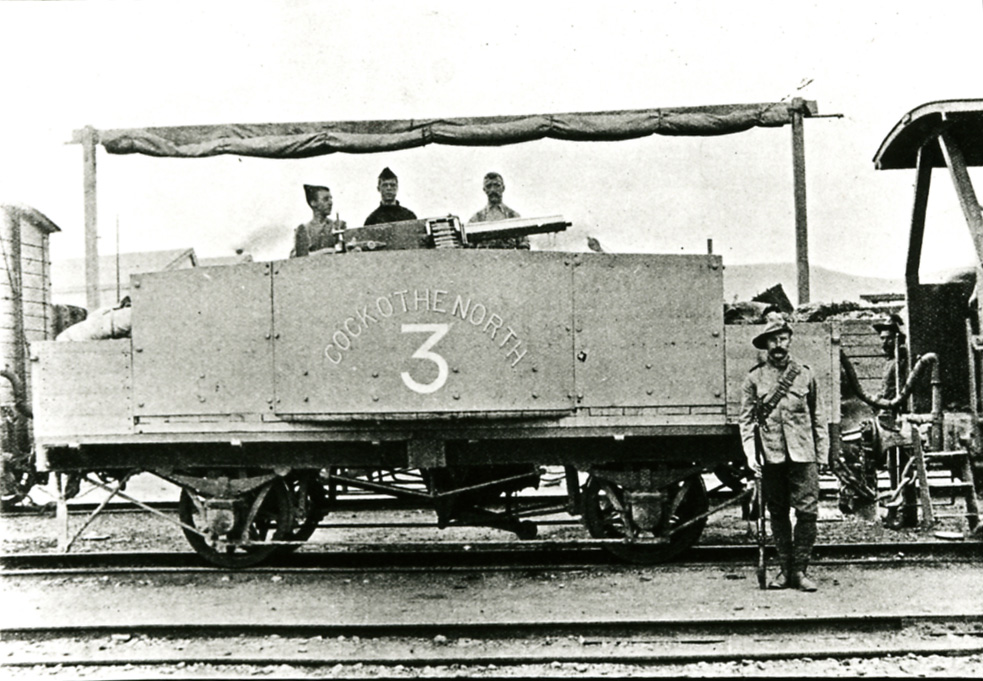
His Majesty’s Armoured Train (HMAT) No 3
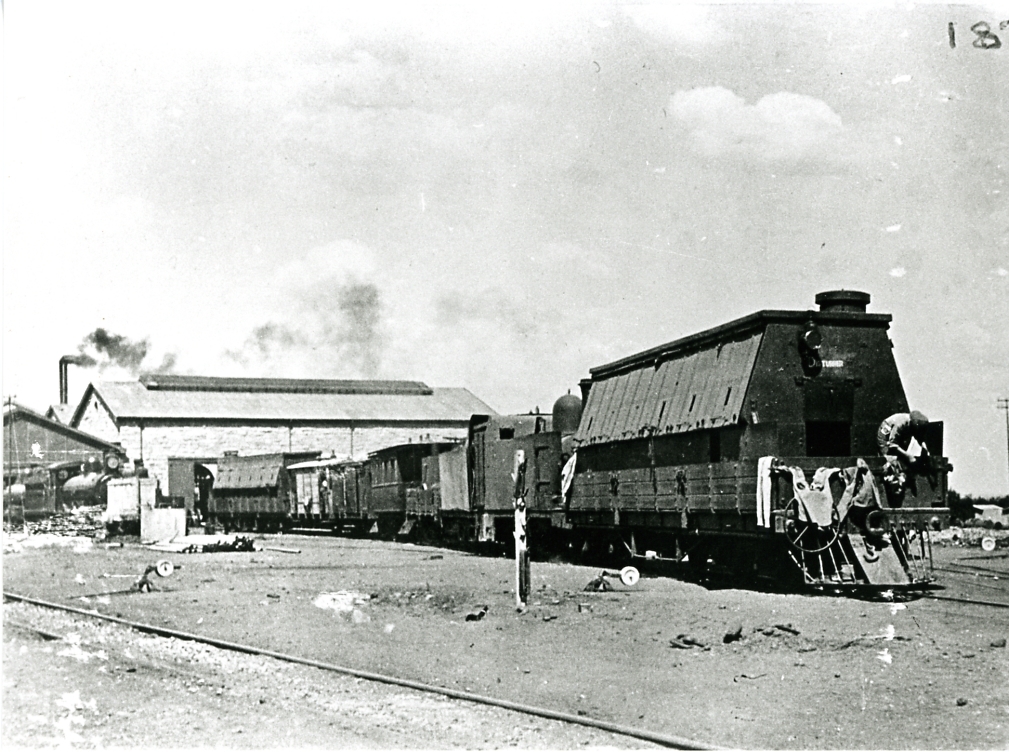
British Armoured Train
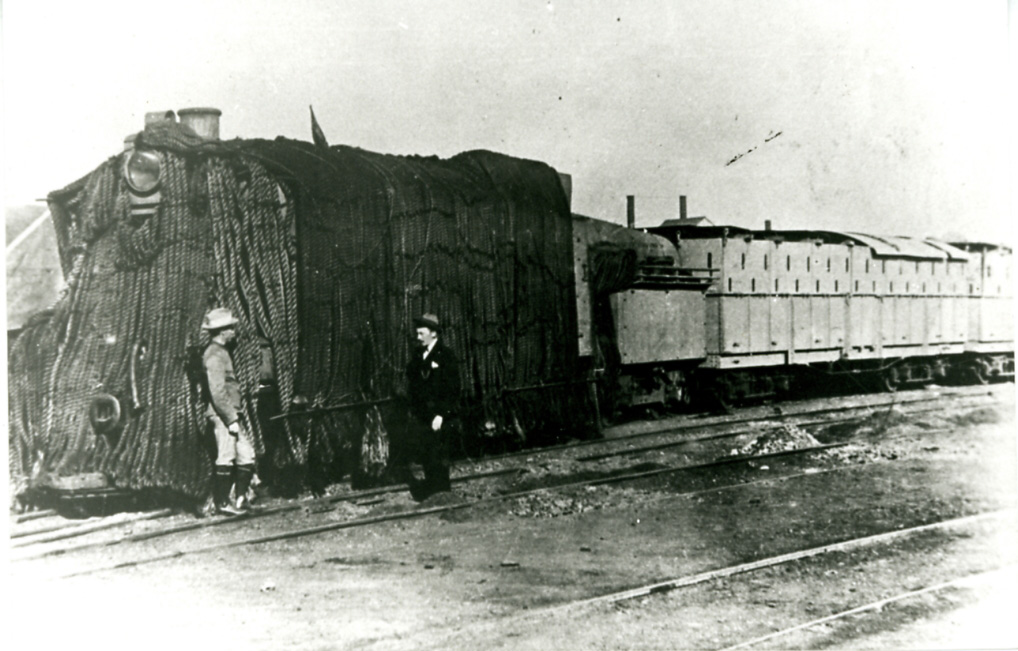
The famous “Mary Hairy” of the Natal Government Railways. The locomotive was the first to be built in South Africa.
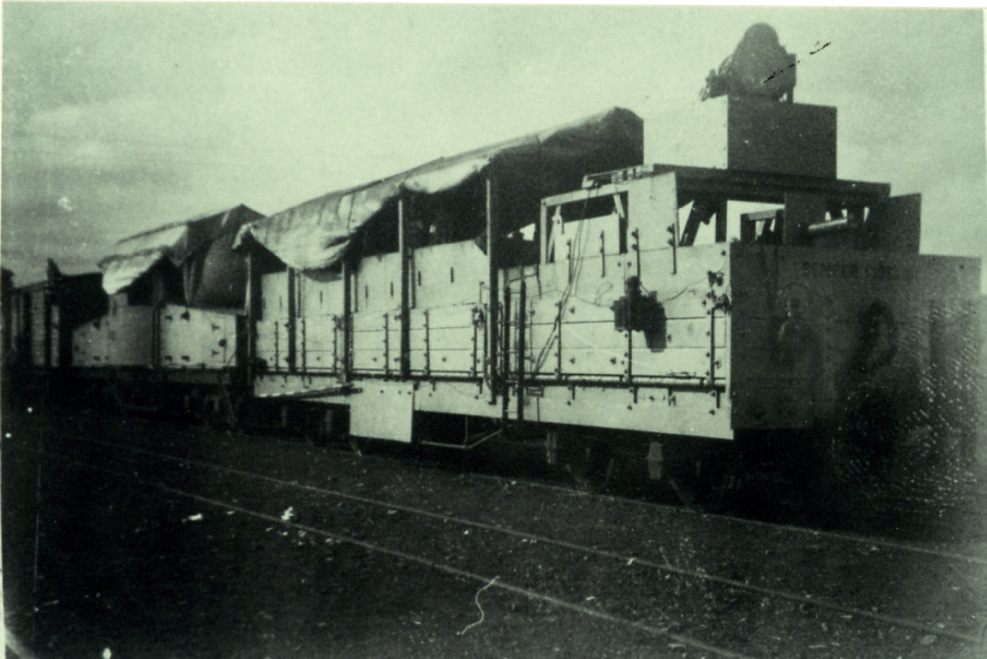
British Armoured Train
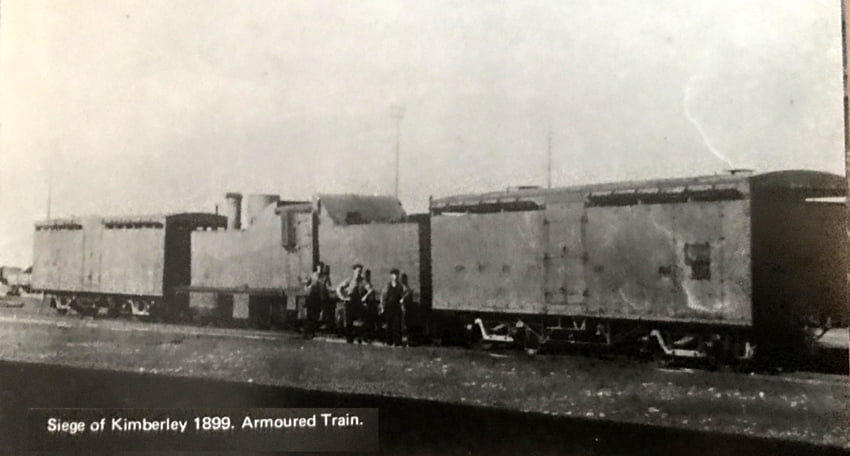
British Armoured Train – Siege of Kimberley
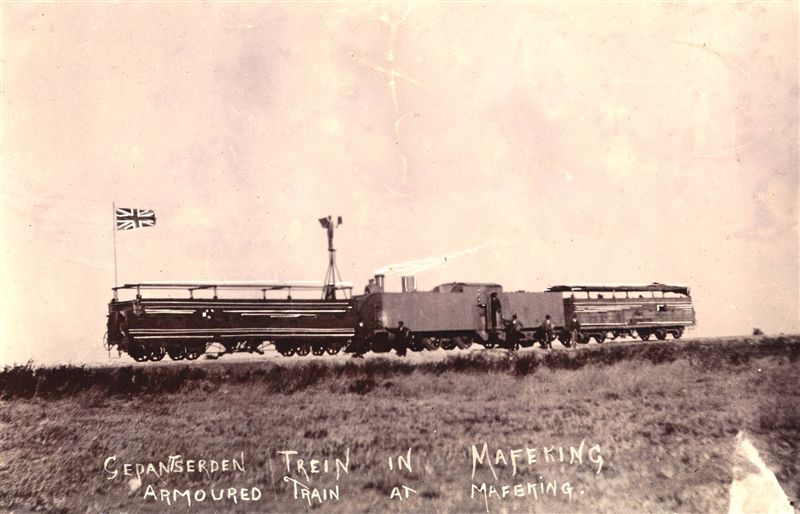
British Armoured Train at Mafeking
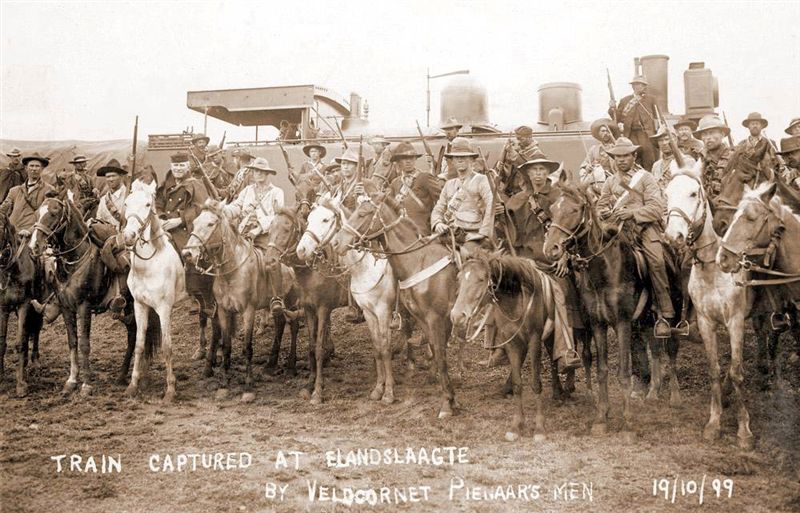
Natal Government Railways: Train captured by the Boers
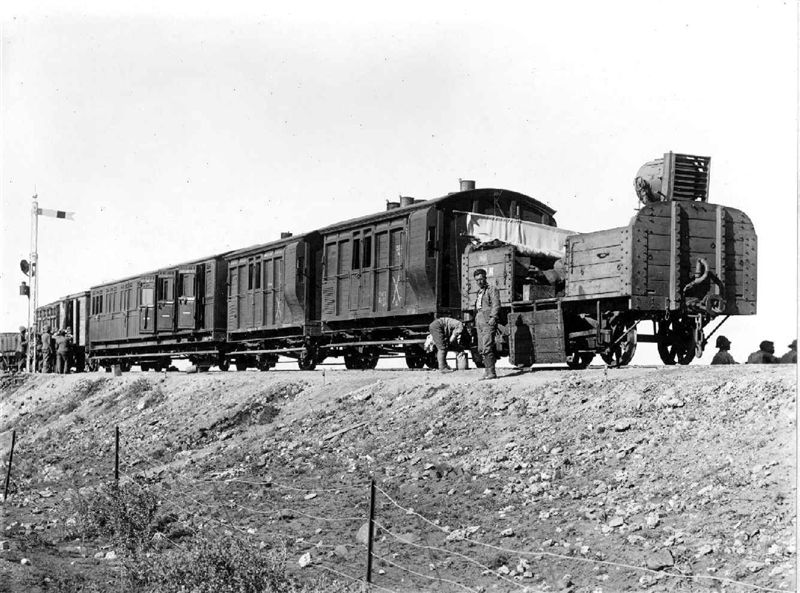
British Armoured Train
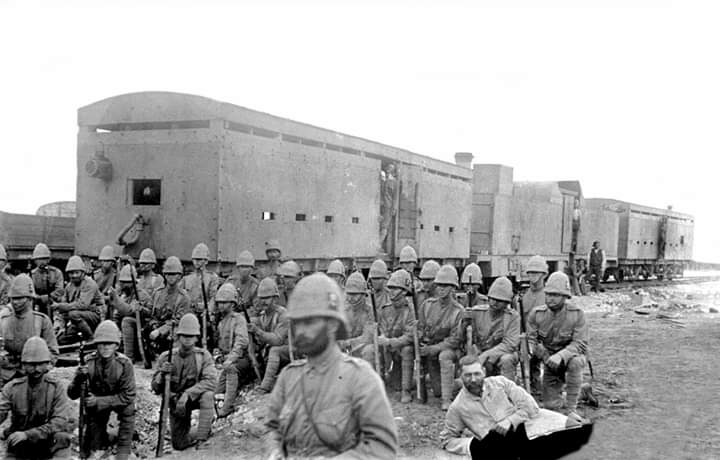
British Armoured Train
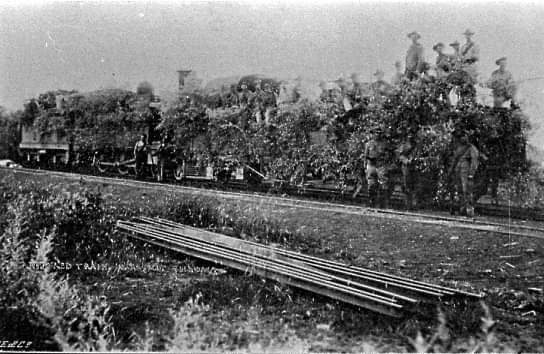
British Armoured Train – completer covered by bush shrubs
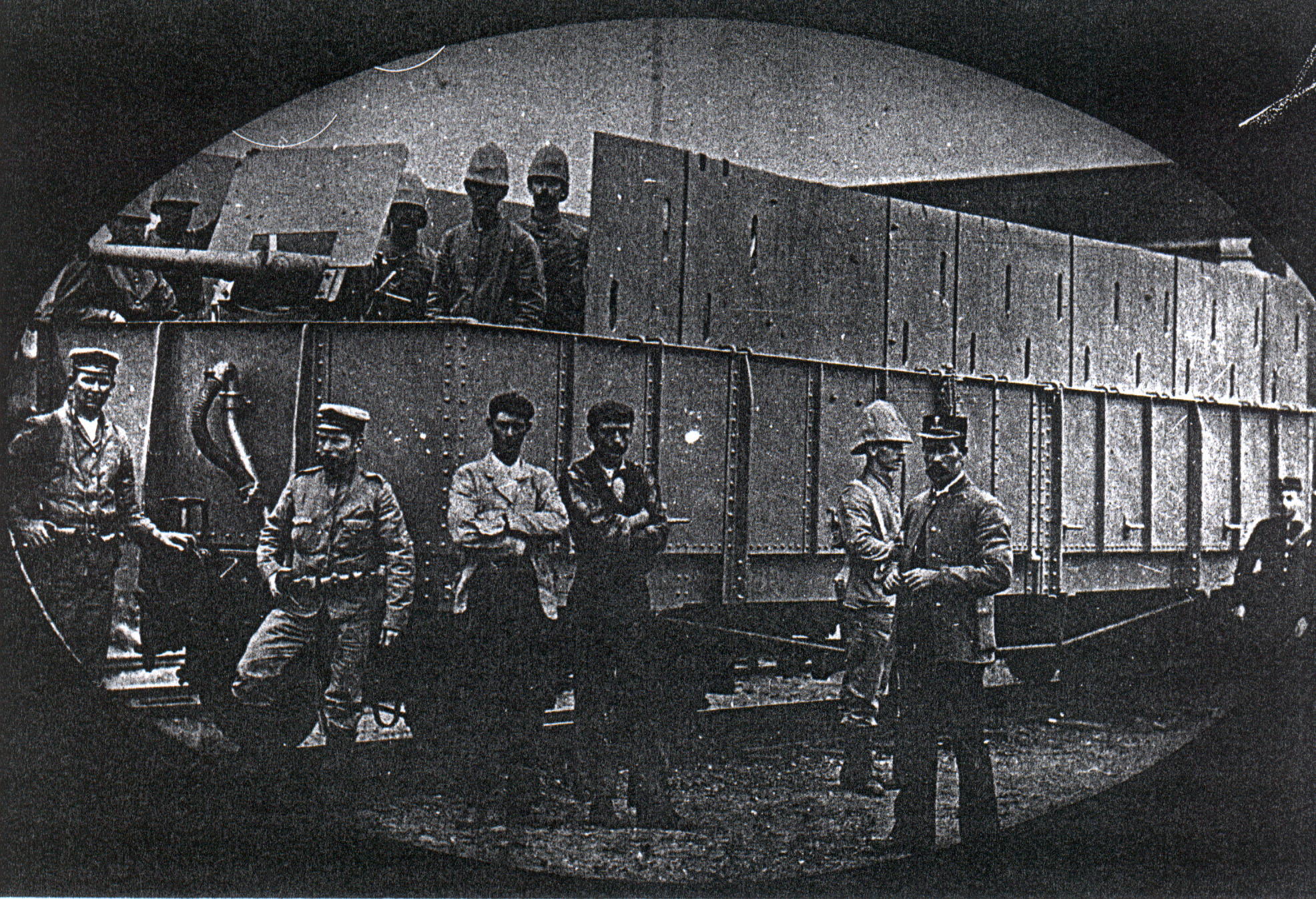
British Armoured Train
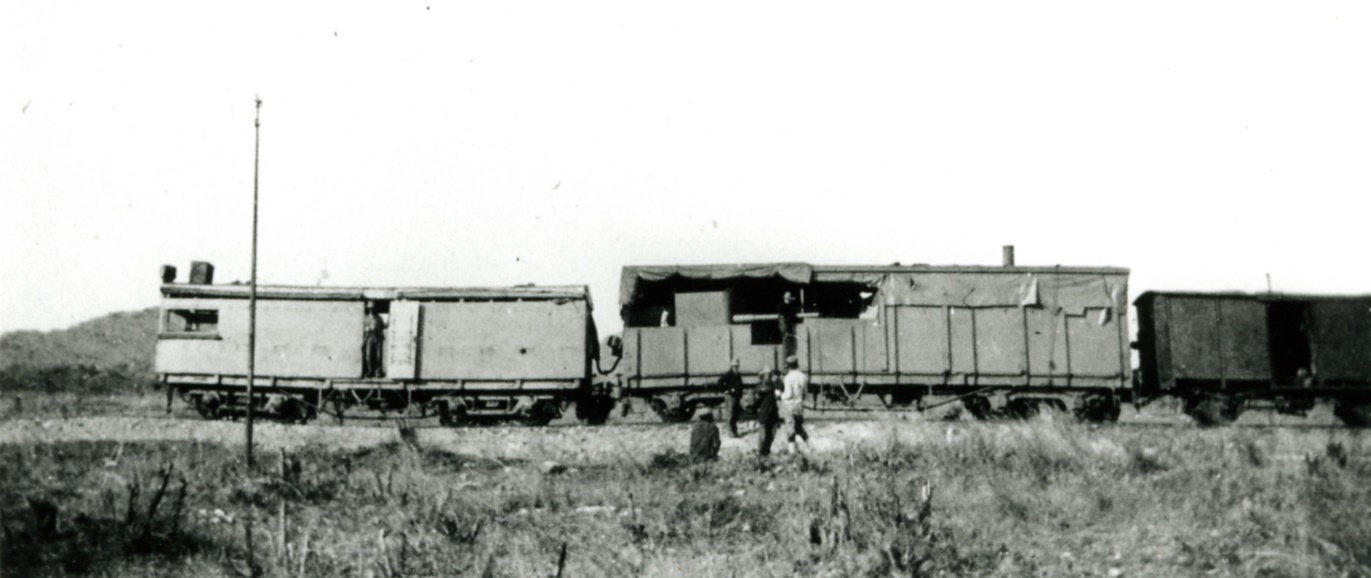
His Majesty’s Armoured Train (HMAT) No 1
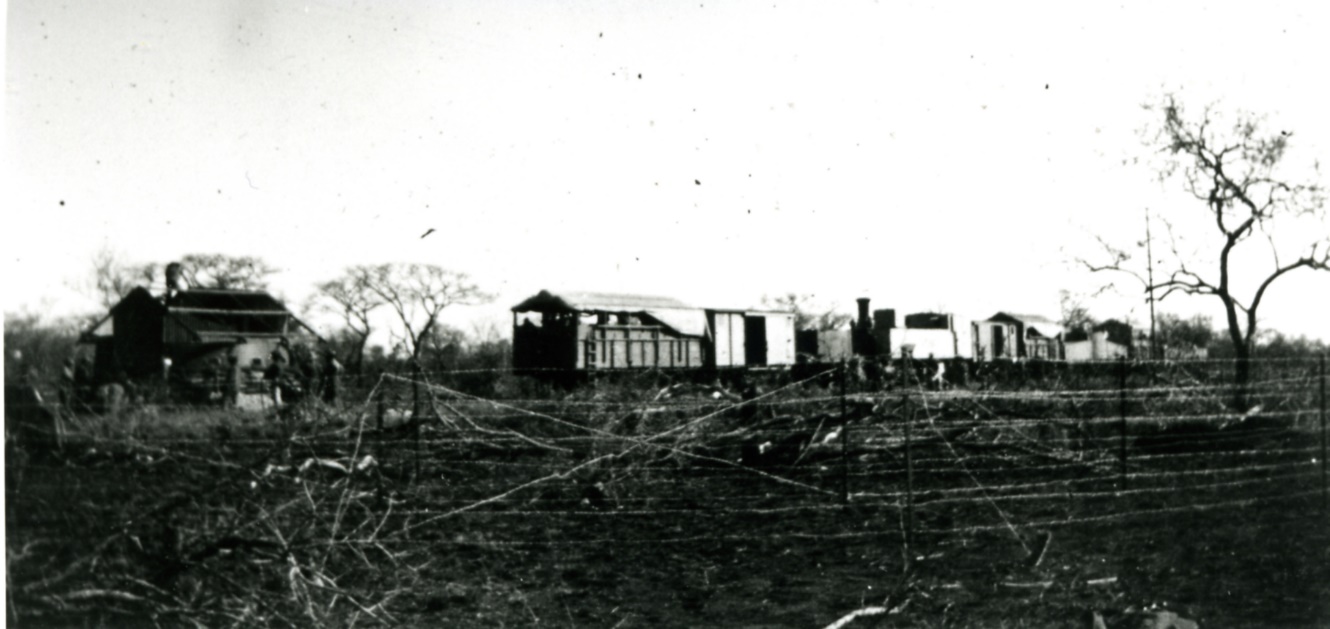
His Majesty’s Armoured Train (HMAT) No 17
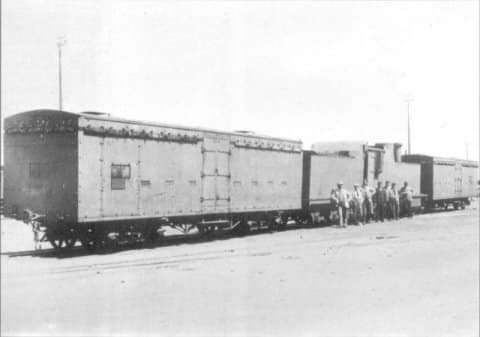
British Armoured Train: Cape Colony
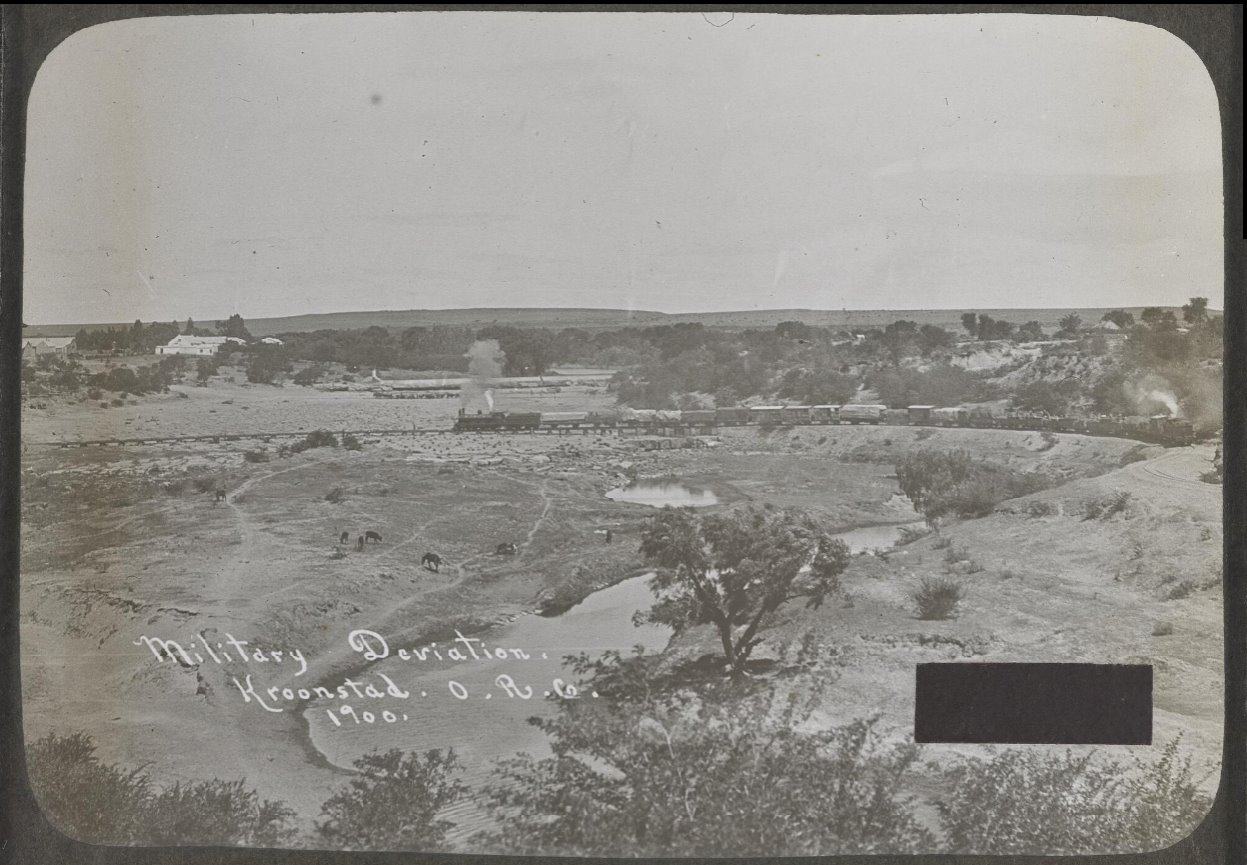
Military Deviation at Kroonstad in the Free State
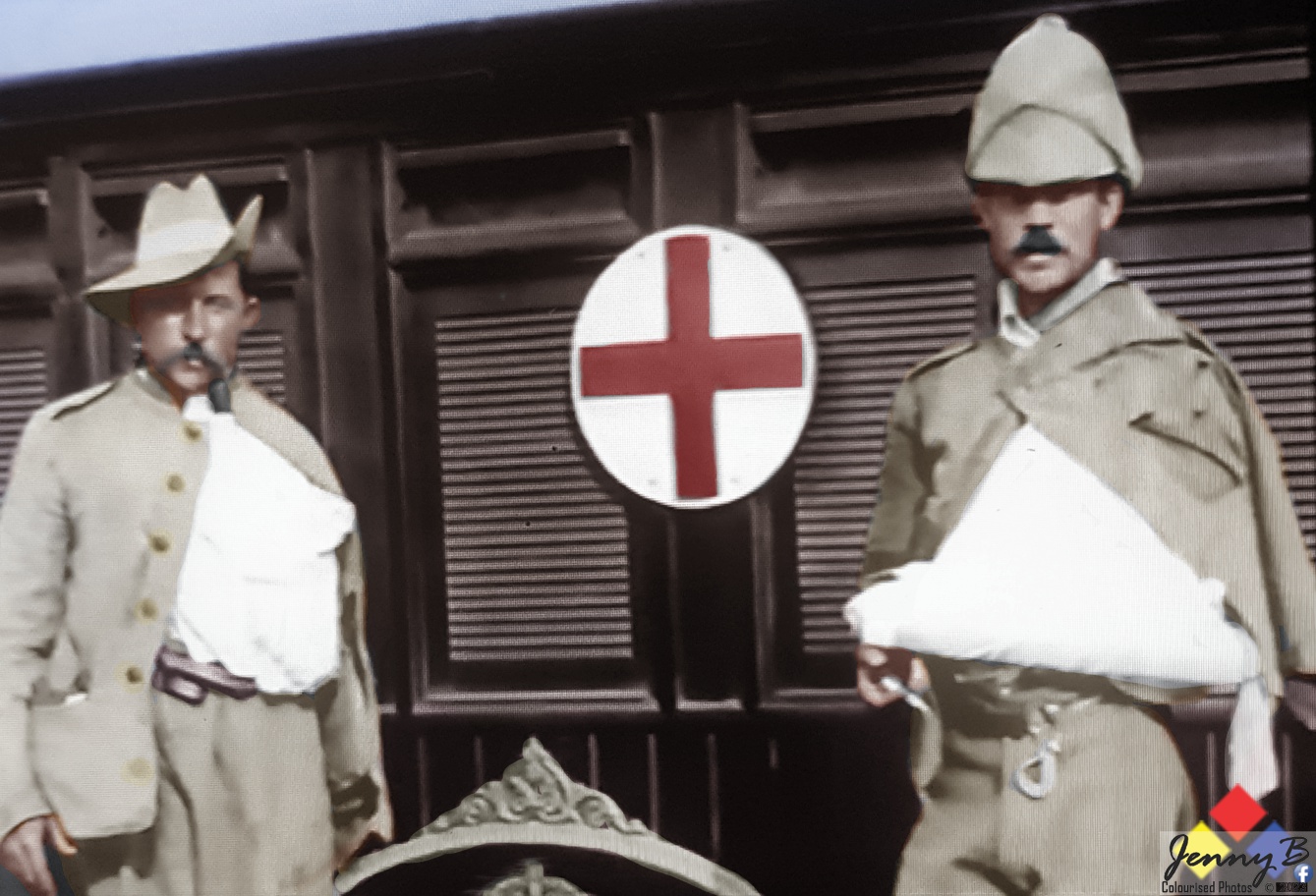
After the Battle of Magersfontein – On Kimberley station colourised by Jennifer Bosch.


That’s a really interesting look at a less-often-seen part of history. It’s amazing to think about the logistics of supplying troops during such a conflict.
William Marshall has brought the following article to our attention:
https://www.standingwellback.com/category/19th-century/1890-1900/