Magersfontein – Nongqai Vol 17 No 5
6. BATTLE MAGERSFONTEIN.
– Boer Ambush.
Jennifer Bosch

THE PRINCIPAL COMMANDERS OF BLACK WEEK’S 2ND BATTLE.
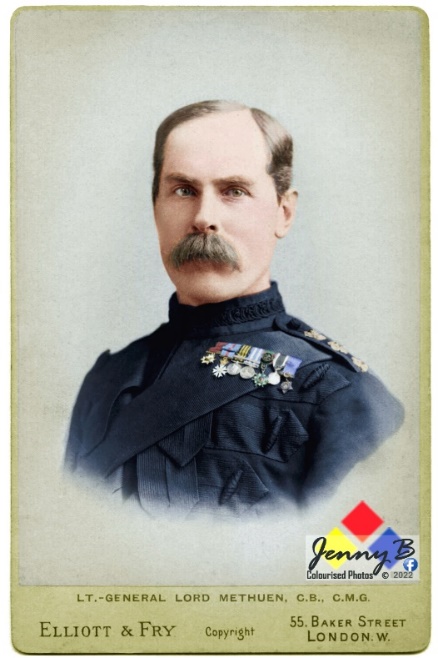
LORD METHUEN (Paul) – Commander of the British force advancing toward Kimberley; he planned and supervised the night‑march attack that ended in disaster.
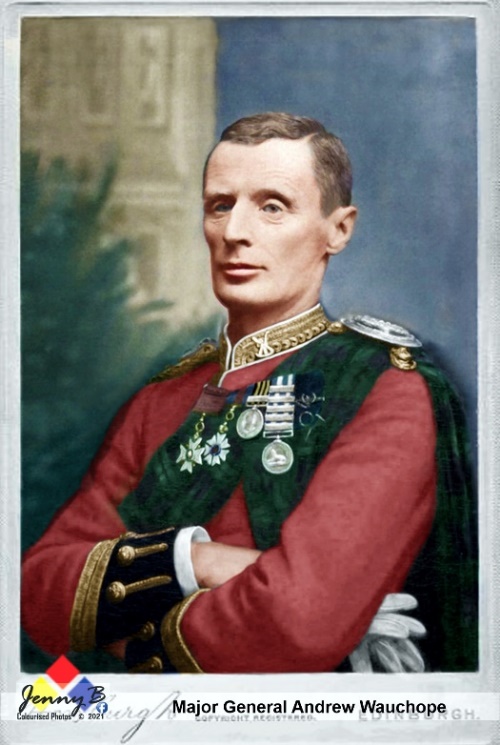
MAJOR-GENERAL ANDREW WAUCHOPE (www.britishempire.co.uk)
Commanded the Highland Brigade; killed in the opening volleys when his troops were met by concentrated Boer fire.
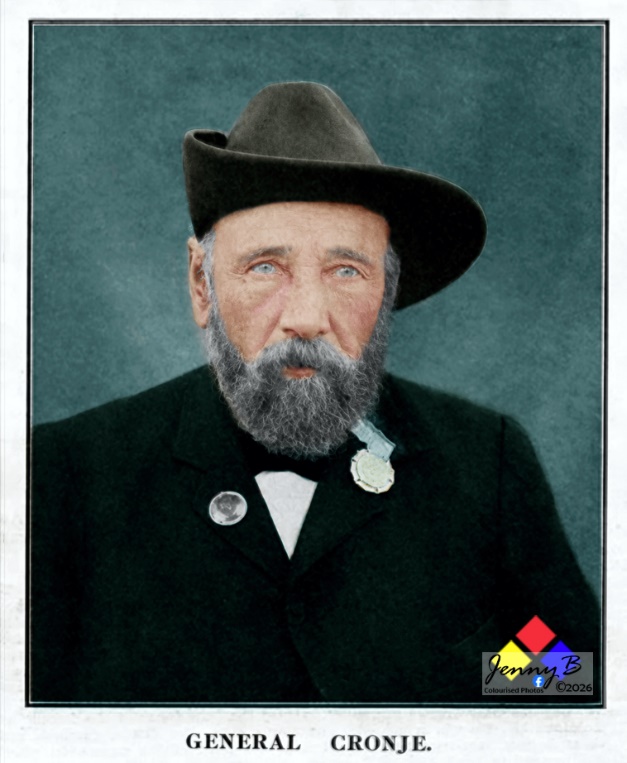

GENERAL PIET CRONJE (southafricanresearcher.com)
Overall Boer commander at Magersfontein; his army blocked Methuen’s route to relieve Kimberley.
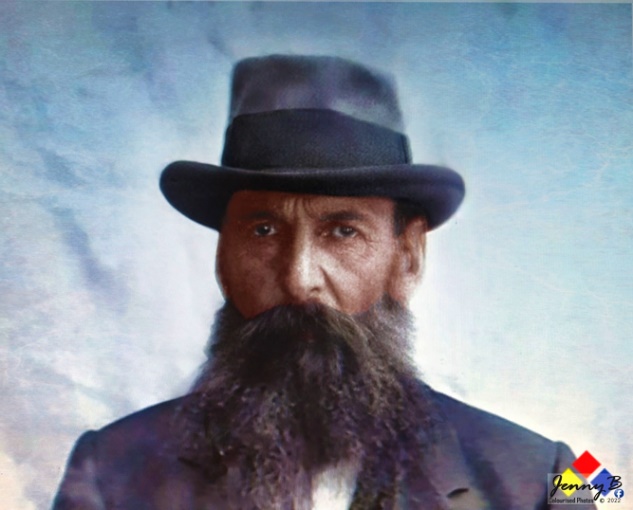

GENERAL KOOS DE LA REY
The brains behind the defensive plan; repositioned the Boers from the hilltops into camouflaged trenches on the lower slopes, which maximised the effect of their fire.
These personalities shaped both the flawed British night‑attack and the Boer trench‑line defence that turned Magersfontein into one of the “Black Week” disasters for the British.
THE TRENCHES
Boer forces under General Piet Cronjé occupied positions near Magersfontein Hill ahead of the British advance. Gen. “Koos” de la Rey convinced commanders to abandon traditional defences atop the kopjes (hills). He insisted on digging concealed trenches at the base to exploit the flat-trajectory fire of Mauser rifles. – blackwatch.50megs.com –
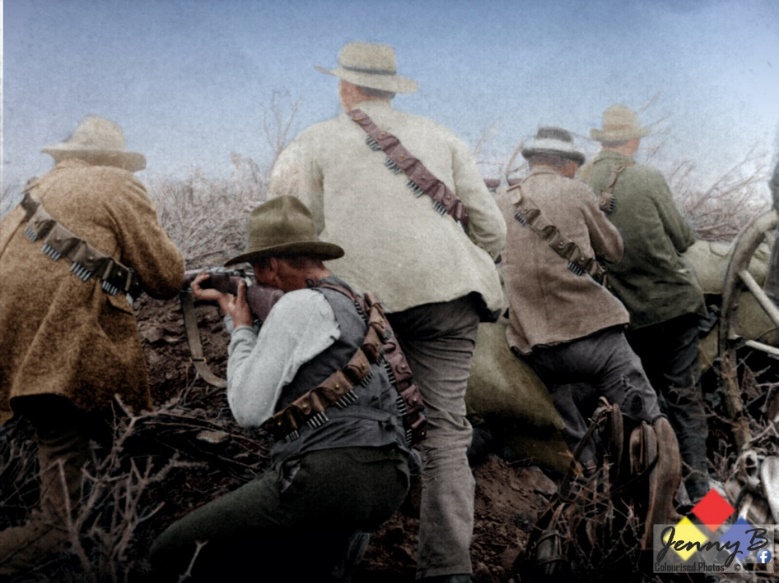
Boers in trenches at Magersfontein
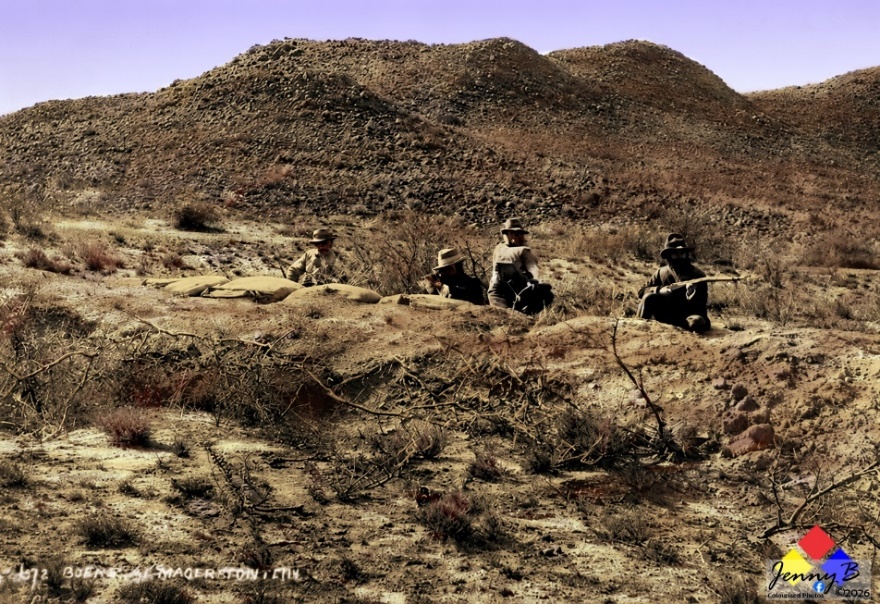
Boers at Magersfontein
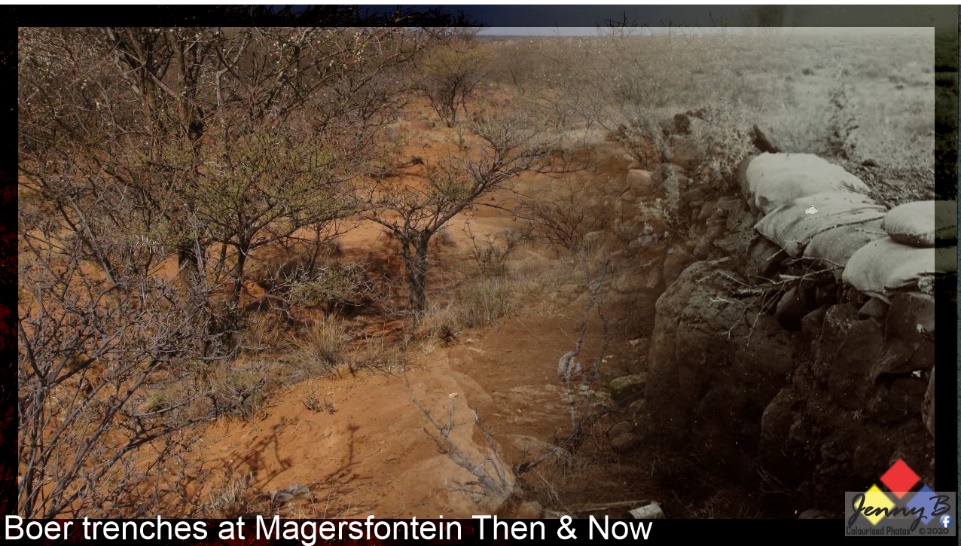
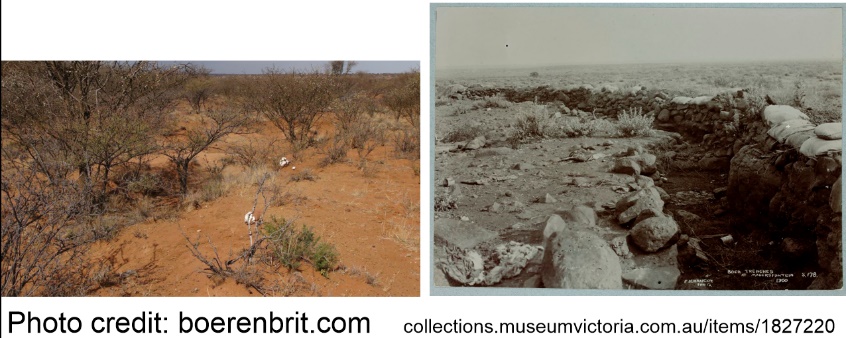
Boer Trenches at Magersfontein Then & Now blend.
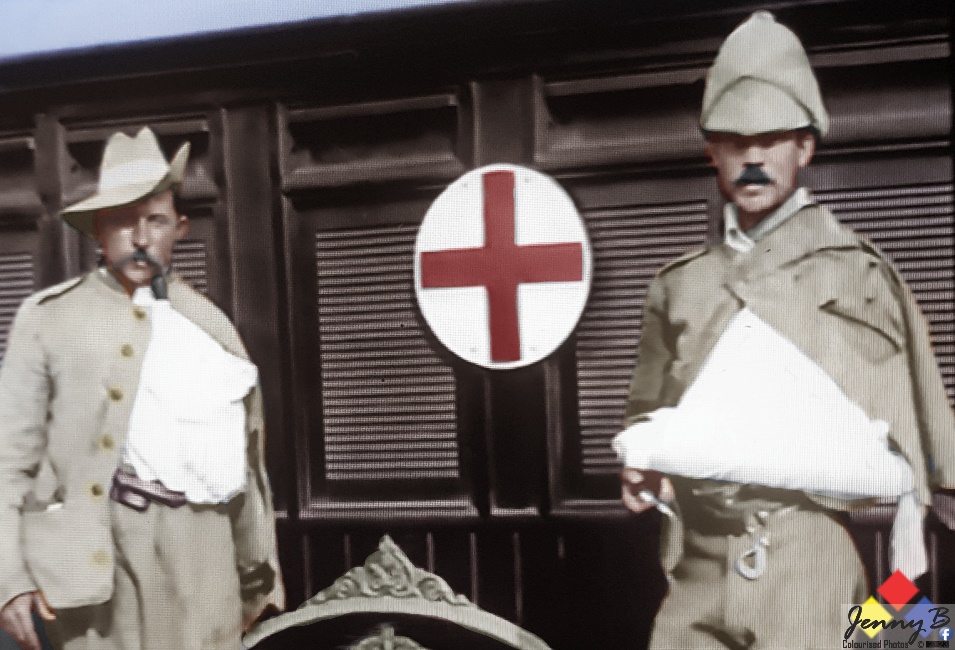
After Magersfontein- hospital train and infirm at Kimberley Station
– Nico Moolman –
CAPTAIN J ALLUM
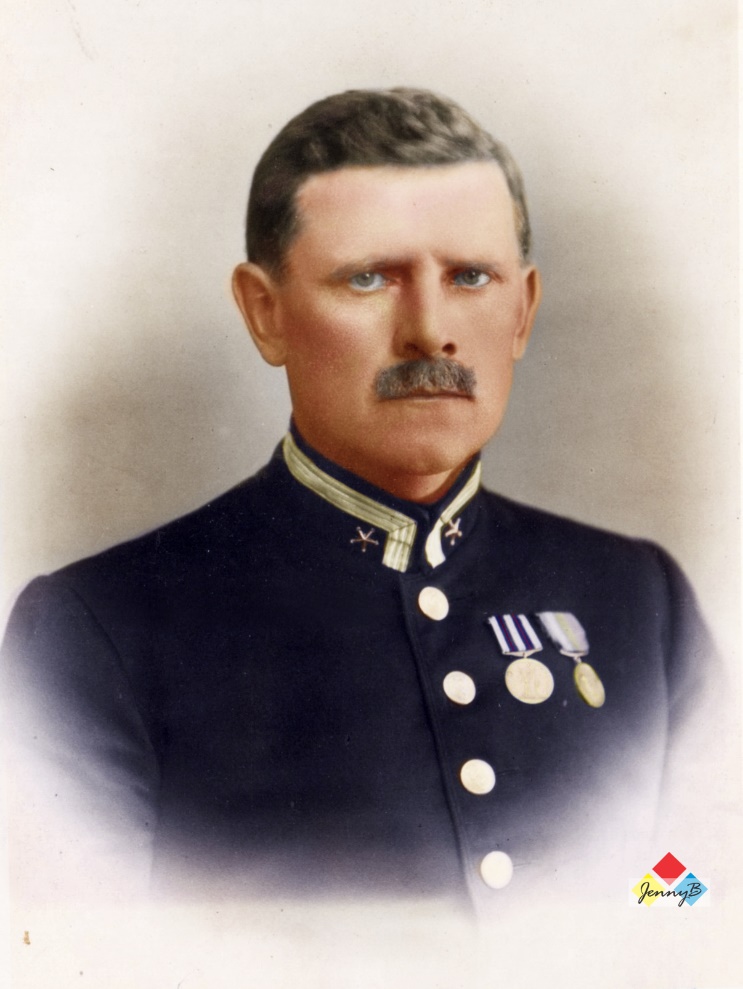
CAPTAIN J ALLUM, A NORWEGIAN MILITARY ATTACHÉ
On 11th December, the Highland Brigade attacked. Captain J Allum, a Norwegian military attaché in South Africa, was in the Scandinavian trenches and tells: “It was a rainy, dark night, the men suffering from the cold, which at this time of the year can be severe. Everything was quiet until around 4.30 in the morning, when a few shots were heard on our right. Then silence for a couple of seconds, perhaps a minute it seemed to us, waiting tensely, as an eternity. It was so silent you could hear your heartbeats. Suddenly heavy firing broke out at the foot of the hill on the Boer right flank, and in the next second the mauser’s began to smatter, the wounded screamed and the English hurrahs and commands sounded. This went on for about 15 minutes, then silence fell anew. The first assault was beaten back with heavy losses. The Boers had let the English, marching in formation, come very close before opening a devastating fire.”
https://www.angloboerwar.com/unit-information/boer-units/179-foreign-vols/1955-scandinavian-vols?showall=1&limitstart=
The Scandinavian Corps
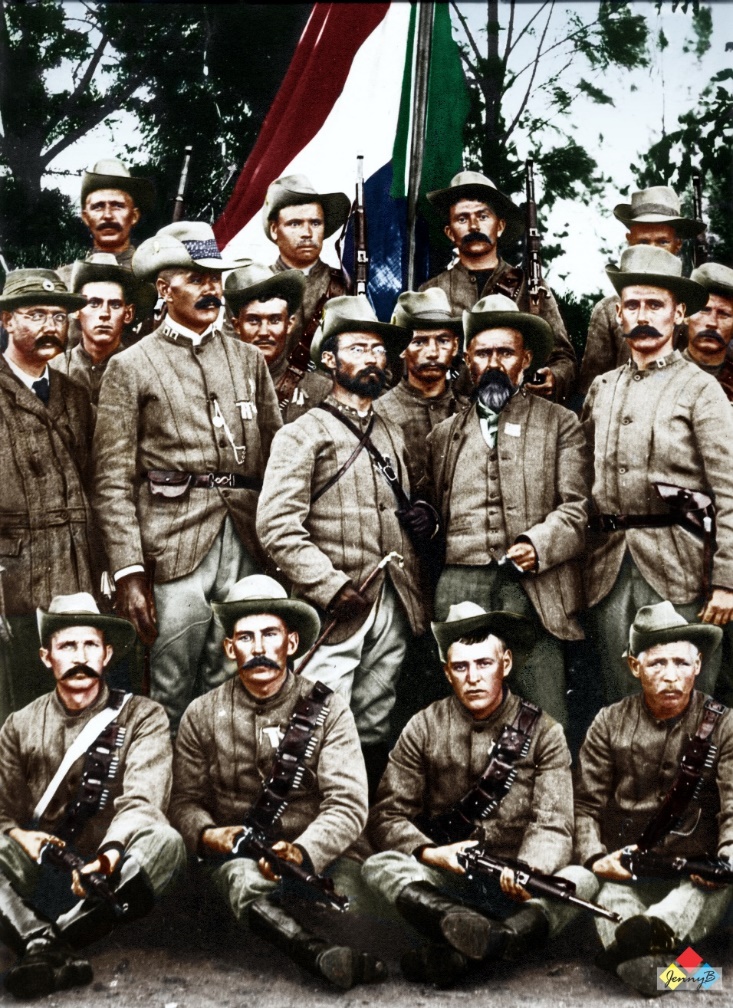
Members of the Scandinavian Corps.
The Scandinavian Corps was founded before the outbreak of hostilities at a meeting in Pretoria. Recruiting was mainly among Scandinavian miners around Johannesburg, but the corps also contained a number of sailors.
The founder was captain Axel Christer Helmfrid Uggla (a railway engineer) from Sweden. On 16th October 1899 about 50 men of the corps paraded for president Krüger before leaving for the front. Johannes Flygare was chosen as Company Commander (Veldkornet). His second in command was fellow Swede (from Sundsvall) Erik Ståhlberg (lieutenant), the only officer who was a trained officer. The corps tasks were mainly sabotage operations, but they also took part in the siege of Mafeking and the battles at Magersfontein and Paardeberg.
Captain Ståhlberg : “After three hours our resistance is broken. Our CO, Captain Flygare falls in the beginning of the battle, shot in the heart. Lieutenant Berentsen is wounded and man after man falls, drilled through by bullets. The Highland Brigade, with the Gordons on the right encircles us. In the final act they fell over us like hungry vultures, and our resistance is over. Carl Albert Olsson from Gothenburg tries to save his brother Edvin, shot in the head by pulling him under cover. He is attacked by two scots whose heads he smashes with the rifle butt, only to fall from several bayonet wounds.
The Swedish nurse Elin Lindblom
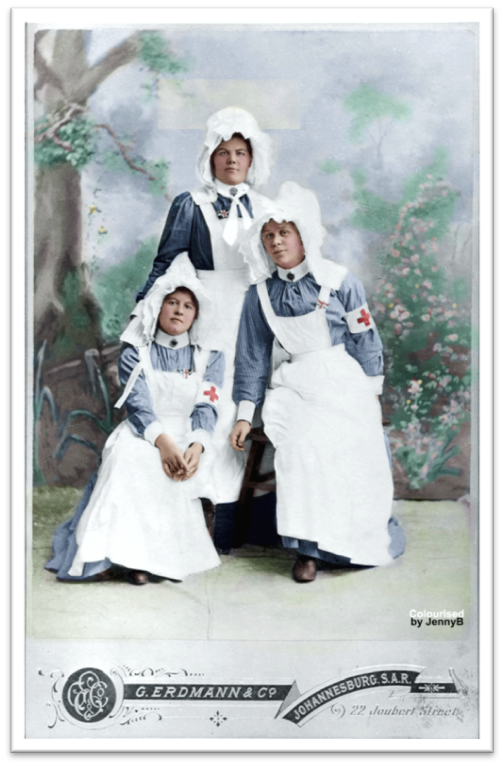
Elin Lindblom, her sister Anna and Hildur Svensson
– www.amazon.com/Vintage-nurses-posing-Lindblom-Svensson-1959/dp/B01MAYPN8I –
The Swedish nurse Elin Lindblom, served with the Scandinavian ambulance with the Boers tells: “Early in the afternoon came the seven men who had succeeded in escaping in the battle at Magersfontein, six unscathed, a Dane, Krohn, shot in the heel. The rest of the 49 Scandinavians who had been sent to the fore post, were dead or wounded and the wounded were prisoners with the English.
Our ambulance men had gone out with the wagon and in the evening they brought some of the wounded Scandinavians with them, among them Appelberg. He was shot in the stomach and died after a few days and he was buried after a post-mortem examination by a German surgeon
Sources: angloboerwar.com
- Lars Ericson, Svenska Frivilliga – Lars Gyllenhaal & Lennart Westberg, Svenskar I Krig,
Karl-Gustav Olin, Afrikafeber – Elin Lindblom, Report (1) regarding the activities of the Scandinavian ambulance during the Anglo-Boer War in 1899-1900, printed in South African Military History Society Journal, vol 4 no 5



My great grandfather, a German Jew, Gustav Lindenberg was wounded in action at the battle of Magersfontein on 11th December 1899, and died the following day from his wounds in the hands of the British forces. He was a member of the Bloemhof Kommando but on the day fought in the Swedish Contingent of The Scandinavian Corps on the side of the Boers. He was the second Jew to have been killed fighting for the Boers during the Anglo Boer War in South Africa.