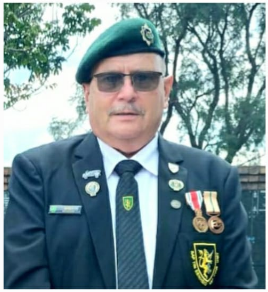
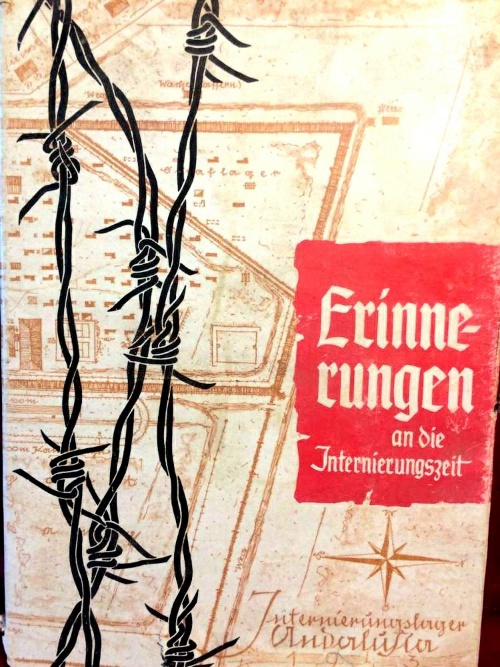
The Forgotten Shadows of World War ll Interment Camps in Windhoek, Andalusia, Ganspan, Koffiefontein & Jagersfontein
Wolfgang Witschas
Abstract
After the Union of South Africa declared war on Germany in September 1939 approximately 5000 German men from South West Africa (SWA) which was allocated by the League of Nations to be administrated as a “C” Mandate under the Union of South Africa, and Germans in South Africa were interned as ‘enemy aliens’. Fears of a destabilisation of South Africa by German ‘fifth columnists’ were nurtured by the fractured social and political environment of the Union. These challenges to domestic security convinced the Smuts government that the internment of German men suspected of subversion was urgent and justified.
The internment of German civilian internees from SWA and South Africa has been briefly mentioned in some studies, but this article seeks to provide a more detailed analysis of their internment against the background of wartime South Africa.
Key Words
Union of South Africa
South West Africa (SWA)
Germans residing in the Union and SWA
Internment Camps
Klein Danzig : Windhoek
Andalusia
Ganspan,
Koffiefontein
Jagersfontein
Introduction
Germans in South Africa and in South West Africa (SWA) (present Namibia) had enthusiastically greeted Hitler’s rise to power as the beginning of a new dawn for their mother country after a humiliating defeat in WW l. Approximately 33,000 residents with a German background lived in the Union and SWA. While there was a broad consensus amongst them that Hitler was inducting Germany’s rebirth, the haughty claim of a younger generation that the Nazi movement was the sole representative of the German interests in southern Africa, clashed with older conservative traditions. Monarchist nostalgia was still prevalent in sections of the German community.
The modest numbers of card-carrying members of the Nazi party in the Union reflected the integration of Germans into socio-economic networks dominated by white English-speakers, which mitigated against noisy declarations of support for Hitler. As nationalistic and anti-Semitic as many Germans in South Africa may have been, they were not as moved by the prospect of colonial revision that fired up most Germans in mandate of SWA. Many insisted that the validation of a German identity in South Africa had a longer history that should not be usurped by National Socialism. The Union government’s resolute restriction of Nazi activities in the former German colony (SWA) also served as a warning to overeager admirers of Hitler.
The outbreak of war plunged naturalised and non-naturalised Germans into a precarious situation. Suspicions about their political allegiances had been mounting for some time and reverberated with memories of the internment of Germans during WW I.
English-speaking whites and Empire loyalists in all population groups became increasingly sensitive to news or rumours of underground Nazi activities in the Union. Attempts at blurring markers of German identity to evade stigmatisation were made difficult. The government put a stop to the naturalisation of Germans. Applications for changes of German names were no longer accepted. German residents who thought of themselves as respectable members of white society, such as the Protestant missionaries who could look back on an extensive tradition of work among indigenous communities, were suspected of subversive activities. The acting minister of Native Affairs publicly referred to ‘500 Nazi missionaries’ who would need close monitoring.
With the numbers of internees steadily rising, early calculations of a total of 1000 internees soon turned out to be premature. The Union government rejected a request submitted by the British government to South Africa, Canada, Newfoundland, and Australia to accommodate transports of civilian internees from the United Kingdom. By the end of 1940, the minister of the interior, Harry Lawrence, announced that 4000 persons had been interned. After the end of the war, the official statistics listed a total of 6636 civilian internees. Of these, 4069 were non-naturalised ‘Reich Germans, 17 833 German Union nationals (158 of whom born in South Africa), 1466 Italians, 12 British subjects and 256 other nationals.
German men were accommodated in, and shifted between, six camps: Baviaanspoort (near Cullinan) and Leeuwkop (Krugersdorp) in the Transvaal, Ganspan and Andalusia on the Transvaal-Cape border, Koffiefontein and Jagersfontein in the Orange Free State (OFS) Female German residents in South Africa and SWA were not interned in South Africa. Those females suspected of subversive activities were under house and farrm arrest in SWA.
Historical Background
After the Union of South Africa declared war on Nazi Germany on 04 September 1939 approximately 5000 German men were interned as ‘enemy aliens’. Fears of a destabilisation of South Africa by German ‘fifth columnists’ were nurtured by the fractured social and political environment of the Union and SWA wich was administered as a “C” mandate under the League of Nations charter, by South Africa.
A bitter sentiment though existed even into the 1960s/70s towards those Germans/their families that acted as informers for the South African authorities and denounced fellow Germans. This was done to settle old scores, secure their freedom, receive privileges in the ration chain or a combination of all. Some were German Jews.
Internment of German males in Windhoek, SWA
Background
The internment of the German minority in SWA during World War II, the so called ‘Kamp-Zeit’, has received little attention in historic writing. However, the ‘Kamp-Zeit’ played a crucial role in the constitution of a distinct “Südwester identity”. German speaking “Southwesters” remember this time as “stolen lifetime”, as martyrdom for the fatherland, but also as a time of great companionship. The national-socialist tendencies of the time tend to be overlooked and later forgotten.
The internment camp ‘Klein-Danzig’ in Windhoek was situated at the old German Radio Station, to the west of Windhoek.
The camp, colloquially and perhaps sarcastically named ‘Hotel Smuts’, ‘Sanatorium’ or ‘Klein Danzig’ by its inmates, quickly became overcrowded.
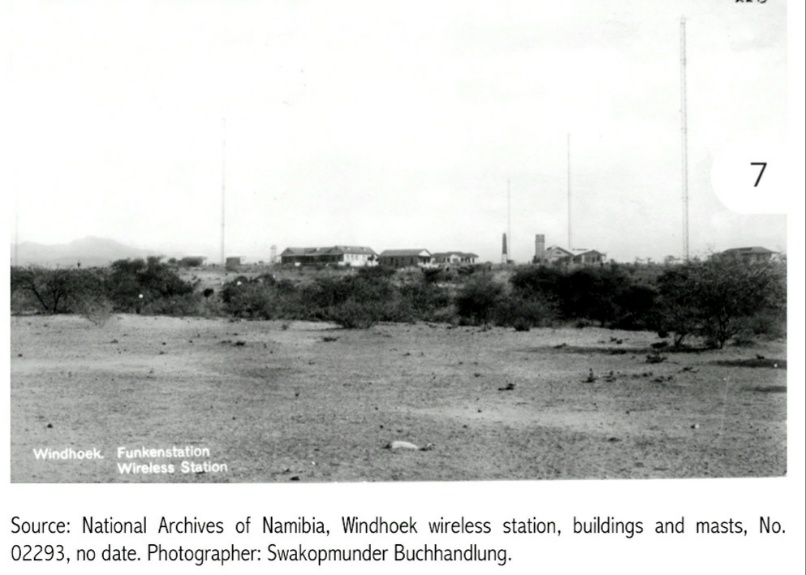 Wireless station still in operation before 1915
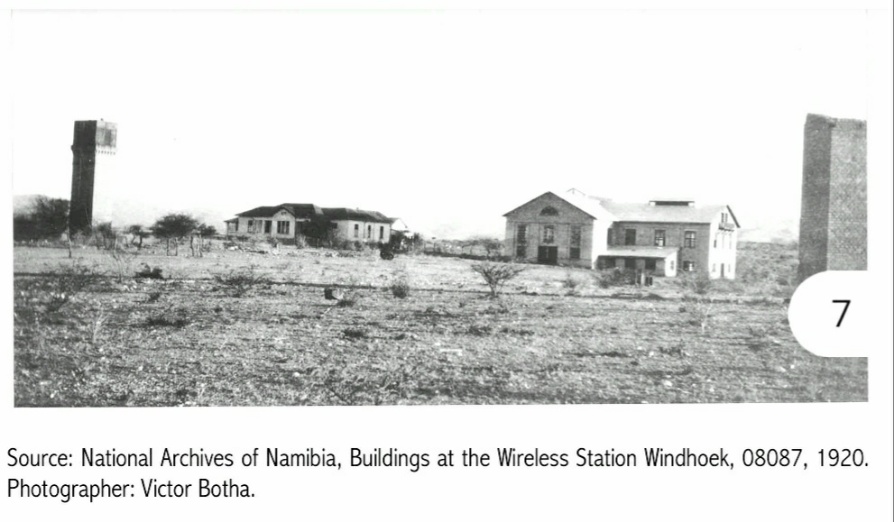
Wireless station after 1915
The camp was in existence during the first years of the Second World War between 1939 and 1941. At the end of 1939, the number of internees grew to 77. At the end of March 1940, there were 96. Its overall capacity rose from 70 up to 200 men.
The Windhoek camp was not able to cope with such numbers and furthermore the internees’ disobedience and insubordination which finally led to the shut-down of the camp in 1941. In a cloak and dagger operation the first internees were transferred to South Africa by rail on 28 June 1940. They were sent to the Andalusia camp close to Jan Kempdorp, which was still under construction. Windhoek served as a transition camp until February 1941.
Afrikaner Nationalism
The attempts made by Afrikaner nationalists to undermine the war effort of the Union reverberated with anti-Semitic and anti-British Nazi propaganda. Apprehensions about the disruptive effects of Nazi activities among Afrikaners and German residents also blended with the perpetual fears of the white minority about losing control of the black population. These challenges to domestic security convinced the Smuts government that the internment of German men suspected of subversion was urgent and justified.
Internment Camps in South Africa
At the beginning of 1940, only Baviaanspoort and Leeuwkop existed where German civilians, besides prisoners of other nationalities, were held. Most internees in Baviaanspoort were South African Germans.
In June 1940, the opening of three new camps – Andalusia, Ganspan, and Koffiefontein were announced.
The Union Defence Force (UDF) built large Internment Camps in the town of Andalusia and Ganspan in the Northern Cape, Koffefontein and Jagersfontein in the Orange Freestate (OFS).
Background of Andalusia, Ganspan, Koffiefontein and Jagersfontein
The town of “Andalusia” in the Northern Cape of South Africa, was initially established as a farm called Andalusia in 1938, named after the Andalusian Riesenesel, a breed of donkey used for constructing irrigation canals in the Vaalharts Irrigation Scheme.
During World War II, Andalusia served as an internment camp for German nationals from South West Africa (SWA) (present Namibia), the Union of South Africa and Italian citizens residing in the Union. The camp was holding around 2,000 internees from 1940 to 1945.
Andalusia was renamed Jan Kempdorp in 1956, honouring General Jan Kemp, a notable figure in the Second Anglo-Boer War.
During the tumultuous times of the Second World War, South Africa, like many nations, was haunted by the spectre of potential fifth-column threats from within. The South African government, grappling with its allegiance to the Allies and the looming danger, instituted severe measures against those deemed perilous. One such action was the creation of internment camps, and among the most infamous was the Andalusia Internment Camp situated in present day Jan Kempdorp.
A Backdrop to the Crisis.
At the outbreak of the Second World War, on 01 September 1939, a wave of paranoia enveloped the South African government of General Jan Smuts who had decided to align itself to the Allied cause. Fearful of German-speaking individuals as potential enemies, many were arrested, regardless of their personal or political beliefs. Their only crime, in many cases, was simply being a German national, residing in SWA or South Africa, East Africa or Rhodesia. The initial collection point for the German ‘undesirables’ in South West Africa, specifically in Windhoek was the old German Radio Station, to the west of Windhoek.
The Birth of Andalusia Camp
With the Windhoek facility strained to its limits, a new location was sought. The answer was found on a farm named Andalusia. Interestingly, Jan Kempdorp, where the camp was located, did not exist as a town during this period. The farm’s name would thus lend its identity to one of the darkest chapters of wartime South Africa.
By June 1940, the first group from Windhoek arrived. The camp eventually grew to house approximately 2000 internees. And while the war might have raged on for six years, its aftermath was felt even longer at Andalusia, with some prisoners remaining there for ten months after the war’s conclusion in 1945.
Life in Andalusia: A Test of Spirit
Andalusia was no holiday retreat. The mental and emotional anguish of internment was profound. Reports of suicides and general despondency among inmates were widespread. The monotonous grind of daily life, combined with the uncertainty of the future, took a heavy toll on many souls. Yet, amid this gloom, a ray of resilience shone. Many internees, choosing to combat the ennui, sought solace in education. Classes and courses sprang up, taught by fellow inmates. Remarkably, some of these teachers were university professors, showcasing the absurdity of their internment based purely on nationality.
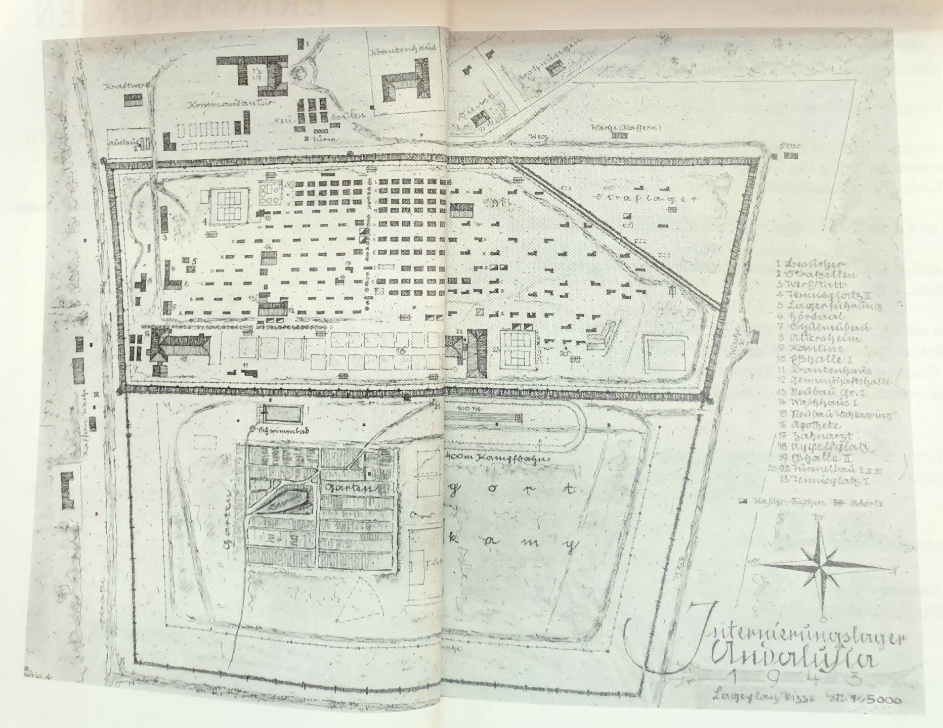
Map of the Andalusia camp layout
The Andalusia Camp Cemetery in Jan Kempdorp
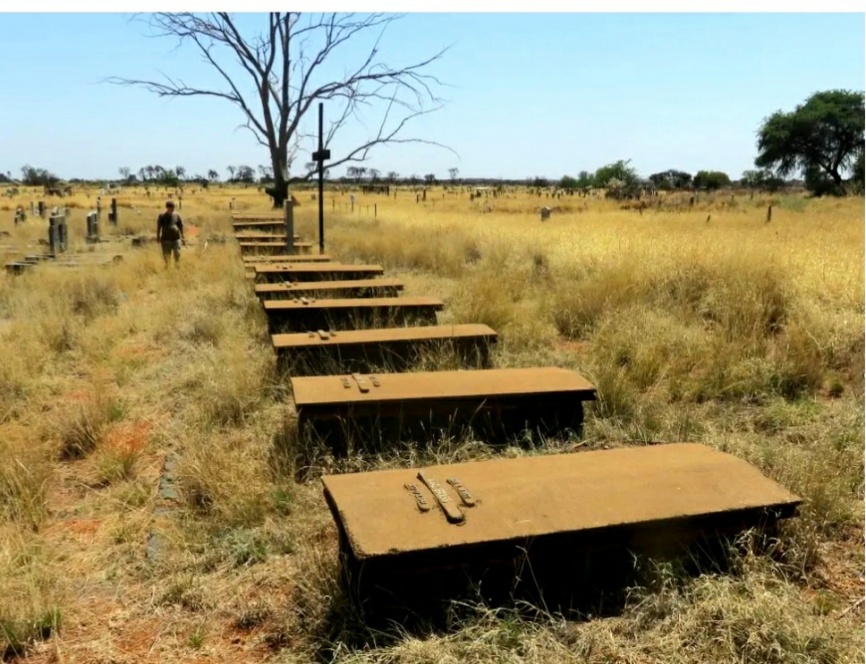
The quiet town of Jan Kempdorp, nestled in the heart of South Africa’s Northern Cape province, holds a piece of history that not many are aware of. This historical fragment speaks of war, displacement, and human endurance. The Andalusia Camp Cemetery stands as a testament to a group of Germans who were held in internment during a tumultuous period in world history. Today, visitors to the Jan Kempdorp cemetery can find graves of these Germans, solemn reminders of the times gone by.
The early 20th century witnessed global upheavals and changes. World War I and II reshaped political landscapes and left indelible marks on many nations. South Africa, far from the primary theatres of the world wars, still played a significant role in these events. The country held several internment camps for enemy nationals, and one such camp was the Andalusia Internment Camp.
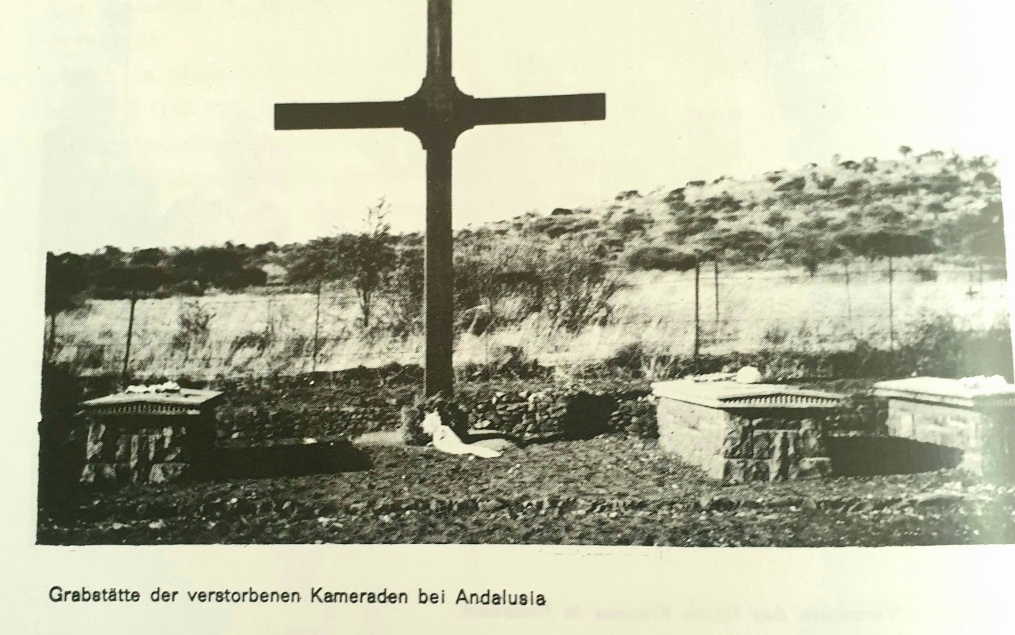
Upon entering the Jan Kempdorp cemetery, one’s eyes are instantly drawn to a line of graves, distinct from the others. These graves, marked with meticulous care, belong to the Germans who died at the Andalusia Internment Camp. Their final resting place has been preserved and maintained with respect, ensuring that their stories do not fade away.
At the heart of this row lies a poignant memorial cross, etched with the names of the Germans who lost their lives at the camp. This cross serves as a focal point for the cemetery, a silent monument representing memories and stories of those who are laid to rest there. At least 30 Germans are buried in the Jan Kempdorp cemetery, each with their unique tale. While the reasons for their internment varied, they shared the common experience of living in confinement, far from their homeland, during a period marked by global unrest.
Though details about individual lives might be sparse, the presence of their graves in Jan Kempdorp hints at the diverse and intricate tapestry of histories that this small town encompasses. For many of these Germans, Andalusia Camp would have been a world away from anything familiar. The South African landscape, culture, and climate would have been strikingly different from what they knew.
The Andalusia Camp Cemetery in Jan Kempdorp stands as a poignant reminder of the intricate and interconnected nature of world history. Even in places that seem distant from the primary events of world wars, traces of these monumental conflicts can be found. The graves and the memorial cross at Jan Kempdorp serve as silent witnesses to the past, urging us to remember and reflect upon the stories they represent. They invite visitors to take a moment, pay their respects, and ponder on the myriad ways in which the threads of history intertwine.
Ganspan Internment Camp
The Ganspan internment camp situated near Kimberley was one of several civilian internment camps established in South Africa during World War II to hold German-speaking residents of South West Africa (modern-day Namibia) and other perceived enemy aliens. Located near Kimberley, the Ganspan camp was established to hold 180 South African internees and featured an escape tunnel dug by hand, with digging occurring while music was played to conceal the activity. The camps, along with
Andalusia, Baviaanspoort, and Koffiefontein, were temporary facilities, and the internees were eventually released after the war.
Key Details about Ganspan:
• Internees:
It held approximately 180 South African
internees, who were German-speaking
individuals from South West Africa (SWA)
• Location:
The camp was situated near Kimberley in the Northern Cape South Africa.
• Escape:
A notable feature of Ganspan was an escape tunnel, dug by hand using mace scoops and transporting sand back in
buckets to the music room.
• Purpose:
The camp was part of a wider network of internment camps established by the South African government during World War II to detain those suspected of Nazi sympathies or those whose presence was
deemed a security risk.
• Closure:
Most of the internees were released in 1946, with some waiting until after the war to be reunited with their families.
Koffiefontein Internment Camp
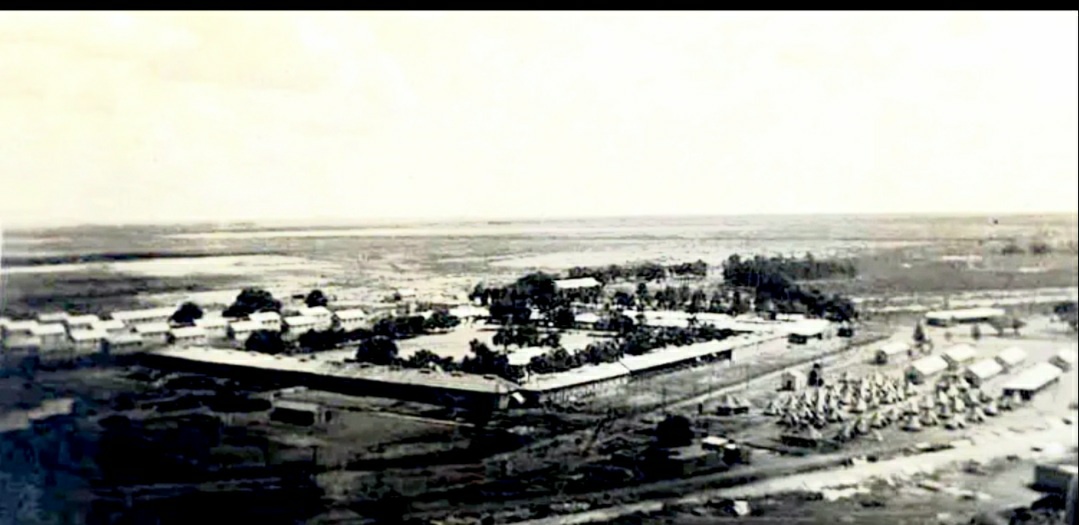
The Union Defence Force built a large Internment Camp in the Orange Freestate (OFS) town of Koffiefontein. The Camp held 2 000 Italian Prisoners of War (POW’s), a couple of German internees and approximately 800 South African Internees who had been identified as Pro-Nazi sympathizers.
Among the more interesting South African internees held in this Camp was Balthazar Johannes “B.J.” Vorster who later became the Prime Minister of South Africa from 1966 to 1978 and the fourth State President of South Africa from 1978 to 1979. Another interesting internee was Frans Christiaan Erasmus who later became a South African National Party Politician and Minister of Defence from June 1948 to 1959 before being appointed as Minister of Justice, a post he held from 1959 to August 1961.
The remains of murals that were painted by the Italian POWs can still be seen in the town as well as the barracks where they lived.
Badges:
Italian Internees wore barbwire badges, which were made of white metal, copper, or had a pin back, and are now collectible items
History:
Koffiefontein has a rich history, including involvement in the Second Anglo-Boer War, during which blockhouses were erected by the British in 1900.
The camp’s legacy serves as a reminder of the complex history of South Africa during World War II and the impact of global conflicts on local communities.
Koffiefontein Internment Camp
Jagersfontein Internment Camp
The Jagersfontein Internment Camp in the Orange Freestate (OFS) in South Africa was a World War II internment camp , specifically designed to hold enemy aliens and prisoners of war. Here are some key points about the camps
• Location of Internment:
While not a camp, Jagersfontein became
the site of an internment camp during
WWII, housing Italian, German, and pro
-Nazi South Africans
• Incarceration:
The camp held more than 2,000 soldiers
Epilogue
A Long Road to Freedom
The end of the war did not bring immediate relief. An agonizing ten-month period lapsed before the majority of internees were released. This delay only added to the heartbreak and frustration felt by many.
Visitors, though allowed, were subjected to stringent rules. Conversations took place through a chicken-wire fence, under the ever-watchful eyes of guards. Tragically, young children were barred from these visits, tearing families further apart.
The Andalusia, Ganspan, Koffiefontein, Jagersfonteinand Internment Camps stand as a testament to the far-reaching consequences of war – where innocent individuals, caught in the crossfire of global conflict, were subjected to years of unwarranted confinement. The memory of these camps serve as a stark reminder of the price paid not just on battlefields but in the unseen corners of wartime paranoia.
Today, Jan Kempdorp is a small agricultural town in South Africa’s Northern Cape province with a population of approximately 24,220 people.
Postscript
The compiler’s main focus in this article is based on the historical events that unfolded regarding the internment of mainly German subjects that resided in SWA and South Africa when WW II stared. Although the compiler could mention many personal accounts of many former internees of how they experienced the five to six years of being interned, it was decided to stick to historical facts.
On a personal account compiler’s family were directly affected by these events:
The grandfather of compiler, Reinhardt Seebach, who was sent to the then German colony of Deutsch Südwest Afrika (DSWA) in 1902 as a young “Schutztruppen” soldier. He decided to stay on in SWA even after WW l. When WW ll started in September 1939 he was interned first in Windhoek (Klein Danzig) and in 1940 sent to Andalusia.
In 1941 my father, Herbert Ernst Witschas, was taken prisoner when the German merchant ship he served on was captured by the allies off Madagascar. They were taken to Durban and sent to Baviaanspoort internment camp, but a short while later transferred to Andalusia. It was in Andalusia that he met his “future father in Law, my grandfather” from my mother’s side.
In 1944 my father was transferred to the Koffiefontein camp, were he was interned, sent to the Jagersfontein camp until his release in 1946. He decided to stay in South Africa and went to Johannesburg were he got work. In 1948 my father went to Windhoek for work he had applied for.
After WW ll ended in Europe in May 1945, my grandfather was still interned in Andalusia but in 1946 he was released an sent back to Windhoek, SWA.
It was in Windhoek that my father met my mother, the daughter of Reinhardt Seebach and they were married in 1949. A historical event, the interment of Germans, from various diffent circumstances which unknowingly brought them together.
References:
https://www.tandfonline.com/doi/full/10.1080/02582473.2024.2367246#d1e105
https://countrytravel.co
za/northern_cape/jan_kempdorp/places/internment_camp.html
Face Book Group
The Anglo Boer War ( South African War)
1899 – 1902
- Wolfgang Witschas