Nongqai Vol 17 No 4A
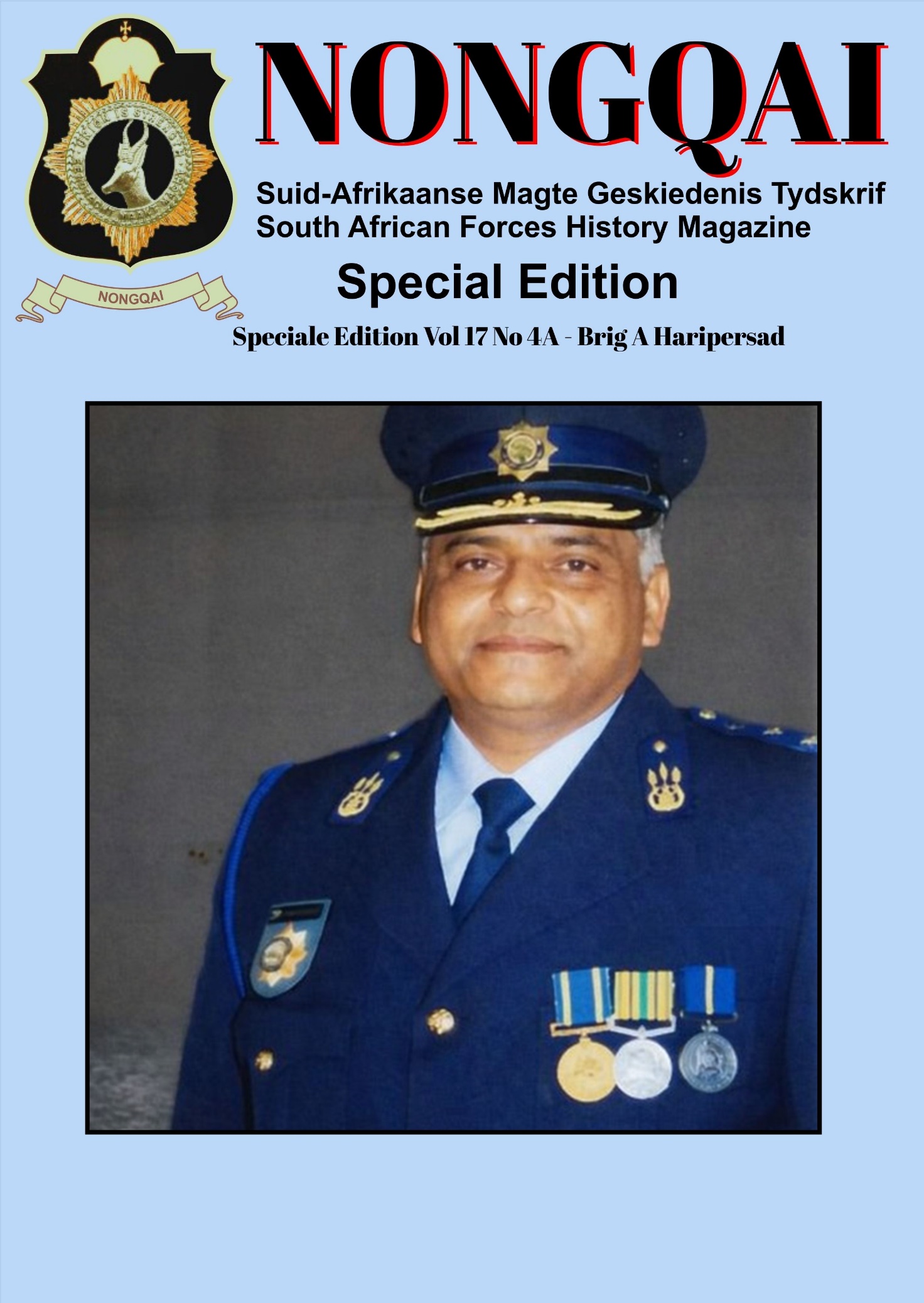
SOUTH AFRICAN POLICE
BRIGADIER ANESH HARIPERSAD
A LIFE OF COURAGE, LEADERSHIP AND SERVICE
Nongqai Vol 17 No 4A
Col Logan Govender
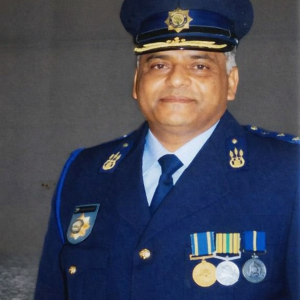
Brigadier Anesh Haripersad
Abstract
This work provides a respectful and concise account of Brigadier Anesh Haripersad’s life and long career in the South African Police. It highlights his early influences, his dedication to public service, and the values shaped by his family and upbringing. The narrative follows his progression through various policing roles, showing his commitment, leadership, and calm approach to difficult situations. A major focus is his courageous mediation during the 1991 Malagazi conflict, where he chose peaceful negotiation over force. His achievements, medals, and lasting impact on colleagues and communities are recognised. This summary honours a man whose service reflected integrity, compassion, and courage.
Keywords
Brigadier Anesh Haripersad,
South African Police,
South African Police Service,
policing history,
leadership,
conflict resolution,
public service,
Malagazi conflict,
career biography, community peace,
dedication
FOREWORD
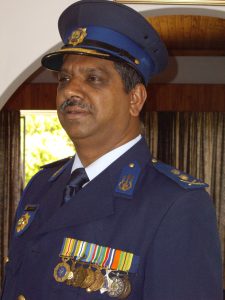
Major General (Professor) George D Govender – [GDG]
BRIGADIER ANESH HARIPERSAD
It is indeed a pleasure to provide a Foreword for an esteemed colleague, who is well known to me as a friend and colleague for over five decades. Brigadier ANESH HARIPERSAD who is well known to friends and colleagues as Harry served the South African Police (SAPS) meritoriously, for over three decades, thus earning himself the accolade by the media as ‘Hero Cop’ and medals for 10, 20 and 30 years for faithful service and two commemorative medals, one for 75years and another for 10years. Brigadier Harry was born in 1951, in Mayville, Kwa Zulu Natal, son of the late Constable Haripersad Bhaul. About four decades ago, he married his dear wife, Kay. They have three children, two daughters and a son. He had a remarkable journey in the SAPS as outlined by the author of this publication. During 1973, I had the privilege to meet Brigadier Harry for the first time on basic training. Since the Wentworth basic training college could only take thirty-six (36) students, and the call up was for 37 students, I was chosen as the youngest student to return to the police station and come back for basic training in the following. Brigadier Haripersad and I again met in 1984, on the candidate officers’ course for non-white officers in Benoni. We became close friends together with the late Warrant officer, Thiluk Singh. We travelled together from Benoni during weekends, spending time in Durban and returning on Sunday evening. We travelled mainly with the new Mazda vehicle belonging to Brigadier Harry. We shared very interesting music and conversations during our travels. Brigadier Harripersad stood out to me as a very experienced and learned police officer. Whenever we engaged in debates on policing and other related matters, he would share his practical wisdom and his time he served in Johannesburg. At Benoni we shared some very entertaining moments together with other colleagues. When we had the opportunity to mingle during personal and social gatherings to know each of our candidate officers on a more personal and social level, as friends than colleagues, we took advantage of the opportunity. Upon completion of the candidate officers’ course, we were promoted, and I was appointed as Branch Commander of the Detective Service at Isipingo, and he was appointed at Crime Intelligence in Durban. He retired from the SA Police Service during 2007.
Major General (Ret) Doraval Govender, DLitt et Phil, SOE, F.I.S (SA).
Professor in Criminal Justice Studies, University of South Africa
SOUTH AFRICAN POLICE
BRIGADIER ANESH HARIPERSAD
A LIFE OF COURAGE, LEADERSHIP AND SERVICE
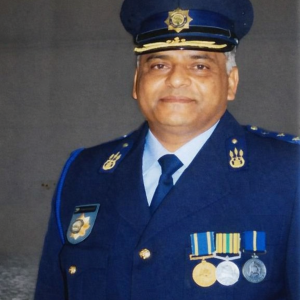
Brigadier Anesh Haripersad
Authored, researched, compiled, edited, and submitted for publication by Logan Govender [LG], drawing on information provided by Brigadier Haripersad, as well as various sources, police personnel, and other contributors.
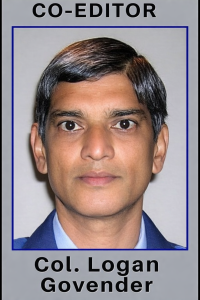
[LG]
Author’s Note
“The Nation which forgets its defenders will itself be forgotten” – Calvin Coolidge
This work is inspired and encouraged by Brigadier Bala Naidoo, a dear friend and former colleague, who urged me to acknowledge and honour Brigadier Haripersad, someone he closely worked with and held in high regard as both a respected officer and a trusted friend.
The account of Brigadier Anesh Haripersad’s life and career is written with deep respect for a man whose service reflects dedication, courage and integrity. Born in 1951 in Mayville, Durban, Brigadier Haripersad grew up in a time and place very different from the present day. His early life was shaped by the strong influence of his father, a police member whose commitment to duty left a lasting impression on him. It is clear that from a young age, values such as discipline, respect and service were firmly instilled in his character.
Following in his father’s footsteps, he joined the South African Police in 1973. Like many young recruits, he faced the demands of rigorous training and the challenges of adapting to a structured and disciplined environment. However, he quickly proved himself to be determined and capable, laying the foundation for a long and distinguished career.
Throughout his years of service, Brigadier Haripersad gained experience in a variety of roles, from visible policing to crime intelligence and thereafter senior leadership positions. His work took him to different parts of the country, exposing him to complex and often volatile situations. Yet, what stands out most is not only his ability to manage these challenges, but the manner in which he did so, with calmness, fairness and sound judgement.
One of the most notable moments in his career came during the conflict in Malagazi in 1991. Faced with a highly dangerous and tense situation, he chose negotiation over force, bringing opposing groups together and guiding them towards peace. This moment highlights a defining quality of his leadership, the belief that understanding and communication can resolve even the most difficult conflicts.
Beyond his operational duties, Brigadier Haripersad also contributed to the broader police community, including involvement in sport and mentorship. His leadership extended beyond the workplace, fostering teamwork and unity among colleagues.
After more than three decades of service, his retirement marked the conclusion of a remarkable career. Yet his legacy continues through the respect he has earned, the lives he has influenced, and the example he has set for others. He is remembered not only as a capable officer, but as a humble and principled individual who treated others with dignity.
This narrative aims to honour Brigadier Haripersad’s journey and preserve the story of a man whose life demonstrates the value of commitment, courage and compassion in public service.
[LG]
Brigadier Anesh Haripersad was born on 18th October 1951 in Mayville, Durban. At the time of his birth, the area looked very different from today. The place where he was born now lies along the busy Jan Smuts Highway, but in the day, it was a quieter community where many families lived and worked alongside each other peacefully.
Policing was already part of the Haripersad family’s heritage. His father, Sergeant Haripersad Bhaul, served as a police officer stationed at Sydenham Police Station in Durban. Bhaul dedicated 18 years of his life to the South African Police before he sadly passed away. His commitment to service left a lasting impression on young Anesh.
Growing up with a father in the police force meant that discipline, respect, and a strong sense of duty were part of everyday life. These early influences helped shape his character and would later guide him in his own distinguished career in policing.
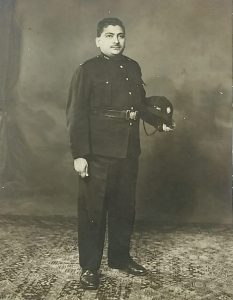
Brigadier Anesh Haripersad’s father, Constable Haripersad Bhaul, pictured in uniform
Anesh Haripersad joined the South African Police (SAP) on 5th February 1973 at Durban Central in Smith Street. He was then posted to the SAP station in Kliptown. At the time, he was a young man who wanted to follow his father’s path and serve his country with pride and commitment, and the distant posting did not discourage him.
He was given a third-class train ticket and told to take a passenger train from Durban Central Station the same evening to Park Station in Johannesburg. Sergeant Dauwan picked him up and drove him to the station. Sergeant Dewan spoke fluent Afrikaans. The Station Commander, a Major, assigned him to do administrative work until he was called up for basic police training. Other Indian students at the station were Scottisville Nayager; Singh and Govender. During July 1973, he travelled back to Durban by train.
He began his basic police training at the South African Police, Training College in Wentworth, Durban. Haripersad was a member of Troop 19 of 1973, where he underwent rigorous police training. The training programme was demanding and required physical endurance, mental discipline, and a strong commitment to learning the responsibilities of law enforcement.
During this time, Haripersad developed the skills and discipline that would become the foundation of his long career. Like many young recruits, he faced the challenges of adapting to the strict structure and expectations of police training. However, he quickly demonstrated determination and leadership potential.
SOUTH AFRICAN POLICE
TRAINING COLLEGE
WENTWORTH, DURBAN
PLATOON 19 / 1973
JULY – DECEMBER
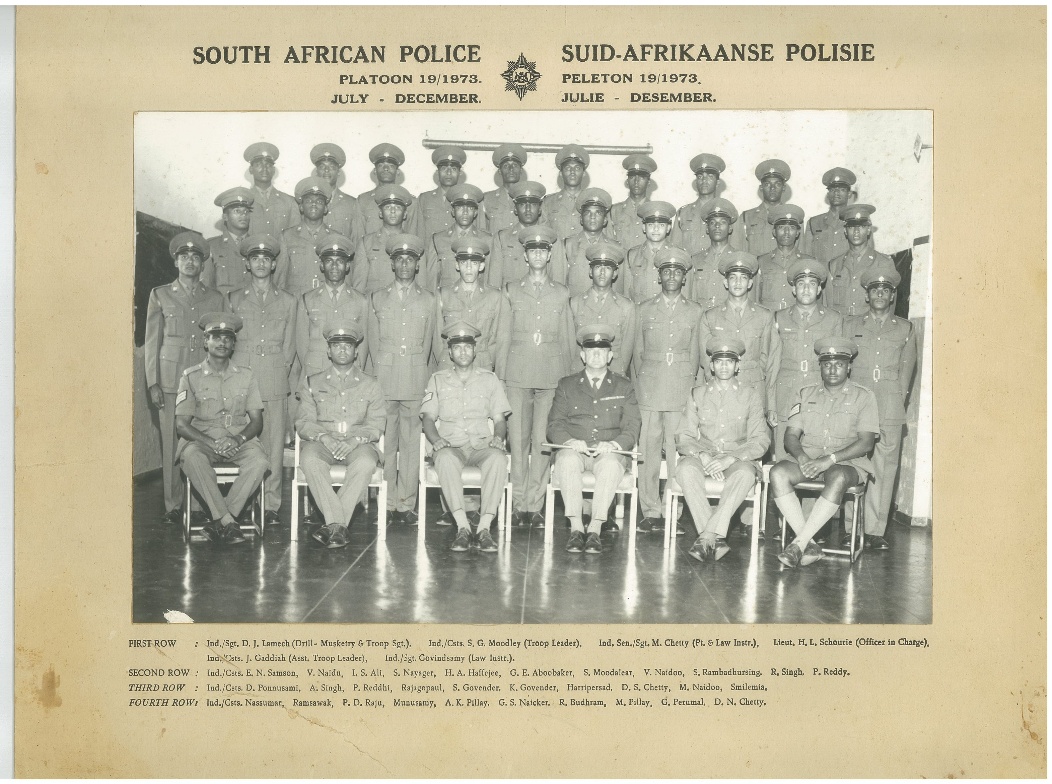
L-R, 3rd row, 7th A Haripersad
(Courtesy Warrant Officer Anand K Pillay)
After successfully completing his training, he was posted to John Vorster Square. His Commanding Officer was Colonel PJ Coetzee, General, former Commissioner of the South African Police.
These early postings exposed him to complex policing environments. Working in intelligence required patience, observation, and the ability to understand community tensions and criminal activity.
In June 1975, Haripersad was transferred to Protea in the Soweto West District, where he spent three important years of his career.
His time in Soweto would prove to be a turning point. During this period, he developed valuable experience in dealing with community disputes and conflict situations. Rather than relying only on force or authority, Haripersad learned the importance of communication, negotiation, and understanding the root causes of conflict.
It was here that he began developing the skills that would later define him as an exceptional conflict resolver and peace broker. These abilities would place him ahead of many of his contemporaries in handling sensitive community disputes.
In December,1978, Haripersad was transferred back to Durban, where he once again was posted to the Crime Intelligence Unit in Fischer Street.
Haripersad performed his duties with dedication and competence. His strong work ethic and leadership qualities soon became widely recognised within the police service.
CANDIDATE OFFICER’S COURSE
During July 1984, Haripersad was selected to attend a Candidate Officer’s Course at the South African Police, Mechanical School in Benoni. If he passed, he would be promoted to the rank of Lieutenant in the South African Police.
The course lasted three months and was completed in December 1984. The graduation ceremony for the National Diploma was also later held in December 1984 at the Mechanical School in Benoni, Gauteng.
During the course, the officers were taught many subjects. These included police administration, financial management, stores, and vehicle maintenance. They also learned about different boards of enquiry, such as fitness to remain in the Force, medical boards, injury boards, and vehicle boards. Other subjects included leadership skills, public speaking, crime investigation, evidence handling, and departmental trials. The aim was to prepare them to work as commissioned officers. The course was both challenging and rewarding.
From 1981, this diploma became a requirement for all South African Police members, along with other conditions. These included:
- holding the rank of Warrant Officer;
- having a required number of years of service;
- passing a psychometric test;
- and receiving a recommendation from the District Commandant.
Some of the Candidates from Durban travelled by train to Benoni. From the railway station, they were taken by police vehicles to the Mechanical School the day before the course began.
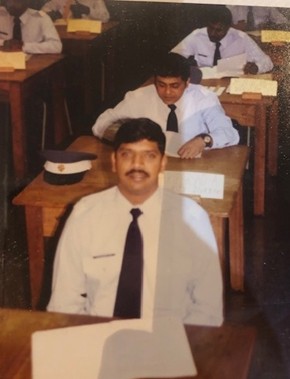
Candidate Officers attentive in the lecture hall
Seated up front, George Govender;
Behind, Anesh Haripersad
(Source – [GDG])
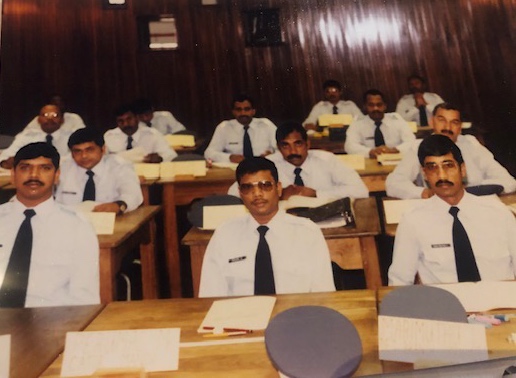
Attentive Candidate Officers at the lecture hall
Front row, from left to right, George Govender; M Perumal; Reggie Marimuthu
Second row, from left to right, Anesh Haripersad; Bala Naidoo; Petersen
Third row, from left to right, Mampane; Murugas; Johnny Govender; Gibson
Fourth row, from left to right, Mampanga; Tiluk Singh; Christie Marimuthu; Wilson
(Source – [GDG])
(Source of photograph and names [DG])
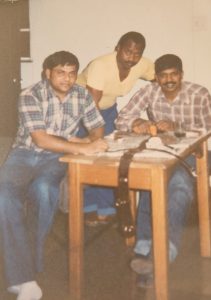
Candidate Officers applying the finish “spit and polish” to their Sam Brownes the night before their graduation parade
(Source of photograph and names [GDG])
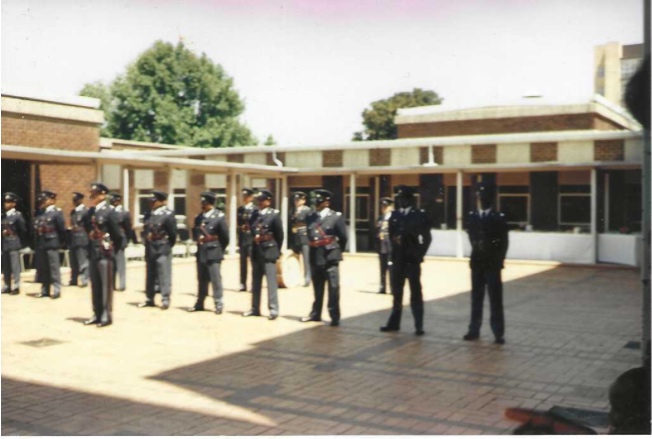
Candidate Officers standing “at ease” on parade at their graduation ceremony during December 1984 at S A Police, Mechanical School, Benoni
(Source [GDG])
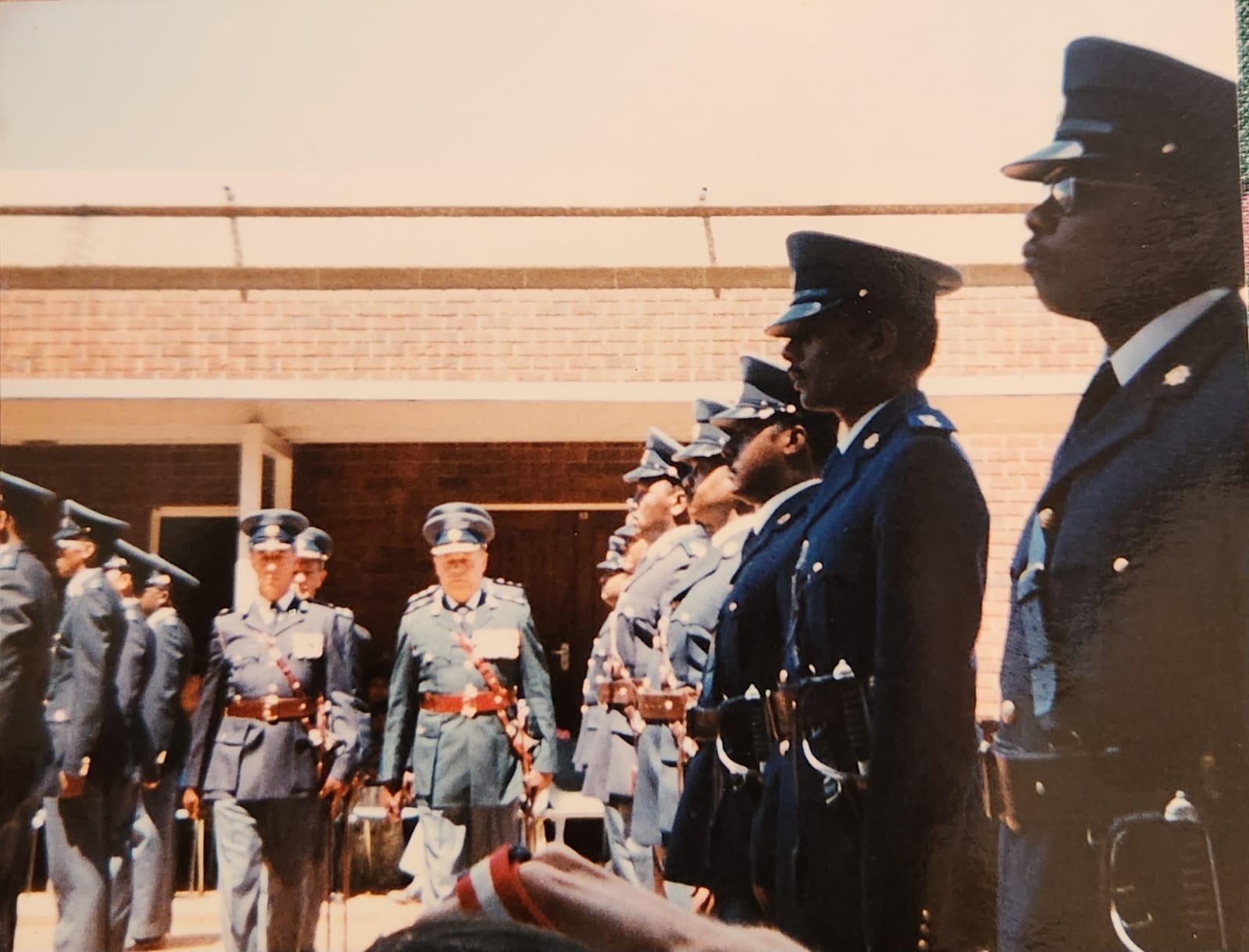
Inspection of the parade of Candidate Officers at their Graduation Ceremony during December 1984 at SA Police, Mechanical School, Benoni by Major General JAB Laubscher
(Source [GDG])
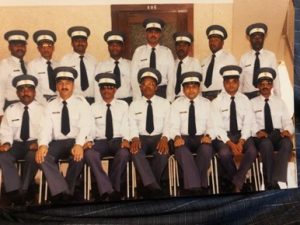
Class 6 / 1984 Non-White Candidate Officer’s Course, SA Police, Mechanical School, Benoni
(Source – [GDG])
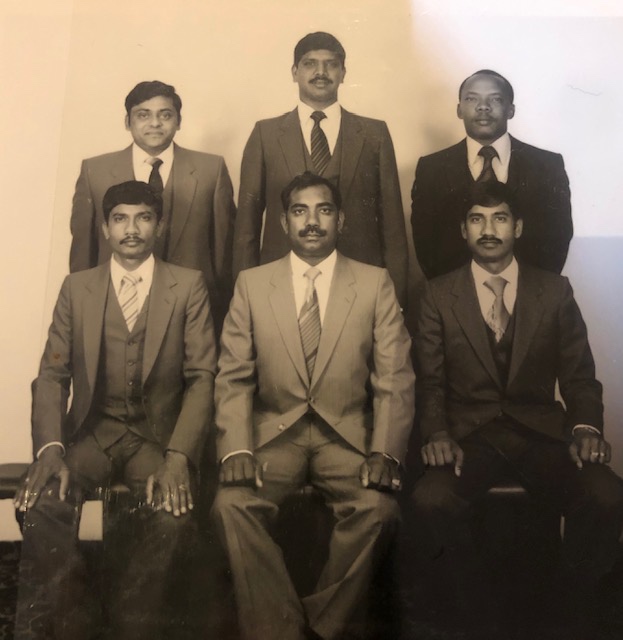
Detectives on Candidate Officer’s Course 6/1984
Front row, from left to right, Cristy Marimuthu; Bala Naidoo: Reggie
Marimuthu
Rear row, from left to right, Anesh Haripersad; George D Govender; Mpanga
(Source – [GDG])
SOUTH AFRICAN POLICE
CANDIDATE OFFICER’S COURSE
NO 6/84
NON-WHITES
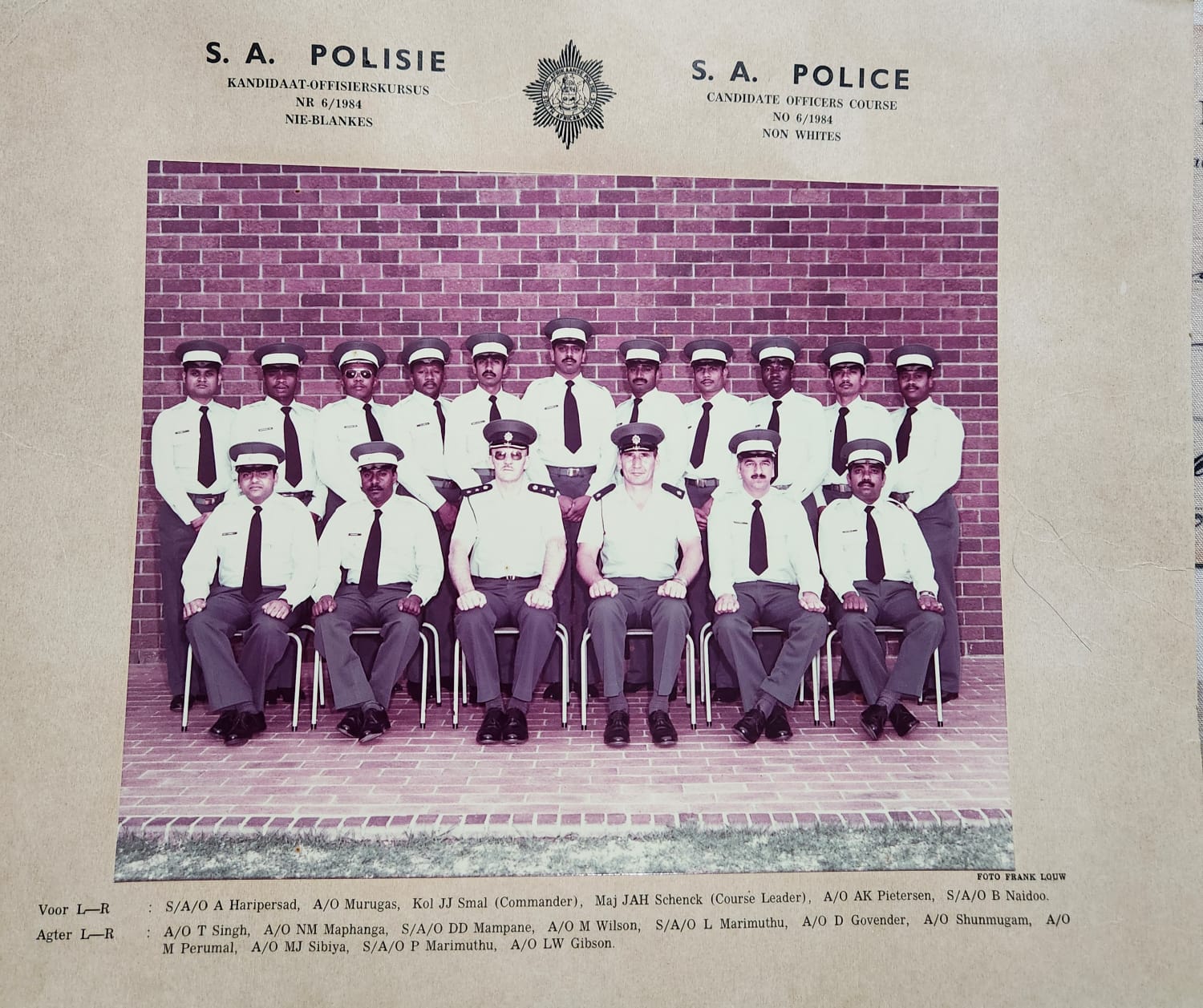
“Our course leader Brig Schenck passed away recently. My sympathies and condolences to his family, friends and then Candidate Officers Course of 1984. See Course photo. Found the original. This is the best print I got. This photo is important because it has late Brig Schenck, our course leader. If time permits.” – Major General (Professor) George D Govender.
(Source – [GDG])
After successfully completing the Candidate Officer’s Course in December 1984 he was transferred to back to Crime Intelligence in Fischer Street, Durban.
During 1986 he was transferred to the VIP Protection in Broad Street, under the command of Captain M Govender. A few days after his arrival, he was appointed Second-in-Command. This role required professionalism, reliability, and the ability to operate under pressure while protecting high-profile individuals.
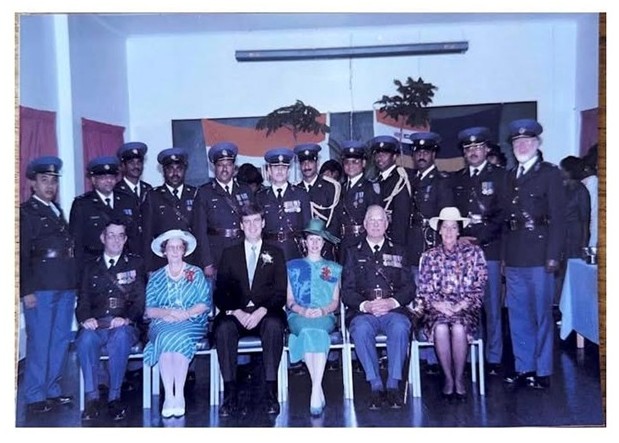
Officers who attended a Passing Out Parade in Durban, Circa 1986
(Source family of Lieutenant-Colonel Soobramoney Govender)
During 1987 he was promoted to the rank of Captain.
On 1991-07-01 he was transferred to SA Police, Isipingo and appointed the Station Commander.
As his career progressed, he continued to build a reputation as a capable and dependable officer who could manage difficult situations calmly and effectively.
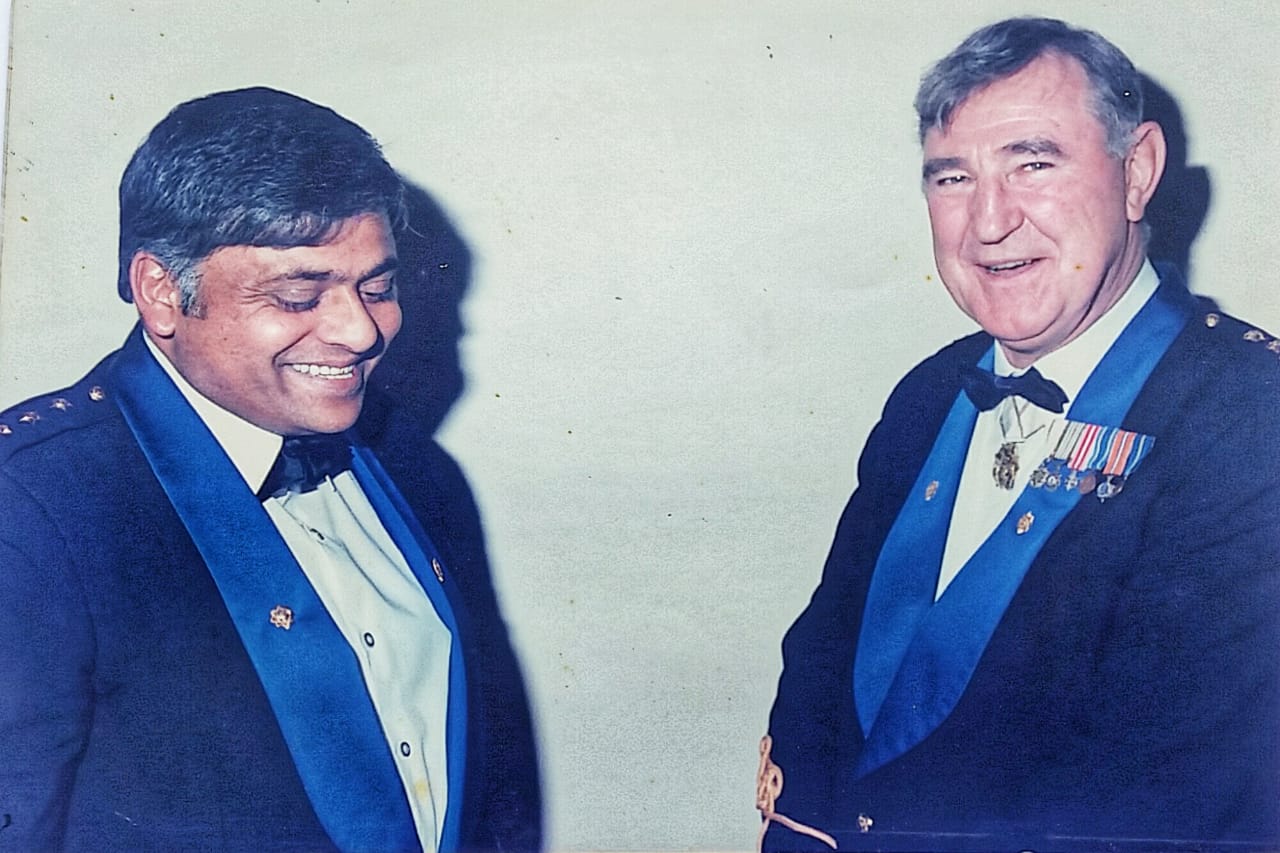
Haripersad in mess dress chatting with General Lothar Neethling, Head of the Forensic Science Laboratory
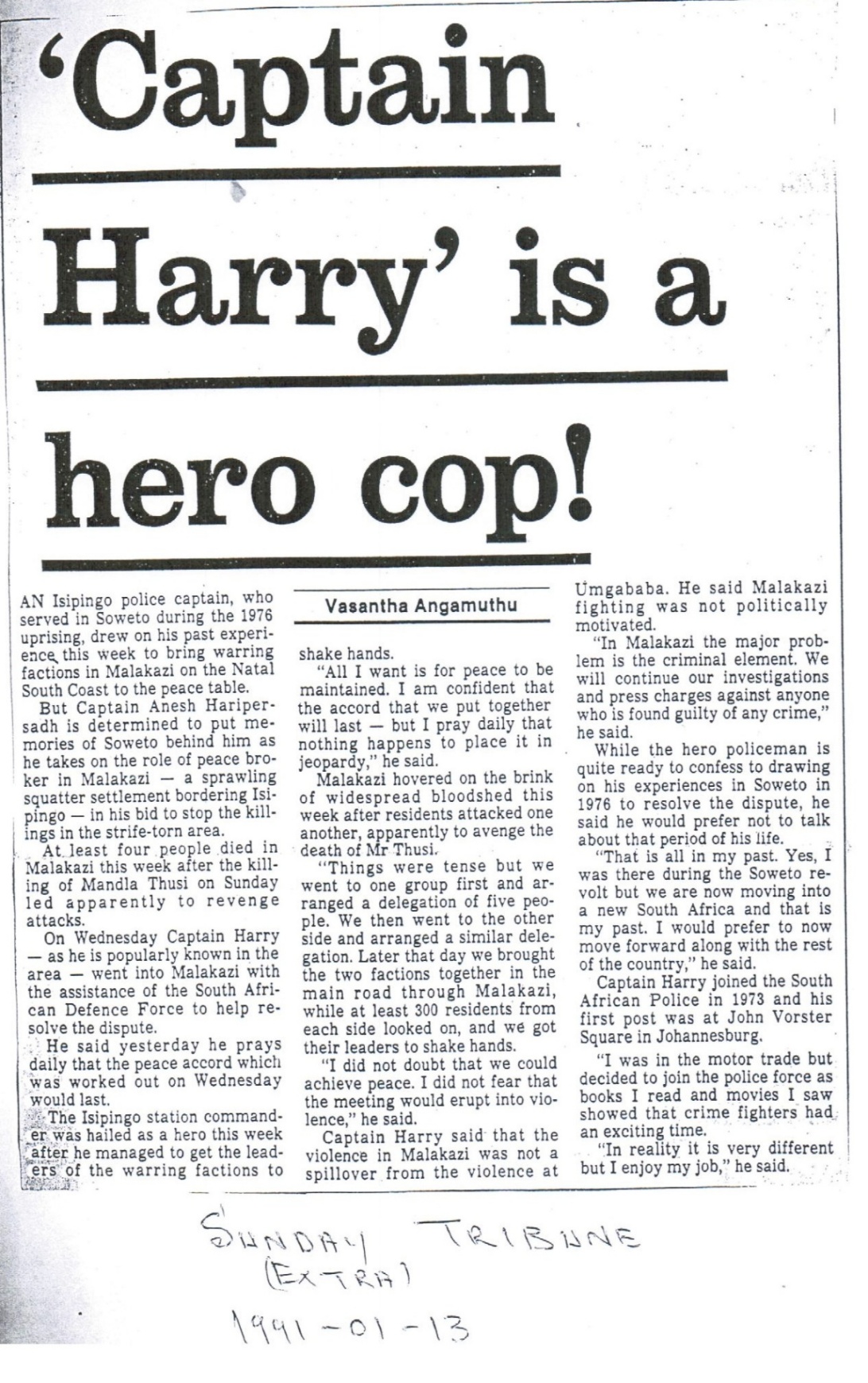
One of the most remarkable moments in Haripersad’s career occurred in 1991, while he was serving as Captain and Station Commander at Isipingo Police Station.
During this time, a serious and violent conflict broke out in Malagazi Township, which fell under the Isipingo policing area. The situation quickly escalated into armed confrontation between two groups in the community.
Reports indicated that at least three people had been killed, several others had been seriously injured, and fourteen homes had been burned down. Tensions were extremely high, and the potential for further violence was very real.
Captain Haripersad responded immediately. Together with other police personnel and supported by the Defence Force, he rushed to the troubled area.
What he encountered was an extremely dangerous situation. Around 400-armed individuals had gathered. They carried AK-47 rifles, knobkerries, pangas, and other weapons. The opposing groups stood roughly 500 metres apart, each prepared for further confrontation.
Many officers might have chosen to remain at a distance and rely purely on force. However, Captain Haripersad decided on a different approach.
With remarkable courage, he moved forward to address both groups directly.
Captain Haripersad first asked both sides to select five representatives each to speak on behalf of their group. The two factions involved in the conflict were known locally as the “Senyooras” and the “Comrades.”
By creating a smaller group for discussion, he was able to open a line of communication between the opposing sides. This step alone helped reduce tension and allowed meaningful dialogue to begin.
During the discussions, Haripersad carefully listened to the concerns and accusations from both groups. Through his experience and judgement, he quickly realised that the violence had not been politically motivated, as many had believed.
Instead, the conflict had started after the killing of a respected elder within the community, with each group blaming the other for the crime.
After lengthy discussions and careful mediation, Captain Haripersad succeeded in guiding both sides toward a peaceful resolution.
Eventually, a Peace Accord was signed by representatives of both the Senyooras and the Comrades.
In a powerful moment witnessed by the gathered community members, the representatives of the two factions shook hands and embraced each other, signalling the end of the confrontation.
The agreement brought immediate calm to the situation and prevented further bloodshed.
News of Captain Haripersad’s courageous intervention quickly spread throughout the country. Media outlets reported on the remarkable achievement of a police officer who had stepped into a dangerous conflict and successfully negotiated peace.
His actions were widely praised, not only for their bravery but also for the wisdom and leadership he displayed in choosing negotiation over violence.
In recognition of his outstanding work, Captain Haripersad received a formal acknowledgement from General WH Steyn, the Regional Commissioner of the South African Police in Natal. Such recognition was not easily earned during that time and demonstrated the high regard in which his actions were held.
Media Clipping – Sunday Times Extra 1991-01-13
During February Haripersad was nominated for a Skills Development Course in Cape Town, which he successfully completed.
SOUTH AFRICAN POLICE
COLLEGE FOR ADVANCED TRAINING
SKILLS DEVELOPMENT COURSE NO 1 / 1991
1991-02-04 TILL 1991-02-28
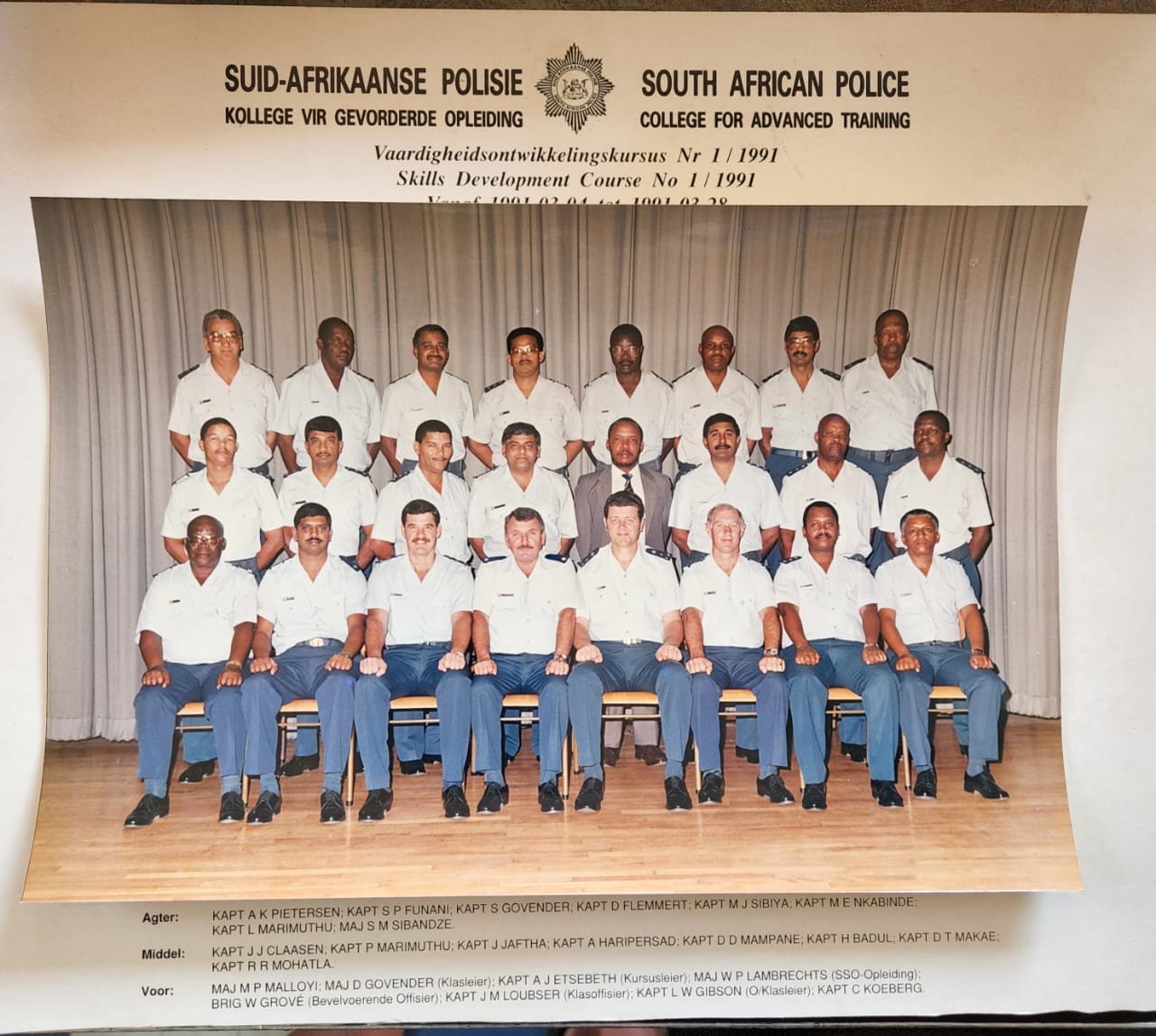
L-R, Middle row, 4th A Haripersad
(Source – [GDG])
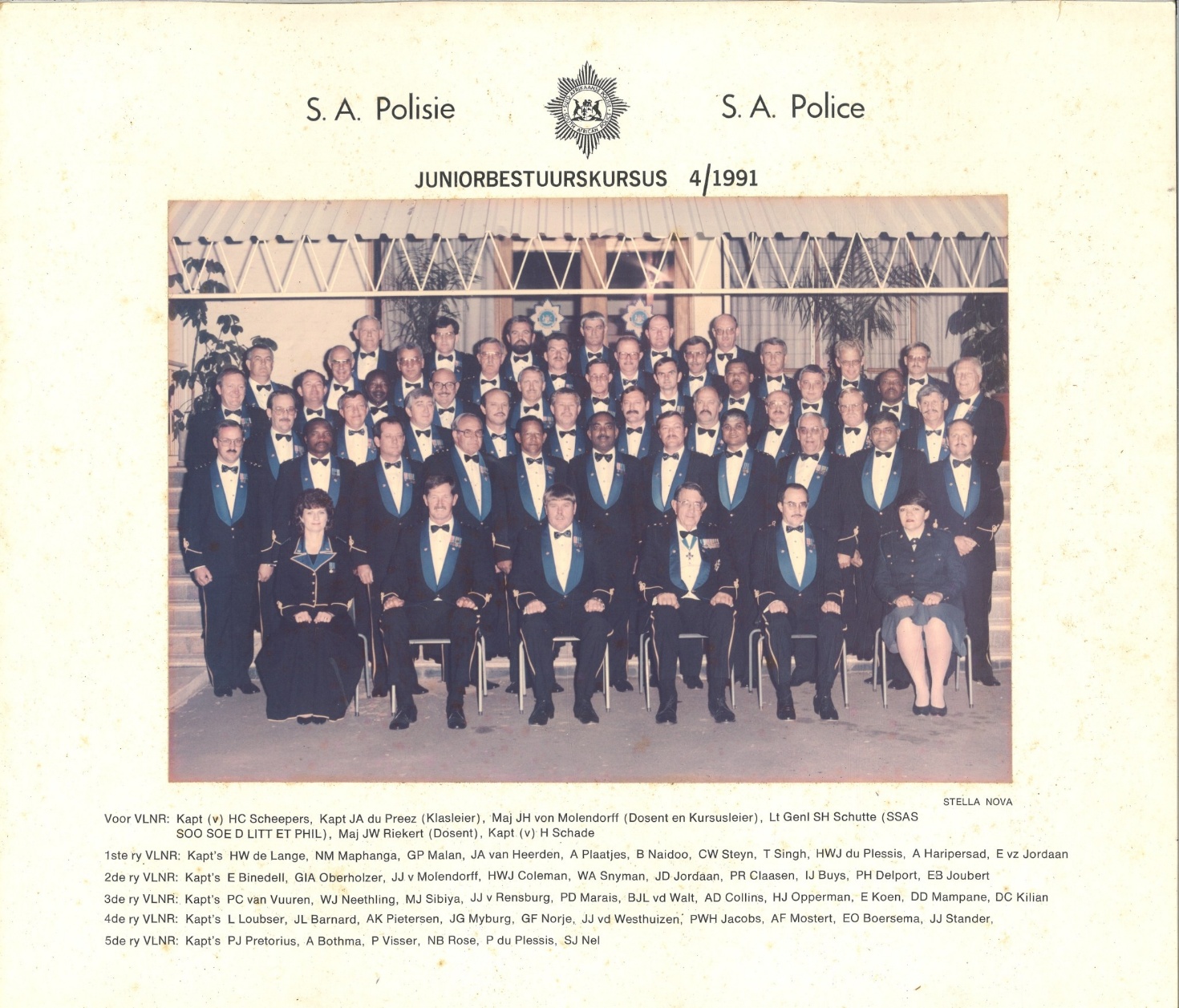
During 1991 he was nominated to attend a Junior Management Course in Silverton, Pretoria.
SOUTH AFRICAN POLICE
JUNIOR MANAGEMENT COURSE 4/91
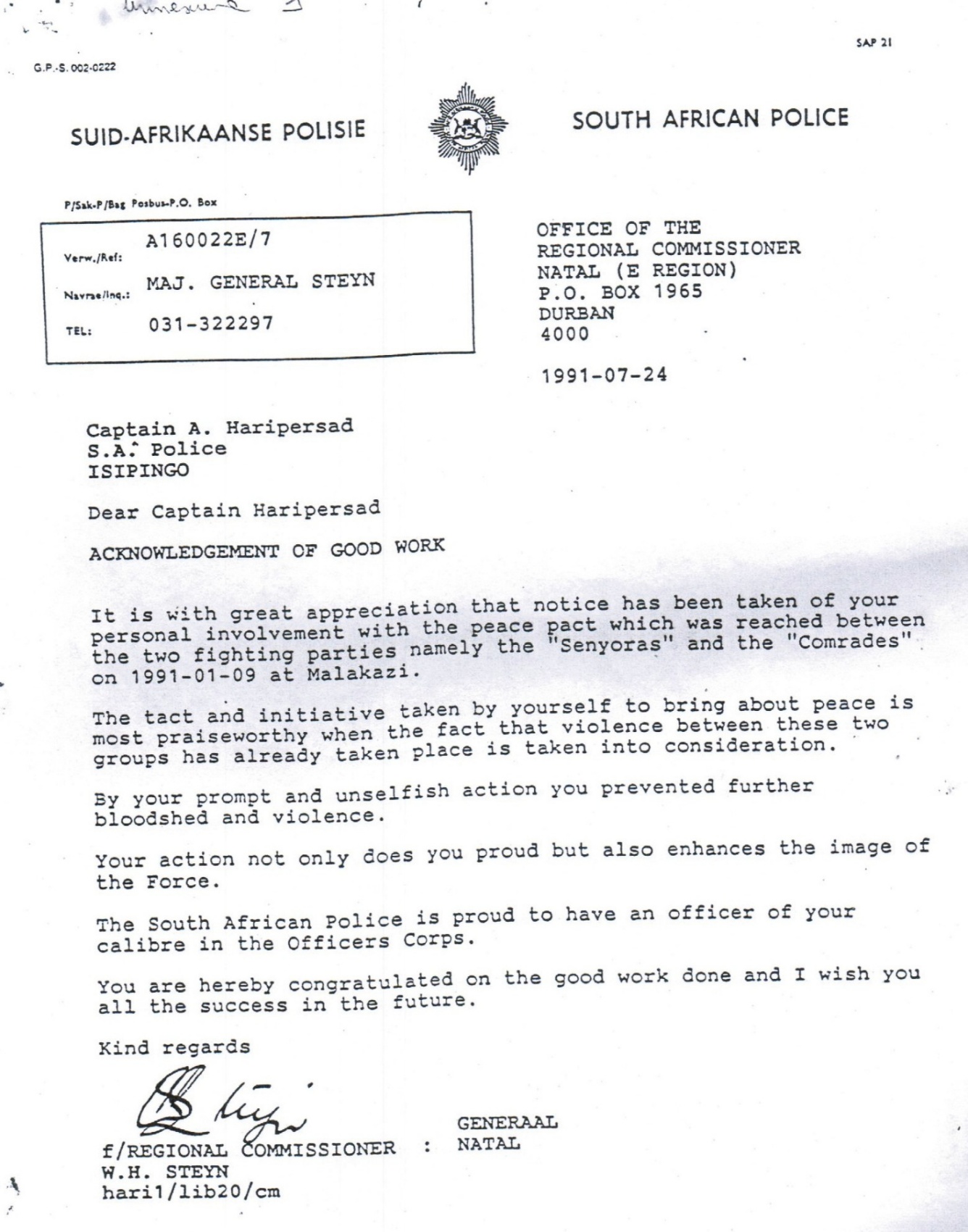
Copy of the official acknowledgement of good work rendered by Haripersad from the Regional Commissioner, Natal “E” Region, General WH Steyn
Haripersad’s career continued to progress steadily as he took on more senior responsibilities.
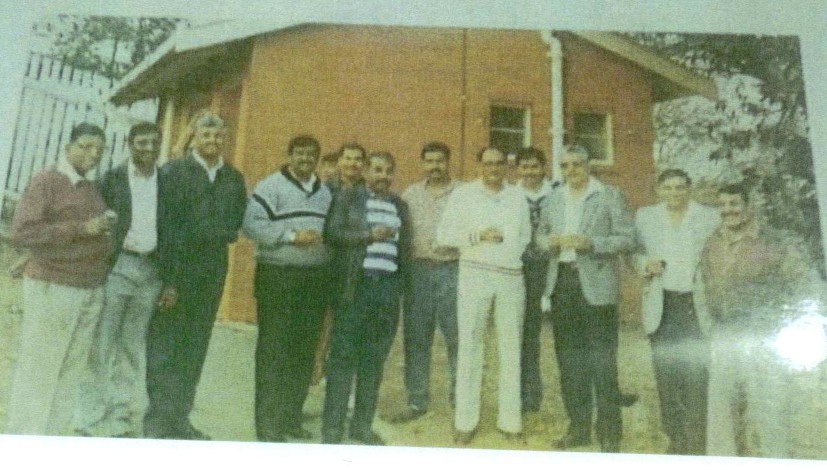
Meeting of Indian Officer’s wives with Brigadier Indera Chetty at the SA Police, Female Training College in Cato Manor, Durban during 1992
L-R, 10th Lieutenant General Sharma DS Maharaj; 11th Brigadier Anesh Haripersad; 12th Major General Hans Jissok. Other Officers not identified
On 1st April 1992, he was promoted to the rank of Major and transferred as Head of Visible Policing at the office of the District Commandant in Chatsworth. He served alongside Brigadier Sharma DS Maharaj, who later became a Lieutenant General and the first Indian Provincial Commissioner of Gauteng.
In this position, Haripersad worked closely with police members to improve community safety and policing efficiency. Through teamwork and disciplined policing strategies, the unit was able to significantly reduce crime rates in the area.
On 1st January 1993, he was appointed Head of Human Resource Management at the office of the Area Commissioner in Pinetown, where he worked alongside Brigadier Meintjies.
On 1993-04-01 as a Lieutenant-Colonel he was transferred to eThekwini Cluster and worked under the command of Major General Kitching as his Staff Officer.
For the second time in his career, Haripersad returned to Isipingo Police Station, this time as Station Commander on 1996-07-01.
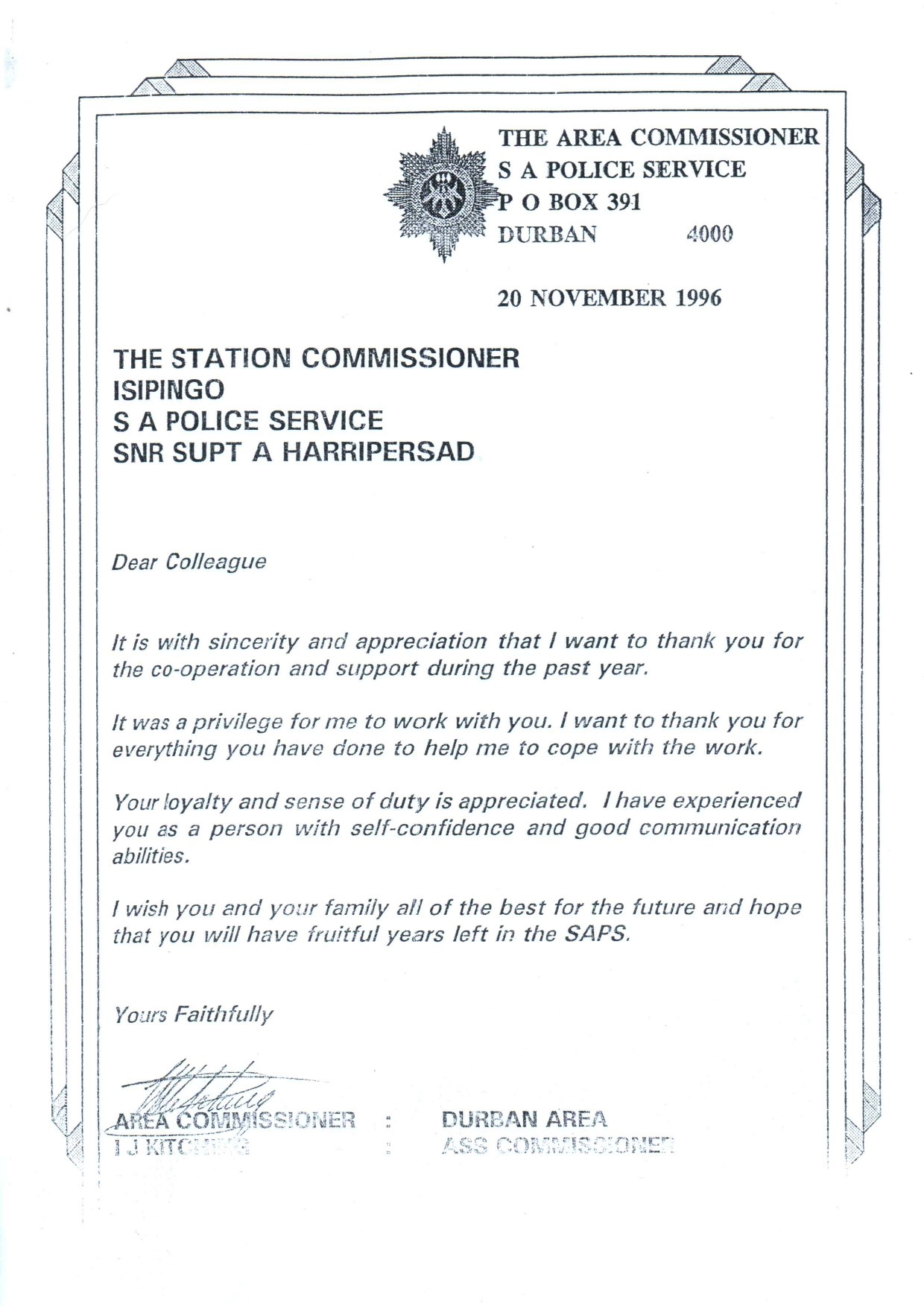
Letter of Appreciation for excellent services rendered to Major General IJ Kitching, Area Commissioner, Durban
The station faced several serious challenges at the time. On more than one occasion, Haripersad was sent to stabilise difficult and volatile situations within the area.
Drawing on his experience and leadership abilities, he successfully managed these situations and helped restore order and stability.
On 1st August 2008, Haripersad was promoted to the rank of Brigadier and appointed Deputy Area Commissioner for the Durban South Area, again serving alongside Major General Ramsaroop.
This promotion marked the culmination of decades of dedicated service. As Brigadier, he continued to demonstrate the same professionalism, calm leadership, and commitment to duty that had characterised his career from the beginning.
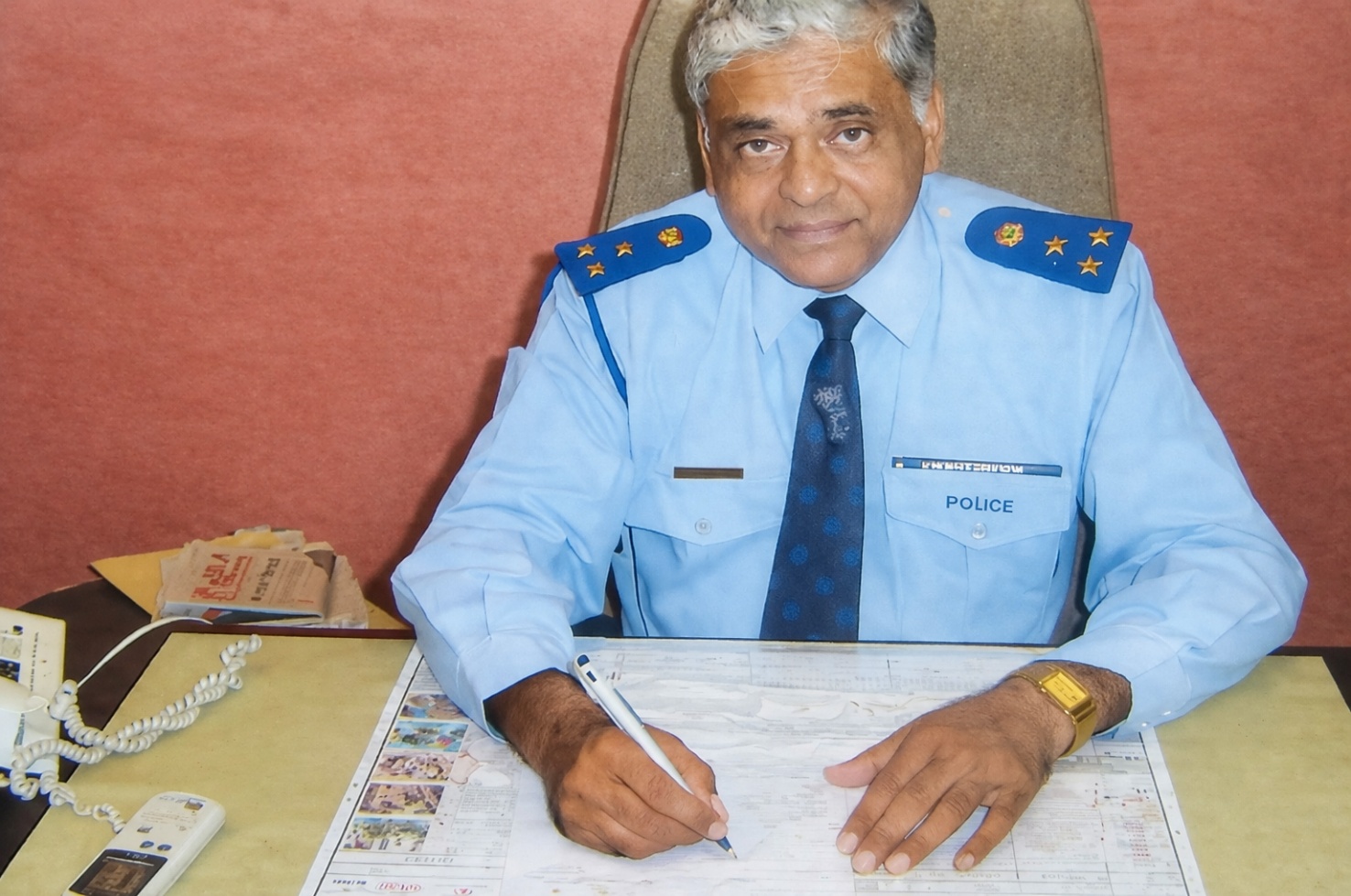
Brigadier Anesh Haripersad at his desk at the Area Commissioner’s Office, Durban South
Brigadier Haripersad was transferred SA Police, Umlazi as the Station Commander with Colonel Romer as the Head of the Crime Prevention Unit. Colonel Zama was later appointed as the Station Commander. On 2006-02-01 Haripersad was then transferred to Pinetown as the Station Commander, until a new Station Commander was appointed.
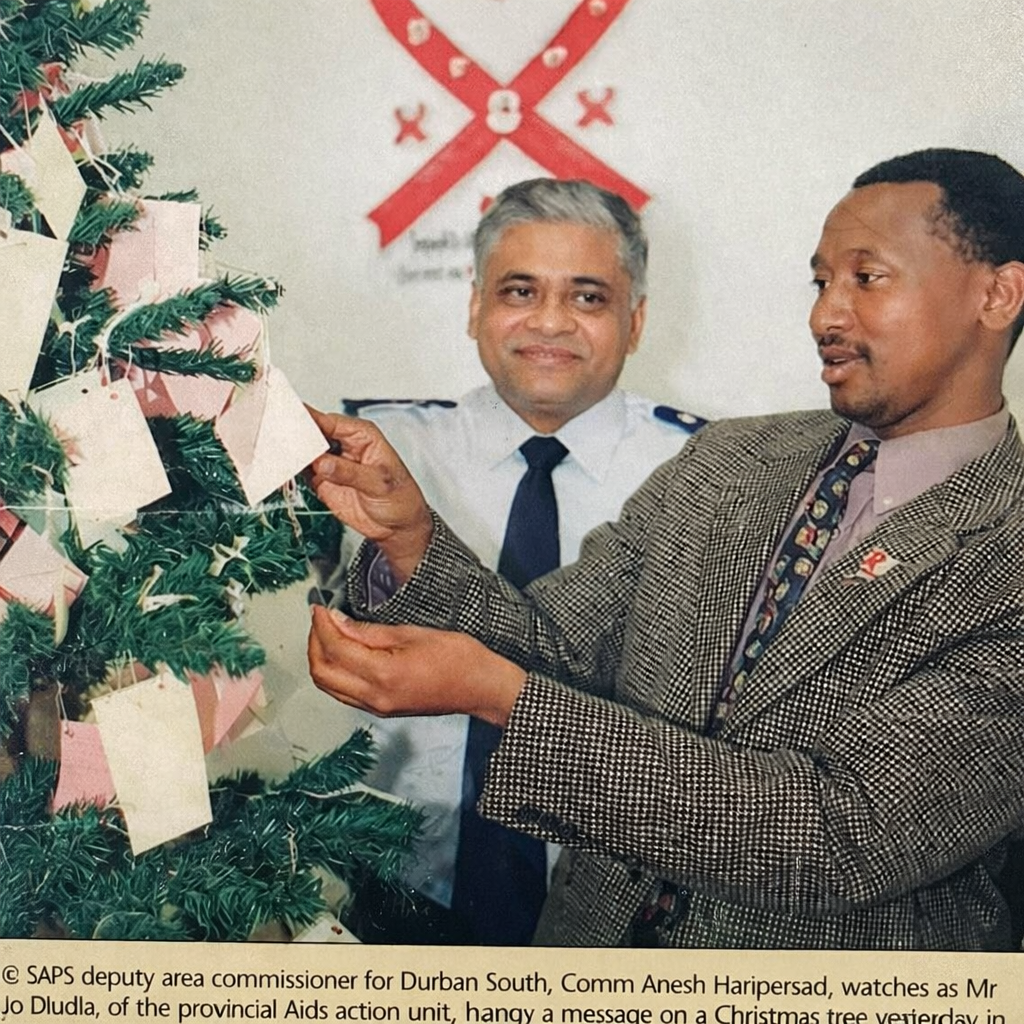
World Aids Day commemorated at the SA Police Service, College in Chatsworth – Circa 2004
During 2005 he was again nominated to attend the Presidential Strategic Leadership Development Programme “Transcending Managers into Leaders” at the University of the North West and successfully graduated.
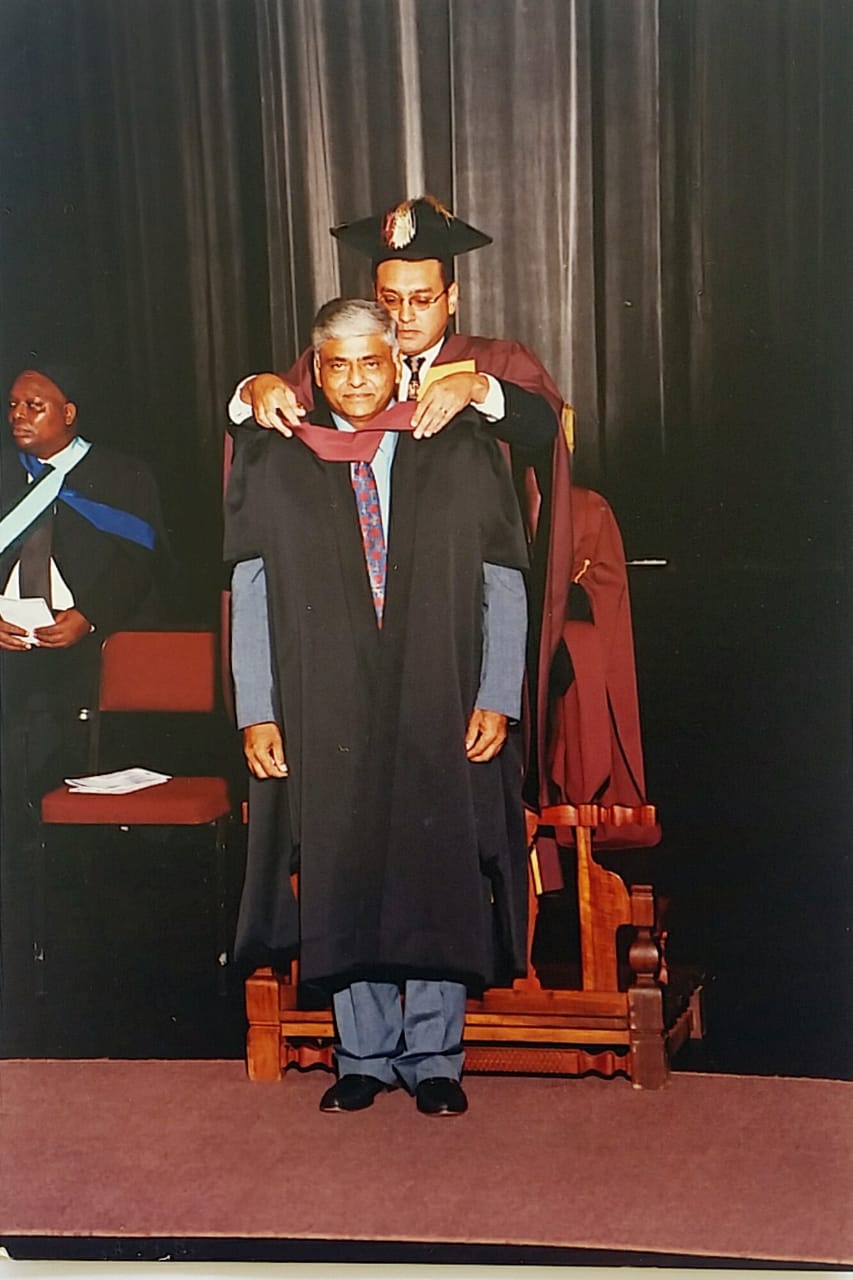
Haripersad is graduated at the University of the North West during 2005
Brigadier Haripersad’s achievements were not limited to his official duties. He also played an important role in police sport and community activities.
For many years, he successfully managed the Port Natal Police Soccer Team. Under his leadership, the team achieved significant success and won the National Police Commissioner’s Trophy after successfully beating the team from the Western Cape.
His contribution to police sport earned him the honour of receiving Police Colours in Sport, recognising his dedication as a successful team manager.
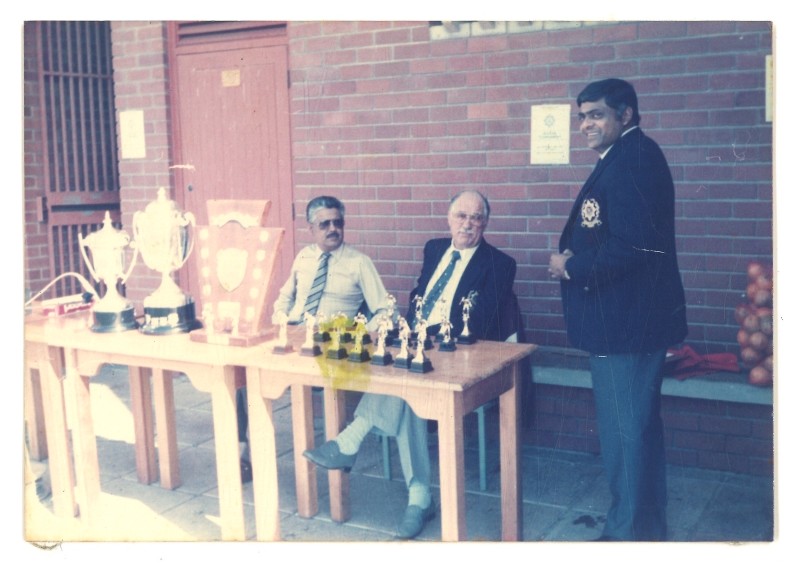
L-R, Lieutenant General Sharma DS Maharaj; Major General Van Niekerk, Regional Commissioner, Region “E” Natal; Brigadier Anesh Haripersad
Haripersad retired from the South African Police after serving the South African Police and its various communities for 35 years.
The following Medals were awarded to him for meritorious and loyal service to the South African Police and its Communities
-
-
- 1988-04-01 – The South African Police Commemorative Medal, 75 years;
- 2003-02-05 – The South African Police Star for Merit, for 30years of Faithful Service and Exemplary Conduct;
- 1993-02-05 – The South African Police Star for Faithful Service for 20 years Faithful Service and Exemplary Conduct;
- 1983-02-05 – The South African Police Meda for Faithful Service for 10 years Long Service and Exemplary Conduct;
- 2005-01-27 – The South African Police Service 10 Year Commemoration Medal 1995 -2005.
-
After 36 years of loyal and meritorious service, Brigadier Haripersad retired from the police service on 2007-11-30 with a remarkable record of achievement.
He and his wife Kay have been married for more than four decades 1977. Together they have three children – two daughters and a son.
Their daughter Sadhana Haripersad followed in her father’s footsteps and works within the SAPS Legal Services in Pinetown.
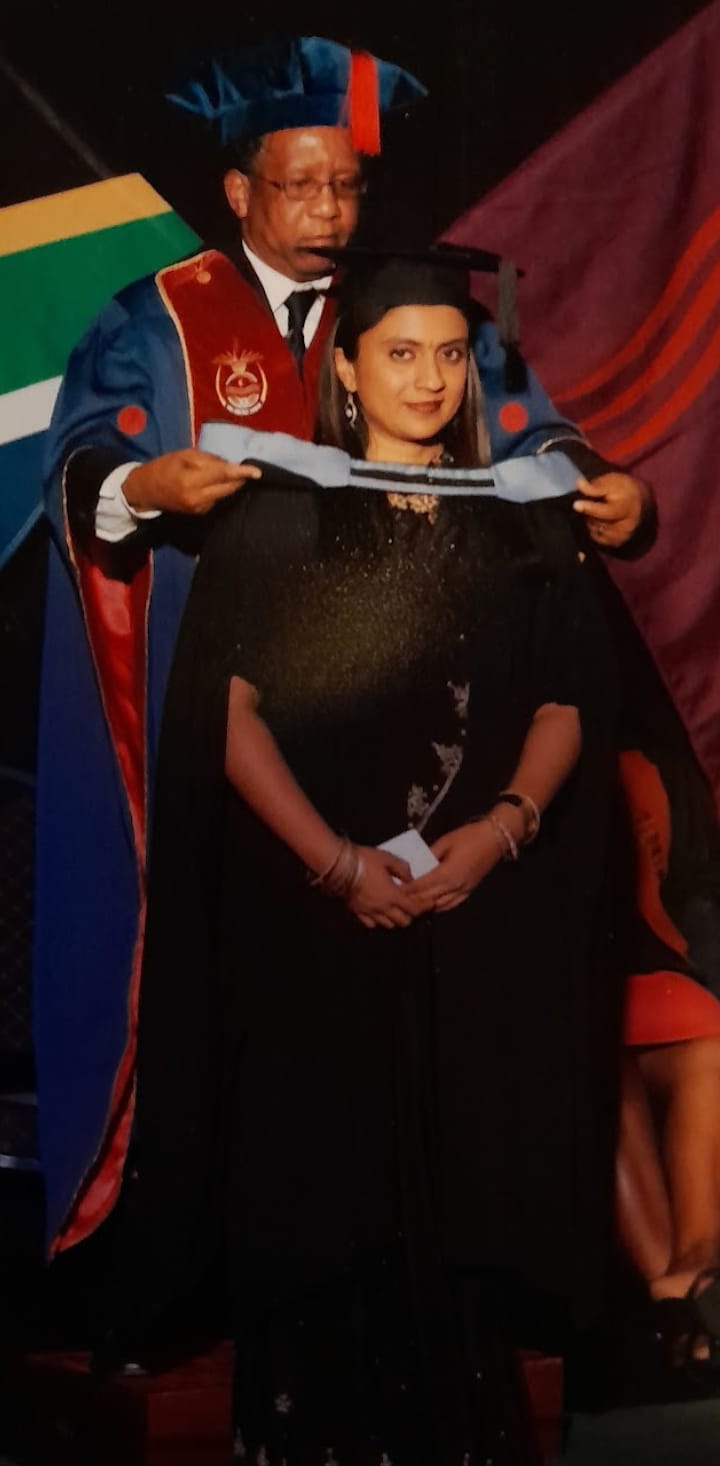
Sadhana Haripersad at her graduation ceremony
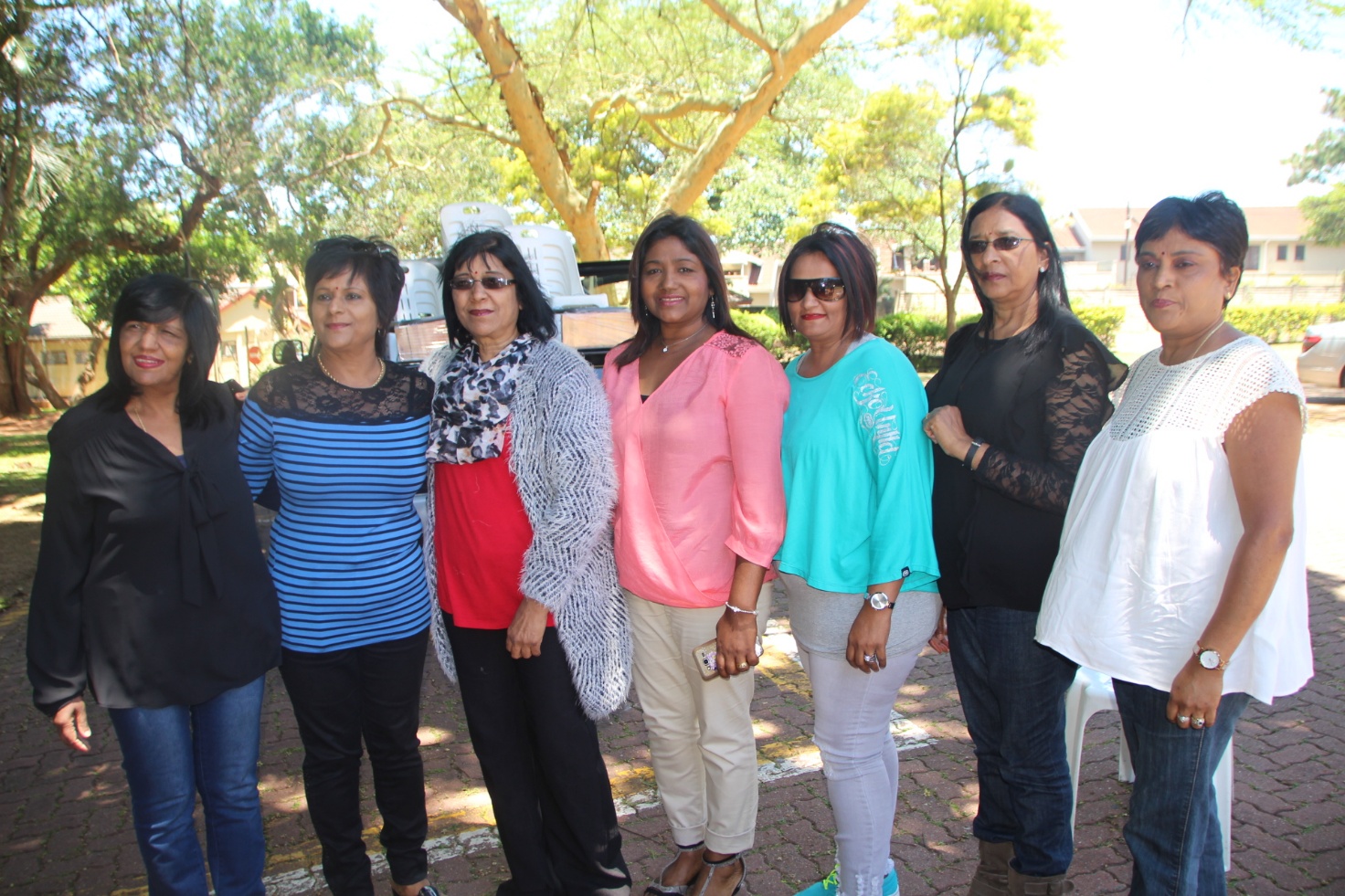
Gathering of The Retired Police Officer’s Wife’s Club meeting in Durban
L-R, 3rd left, Kay Haripersad
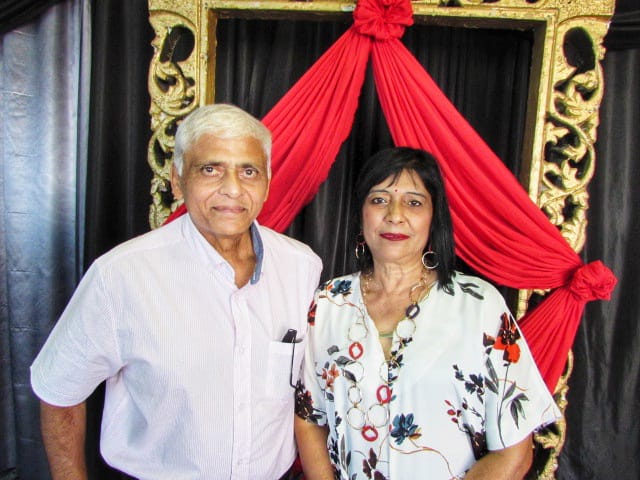
Brigadier Haripersad with his wife Kay
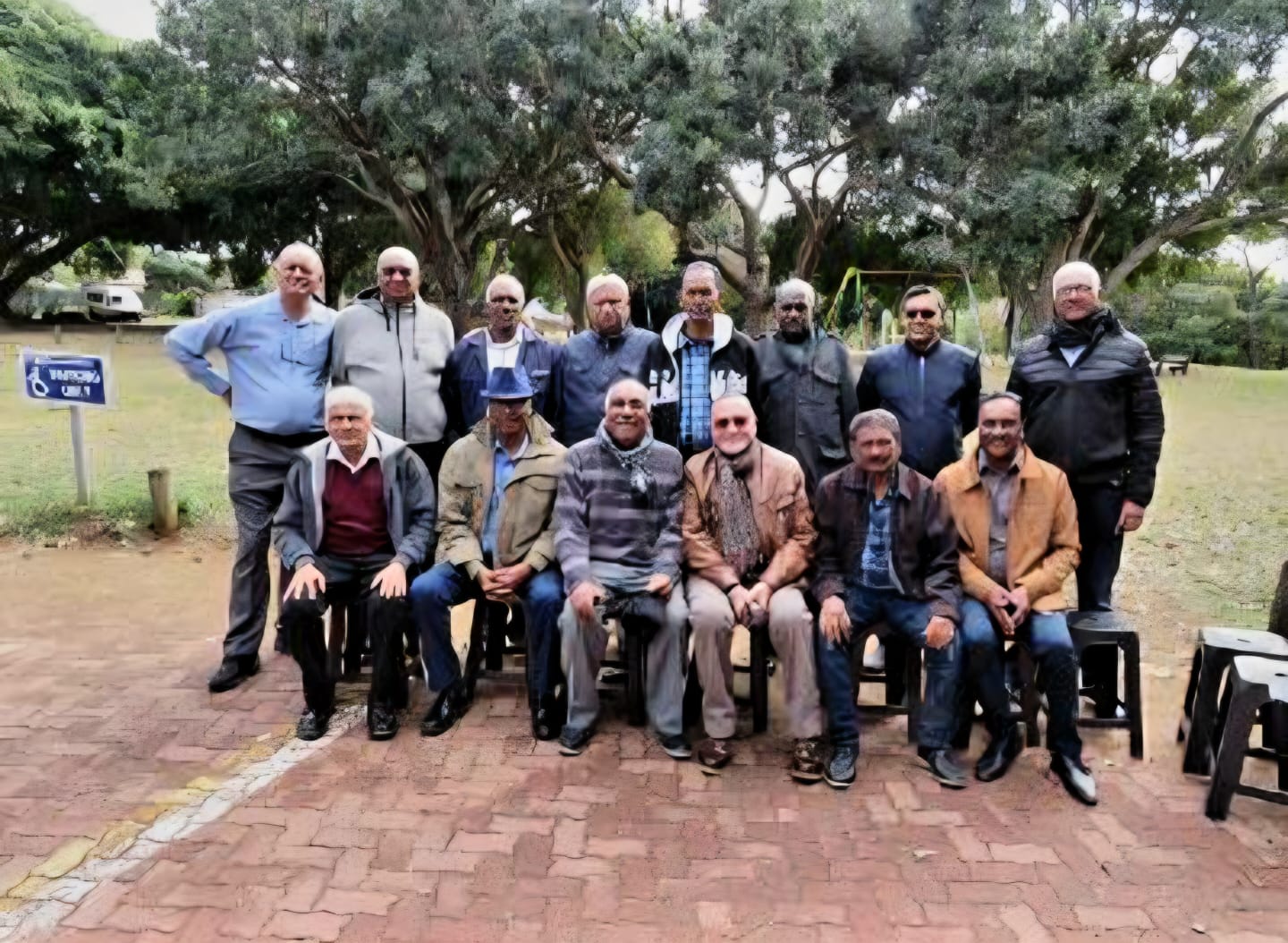
Gathering of The Retired Police Officer’s Club meeting in Durban
L-R, 3rd left, Kay Haripersad
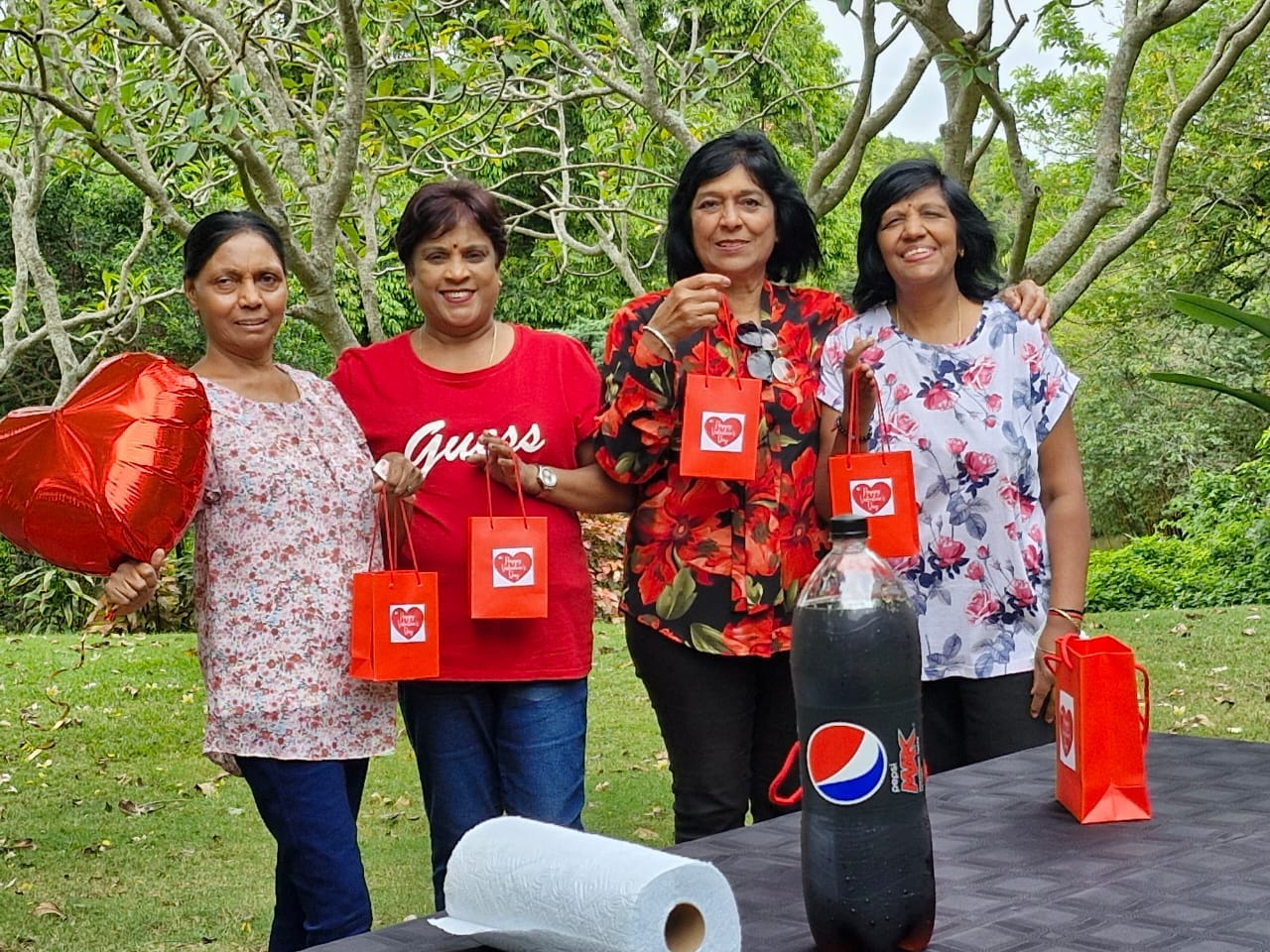
Gathering of The Retired Police Officer’s Wife’s Club meeting in Durban, Celebrating Valentine’s day
L-R, 3rd left, Kay Haripersad
Brigadier Anesh Haripersad remains widely respected among his former colleagues, subordinates, and friends. Those who know him describe him as a kind, humble, and thoughtful person who always treated others with dignity and respect.
He and his wife are also founding members of the Retired Officers’ Social Club in Durban, where he continues to maintain friendships with former colleagues.
His career stands as an example of what can be achieved through courage, integrity, and a commitment to peace. His ability to resolve conflict through dialogue and understanding remains one of his most remarkable qualities.
For many police officers, Brigadier Haripersad continues to serve as an inspiration and role model, demonstrating that strong leadership and calm judgement can bring peace even in the most dangerous situations.
INSERT: BRIGADIER ANESH HARIPERSAD
After 1984, Brigadier Harry, his family and my family, met often at police functions, family events and went on family outings together. Our wives met at the Port Natal Indian Ladies club meetings, functions etc, while we met at the Indian Officers functions and meetings and sporting events. Brigadier Harripersad, I and other officers often met with late Lieut General DS Maharaj, who was then a Captain and the appointed Station Commissioner at Chatsworth. Lieut Gen. Maharaj (later Provincial Commissioner – Gauteng) always encouraged us as new officers to register for our BA Pol Degree, through UNISA. We used to spend many hours doing assignments for our degree at Lieut Gen Maharaj’s home in Umhlatuzana Township. Brigadier Harry and I also used to spend many hours working on assignments at his home in Silverglen. During 1991, we were nominated to attend the Skills Development Management course in Paarl. Many of us, from the candidate officers’ course of 1984, again met on this course. During 2005, Brigadier Harry and I graduated at the Northwest University in Potchefstroom, after having successfully completing the Presidential Strategic Leadership Development Programme at Diploma level, which was managed and presented by the South African Management Development Institute (SAMDI). It was a three-year intense programme involving classroom presentations, distance education and assignments. The qualification was accredited by Northwest University in Potchefstroom. Brigadier Harripersad and I retired from the SAPS during the same year. To date we are still good family friends and retirees, sharing special conversations online and on social media.
Major General (Ret) Doraval Govender, DLitt et Phil, SOE, F.I.S (SA).
Professor in Criminal Justice Studies, University of South Africa
I want to acknowledge and respect these Officers for tireless behind the scenes, efforts in the production and publication of this magazine.
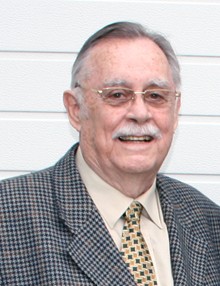
Brigadier Hennie Heymans, Editor in Chief of Nongqai
An experienced and highly skilled officer with an exceptional memory. His Dad was stationed at Mount Edgecombe and Somtseu Road during the 1940’s – 60’s. Brigadier holds a Masters degree in National Strategy. Was stationed with Lieutenant-Colonel (Ray) Mathura Munilall at Wentworth. He was also based at King’s Rest (Brighton Beach); and amongst others, The Public Relations Officer at Head Office and later a District Commandant at Welkom in the Free State Province and Soweto Region.
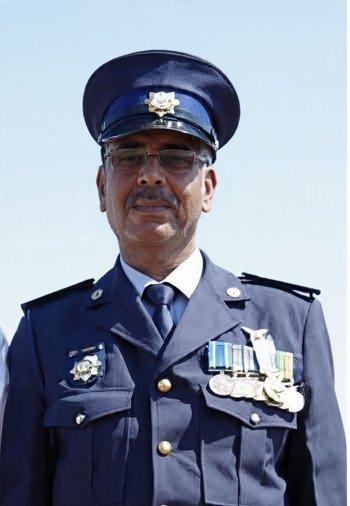
Captain DME Lazarus
Captain DME Lazarus, a Stalwart of SA Police, Chatsworth, Unit 02 & Unit 05, later SA Police, Training College, Chatsworth and Supply Chain Management, Durban, KwaZulu-Natal. An experienced and highly skilled officer with an exceptional memory.
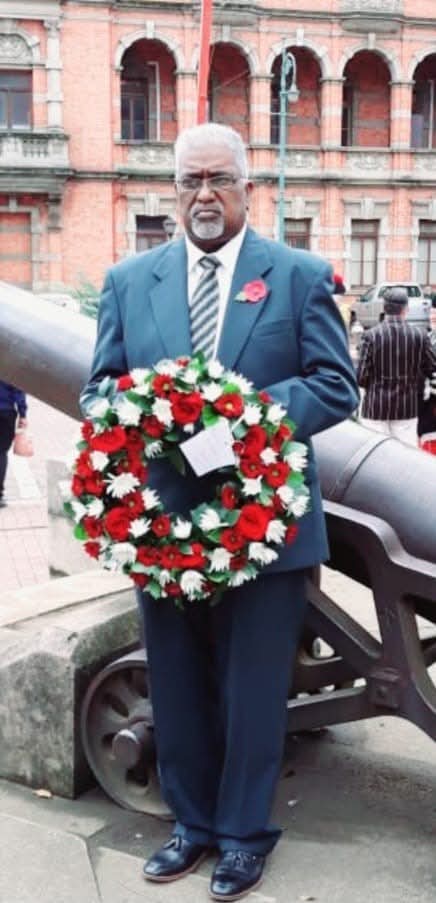
Captain (Sooks) P Sokaloo
Captain (Sooks) P Sokaloo laying a wreath at a Commemoration Service in Pietermaritzburg. His Dad was a World War 11 veteran. An experienced and highly skilled officer.
He was nominated by Lieutenant General Andre Pruis to represent the SA Police at Interpol in the illicit trafficking of narcotic drugs, etc
I must also acknowledge the outstanding contributions and enduring commitment of those who strive to preserve our policing heritage.
My sincere thanks go to:
- Brigadier Hennie Heymans [HBH], Editor-in-Chief of Nongqai, whose scholarship, experience, and visionary dedication made this Special Edition possible;
- Major General (Professor) George D Govender [GDG], for the Foreword and his scholarly guidance, encouragement, and steadfast support;
- Advocate Karen Pillay, daughter of the late Colonel Rungasamy “Dickey” Munsamy, for her professional insight and motivation;
- Advocates (Lt-General) Sally Khan, Yolan Denness, Major General Oswald Reddy, Lt-Colonel (Advocate) Jay Govender, Captains DME Lazarus and PS Sokaloo, for their valued contributions and shared historical knowledge;
- ALL photographs were provided by Brigadier Anesh Haripersad. Unless otherwise specified;
- And finally, to my family, for their patience, encouragement, and understanding throughout the journey of compiling and refining this tribute.
“agnoscere et honorare servientibus” –
“to acknowledge and honour those who served”
“Soli Deo Gloria” – “To God Alone Glory”
Logan Govender


An humble, kind Officer and a Gentleman. Remarkable negotiation skills. Congratulations, Sir. Salute.
Logan
A humble, kind Officer and a Gentleman. Remarkable negotiation skills. Congratulations, Sir. Salute.
Logan