The Start of the Border War (1966 – 1989) and The History of the South African Police (SAP) Counter Insurgency (COIN) Unit
Wolfgang Witschas
Abstract
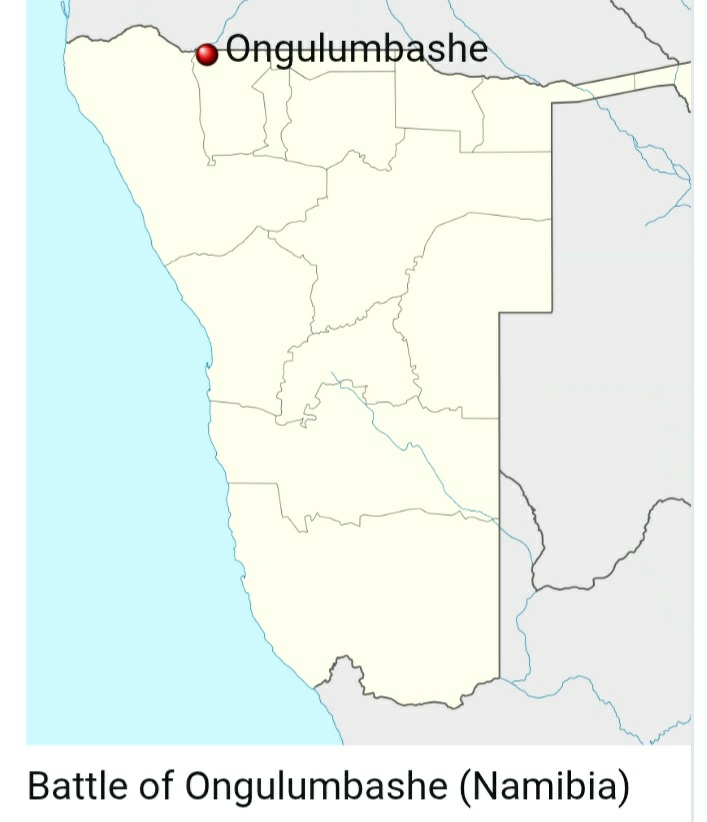
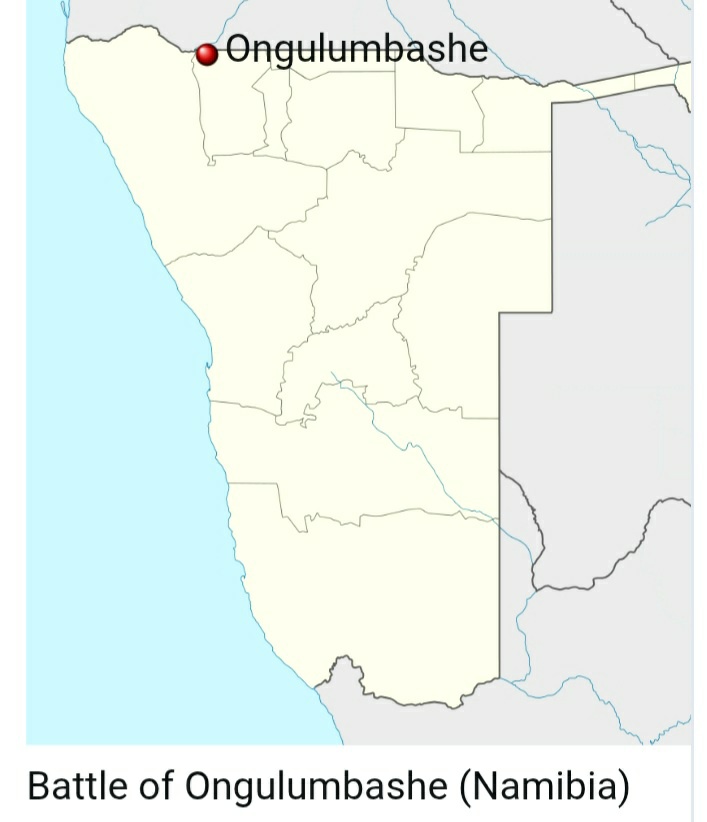
The Battle of Ongulumbashe (also known as Omugulugwombashe), or Operation Blouwildebees, was a pivotal clash between the South African Police (SAP), the South African Defence Force (SADF) and the South West African People’s Organization (SWAPO)/Peoples Liberation Army of Namibia (PLAN), on Friday 26 August 1966, near the hamlet of Ongulumbashe in Ovamboland, northern South West Africa (SWA) (now Namibia). This battle marked the first direct confrontation between the South African security forces and SWAPO insurgents, signalling the start of the 23 year long South African Border War from 1966 to 1989.
Key Words
Ongulumbashe (Omugulugwombashe)
Operation Blouwildebees
South West African People’s Organization (SWAPO)
South West African Liberation Army (SWALA)
Peoples Liberation Army of Namibia (PLAN)
Battle of Ongulumbashe
South African Police (SAP)
South African Defence Force (SADF)
South African Police (SAP) Counter Insurgency (COIN) Unit
Pasco Civil Engineering Company (PASCO)
Sud Aviation Alouette III helicopters
Introduction
This year on 26 August 1966 Sixty Years ago was the beginning of the South African Border War: 1966 to 1989
In 1962, the United Nations (UN) General Assembly adopted the position that South Africa’s mandate over South West Africa (in force since the end of World War I) e be terminated and that the territory should be given independence. The inaction of South Africa adhering to the UN resolution to grant independence, emboldened SWAPO, who had been preparing for an armed struggle against the South African authorities in SWA since the early 1960s to initiate the armed struggle. SWAPO announced in 1962 the establishment its armed wing, the South West African Liberation Army (SWALA). It was not until 1973 that SWALA was formally renamed the People’s Liberation Army of Namibia (PLAN). The title may have been adopted informally or semi-formally as early as 1969.
Though SWAPO had already carried out several attacks in 1965 and early 1966, the battle marked the first time that elements of the South African security forces directly clashed with SWAPO insurgents and is considered to be the start of the South African Border War on 26 August 1966.
For this purpose young Ovambo males were recruited under false pretence that they would receive education in foreign countries. SWAPO took these recruits to Tanzania for military training. Those with higher educational after completing their basic training were sent for specialist military training to countries such as Algeria, China, Cuba, Egypt, North Korea and Russia.
The First Trained Insurgents Return to SWA
During September 1965 the first six trained insurgents, armed with Soviet and Chinese automatic weapons arrived in Ovambo land, SWA. They had infiltrates Ovamboland unnoticed and established an underground hideout in the vicinity of a small hamlet, Ongulumbashe, there after they immediately started to recruit and train local Ovambos in guerrilla warfare and also initiated a campaign of intimidation.
The Security Branch of the SAP became aware of these developments and took action in the form of setting up regular patrols in the area to track down and to discourage acts of intimidation and terrorism.
During September 1965 two Sud Aviation
Alouette III helicopters were dispatched from South Africa to Windhoek to establish the first SAP Flight, the “SAP Windhoek Flight”. The helicopters were then dispatched to Ovamboland to aid the detachment of South African Police (SAP) assigned to patrol and guard the border.
Meanwhile during February 1966, a second group of ten insurgents, who by mistake had attacked two shops and killed both shop owners, one Portuguese and one Ovambo, in Angola. They believed that they had crossed the border from Angola to SWA. The group however decided to disband, but three of the insurgents were captured shortly afterwards by some of the locals near Rundu and handed over to the police.
SAP Security Branch Investigation
During March 1966, information was received during intensive surveillance operations utilising the cover of a civilian company, Pasco Civil Engineering Company (PASCO), that SWAPO/SWALA had established a terrorist training base in SWA, in the west of Ovamboland with the name of Ongulumbashe located in a forested area 22 km west of the hamlet of Tsandi, with the sole purpose of terrorising the area.
And so Operation “BLOUWILDEBEES” was born.
Prelude to Operation Blouwildebees
The planning of Operation Blouwildebees was conducted between Colonel PJ “Pat” Dillon (SAP), Colonel JDJ “Jan” Blaauw (SA Air Force) and Commandant RT “Tommy” Renfree (SA Armoured Corps).
Early in August 1966 Dillon, Blaauw and Renfree had conducted a ground reconnaissance of the area of the Ongulumbashe base and on Wednesday 24 August 1966 they conducted aerial reconnaissance from Ruacana in a SAP Cessna 85 and returned to Ruacana.
Training of the SAP members
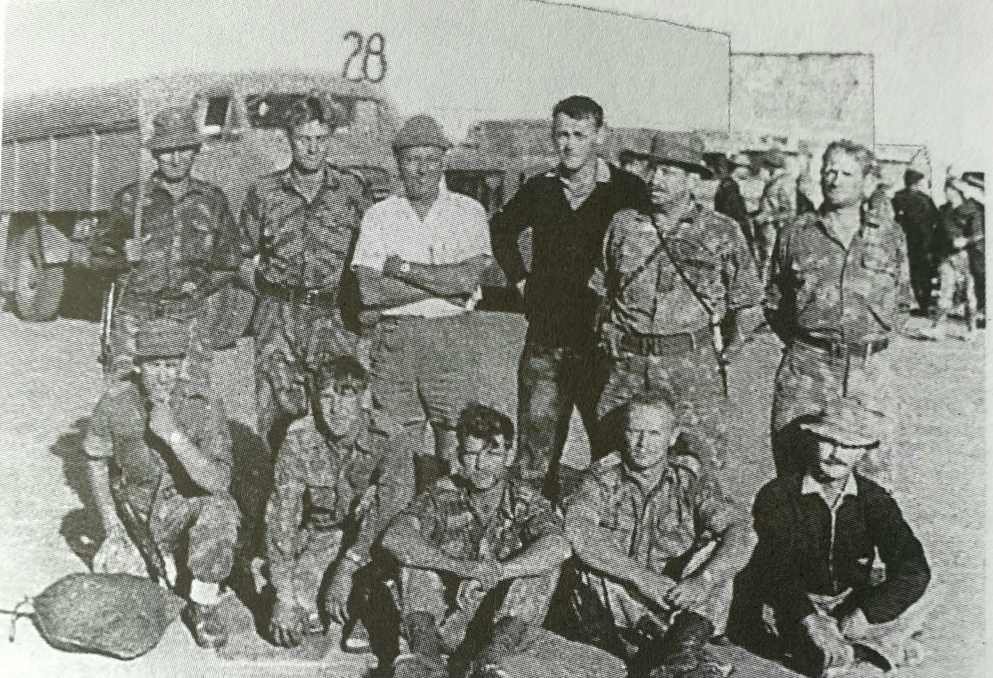
One hundred and fifty selected policemen were drawn from various units and eventually about eighty were selected for the training. Eleven members of 1st Parachute Battalion of the South African Defence Force (SADF), under the command of Captain Jan Breytenbach were selected for the mission. The other members were Lieutenant Willem “Kaas” van der Waals, Commandant Anton Klomp (Medical Officer) and seven NCOs. The SADF members travelled from Bloemfontein to Pretoria to be accommodated at the SAP College. All SADF paratroopers were sworn in as members of the SAP. The paratroopers first had to train the SAP members under the command of Major Frik Engels. The training took place from 11 to 15 August 1966 and the police men were trained in basic counter insurgency, handling of assault weapons (FN rifles and Walther HMK sub mashine guns) especially in dense bush and helicopter drill. The training took place at the Elandsfontein shooting range to the west of Pretoria. Eventually only 35 policemen qualified to be part of the attack force.
The police members of the attack force wore civilian clothes and the paratroopers wore camouflage uniforms (Rhodesian and Portuguese altered with bleach spots).
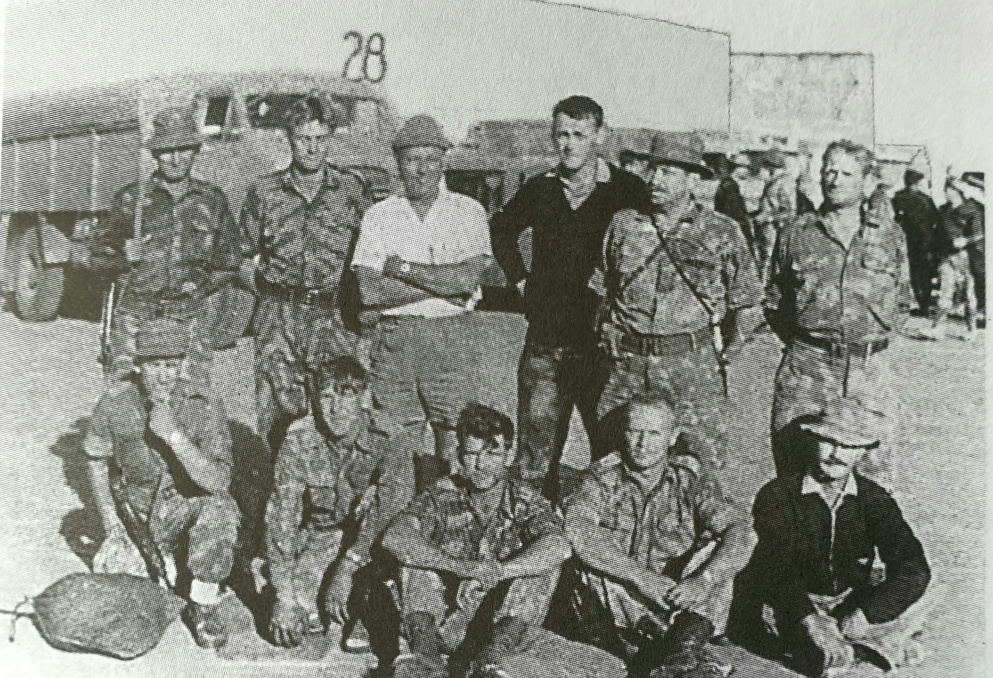
SADF Paratroopers: Captain J Breytenbach
standing left at the back, Lieutenant Kaas
van der Waals kneeling left front
Preparations for Operation Blouwildebees
It was not until Tuesday 23 August 1966 that the members of the attack force were informed of exactly where they were going and what they were going to do.
On Wednesday 24 August 1966 six Sud Aviation Alouette lll helicopters with their crew were flown from Swartkops Air Force Base in Pretoria to Rooikop Air Force Base near Walvis Bay in three Lockheed CI 30 B Hercules transport planes. On their arrival they were immediately assembled and test flown.
On 25 August 1966 the helicopters left for Ruacana Airstrip near the Kunene river. On their way they landed at the small town of Kamamjab in the north of Damaraland (about half way between Walvis Bay and Ruacana) to refuel and where they were joined by the two Alouette lll helicopters from the SAP Windhoek Flight. From Kamamjab the eight helicopters flew a detour to Ruacana to ensure that they did not fly over the operational area. On their arrival at Ruacana the attack force, under the command of Colonel Pat Dillon of the SAP, who were flown in earlier in a Lockheed Cl 30B Hercules to Ruacana, awaited them.
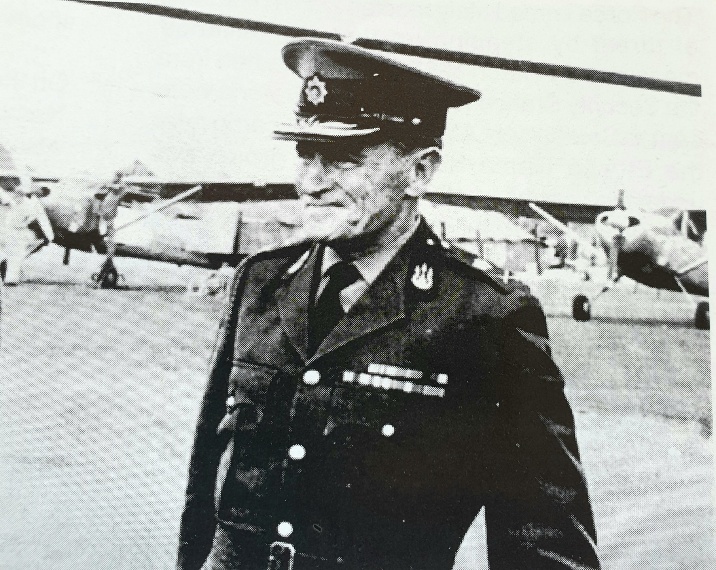
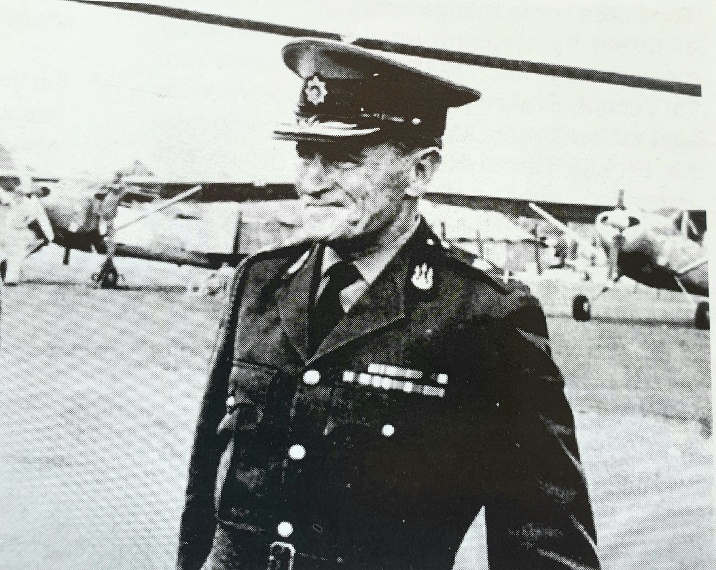
Then SAP Colonel Pat Dillion
SAP Colonel Pat Dillion was in overall command of “Operation Blouwildebees”
The same afternoon the crews were briefed fully about the operation. All helicopters carried SAP police markings.
To allow for the maximum of troops to be carried by the helicopters, it was decided not to take the flight engineers along. It was also planed that the mission leader would fire a red flare from a Very pistol (signal pistol), as soon as the SWAPO base was seen by him, where after the other Alouette lll helicopters would land at pre planned clock positions around the base to drop the troops. The troops then would move inward to make the circle smaller. The mission leader would circle above to controle the troops and to supply air support
The Attack: Operation Blouwildebees
On Friday 26 August 1966, shortly after sunrise at approximately 06:45, 8 Alouette lll helicopters took off from Ruacana air strip. In the Alouette lll helicopter of the mission leader, Colonel Jan Blaauw, were also the operational commander Major Theuns “Rooi Rus” Swanepoel aswell as a “turned” insurgent. It took the helicopters 30 minutes to reach the terrorist base.
The troops were dropped at a height of about 3 meter and moved towards the base.
Although SWAPO/SWALA insurgents had dug trenches around the base for defensive purposes, they were taken by surprise by the heliborne assault.
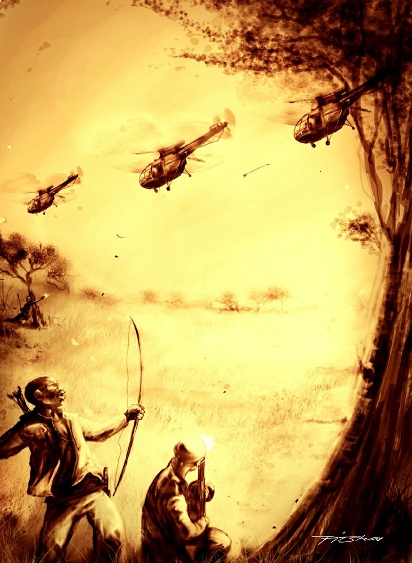
The SWAPO insurgents started to shoot at the attack force with automatic weapons and a bow and arrow. The attack force returned fire but could not see any insurgents. The entire operation barely lasted half an hour.
In the base documents, used mess kits and two dead insurgents, were discovered, one was shot by Major Swanepoel when he aimed a pistol at Colonel Dillion and one by the troops. There were also two wounded insurgents one seriously to was attended to by the medical officer, Commandant Klomp, who saved his life. Eight insurgents were arrested in the base. The attack force suffered no casualties
A short follow-up operation was then launched in which another insurgent was killed. At least 2 insurgents were known to have escaped the battle.
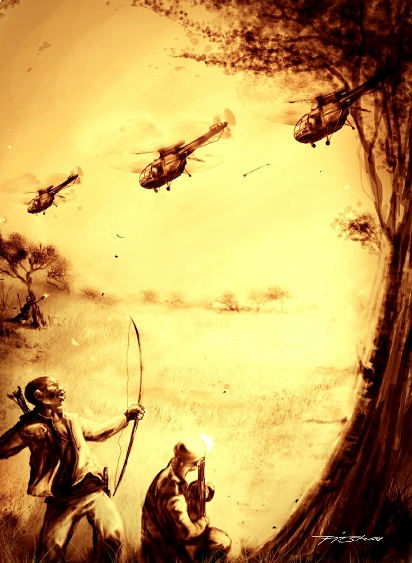
Insurgents shooting at Alouette helicopters with
Bow & Arrow and a Russian PPSh 41 submachine gun
Key SWAPO/SWALA Figures
• John Ya Otto Nankudhu: The SWAPO/SWALA commander who established the camp; he was later captured and served 17 years on Robben Island
• Simeon Linekela Kambo Shixungileni: Deputy Commander of the camp
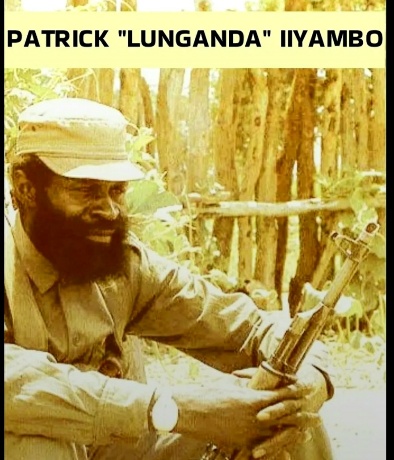
• Patrick “Lungada” Iyambo: A commander who escaped the initial battle and continued fighting until 1974
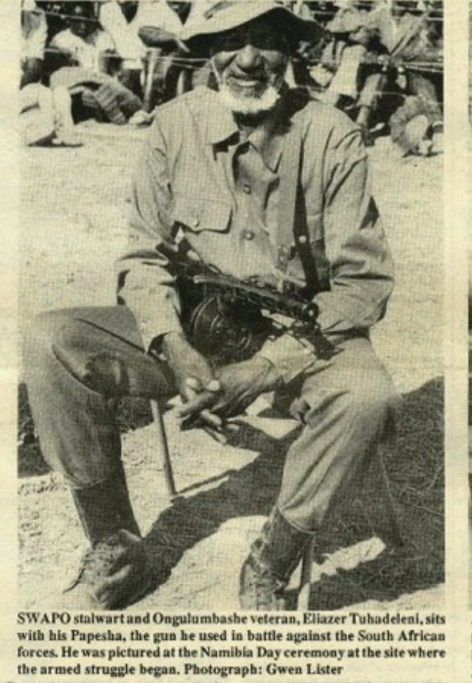
• Eliazer Tuhadeleni (Kaxumba kaNdola): A key figure who escaped the battle but was captured in March 1967
• Leonard Phillemon Shuuya (Castro): A SWAPO member who was captured before the battle and allegedly “converted” to assist South African forces.” The “turned insurgent”
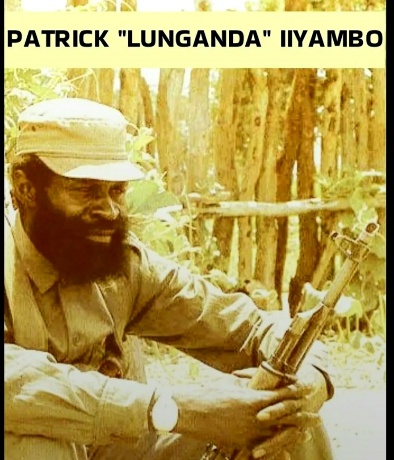
SWAPO/SWALA commander escaped the initial battle and continued fighting until 1974
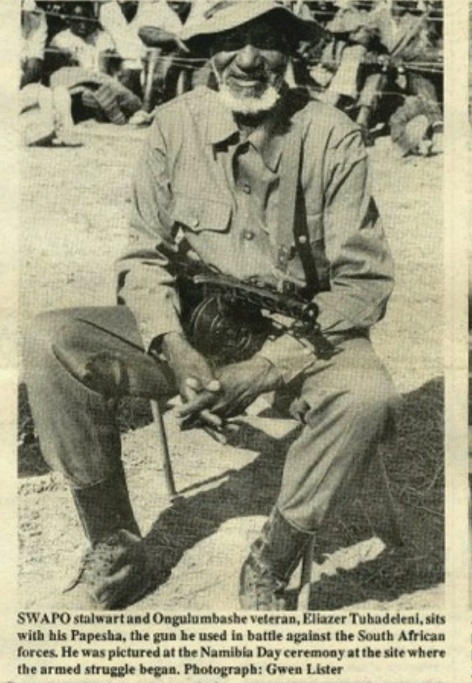
SWAPO/SWALA (later PLAN) Insurgent: Eliazer Tuhadeleni with the Russian PPsh 41 sub machine gun he carried on 26 August 1966
Photograph: The Namibian: Gwen Lister
Ongulumbashe – Where It All Began
The story of John ya Otto Nankudhu: SWAPO/SWALA Insurgent and Leader
Shortly before his death, Linda de Jager, a television producer and journalist interviewed the first SWAPO insurgent to cross the border bearing a gun for the Namibian newspaper “The Namibian”. He was “John ya Otto Nankudhu” the leader of one of the first SWAPO/SWALA camps in the then SWA, namely Ongulumbashe.
The forested area where Ongulumbashe is situated was chosen for its aquifer (a body of rock and/or sediment that holds groundwater) and local support for SWAPO.
The group had just started to build defensive structures and planned to train about 90 insurgents there. Nankudhu survived the attack unscathed to tell the tale of the first skirmish in a conflict that dragged on for 23 years.
On 14 March 1965, the first six SWALA/PLAN insurgents left Kongwa refugee camp in Tanzania during September 1965 with the intention of infiltrating across the Angolan border into northern SWA by foot. Each man carried a Russian PPSh 41 sub-machine gun, a Tokarev or Makarov pistol and ammunition.
They travelled mainly on foot. Nankudhu told that they had walked over 6 000km from Tanzania to Namibia “to open the front in Namibia” and “to establish training camps”.
‘However, according to members of the South African security forces, such was the disparity in resources at the time that in addition to guns, they also had to face bows and arrows at the scene of the first documented skirmish’.
Nankudhu’s Account of the Battle
By means of aerial photographs, the South African security forces had determined the exact position of the base at Ongulumbashe and decided to attack the base from the air with the help of helicopters. Based on intelligence provided by a double agent known as ‘the Major’, Nankudhu claimed that they had expected the attack. Nankudhu said it was true that one of the members in his team, an elderly man, had only a bow and arrow and he shot the arrow towards the man who piloted the helicopter.
Corroborated in supporting interviews by security forces at the time, roughly between 17 to 23 insurgents were in the camp and were fighting that day.
The security forces were dropped by helicopters, which then turned back to fetch reinforcements. At this point, Nankudhu told his soldiers to retreat. While he had managed to escape, two insurgents died, and eight were taken prisoner. The base was captured quickly; two SWAPO fighters were killed, and eight were captured later in a search operation, including future prominent figures like John ya Otto Nankudhu, while others escaped. The captured insurgents were later imprisoned on Robben Island.
According to members of the South African security forces present at the time, the first prisoner repeated two sentences over and over: “I am Swapo, and I will not talk. I know I am going to die for my country.”
The South African security forces achieved a decisive tactical victory, destroying the camp’s infrastructure, including rudimentary training facilities and supplies, with no personnel losses on their side; SWAPO suffered two fighters killed, one wounded, and eight captured, while the remainder dispersed into the bush. This encounter, devoid of broader strategic controversies but pivotal in escalating SWAPO’s shift to protracted external operations from bases in Angola and Zambia, is conventionally recognized as the inaugural clash of the 23-year South African Border War, influencing subsequent counterinsurgency doctrines.
Aftermath
During a closer investigation of the base it was discovered that the base was laid out strictly to the designs laid down by Mao Tse Tung and Ché Guevera, with camouflaged underground shelters and trenches which blended so effectively with the surroundings that the base was invisible from the air.
The terrorists were armed with Russian/ Chinese PPSh 41 submachine guns, Tokarev and Makarov pistols and bow and arrows.
This was the only base to be built by SWAPO/SWALA/PLAN in SWA, during the entire period the Bush War lasted, 1966 to 1989, 23 years.
It is officially recorded in history that this was the beginning of the South African Bush War which would last 23 years (1966- 1989)
After the battle, SWAPO/SWALA blamed spies in the region for betraying them. Sam Nujoma held a council in which he reportedly stated that “We made mistakes. We won’t do that again”.
In response to the attack at Ongulumbashe, during the night of 26/27 September 1966, SWAPO/SWALA insurgents led by Linekela Kambo Shixungileni retaliated by carrying out a successful military attack on the small town of Oshikango, located on the border between SWA and Angola. The attackers succeeded in burning down the offices of the Commissioner of Bantu Affairs in the town, while a Portuguese Army Post on the Angolan side, north of Oshikango, was also targeted and burnt to the ground, when the attackers withdrew.
Establishment of the SAP Counter Insurgency (COIN) Unit
Introduction
Following the battle at Ongulumbashe, the Commissioner of the SAP General Keevy and the other members of the top management, correctly determining that this was only the beginning of a protracted campaign of infiltration and sabotage by SWAPO/SWALA combatants. It became obvious that insurgent activities in Ovamboland were on the increase. This led to the decision that the SAP must establish a dedicated Counter Insurgency unit, not in the sense of a permanent unit, but made up of trained policemen from all over South Africa and SWA. These policemen would then be called up for a period of three month to conduct Counter Insurgency duty. Bases would also be built to accommodate these SAP member through out Ovamboland, Kavango and Eastern Caprivi.
SAP Coin Unit
In 1967 Police Captain (later Colonel) Jan Brand and four colleagues, Dawid Erasmus, Koos van Rensburg, Gert Dempers and Lolla van Vuuren, were approached to establish the COIN unit. They were sent to the SADF Infantry school at Outshoorn to receive intensive infantry training.
With their return the SAP COIN Unit was officially established a few months later in 1967 at the SAP College in Pretoria.
The first training was conducted on the farm “Danke” near Rustenburg, which a friend of the then South African Prime Minister John Vorster, made available. The practical COIN training was conducted there and the theoretical side at the SAP College.
Police officers that were called up from Police Stations and other police offices nationwide and intensively trained for seven weeks in counter insurgency which briefly consisted of:
• Handling of assault weapons
• Pyrotechnics (The science and art creating fireworks)
• Handling of hand grenades and later also mortars and rifle grenades
• Patrols (foot and vehicle patrols)
• Setting up ambushes and counter-ambush techniques
• Combat and skirmishing prowess
• Patrol techniques
• Map and compass reading
• Follow up assessment
• Radio speech procedures
• Survival techniques
• helicopter drill
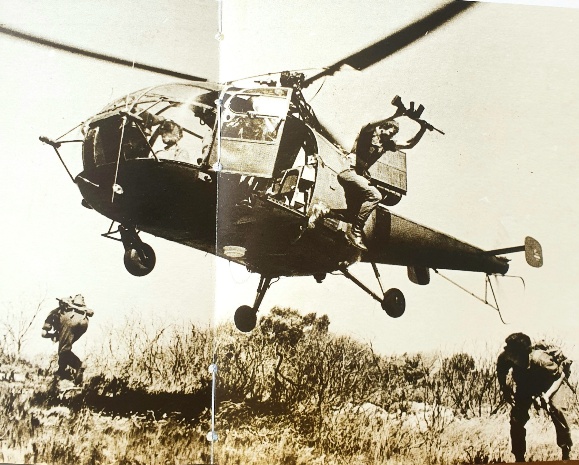
Helicopter drill
The first SAP COIN members were only dispatched after an incident on 18 May 1967, when a ferry boat carrying three police officers on the Zambezi river was attacked, that members of the COIN unit were deployed in the northern border areas of SWA to combat terrorism.
The police officers from all over South Africa and SWA were detached to the SA Police COIN Unit deployed on borders. They would
play a “Full Combat Role” throughout the war until the end in 1989 and would operate on the Angolan border, the Caprivi strip, the full expanse of the RSA border up to Mozambique and inside Rhodesia.
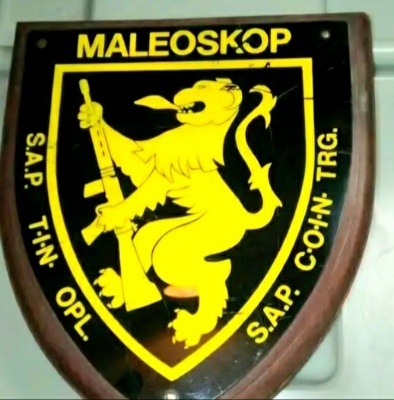
In 1970 the SAP acquired the farm Maleoskop near Groblerddal and was presented to Colonel Pat Dillion as the future training facility for COIN, both the practical as well as the theoretical parts.
After a visit to the farm on 11 February 1970 by Captain Jan Brand, Lieutenant Koos van Rensburg and Sergeants Loffie du Toit and Nic Niemand, the group thought that the farm was not suited for the purpose but were informed that Maleoskop is all that ia available to the SAP.
As there was no infrastructure, everything had to be built from scratch.
At the beginning the theoretical part of two weeks was still presented at the SAP College in Pretoria and the practical part at Maleoskop for two weeks. Between 1970 to 1974 Maleoskop was slowly developed to become the permanent COIN training centre. From 1974 all training was conducted at Maleoskop, a six week intense course.
Although there was some resistance to utilise Maleoskop at the beginning, it was ideal for COIN training as it was virgin Bushveld – the next best to the real areas of the Border War.
Every year over 1 500 policemen were sent to the SAPs COIN training centre at Maleoskop. When called up to serve on the border they first had to attend an intensive refresher course.
Manny ex SAP members that had received COIN training at Maleoskop and then were deployed for COIN duty in Caprivi, Ovamboland, Kavango and Rhodesia look back and say “It was tough, nearest to hell … but we will do it again”. This is the “Esprit de Corps” amongst the Veterans to this day. It was the main motivating factor to found the “SAP Counter Insurgency (COIN) Veterans League.
Uniforms
From 1967 to 1970 the first SAP COIN members deployed to Ovamboland, Kavango and Caprivi, wore khaki overalls, short brown boots, puttees and a brown safari hat as uniforms. The webbing was standard 1960s SADF webbing.
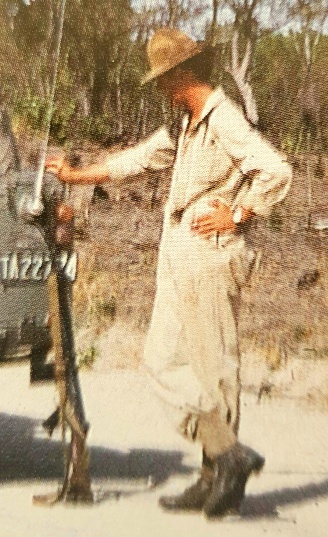
SAP COIN member c/a
1968 Rundu Kavango
In the late 1960s the camouflage uniform for the SAP was developed most probably inspired by the camouflage uniforms, the “Rhodesian Brushstroke” , the Rhodesians army and British South Africa Police (BSAP) used since 1965, when SAP members were deployed in Rhodesia in 1968.
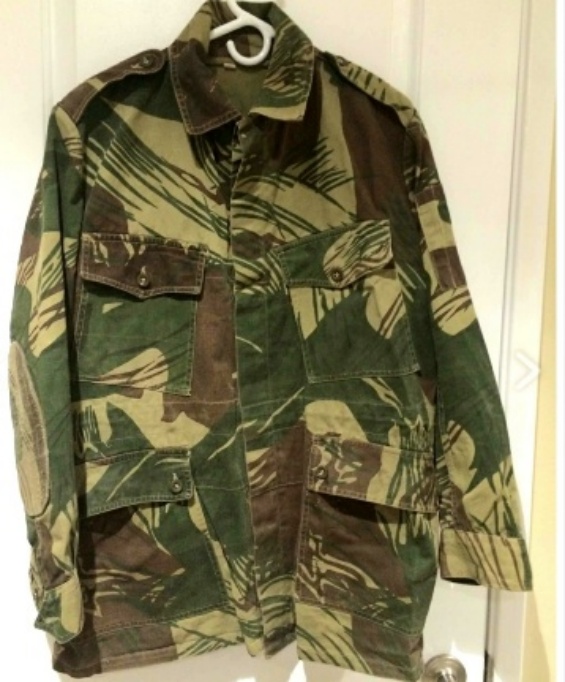
“Rhodesian Brushstroke”
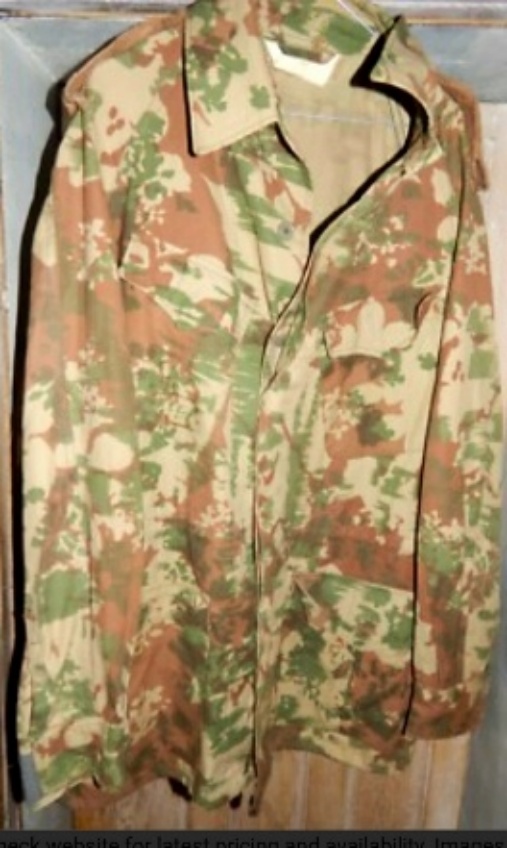
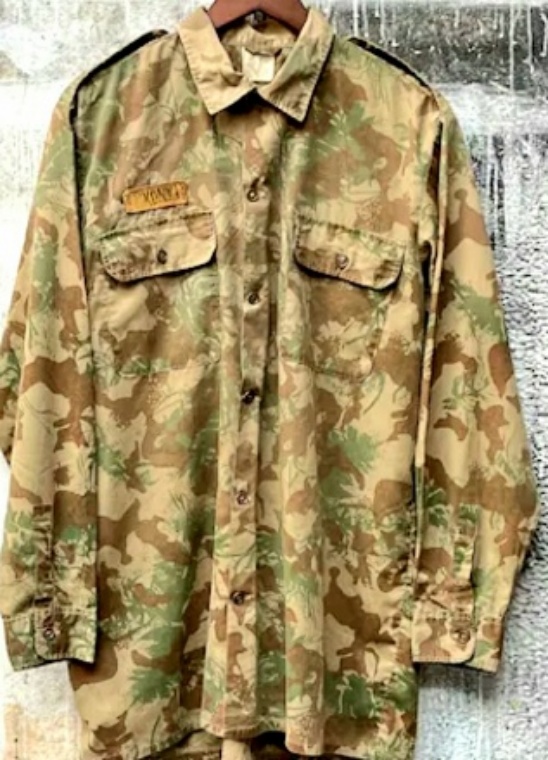
It was in the early 1970 that the SAP COIN Unit was issued with camouflage uniform with the Lizzy pattern”. Originally pattern 1and later pattern 2.
“The ‘Lizzy Pattern’ is a camouflage design featuring a mix of earth tones – browns, greens, and tans – in a splotted, disruptive pattern. It was designed for blending into the bushveld terrain of southern Africa. Think irregular shapes, kinda like a mix of spots and blobs, helping to break up the outline of personnel and gear in vegetation-rich environments”
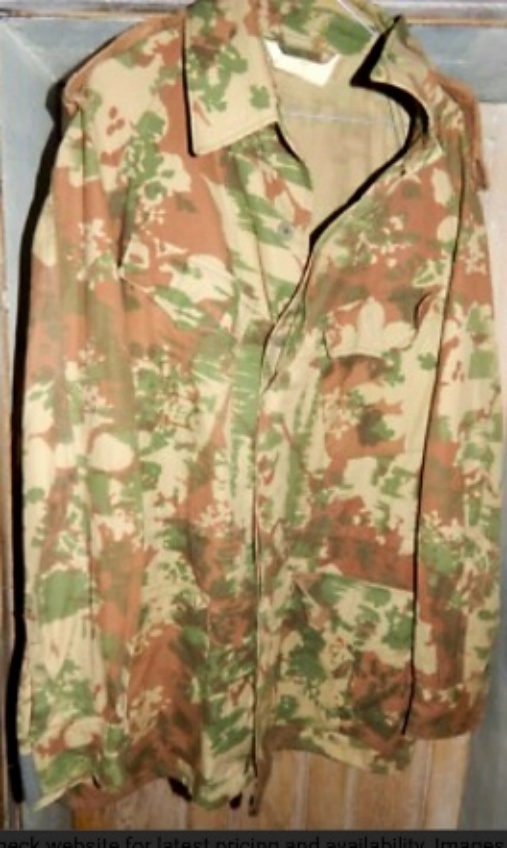
Pattern1 camouflage
1968/9 -1971
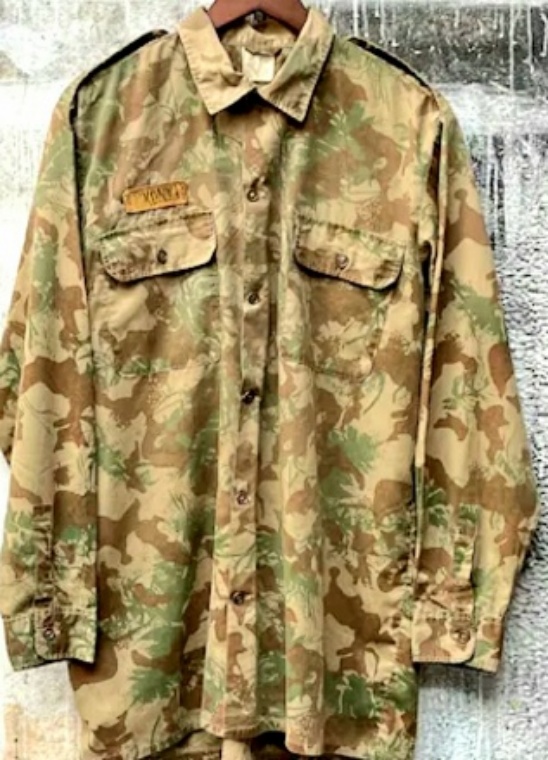
Pattern 2 camouflage
1971 -1989
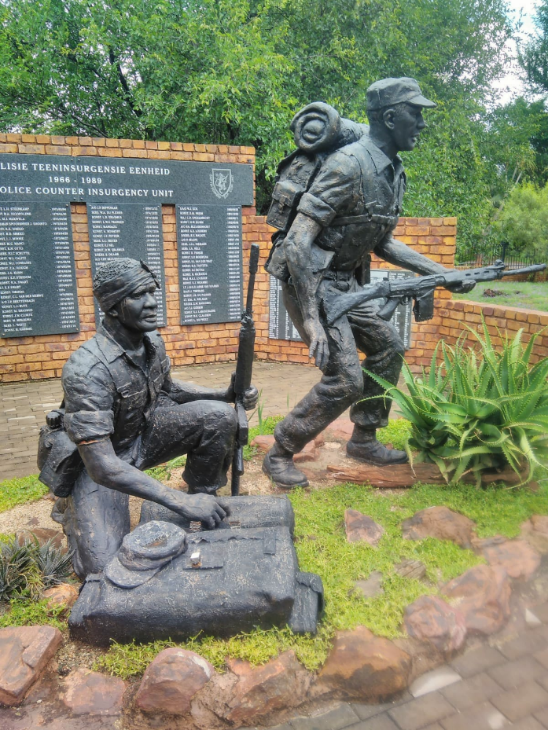
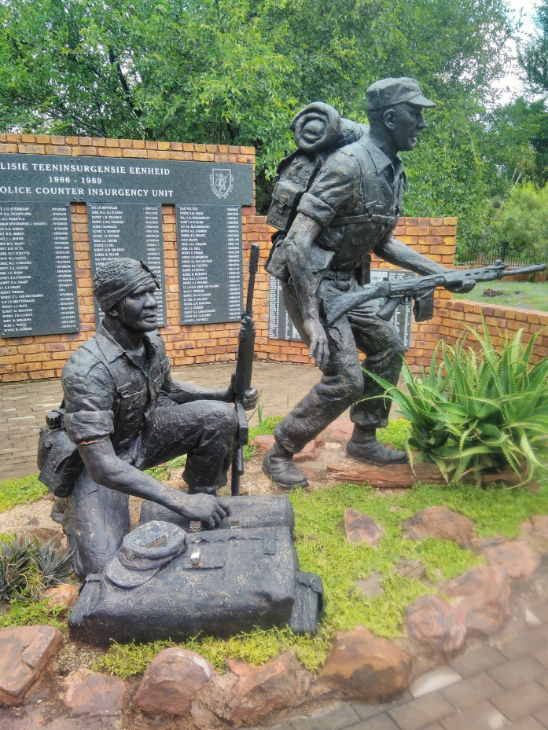
Maleoskop monument at the Wall
of Remembrance in Doringpoort
Plot 61 Breed Street Pretoria
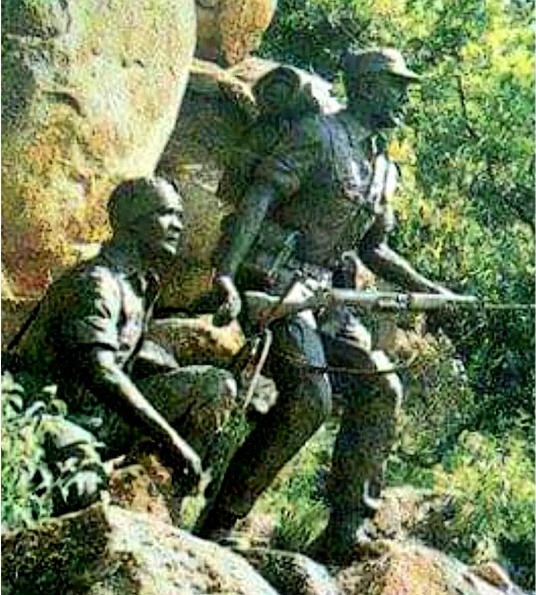
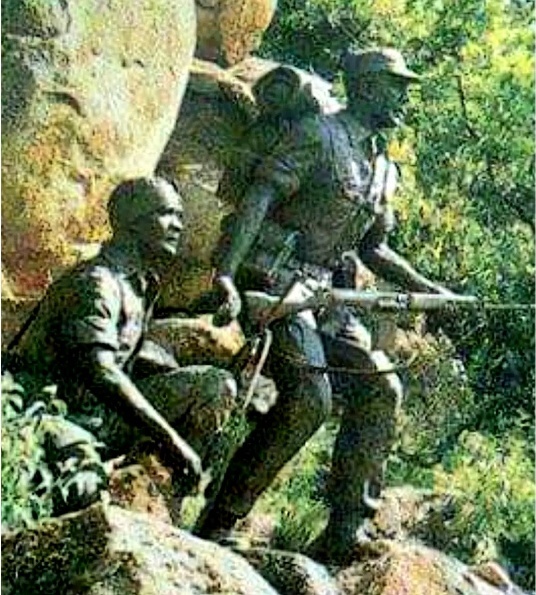
Original Monument at
Malesokop: Inaugurated on
01 April 1987
Historic Events
The first member of the SAP COIN Unit to die on active border duty in SWA, was Constable JA Nel, on 07 March 1967. He died in the Cunene river near Ruacana when he jumped off a pont into the river and was killed by a crocodile. Hie remains were never found.
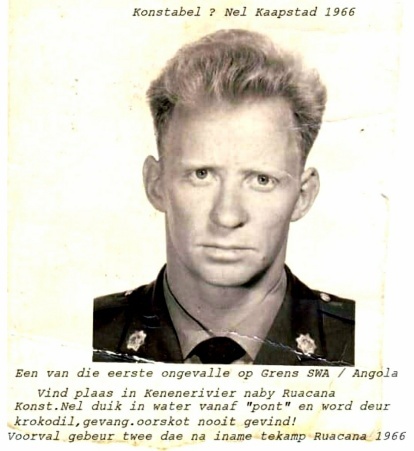
Constable JA Nel
In September 1967 the first SAP COIN members were dispatched to Rhodesia to assist the Rhodesian Army and the British South Africa Police (BSAP) .
The first SA Police (COIN Unit) member to be killed in action during the Rhodesian Bush War was Constable D “Danie” Du Toit in a contact with ZIPRA terrorists in the Rawamombe range in the Kariba area during Operation Griffon. He was posthumously rewarded the SA Police Star for Distinguished Service.
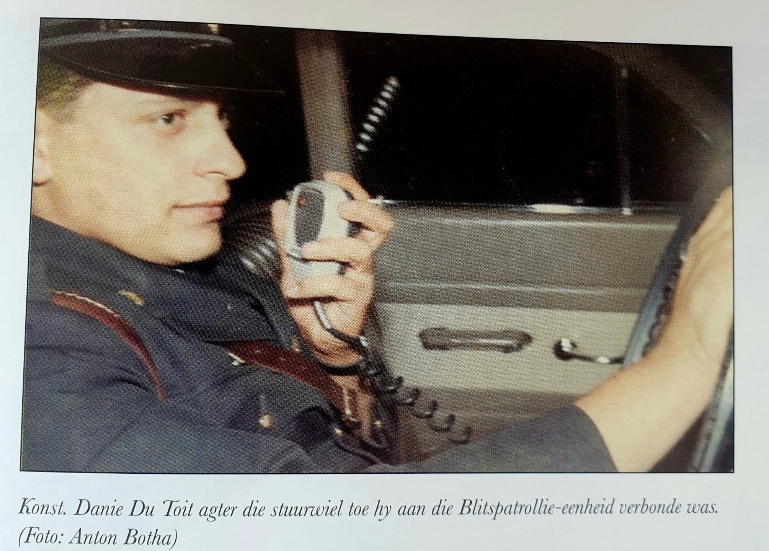
Constable Danie du Toit
SAP COIN Veterans League Honoury President, W/O Johann Visagie, is the only surviving member of the “Ongulumbashe Attack Force” .
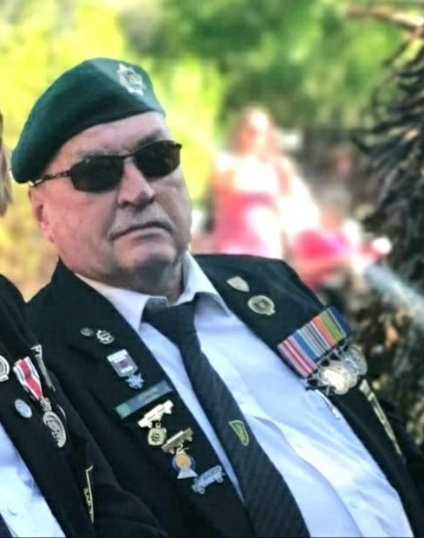
SAP COIN Veteran member
Johann Visagie
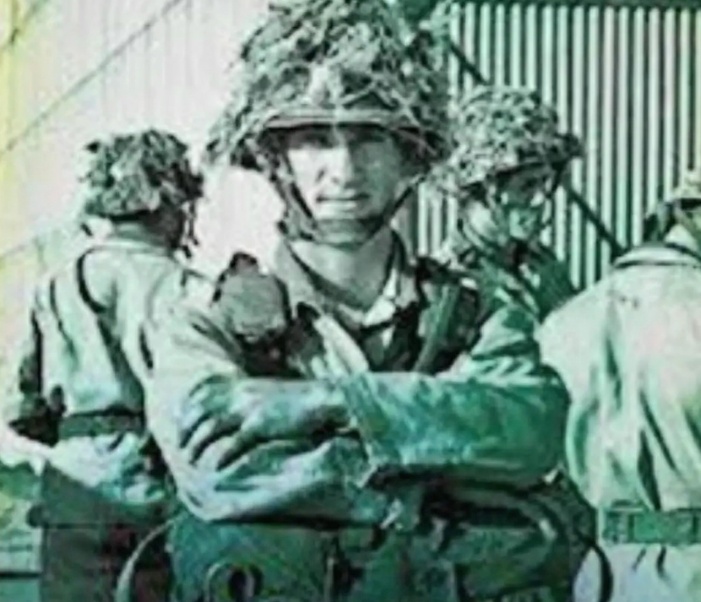
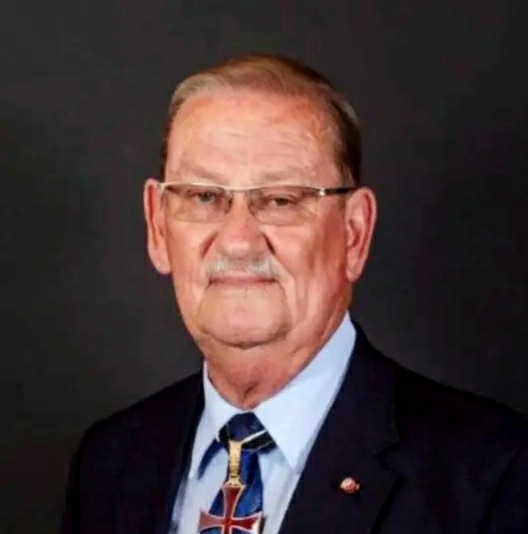
General Kaas van der Waals, then Lieutenant: 1st Parachute Battalion: Ongulumbashe
The South African Police (SAP) Counter Insurgency (COIN) Unit Veterans League’s Annual Memmorial
On a crisp Saturday morning, closest to August 26th, the South African Police (SAP) Counter Insurgency (Coin) Unit Veterans League gather at the Maleoskop statues placed infront of the Wall of Remembrance, that honours the 105 men who from 1966 to 1989 served and sacrificed their lives with the South African Police (SAP) Counter Insurgency (COIN) Unit, during the Rhodesian and South West African (SWA) Bush War.
Their mission is to pay homage to the brave police officers who had made the ultimate sacrifice in the line of active service. The SAP COIN Unit Veterans league, comprising of Border War Veterans and Supporters attend the event and the event is also attened by members of other military Veteran Organisations. Together, they stand as a symbol of support for the families of the fallen heroes and a reminder that their sacrifices will never be forgotten. This collective effort ensures that the legacies of the brave officers live on, inspiring future generations in the form of younger supporter members to follow in their footsteps.
As the sun cast its golden rays upon the
statues, the veterans are welcomed and each attendee takes his seat. With each step, they draw closer to the memorial, their hearts heavy with reverence. The air is filled with the sweet scent of wreaths, carefully prepared to adorn the Memorial wall.
The ceremony opens with the placement of the banners of the various Veteran Organisations attending, being deployed with brisk drill movements. After a welcoming address it is followed with a poignant speech, delivered by the league’s chairman. He first gives a summary of the unique history of the day of commemoration, 26 August 1966, when the Border War or Bush War started at a SWAPO training camp in Ovamboland in South West Africa (SWA), Ongulumbashe
with Operation Blouwildebees. He speaks of the selflessness and courage exhibited by the fallen officers for 23 years until the end of the Bush War, who had dedicated their lives to protecting their country and its people.
The chaplain’s service follows setting the tone for the commemoration ceremony, offering words of comfort and reflection and is followed by the the Veterans version of the song “Hallelujah” sung by a young female COIN Supporter. Then the Tribute “We Remember”, a poignant acknowledgment of the sacrifices made by fallen comrades. The Last Post (bugle call), a traditional signal to commemorate the fallen, played by a trumpeter followed by two minutes of silence as a moment for contemplation, reflection, and respect. At the end the Reveille (bugle call), a symbolic call to awaken, signalling the end of the two minute silence and a reminder to move forward, is played by the trumpeter. The veterans stand in contemplation, remembering the sacrifices made by their comrades.
Family members and friends, followed by the veterans of the various Military Veterans Organisations attending then lay wreaths at the base of the wall, their hands trembling with emotion but still saluting smartly. Afterwards a special tribute is also paid to the police dogs and all other animals who had lost their lives during the Bush War. This is proudly done by a COIN veteran dog handler and his dog. The veterans place additional wreaths against the right corner of the Wall of Remembrance, where the plaque with the names of the dogs are engraved, acknowledging the invaluable service and loyalty of these four-legged heroes.
This is also a day to remember their fellow members of the SAP COIN Unit Veterans League who passed on at an additional wall specially placed at the side of the Memorial Wall to pay tribute to their role in the Border War and the erection of the Memorial wall. Their family members have the chance to lay flowers as a tribute.
The SAP Coin Unit Veterans League’s annual ceremony at their Memorial wall is a powerful way to honor the memories of fallen police officers and their loyal canine partners. The bravery and dedication of these individuals will never be forgotten, thanks to this poignant reminder. The fact that their names are etched on the wall serves as a permanent reminder of their sacrifice, ensuring that their memory lives on. It’s a testament to the bond between those who served together, and a reminder of the risks and challenges they had faced.
This tribute is a heartfelt way to acknowledge the contributions of those who have made the ultimate sacrifice, and to provide closure and solace to their families and colleagues. It’s a tradition that will continue to inspire and motivate future generations of police officers and their canine partners.
Wolfgang Witschas
Comments by Author
The article’s author, having served in the SAP, attended the six-week SAP COIN training course from July to August 1977, giving him first-hand experience of the COIN training SAP officers underwent.
References:
https://en.wikepedia.org/wiki/ Battle_of_Ongulumbashe
Books:
https://www.tandfonline.com/doi/full/10.1080/09592418.2025.2586254
Eye in the Sky: A Brief History of the SA Police Service Air Wing: African Aviation Series
Herman Bosman
Freeworld Publications
Pages: 79 – 83
Eerste Daar
WS van der Waals
Pages: 41 – 44
Van Ovamboland tot Mashonaland
Louis Lubbe
Pages: 256, 275
Photographs:
Van Ovamboland tot Mashonaland
Louis Lubbe
Pages: 33 & 256
Photographs:
Africa’s Super Power
Paul Moorecraft
Page: 72 – 74, 153
Photographs:
Ongulumbashe: Die Begin van die Bosoorlog
Paul J Els
Page: 131
The Start of the Border War (1966 – 1989) and The History of the South African Police (SAP) Counter Insurgency (COIN) Unit
Compiled by Wolfgang Witschas
Abstract
The Battle of Ongulumbashe (also known as Omugulugwombashe), or Operation Blouwildebees, was a pivotal clash between the South African Police (SAP), the South African Defence Force (SADF) and the South West African People’s Organization (SWAPO)/Peoples Liberation Army of Namibia (PLAN), on Friday 26 August 1966, near the hamlet of Ongulumbashe in Ovamboland, northern South West Africa (SWA) (now Namibia). This battle marked the first direct confrontation between the South African security forces and SWAPO insurgents, signalling the start of the 23 year long South African Border War from 1966 to 1989.
Key Words
Ongulumbashe (Omugulugwombashe)
Operation Blouwildebees
South West African People’s Organization (SWAPO)
South West African Liberation Army (SWALA)
Peoples Liberation Army of Namibia (PLAN)
Battle of Ongulumbashe
South African Police (SAP)
South African Defence Force (SADF)
South African Police (SAP) Counter Insurgency (COIN) Unit
Pasco Civil Engineering Company (PASCO)
Sud Aviation Alouette III helicopters
Introduction
This year on 26 August 1966 Sixty Years ago was the beginning of the South African Border War: 1966 to 1989
In 1962, the United Nations (UN) General Assembly adopted the position that South Africa’s mandate over South West Africa (in force since the end of World War I) e be terminated and that the territory should be given independence. The inaction of South Africa adhering to the UN resolution to grant independence, emboldened SWAPO, who had been preparing for an armed struggle against the South African authorities in SWA since the early 1960s to initiate the armed struggle. SWAPO announced in 1962 the establishment its armed wing, the South West African Liberation Army (SWALA). It was not until 1973 that SWALA was formally renamed the People’s Liberation Army of Namibia (PLAN). The title may have been adopted informally or semi-formally as early as 1969.
Though SWAPO had already carried out several attacks in 1965 and early 1966, the battle marked the first time that elements of the South African security forces directly clashed with SWAPO insurgents and is considered to be the start of the South African Border War on 26 August 1966.
For this purpose young Ovambo males were recruited under false pretence that they would receive education in foreign countries. SWAPO took these recruits to Tanzania for military training. Those with higher educational after completing their basic training were sent for specialist military training to countries such as Algeria, China, Cuba, Egypt, North Korea and Russia.
The First Trained Insurgents Return to SWA
During September 1965 the first six trained insurgents, armed with Soviet and Chinese automatic weapons arrived in Ovambo land, SWA. They had infiltrates Ovamboland unnoticed and established an underground hideout in the vicinity of a small hamlet, Ongulumbashe, there after they immediately started to recruit and train local Ovambos in guerrilla warfare and also initiated a campaign of intimidation.
The Security Branch of the SAP became aware of these developments and took action in the form of setting up regular patrols in the area to track down and to discourage acts of intimidation and terrorism.
During September 1965 two Sud Aviation
Alouette III helicopters were dispatched from South Africa to Windhoek to establish the first SAP Flight, the “SAP Windhoek Flight”. The helicopters were then dispatched to Ovamboland to aid the detachment of South African Police (SAP) assigned to patrol and guard the border.
Meanwhile during February 1966, a second group of ten insurgents, who by mistake had attacked two shops and killed both shop owners, one Portuguese and one Ovambo, in Angola. They believed that they had crossed the border from Angola to SWA. The group however decided to disband, but three of the insurgents were captured shortly afterwards by some of the locals near Rundu and handed over to the police.
SAP Security Branch Investigation
During March 1966, information was received during intensive surveillance operations utilising the cover of a civilian company, Pasco Civil Engineering Company (PASCO), that SWAPO/SWALA had established a terrorist training base in SWA, in the west of Ovamboland with the name of Ongulumbashe located in a forested area 22 km west of the hamlet of Tsandi, with the sole purpose of terrorising the area.
And so Operation “BLOUWILDEBEES” was born.
Prelude to Operation Blouwildebees
The planning of Operation Blouwildebees was conducted between Colonel PJ “Pat” Dillon (SAP), Colonel JDJ “Jan” Blaauw (SA Air Force) and Commandant RT “Tommy” Renfree (SA Armoured Corps).
Early in August 1966 Dillon, Blaauw and Renfree had conducted a ground reconnaissance of the area of the Ongulumbashe base and on Wednesday 24 August 1966 they conducted aerial reconnaissance from Ruacana in a SAP Cessna 85 and returned to Ruacana.
Training of the SAP members
One hundred and fifty selected policemen were drawn from various units and eventually about eighty were selected for the training. Eleven members of 1st Parachute Battalion of the South African Defence Force (SADF), under the command of Captain Jan Breytenbach were selected for the mission. The other members were Lieutenant Willem “Kaas” van der Waals, Commandant Anton Klomp (Medical Officer) and seven NCOs. The SADF members travelled from Bloemfontein to Pretoria to be accommodated at the SAP College. All SADF paratroopers were sworn in as members of the SAP. The paratroopers first had to train the SAP members under the command of Major Frik Engels. The training took place from 11 to 15 August 1966 and the police men were trained in basic counter insurgency, handling of assault weapons (FN rifles and Walther HMK sub mashine guns) especially in dense bush and helicopter drill. The training took place at the Elandsfontein shooting range to the west of Pretoria. Eventually only 35 policemen qualified to be part of the attack force.
The police members of the attack force wore civilian clothes and the paratroopers wore camouflage uniforms (Rhodesian and Portuguese altered with bleach spots).
SADF Paratroopers: Captain J Breytenbach
standing left at the back, Lieutenant Kaas
van der Waals kneeling left front
Preparations for Operation Blouwildebees
It was not until Tuesday 23 August 1966 that the members of the attack force were informed of exactly where they were going and what they were going to do.
On Wednesday 24 August 1966 six Sud Aviation Alouette lll helicopters with their crew were flown from Swartkops Air Force Base in Pretoria to Rooikop Air Force Base near Walvis Bay in three Lockheed CI 30 B Hercules transport planes. On their arrival they were immediately assembled and test flown.
On 25 August 1966 the helicopters left for Ruacana Airstrip near the Kunene river. On their way they landed at the small town of Kamamjab in the north of Damaraland (about half way between Walvis Bay and Ruacana) to refuel and where they were joined by the two Alouette lll helicopters from the SAP Windhoek Flight. From Kamamjab the eight helicopters flew a detour to Ruacana to ensure that they did not fly over the operational area. On their arrival at Ruacana the attack force, under the command of Colonel Pat Dillon of the SAP, who were flown in earlier in a Lockheed Cl 30B Hercules to Ruacana, awaited them.
Then SAP Colonel Pat Dillion
SAP Colonel Pat Dillion was in overall command of “Operation Blouwildebees”
The same afternoon the crews were briefed fully about the operation. All helicopters carried SAP police markings.
To allow for the maximum of troops to be carried by the helicopters, it was decided not to take the flight engineers along. It was also planed that the mission leader would fire a red flare from a Very pistol (signal pistol), as soon as the SWAPO base was seen by him, where after the other Alouette lll helicopters would land at pre planned clock positions around the base to drop the troops. The troops then would move inward to make the circle smaller. The mission leader would circle above to controle the troops and to supply air support
The Attack: Operation Blouwildebees
On Friday 26 August 1966, shortly after sunrise at approximately 06:45, 8 Alouette lll helicopters took off from Ruacana air strip. In the Alouette lll helicopter of the mission leader, Colonel Jan Blaauw, were also the operational commander Major Theuns “Rooi Rus” Swanepoel aswell as a “turned” insurgent. It took the helicopters 30 minutes to reach the terrorist base.
The troops were dropped at a height of about 3 meter and moved towards the base.
Although SWAPO/SWALA insurgents had dug trenches around the base for defensive purposes, they were taken by surprise by the heliborne assault.
The SWAPO insurgents started to shoot at the attack force with automatic weapons and a bow and arrow. The attack force returned fire but could not see any insurgents. The entire operation barely lasted half an hour.
In the base documents, used mess kits and two dead insurgents, were discovered, one was shot by Major Swanepoel when he aimed a pistol at Colonel Dillion and one by the troops. There were also two wounded insurgents one seriously to was attended to by the medical officer, Commandant Klomp, who saved his life. Eight insurgents were arrested in the base. The attack force suffered no casualties
A short follow-up operation was then launched in which another insurgent was killed. At least 2 insurgents were known to have escaped the battle.
Insurgents shooting at Alouette helicopters with
Bow & Arrow and a Russian PPSh 41 submachine gun
Key SWAPO/SWALA Figures
• John Ya Otto Nankudhu: The SWAPO/SWALA commander who established the camp; he was later captured and served 17 years on Robben Island
• Simeon Linekela Kambo Shixungileni: Deputy Commander of the camp
• Patrick “Lungada” Iyambo: A commander who escaped the initial battle and continued fighting until 1974
• Eliazer Tuhadeleni (Kaxumba kaNdola): A key figure who escaped the battle but was captured in March 1967
• Leonard Phillemon Shuuya (Castro): A SWAPO member who was captured before the battle and allegedly “converted” to assist South African forces.” The “turned insurgent”
SWAPO/SWALA commander escaped the initial battle and continued fighting until 1974
SWAPO/SWALA (later PLAN) Insurgent: Eliazer Tuhadeleni with the Russian PPsh 41 sub machine gun he carried on 26 August 1966
Photograph: The Namibian: Gwen Lister
Ongulumbashe – Where It All Began
The story of John ya Otto Nankudhu: SWAPO/SWALA Insurgent and Leader
Shortly before his death, Linda de Jager, a television producer and journalist interviewed the first SWAPO insurgent to cross the border bearing a gun for the Namibian newspaper “The Namibian”. He was “John ya Otto Nankudhu” the leader of one of the first SWAPO/SWALA camps in the then SWA, namely Ongulumbashe.
The forested area where Ongulumbashe is situated was chosen for its aquifer (a body of rock and/or sediment that holds groundwater) and local support for SWAPO.
The group had just started to build defensive structures and planned to train about 90 insurgents there. Nankudhu survived the attack unscathed to tell the tale of the first skirmish in a conflict that dragged on for 23 years.
On 14 March 1965, the first six SWALA/PLAN insurgents left Kongwa refugee camp in Tanzania during September 1965 with the intention of infiltrating across the Angolan border into northern SWA by foot. Each man carried a Russian PPSh 41 sub-machine gun, a Tokarev or Makarov pistol and ammunition.
They travelled mainly on foot. Nankudhu told that they had walked over 6 000km from Tanzania to Namibia “to open the front in Namibia” and “to establish training camps”.
‘However, according to members of the South African security forces, such was the disparity in resources at the time that in addition to guns, they also had to face bows and arrows at the scene of the first documented skirmish’.
Nankudhu’s Account of the Battle
By means of aerial photographs, the South African security forces had determined the exact position of the base at Ongulumbashe and decided to attack the base from the air with the help of helicopters. Based on intelligence provided by a double agent known as ‘the Major’, Nankudhu claimed that they had expected the attack. Nankudhu said it was true that one of the members in his team, an elderly man, had only a bow and arrow and he shot the arrow towards the man who piloted the helicopter.
Corroborated in supporting interviews by security forces at the time, roughly between 17 to 23 insurgents were in the camp and were fighting that day.
The security forces were dropped by helicopters, which then turned back to fetch reinforcements. At this point, Nankudhu told his soldiers to retreat. While he had managed to escape, two insurgents died, and eight were taken prisoner. The base was captured quickly; two SWAPO fighters were killed, and eight were captured later in a search operation, including future prominent figures like John ya Otto Nankudhu, while others escaped. The captured insurgents were later imprisoned on Robben Island.
According to members of the South African security forces present at the time, the first prisoner repeated two sentences over and over: “I am Swapo, and I will not talk. I know I am going to die for my country.”
The South African security forces achieved a decisive tactical victory, destroying the camp’s infrastructure, including rudimentary training facilities and supplies, with no personnel losses on their side; SWAPO suffered two fighters killed, one wounded, and eight captured, while the remainder dispersed into the bush. This encounter, devoid of broader strategic controversies but pivotal in escalating SWAPO’s shift to protracted external operations from bases in Angola and Zambia, is conventionally recognized as the inaugural clash of the 23-year South African Border War, influencing subsequent counterinsurgency doctrines.
Aftermath
During a closer investigation of the base it was discovered that the base was laid out strictly to the designs laid down by Mao Tse Tung and Ché Guevera, with camouflaged underground shelters and trenches which blended so effectively with the surroundings that the base was invisible from the air.
The terrorists were armed with Russian/ Chinese PPSh 41 submachine guns, Tokarev and Makarov pistols and bow and arrows.
This was the only base to be built by SWAPO/SWALA/PLAN in SWA, during the entire period the Bush War lasted, 1966 to 1989, 23 years.
It is officially recorded in history that this was the beginning of the South African Bush War which would last 23 years (1966- 1989)
After the battle, SWAPO/SWALA blamed spies in the region for betraying them. Sam Nujoma held a council in which he reportedly stated that “We made mistakes. We won’t do that again”.
In response to the attack at Ongulumbashe, during the night of 26/27 September 1966, SWAPO/SWALA insurgents led by Linekela Kambo Shixungileni retaliated by carrying out a successful military attack on the small town of Oshikango, located on the border between SWA and Angola. The attackers succeeded in burning down the offices of the Commissioner of Bantu Affairs in the town, while a Portuguese Army Post on the Angolan side, north of Oshikango, was also targeted and burnt to the ground, when the attackers withdrew.
Establishment of the SAP Counter Insurgency (COIN) Unit
Introduction
Following the battle at Ongulumbashe, the Commissioner of the SAP General Keevy and the other members of the top management, correctly determining that this was only the beginning of a protracted campaign of infiltration and sabotage by SWAPO/SWALA combatants. It became obvious that insurgent activities in Ovamboland were on the increase. This led to the decision that the SAP must establish a dedicated Counter Insurgency unit, not in the sense of a permanent unit, but made up of trained policemen from all over South Africa and SWA. These policemen would then be called up for a period of three month to conduct Counter Insurgency duty. Bases would also be built to accommodate these SAP member through out Ovamboland, Kavango and Eastern Caprivi.
SAP Coin Unit
In 1967 Police Captain (later Colonel) Jan Brand and four colleagues, Dawid Erasmus, Koos van Rensburg, Gert Dempers and Lolla van Vuuren, were approached to establish the COIN unit. They were sent to the SADF Infantry school at Outshoorn to receive intensive infantry training.
With their return the SAP COIN Unit was officially established a few months later in 1967 at the SAP College in Pretoria.
The first training was conducted on the farm “Danke” near Rustenburg, which a friend of the then South African Prime Minister John Vorster, made available. The practical COIN training was conducted there and the theoretical side at the SAP College.
Police officers that were called up from Police Stations and other police offices nationwide and intensively trained for seven weeks in counter insurgency which briefly consisted of:
• Handling of assault weapons
• Pyrotechnics (The science and art creating fireworks)
• Handling of hand grenades and later also mortars and rifle grenades
• Patrols (foot and vehicle patrols)
• Setting up ambushes and counter-ambush techniques
• Combat and skirmishing prowess
• Patrol techniques
• Map and compass reading
• Follow up assessment
• Radio speech procedures
• Survival techniques
• helicopter drill
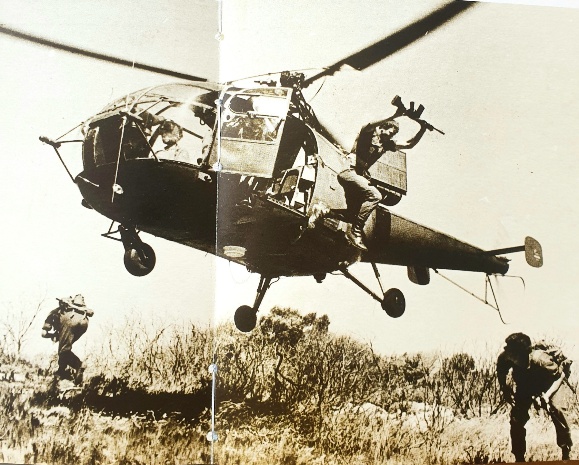
Helicopter drill
The first SAP COIN members were only dispatched after an incident on 18 May 1967, when a ferry boat carrying three police officers on the Zambezi river was attacked, that members of the COIN unit were deployed in the northern border areas of SWA to combat terrorism.
The police officers from all over South Africa and SWA were detached to the SA Police COIN Unit deployed on borders. They would
play a “Full Combat Role” throughout the war until the end in 1989 and would operate on the Angolan border, the Caprivi strip, the full expanse of the RSA border up to Mozambique and inside Rhodesia.
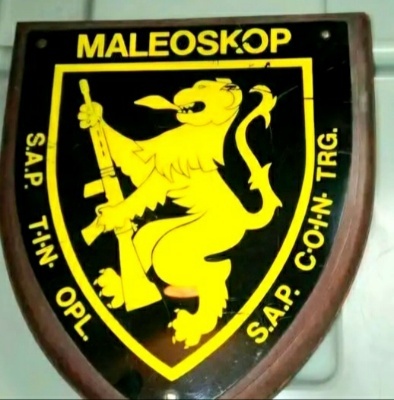
In 1970 the SAP acquired the farm Maleoskop near Groblerddal and was presented to Colonel Pat Dillion as the future training facility for COIN, both the practical as well as the theoretical parts.
After a visit to the farm on 11 February 1970 by Captain Jan Brand, Lieutenant Koos van Rensburg and Sergeants Loffie du Toit and Nic Niemand, the group thought that the farm was not suited for the purpose but were informed that Maleoskop is all that ia available to the SAP.
As there was no infrastructure, everything had to be built from scratch.
At the beginning the theoretical part of two weeks was still presented at the SAP College in Pretoria and the practical part at Maleoskop for two weeks. Between 1970 to 1974 Maleoskop was slowly developed to become the permanent COIN training centre. From 1974 all training was conducted at Maleoskop, a six week intense course.
Although there was some resistance to utilise Maleoskop at the beginning, it was ideal for COIN training as it was virgin Bushveld – the next best to the real areas of the Border War.
Every year over 1 500 policemen were sent to the SAPs COIN training centre at Maleoskop. When called up to serve on the border they first had to attend an intensive refresher course.
Manny ex SAP members that had received COIN training at Maleoskop and then were deployed for COIN duty in Caprivi, Ovamboland, Kavango and Rhodesia look back and say “It was tough, nearest to hell … but we will do it again”. This is the “Esprit de Corps” amongst the Veterans to this day. It was the main motivating factor to found the “SAP Counter Insurgency (COIN) Veterans League.
Uniforms
From 1967 to 1970 the first SAP COIN members deployed to Ovamboland, Kavango and Caprivi, wore khaki overalls, short brown boots, puttees and a brown safari hat as uniforms. The webbing was standard 1960s SADF webbing.
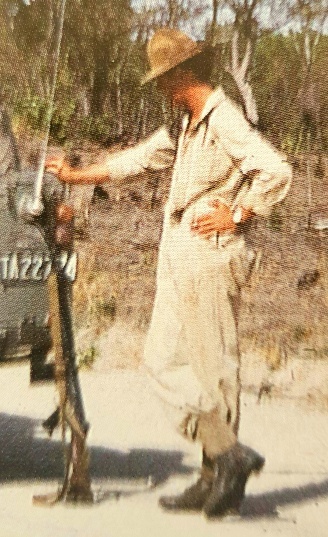
SAP COIN member c/a
1968 Rundu Kavango
In the late 1960s the camouflage uniform for the SAP was developed most probably inspired by the camouflage uniforms, the “Rhodesian Brushstroke” , the Rhodesians army and British South Africa Police (BSAP) used since 1965, when SAP members were deployed in Rhodesia in 1968.
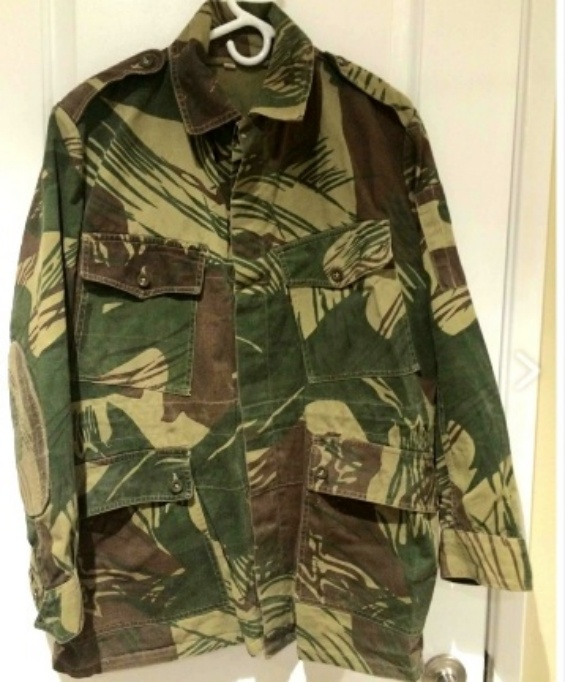
“Rhodesian Brushstroke”
It was in the early 1970 that the SAP COIN Unit was issued with camouflage uniform with the Lizzy pattern”. Originally pattern 1and later pattern 2.
“The ‘Lizzy Pattern’ is a camouflage design featuring a mix of earth tones – browns, greens, and tans – in a splotted, disruptive pattern. It was designed for blending into the bushveld terrain of southern Africa. Think irregular shapes, kinda like a mix of spots and blobs, helping to break up the outline of personnel and gear in vegetation-rich environments”
Pattern1 camouflage
1968/9 -1971
Pattern 2 camouflage
1971 -1989
Maleoskop monument at the Wall
of Remembrance in Doringpoort
Plot 61 Breed Street Pretoria
Original Monument at
Malesokop: Inaugurated on
01 April 1987
Historic Events
The first member of the SAP COIN Unit to die on active border duty in SWA, was Constable JA Nel, on 07 March 1967. He died in the Cunene river near Ruacana when he jumped off a pont into the river and was killed by a crocodile. Hie remains were never found.
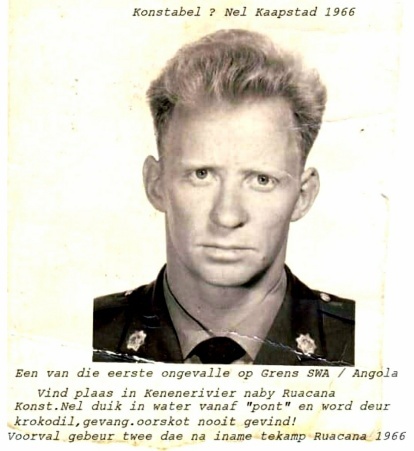
Constable JA Nel
In September 1967 the first SAP COIN members were dispatched to Rhodesia to assist the Rhodesian Army and the British South Africa Police (BSAP) .
The first SA Police (COIN Unit) member to be killed in action during the Rhodesian Bush War was Constable D “Danie” Du Toit in a contact with ZIPRA terrorists in the Rawamombe range in the Kariba area during Operation Griffon. He was posthumously rewarded the SA Police Star for Distinguished Service.
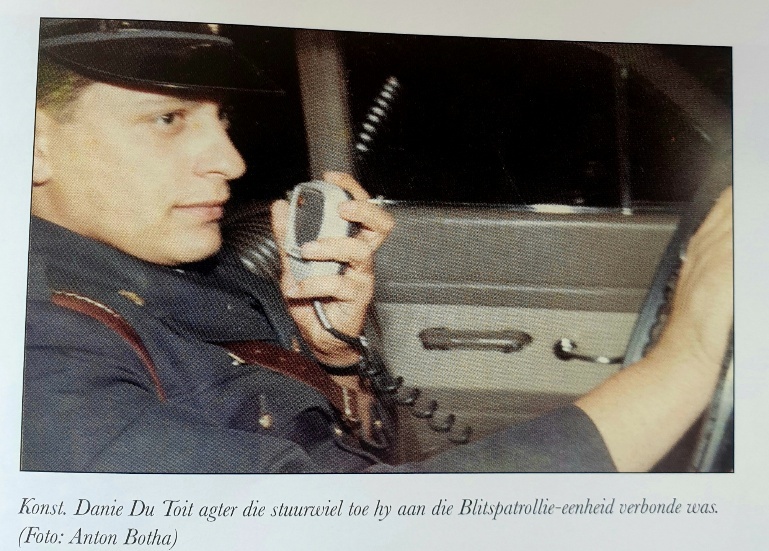
Constable Danie du Toit
SAP COIN Veterans League Honoury President, W/O Johann Visagie, is the only surviving member of the “Ongulumbashe Attack Force” .
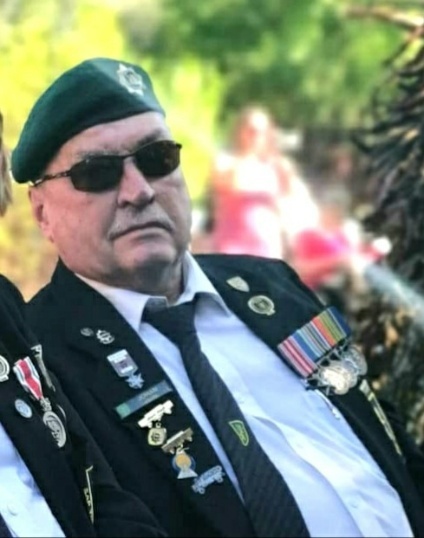
SAP COIN Veteran member
Johann Visagie
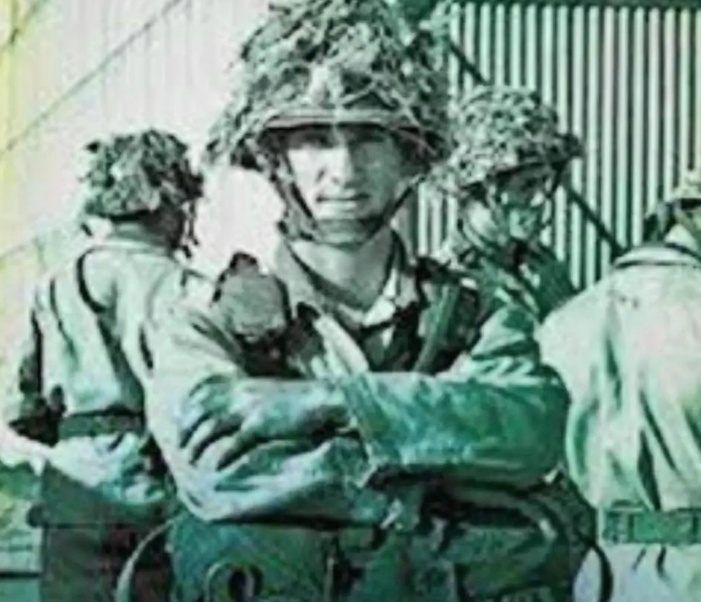
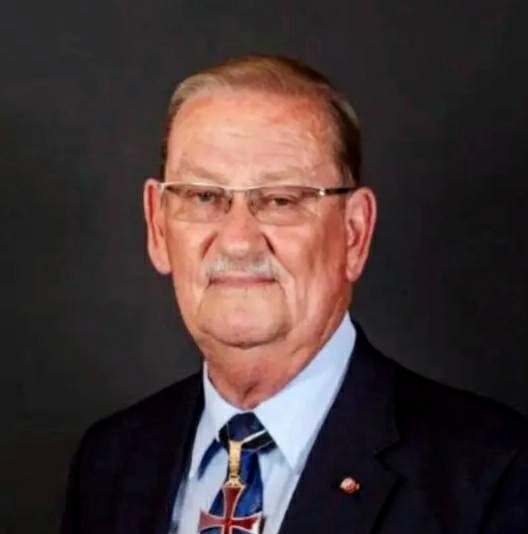
General Kaas van der Waals, then Lieutenant: 1st Parachute Battalion: Ongulumbashe
The South African Police (SAP) Counter Insurgency (COIN) Unit Veterans League’s Annual Memmorial
On a crisp Saturday morning, closest to August 26th, the South African Police (SAP) Counter Insurgency (Coin) Unit Veterans League gather at the Maleoskop statues placed infront of the Wall of Remembrance, that honours the 105 men who from 1966 to 1989 served and sacrificed their lives with the South African Police (SAP) Counter Insurgency (COIN) Unit, during the Rhodesian and South West African (SWA) Bush War.
Their mission is to pay homage to the brave police officers who had made the ultimate sacrifice in the line of active service. The SAP COIN Unit Veterans league, comprising of Border War Veterans and Supporters attend the event and the event is also attened by members of other military Veteran Organisations. Together, they stand as a symbol of support for the families of the fallen heroes and a reminder that their sacrifices will never be forgotten. This collective effort ensures that the legacies of the brave officers live on, inspiring future generations in the form of younger supporter members to follow in their footsteps.
As the sun cast its golden rays upon the
statues, the veterans are welcomed and each attendee takes his seat. With each step, they draw closer to the memorial, their hearts heavy with reverence. The air is filled with the sweet scent of wreaths, carefully prepared to adorn the Memorial wall.
The ceremony opens with the placement of the banners of the various Veteran Organisations attending, being deployed with brisk drill movements. After a welcoming address it is followed with a poignant speech, delivered by the league’s chairman. He first gives a summary of the unique history of the day of commemoration, 26 August 1966, when the Border War or Bush War started at a SWAPO training camp in Ovamboland in South West Africa (SWA), Ongulumbashe
with Operation Blouwildebees. He speaks of the selflessness and courage exhibited by the fallen officers for 23 years until the end of the Bush War, who had dedicated their lives to protecting their country and its people.
The chaplain’s service follows setting the tone for the commemoration ceremony, offering words of comfort and reflection and is followed by the the Veterans version of the song “Hallelujah” sung by a young female COIN Supporter. Then the Tribute “We Remember”, a poignant acknowledgment of the sacrifices made by fallen comrades. The Last Post (bugle call), a traditional signal to commemorate the fallen, played by a trumpeter followed by two minutes of silence as a moment for contemplation, reflection, and respect. At the end the Reveille (bugle call), a symbolic call to awaken, signalling the end of the two minute silence and a reminder to move forward, is played by the trumpeter. The veterans stand in contemplation, remembering the sacrifices made by their comrades.
Family members and friends, followed by the veterans of the various Military Veterans Organisations attending then lay wreaths at the base of the wall, their hands trembling with emotion but still saluting smartly. Afterwards a special tribute is also paid to the police dogs and all other animals who had lost their lives during the Bush War. This is proudly done by a COIN veteran dog handler and his dog. The veterans place additional wreaths against the right corner of the Wall of Remembrance, where the plaque with the names of the dogs are engraved, acknowledging the invaluable service and loyalty of these four-legged heroes.
This is also a day to remember their fellow members of the SAP COIN Unit Veterans League who passed on at an additional wall specially placed at the side of the Memorial Wall to pay tribute to their role in the Border War and the erection of the Memorial wall. Their family members have the chance to lay flowers as a tribute.
The SAP Coin Unit Veterans League’s annual ceremony at their Memorial wall is a powerful way to honor the memories of fallen police officers and their loyal canine partners. The bravery and dedication of these individuals will never be forgotten, thanks to this poignant reminder. The fact that their names are etched on the wall serves as a permanent reminder of their sacrifice, ensuring that their memory lives on. It’s a testament to the bond between those who served together, and a reminder of the risks and challenges they had faced.
This tribute is a heartfelt way to acknowledge the contributions of those who have made the ultimate sacrifice, and to provide closure and solace to their families and colleagues. It’s a tradition that will continue to inspire and motivate future generations of police officers and their canine partners.
Wolfgang Witschas
Comments by Author
The article’s author, having served in the SAP, attended the six-week SAP COIN training course from July to August 1977, giving him first-hand experience of the COIN training SAP officers underwent.
References:
https://en.wikepedia.org/wiki/ Battle_of_Ongulumbashe
Books:
https://www.tandfonline.com/doi/full/10.1080/09592418.2025.2586254
Eye in the Sky: A Brief History of the SA Police Service Air Wing: African Aviation Series
Herman Bosman
Freeworld Publications
Pages: 79 – 83
Eerste Daar
WS van der Waals
Pages: 41 – 44
Van Ovamboland tot Mashonaland
Louis Lubbe
Pages: 256, 275
Photographs:
Van Ovamboland tot Mashonaland
Louis Lubbe
Pages: 33 & 256
Photographs:
Africa’s Super Power
Paul Moorecraft
Page: 72 – 74, 153
Photographs:
Ongulumbashe: Die Begin van die Bosoorlog
Paul J Els
Page: 131
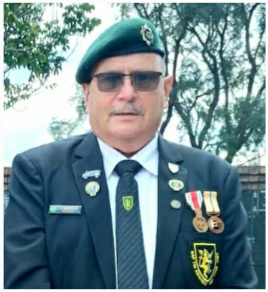
Wolfgang Witschas is a former member of the South African Police (SAP 1976 – 1981)(Uniform & Detective Branch), a member of the National Intelligence Service (NIS 1981 -1994), National Intelligence Agency (NIA 1995 – 2008), and the State Security Agency (SSA Domestic Branch 2008 – 2016).
Thank you for the detailed version of the Bush war!
Still today I am quite proud to have been one of the “pioneers” at Maleoskop [think may 1970 ??]
Also one of a small percentage policemen who did border duties in Rhodesia, Ovamboland and at Swartwater RSA-border.
Regards