Captain Nelson Kabalamurthi Nayager
Excerpt
Captain Nelson Kabalamurthi Nayager (1932–1975) was a pioneering Indian member of the South African Police whose career embodied professionalism, integrity, and resilience during the apartheid era. Joining the force in 1952, he rose steadily despite systemic racial barriers, completing advanced technical training and earning widespread respect for his discipline and dedication. In 1970, he became one of the first two Indian policemen to receive a commissioned rank, later advancing to Captain in 1974—milestones that marked significant progress for Indian representation in the police service. Throughout his 23-year career, he was commended by senior judicial authorities for his exemplary conduct and became a mentor and advocate for the advancement of Indian policemen. His sudden passing in 1975 at the age of 43 was deeply mourned across racial lines, reflecting the high esteem in which he was held. Today, his legacy endures in police history records, including the Nongqai archives and the University of KwaZulu-Natal’s Gandhi-Luthuli Documentation Centre, where he is honoured as one of the great legends of the South African Police and a symbol of the Indian community’s contribution to public service.
Abstract:
Captain Nelson Kabalamurthi Nayager was one of South Africa’s most respected senior police officers and a pioneering Indian member of the South African Police during the apartheid era. Born in 1932, he joined the South African Police on 11 September 1952 and served with loyalty and distinction for 23 years. From the start of his career, he showed strong dedication to learning, discipline, and self-improvement, steadily rising through the ranks despite racial discrimination. In 1962, he completed an advanced six-week Mechanical Course at the South African Police Mechanical School in Benoni, where he received intensive theoretical and practical training in the safe driving, handling, maintenance, and safekeeping of state-owned vehicles. On 1 July 1970, he made history by becoming one of the first two Indian members of the South African Police to receive a commissioned rank, alongside Lieutenant-Colonel Subramonia Pillai. He later became one of the first two Indian officers promoted to the rank of Captain in 1974, reflecting his leadership ability and the high regard in which he was held by his superiors. Throughout his career, he received numerous letters of appreciation from Supreme Court judges and the Attorney General, recognising his professionalism, honesty, and high standards of work. Captain Nayager was also deeply committed to improving the welfare and advancement of Indian policemen and served as a mentor and role model to many younger officers. He passed away on 20 October 1975 in Durban at the age of 43 after suffering a heart attack, a loss felt deeply by the police force and the wider community. His funeral, attended by officers of all races and hundreds of mourners, reflected the widespread respect he commanded. Remembered as a brilliant policeman, principled leader, and true gentleman, his legacy continues as an important chapter in South African police history and the Indian community’s contribution to public service.
Captain Nelson Kabalamurthi Nayager (1932-1975) was a groundbreaking Indian South African police officer. He served with great dedication during the apartheid era, a time when strict racial rules limited opportunities for non-white members.
Born in 1932, he joined the South African Police on 11 September 1952 and served for more than 20 years. Despite strong racial discrimination, he rose through the ranks. In the 1960s, he became one of the first Indian officers to hold the rank of Special Grade Chief Sergeant. In the 1970s, he was also one of the first two Indian officers to be commissioned.
Captain Nayager’s career showed determination and courage in the face of hardship. He inspired others to serve their communities with pride, discipline, and integrity. Although he passed on 20 October 1975, his achievements are still honoured today. Police history records, including the Nongqai archives and he is also featured in the University of KwaZulu-Natal’s Gandhi-Luthuli Documentation Centre’s website gallery entitled, South African Police Indian Veteran. The centre serves as both a living archive and a tribute to the Indian community’s legacy in South Africa and recognise him as one of the great legends of the South African Police.
Keywords
Captain Nelson Kabalamurthi Nayager,
South African Police,
Indian commissioned officers,
Apartheid-era policing,
police leadership,
Port Natal Division,
Internal Security Division,
Mechanical School Benoni,
commissioned rank 1970,
Captain promotion 1974,
police professionalism,
letters of appreciation,
community respect,
South African Indian police history,
Chatsworth Durban,
Nongqai archives,
Gandhi-Luthuli Documentation Centre.
SOUTH AFRICAN POLICE
CAPTAIN NELSON KABALAMURTHI NAYAGER
A RESPECTED SOUTH AFRICAN POLICE OFFICER
By Col Logan Govender
[LG]
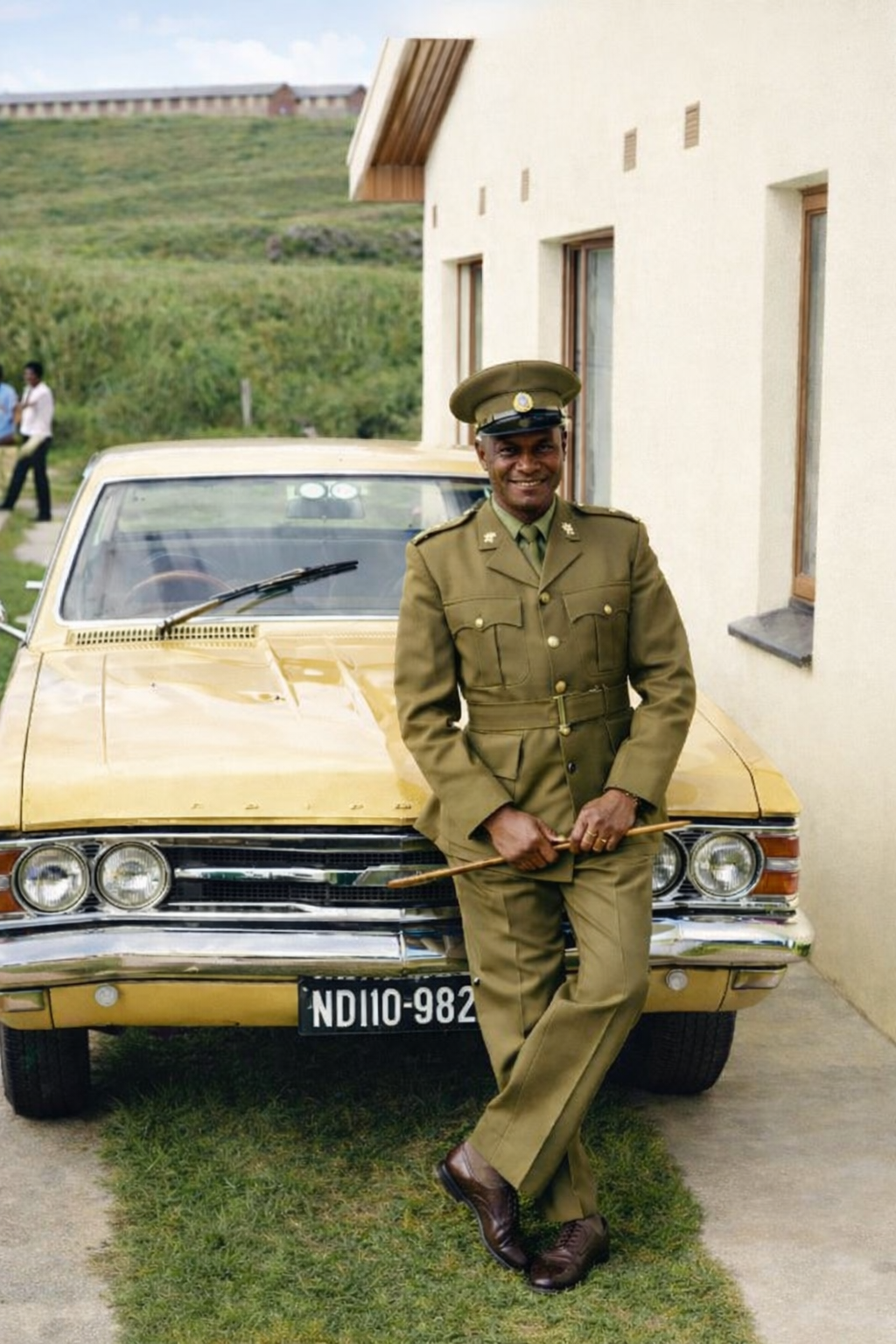
Captain Nelson Kabalamurthi Nayager
“The Nation which forgets its defenders will itself be forgotten” – Calvin Coolidge
Captain Nelson Kabalamurthi Nayager was one of South Africa’s most respected senior police officers. He passed away on 1975-10-20 in Durban at the age of 43 after suffering a heart attack at his home in Chatsworth. His death was a great loss to the police force after 23 years of loyal and faithful service and to the many people who knew and respected him.
Captain Nayager joined the South African Police Force on 1952-09-11. From the beginning of his career, he showed strong dedication to his work. He believed in learning and self-improvement and studied constantly while serving. Through hard work, discipline, and commitment, he steadily moved up through the ranks.
In 1962, he was selected to attend a six-week Mechanical Course in Benoni. This course included both theory and practical training. He was taught how to drive police vehicles safely, as well as how to care for, handle, and maintain them properly. The training was advanced and very intensive for that time. Because of its high level, the course lasted six weeks to make sure officers understood vehicle safety. The main purpose was to protect people and to prevent damage to government-owned vehicles. On 1962-12-21 he successful completed this advanced course on the handling, driving, maintenance and safekeeping on State owned motor vehicles at the South African Police, Mechanical School in Benoni, Gauteng.
In 1970, Captain Nayager made history by becoming of the first two Indian members of the South African Police to receive a commissioned rank on 1970-07-01. The other Indian was Lieutenant-Colonel S Pillai.
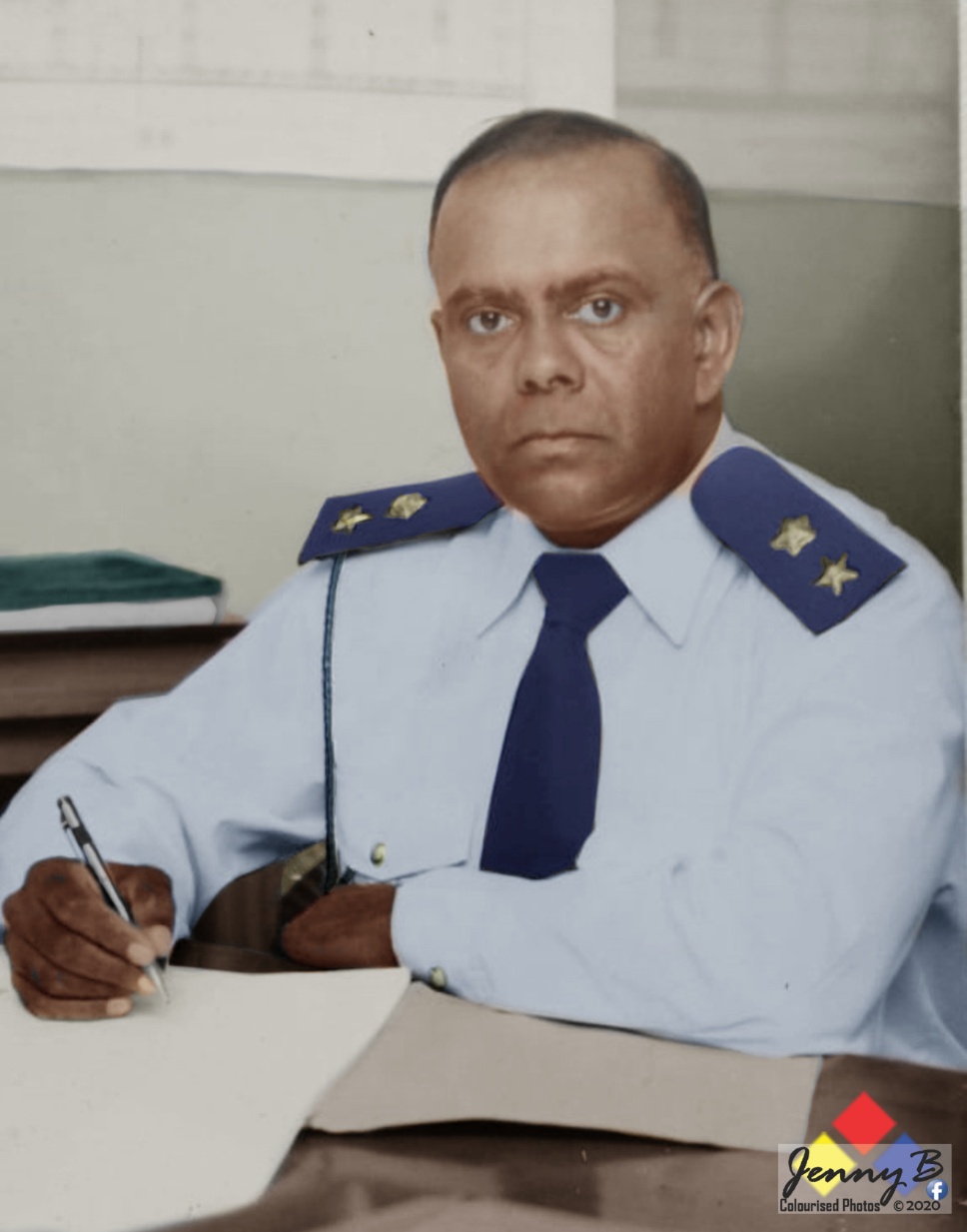
Lieutenant-Colonel Subramonia Pillai
This was a major achievement at the time and marked an important moment for Indian policemen in the force. Later, he became one of the first two Indian officers to be promoted to the rank of Captain in 1974. His promotions reflected his ability, leadership, and the respect he earned from his superiors.
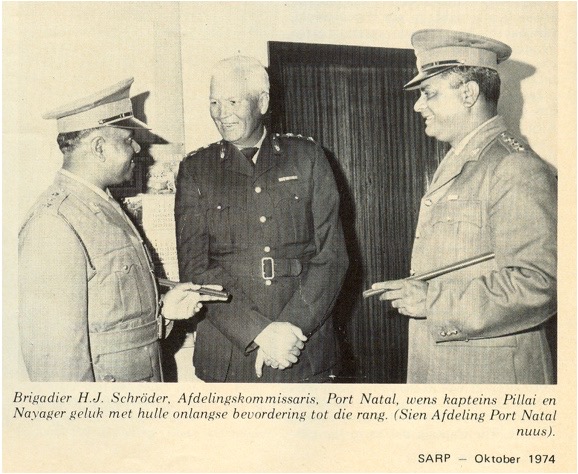
The Divisional Commissioner, SA Police, Port Natal Division, Brigadier HJ Schroeder, congratulates both Captains Pillai and Nayager on their recent (1974) promotion to the rank of Captain
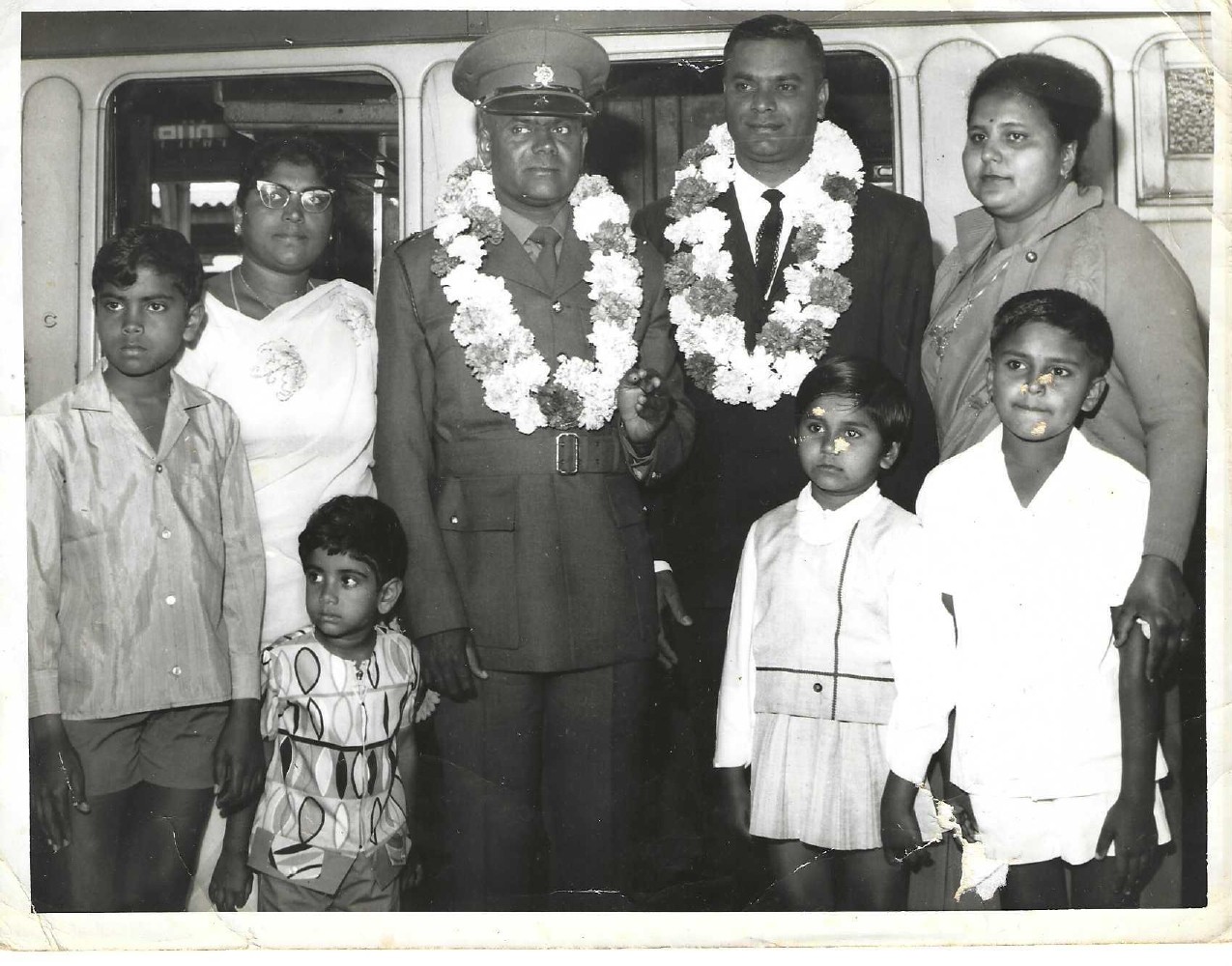
A proud moment in 1970 as newly promoted Indian commissioned officers were welcomed by their families at Durban Railway Station after arriving on a South African Railways train.
From left to right: Mrs Vimla Pillai; Lieutenant Subramonia Pillai with his eldest son Colin and youngest daughter Janet; Lieutenant Nelson Kabalamurthi Nayager with his wife Parvathi, his daughter Vimla, Lieutenant-Colonel and his son Glen, who later became a Colonel.
Throughout his career, Captain Nayager received many letters of appreciation. These came from Supreme Court judges and from the Attorney General, who praised the quality of his work and his professionalism. He was known as a careful, honest, and highly capable policeman who always set high standards for himself.
Captain Nayager was also deeply concerned about the well-being of other Indian policemen. He worked hard to improve their conditions and made many suggestions aimed at helping them progress within the force. To many younger officers, he was a source of guidance and inspiration, showing by example what could be achieved through dedication and integrity.
His funeral was held at the Cato Manor Crematorium and was attended by police officers of all races, as well as hundreds of other mourners. This large attendance showed the respect and admiration people had for him.
At the funeral, his commanding officer, Colonel Frans Steenkamp, paid tribute to him. He described Captain Nayager as a brilliant policeman, a strong leader, and a loyal friend. Colonel Steenkamp said he was proud to have worked with him for over thirteen years and spoke of his bright future and deep love for his country and fellow citizens.
Captain Nayager followed in the footsteps of his father, who was also a policeman. He is survived by his wife and two children. His memory lives on as that of an outstanding officer, a true gentleman, and a man who served his country with honour.
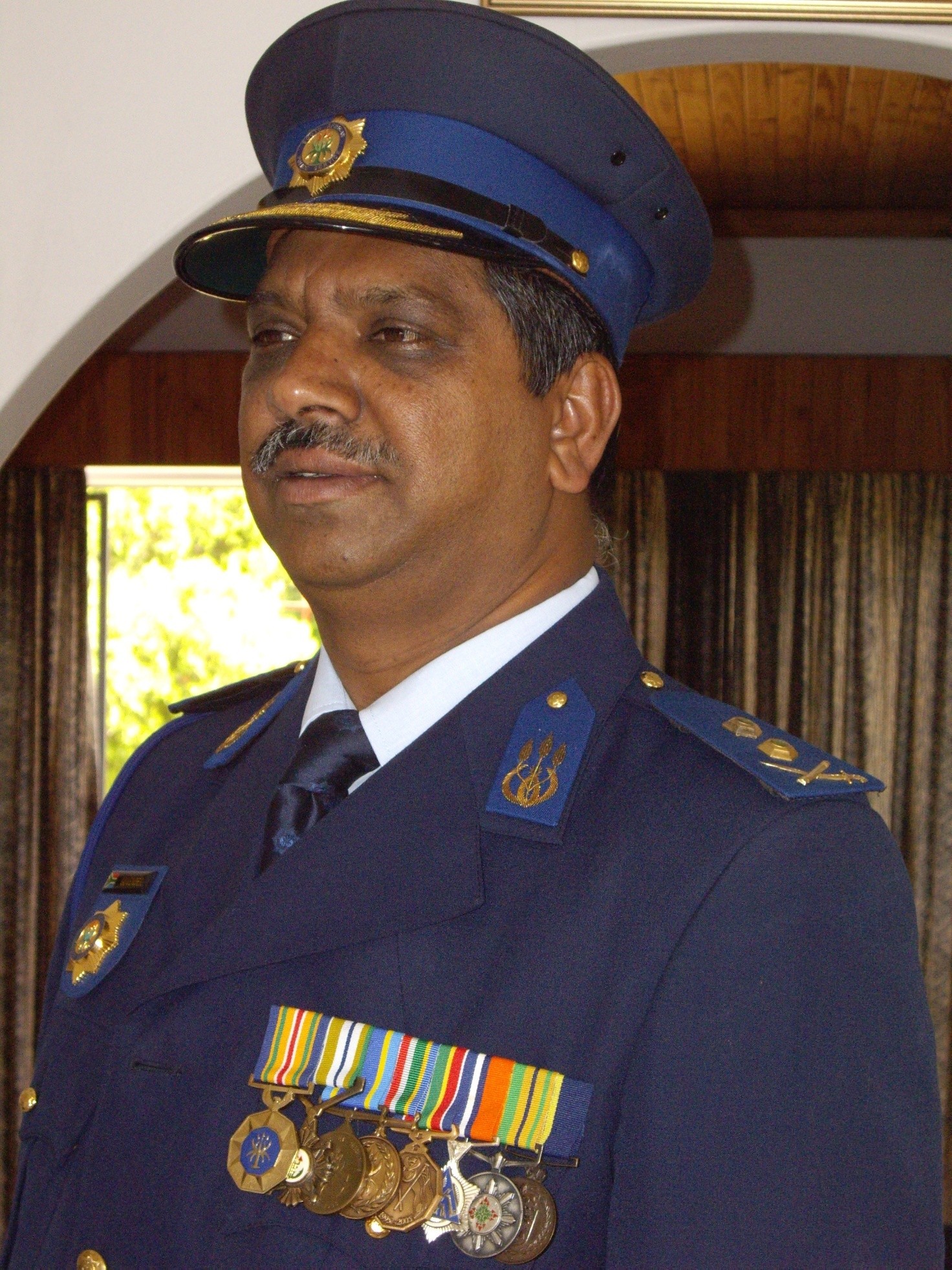
Major General (Professor) George D Govender
“When I joined the SAP in 1973, Capt. Kabalamurthi Nayager, was known to me as one of the highest-ranking police officers of Indian descent together with Col S Pillai (Late). He worked at the Division of Internal Security in the then Port Natal Division. Capt. Glen Nayager was his son, who attended Protea High School in Unit 2, Chatsworth. He joined the SAP and served at Chatsworth Unit 2 Police Station. He was later appointed as the Head of the Tourism Unit in Kwa Zulu Natal. Capt. Insert Glen Nayager was married to a policewoman. Capt. Kabalamurthi Nayager also had a daughter who was married to a Metro Police Officer. The family lived in Unit 2 Chatsworth. I know that many non-white police officials served under him. He was very popular and highly respected by both his colleagues, superiors, and subordinates.” – Major General (Professor) George D Govender
“agnoscere et honorare servientibus” –
“to acknowledge and honour those who served”
“Soli Deo Gloria” – “To God Alone Glory”
Logan Govender

