 Brigadier Heymans
Special Edition Nongqai please
Brigadier Balakrishnan Naidoo
Thank you.
Logan
SOUTH AFRICAN POLICE
“CARVING THE LION”
THE LIFE AND LEGACY OF
BRIGADIER BALA NAIDOO
AND A BORDER VETERAN
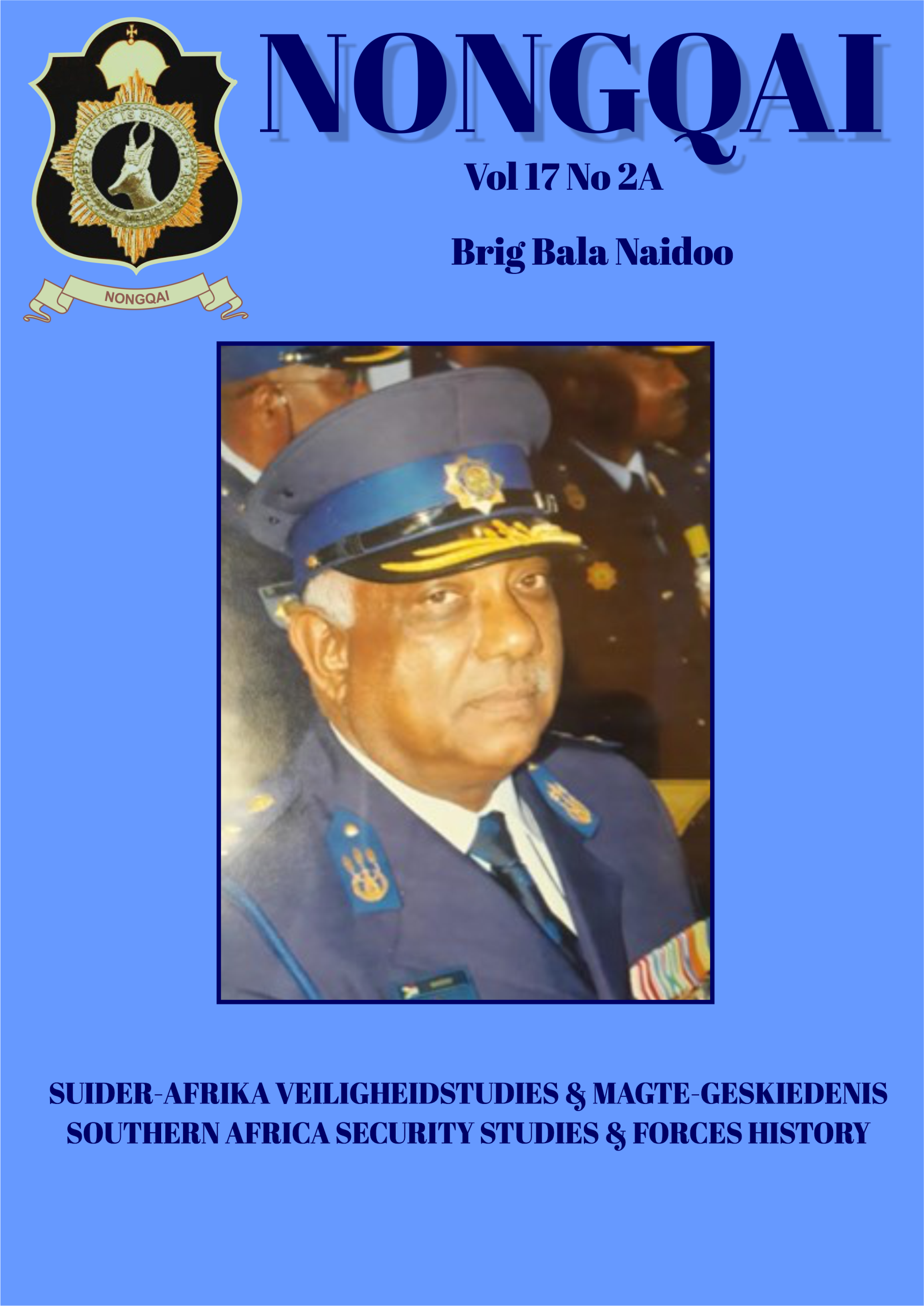
Cover photo
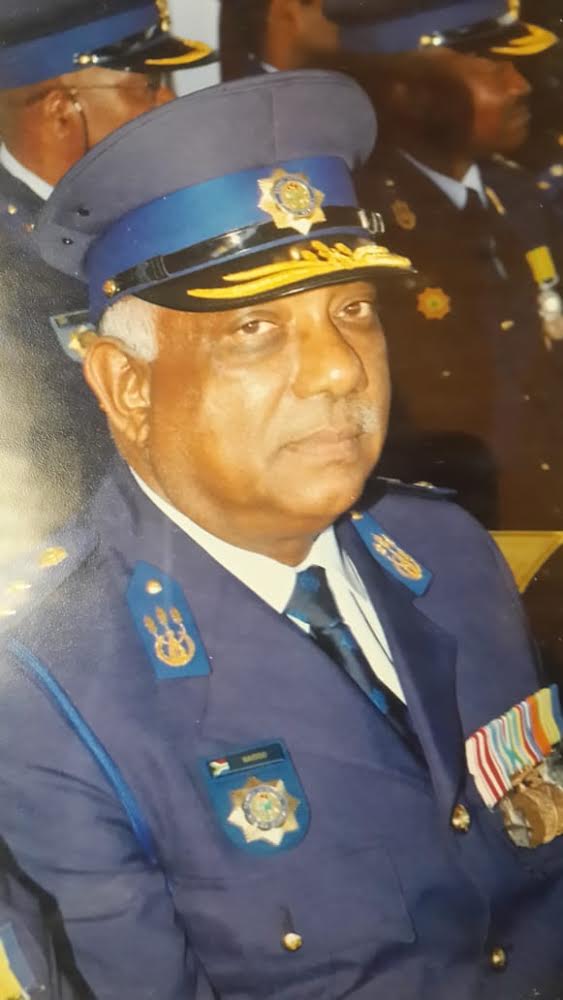
Brigadier Bala Naidoo
Keywords
Brigadier Balakrishnan Naidoo; South African Police Service (SAPS); South African Police (SAP); Criminal Record Centre (CRC); Local Fingerprint Office (LFPO); forensic science; dactyloscopy; fingerprint identification; manual fingerprint systems; forensic investigation; crime scene investigation; expert witness; Counter-Insurgency (COIN) training; border duty; Caprivi Strip; Rhodesia deployments; leadership; discipline; resilience; transformation in policing; loyal service medal; SAP Medal for Combating of Terrorism; Amanzimtoti bombing 1985; public service; retired police officers; police reunions; community involvement; mentorship; professional integrity; four decades of service; South African policing history.
Abstract
Brigadier Balakrishnan Naidoo
This profile outlines the life and forty-year career of Brigadier Balakrishnan Naidoo in the South African Police (SAP) and later the South African Police Service (SAPS). His career began in 1970 and included active border deployments, Counter-Insurgency training, and service during politically challenging periods in South Africa’s history. He was awarded the South African Police Medal for Combating of Terrorism, with additional bars for extended operational service. Brigadier Naidoo became one of the early Indian commissioned officers in the SAP and built a distinguished career in forensic policing, particularly in fingerprint identification and criminal record management. He worked extensively within the Local Fingerprint Office and Criminal Record Centre, mastering complex manual systems before the introduction of modern automated technology. He later served in leadership positions and frequently testified in court as an expert witness. Throughout his career, he demonstrated discipline, resilience, and strong leadership under demanding conditions, including attending major crime scenes such as the 1985 Amanzimtoti bombing. After retiring in 2010, he remained committed to service by organising police reunions and founding the Retired Police Officers Social Club in Durban. His legacy reflects dedication to duty, professional excellence, and continued commitment to community and former colleagues.
FOREWORD
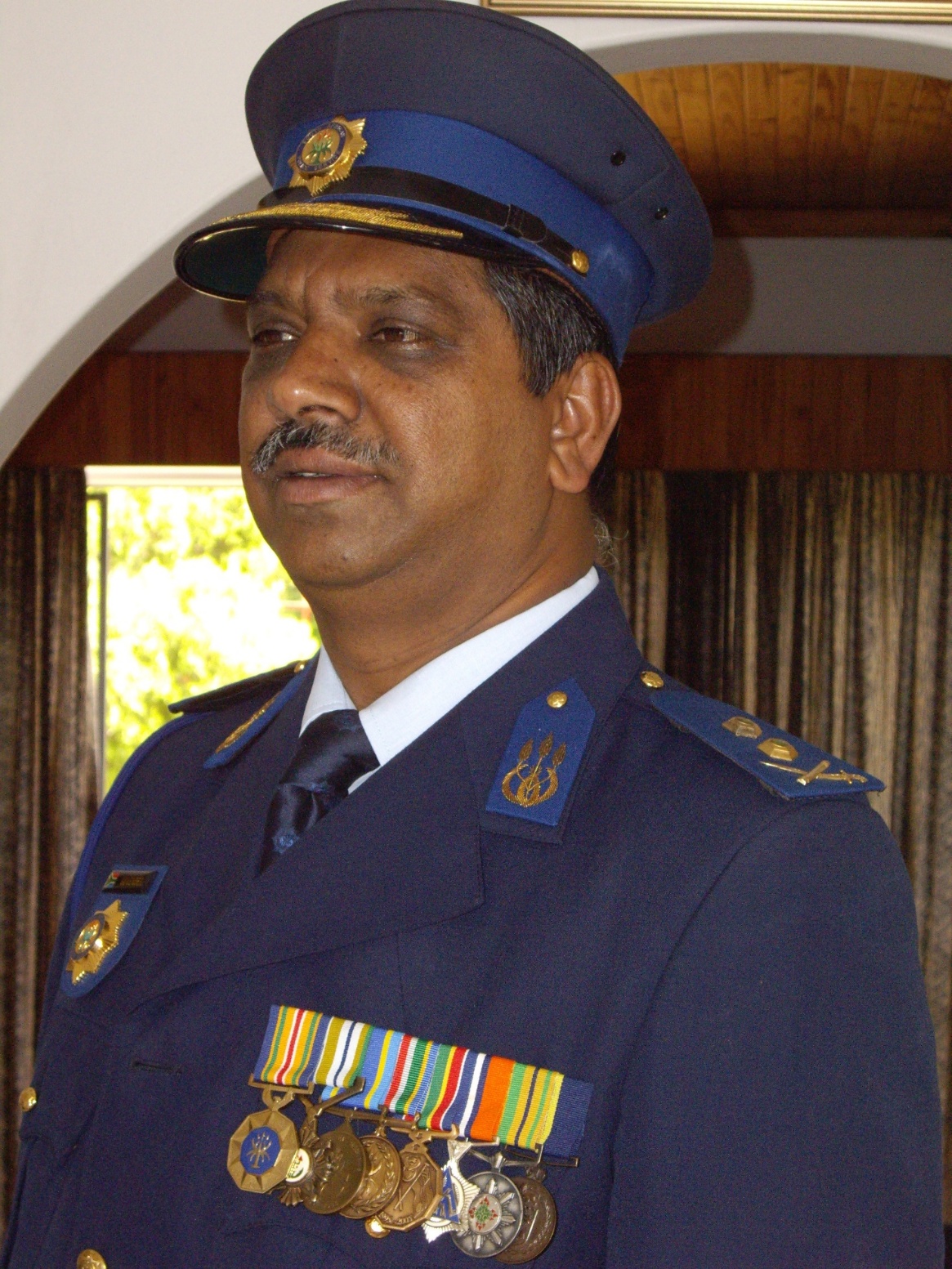
Major General (Professor) George D Govender – [GDG]
Brigadier (Director) Balakrishnan Naidoo
FOREWORD
It is indeed a privilege to contribute a foreword for a colleague who has spent over 40 years in the South African Police Service (SAPS), earning himself a forty-years loyal service gold medal. Forty years is a long time, which not everyone can achieve with a clean record. During Brigadier Balakrishnan Naidoo’s forty years journey, there were many experiences and challenges, which cannot all be easily recalled or remembered. The author of this publication has done his best to mention the experiences of Brigadier Naidoo, who had spent such a long time in both the South African Police (SAP) and the SAPS. However, it is clear from the contribution that the author did justice to all the experiences brought to his attention, and for which he himself bears knowledge.
During 1984, I had the opportunity to interact as a friend and colleague with then Det Warrant Officer Balakrishnan Naidoo known to many of his friends and colleagues as “Bala Naidoo”; when we non-white Warrant Officers were selected by the selection committee at SAP Head Office to attend the Candidate officers’ course at the Benoni Mechanical College. This was the first three months candidate officers’ course for non-white officers of the SA Police at that time. The minimum requirement for selection was a National Diploma in Policing or a BA degree. Upon successful completion of the candidate officers’ course, we were awarded a diploma certificate at a graduation ceremony held on the parade grounds of the Benoni Mechanical College. We were graduated together with senior Indian Officers; late Lieut Gen M Chetty (later appointed Deputy National Commissioner) and Lieut. Gen DS Maharaj (later appointed Provincial Commissioner).
We candidate officers got to know each other personally as we slept together in dormitories, had breakfast, lunch and dinner together and travelled together for three months. Some of us also travelled home over weekends together as far as Pietermaritzburg and Durban, KwaZulu-Natal, Cape Town and Johannesburg. Brigadier Naidoo was always friendly, humble and outspoken. His experience and knowledge in policing held him in good stead during discussions and debates on policing. Upon promotion to the rank of Lieutenant, Brig. Naidoo was appointed the first commissioned officer of Indian descent at the Local Fingerprint Office (LFPO) in Durban.
Brigadier Naidoo’s journey in the SAPS, shows that he lived the real life of a policeman by working in almost all spheres of policing, including safeguarding our borders, for which he was awarded a good service medal. His biggest contribution was in the Fingerprint section of policing, which was later integrated under the Forensic umbrella. Fingerprint expertise which is seen as part of the field of dactyloscopy in international circles, reminds me of my days as a field detective at police station level. I had the opportunity of seeing how fingerprint experts in those days worked using manual systems. It was a very difficult period working with manual systems, using mainly their eyes and magnifying glasses and searching hundreds of archived fingerprints of previously arrested criminals, and of lifted fingerprints on file for identification purposes. Today fingerprinting has changed through the automated system. Brigadier Naidoo had spent many years working on manual systems under difficult circumstances. This shows the passion he had to maintain his career as a fingerprint expert, and later commander (Brigadier) of the Local fingerprint office (LFPO) or the Local criminal record centre (LCRC).
Brigadier Naidoo also had the opportunity to serve at the SAP Criminal Record Centre (SAPCRC) in Pretoria, at Head Office among many other experienced and seasoned forensic experts, senior managers and top management of the police echelon. I was also appointed to serve at Head office at that time. This was a difficult period in our history, when transformation was at its peak. This posed many challenges for us as non-white officers (small number) occupying senior positions at Head Office to meet the needs of transformation. Brigadier Naidoo was at the SAPCRC and I at Head Office, National, Organised Crime Investigations. We used to meet daily with other colleagues, when we worked at Pretoria, until Brigadier Naidoo was transferred back to Durban LCRC on promotion. In the later years he assumed overall command overt the Durban LCRC. He attended many national and international training and development programmes and conferences. This helped him develop his skills in the science of fingerprints. Over the years his expertise grew in the science of fingerprints. In 2010, Brigadier Naidoo retired on superannuation from the SAPS.
Brigadier Naidoo is married to Lilly, an educator. The Naidoo’s have two sons, daughters-in law and grandchildren. Their eldest son is a dental surgeon and the other son a physiotherapist. Brigadier Naidoo plays a pivotal role in organising reunions and other activities for retired senior member of the SAPS. He is still deeply involved with community work.
Major General (Prof) Doraval Govender, DLitt et Phil, SOE, F.I.S (SA). Professor in Criminal Justice Studies University of South Africa.
[GDG]
SOUTH AFRICAN POLICE
“CARVING THE LION”
THE LIFE AND LEGACY OF
BRIGADIER BALA NAIDOO
AND A BORDER VETERAN
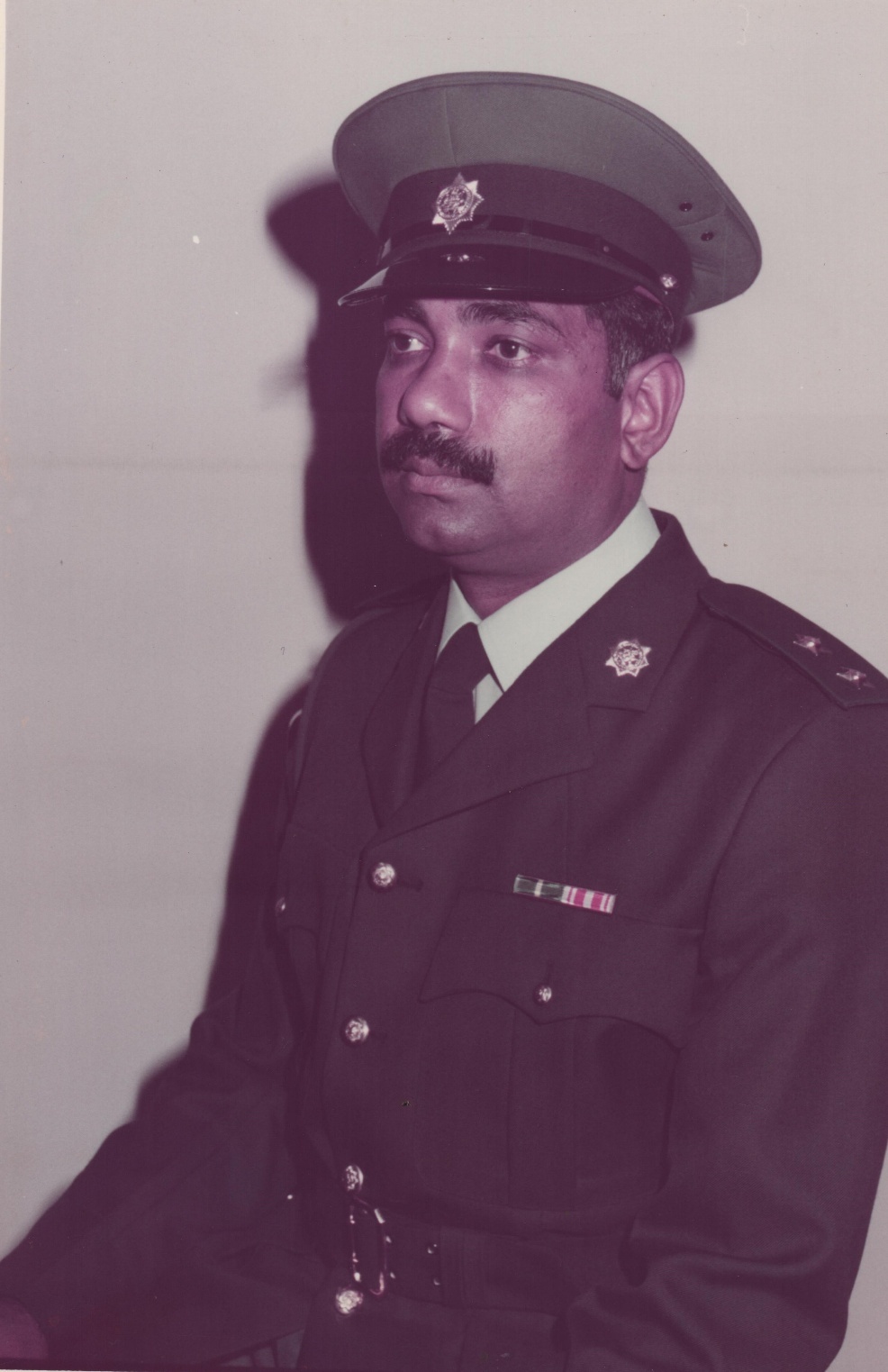
Bala Naidoo
Authored, researched, compiled, edited, and submitted for publication by Logan Govender [LG], drawing on information provided by Brigadier Bala Naidoo, as well as various sources, police personnel, and other contributors.
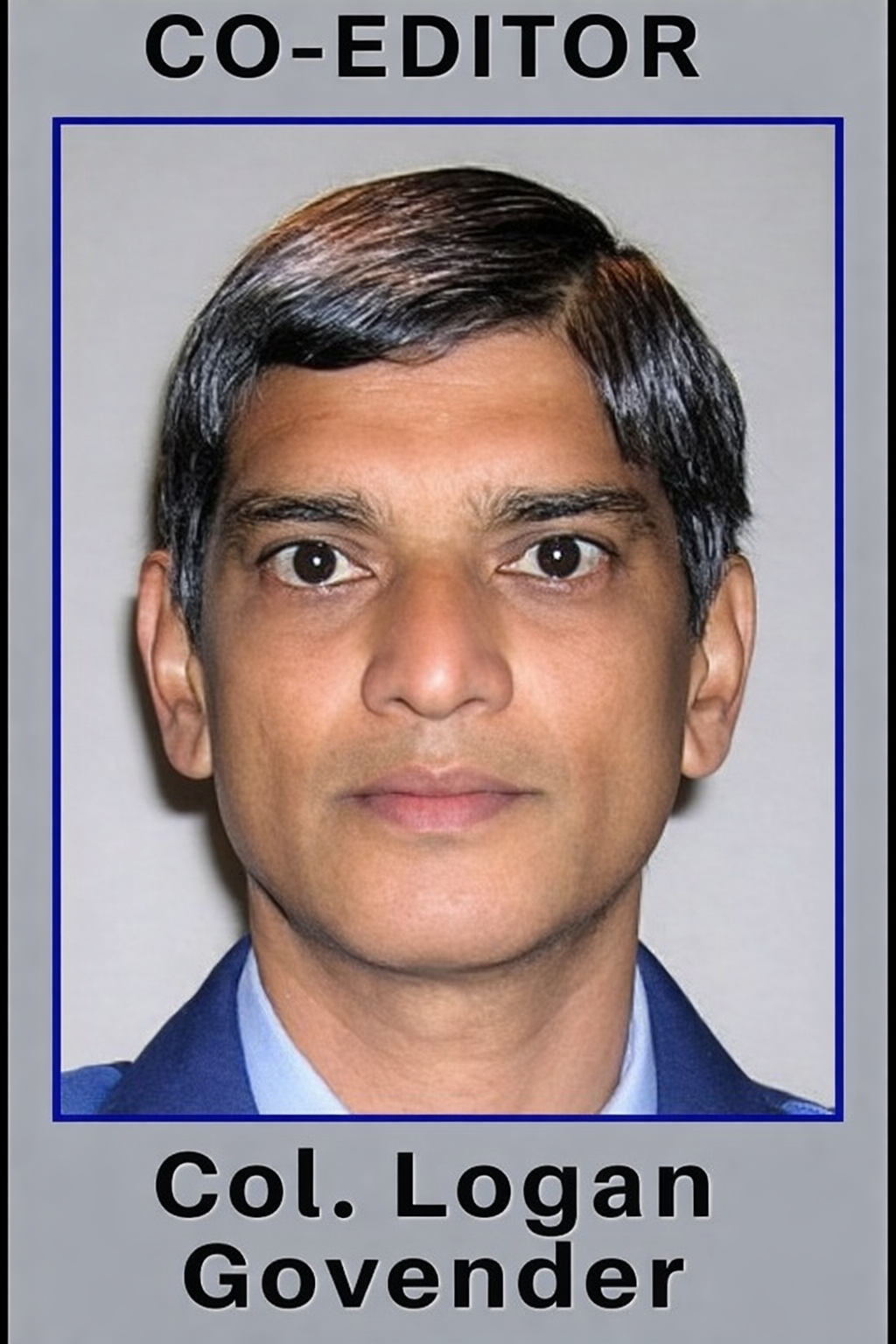
[LG]
AUTHOR’S NOTE
“The Nation which forgets its defenders will itself be forgotten” – Calvin Coolidge
I am proud to present this Special Edition of Nongqai, which tells the story of the life and service of Brigadier Bala Naidoo. He was a pioneer in forensic policing and an important figure in the history of the South African Police Service. His journey from a young constable to the first Indian officer to lead the Criminal Record Centre in KwaZulu-Natal shows his strong values, discipline, and commitment to finding the truth.
This edition is more than a biography. It honours a man whose work improved forensic standards, inspired many fingerprint experts, and took him to some of the most difficult crime scenes in our country. Brigadier Naidoo combined strong technical skills with quiet leadership and moral courage.
I have known Bala since the 1970s. As a Reservist and later as a permanent police member in the 1980s, I saw his dedication to people and his willingness to give his time and energy long before he received recognition. My early experiences at Mountain Rise were shaped by the guidance of Captain Bob Sewpersad, Colonel Johnny Govender, and Brigadier Bala Naidoo. These leaders showed how important Reservists were in helping to make South Africa safer.
Later, Bala joined the Detective Branch and moved from SAP Mountain Rise to Loop Street, thereafter he moved to the Local Fingerprint Office. He encouraged me to transfer from the uniform branch to this specialised unit, but my station commander did not approve at the time as the department was not going to replace me. Even so, his guidance had a lasting influence on me.
Bala also showed great kindness and loyalty. When I had just married and needed a guarantor to buy major household appliances, he arranged help through a family member. In 2016, he asked me to help him start a social club for retired police members in Pietermaritzburg. Our friendship, which began in the 1970s, has remained strong over the years.
In preparing this edition, I want to recognise the many past and present officers whose work have often gone unnoticed but have supported the criminal justice system. The Criminal Record Centre and Local Fingerprint Offices have played a vital role, yet they were often overlooked. This publication honours the men and women who, like Brigadier Naidoo, our late Warrant Officer Kistan Naidoo, and many others, helped build the foundation of forensic policing in South Africa.
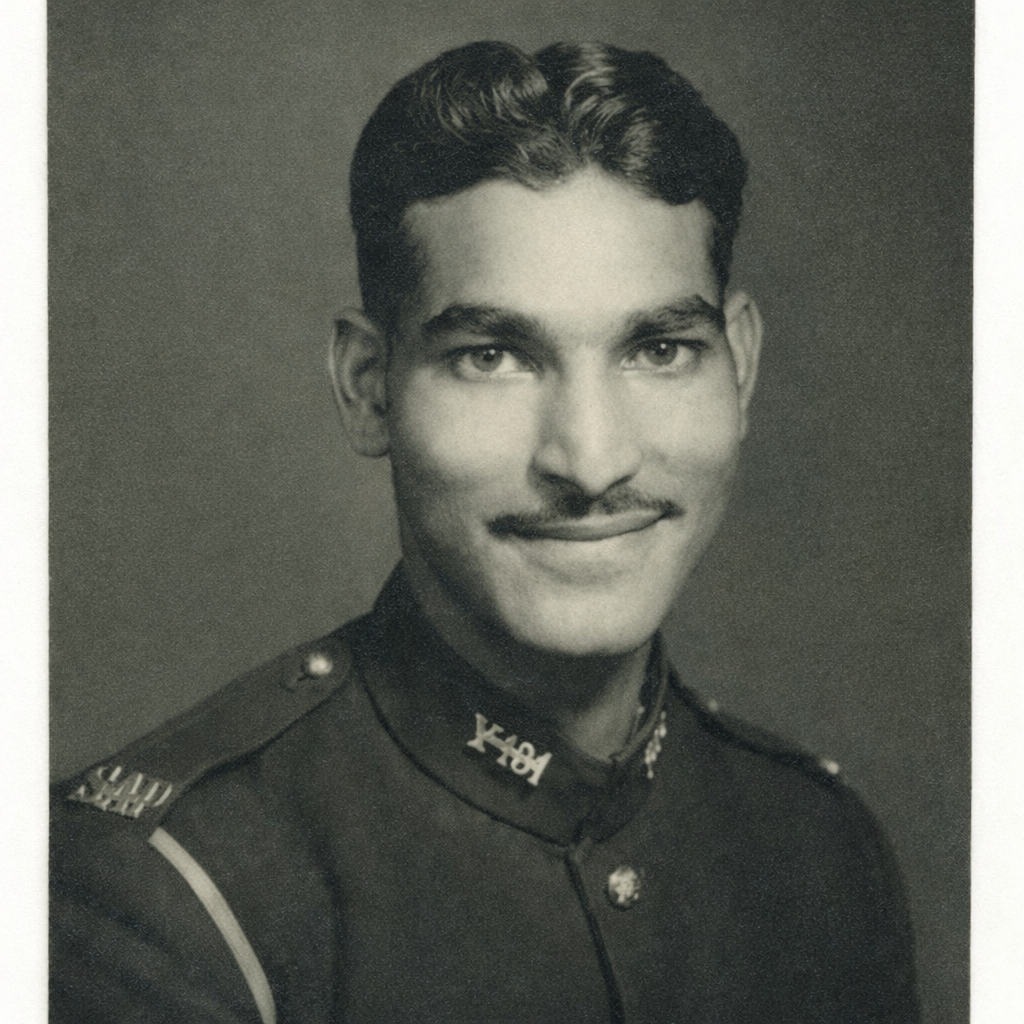
Warrant Officer Kistan Naidoo
(Source, family of arrant Officer K Naidoo, his son Warrant Officer PK Naidoo)
I sincerely thank everyone who shared their knowledge, guidance, and historical insights. Their contributions helped ensure that this tribute is accurate and respectful.
In my view, Brigadier Bala Naidoo deserved to be promoted to General in the South African Police Service. His outstanding technical ability, calm nature, emotional intelligence, and ability to work well under pressure made him an exceptional leader. His careful and disciplined approach to investigations has left a lasting mark on forensic science in South Africa.
[LG]
EARLY LIFE
Bala Naidoo was born on 2 September 1950 in Nel’s Rust, Baynesfield, Thornville, near Pietermaritzburg. He grew up in a family of six children, three sons and three daughters. His parents raised the family with strong values of discipline, respect and humility.
When Bala was only thirteen years old, his father sadly passed away. This was an extremely very difficult time for him. This left his mother alone to raise six children. As a single mother, she faced many hardships and struggles, but she remained strong and determined. She worked hard to provide for her children and made sure they were cared for and sent to school, despite the difficulties she faced.
Through her strength, sacrifice and guidance, Bala learned the importance of perseverance and hard work. Despite the challenges in his life, he remained focused on his education and completed his matric at Woodlands Secondary School in Northdale.
BASIC POLICE TRAINING
While walking past a greengrocer called Dukwah’s in Church Street, Pietermaritzburg, he noticed a handwritten notice on the shop window stating that the South African Police were recruiting Indian applicants.
He applied at the office in Loop Street, where Sergeant Roy Bernard Pillay completed his paperwork. Bala was officially enlisted on 11 February 1970 and was one of the few matriculants to join the police force in the early 1970s.
On 1970-02-11, at the age of 18, Bala Naidoo joined the South African Police (SAP). He underwent police basic training at the renowned SA Police, Training College, Wentworth. Durban forming part of Troop 15/1971/72.
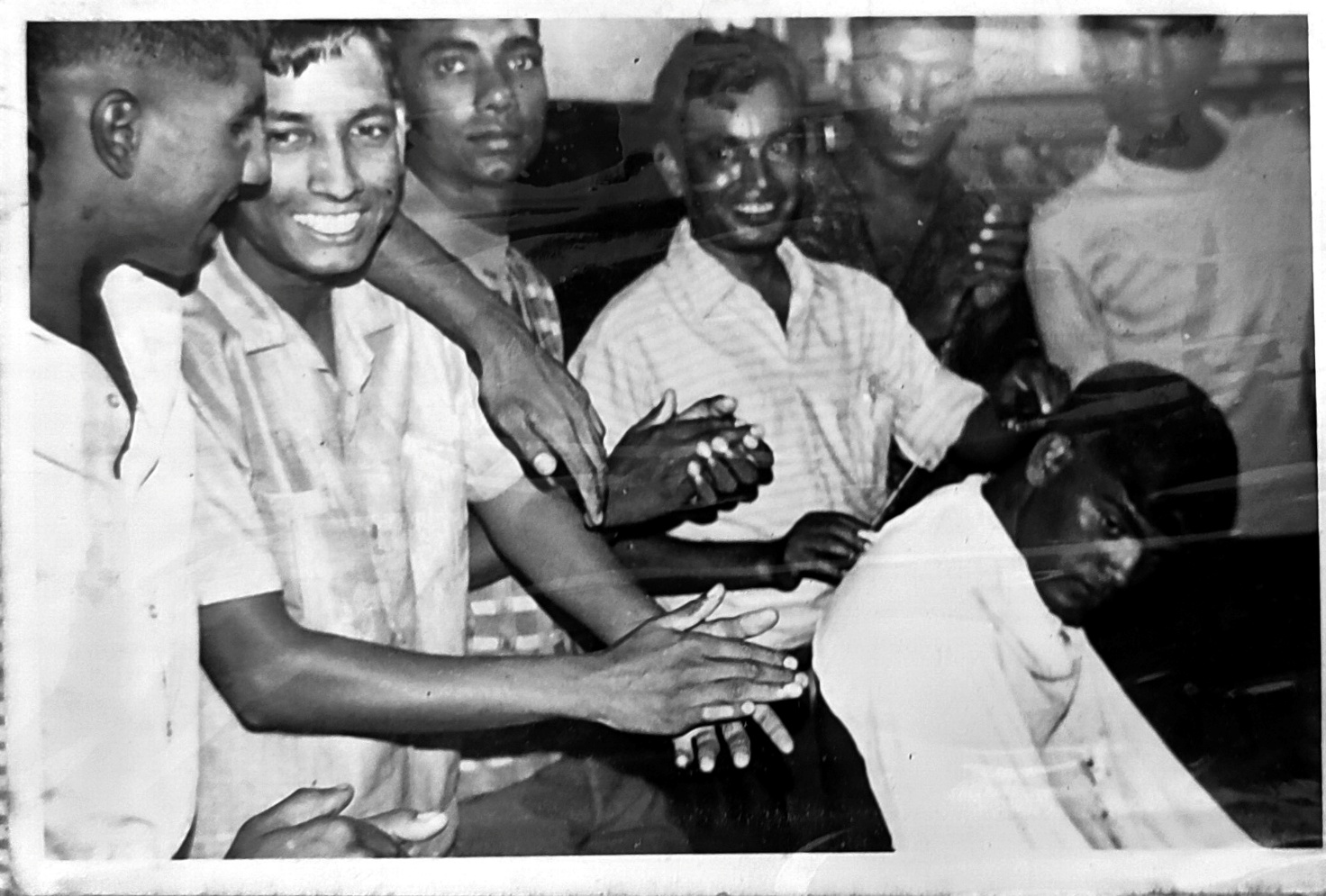
Recruits queuing up for their buzz cut, military style! Sounds like they’re getting the classic No 1 English cut – super short
(Source, Suresh member of this Platoon)
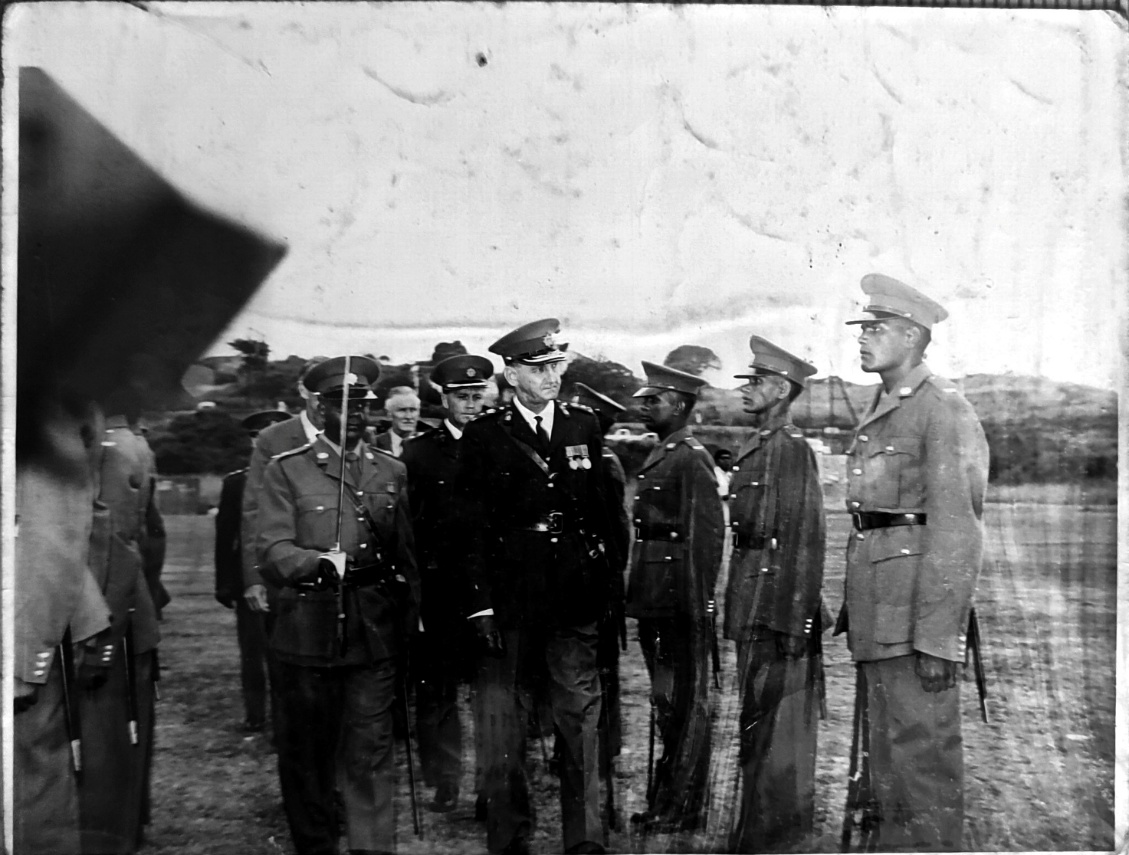
Original photograph of The Divisional Commissioner, Port Natal Division, Brigadier CPJ De Guisti, inspecting the parade
(Source, Suresh member of this Platoon)
Passing-Out Parade of Indian …
(Fiat Lux 1970 v16-2-Mar-1 – Courtesy of UKZN Special Collections, Gandhi-Luthuli Documentation Centre. Courtesy of Mr T Munsamy, Senior Librarian, University of Kwa- Zulu Natal (UKZN), Westville Campus)
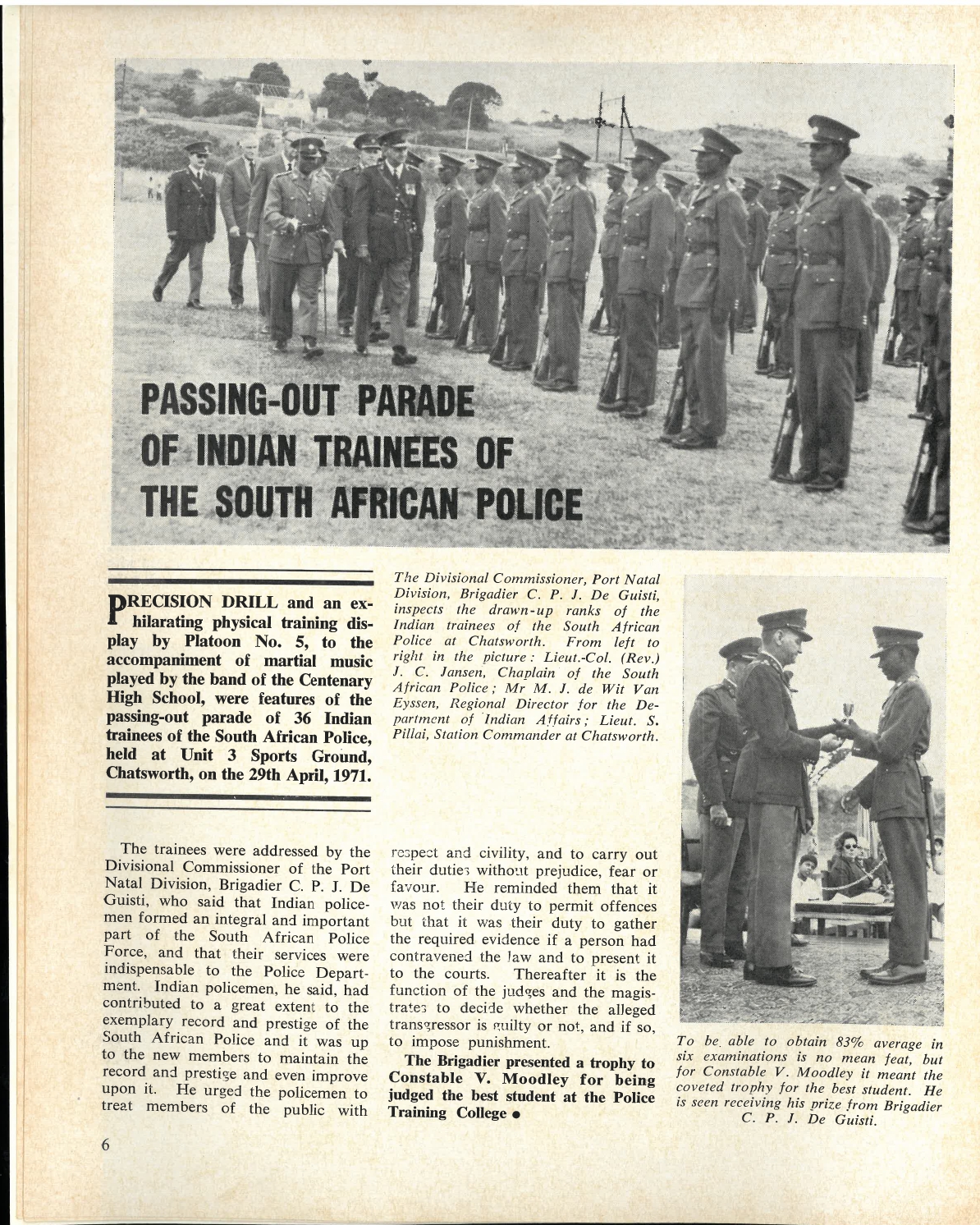
“The Brigadier presented a trophy to Constable V Moodley for
being judged the best student at the Police Training College. (This is incorrect Constable Bala Naidoo was presented with the trophy for being judged the best student at the Police Training College NOT V Moodley.- [LG])”
“To be able to obtain 83% average in six examinations is no
mean feat, but for Constable V Moodley (B Naidoo NOT V Moodley – [LG]) it meant the coveted trophy for the best student. He is seeing receiving his prize from Brigadier CPJ De Guisti.”
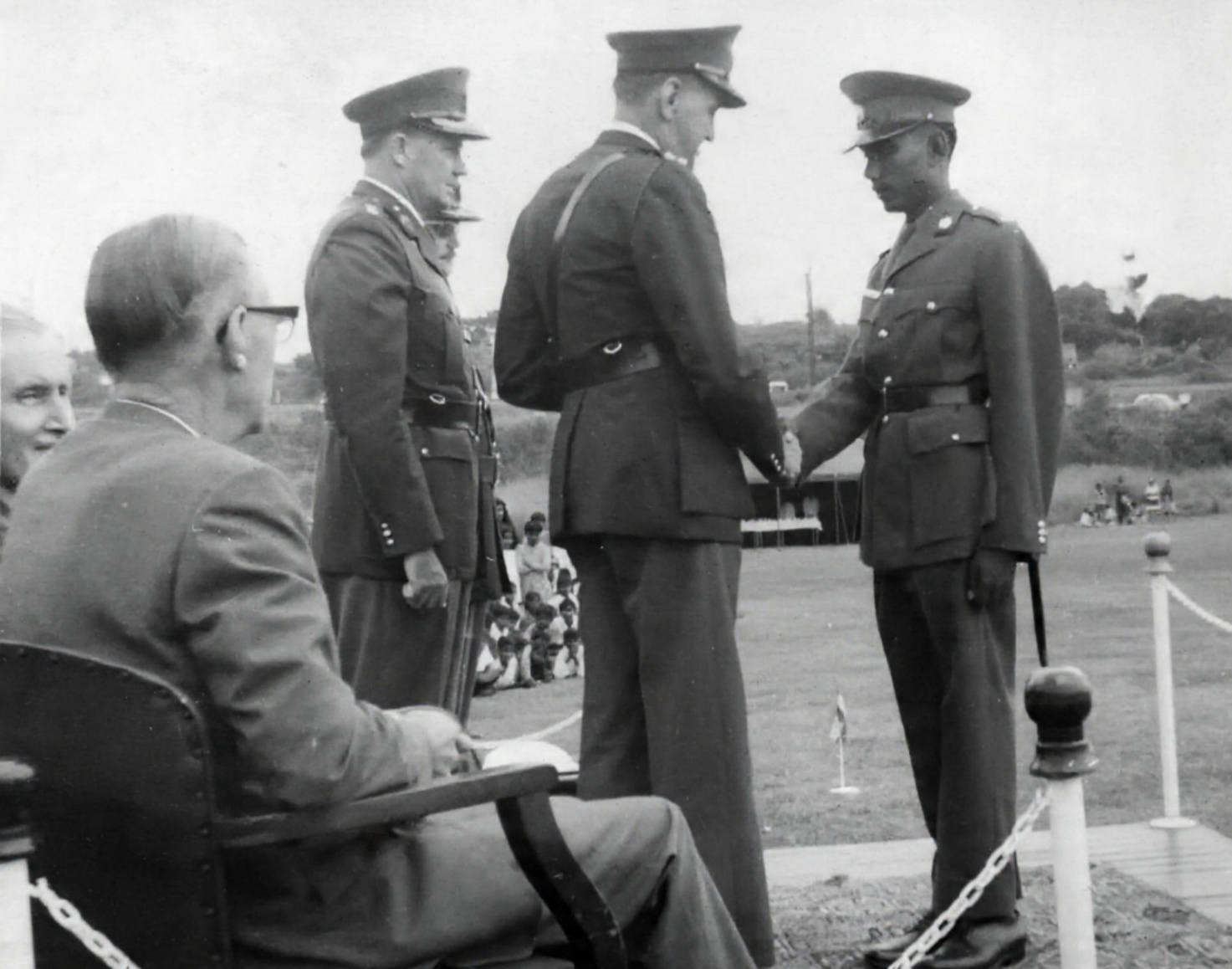
The Divisional Commissioner, Port Natal, Brigadier CPJ De Guisti awards Bala Naidoo the trophy for the best recruit of Platoon 15/1970/71
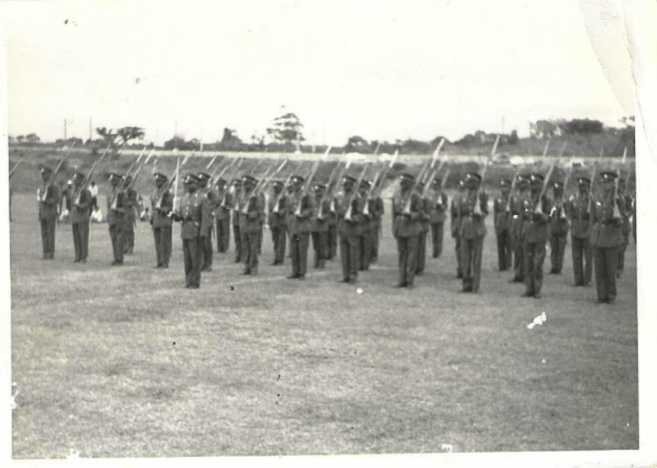
Recruits on parade at a drill display with their .303 rifles and bayonets
(Source, Suresh member of this Platoon)
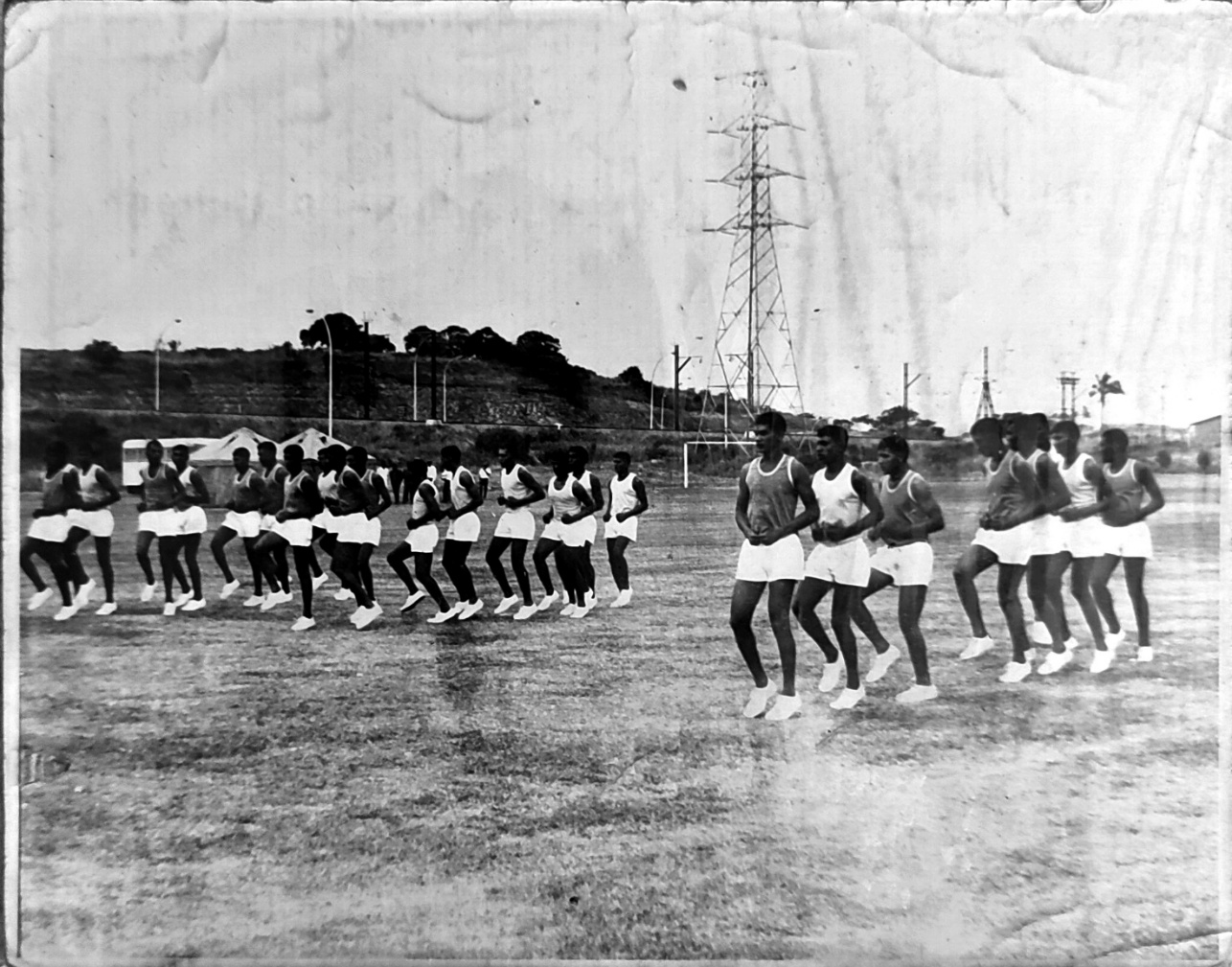
Recruits preparing to show off their physical fitness skills to the large crowd of family, friends, and spectators
(Source, Suresh member of this Platoon)
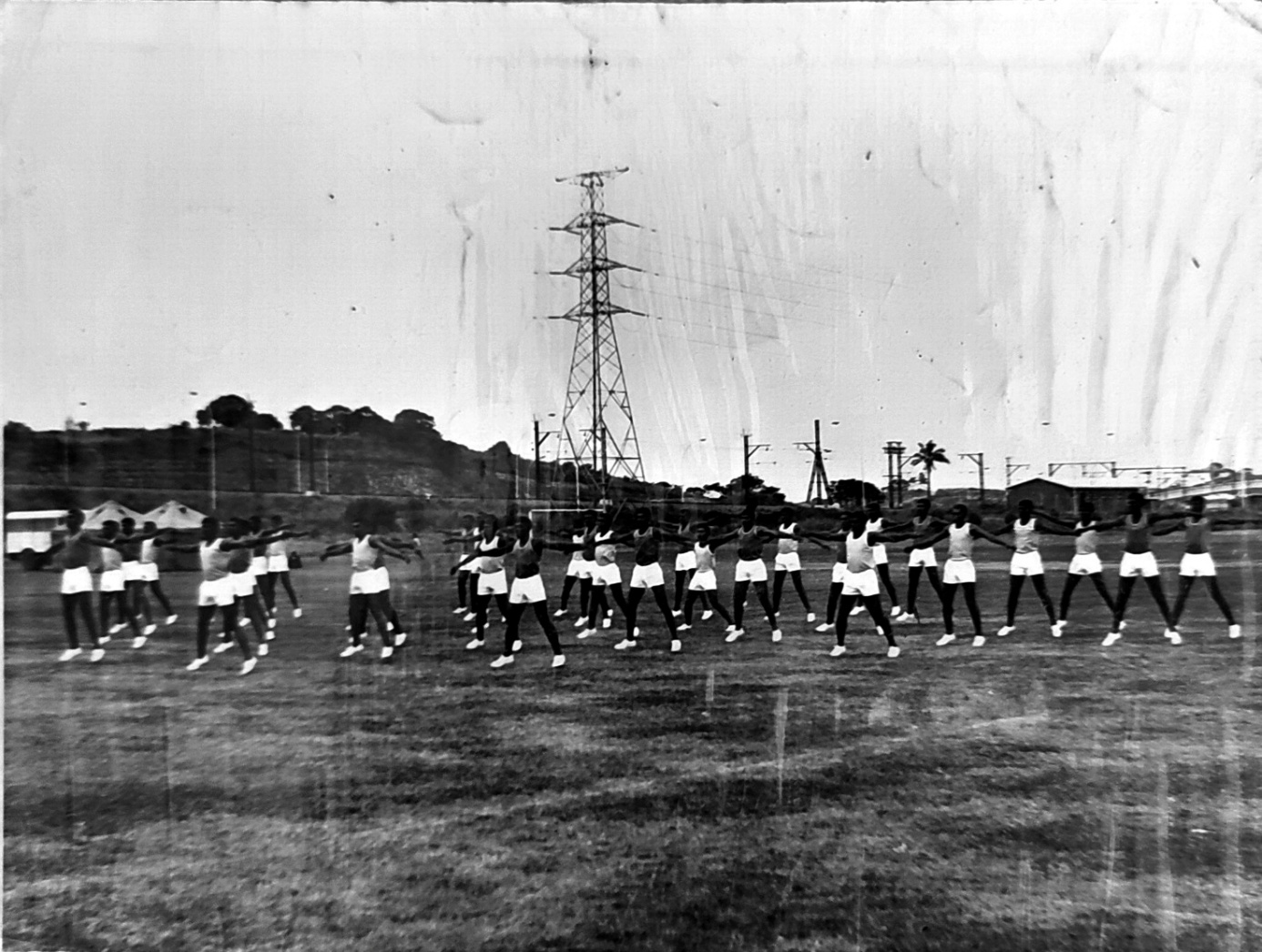
Recruits preparing to show off their physical fitness skills to the large crowd of family, friends, and spectators
(Source, Suresh member of this Platoon)
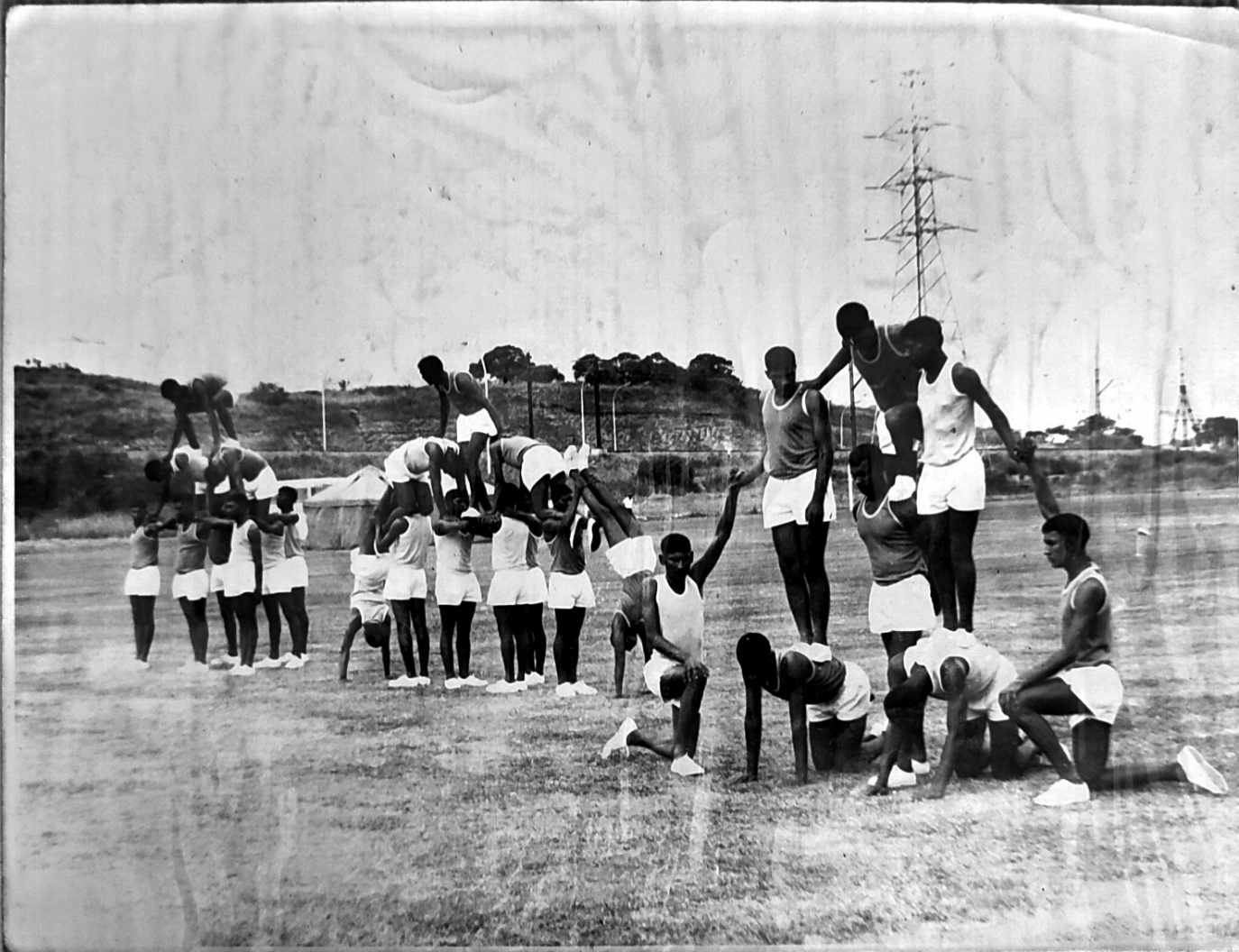
Recruits preparing to show off their skills in the formation of a human pyramid
(Source, Suresh member of this Platoon)
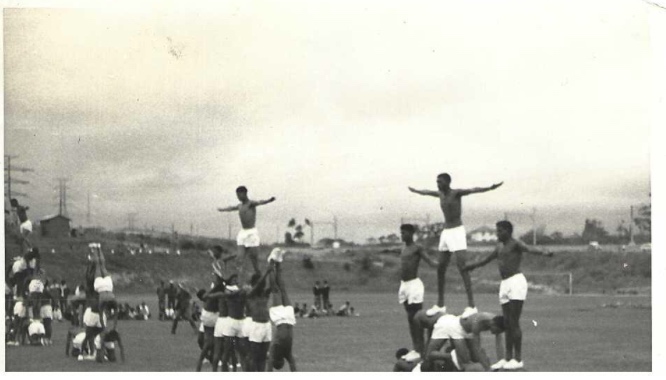
Recruits preparing to show off their skills by performing a human pyramid
(Source, Suresh member of this Platoon)
SOUTH AFRICAN POLICE
TRAINING COLLEGE
WENTWORTH, DURBAN
TROOP 15
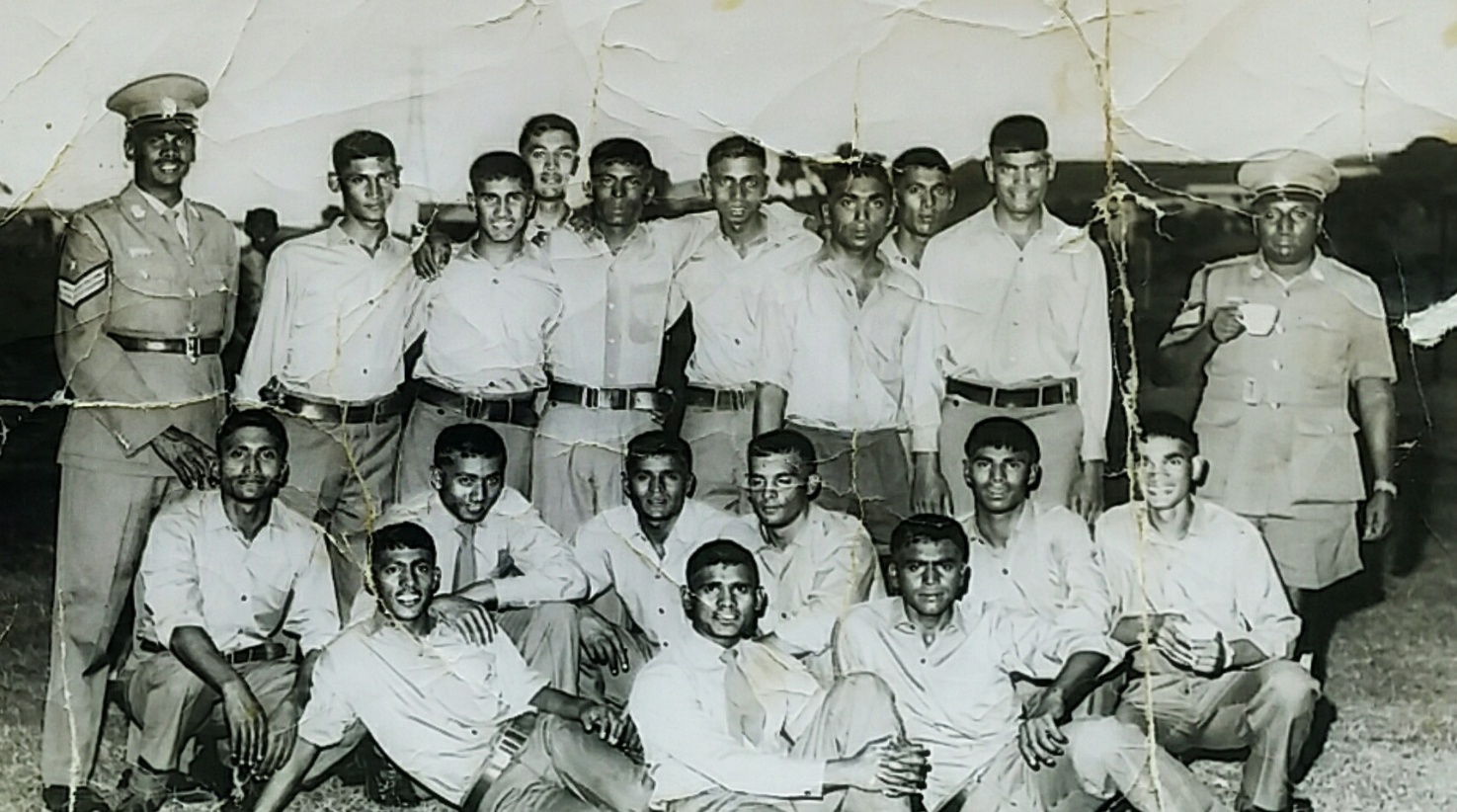
Part of the group of 36 recruits of Platoon 15 0f 1971/2 after successfully passed out on completion of their basic training are seen with the training staff at the Chatsworth Sports Stadium in Unit 03.
Left to Right, Seated: Bala Naidoo, Sundarah Sandy Moodley,
Mahalingam Reggie Durugiah, Moonsamy Mickey Chetty and Suresh.
Standing: Daniel Seevraj, Sivalingam Pillay, Satchie
G Vallunar, Jagadasen Jacques Pillay and Govindasamy Rickey Narain
(Source, Sergeant Daniel Seevaraj member of this Platoon)
REPUBLIC FESTIVAL
After the parade, they returned to the SA Police Training College to prepare for more performances for the 10th Republic Day celebrations. These celebrations were held at Kingsmead Stadium and at the Chatsworth Unit 3, Sports Ground on 31 May 1971.
From 1 May 1971 until the day of the festival, the platoon practiced drill, physical training, and gymnastics. After lunch, they were given the afternoon off and were allowed to leave the college grounds. However, they had to return by 4:00 pm. After that, under the supervision of experienced police officers, they carried out crime prevention duties in the Wentworth and Merebank areas until 9pm. They were then taken back to the base.
The day after the Republic Festival, they were sent to their respective police stations.
He was posted back to his station of origin, Mountain Rise.
COUNTER INSURGENCY
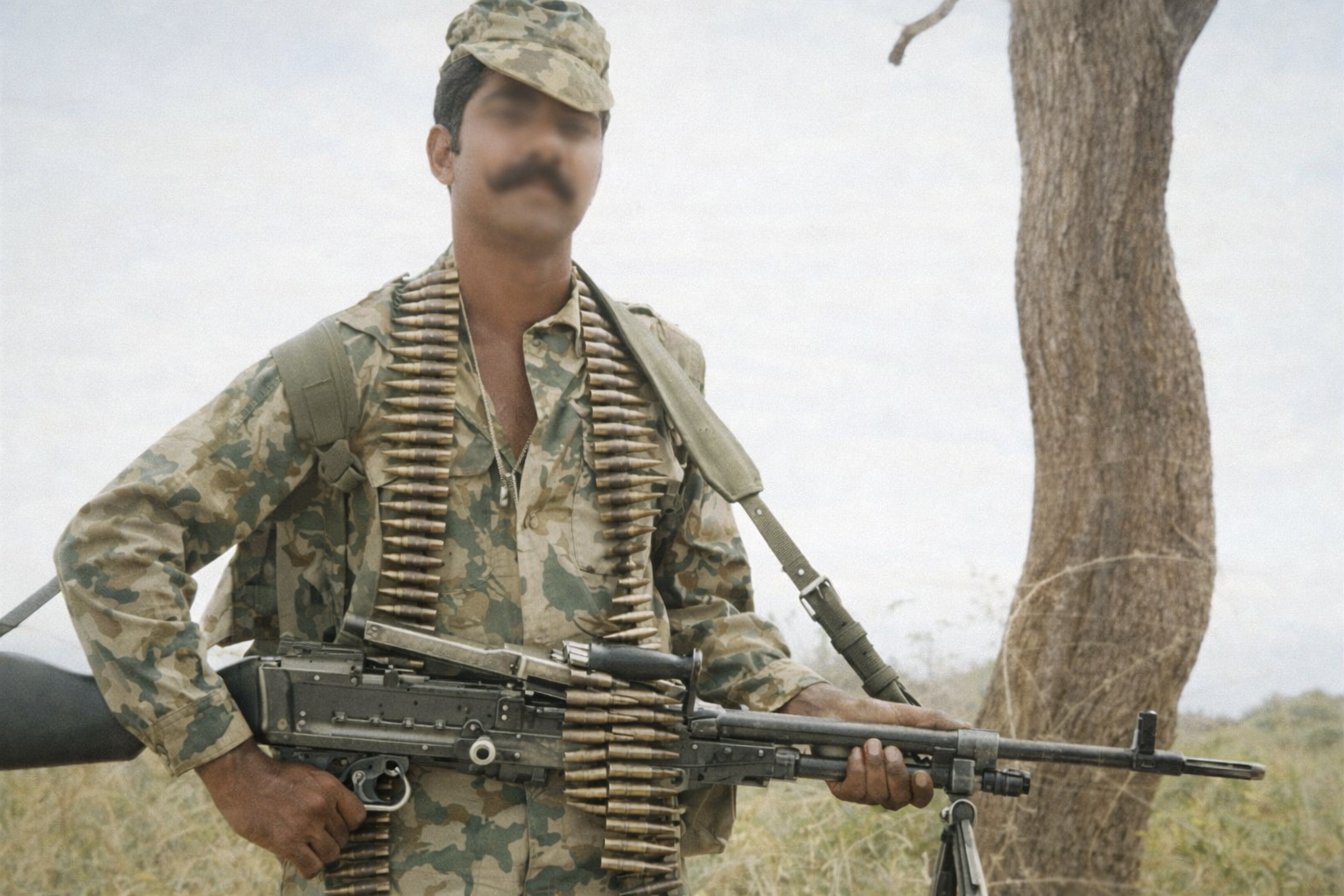
Bala Naidoo with a LMG at the Caprivi Strip during 1973
During 1972, he was selected to attend Counter-Insurgency (COIN) training at Maleoskop, Groblersdal. After successfully completing the training, the company was immediately sent to the Eastern Caprivi Strip for active border duty in the Katima Mulilo area. He served on the Caprivi border from 7 December 1972 to 22 February 1973. After about three months, he returned to Mountain Rise.
In 1973, he was again chosen for border duty, this time in Zimbabwe (then Rhodesia), at Plumtree. He served there from 11 September 1973 to 19 December 1973, after which he returned to his station, Mountain Rise.
Later in 1973, now holding the rank of Sergeant, he was again deployed for border duty in north-eastern Rhodesia, in the Centenary area. He was part of the “Kitbag Squad”. He served with this unit from 3 January 1974 to 19 August 1974 in the Centenary district.
He was awarded the South African Police Medal for the Combating of Terrorism, along with two bars for his additional deployments.
These deployments helped to broaden his experience and develop his leadership skills under very demanding conditions.
At that time, promotion opportunities for Indian police members were limited, and no promotion exams were held for six years. Despite this, Naidoo focused on doing his job well rather than seeking promotion.
The deployments required high levels of discipline, alertness, and mental strength.
MARRIAGE
Brigadier Balakrishnan Naidoo is married to Lily, a retired foundation phase educator. She began her teaching career in Dalton and thereafter taught in schools in Phoenix, Effingham and Pietermaritzburg.
She retired as head of department at Berg Street primary school in Pietermaritzburg, after 33 years of service.
Their eldest son Elvin Naidoo is a well-known dental surgeon in Pietermaritzburg. He is married to Mathu Rangan an Orthodontist, also practicing in Pietermaritzburg.
Merlin Naidoo, their second son, lives in New Zealand. Both Merlin and his wife, Nishantha are Physiotherapists
and have their practice in Whanganui, New Zealand.
Naidoo is blessed with four grandchildren.
Bala and Lily married on 1976-07-14.
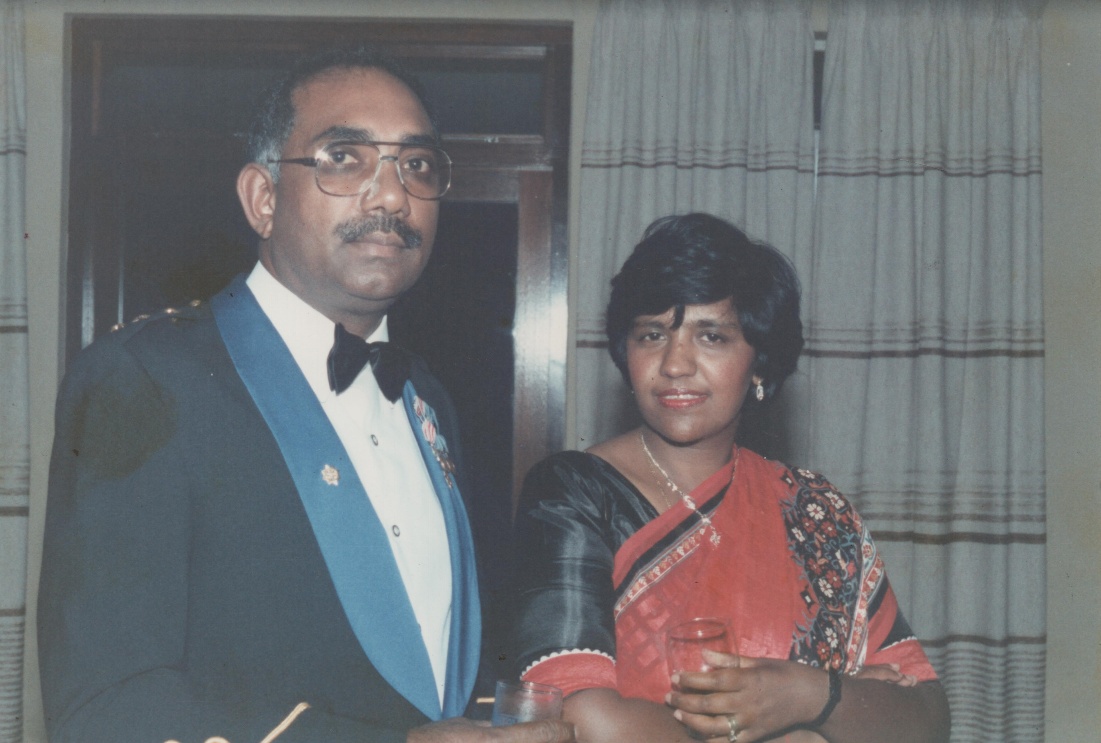
Bala and Lily Naidoo attending an Officer’s function in Durban
CANDIDATE OFFICER’S COURSE
In 1984, Naidoo was nominated to attend the Candidate Officer’s Course at the South African Police, Mechanical School in Benoni. Upon completion, he was promoted to Lieutenant, becoming one of the first Indian officers posted to the Durban Local Fingerprint Office.
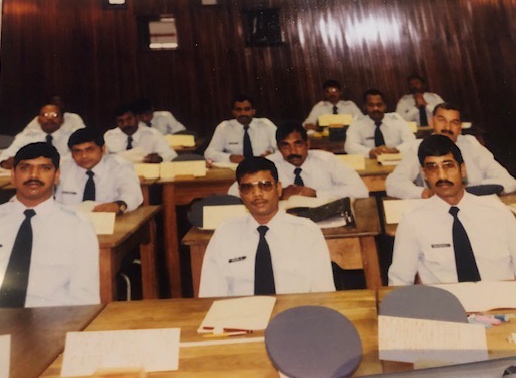
Attentive Candidate Officers at the lecture hall.
Front row, from left to right, George Govender; M Perumal; Reggie Marimuthu
Second row, from left to right, Anesh Haripersad; Bala Naidoo; Petersen
Third row, from left to right, Mampane; Murugas; Johnny Govender; Lewis Gibson
Fourth row, from left to right, Mampanga; Tiluk Singh; Christie Marimuthu; Wilson
(Source [GDG])
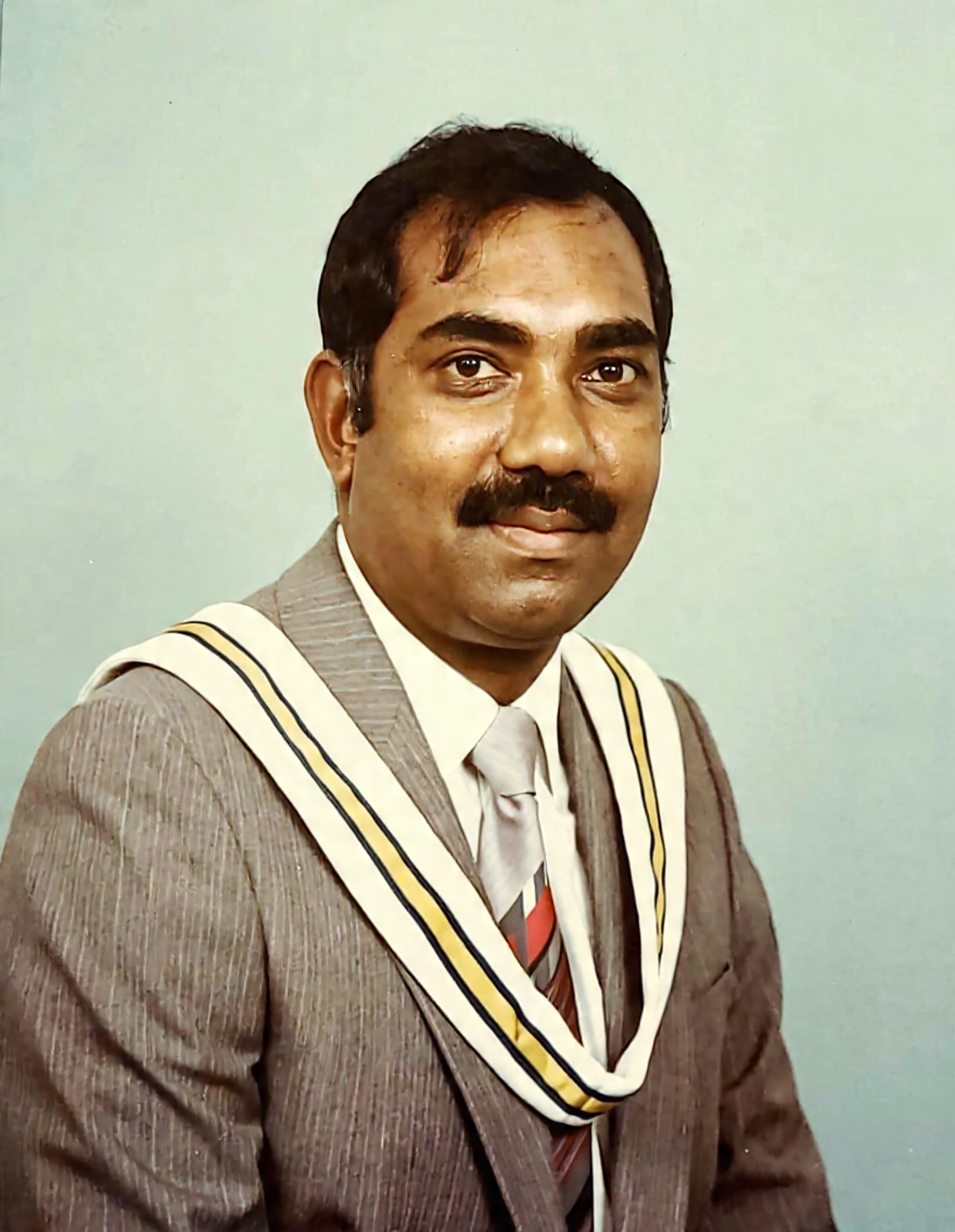
Bala Naidoo after his graduation
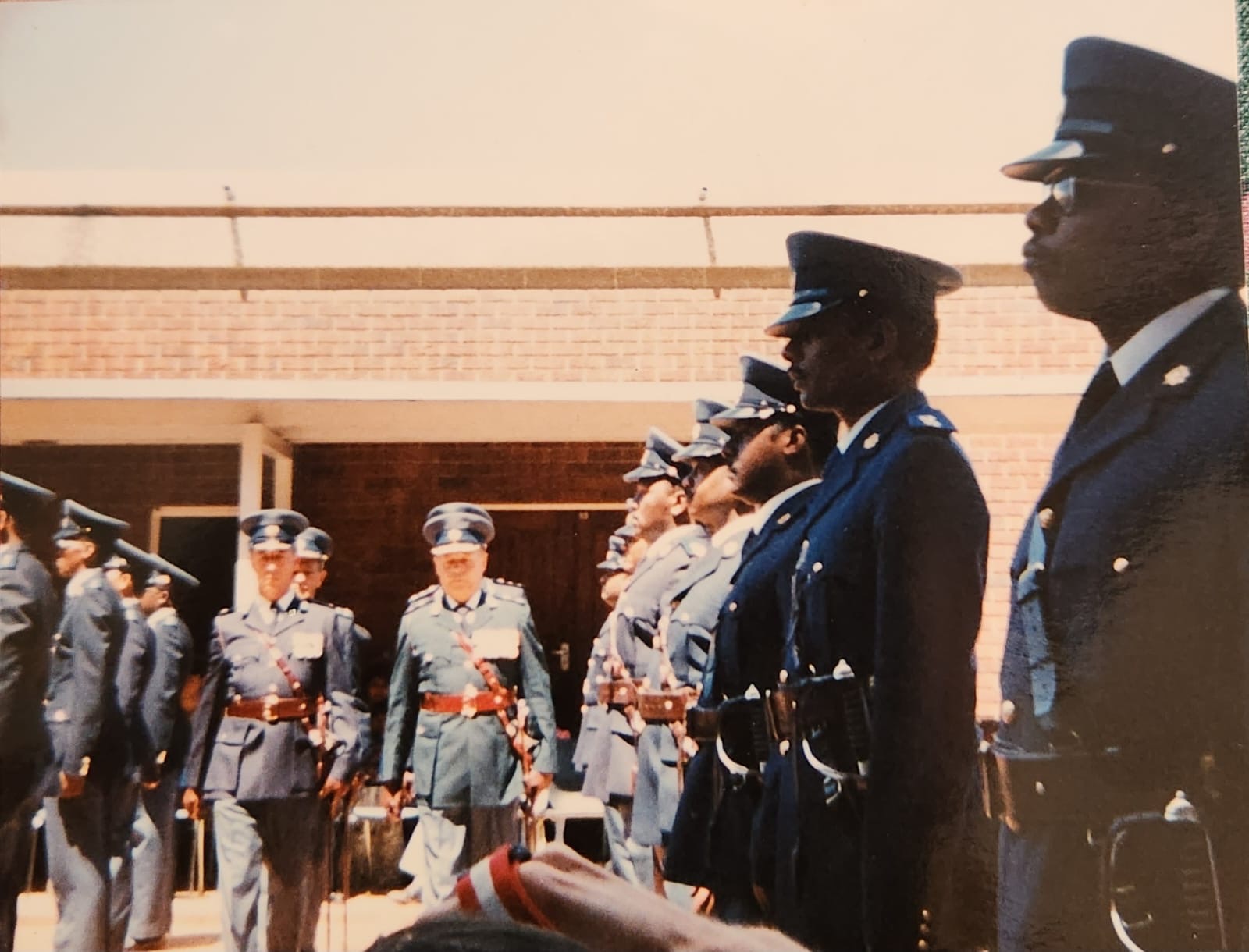
Inspection of the parade of Candidate Officers at their Graduation Ceremony during December 1984 at SA Police, Mechanical School, Benoni by Major General JAB Laubscher
(Source [GDG])
SOUTH AFRICAN POLICE
CANDIDATE OFFICER’S COURSE
NO 6/84
NON-WHITES
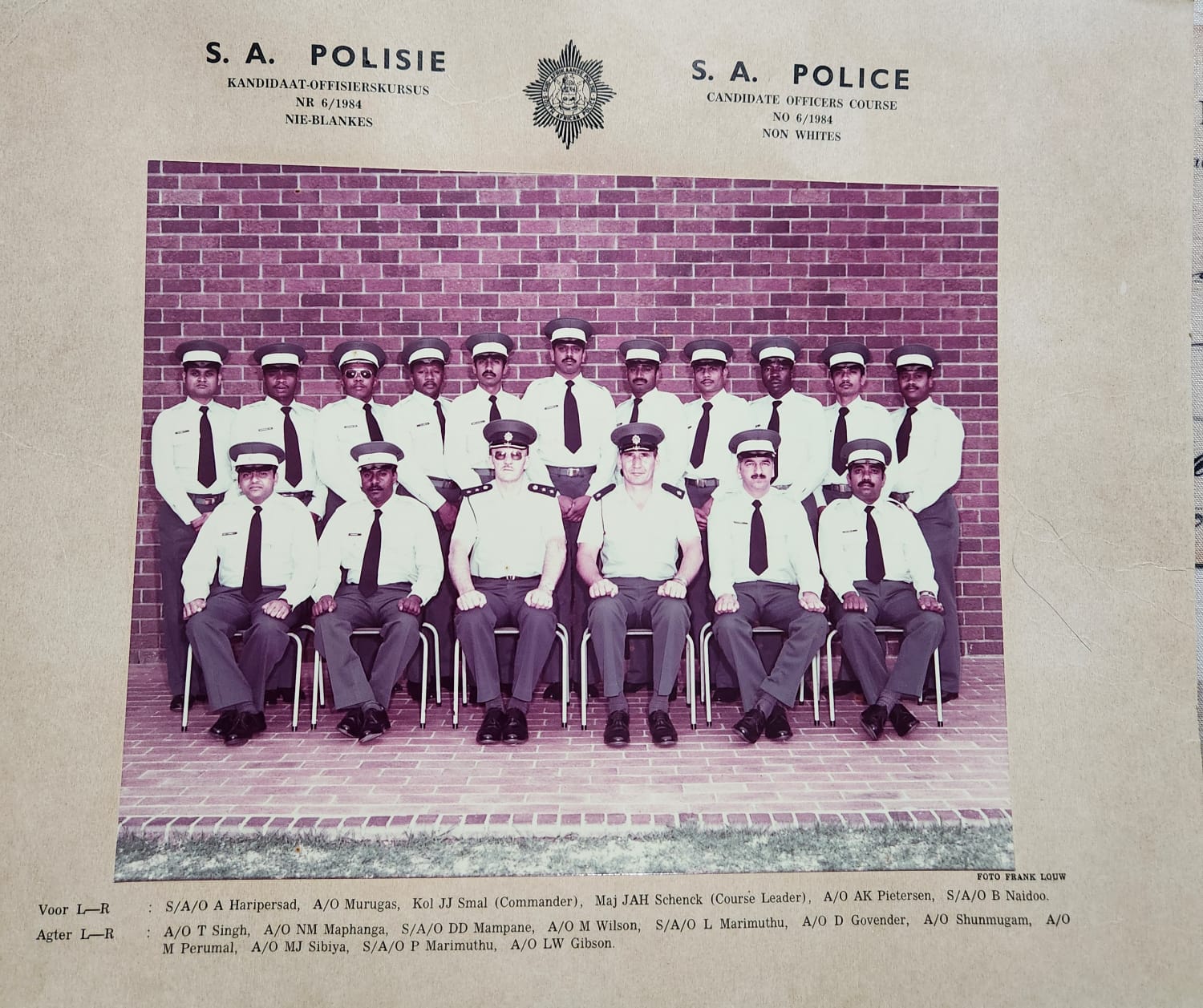
Front row, extreme right Bala Naidoo
[GDG]
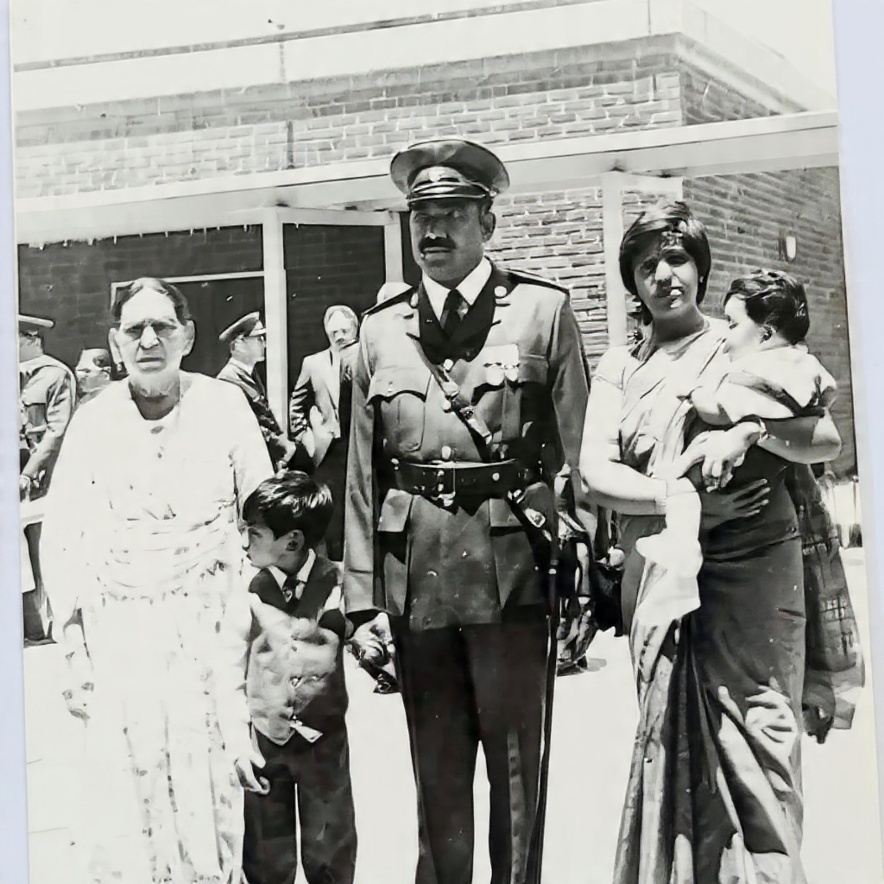
Graduation ceremony, candidate officer to Lieutenant. SAP Mechanical School Benoni, December 1984
L-R, Mrs N Naidoo (Bala Naidoo’s mother) son, Elvin, Lily and son, Merlin.
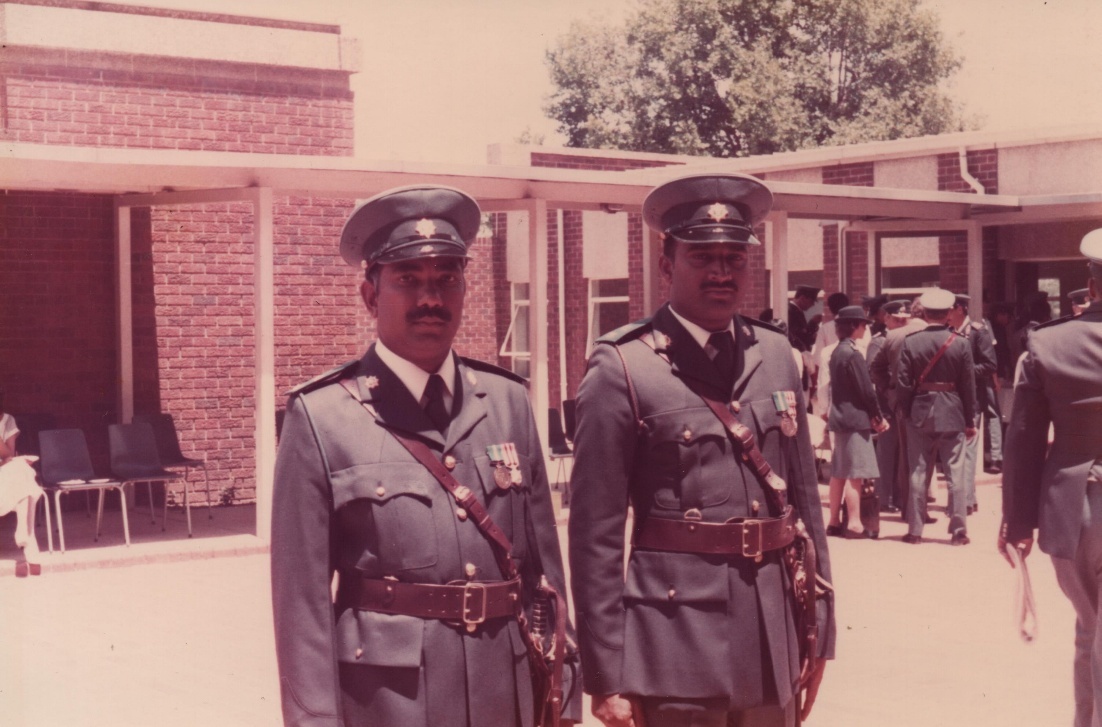
Graduation ceremony National Diploma Police Administration. SAP Mechanical School Benoni, December 1984
Bala Naidoo and Colonel Johnny Shunmugam Govender.
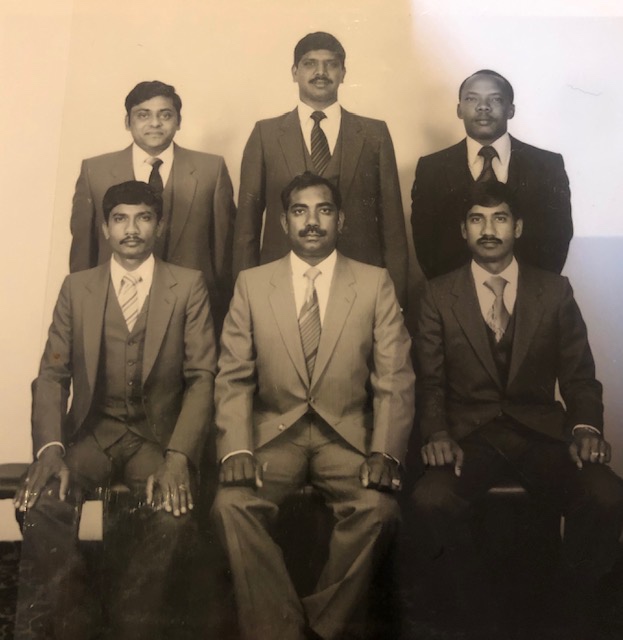
Detectives on Candidate Officer’s Course 6/1984
Front row, from left to right, Cristy Marimuthu; Bala Naidoo: Reggie
Marimuthu
Rear row, from left to right, Anesh Haripersad; George D
Govender; Mpanga
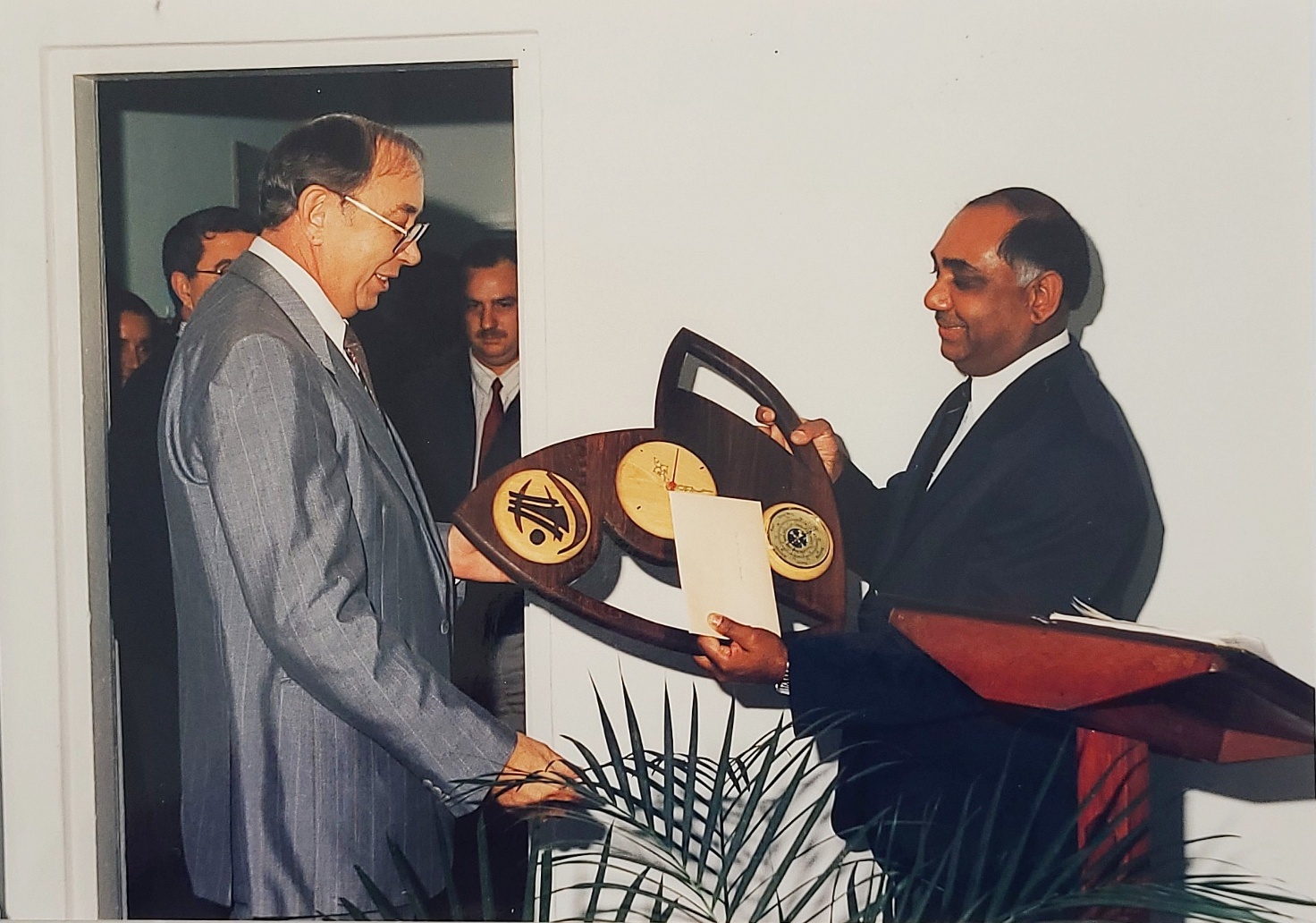
Retirement function Brigadier Ben van Heerden. Provincial Head SAPS Criminal Record Centre, KZN. Function held at Port Shepstone, LCRC, KZN 1997/8
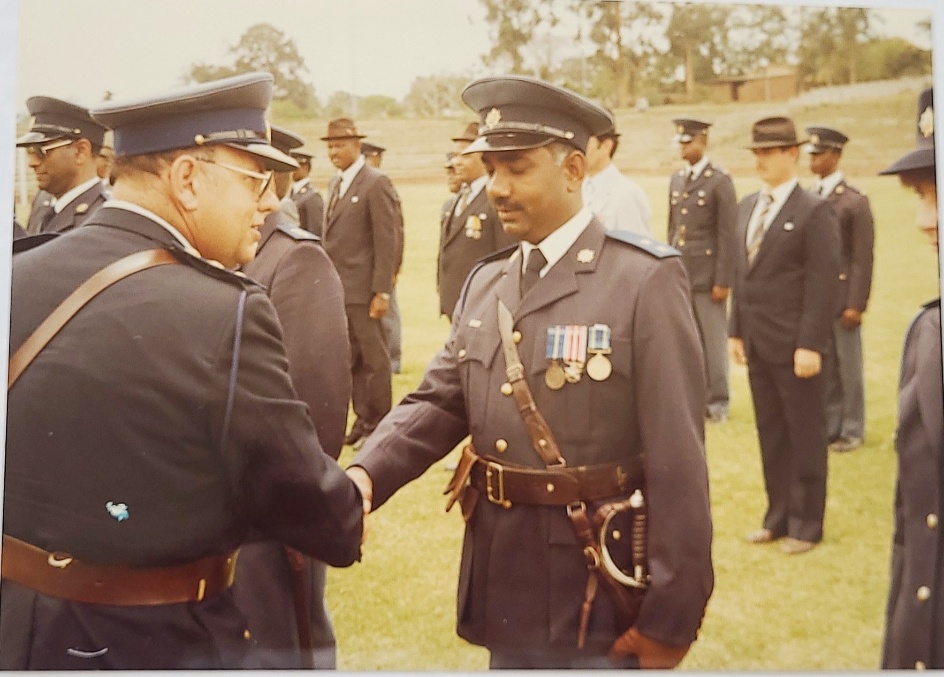
Medal Parade, Protea Grounds, Pietermaritzburg Bala Naidoo receiving the 75th year Commemorative medal from the District Commandant (No 45) District, Colonel WF Vorster during 1988
During 1985, he was transferred to the Criminal Record Centre in Durban. Even though his work was demanding, Naidoo travelled every day from his home in Pietermaritzburg to Durban. His wife, Lily, an educator who was deeply committed to her work, stayed in Pietermaritzburg to look after their two young children. These years required many sacrifices from the family, but their stability and support played an important role in his success.
His skills and experience continue to grow. After many years of outstanding service in Durban, in 1997 he was promoted to Colonel and transferred to Criminal Record Centre, Head Office, Pretoria. There, he took on a senior management role responsible for evaluation and restoration. This position expanded his influence at a national level and allowed him to help shape forensic processes and guide younger forensic specialists.
In 1997, Naidoo returned to KwaZulu-Natal as the second-in-command of the Provincial CRC. This move brought him back to familiar surroundings, with experience in both technical and management roles. His calm, careful, and principled leadership style quickly set him apart.
In 1999, he achieved an important milestone when he was promoted to Brigadier. He became the first Indian officer to lead the Provincial Criminal Record Centre in KwaZulu-Natal. He held this position for 11 years, leading the unit with distinction until his retirement after forty years of dedicated service to the South African Police Service and the wider community.
Throughout his career, Naidoo received more than seven medals and awards, recognising his long-standing commitment and excellence. Earlier in his career, in 1971, he received the Best Student Award at the Wentworth Police Training Academy, a clear sign of the achievements that were to follow.
He has been married to Lily for 49 years. She is a retired schoolteacher, and their two adult children now work as healthcare professionals in KwaZulu-Natal and Whanganui, New Zealand, continuing the family’s tradition of public service.
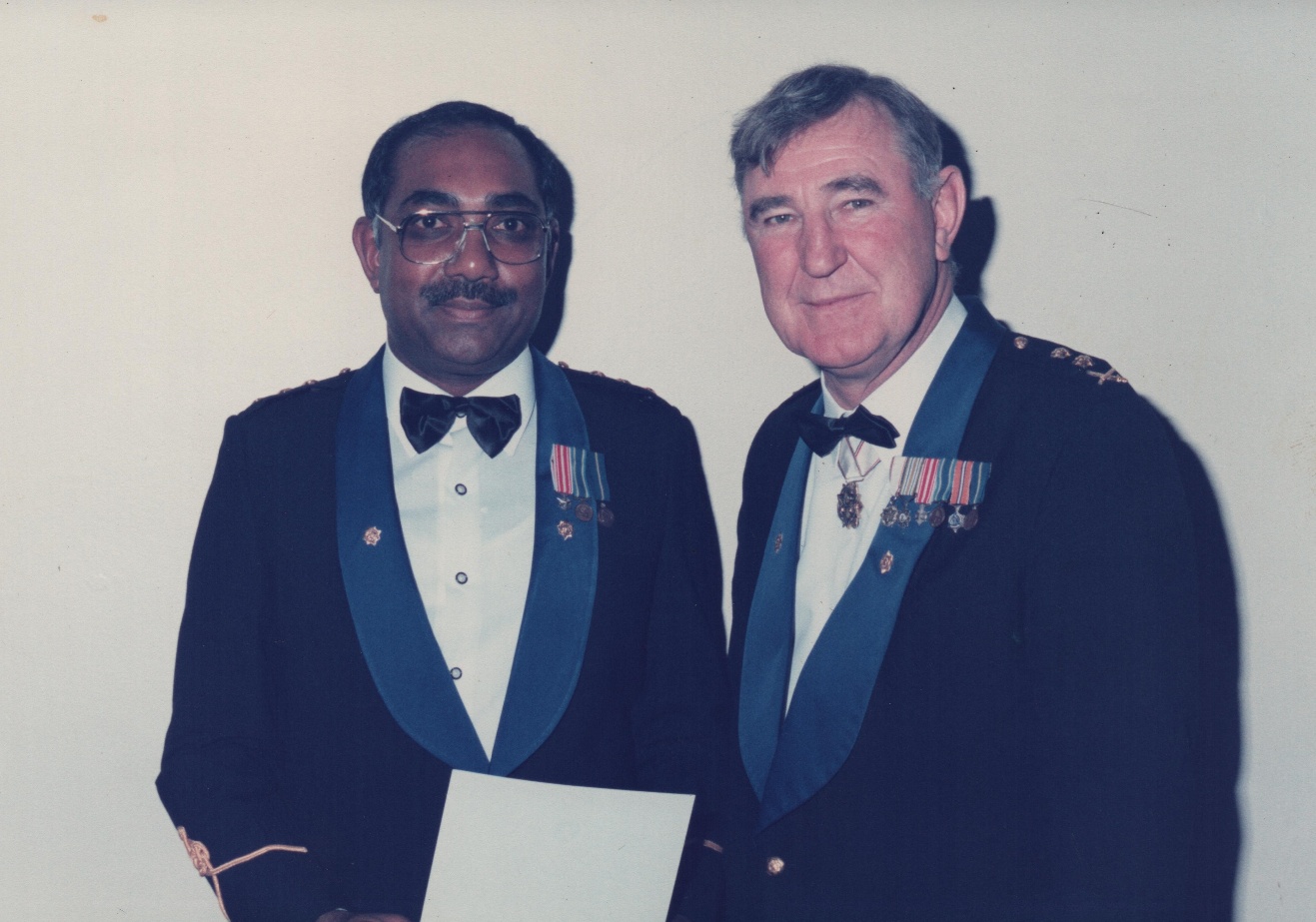
An Official Banquet. Bala Naidoo and Lieutenant General Lothar Neethling (Head SAPS Forensic Science Laboratory)
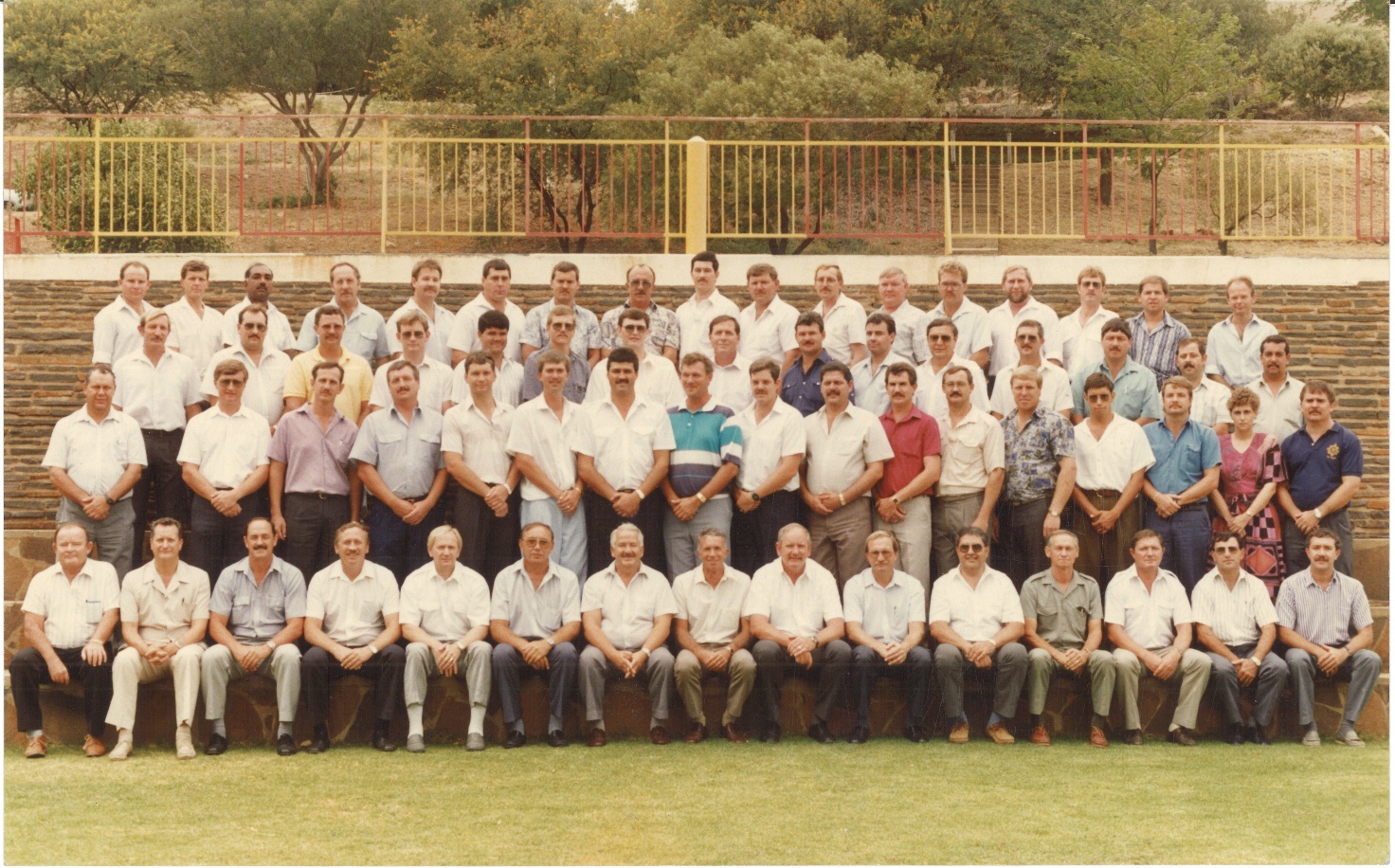
Commanders of the LCRCs in RSA. Year unknown
Last row, L-R, 3rd Bala Naidoo
SOUTH AFRICAN POLICE
JUNIOR MANAGEMENT COURSE 4/1991
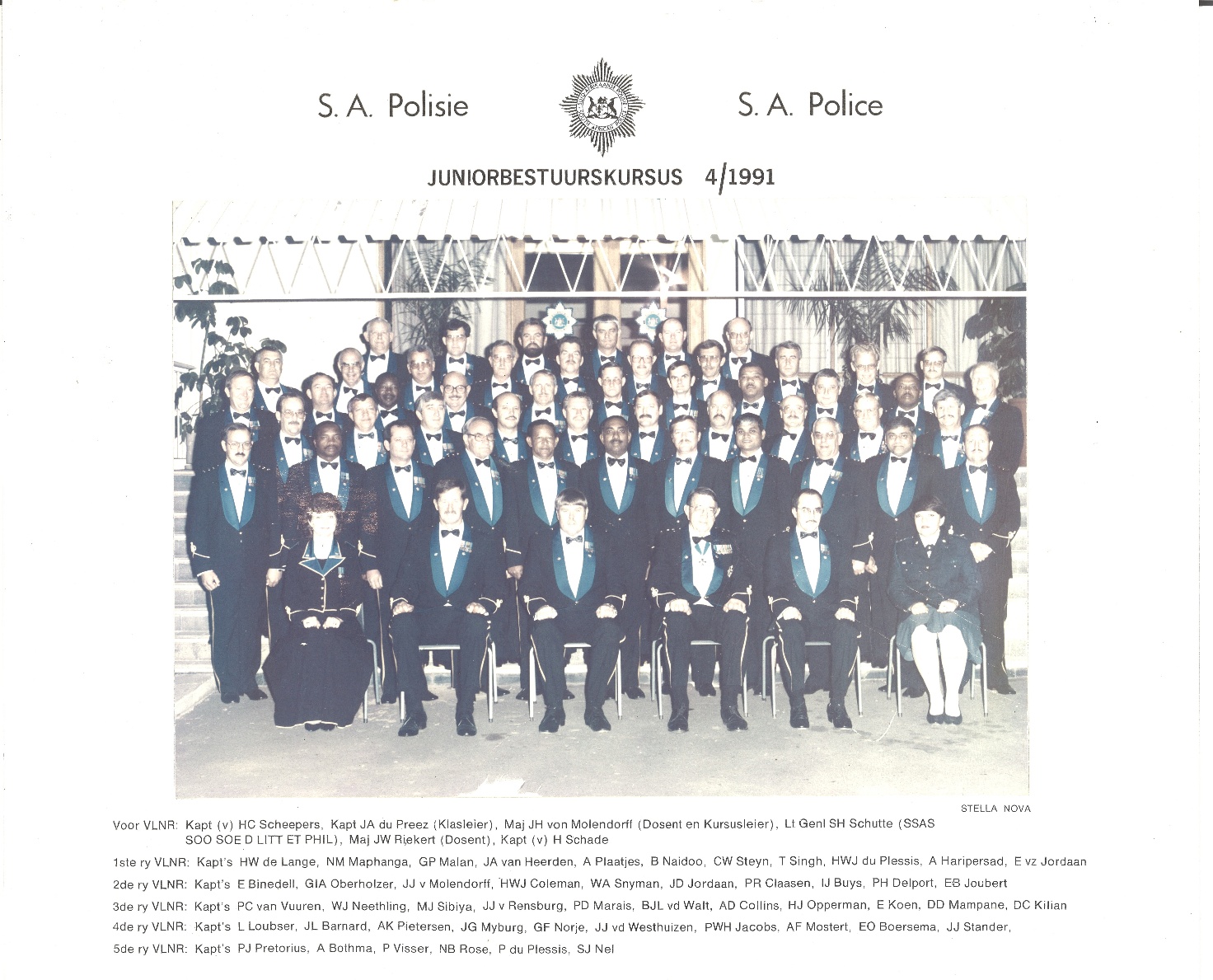
First row, standing, 6th Bala Naidoo
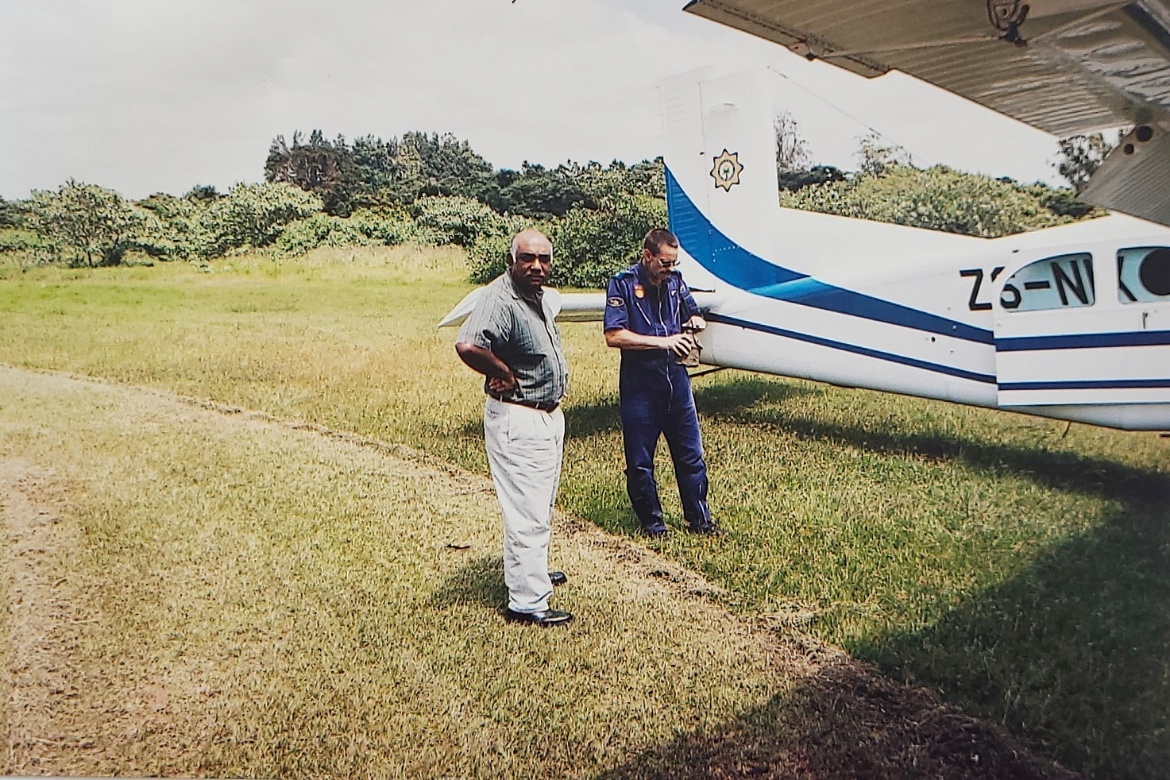
Preparing to take aerial photographs from a fixed wing plane for strategic crime prevention planning, Dukuduku. North coast KZN circa 2007/8
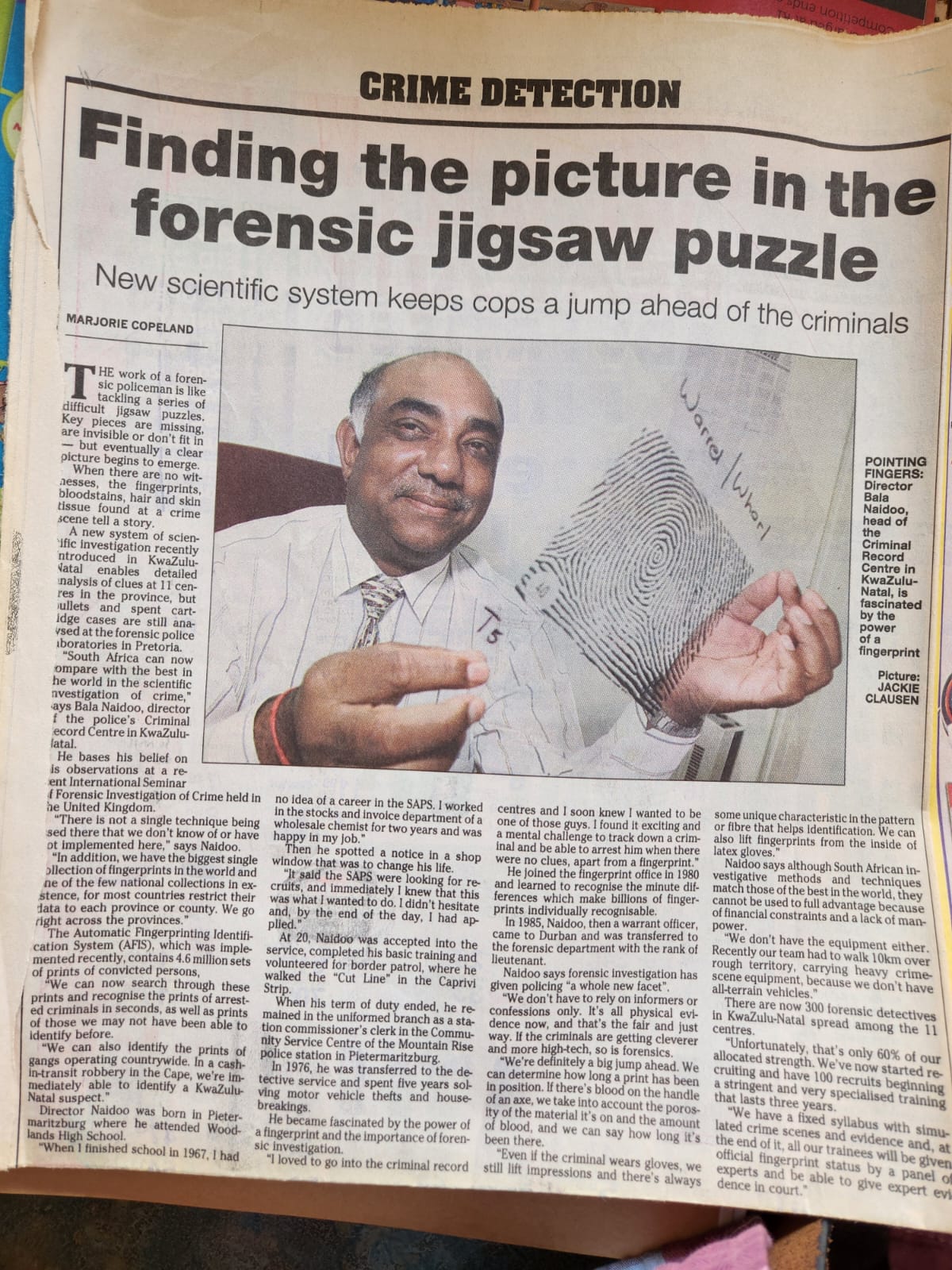
CRIME DETECTION
Finding the picture in the forensic jigsaw puzzle
New scientific system keeps cops a jump ahead of the criminals
MARJORIE COPELAND
[GDG]
“THE work of a forensic policeman is like tackling a series of difficult jigsaw puzzles. Key pieces are missing, are invisible or don’t fit in, but eventually a clear picture begins to emerge.
When there are no witnesses, the fingerprints, bloodstains, hair, physical evidence and skin tissue found at a crime scene tell a story.
A new system of scientific investigation recently introduced in KwaZulu-Natal enables detailed analysis of clues at 11 centres in the province, but bullets and spent cartridge cases are still analysed at the forensic police laboratories in Pretoria.
“South Africa can now compare with the best in the world in the scientific investigation of crime,” says Bala Naidoo, Provincial Head of the police’s Criminal Record Centre in KwaZulu-Natal.
He bases his belief on his observations at a recent International Seminar on Forensic Investigation of Crime held in Durham, United Kingdom.
“There is not a single technique being used there that we don’t know of or have not implemented here,” says Naidoo.
“In addition, we have the biggest single collection of fingerprints in the world and one of the few national collections in existence, for most countries restrict their data to each province or county. We go right across the provinces.”
The Automated Fingerprinting Identification System (AFIS), which was implemented recently, contains 4,6 million sets of prints of convicted persons.
“We can now search through these prints and recognise the prints of arrested criminals in seconds, as well as prints of those we may not have been able to identify before.
“We can also identify the prints of criminals operating countrywide. In a cash-in-transit robbery in the Cape, we’re immediately able to identify a KwaZulu-Natal suspect.”
Director Naidoo was born in Pietermaritzburg where he attended Woodlands High School.
“When I finished school in 1967, I had no idea of a career in the SAPS. I worked in the stock control and invoice department of a wholesale pharmacy for two years and was happy in my job.
Then he spotted a notice in a shop window that was to change his life.
“It said the SAPS were looking for recruits, and immediately I knew that this was what I wanted to do. I didn’t hesitate and by the end of the day, I had applied.”
At 19, Naidoo was accepted into the service, completed his basic training and volunteered for border patrol, where he walked the ‘Cut Line’ in the Caprivi Strip.
When his term of duty ended, he remained in the uniformed branch as a patrol van driver, charge office sergeant, enquiry staff investigator and station commander’s clerk at the Mountain Rise police station in Pietermaritzburg.
In 1976, he was transferred to the detective service and spent four years solving motor vehicle thefts and housebreaking cases.
He became fascinated by the power of a fingerprint and the importance of forensic investigation.
“I loved to go into the criminal record centres, and I soon knew I wanted to be one of those guys. I found it exciting and a mental challenge to track down a criminal and be able to arrest him when there were no clues, apart from a fingerprint.”
He joined the fingerprint office in 1980 and learned to recognise the minute differences which make billions of fingerprints individually recognisable.
In 1985, Naidoo, then a warrant officer, came to Durban and was transferred to the forensic department with the rank of lieutenant.
Naidoo says forensic investigation has given policing “a whole new facet”.
“We don’t have to rely on informers or confessions only. It’s all physical evidence now, and that’s the only way. If the criminals are getting cleverer and more high-tech, so is forensics.
“We’re definitely a big jump ahead. We can determine how long a print has been in position. If there’s blood on the handle of an axe, we take into account the porosity of the substrate and the amount of blood, and we can say how long it’s been there.
“Even if the criminal wears gloves, we still can lift impressions and there’s always some unique characteristic in the pattern or fibre that helps identification. We can also lift fingerprints from the inside of latex gloves.”
Naidoo says although South African investigative methods and techniques match those of the best in the world, they cannot be used to full advantage because of financial constraints and a lack of manpower.
“We don’t have the equipment either. Recently our team had to walk 10km over rough territory, carrying heavy crime scene equipment, because we don’t have all-terrain vehicles.”
There are now 300 forensic detectives in KwaZulu-Natal spread among the 11 centres.
“Unfortunately, that’s only 60% of our allocated strength. We’ve now started recruiting and have 100 recruits beginning a stringent and very specialised training that lasts three years.
“We have a fixed syllabus with simulated crime scenes and evidence and, at the end of it, all our trainees will be conferred official fingerprint status by a adjudication panel of experts and be able to give expert evidence in court.”
POINTING FINGERS
Director Bala Naidoo, head of the Criminal Record Centre in KwaZulu-Natal, is fascinated by the power of a fingerprint
REFLECTIONS
THOSE WERE THE DAYS
Brigadier Naidoo often reflects on the early policing environment stories that reveal both how far the service has evolved and how different the practical realities once were. These anecdotes form a collective memory of a policing era that today sounds almost unbelievable.
“In those days, a person arrested on a warrant for a traffic violation could be transported by passenger train from Pietermaritzburg to East London, via the long Bloemfontein route hundreds of kilometres in custody simply for a minor Traffic violation. Curfews were strictly enforced; being out at night after certain hours could result in arrest. A person who failed to carry a “reference book” popularly known as a dompas risked immediate imprisonment.
Despite these strict measures, community trust ran remarkably deep. Officers could leave a message with a neighbour for a suspect to report to the station, and he would almost certainly comply. A man completing his prison sentence would sometimes return to express his gratitude for the discipline that had helped put him back on the straight and narrow.
The challenges of rural policing were particularly intense. At 2:00, officers would head into isolated areas, sometimes wading barefoot across rivers because no bridges existed. They would conduct arrests with only a single colleague present and occasionally, in an ironic twist of justice, the suspect himself would help carry stolen property back to the station as evidence.
In many charge offices, the entire relief or shift was run by a single sergeant sometimes only a constable by rank who managed all operations with competence and efficiency. At that time the Province of Natal was commanded by only two Brigadiers, one stationed in Durban (Port Natal) and the other in Pietermaritzburg (Natal Midlands Region). Movement and residency were heavily restricted; Indians and Chinese citizens were prohibited from living in the Orange Free State except while “in transit.
Even fingerprint and criminal record processing belonged to a different world. When a court remanded a case for fourteen days, the South African Criminal Bureau had just enough time through only ordinary postal services to receive the SAP 76 fingerprint form, manually search archival records, type and photocopy documents, and return a SAP 69 (record of previous convictions) to the originating station. There were no electronic submissions, no digital archives only the patience and precision of dedicated officers.
These were, as the old saying goes, “the days when men were men.”
Among Naidoo’s many recollections is the case of Mr Jim D, known by his fingerprint classification 1a3a, a habitual burglar who targeted school staff rooms for crockery and cutlery. His arrest came not through dramatic surveillance but by the keen eye of a fingerprint expert who examined suspicious individuals near affected schools and identified him solely by his prints.
Naidoo himself joined the Local Fingerprint Office driven by admiration. During his early policing years, he frequently delivered fingerprint forms to the LFPO and became fascinated with the dedication of the fingerprint experts – professionals who eagerly awaited new prints to compare against unsolved crime scene latent prints. In their passion and precision, he saw his future. They became his heroes, and he resolved to follow their path.
He recalls the date he enlisted in the South African Police on 1970-02-11 a date he has written more than a few thousand times across the countless forms and documents of his long career. It marked the beginning of a journey that would last 40 years, a journey of service he embraced wholeheartedly.
There were light-hearted, even bizarre, moments too. At one-point, certain members entrusted with processing pension payments devised a fraudulent scheme involving fingerprints and toe prints. When they exhausted these options, they resorted astonishingly to using penile impressions on vouchers. These prints, unsurprisingly, remain in the latent database under the classification “unknown.” Naidoo humorously wondered what the results would be if today’s modern morphological matching systems were applied to that peculiar evidence.
In another case, the Security Branch delivered numerous textbooks requiring latent print processing. Working late and desperate for results, Naidoo and a colleague experimented with a cocktail of chemical agents from the development cupboard. By the next morning, the mixture had produced one of the clearest latent prints of their careers even though the formula could never be replicated again. “Sorry guys,” he would later joke, “that was our one-time miracle.
In those early days his salary was a humble R 72, barely enough to support himself. He remembers photographing a deceased at the Gale Street mortuary and immediately thereafter eating sandwiches in the car park before rushing off to the next crime scene. The work demanded much, but he gave even more.
Naidoo often frames his professional journey through the metaphor of a young boy watching an African woodcarver. Hidden deep within the block of wood, the carver explained, the lion already existed. The artist’s task was simply to remove everything that was not the lion. Naidoo began his career as the curious boy, observing and learning. Over time, through discipline and patience, he became the carver shaping his own lion, a career that grew, roared, and commanded respect.
In his reflections, he draws inspiration from Dr Martin Luther King Jr’s 1964 Nobel Peace Prize acceptance speech. Like King acknowledging the unseen pilots, cabin crew, and ground staff behind every successful flight, Naidoo honours the countless CRC and LFPO members whose labour enabled the unit to soar. Many of these individuals never appeared in headlines, and their names were absent from lists of public recognition. Yet their dedication crafted a safer and more just South Africa.
The career of Brigadier Bala Naidoo stands as one of the most remarkable journeys in South African forensic policing, a story shaped by dedication, resilience, and a profound sense of duty. His path into the Criminal Record Centre (CRC), once known as the Local Fingerprint Office (LFPO), began in an era when competition for a post within this specialist unit was fierce. In 1980, after rising above numerous other applicants, Naidoo was nominated to join the CRC. His selection was not merely based on technical ability; it was his temperament, his high emotional quotient, his steadiness under pressure, and his capacity to channel personal strengths toward precise investigative work that set him apart. It was evident even then that he possessed an aptitude for meticulous analysis, a quality that would later define his contributions to forensic science in South Africa.
BOMB BLAST 23 DECEMBER 1985
His policing career had started earlier, and by the time he joined the CRC he already demonstrated a disciplined work ethic. Yet nothing could prepare him for the horrific scene he was called to just five years later. On 23 December 1985, while attached to the Durban Local Criminal Record Centre, Naidoo was dispatched to Amanzimtoti to attend what would become one of the most tragic crime scenes in the province’s history, a bombing inside a busy shopping mall. A limpet mine had been placed in a rubbish bin; its explosion killed two adults and two children and injured approximately 140 people on a day when families were preparing for Christmas.
The devastation was immense. Naidoo worked through the night and many hours beyond, sweeping the scene for evidence, collecting and preserving fragments, and photographing the post-mortems of all four deceased victims. That December would pass without Christmas for him; duty did not permit him the luxury of rest or the comfort of family. He was 35 years old, with 15 years of service, yet he had never encountered a scene so catastrophic. The experience left a permanent imprint on him, sharpening both his resolve and his compassion.
By 1984, Naidoo had already proven himself indispensable. He was promoted to the commissioned rank of Lieutenant and transferred to the Durban office for advanced training in forensic disciplines, fingerprints, crime-scene reconstruction, latent and physical evidence recovery, and the complex science of dactyloscopy. His responsibilities expanded to the classification, filing, comparison, and identification of finger and palmprints, as well as testifying in courts of law as an expert witness.
He offers gratitude to the heads of CRC South Africa, the national CRC office in Pretoria, colleagues and team members across provinces, and the many friends made during years of shared service. His deepest thanks go to his family his “immediate and extended pillars” whose support sustained him throughout every trial of his career.
Some memories he wishes he could replay frame by frame:
- attending the Woltru Leadership Conference in Cape Town.
- representing South Africa at the Scientific Investigation of Crime Conference in Durham, UK;
- participating in the NFSI Conference in Brussels, Belgium;
- and standing “on top of the world” during professional summits such as the EDLP.
These moments, combined with the friendships, teamwork, and institutional progress achieved over four decades, leave an indelible mark on his heart.” – he said.
PRESIDENTIAL STRATEGIC LEADERSHIP
DEVELOPMENT PROGRAMME
GROUP 4/2002
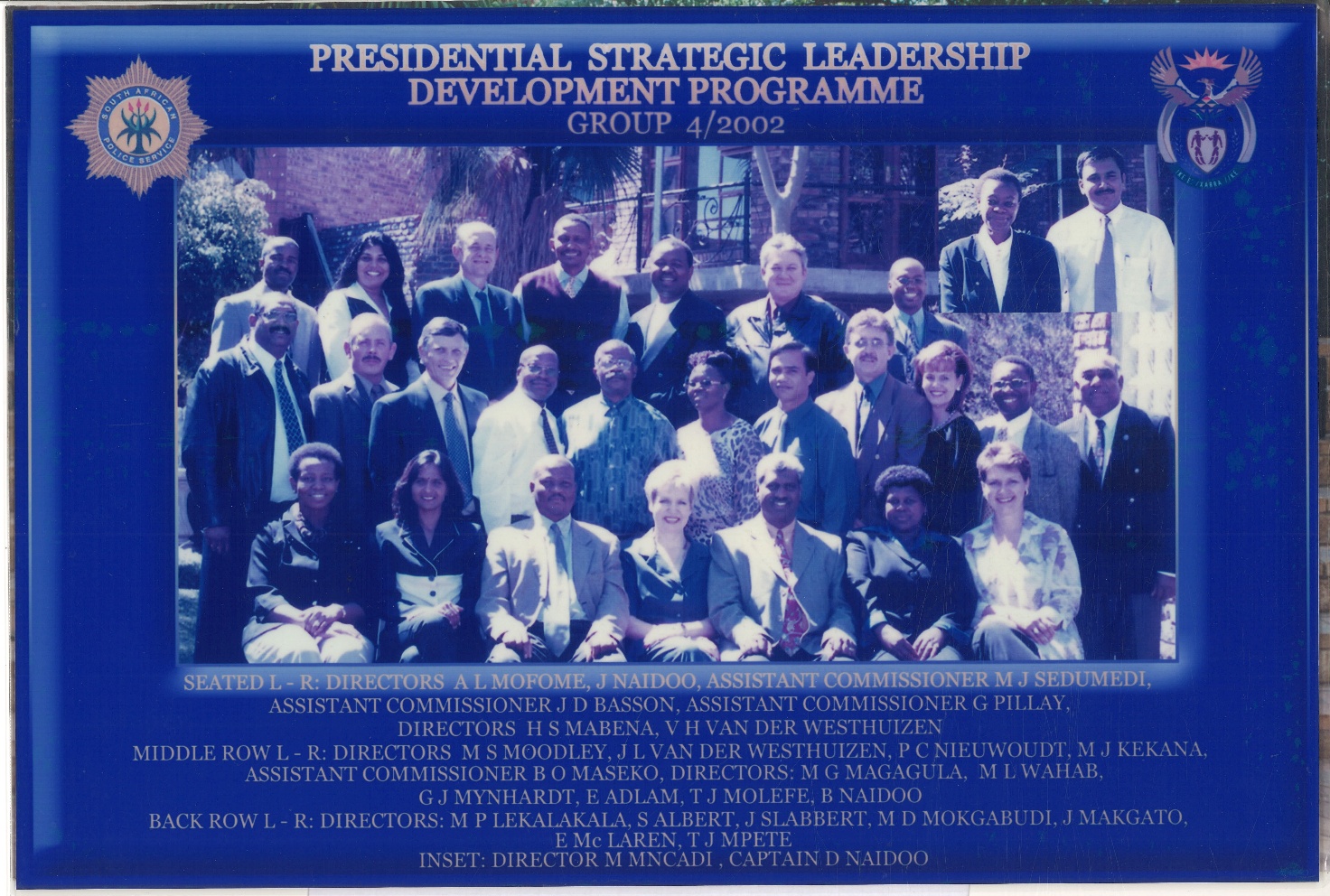
Hoffenheim Conference Centre, Pretoria 2002
Centre row, extreme right, Bala Naidoo
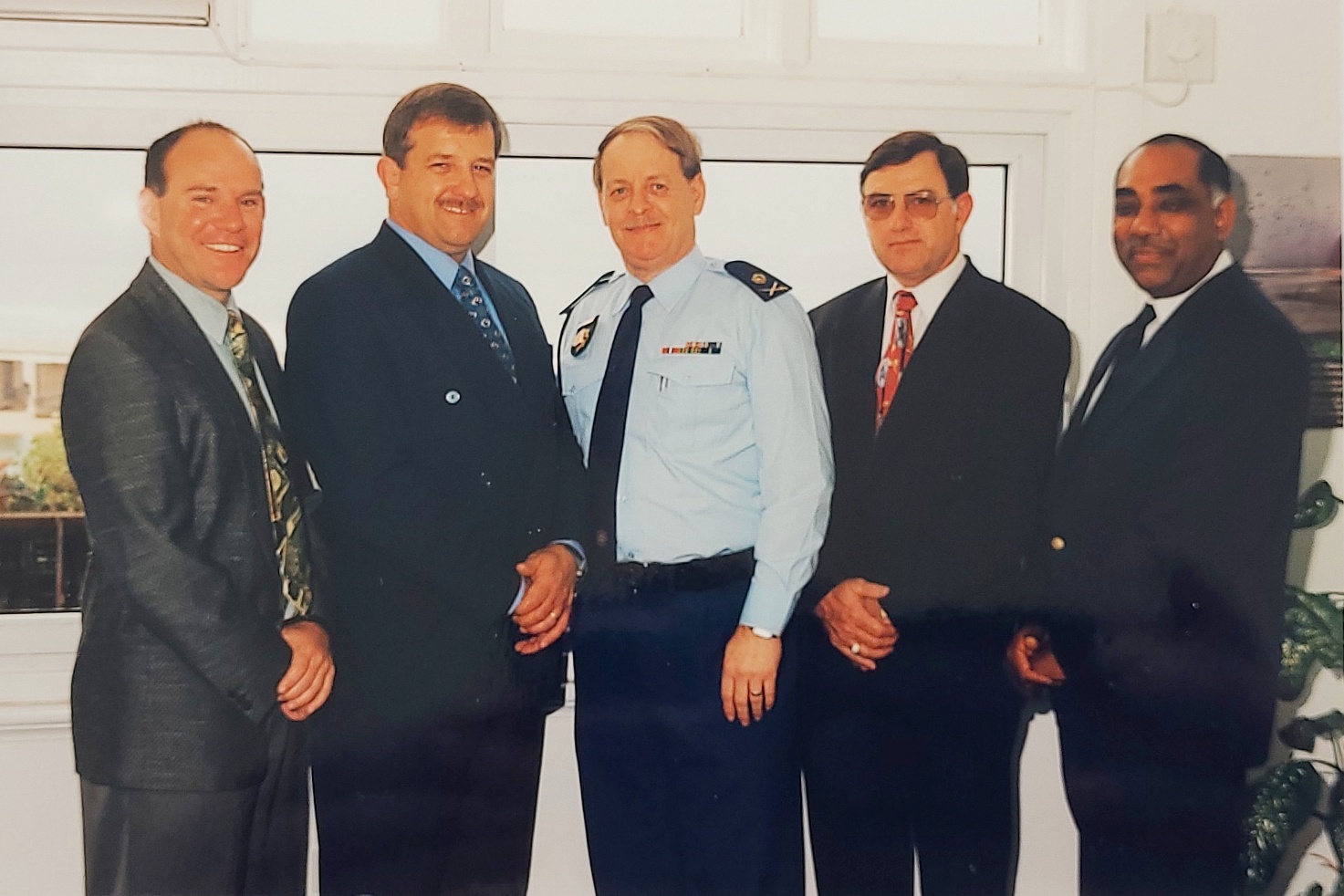
South African Police Services uMzimkhulu Cluster
L-R, Superintendent M Ogilvie, Commander LCRC Port Shepstone; Commissioner P du Toit, Head CRC, Pretoria; Commissioner Dirk Schoeman, Cluster Commander, uMzimkhulu, KwaZulu-Natal; Director F Vorster, CRC Directorate, Pretoria; Director Bala Naidoo, Provincial Head, CRC, KwaZulu-Natal
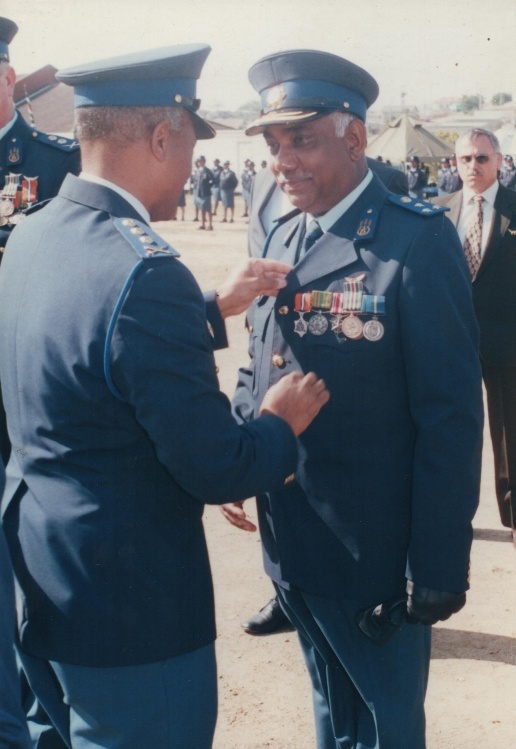
Medal Parade Umlazi SAPS Umlazi Cluster, Durban KZN. Year 2001-2004
Provincial Commissioner, SAPS, KZN, Commissioner Khyanile. Medal recipient Director Bala Naidoo
SOUTH AFRICAN POLICE SERVICE
CRIMINAL RECORD CENTRE
RIDGEOLOGY COURSE
2004-10-18 TO 2004-10-22
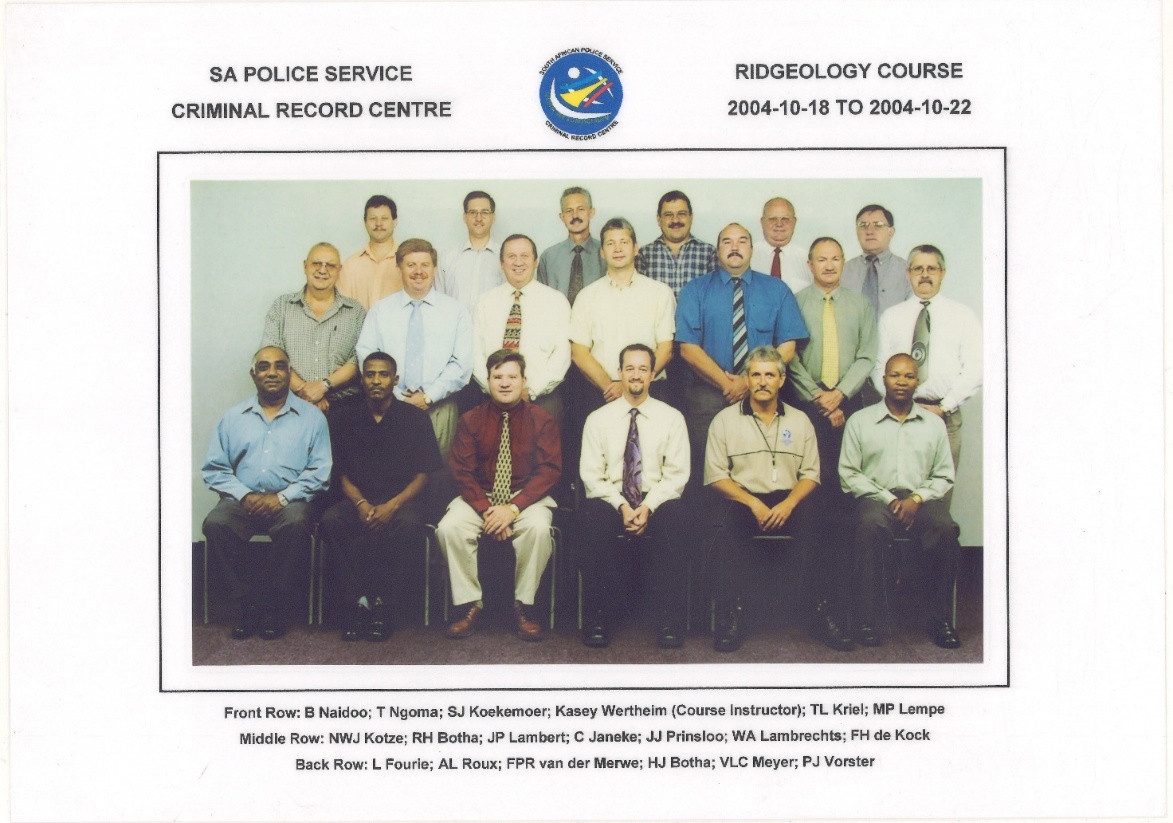
Front row, 1st Bala Naidoo
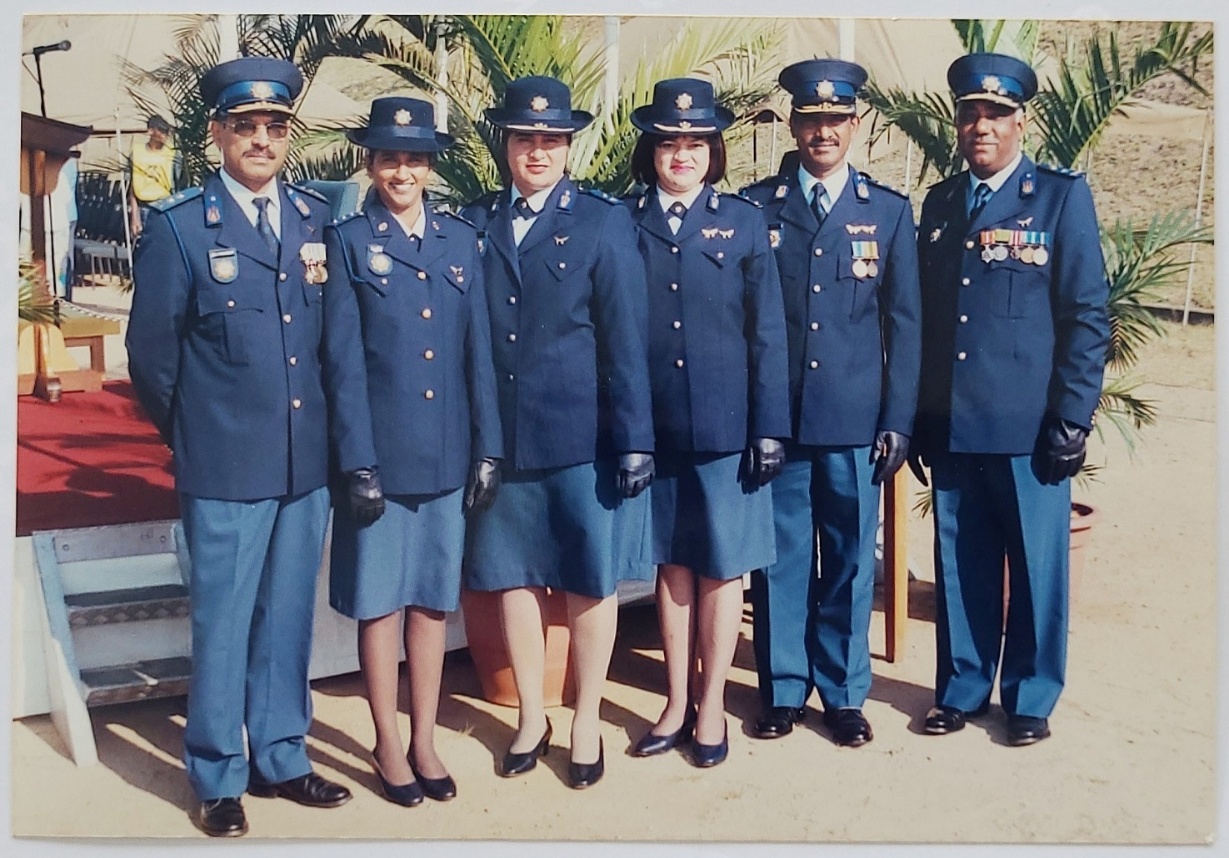
Medal parade at SA Police, Training College, Chatsworth, Durban, KZN, circa 2010
L-R, Major General Ramsaroop; Colonels Shireen Ramchunder; Miranda Hurinarain; Niri Nayager; Major General Bala Naidoo and Brigadier Bala Naidoo (Information provided by Colonel Niri Nayager. – [LG])
The South African Police Service later selected him to attend two international conferences on the scientific investigation of crime, one in Durham, United Kingdom, and another in Brussels, Belgium, representing South Africa on the global forensic stage.”
Even in retirement, Naidoo remained committed to camaraderie and service. He initiated a Social Club for Retired Police Members in Pietermaritzburg and later a similar club in Durban, both under his leadership and guidance. He had once been earmarked for generalship, but the political realities of South Africa’s historical past prohibited that possibility. Yet his legacy remains unquestioned.
RETIRED POLICE OFFICERS SOCIAL CLUB, PIETERMARITZBURG
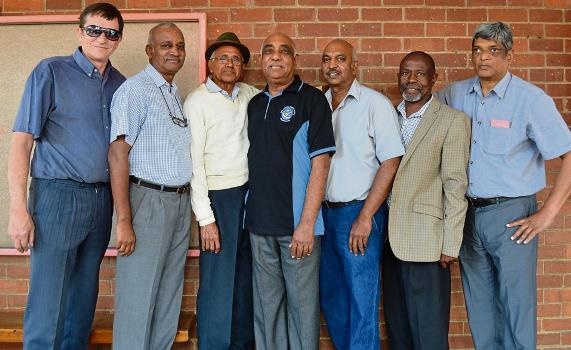
Former policemen from around the city gathered on the weekend to relive the good times, share the bad, and reunite with old friends
From left to Right, Jerome De Villiers; Johnny Govender; Bob Sewpersad; Bala Naidoo; Henry Budhram; George Ngcamu and Logan Govender
“Former brigadiers, captains and colonels from many different units such as the K9 and narcotics unit, crime prevention, station commanders and ex-communications officers met at Deccan Road Primary for the first time in years on Saturday 3rd September 2016.
The reunion was initiated by former policeman Brigadier Bala Naidoo, who said the reason for the event was to bring former policemen together so they could talk about their careers with people who had similar experiences.
“Here they can share stories and memories in an environment that understands,” said Naidoo.
One by one, former policemen stood up and walked to the front where they shared their favourite memories of being in the police force.
Former Plessislaer police officer Logan Govender said he was ecstatic to see the reunion had a “good” turnout.
“We do not see each other often, as we all live apart, but today has been wonderful,” said Govender.
“Brigadier Naidoo initiated the reunion and at first we thought everybody would just stand up and introduce themselves and then talk among themselves.
“But people started talking about their careers, the good times and the bad, where everyone here can understand what they have been through.”
Govender said an association where ex-policemen could meet regularly is in the pipeline.
“It is very important that we keep up with the well-being of our former policemen,” he said.
“If anyone is having problems, we want to be able to be there for them, to help in any way that we can.”
The group of around 40 policemen, some who had recently retired and others who had retired years ago, said their work was what bonded them together. Being able to share stories with people who understood was helpful for them going forward, they said.”
RETIRED POLICE OFFICERS SOCIAL CLUB, DURBAN
After spending several years in Durban, Bala earned strong loyalty and support from his colleagues due to his experience, expertise, and professionalism. With the help of Morgan Naicker and Daniel V G Naidoo, he formed the Retired Police Officers Social Club, which has been active since September 2017. His leadership skills and deep knowledge gained over many years of service have been key to the club’s success. Bala was appointed Chairperson of the club and continues to hold this position to this day, where he is respected for his integrity, commitment, and guidance.
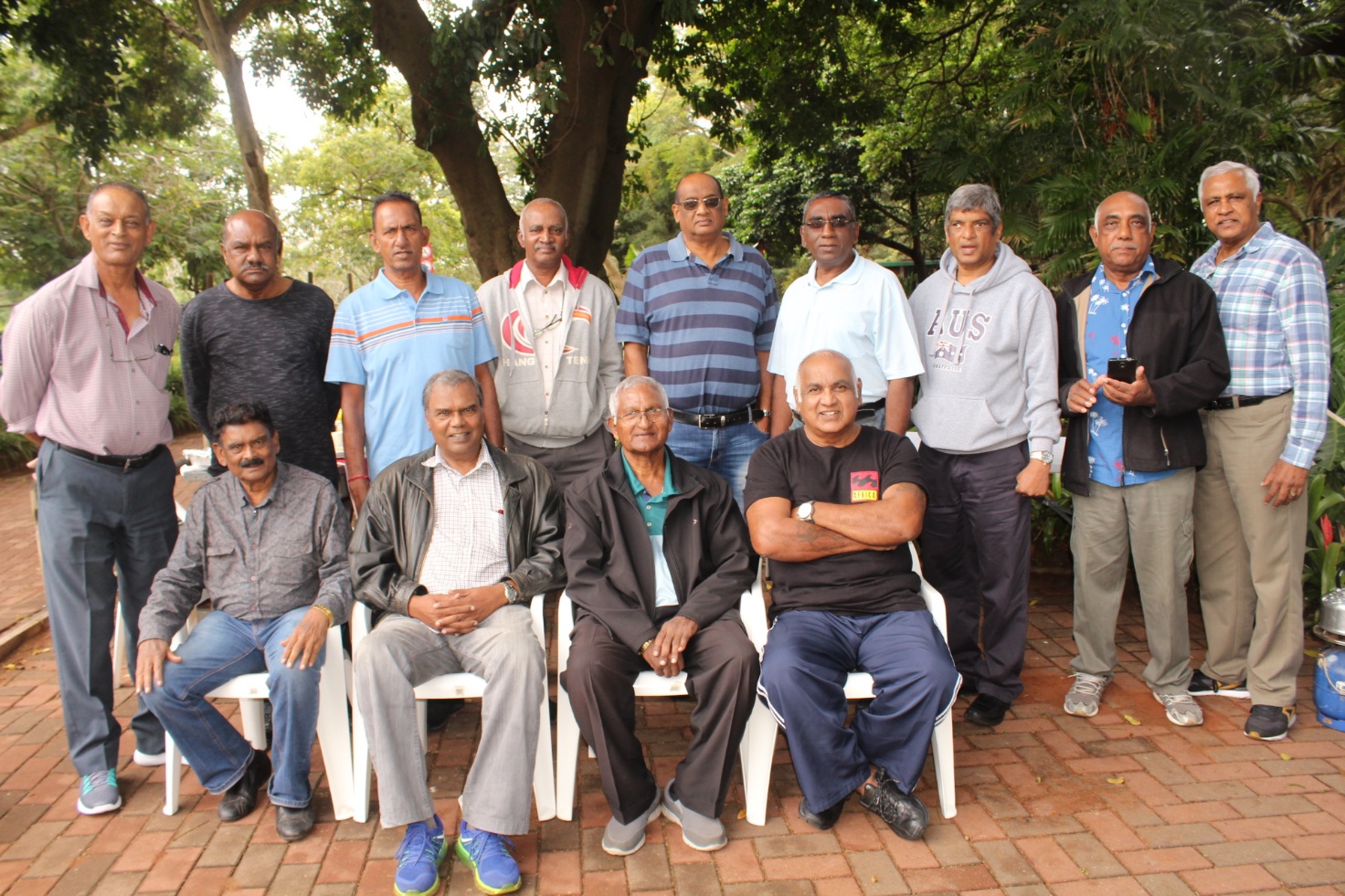
Retired Police Officers based in Durban at their inaugural meeting during September 2017 at the Japanese Gardens, Durban North KwaZulu-Natal
L-R Seated
Sakkie Govender; Krish Thaver; Saravana; Tiger Ellappan
L-R Standing
Bob Govender; Soobrey Naicker; Morgan Naicker; Johnny Govender; Morris Moodley; NG Govender; Logan Govender; Bala Naidoo; Pete Naidoo.
The following service medals awarded to him in order of precedence
- 194-07-04 The South African Police Medal for Combating of Terrorism (2 bars);
- 1980-02-01 – The South African Police ten year commemoration medal (1995 – 2005);
- 1988-04-01 – The South African Police Seventy Fifth Anniversary Commemorative Medal;
- 2010-02-10 – South African Police Service Forty year Loyal Service;
- 2000-02-11 – The South African Police Star for Merit for 30 years of Faithful Service and Exemplary Conduct;
- 1991-04-11 – The South African Police Star for Faithful service for 20 years Faithful service and Exemplary Conduct;
- 1980-02-01 – The South African Police Medal for Faithful Service, 10 years Long Service and Exemplary Conduct.
Brigadier Bala Naidoo retired 2010-09-30 after serving loyally, faithfully and meritoriously for over 40 years in the South African Police.
REUNION OF SAP CANDIDATE OFFICERS’ COURSE 6/1984 AFTER 39 YEARS
MAJ GEN GEORGE GOVENDER (RETIRED)
“Dear colleagues and ladies. Good day. Big thank you to Brigadier’s Bala Naidoo and Reggie Marimuthu for their extra effort in making this Reunion of Course 6 of 1984 a success. Colleagues, I feel refreshed to see us coming together after approximately 40 years, since we graduated as the first Non – white Diploma graduandi Lieutenants on the parade ground of Benoni Mechanical College. We were also fortunate to graduate together with two of our senior officers, late Deputy National Commissioner Morgan Chetty and Lieutenant General Sharma Maharaj (Former Provincial Commissioner of Gauteng). Walking the road since 1984, amidst challenges and high career risks, and being able to attend this reunion, is indeed a great achievement. My thanks go to the almighty, who made this 40 years journey possible. My career in the South Africa Police (SAP) and the South Africa Police Service (SAPS) has always been exciting with many successes on the way. I had the occasion to work with, interact and enjoy the company of excellent colleagues and superiors, who always appreciated my contribution. There were times, when it was difficult to satisfy some individuals, however this is too few to mention. Since the non-white officers were a diverse group, competition was great in the police. This was healthy in a way, because it kept one on his toes to make sure you walk a straight path to qualify for promotions, otherwise you are left behind because of your own foolish mistakes. The biggest lesson I learnt in the police is to educate yourself to the fullest, 51 since the government carried the costs to educate you. Being educated, allowed you to keep a back door opened to pursue a second career. When new leadership and policies start to impact negatively on your career, you must look at other avenues even if you have to sacrifice your salary and power position. When I went on early retirement from the police after 36 years of service, having served as a Major General for 12 years, at police station level, area level and Head Office level. I joined the University of South Africa (UNISA) and obtained my Doctorate degree in 2012.The biggest challenge was to relinquish your power position as a police officer and the benefits offered to senior officers in the police. I later realized through research, that this so-called legitimate power is very dangerous, it affects families negatively and many police officers suffer a backlash because of the loss of this power position. I had a very successful career at the University, where I became an internationally rated researcher with a NRF rating awarded by the CSIR. After 13 years, I retired from the University as a full Professor. I presently do work for several Universities in South Africa and Internationally, because of my passion for Education. I had a very successful working career, working for almost 49 years before joining my new career as a pensioner. My participation in the Comrades Marathon and training for this endurance race by running many marathons, over many stressful years in senior management positions, helped me beat PTSD in my early days. Today, due to health reasons I keep walking and cycling to manage old age symptoms.”
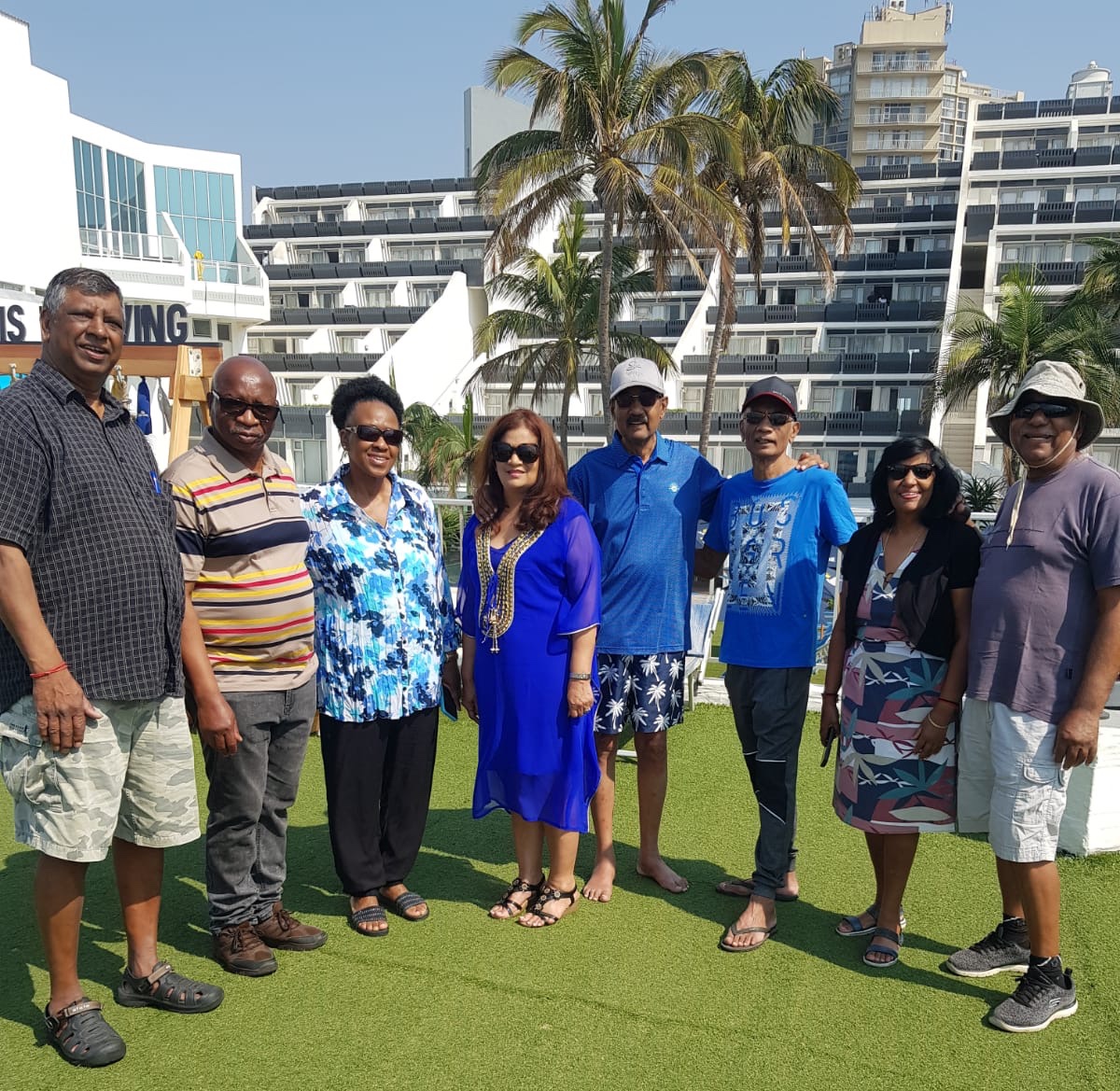 Reunion of Candidate Officers of Group xx/ 1984 after 49 years at La Montagne Ballito from 8 / 11 Sept 2023
Left to right, Major General (Professor) George D Govender; Major General Martin Mpanga; Mrs Naledi Mpanga, Mrs Roda Marimuthu; Brigadier Reggie Marimuthu; Colonel Cristy Marimuthu; Mrs Lily Naidoo; Brigadier Bala Naidoo.
REUNION MEMBERS OF PLATOON 15 1970/1972
Nostalgic 54-year …
The Public Eye, 29 March 2023
Transcript
“NOSTALGIC 54-YEAR REUNION OF POLICE OFFICERS
The Public Eye
29 March 2023
Akheel Sewsunker
“Retired police officers, who trained together in 1970 but did not see
each other for more than 50 years, celebrated a nostalgic reunion at
Chistlehurst in Pietermaritzburg yesterday.
A contingent of 37 (36 – [LG]) men in blue (khaki / drab in the
year 1970/71. – [LG]) were posted to different police stations
resulting in them losing contact for more than half century.
Bala Naidoo, a former brigadier who organised the event, said that
it was important for these reunions.
“It is hard to be alone, especially in this job. It can be a huge burden
on your own. By visiting your friends and colleagues, it benefits you.
The event took six months to organise. We are now meeting guys
after many years, some after 53 years,” said Naidoo.
The men came together yesterday to catch up and reminisce about
their days together in the force…”
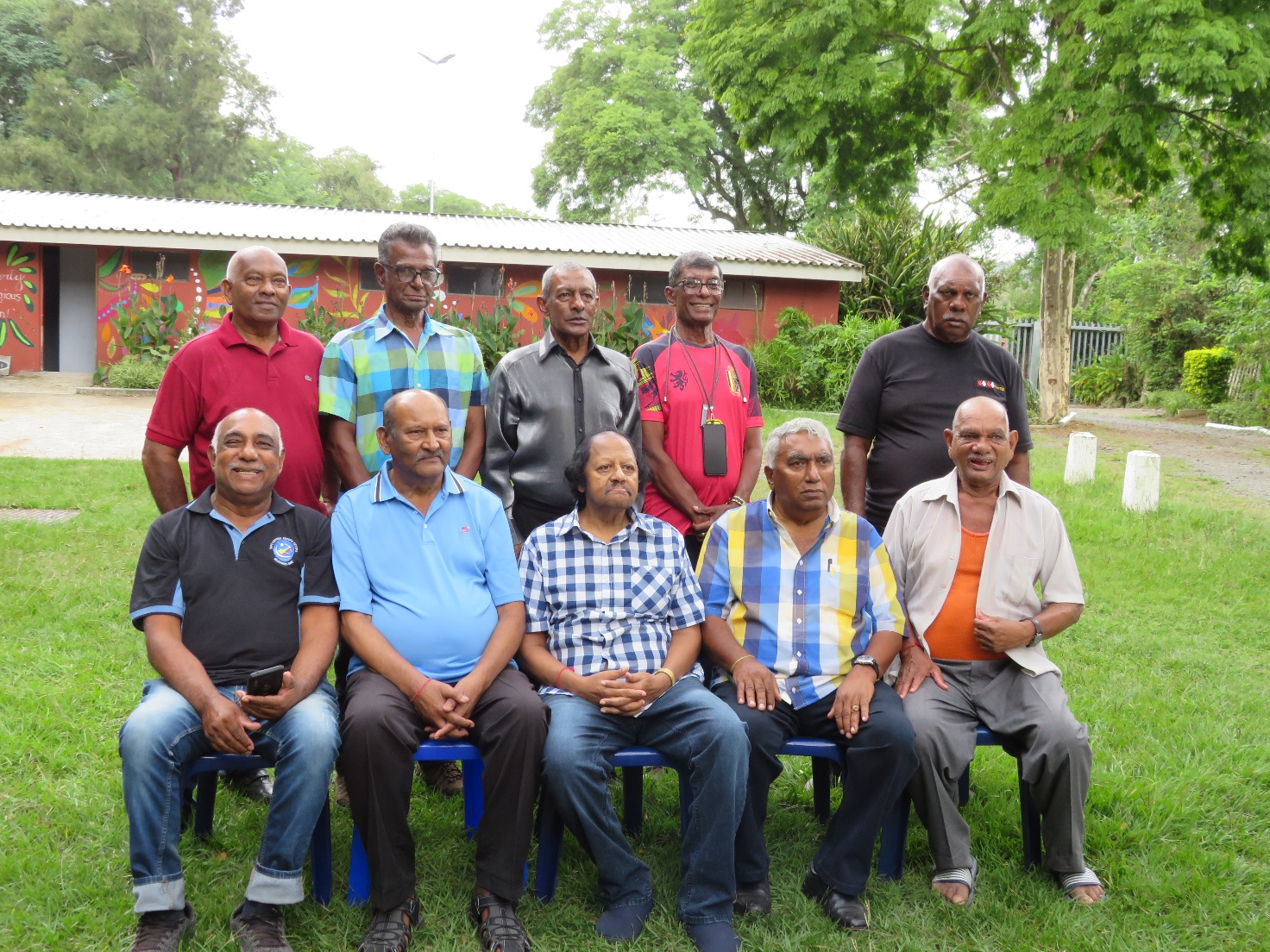
Group photograph of members who attended a reunion after 53
years. (Taken on 2024-03-27 at the 53 rd reunion of members
Platoon 15, 1970-10-09 till 29 April 1971, at Chistlehurst
Academics & Arts, Pietermaritzburg. –[LG])
Seated, from, left to right, Bala Naidoo; Sundarah (Sandy)
Moodley; Mahalingam Reggie Durugiah; Moonsamy Mickey Chetty
and Suresh.
Standing, left to right, Daniel Seevraj; Sivalingam Pillay; Satchie G
Vallunar; Jagadasen; Jacques Pillay and Narayanan (Ricky)
Govindasami;
AFTERWORD
Brigadier Bala Naidoo’s life and service remind us that true greatness is not measured by rank alone, but by character, humility, and lasting influence. He reached great heights in the South African Police Service, yet he always remained an officer and a gentleman, respected not only for his professional ability but also for his kindness, fairness, and quiet strength. Among former members and within the wider community, he is rightly regarded as an icon.
The words of Calvin Coolidge, “The nation which forgets its defenders will itself be forgotten,” are deeply relevant here. This Special Edition of Nongqai ensures that Brigadier Naidoo’s contribution will not be forgotten. His pioneering work in forensic policing, especially in fingerprint science, helped shape modern investigative standards in South Africa. From his early days as a young constable to becoming the first Indian officer to lead the Criminal Record Centre in KwaZulu-Natal, his journey reflects discipline, perseverance, and an unwavering search for truth.
What stands out most is not only what Bala achieved, but how he achieved it. He led with calm authority, strong moral values, and deep respect for others. He inspired colleagues, mentored younger members, and never forgot those who walked the path with him. His loyalty and compassion extended beyond the workplace, building lifelong friendships and strengthening the police family long after retirement.
This edition also honours the many dedicated men and women of the Criminal Record Centre and Local Fingerprint Offices, whose vital work often went unnoticed. Together, they laid the foundation of forensic policing in our country, serving justice with professionalism and integrity.
Brigadier Bala Naidoo leaves behind a proud legacy. His work, his leadership, and his example will continue to guide future generations. In remembering him, we also reaffirm our respect for all those who have served with honour, often without recognition, but never without purpose.
[LG]
I want to acknowledge and respect these Officers for tireless behind the scenes, efforts in the production and publication of this magazine.
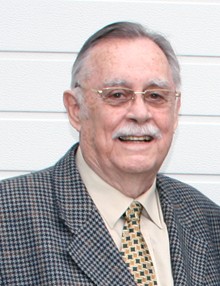
Brigadier Hennie Heymans, Editor in Chief of Nongqai
An experienced and highly skilled officer with an exceptional memory. His Dad was stationed at Somtseu Road and Mount Edgecombe during the 1940’s. Brigadier holds a Master’s degree. Was stationed with Lieutenant-Colonel (Ray) Mathura Munilall at Wentworth. He was also based at King’s Rest (Brighton Beach); and amongst others, Soweto Region, The Public Relations Officer at Head Office and later a District Commandant at Welkom in the Free State Province.
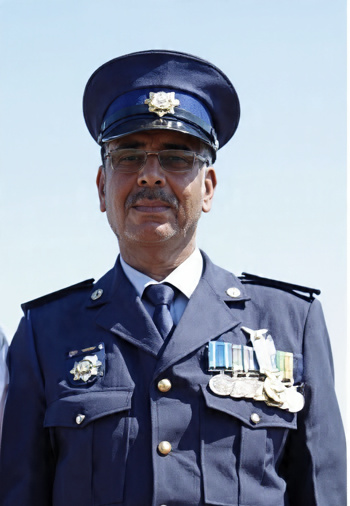
Captain DME Lazarus
Captain DME Lazarus, a Stalwart of SA Police, Chatsworth, Unit 02 & Unit 05, later SA Police, Training College, Chatsworth and Supply Chain Management, Durban, KwaZulu-Natal. An experienced and highly skilled officer with an exceptional memory.
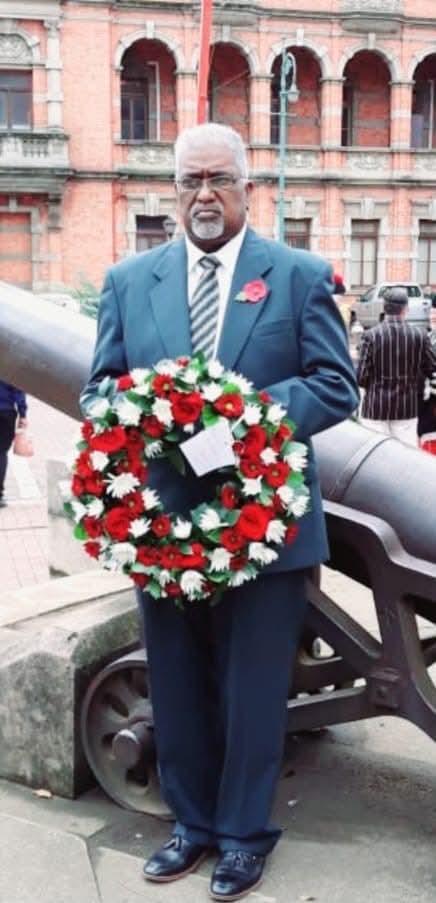
Captain (Sooks) P Sokaloo
Captain (Sooks) P Sokaloo laying a wreath at a Commemoration Service in Pietermaritzburg. His Dad was a World War 11 veteran. An experienced and highly skilled officer.
He was nominated by Lieutenant General Andre Pruis to represent the SA Police at Interpol in the illicit trafficking of narcotic drugs, etc
I must also acknowledge the outstanding contributions and enduring commitment of those who strive to preserve our policing heritage.
My sincere thanks go to:
- Brigadier Hennie Heymans, Editor-in-Chief of Nongqai, whose scholarship, experience, and visionary dedication made this Special Edition possible;
- Major General (Professor) George D Govender [GDG], for the Foreword and his scholarly guidance, encouragement, and steadfast support;
- Advocate Karen Pillay, daughter of the late Colonel Rungasamy “Dickey” Munsamy, for her professional insight and motivation;
- Advocates (Lt-General) Sally Khan, Yolan Denness, Major General Oswald Reddy, Lt-Colonel (Advocate) Jay Govender, Captains DME Lazarus and P.S. Sokaloo, for their valued contributions and shared historical knowledge;
- ALL photographs were provided by Brigadier Bala Naidoo. Unless otherwise specified;
- And finally, to my family, for their patience, encouragement, and understanding throughout the journey of compiling and refining this tribute.
“agnoscere et honorare servientibus” –
“to acknowledge and honour those who served”
“Soli Deo Gloria” – “To God Alone Glory”
Logan Govender


Wow beautiful….this country should be proud of an officer such as Brig Naidoo….