
 AI image
South Africa’s Defence Capability in Numbers: A Long Decline and an Urgent Choice

Three decades of declining defence priority, constrained resources and institutional weaknesses point to the need for a credible programme of recovery.

South Africa's defence establishment faces a challenge that extends beyond the condition of individual military platforms, the performance of particular institutions or the size of the annual defence budget. The deeper problem is cumulative: over three decades, the country's relative commitment to defence has declined, the resources available for maintaining and renewing military capability have become increasingly constrained, and important parts of the defence-industrial and procurement system have struggled to perform.
The numbers tell a sobering story. They do not, on their own, measure operational readiness or determine what force South Africa needs. They do, however, provide a useful indication of the financial and institutional pressures that have shaped the country's defence capability since 1994. Taken together, they raise a question that can no longer be postponed: what is required to arrest the decline and establish a sustainable defence capability for the future?
Thirty Years of Declining Defence Priority
The first indicator is defence expenditure as a proportion of gross domestic product (GDP). In 1995/96, defence expenditure represented approximately 1.75% of GDP. By 2024/25, that figure had fallen to approximately 0.75%. The adjusted appropriation for 2025/26 amounts to approximately 0.722% of GDP.
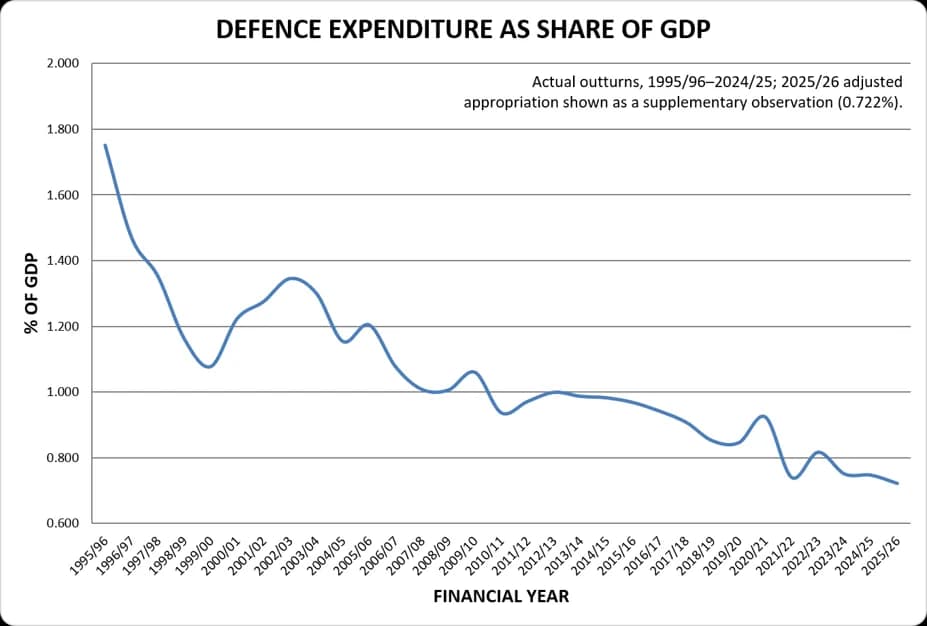
Chart 1: Defence expenditure as a share of GDP
This is a substantial long-term reduction in the relative priority accorded to defence. It is important to distinguish between a declining defence burden and a direct measure of military effectiveness: the percentage of GDP allocated to defence does not tell us whether the SANDF is appropriately structured, efficiently managed or capable of fulfilling its assigned tasks. It does, however, show the changing scale of the national resources committed to the defence function.
The nominal figures initially appear less concerning. Actual Defence Vote expenditure increased from approximately R11.62 billion in 1995/96 to R57.99 billion in 2024/25. But nominal expenditure does not account for inflation. Once adjusted using Statistics South Africa's historical Consumer Price Index (CPI) series, the picture changes considerably.
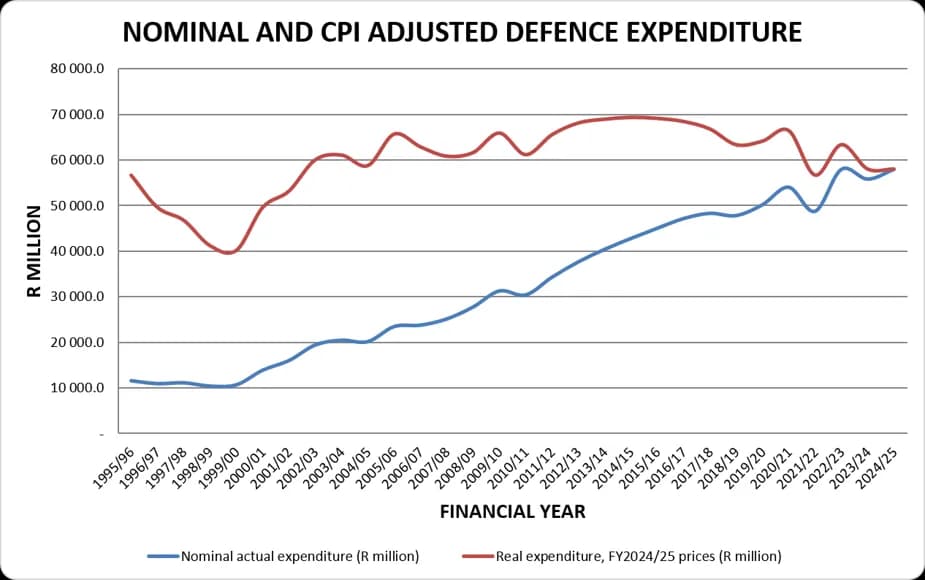
Chart 2: Nominal and CPI-adjusted defence expenditure
Expressed in 2024/25 prices, actual expenditure was approximately R56.64 billion in 1995/96 and R57.99 billion in 2024/25. In other words, after almost three decades, the real value of expenditure was only marginally higher than at the beginning of the period. The intervening years were not a straight line: real expenditure rose above these levels during parts of the 2000s and 2010s, before declining again.
This comparison is an indicative adjustment using general consumer inflation, not a defence-specific measure of purchasing power. Military equipment, specialist maintenance, fuel, technology and imported components can experience price movements quite different from the general CPI. Nevertheless, the comparison makes an important point: the substantial increase in the nominal budget should not be mistaken for a comparable expansion in the resources available to the defence force.
The latest actual expenditure figures in this series are for 2024/25. The R59.07 billion allocated in the 2025/26 adjusted appropriation is a budget figure, not an audited outturn. It should therefore not be treated as evidence that actual expenditure or capability has increased.
Where the Money Goes
The second issue concerns the composition of defence expenditure. A defence budget is not simply a pool of money available for acquiring new equipment. It must sustain personnel, training, operations, maintenance, infrastructure, logistics and the renewal of military capabilities. The balance between these requirements matters as much as the total allocation.
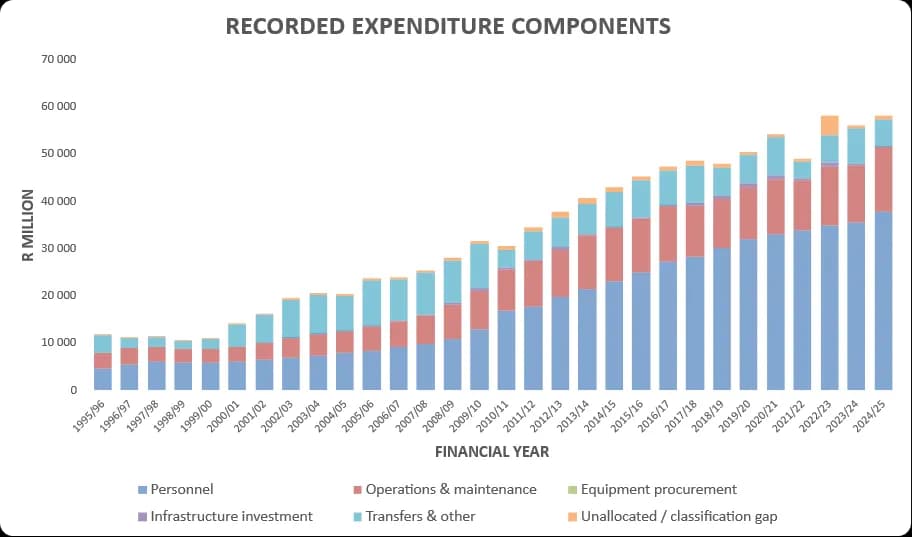
Chart 3: Composition of actual defence expenditure
The 2024/25 figures illustrate the pressure. Compensation of employees amounted to approximately R37.65 billion out of total departmental expenditure of R57.99 billion – almost 65% of the total. Operations and maintenance accounted for approximately R13.57 billion, while transfers amounted to R5.78 billion and infrastructure expenditure to just under R119 million. A further residual reflects expenditure that cannot be confidently allocated to the selected analytical categories using the historical classifications.
The personnel component is not inherently excessive simply because it is large. A professional defence force requires trained and experienced people, and personnel costs are an essential part of military capability. The concern is the balance: when compensation absorbs nearly two-thirds of the available resources, the remaining allocation must cover the full range of operating, maintenance, infrastructure and acquisition requirements.
The historical budget classifications also require some care. They do not permit a reliable, continuous separation of major equipment procurement from all other capital and related expenditure over the entire period. It would therefore be misleading to present a precise three-decade procurement trend that the underlying records cannot substantiate. What can be established is that the financial room for sustaining and renewing capability is under considerable pressure.
This is not merely an accounting issue. Equipment that cannot be maintained, personnel who cannot train adequately, and platforms that cannot be kept operational do not constitute a credible military capability, regardless of their original acquisition cost.
The Cost of Losing Capability
The condition of South Africa's defence-industrial base adds another dimension. Denel remains an important part of the country's strategic industrial capacity, but its financial and operational difficulties illustrate the consequences of allowing critical skills, production capacity and institutional resilience to deteriorate.
Denel's 2025/26 annual financial statements reported group revenue of approximately R1.47 billion and an operating loss of R364 million. Although the group recorded a positive net result, this was materially influenced by its share of profits from associated companies, amounting to R716 million. The operating performance of the group's own divisions therefore remains a more complicated picture than the headline net result might suggest. These figures must also be treated with caution: the Auditor-General issued a disclaimer of opinion on the group's financial statements, meaning that sufficient appropriate audit evidence was not available to express an opinion.
The procurement relationship provides a further warning. Armscor's 2024/25 annual report indicated that Denel invoiced only 8.65% of the total value of orders for that financial year. Armscor attributed suboptimal contractual performance to the continued loss of Denel's capacity and capability. Invoicing is not the same as physical delivery or customer acceptance, but the figure nevertheless raises serious questions about the ability to execute contracts and convert orders into completed work.
These indicators should not be confused with direct measures of SANDF readiness. Denel's financial performance is not a measure of the operational availability of military platforms, and Armscor's procurement figures do not establish how many systems have been delivered, accepted or made operational. They do, however, reveal weaknesses in the institutional and industrial chain on which defence capability depends.
The implications extend beyond Denel itself. A weakened domestic defence industry can reduce the country's ability to maintain, upgrade and support certain systems independently, while increasing reliance on external suppliers, foreign currency and international supply chains. Rebuilding lost industrial capacity is neither quick nor inexpensive. In some areas, it may not be economically viable to recreate capabilities that have disappeared. Strategic choices are therefore necessary about which industrial competencies and technologies South Africa must retain.
Before considering how much should be spent on defence, however, a more fundamental question needs to be answered: what military capabilities does South Africa actually require to fulfil its constitutional obligations and protect its national interests? Section 200 of the Constitution requires a disciplined military force whose primary purpose is to defend the Republic, its territorial integrity and its people. This does not prescribe a particular force design, size or equipment inventory. Nor does it automatically justify retaining every capability inherited from the past. South Africa must determine what it needs to protect its land borders, airspace and maritime approaches, deter or respond to external threats, support regional security commitments and fulfil its international obligations. The strategic assessment must therefore establish whether, and to what extent, South Africa requires conventional military capabilities, and what form and scale of force it can realistically sustain.
From Decline to Recovery: What Needs to Change?
The economic debate surrounding defence expenditure is not new. Research on South Africa has produced different findings, depending on the period, methodology and aspects of expenditure examined. Batchelor, Dunne and Saal's 2000 study found no significant aggregate effect of military spending on economic growth, but identified a negative effect on manufacturing. Andrew Phiri's 2017 research found a non-linear relationship between military spending and economic growth, cautioning against assuming that higher defence expenditure automatically produces better economic outcomes.
These studies are useful reminders that defence spending must be judged in terms of its purpose, composition and wider economic consequences. They do not, however, resolve the separate question of what resources South Africa requires to maintain a credible defence capability. Nor should the economic debate be reduced to an assumption that every rand allocated to defence is necessarily diverted from more productive civilian expenditure. National security is itself a condition for protecting the country's sovereignty, economic interests and strategic freedom of action.
The answer is not simply to demand a larger budget. Additional funding without institutional reform, credible planning and accountability could reproduce existing weaknesses on a larger scale. Equally, efficiency measures cannot compensate indefinitely for a resource base that is insufficient to sustain the force structure and capabilities government expects the SANDF to maintain.
- A credible recovery programme should begin with a realistic assessment of national security requirements and an affordable force design.
- It should establish a multi-year funding trajectory, prioritise operational availability and maintenance, and identify the capabilities that require urgent renewal.
- Procurement programmes must be properly costed, managed and monitored, with clear accountability for delays, cost overruns and non-delivery.
- The defence industry should be assessed on the basis of strategic value, technical competence and realistic economic viability, rather than on the assumption that every existing capability can or should be preserved.
- Most importantly, the implementation of strategy must be measured against actual outcomes.
- The Department of Defence, Armscor and the relevant state-owned entities should be expected to demonstrate how allocated resources translate into trained personnel, functioning equipment, sustainable maintenance, completed acquisitions and operational capability.
- Parliament's oversight role must extend beyond approving budgets and receiving annual reports to scrutinising whether the intended results are being achieved.
The historical figures show how far the country has moved from the levels of relative expenditure that prevailed three decades ago. The institutional indicators demonstrate that the consequences extend beyond budgetary statistics. Reversing this decline will require more than additional funding: it will demand clear strategic priorities, an affordable force design, institutional reform and sustained political commitment.
The central issue is no longer whether the decline should be recognised, but whether government is prepared to act before the loss of capability becomes even more difficult and expensive to reverse. A strategy is not a funding wish list, but neither can a defence strategy be implemented without the resources, institutions and political commitment to make it real.
Sources and methodology
The historical expenditure series was consolidated from National Treasury Budget Reviews, Estimates of National Expenditure and successive Defence Vote documents, using actual expenditure where available and retaining original and adjusted appropriations as separate budget stages. The GDP ratios use Statistics South Africa's P0441 national accounts data, with quarterly nominal GDP aggregated to the South African financial year (April–March). The real expenditure series uses Statistics South Africa's historical CPI data, adjusted to 2024/25 prices using the average annual CPI indices of the two calendar years overlapping each financial year. This is an indicative general-price adjustment, not a defence-specific deflator.
Institutional performance information is drawn from the Denel Group Annual Report 2025/26 and the Armscor Annual Report 2024/25. Academic context is drawn from P. Batchelor, J.P. Dunne and D.S. Saal (2000), “Military Spending and Economic Growth in South Africa”; A. Phiri (2017), “Does Military Spending Nonlinearly Affect Economic Growth in South Africa?”; and A. Birdi, P. Dunne and D.S. Saal (2000), “The Impact of Arms Production on the South African Manufacturing Industry”.
References
- Batchelor, P, Dunne, J. P., & Saal, D. S. (2000). Military spending and economic growth in South Africa. Defence and Peace Economics, 11(4), 553-571. http://dx.doi.org/10.1080/10430710008404966
- Birdi, A., Dunne, P., & Saal, D. S. (2000). The impact of arms production in the South African manufacturing industry. Defence and Peace Economics, 11(4), 597-613. https://doi.org/10.1080/10430710008404969
- Phiri, A. (2017). Does military spending nonlinearly affect economic growth in South Africa? Defence and Peace Economics, 30(4), 474-487. http://dx.doi.org/10.1080/10242694.2017.1361272
Write to us about this article
Do you remember this, or know more? Your comment appears here once an editor has read it.
The editors may print your comment, with your name, in the monthly edition.
Related Articles

The Department of Defence’s Journey to Greatness: Nearly Two Years On
November 14, 2026

Medium Term Budget Policy Statement and SA Defence, Joan Swart
October 22, 2026
What Kind of Defence Force Does South Africa Need?
November 2, 2026
South Africa's Defence Oversight Problem: When Parliamentary Scrutiny Fails to Deliver
November 12, 2026

Beyond Capitalism and Socialism
November 17, 2026