NONGQAISouth Africa’s National Security MagazineEstablished in 1907
DONATE

All Articles


31 articles match your filters

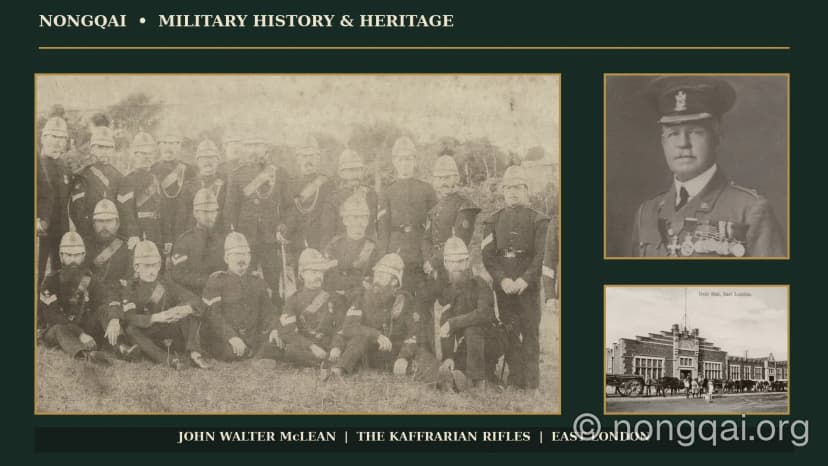
The Life and Times of Lieutenant Colonel John Walter McLean OBE VD (MID), 1855–1939
Anglo Boer War / Anglo-Boereoorlog

The Life and Times of Lieutenant Colonel John Walter McLean OBE VD (MID), 1855–1939

The remarkable life of Lieutenant Colonel John Walter McLean OBE VD (MID) spans more than six decades of South African military and civic history. From the early volunteer forces of the Eastern Cape and the frontier campaigns to the Anglo-Boer War, the First World War and the Railway and Harbour Brigade, this account preserves the experiences, service and legacy of a soldier closely associated with the Kaffrarian Rifles and the history of East London.


Anglo Boer War: Bethulie and the Bridges
1899 - 1902 Anglo Boer War

Anglo Boer War: Bethulie and the Bridges

This chapter examines the strategic importance of Bethulie and its railway and road bridges during the Anglo-Boer War. It recounts the destruction of the railway bridge by Boer forces, the dramatic efforts of British troops to save the wagon bridge, and the crucial role of the Imperial Military Railways in maintaining military supply lines. The narrative highlights the actions of Major Nolan-Neylan, Captain P. G. Grant, and Lieutenant R. S. Popham, whose interventions preserved a key crossing over the Orange River.

Potpourie: Oktober 2026
1914 - 1918 WW1

Potpourie: Oktober 2026

Photo album: The history of a country and its people is closely interwoven with its uniformed services.

The Battle of Paardeberg
1899 - 1902 Anglo Boer War

The Battle of Paardeberg

Anglo Boer War: Cronjé’s encircled Boer force collapsed after ten days of siege at Paardeberg, marking a decisive turning point in the war.

The ZARPS and Bergendal
1899 - 1902 Anglo Boer War

The ZARPS and Bergendal

The ZARPs, turned mounted infantry, held the exposed koppie at Bergendal with exceptional discipline under hours of British shelling. Their stand, praised even by Arthur Conan Doyle, broke Botha’s line and marked the end of conventional warfare in the Anglo Boer War.

Horses in the Anglo Boer War
1899 - 1902 Anglo Boer War

Horses in the Anglo Boer War

The Anglo Boer War placed unprecedented demands on horses and mules, drawing animals from across the world into a conflict for which many were unprepared. Long sea voyages, unfamiliar fodder, extreme climate, disease, overloading and poor management resulted in catastrophic losses—around 60% of all horses died, compared with only 3% of human combatants. The Boers benefited from hardy local Cape horses accustomed to the harsh South African environment, while imported British horses often survived only a few weeks after arrival. Between 1899 and 1902, more than 109,878 horses and 81,524 mules were shipped from New Orleans alone, with many dying en route. Diseases such as mange, strangles, influenza, pneumonia and tick bite fever ravaged the imported stock. Individual horses became legendary: Freddy of the Household Cavalry, who survived 1,780 miles of campaigning; Fleur, De Wet’s conspicuous white Arab; Bokkie, De la Rey’s beloved mount; and Major, the only New Zealand horse to return home. Their stories highlight both the suffering and the extraordinary endurance of the animals that carried the war.

Cape District Mounted Troops in the Anglo Boer War
1899 - 1902 Anglo Boer War

Cape District Mounted Troops in the Anglo Boer War

This article recounts the operations of the Bedford District Mounted Troops (DMT) in the Cape Colony during the Anglo-Boer War. Composed mainly of local farmers, these units supported British forces by observing Boer movements rather than engaging directly, fearing reprisals against their farms. The narrative follows General Pieter Kritzinger’s 1901 incursion through the Cape Midlands, detailing skirmishes near Buffelskloof and Cameron’s Glen, the deaths of Captain John Rennie and Trooper W.D. Ross, and the subsequent pursuit by Gorringe’s Flying Column. The account captures the tension between loyalty, survival, and local heritage in a turbulent frontier.

Anglo Boer War: The Battle of Vaal Krantz
1899 - 1902 Anglo Boer War

Anglo Boer War: The Battle of Vaal Krantz

The Battle of Vaal Krantz marked General Redvers Buller’s third failed attempt to break through Boer positions along the Tugela River and relieve Ladysmith. Confined terrain, heavy Boer resistance under Ben Viljoen, and the inability to deploy British artillery effectively forced Buller to abandon the operation after three days of fighting.

“Commando” - Deneys Reitz: Gamkaskloof
1899 - 1902 Anglo Boer War

“Commando” - Deneys Reitz: Gamkaskloof

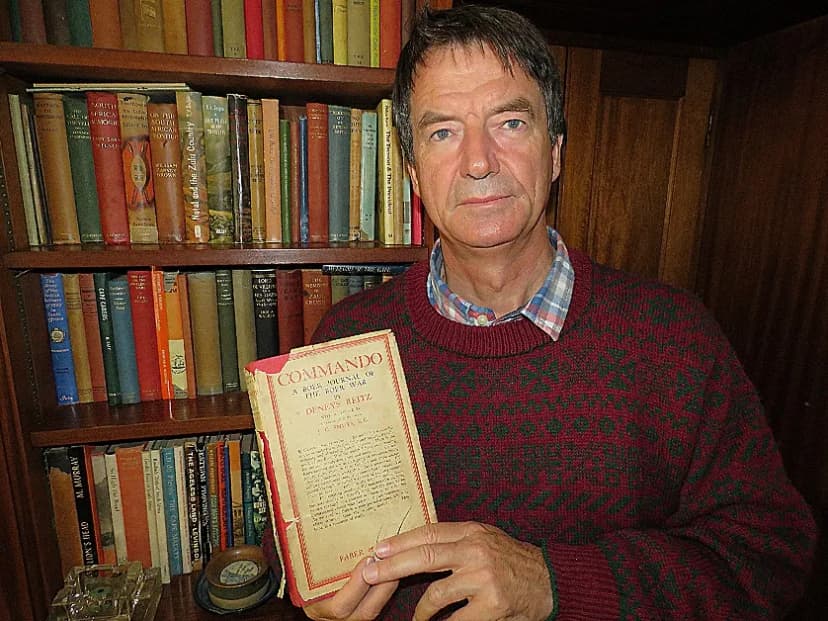
This article examines the discrepancies between Deneys Reitz’s famous war memoir Commando (1929) and his earlier, detailed handwritten journal Herinneringen van den Engelschen Oorlog 1899–1902. By comparing Reitz’s descriptions of events in the Klein Karoo and Gamkaskloof, the author highlights significant factual differences, omissions, and later embellishments. These inconsistencies raise questions about the absolute reliability of Commando, while still acknowledging its enduring literary and historical value. “Teen hierdie agtergrond mag dit aan heiligskennis grens om die waarheid van Reitz se vertellings… enigsins te betwyfel.” SOE – SHORT EXTRACT A comparison of Commando with Reitz’s original 1903 journal reveals notable contradictions in his accounts of Armoed and Gamkaskloof, suggesting later alterations for political, social, or personal reasons. “Die teenstrydige feitebewerings… blyk dan ook duidelik uit die opsommings hierbo gegee.”

Spioenkop
SOUTH AFRICAN FORCES HISTORY PRESERVED

Spioenkop

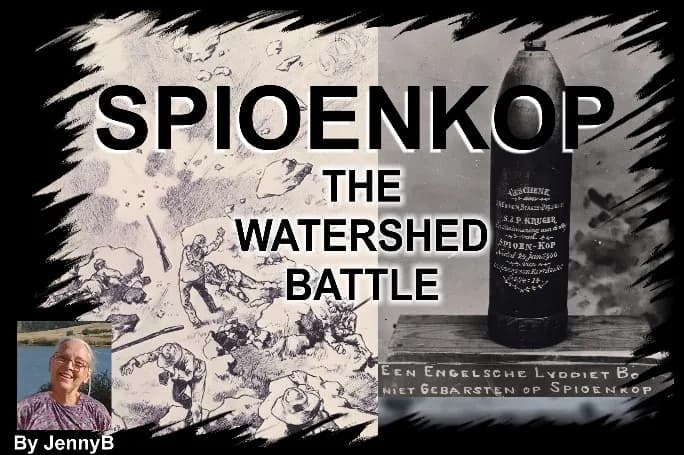
This chapter examines the Battle of Spioenkop (23–24 January 1900), one of the most decisive and tragic engagements of the Second Boer War. It outlines the British capture and subsequent loss of the summit due to poor reconnaissance, miscommunication, and tactical confusion. The narrative highlights key figures such as General Edward Woodgate, Dr Frederick Treves, General Joachim Christoffel Fourie, Captain Hendrik Frederik Slegtkamp, and international volunteers including Joseph and August Hammar and John Costas. The chapter integrates battlefield descriptions, personal accounts, medical details, and cultural artefacts to illustrate the human dimension of the conflict. It also traces how Boer tactical ingenuity, including actions at Aloe Knoll/Alwynkoppie, contributed to the British defeat. The legacy of Spioenkop is presented through graves, memorials, and later artistic depictions, underscoring its enduring place in South African and international military history.