11 articles match your filters
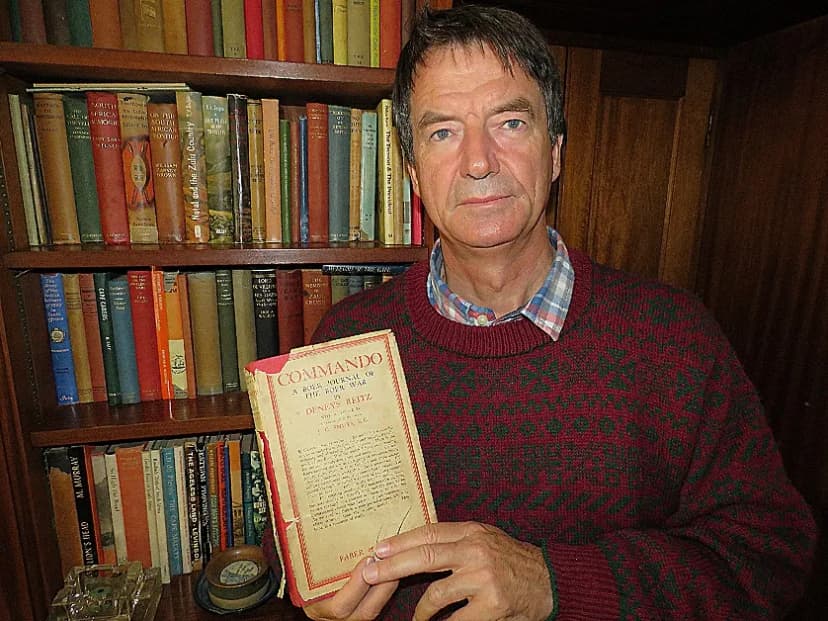
1899 - 1902 Anglo Boer WarThis article examines the discrepancies between Deneys Reitz’s famous war memoir Commando (1929) and his earlier, detailed handwritten journal Herinneringen van den Engelschen Oorlog 1899–1902. By comparing Reitz’s descriptions of events in the Klein Karoo and Gamkaskloof, the author highlights significant factual differences, omissions, and later embellishments. These inconsistencies raise questions about the absolute reliability of Commando, while still acknowledging its enduring literary and historical value. “Teen hierdie agtergrond mag dit aan heiligskennis grens om die waarheid van Reitz se vertellings… enigsins te betwyfel.”
SOE – SHORT EXTRACT
A comparison of Commando with Reitz’s original 1903 journal reveals notable contradictions in his accounts of Armoed and Gamkaskloof, suggesting later alterations for political, social, or personal reasons. “Die teenstrydige feitebewerings… blyk dan ook duidelik uit die opsommings hierbo gegee.”

1939 - 1945: The Wartime SA PoliceThis article traces the layered history of Koffiefontein, a Free State town shaped by diamond discovery, military conflict, and evolving systems of law enforcement. Beginning as a vital rest stop for 19th‑century transport riders, Koffiefontein rose to prominence after a diamond was found at its fountain in 1870, sparking a local diamond rush. The narrative follows three major eras: the diamond‑mining boom, the Anglo‑Boer War—during which British forces fortified the town with blockhouses—and the Second World War, when Koffiefontein became a major internment camp holding Italian and German POWs as well as South Africans suspected of pro‑Nazi activity, including future Prime Minister B.J. Vorster. The article also explores the development of policing in the region, from early constables of the Orange Free State Republic to the establishment of the SAP in 1913 and highlights the architectural heritage of the historic Hampden Street police station. Finally, it reflects on modern community concerns and the station’s dual identity as both a heritage landmark and an active centre of law enforcement.
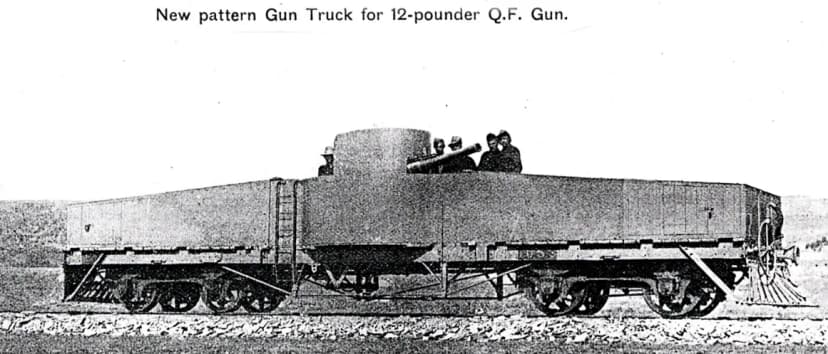
1914 - 1918 WW1The use of Armoured trains in South Africa during 1906 & 1914 - 1918

1939 - 1945: The Wartime SA PoliceThis article explores the fraught intersection of policing and politics in South African history, tracing a cycle of duty, disloyalty, and moral reckoning from World War II through the democratic transition of the 1990s. It highlights the roles of key Security Branch officers under the Smuts government, including covert operatives like Captain Jan Taillard, and reflects on the ideological tensions that shaped their careers. Through the lens of Major GE Diedericks’ internment of BJ Vorster and the later abandonment of the South African Police during CODESA negotiations, the narrative examines how political shifts repeatedly left loyal officers vulnerable. The article argues for a retrospective moral accounting of the policeman’s role, invoking the Nuremberg Principles and emphasizing the need to honour integrity amid political storms. It concludes with reflections on South Africa’s intelligence community and the enduring lessons of service, sacrifice, and historical memory.
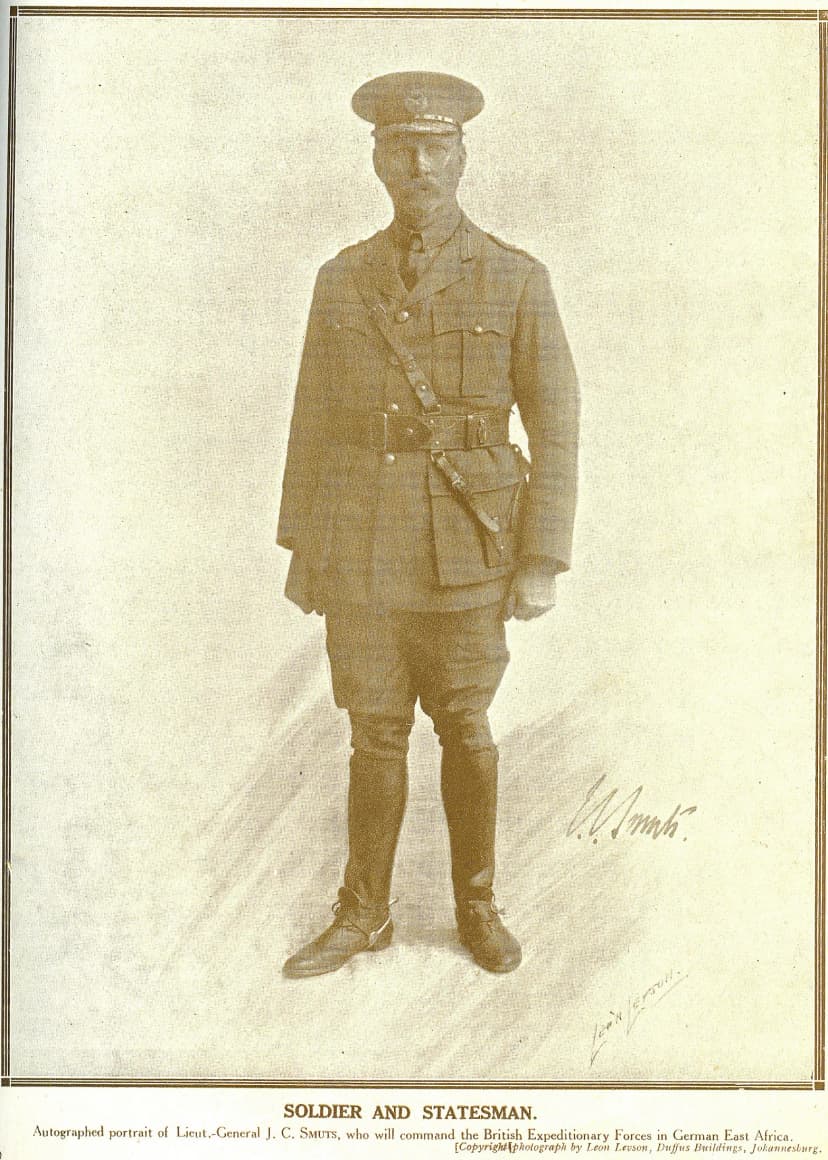
1950 Funeral Gen JC SmutsA pictorial history; Gen Smuts and the Nongqai 1914 - 1950.

• M.O.T.H. Bomb Alley ShellholeAbstract

1899 - 1902 Anglo Boer WarBovenplaas and the boyhood of General JC "Jan" Smuts. He first went to school at the age of 12. Before then, his teachers were his parents, their farmworkers, and Mother Nature …
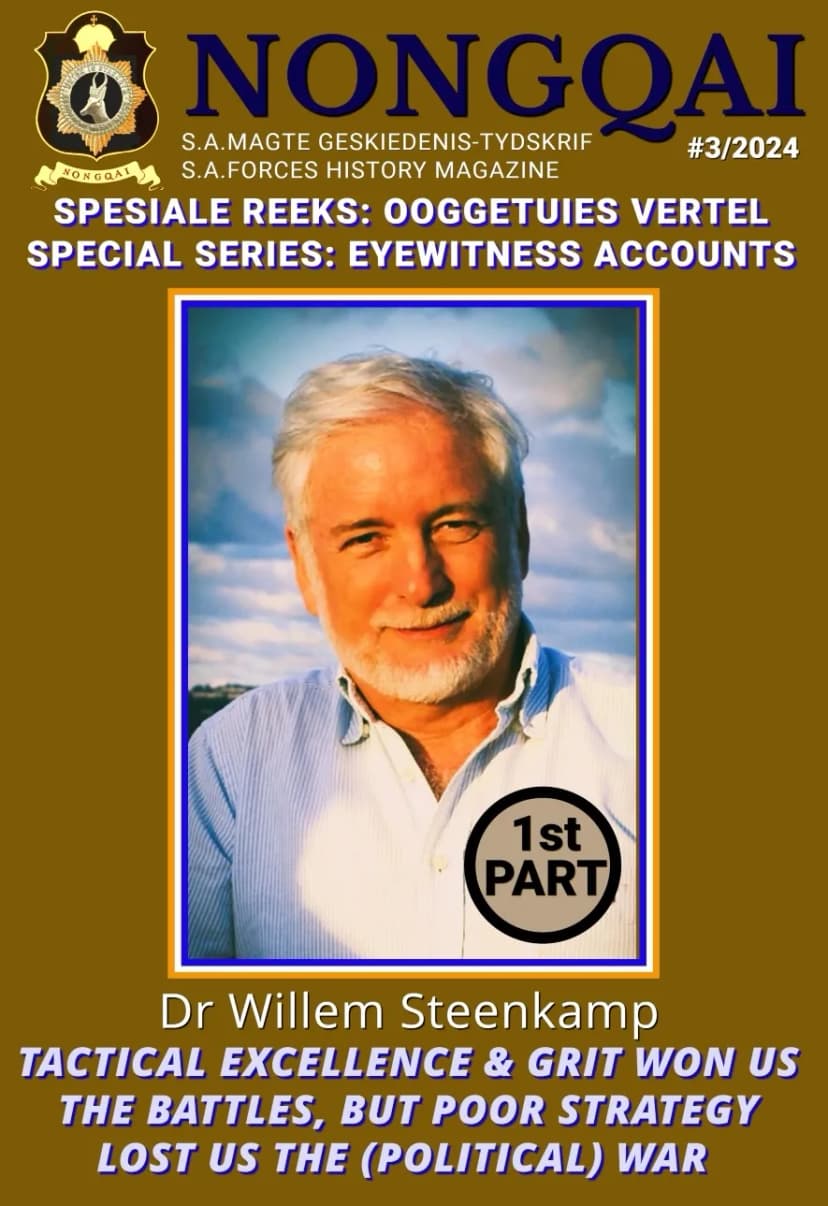
BfSS NISDr Willem Steenkamp, son of former SAP-SB CO Maj-Gen Frans Steenkamp, and himself a former NIS officer who did his doctoral thesis on the intelligence function, as well as being a novelist, ambassador, attorney, entrepreneur and polyglot with wide experience of living abroad, and currently the co-editor and business manager of Nongqai magazine, shares his experiences and insights into South Africa’s transition. He gives his personal view on why and how the political war was lost, despite the “armed struggle” battles having been won, explaining that it had always been a political rather than a military conflict, with the “armed struggle” having been just one part of the propaganda war, which latter the former South African government decisively lost due to poor strategic and policy choices.
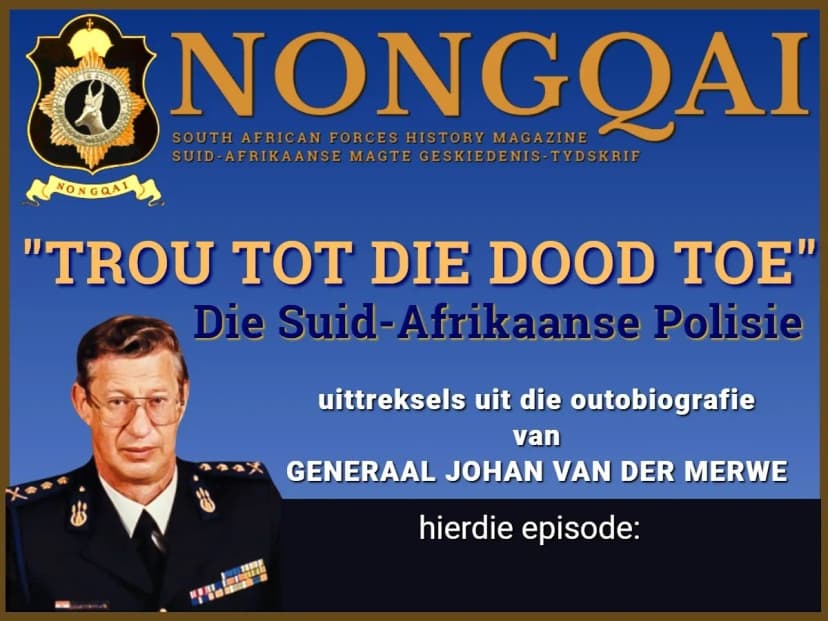
SAP History / GeskiedenisSedert sy totstandkoming het die Suid-Afrikaanse Polisie, wat onlosmaaklik deel van die gemeenskap is, dikwels vasgevang geraak in politieke tweespalt. Deur die geskiedenis heen het die Polisie egter nog altyd wet en orde gehandhaaf, al het
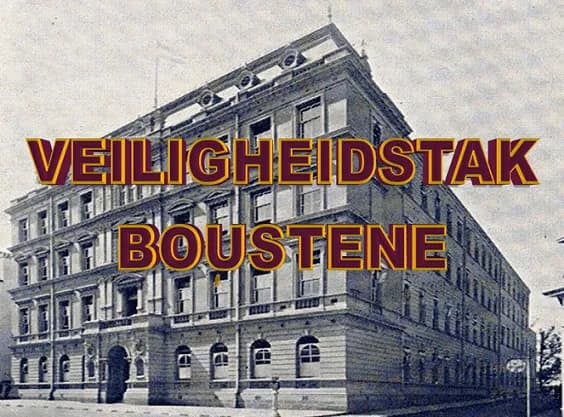
Archives PostsThe Career of Detective Head Constable (Detective Warrant Officer) WJ Herbst a founder member of the Security Branch of the 1950’s and prior, he worked under Lt-Col AE Trigger and Lt-Col JAC Reay on the Witwatersrand.
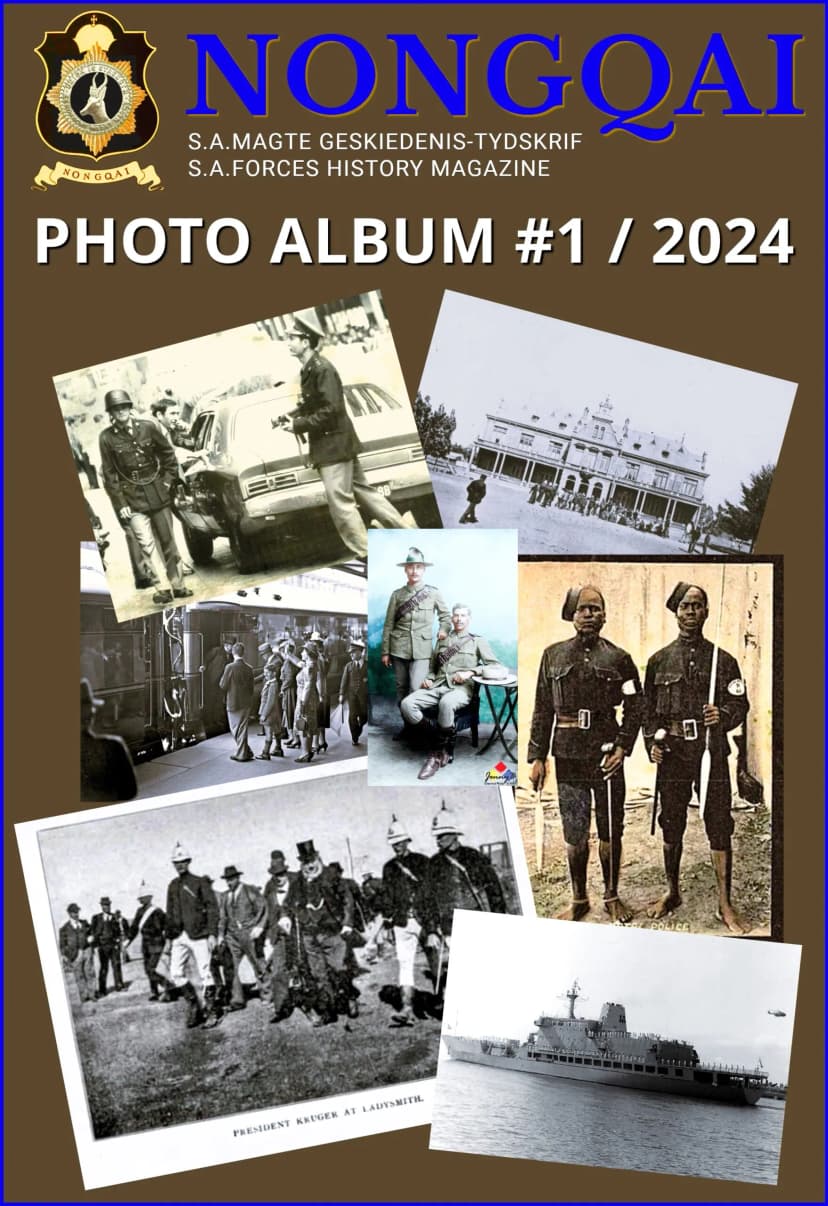
Archives PostsNongqai magazine photo album #1 of 2024 consisting of interesting vintage photos of historic buildings, past events that had made the news, or which demonstrate police and military life in South Africa in years past.
