

Editions / Uitgawes
Nongqai - Digitale Uitgawe - Junie 2026
Nongqai June 2026, Volume 17 Nr. 6. Maanduitgawe Junie 2026.
995 articles
Nongqai June 2026, Volume 17 Nr. 6. Maanduitgawe Junie 2026.
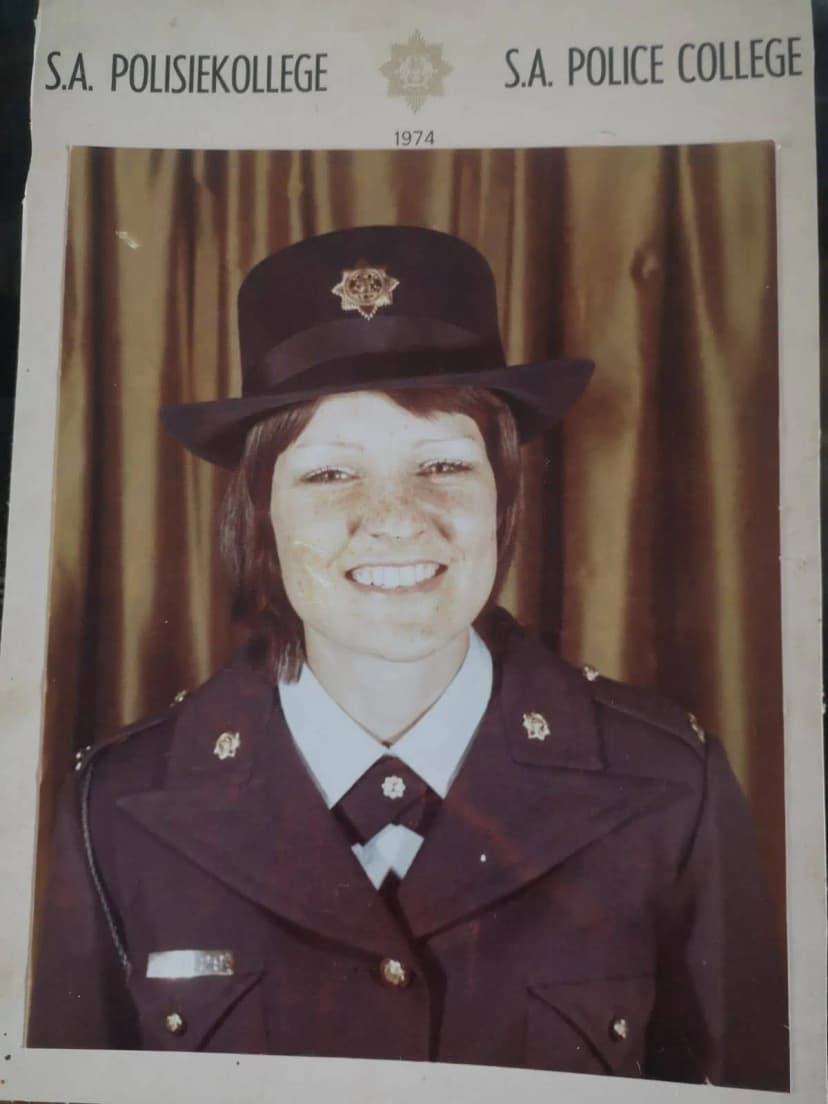
This biographical profile traces the life and distinguished career of Heleen Swart, a pioneering South African policewoman whose service spanned from 1974 to 1999. Rising from early administrative duties to specialised investigative work, she played a central role in establishing the first Child Protection Unit (CPU) in Durban following the landmark Addington Hospital baby abduction case. Her career included extensive work in crime investigation, police training, station command, and election management during South Africa’s transitional period. After retiring medically, she built a successful hospitality business and remains actively involved in community safety and veteran police organisations. Her story reflects resilience, dedication, and lifelong service to the SAPD, her community, and her family.

Defence research is about far more than technology. It is the mechanism through which a defence establishment learns, adapts and remains strategically relevant. This article argues that the real challenge is not simply increasing R&D expenditure, but ensuring that research continuously informs strategy, doctrine, capability development and defence policy.


The one humped camel was introduced to German South West Africa from 1889 onward. Early shipments came from the East African coast, Port Said, British India, Somaliland and Arabia. Camels were difficult to obtain at the time due to global military and infrastructure demands. The first major shipment to DSWA included 76 camels from Port Said, followed by an additional 403 animals acquired through Hagenbach’s Somali and Arab trading contacts. Later, a large consignment of 2,000 Somali camels arrived after a sea voyage of 192 days. Initially, the camels were intended for railway construction between Lüderitzbucht and Keetmanshoop, but they soon became essential to military operations in the arid interior.

This chapter examines the Battle of Platrand (Wagon Hill) on 6 January 1900, one of the decisive engagements during the Siege of Ladysmith in the Second Boer War. It outlines the strategic importance of the Platrand ridge, the coordinated Boer assaults under Generals Schalk Burger and C. J. de Villiers, and the British defence directed by Colonel Ian Hamilton. The narrative highlights the intense close quarter fighting at Wagon Hill and Caesar’s Camp, the temporary Boer breakthroughs, and the eventual British counter attack by the Devonshire Regiment in a violent storm. Special attention is given to acts of exceptional bravery, including those of Trooper Herman Albrecht and Lieutenant R. J. T. Digby Jones—both posthumously awarded the Victoria Cross—and Lieutenant J. E. I. Masterson. The chapter also records the humanitarian role of Rev. J. D. Kestell, the death of Lord Ava, and the remarkable civilian contribution of Parbhoo Singh during the siege. Through these accounts, the chapter provides a detailed and humanised portrayal of the battle, its leadership, its failures, and its enduring legacy in South African and British military history.

This publication pays tribute to the life and distinguished career of Colonel Priscilla Govender, a respected member of the South African Police Service (SAPS). The foreword by Brigadier (Retired) Maggie Govender and the tribute by Colonel (Retired) Charlie Pillay recognise Colonel Govender's outstanding leadership, professionalism and commitment to public service. Born and raised in Chatsworth, Colonel Govender overcame many challenges to become one of the first Indian women to build a successful career in policing. Through dedication, discipline and continuous learning, she rose through the ranks to retire as a Colonel after more than 37 years of distinguished service. The publication highlights her professional achievements, specialised training, medals and contributions to major national and international operations. The publication also celebrates her personal life as a devoted wife, mother, grandmother and community leader. Even after retirement, she continued serving society through voluntary work and by supporting senior citizens, demonstrating that public service extends beyond a professional career. Her humility, compassion and integrity remain an example to others. Overall, this work honours Colonel Priscilla Govender as a trailblazer and role model whose life inspires future generations to serve with courage, integrity and dedication. It preserves her legacy while recognising the contributions of all those who assisted in documenting and celebrating her remarkable journey.
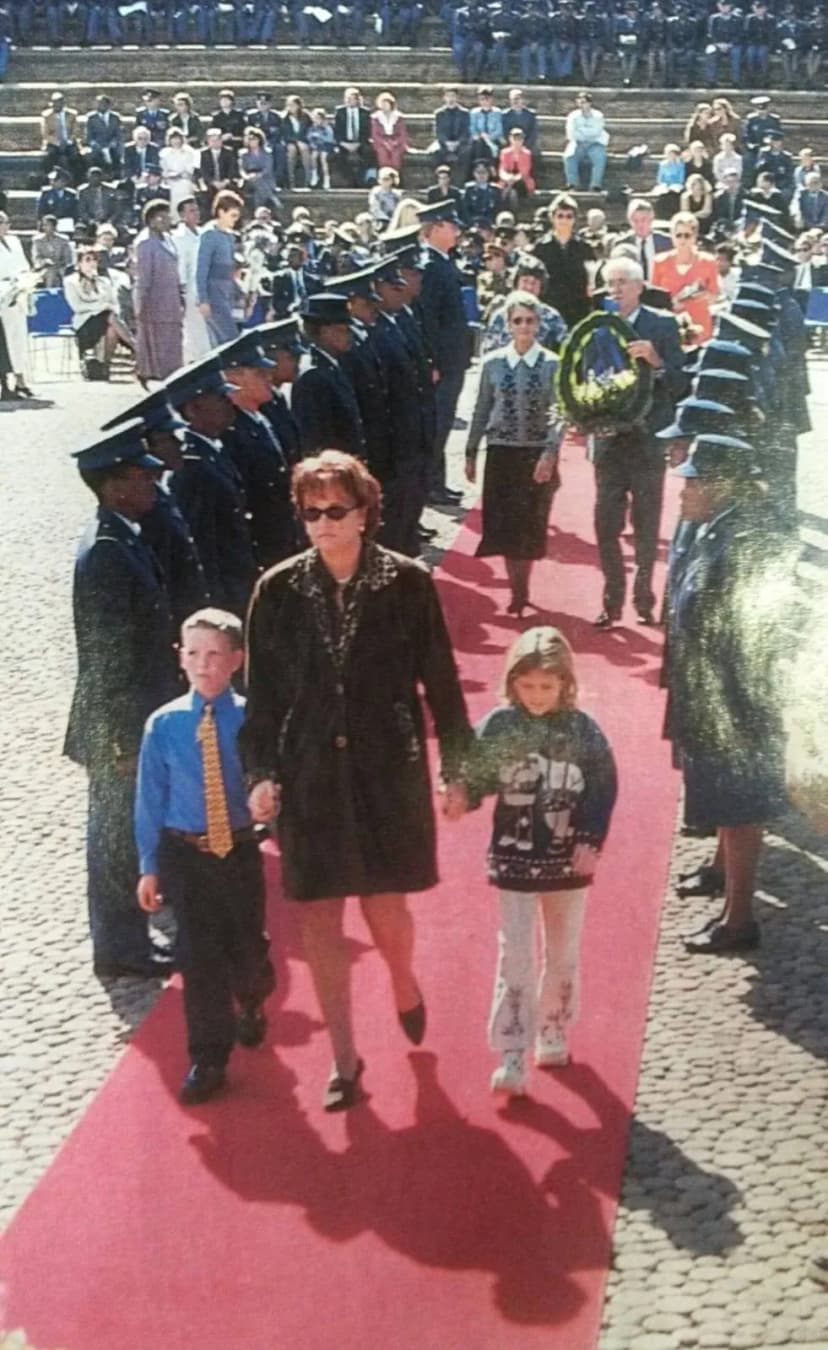
This autobiographical narrative traces the life and career of Ria Potgieter within the South African Police Service (SAPS) community, beginning with her appointment in 1983 as a typist at the Potchefstroom Headquarters Division. Her story highlights the deep professional and personal bonds formed within the policing environment, her marriages to two policemen, and her varied roles in administrative, investigative, and child‑protection units. A central and devastating turning point occurs with the murder of her husband, Sergeant Jaco Potgieter, during an armed robbery on 25 June 1999 — an event that profoundly shaped her life and remains emotionally present decades later. The narrative also reflects her continued resilience, career transitions, relocation to the Western Cape, and her role in raising both her biological and step‑children. Ultimately, the account emphasises the enduring solidarity of the SAPS community and her gratitude for divine protection throughout her life.
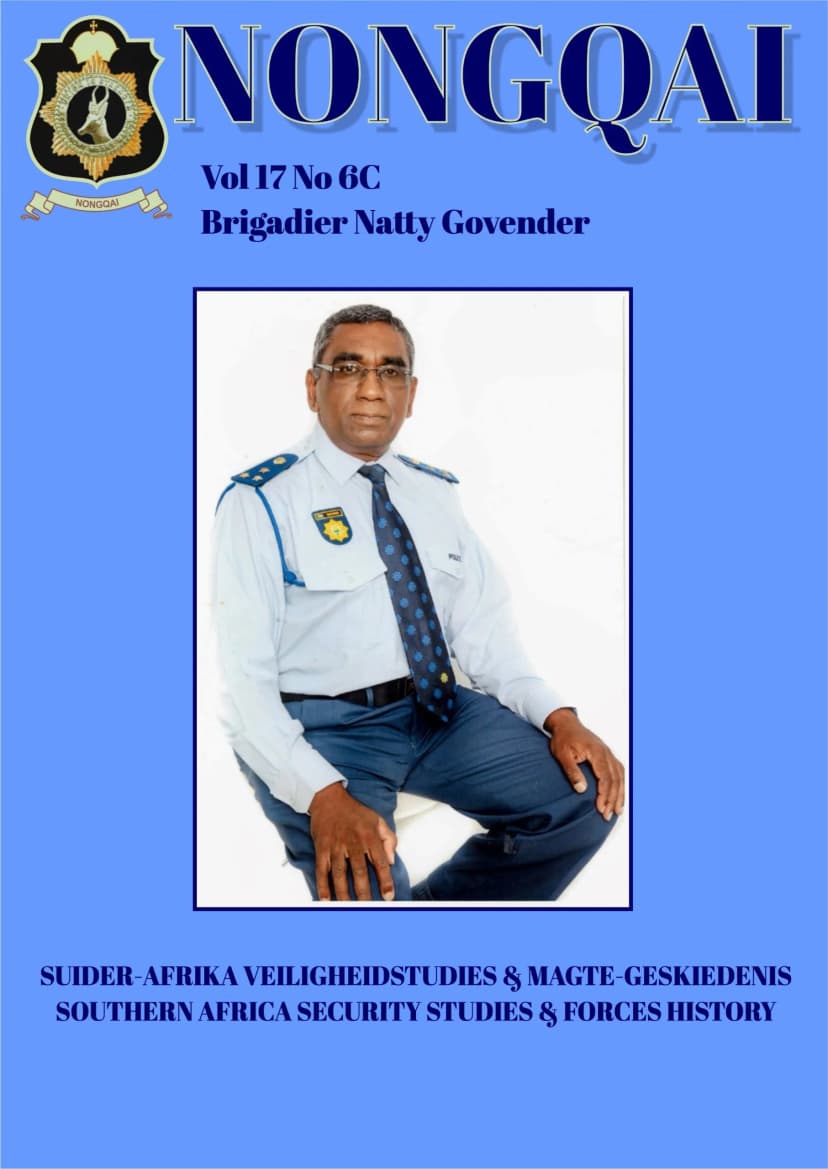
This publication celebrates the life and career of Brigadier NG Govender. He rose from humble beginnings through hard work and determination. He became one of the most respected instructors in the South African Police. His leadership was based on discipline, professionalism and personal example. He served as Parade Commander and head of Drill and Musketry. His parade and training standards received national recognition. Beyond policing, he excelled in engineering, mechanics and craftsmanship. He mentored and inspired many police officers throughout his career. His innovations contributed to improved policing and organisational performance. His legacy continues to inspire service, integrity, excellence and leadership.
Five years after the July 2021 unrest exposed serious weaknesses in South Africa's national security architecture, questions remain about the country's preparedness for future instability. Drawing on the findings of the Expert Panel and SAHRC investigations, this article examines what lessons were identified, what vulnerabilities remain, and whether South Africa is better equipped to prevent localised unrest from escalating into a broader national crisis.
Abstract This article examines the employment of armoured trains in Mozambique across distinct historical phases shaped by conflict and strategic necessity. Beginning with the anti-colonial struggle led by FRELIMO and the subsequent civil war against RENAMO (1977–1992), Mozambique’s railway network emerged as a critical yet vulnerable logistical lifeline. In response to persistent sabotage, ambushes, and infrastructure attacks, government forces adopted improvised armoured trains—locally modified locomotives and carriages equipped with reinforced plating and weaponry—to secure rail corridors and maintain the flow of goods and military supplies. The study highlights the operational role of armoured trains during key periods, including the protection of the Beira Corridor in the 1980s, where regional forces such as the Zimbabwe Defence Forces and Malawi Defence Force contributed to railway security, and the deployment of specialised armoured rolling stock such as the “Jackal.” It further explores the post-2000 resurgence of railway protection measures, particularly in safeguarding coal transport routes, where modern armouring solutions were applied to locomotives to counter renewed insurgent threats. Overall, the article illustrates how Mozambique’s reliance on rail infrastructure, combined with prolonged insurgency, necessitated adaptive and evolving armoured rail solutions, reflecting both the tactical importance of railways in conflict zones and the enduring interplay between security and economic survival.