
1976 Soweto Riots / Soeto-onluste
South Africa's Transition What Really Happened and Why
South Africa's Transition What Really Happened and Why
995 articles
South Africa's Transition What Really Happened and Why
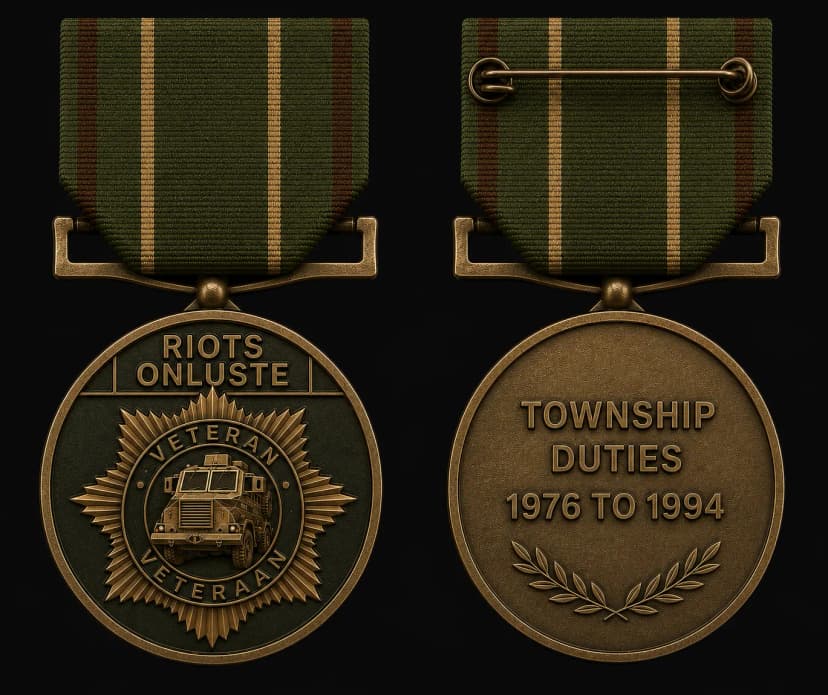
This article discusses the proposal for a commemorative medal intended to honour members of the Internal Stability Division and Riot Units who served between 1976 and 1994 during one of the most volatile periods in South Africa’s history. Although their work was dangerous, politically sensitive, and often unrecognised, many former members feel that their service deserves formal acknowledgement. The article argues that the significance of such a medal lies not in official government approval, but in its symbolic value—providing long‑overdue recognition, restoring dignity, and offering emotional closure to those who served and to the families of those who did not return. The piece invites readers to consider whether creating such a medal is appropriate and meaningful.
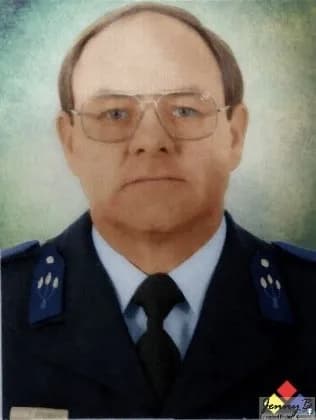
This article reflects on the nature of truth, deception, and credibility in courtrooms, commissions of inquiry, and everyday human interaction. Drawing on personal experience, the author examines how witnesses—both educated and completely illiterate—respond under cross‑examination, and how honesty often proves more resilient than intellectual sophistication. Through anecdotes from police service and courtroom observation, the piece explores why some witnesses withstand intense questioning while seasoned legal practitioners sometimes fail to unsettle them. The article ultimately highlights the paradox that simplicity, sincerity, and direct recollection of sensory experience can make an “uneducated” witness remarkably effective, even against formidable cross‑examiners.

This article offers a reflective account of a lifetime devoted to collecting, preserving, and documenting police, military, and cultural memorabilia. The author, now in his eighties, recounts the development of extensive collections that include books, documents, photographs, medals, model trains, artefacts, insignia, and other historical items. He describes decades of research, travel, and editorial contributions to Nongqai, as well as the challenges faced when institutions lose interest in preserving certain aspects of South Africa’s past. The narrative concludes with practical guidance for veterans and collectors on responsibly disposing of their own historical materials to ensure that the heritage of the South African policing community is safeguarded for future generations.

From 1968 to 1994 the South African Police (SAP) Counter Insurgency Unit (COIN) and the SAP Special Task Force used distinct camouflage uniforms. First the SAP Pattern 1 and later the SAP Pattern 2, from 1970 to1994. With the SA Police Service (SAPS) only the Special Task Force still use camouflage uniforms.From 1968 to 1994 the South African Police (SAP) Counter Insurgency Unit (COIN) and the SAP Special Task Force used distinct camouflage uniforms. First the SAP Pattern 1 and later the SAP Pattern 2, from 1970 to1994. With the SA Police Service (SAPS) only the Special Task Force still use camouflage uniforms.

This article reflects on the 1966 International Court of Justice ruling on South West Africa, in which Ethiopia and Liberia challenged South Africa’s administration of the mandate. The judgment, delivered by Judge Percy Spender, dismissed the applicants’ case, triggering far‑reaching diplomatic, political, and military consequences. As the article notes, “the General Assembly… revoked the mandate on 27 October 1966,” placing South Africa’s presence in the territory under intense global scrutiny. The author, Riaan Eksteen, recounts his direct involvement in South Africa’s diplomatic efforts over nearly three decades, detailing the escalation of conflict with SWAPO, the role of major international actors such as the United States, and the eventual implementation of UN Resolution 435 leading to Namibia’s independence in 1990. The narrative offers a unique insider perspective on the interplay between diplomacy, international law, and geopolitical pressures during a pivotal era in Southern African history.

Major General Bertus Steenkamp. A Eulogy in Nongqai by military historian Walter Volker.

News Letter No 2 - Special Task Force of the South African Railways Police

This article traces the layered history of Koffiefontein, a Free State town shaped by diamond discovery, military conflict, and evolving systems of law enforcement. Beginning as a vital rest stop for 19th‑century transport riders, Koffiefontein rose to prominence after a diamond was found at its fountain in 1870, sparking a local diamond rush. The narrative follows three major eras: the diamond‑mining boom, the Anglo‑Boer War—during which British forces fortified the town with blockhouses—and the Second World War, when Koffiefontein became a major internment camp holding Italian and German POWs as well as South Africans suspected of pro‑Nazi activity, including future Prime Minister B.J. Vorster. The article also explores the development of policing in the region, from early constables of the Orange Free State Republic to the establishment of the SAP in 1913 and highlights the architectural heritage of the historic Hampden Street police station. Finally, it reflects on modern community concerns and the station’s dual identity as both a heritage landmark and an active centre of law enforcement.
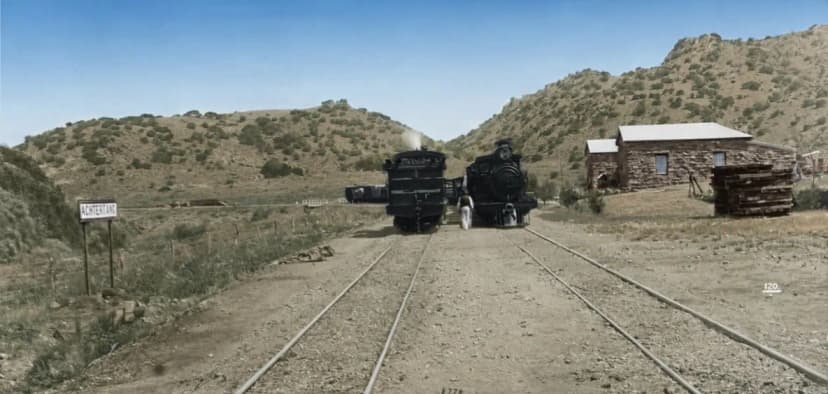
This chapter examines two linked engagements during the Colesberg campaign of early 1900: the skirmish at Agtertang Station on 3 January and the Battle of Slingerfontein on 9–10 January. British forces under Major General John French sought to secure railway lines and dominate the surrounding high ground, while Boer commandos under Generals Schoeman, Piet de Wet, and later Koos de la Rey attempted to halt their advance. The chapter highlights the role of mounted troops, particularly the newly arrived 1st New Zealand Contingent, whose reconnaissance, outpost duties, and defensive actions contributed significantly to British operations. Their stand on 15 January at what became known as New Zealand Hill—alongside the Yorkshire Regiment—proved decisive, repelling a determined Boer attack with minimal losses. The narrative also includes biographical notes on individual soldiers such as Trooper Alister Hugh Matheson and Private George Bradford, the first New Zealander to die in the Anglo-Boer War. Overall, the chapter situates these actions within the broader strategic contest for control of northern Cape Colony and the eventual British consolidation around Colesberg.

This article from Die Lourierkrans (December 1984) highlights the professionalism and elite training of the South African Railway Police Special Task Force. It describes their dual role in counter‑insurgency operations along the national borders and in protecting the country’s extensive transport infrastructure—railways, ports, airports, and public vehicles. The narrative emphasizes their rigorous preparation under Major Ronnie Beyl at Slagboom near Port Elizabeth, where live ammunition and explosives were used to simulate real combat conditions. The piece portrays the unit as a disciplined, fearless brotherhood, praised internationally for its expertise in hostage rescue and anti‑terrorist missions, under the leadership of Brigadier Gustav Erlank.
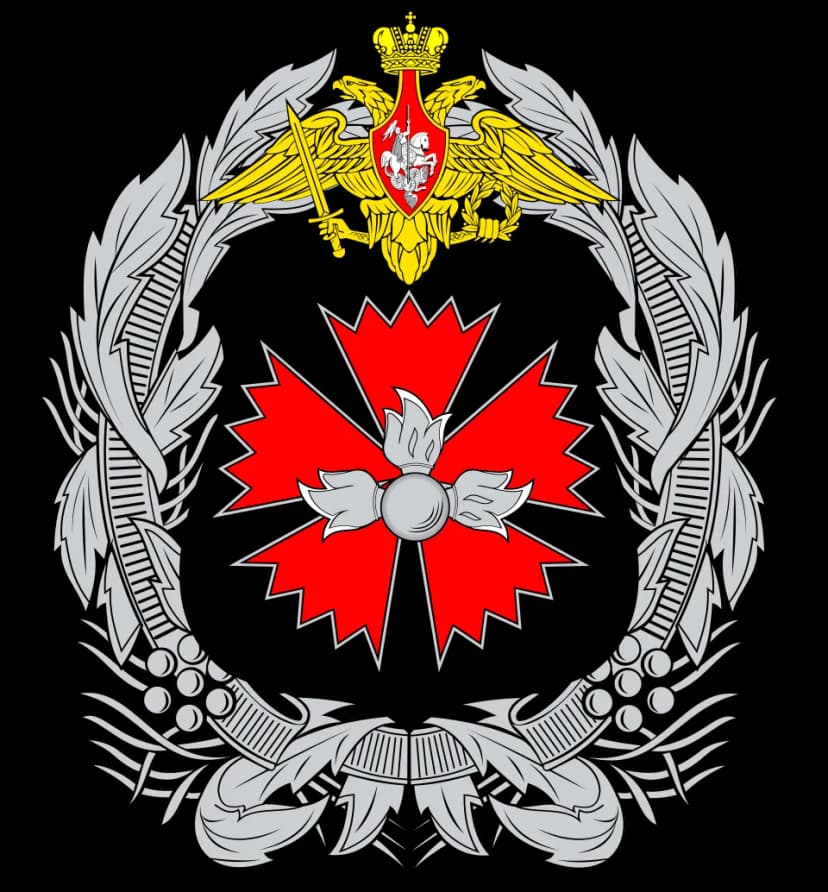
This article examines the life, espionage activities, and eventual death of Rear Admiral (JG) Dieter Felix Gerhardt, one of the most significant Soviet GRU agents to operate in the Western world during the Cold War. Gerhardt, a highly skilled South African naval officer with access to sensitive strategic information, spied for the Soviet Union from the 1960s until his arrest in 1983. His activities included photographing and transmitting thousands of classified South African Defence Force and Western military documents to his GRU handlers, making him a “mega spy” of exceptional value to Moscow. The article outlines his naval career, his recruitment by the Soviets, the role of his wife Ruth as courier, and the eventual counterintelligence investigation led by senior officers of the South African Police Security Branch. It highlights the ethical stance taken by General Major Frans Steenkamp, who insisted Gerhardt be treated lawfully despite pressure for extrajudicial action. After being convicted of high treason and sentenced to life imprisonment, Gerhardt was released in 1992 during South Africa’s political transition and later officially pardoned. The narrative also includes commentary from intelligence professionals, reflections on security clearance failures, and archival material from the SAP Museum. Gerhardt’s legacy remains deeply controversial—seen by some as a traitor and by others as an anti apartheid actor motivated by ideology. His death in July 2026 closes the chapter on one of South Africa’s most complex and impactful espionage cases.