South African Defence Force (SADF): 116 Battalion SA Infantry Corps: Mounted Unit
Compiled by Wolfgang Witschas
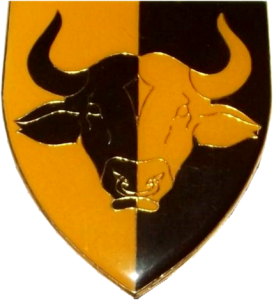
116 Battalion Emblem
Abstract
The South African Defence Force (SADF) 116 Battalion SA Infantry Corps, one of the SADF’s “Ethnic Battalions” during the Border War, was a motorised infantry unit of the South African Army. It was established as one of nine regional African battalions to train black soldiers, each with a particular ethnic identity which would serve under regional SADF commands. 116 Battalion however also had a mounted unit, soldiers on horseback for border protection along the Limpopo/Zimbabwe border.
Key Words
South African Defence Force (SADF),116 Battalion, 116 Battalion 907 Special Service Company, Mounted infantry Venda Shangaan, Tsonga, Soutpansberg Military Command
Introduction
The South African Defence Force (SADF) 116 Battalion SA Infantry Corps, one of the SADF’s “Ethnic Battalions” during the Border War, was a motorised infantry unit of the South African Army. It was established as one of nine regional African battalions to train black soldiers, each with a particular ethnic identity which would serve under regional SADF commands. It was eventually raised at Messina in 1986 as an original platoon of only 14 men but expanded quickly.
116 Battalion, was a similar approach to the South West Africa Territorial Force (SWATF) concept established in 1980, and also activated an immediate reaction force (Special Service Company) to deal with any attack and was primarily infantry company strength and fully motorised with Buffel Troop Carriers.
The first personnel consisted of former Rhodesian soldiers who had moved to South Africa and were mustered by the Intelligence Corps. 64 Tsonga soldiers from 113 Battalion was also integrated in the newly formed Battalion. Recruitment was also done from the Lebowa Homeland to finally bring the Battalion up to strength. 116 Battalion initially resorted under Far North Command and finally with the Soutpansberg Military Area. The unit was disbanded around 1999 as its main function of border control had been issued to the South African Police Service.
Special Service Companies (SSC) for Quick Reaction
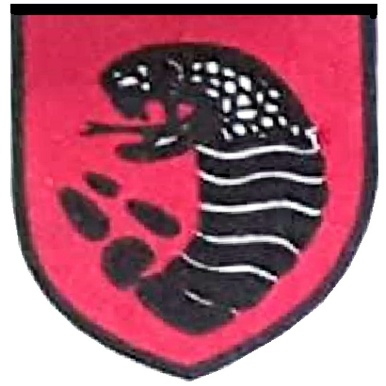 116 Battalion 907 Special Service Company
116 Battalion’s 907 Special Service Company was formed from Bravo Company at Spence Shaft in 1986. It acted as an immediate reaction force to deal with any attack and was primarily infantry company strength and fully motorised. It was based at Madimboj and deployed on Buffels but converted to Casspirs later.
116 Battalion was not as well-known as 32 Battalion (Buffalo) or SWATF’s 101 Battalion (Ovambo), but it had a “unique mounted role” in the Northern Transvaal, which made the Battalion special.
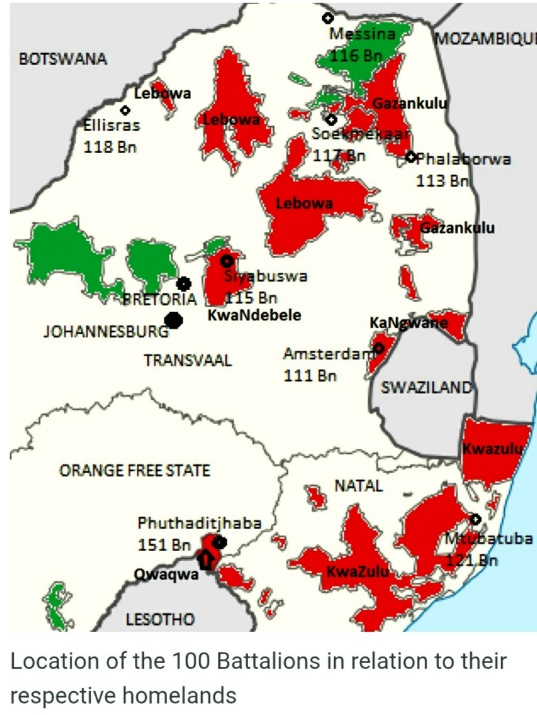
Background of 116 Battalion SA Infantry Corps
Founded:
• 1977, officially activated 01 Jan 1978
Base:
• Messina/Musina, then later Louis Trichardt
Area HQ:
• Soutpansberg Military Area
Role:
• Area protection, border control, tracking, COIN – with a mounted company
Disbanded:
• 1999, integrated into SANDF. Elements went to 15 SAI Battalion
Ethnic composition:
• Troops: 90% Black African. Mainly Venda and Shangaan/Tsonga from Northern Transvaal / Venda homeland
• Officers/NCOs: White SADF Permanent Force at first. From mid-1980s, Black officers and NCOs from Venda Defence Force were seconded
• Language: Venda, Tsonga, Afrikaans for command. English used less than in other units
This was deliberate SADF policy: recruit locally so troops knew the language, terrain, and people. Same model as 101 Battalion in Ovambo, 102 Battalion n Kavango.
116 Battalion, SADF SA Infantry Corps:
Mounted infantry unit of Venda/Shangaan soldiers: “Equestrian Unit”
116 Battalion was one of only two SADF units with a formal mounted component. The other was the SWATF’s 1 SWA SPES.
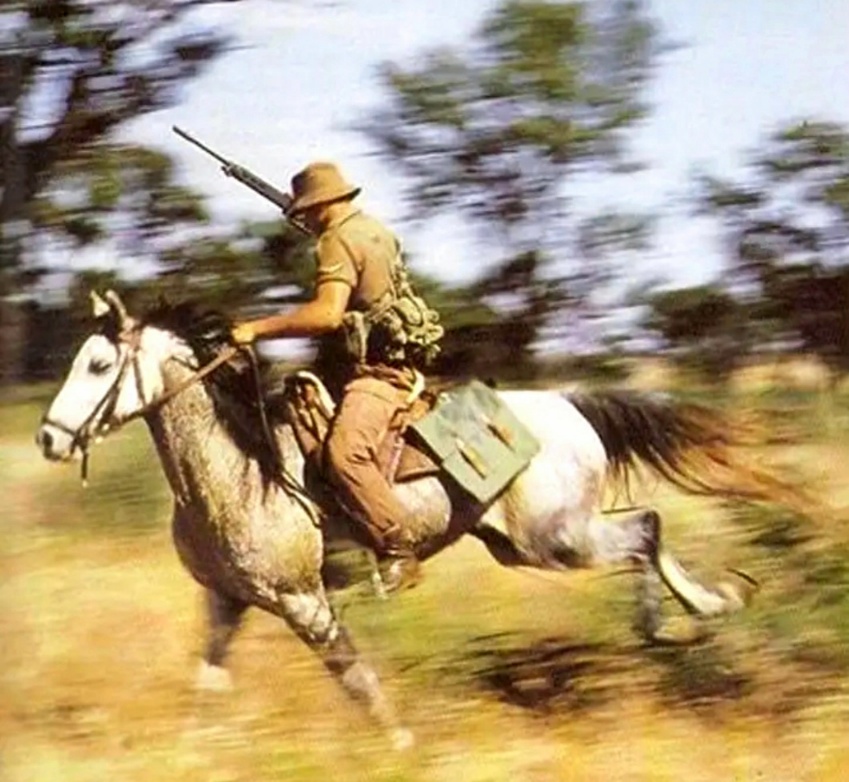 Face Book: Group: Koevoet, SAP & SADF
Feature Details:
• Size: 1x Company, 120 men &130 horses at peak, 1981–1986
Structure:
• 3x Platoons of 30–35 men each. Each platoon comprised of three sections
Horses:
• Local Boerperd/Boerperd-cross types. 14–15 Hand High (hh), hardy, bought from farms around Waterberg, Pietersburg
Saddlery:
• SADF McClellan-type military saddle, not the Rhodesian sawbuck pack saddle. Pack horses used local pack frames
Role:
• Border patrol Limpopo River.
• Follow-up ops after contacts/mines.
• Anti-poaching
• Show of force in Tribal Trust Lands (TTLs)
Why horses:
Northern Transvaal farms & Limpopo River line had same problem as Rhodesia — landmines. Vehicles channelled, tracks easy to mine. Horses could go cross-country, didn’t trigger most AT mines, and locals weren’t terrified of them like Casspirs.
Area of Operations:
Soutpansberg Military Area, covering:
1. Limpopo River border* with Rhodesia/
Zimbabwe: Beit Bridge to Pafuri.
2. Venda homeland TTLs: Thohoyandou,
Sibasa, Mutale
Gazankulu homeland, TTLs: Giyani,
Malamulele
3. Farms: White farming areas around
Messina, Waterpoort, Alldays. High
insurgent transit zone from Zimbabwe.
Operations & tactics:
• Mounted patrols: 10–14 day patrols along Limpopo. 1x section 8–10 men, 2x pack horses. Lived off the land, bought maize meal from kraals
• Follow-ups: After contact or mine strike, mounted platoon deployed by vehicle to nearest road, then went horseback to track. Horses could follow spoor through thick mopane where vehicles could not operate
• Reaction force: Held 1x mounted platoon at Messina as immediate reaction. Could be in the bush in 2 hours vs 6+ hours for infantry waiting for helicopters
• Civic action: Mounted troops did medical clinics, vetenarian services for local cattle. Horses were a “soft” approach in sensitive tribal areas
Weapons:
R4 rifles, 1x FN MAG per section, 1x 60mm mortar per platoon. Same as regular infantry, just horse-mobile.
Differences between 116 Battalion & Grey’s Scouts
Motive:
Grey’s Scouts
Pure COIN/hunter-killer
116 Battalion:
Border patrol + COIN
Training:
Grey’s Scouts
All-volunteer, horse-mad, months of training
116 Battalion:
6-week riding course, Many troops already farm riders
Horses:
Grey’s Scouts
Unit-owned, bought by OC, farrier in squadron
116 Battalion
SADF property, vet corps support
Pack system:
Grey’s Scouts:
Advanced pack trains, 7–10 day self-sufficient
116 Battalion
Basic. Mostly riding horses
Duration:
Grey’s Scouts
7–10 day deep ops
116 Battalion
Short patrols 3–5 days usually
Combat:
Grey’s Scouts
Deliberate offensive ops, lots of contacts
116 Battalion:
Few major contacts. More tracking/presence
116 Battalion was closer to “mounted police” than Grey’s “mounted infantry”. Still effective — ZANLA/ANC avoided areas they patrolled because tracks in sand don’t lie.
Post-1994:
1994: Became part of SANDF. Mounted company disbanded ∼1996–1997. Horses sold off 1999: 116 Bn disbanded. Members integrated into 15 SAI Bn at Thohoyandou
Legacy:
Many Venda/Shangaan veterans still in Limpopo. The horsemanship skill died out — SANDF has no mounted units today.
Insignia & dress:
Balkie: Springbok on maroon backing. Maroon = Venda colours
Stable belt: Maroon, dark blue, white stripes.
Mounted troops*: Wore brown leather leggings and SADF nutria browns. No special cavalry uniform like Grey’s.
116 Battalion – Mounted Company Table of Organisation and Equipment (T/E Table), 1982–1986
This is for the horse element only. 116 Bn also had regular infantry companies, but the mounted company was the unique part. Data from SADF docs + Venda veterans. Strength varied – this is establishment.
Mounted Company – Full strength:
1x Company 120 men, 130 horses. Based at Messina.
Sub-unit: Company HQ:
Men 18
Riding Horses 12,
Pack Horses 6Total 18
Company HQ:
Officer Commandant Captain
2IC Lieutenant
Company Sergeant Major
Company Quartermaster Sergeant (CQMS)
Farrier
Vetenarian NCO
2x signals, medical ordonnance, storemen
Platoons 1, 2 & 3:
34 Men, 30 Horses, 4 Pack Horses 3 Sections & Platoon HQ
Remounts:
10 Pack Horses held at base. Sick/spare horses
Total: 120 Horses 102 Riding Horses & 28.Pack Horses
Ratio: 1.08 horses per man. About 1 pack horse per 3 riders, same as Grey’s Scouts.
Mounted Platoon: 34 men, basic patrol unit:
Commanded by Lt or senior 2Lt. This is what went out on border patrols.
Key weapons:
Platoon HQ:
7 Men, 6 Riding & 1 Pack Horse
1x B25/B26 radio & binoculars
Lieutenant, Platoon Sergeant, 2x signallers,1x medic ordonnance 1x 60mm mortar crew & 1x handler
1 Section:
9 Men, 8 Riding, 1 Pack Horse
1x FN MAG, 8x R4. 1 man = horse handler on contact
2 Section:
9 Men, 8 Riding, 1 Pack Horse
1x FN MAG, 8x R4
3 Section:
9 Men, 8 Riding, 1 Pack Horse
1x RPG-7 or 60mm mortar, 8x R4. Mortar swopped for RPG depending on threat
Contact drill: Same as Grey’s. On contact, 1 man per section took all horses back 100–200m. 24–27 men fought on foot. 6–7 men held horses.
Section breakdown: 9 men, SADF sections were bigger than Grey’s due to doctrine
Section Commander: Corporal, R4, 1x rifle grenade, FN MAG No.1MAG gunner MAG No.2 R4, carries 200 rounds linkbelt & spare barrel
Riflemen x5: R4 rifles each
Horse handler: R4, most junior. Also led section pack horse when mounted
Pack horse: 1 per section, led by handler
116 Battalion – Mounted Company Table of Organisation and Equipment (T/E Table), 1982–1986
This is for the horse element only. 116 Bn also had regular infantry companies, but the mounted company was the unique part. Data from SADF docs + Venda veterans. Strength varied – this is establishment.
Mounted Company – Full strength:
1x Company 120 men, 130 horses. Based at Messina.
Sub-unit: Company HQ:
Men 18
Riding Horses 12,
Pack Horses 6Total 18
Company HQ:
Officer Commandant Captain
2IC Lieutenant
Company Sergeant Major
Company Quartermaster Sergeant (CQMS):
Farrier
Vetenarian NCO
2x signals, medical ordonnance, storemen
Platoons 1, 2 & 3:
34 Men, 30 Horses, 4 Pack Horses 3 Sections & Platoon HQ
Remounts:10 Pack Horses held at base. Sick/spare horses
Total: 120 Horses 102 Riding Horses & 28.Pack Horses
Ratio: 1.08 horses per man. About 1 pack horse per 3 riders, same as Grey’s Scouts.
Mounted Platoon: 34 men, basic patrol unit:
Commanded by Lt or senior 2Lt. This is what went out on border patrols.
Key weapons:
Platoon HQ:
7 Men, 6 Riding & 1 Pack Horse
1x B25/B26 radio & binoculars
Lieutenant, Platoon Sergeant, 2x signallers,1x medic ordonnance 1x 60mm mortar crew & 1x handler
1 Section:
9 Men, 8 Riding, 1 Pack Horse
1x FN MAG, 8x R4. 1 man = horse handler on contact
2 Section:
9 Men, 8 Riding, 1 Pack Horse
1x FN MAG, 8x R4
3 Section:
9 Men, 8 Riding, 1 Pack Horse
1x RPG-7 or 60mm mortar, 8x R4. Mortar swopped for RPG depending on threat
Contact drill: Same as Grey’s. On contact, 1 man per section took all horses back 100–200m. 24–27 men fought on foot. 6–7 men held horses.
Section breakdown: 9 men, SADF sections were bigger than Grey’s due to doctrine
• Section Commander: Corporal, R4, 1x rifle grenade
• FN MAG No.1MAG gunner MAG No.2 R4, carries 200 rounds linkbelt & spare barrel
• Riflemen x5: R4 rifles each
• Horse handler: R4, most junior. Also led section pack horse when mounted
• Pack horse: 1 per section, led by handler
What the 4 pack horses carried per platoon:
Patrols were usually 3–5 days, not 7–10 like Grey’s. Shorter because they had vehicle backup from Messina.
Horses Load & Weight
Pack Horse1: Signals B25/B26 radio & spare batteries, antenna, code books: 50 kg
Pack Horse 2: Weapons: 60mm mortar & 12 15 bombs or RPG-7 +& 4 rockets & FN MAG ammunition 400 rounds 60 kg
Pack Horse 3: Ammunition: FN MAG ammunition 800 rounds +& R4 ammunition (5.56 mm) 1,400 rounds & rifle grenades x6: 65 kg
Pack Horse 4: Rations/Admin: 5 days rations for 34 men &40L water & vetenarian kit & farrier tools: 60 kg
Water: Big difference to Rhodesia. Limpopo area is dry. Pack Horse 4 always carried jerry cans. Troops supplemented from farm windmills/boreholes.
Horses & Tack – SADF issue:
Riding horses: 14–15 Hsnh High (hh) Boerperd types. SADF bought, not bred. Each had SADF brand & number on hoof
Saddle: SADF M83 Universal saddle – copy of US McClellan. Light, wooden tree, felt panels. Not a pack saddle
Pack frames: Local-made wooden sawbuck frames, similar to M1940 but lighter. Lashed with rope, no US hangers
Shoes: All horses shod, 3-week cycle. Farrier in Company HQ. Critical in stony Soutpansberg ground.
Vetenarian: SA Vetenarian Corps NCO attached. Dosed for African Horse Sickness every year. Big killer if skipped.
Typical tasking for s 4-day Limpopo border patrol
Day 1: Taken by truck to Pontdrift. Mount up, ride 25km east along river. Check for spoor, cut for crossings. Night laager in mopane
Day 2–3: Patrol 20km/day. Visit kraals, ask for information. Check water points for fresh tracks
Day 4: Rendezvous (RV) with Unimog at Waterpoort. Horses trucked back, men debrief.
Load out per man:
R4 + 7 magazines, 2x M26 grenades, 2L water, rations. No webbing worn when riding – ammunition in saddle bags
Contacts: Rare, mostly follow-
116 Battalion’s job was to see and report then call in infantry/Casspirs.
A Vetenarian saying from Messina: “Ons het nie oorlog gery nie, ons het grens gery. Die perde het die myne gespaar en die manne het die spore gekry.”
“We didn’t ride to war, we rode the border. The horses saved us from mines and the men found the tracks.”
116 Battalion – Official Mandate
116 Bn was an SADF “Ethnic Battalion” created for area protection in the Northern Transvaal. The mandate changed slightly over time, but the core stayed the same 1978–1999.
Official SADF Mandate, 1978
From _Soutpansberg Military Area Command Directive 1/78:
Primary role:
“To conduct counter-insurgency operations and maintain law and order in the Soutpansberg Military Area, with special emphasis on the international border with Rhodesia/Zimbabwe and the internal borders of the Venda and Gazankulu national states.”
How the mandate evolved:
Period Threat Mandate shift
1978–1980: ZANLA from Rhodesia
Main effort: Stop arms couriers, mortar teams crossing Limpopo to attack farms. Lots of ambushes & horse patrols 1981–1989: ANC MK, internal unrest.
Main effort: Internal. MK used Zimbabwe as springboard into Venda. 116 Bn did cordon/search, roadblocks, urban unrest support in Thohoyandou. Mounted operations reduced
1990–1994: Political transition
Main effort: Stabilize Venda/Gazankulu during negotiations. Stop APLA attacks, protect elections 1994
1994–1999: Integration
Main effort: SANDF integration, borderline ops against crime. Horses gone 1997.
Disbanded 1999, merged into 15 SAI Battalion.
What 116 Bn was NOT:
Not a conventional attack unit: Unlike 32 Battalion or Parabats. No cross-border raids into Zimbabwe. Purely defensive inside RSA.
Not a SWATF: Operated inside SA only, not in South West Africa. Different laws/rules of engagement.
Not police: Could support SAP, but remained military. Arrest powers only under state of emergency.
Conclusion
116 Battalion Veterans Group
The unit was disbanded in 1999, but the veterans are still active in Limpopo. Here’s how to reach them:
Main Veterans Association
Name: 116 Battalion Veterans Association / 116 Battalion Veterane Vereniging
Base: Louis Trichardt / Thohoyandou, Limpopo
Focus: All ranks who served in 116 Bn 1978–1999, including Mounted Company
Contact Details:
Chairman: Col (Ret) Tshililo Ramabulana – ex-2Lt, 116 Bn Mounted Pl, 1984–85
Secretary: WO1 (Ret) A.M. “Oom Attie” Botha – ex-RSM Mounted Company, farrier
Facebook: Search “116 Battalion Veterane” – private group, 340 members. Active.
Annual parade: Last Saturday of July, Messina/Musina Memorial Wall at SANDF base
Contact route: Most members aren’t on email. Best way: Facebook group or via SANDF Fund office Louis Trichardt
Activities:
Memorial services for 116 Bn KIA – 12 names on Messina wall
Welfare: Help with military pension, medical claims for ex-troops
Horse link: Some members still ride. They do ceremonial ride-bys at funerals for mounted coy vets.
Broader groups that include 116 Battalion Veteran Group
SA Legion – Soutpansberg Branch:
Many 116 veterans joined post-1999. Louis Trichardt office. Tel: +27 15 516 2662
Council of Military Veterans Organisations (CMVO) Limpopo. Umbrella body. CMVO office Polokwane can put you in touch.
SANDF Fund – Limpopo Regional Office, Thohoyandou. Handles benevolent fund for 116 Bn members. +27 15 962 1003
Venda Defence Force Veterans: Overlap: many 116 Bn officers/NCOs were VDF seconded. Share history.
Key people still involved – Mounted Company:
Colonel Tshililo Ramabulana. Was 2Lt Pl Command 2 Pl, 1984. Later OC 15 SAI Bn. Retired. Lives Thohoyandou. Knows all horse ops 1983–85.
WO1 Attie Botha – RSM Mounted 1983–85. White PF, stayed in Messina after 1994. Ran farrier shop. Huge knowledge of horses, saddles, routes.
Sergeant Frans Madzunya: SA Vetenarian Corps, 116 Bn 1982–1988. Lives near Mutale. Dosed every horse for African Horse Sickness (AHS).
References:
Source: https://www.facebook.com/ WarInAngola/posts/south-african-unitprofile-116-battalion-116-battalion-116-bnafr-116-bataljon-1/1000323095465892/
https://en.wikipedia.org/wiki/116_Battalion
https://military-history.fandom.com/wiki/116_Battalion
Face Book: Group: Koevoet, SAP & SADF
Face Book: British Commonwealth Forces
116 Battalion Veterans Association

