Nongqai Vol 17 No 10 – (10) 1906: Colonial Natal Police historical photograph
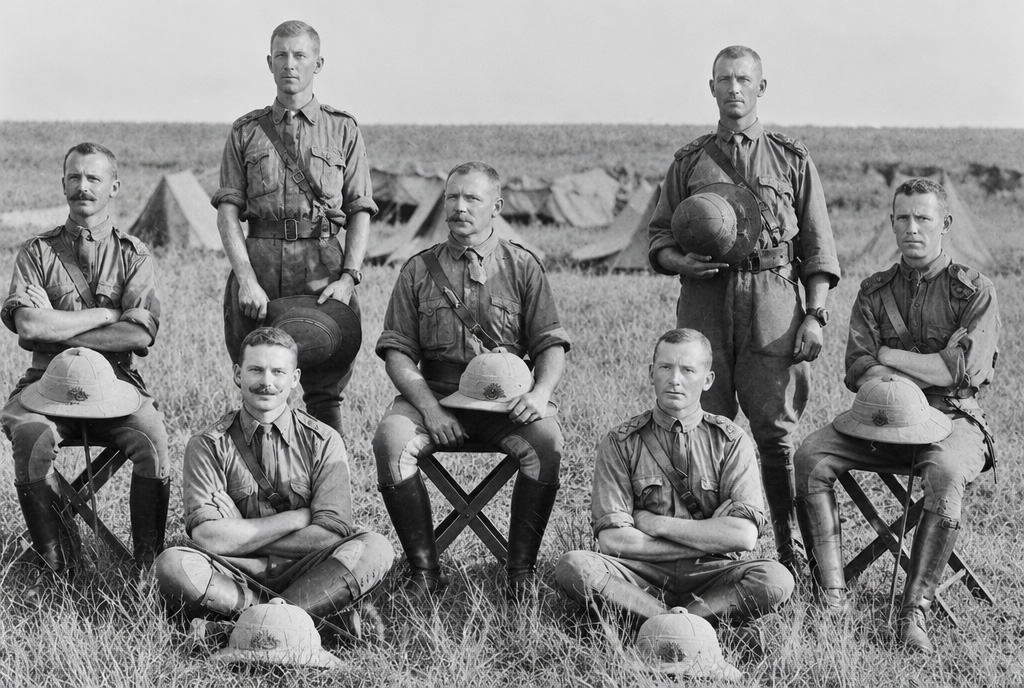
1906: NATAL POLICE (COLONIAL) OFFICERS
Via Lt-Col William Marshall (SADF)

Lt‑Col William Marshall located this historically valuable correspondence in the military archives and shares it with readers.
Excerpt
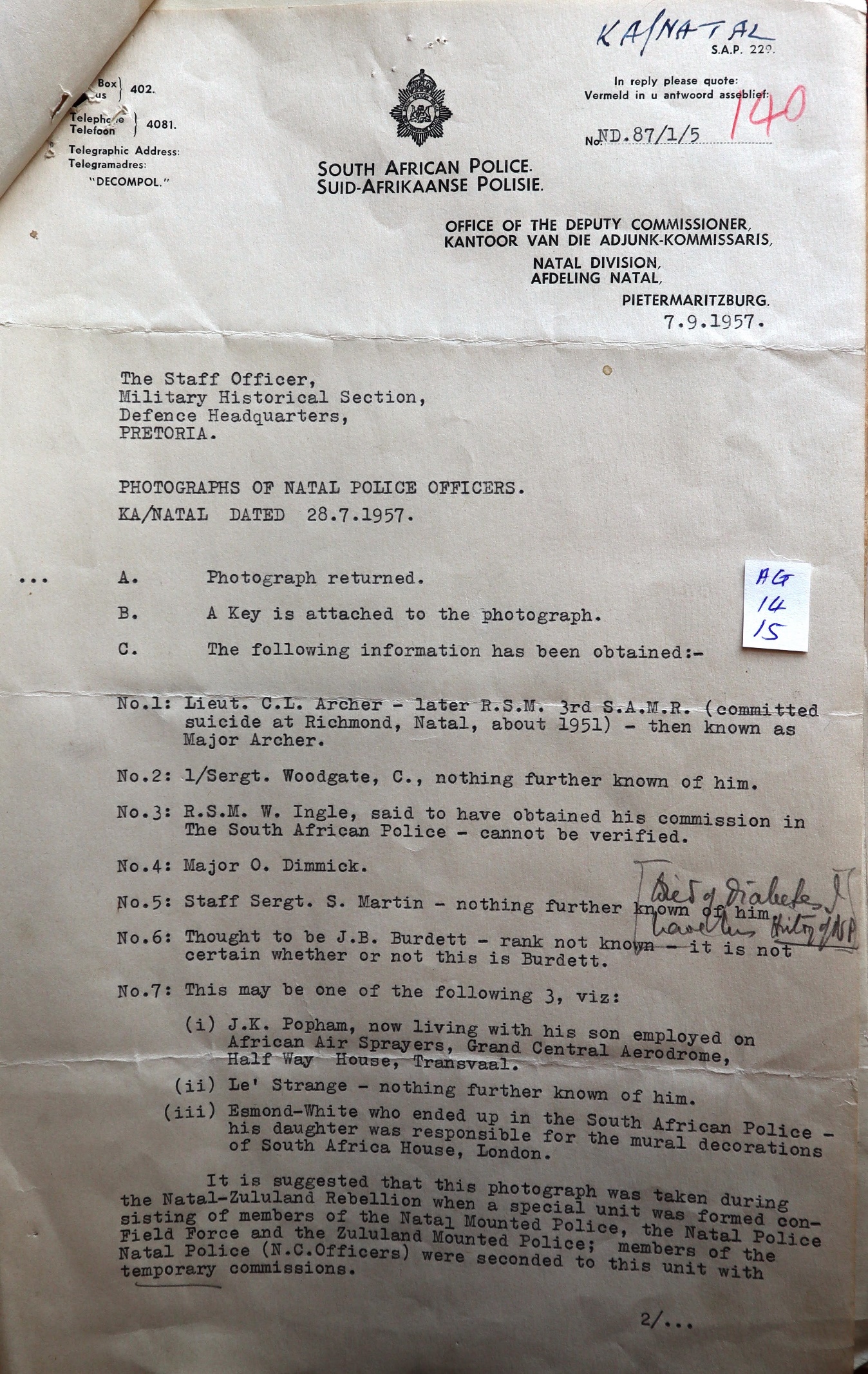
Archival correspondence from the Deputy Commissioner of Police (Natal Division, 1957) identifying colonial-era Natal Police officers and providing historical notes on their service.
Abstract
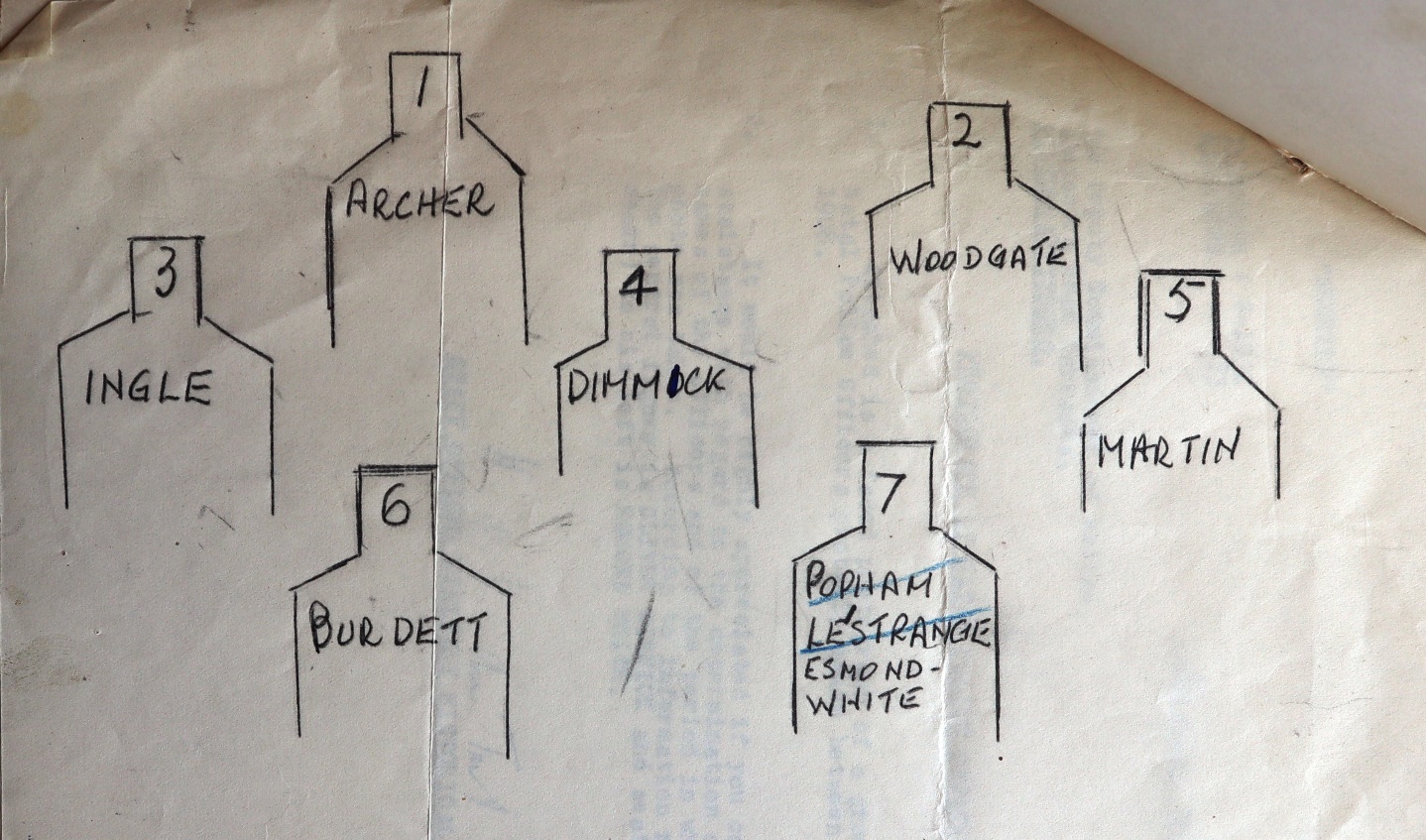
This 1957 letter from the Office of the Deputy Commissioner of Police, Natal Division, responds to a request from the Military Historical Section regarding a photograph of Natal Police officers. The Deputy Commissioner supplies biographical notes on seven individuals—Lieut C.L. Archer, 1/Sgt C. Woodgate, R.S.M. W. Ingle, Maj O. Dimmick, Staff/Sgt S. Martin, J.B. Burdett (probable), and one of three possible candidates for the seventh figure: J.K. Popham, Lt Strange, or Edmond‑White.
The correspondence suggests the photograph may date from the 1906 Natal‑Zululand Rebellion, when a composite unit was formed from the Natal Mounted Police, Natal Police Field Force, and Zululand Mounted Police.
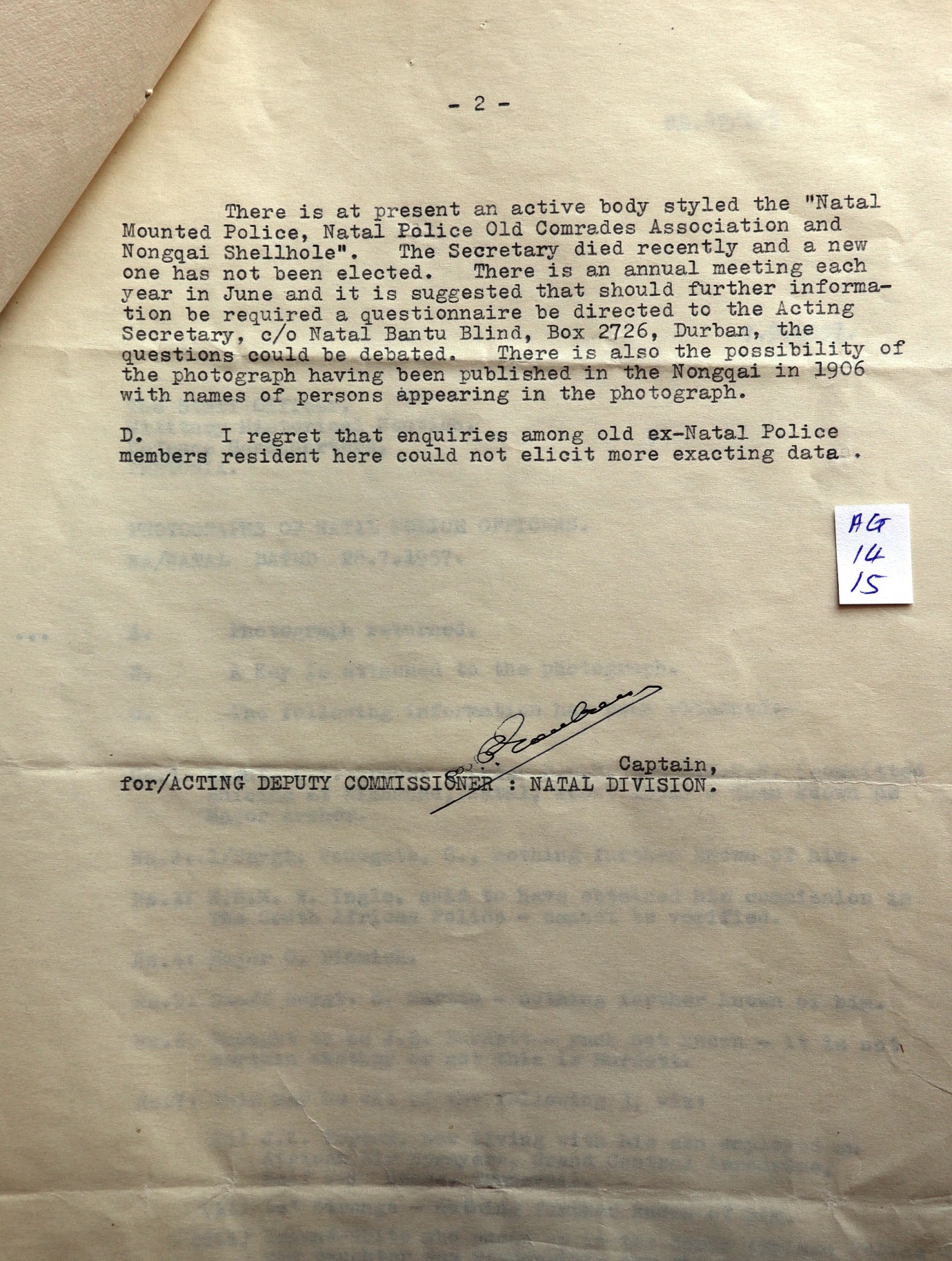
A second page notes the existence of the Natal Mounted Police / Natal Police Old Comrades Association and the difficulty of obtaining further information from surviving members.
Keywords
Natal Police, Colonial officers, Deputy Commissioner of Police Natal Division, Military Historical Section, Lt‑Col William Marshall, 1906 Natal‑Zululand Rebellion, Mounted Police, Nongqai, Archival correspondence, Police history,
Named Officers Identified in the Letter
- Lieut C.L. Archer – later R.S.M., later Major Archer; committed suicide at Richmond c.1951.
- 1/Sgt C. Woodgate – no further information known.
- R.S.M. W. Ingle – believed to have obtained a commission in the SAP (unverified).
- Maj O. Dimmick.
- Staff/Sgt S. Martin – no further information known.
- J.B. Burdett (probable identification; rank uncertain).
- Possible No.7:
- J.K. Popham – living with his son at African Air Sprayers, Grand Central Aerodrome.
- Lt Strange – no further information known.
- Edmond‑White – later SAP; daughter decorated South Africa House, London.
Full English Reading of the Deputy Commissioner’s Letter
Below is a faithful English rendering of the content visible in the archival letter (quoted lines are taken directly from the document):
Page 1 — Identification of Officers
The Deputy Commissioner of Police, Natal Division, writes from Pietermaritzburg on 7 September 1957 to the Staff Officer of the Military Historical Section at Defence Headquarters, Pretoria. The subject concerns:
“PHOTOGRAPHS OF NATAL POLICE OFFICERS. KA/NATAL DATED 28.7.1957.”
He notes that the photograph has been returned and that a key is attached. The following information has been gathered:
- Lieut C.L. Archer — later Regimental Sergeant Major of the 3rd South African Mounted Rifles; subsequently known as Major Archer.
“(committed suicide at Richmond, Natal, about 1951)”
- 1/Sergt C. Woodgate —
“nothing further known of him.”
- R.S.M. W. Ingle —
“said to have obtained his commission in The South African Police – cannot be verified.”
- Major O. Dimmick.
- Staff Sergt S. Martin —
“nothing further known of him.”
- Thought to be J.B. Burdett — rank unknown; identification uncertain.
- Possibly one of three men:
- J.K. Popham, residing with his son at African Air Sprayers, Grand Central Aerodrome, Half Way House.
- Lt Strange — no further information.
- Edmond‑White, who later served in the SAP; his daughter created the mural decorations in South Africa House, London.
The Deputy Commissioner suggests that the photograph may date from the (1906) Natal‑Zululand Rebellion, when a special composite unit was formed from the Natal Mounted Police, Natal Police Field Force, and Zululand Mounted Police. Natal Police N.C.O.’s were seconded with temporary commissions.
Page 2 — Additional Notes
The second page reports that an active body exists:
“the ‘Natal Mounted Police, Natal Police Old Comrades Association and Nongqai Shellhole’.”
The Secretary has recently died and a new one has not yet been elected. The annual meeting is held in June. Further enquiries may be directed to the Acting Secretary at:
“Natal Bantu Blind, Box 2726, Durban.”
The Deputy Commissioner notes that the photograph may have been published in the Nongqai in 1906, possibly with names.
He concludes:
“I regret that enquiries among old ex-Natal Police members resident here could not elicit more exacting data.”
Signed:
Captain, for Acting Deputy Commissioner: Natal Division.


William baie dankie en skielik tref iets my toe ek hierdie histories item publiseer. Ek lewer soos volg in Engels kommentaar:
COLONIAL POWER, CONTINUITY, AND CHANGING GLOBAL PERCEPTIONS
The 1957 letter from the Deputy Commissioner of Police, Natal Division, offers more than simple identification of officers in an old photograph. It is a window into a world shaped by the long shadow of British imperial policing traditions. To understand the significance of the officers listed—Archer, Woodgate, Ingle, Dimmick, Martin, Burdett, Popham, Strange, and Edmond‑White—one must place the Natal Police within the broader pattern of British colonial security culture that stretched across continents.
IMPERIAL POLICING: A GLOBAL PATTERN
From the earliest days of colonial North America, through India, China, Southeast Asia, and Africa, British imperial forces responded to resistance with overwhelming military and police power. Whether confronting Native American nations, suppressing uprisings in India, enforcing treaty port authority in China, or intervening in African conflicts, fighting the Voortrekkers, Boers or Zulu’s the British Empire relied on a consistent doctrine: firm, organised, and often violent enforcement of imperial order.
The Natal Police, like other colonial forces, inherited this doctrine. Their structure, ranks, insignia, and operational methods were direct descendants of British military and policing practice. The officers named in the 1906 photograph were part of this tradition—men who served in a system designed to maintain stability in a turbulent colonial frontier.
SOUTH AFRICA AND THE CONTINUATION OF BRITISH TRADITIONS
After the Anglo‑Boer War, the newly unified South African police and military institutions adopted British systems almost wholesale. Boer officers and men, once bitter opponents of the Empire, eventually absorbed and continued these traditions. South African forces fought in German South West Africa, engaged local communities in South West Africa, and participated in operations against various African nations and tribes within South Africa itself. Flags, colours, medals, rank structures, and parade customs all reflected British heritage.
The officers mentioned in the 1957 letter belonged to this world. Their temporary commissions during the Natal‑Zululand Rebellion, their service in mounted units, and their later careers in the SAP and SAMR illustrate how deeply British organisational culture had taken root.
A WORLD TRANSFORMED: FROM IMPERIAL PRIDE TO COLONIAL CRITIQUE
The letter’s tone is matter‑of‑fact, almost administrative.
Yet today, the world in which it was written has vanished.
Global opinion shifted dramatically in the mid‑20th century. Anti‑colonial movements, new international norms, and changing moral frameworks recast former imperial forces as symbols of oppression rather than order.
South Africa’s police and military—once proud inheritors of British tradition—found themselves criticised for their colonial past. New names, new symbols, and new narratives emerged to distance modern institutions from their imperial origins.
The 1906 photograph, and the 1957 effort to identify its subjects, therefore stands at a crossroads: a relic of a world confident in its imperial mission, preserved in an era when that mission was increasingly questioned.
WHY THIS LETTER MATTERS TODAY
The Deputy Commissioner’s correspondence is valuable not only for its identification of officers, but for what it reveals about the era:
A policing system built on British precedent.
Officers whose careers spanned rebellion, frontier conflict, and early South African statehood.
A world where colonial service was seen as honourable and necessary.
A later world where those same traditions became politically and morally contested.
REMINDER
For historians, genealogists, and heritage researchers, the letter is a reminder that institutions evolve, reputations shift, and the meaning of service changes with time. It is precisely the kind of archival fragment that helps us understand how South Africa’s policing identity was shaped—and reshaped—over more than a century.
Miskien dink ek te veel: Mag ons oud SAP- & SAW-lede met reg trots wees op ons verlede en afkoms, ek dink so!