
1914 - 1918 WW1
Potpourie: Oktober 2026
Photo album: The history of a country and its people is closely interwoven with its uniformed services.
5 articles match your filters
Photo album: The history of a country and its people is closely interwoven with its uniformed services.
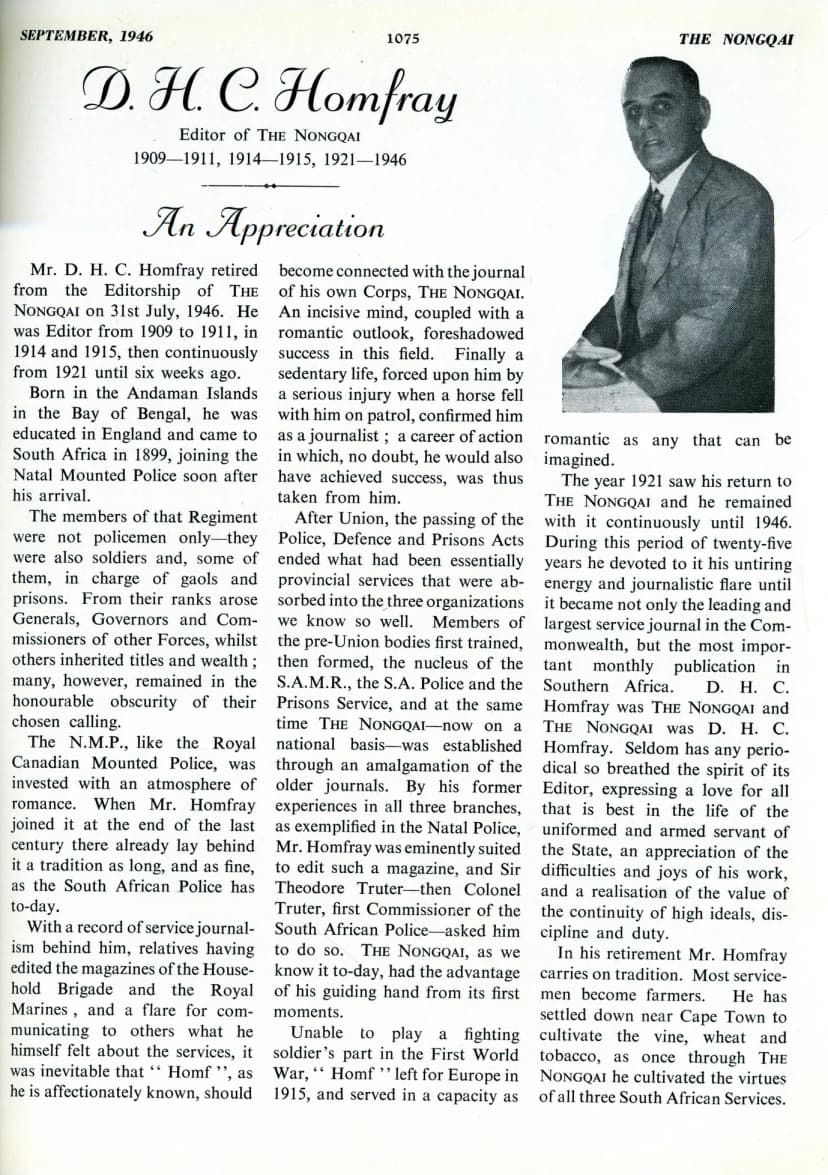
D. H. C. Homfray served as the long‑standing editor of The Nongqai, shaping the journal from its early years into the leading service publication in Southern Africa. Born in the Andaman Islands and trained in England, he joined the Natal Mounted Police in 1899, where his experiences across policing, military duties and prison administration informed his later editorial vision. A severe injury redirected him from active service to journalism, and his tenure as editor — spanning 1909–1911, 1914–1915 and 1921–1946 — gave The Nongqai its distinctive character rooted in tradition, discipline and the ethos of uniformed service. After retiring in 1946, Homfray settled near Cape Town as a farmer, continuing a life shaped by service and dedication.
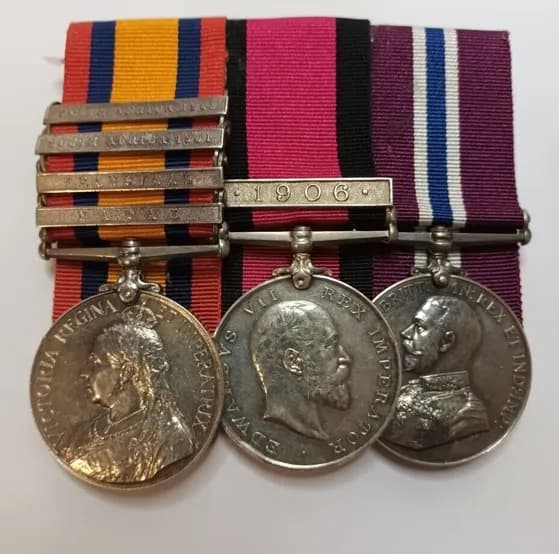
This article explores the long and distinguished policing and military career of Grade 1 Head Constable Charles Detmold Robbins, a Natal Policeman who later served in the 2nd South African Mounted Rifles (SAMR) and earned the Permanent Forces of the Empire Beyond the Seas Long Service & Good Conduct Medal. Robbins’ service reflects the transitional period during which the Natal Police were absorbed into the newly formed Union Defence Force and South African Police, with the SAMR assuming policing duties across Natal. Robbins participated in the Anglo Boer War, earning the Queen’s South Africa Medal with bars Natal, Transvaal, South Africa 1901, and South Africa 1902. He also served during the 1906 Natal Native (Bambatha) Rebellion, receiving the 1906 Medal with Clasp. His shooting achievements were notable, winning multiple competitions including the Hine Cup in 1912. His long service award, although earned in 1911, was only issued in 1916 after administrative delays. The medal is particularly interesting because it bears a police rank on a military long service medal, reflecting the hybrid nature of SAMR service. Robbins retired in 1923 as a state prosecutor and died in 1940, leaving behind a legacy intertwined with the evolution of policing in Natal and the early Union period. “The medal is named No 710 1st GDE. HD. CONST. C.D. Robbins 2nd SAMR.” “He served in the Boer War with Natal Police… earning the Queens South Africa Medal with bars.”
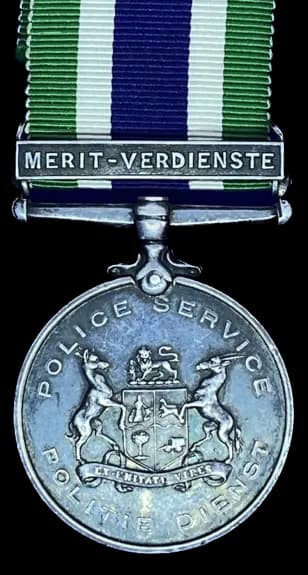
This article examines the complex service history of Constable William Lodewyk Bos/Boss, a member of the South African Mounted Rifles (SAMR) who later transferred to the South African Police (SAP). His career illustrates the transitional period in South African policing after Union, when militarised police forces evolved into national services. The article contextualises the development of long‑service awards, including the Permanent Forces of the Empire Beyond the Seas Long Service and Good Conduct Medal and the later Police Good Service Medal, instituted under Government Notice GN938 of 8 June 1923. Constable Bos/Boss’s military and police service included participation in the 1914 Afrikaner Rebellion, the German South West Africa campaign, and later enlistment in the Union Defence Force during World War II. His unusual change of surname from Bos to Boss, confirmed only by a newspaper notice, highlights administrative irregularities of the era. Despite disciplinary infractions that could have disqualified him, he ultimately received the SAP Good Service Medal in 1949. The article reconstructs his career through service records, force orders, medal documentation, and family history sources, offering a detailed case study of early 20th‑century South African policing and medal policy. “The award was to be known as the Police Good Service Medal…” “A letter dated 2nd January 1920… confirms to staff records at HQ that William Bos has changed his name to Boss.”
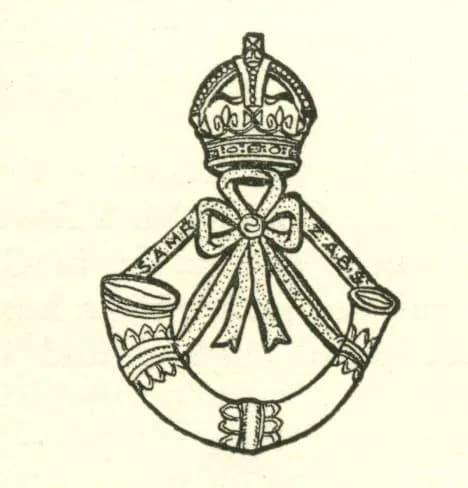
Abstract This short article examines the reorganisation of policing in the newly formed Union of South Africa between 1911 and 1926, focusing on the creation, structure, and eventual dissolution of the South African Mounted Rifles (SAMR). Established under Act 14 of 1912 and formally constituted on 1 April 1913, the SAMR unified several former colonial — the Cape Mounted Police, Cape Mounted Rifles, Natal Police, Orange Free State Police, and Transvaal Police — into a single paramilitary policing organisation. The SAMR comprised five geographically dispersed regiments supported by an artillery brigade of five batteries. From 1916, a Military Police detachment was incorporated into the establishment, with specialised duties performed from ordinary police stations and small garrison-based units such as the 14‑man detachment at Roberts Heights. Comparable detachments likely operated in other Union garrison centres. In 1920, the five regiments were disbanded, with 26 officers, 196 non‑commissioned officers, and 1,022 troopers transferred to the South African Police. The remaining personnel were consolidated into a single regiment stationed at Roberts Heights, which continued to function until its final disbandment in 1926. The study highlights the SAMR’s transitional role between colonial policing traditions and the emerging national police system of the Union.