
Establishment & Generals in SAPS
Open letter: Dr L Max
Police leadership should be founded on professional qualifications, operational policing experience, integrity, and merit rather than primarily on executive or political considerations.
4 articles match your filters
Police leadership should be founded on professional qualifications, operational policing experience, integrity, and merit rather than primarily on executive or political considerations.

This article from Die Lourierkrans (December 1984) highlights the professionalism and elite training of the South African Railway Police Special Task Force. It describes their dual role in counter‑insurgency operations along the national borders and in protecting the country’s extensive transport infrastructure—railways, ports, airports, and public vehicles. The narrative emphasizes their rigorous preparation under Major Ronnie Beyl at Slagboom near Port Elizabeth, where live ammunition and explosives were used to simulate real combat conditions. The piece portrays the unit as a disciplined, fearless brotherhood, praised internationally for its expertise in hostage rescue and anti‑terrorist missions, under the leadership of Brigadier Gustav Erlank.
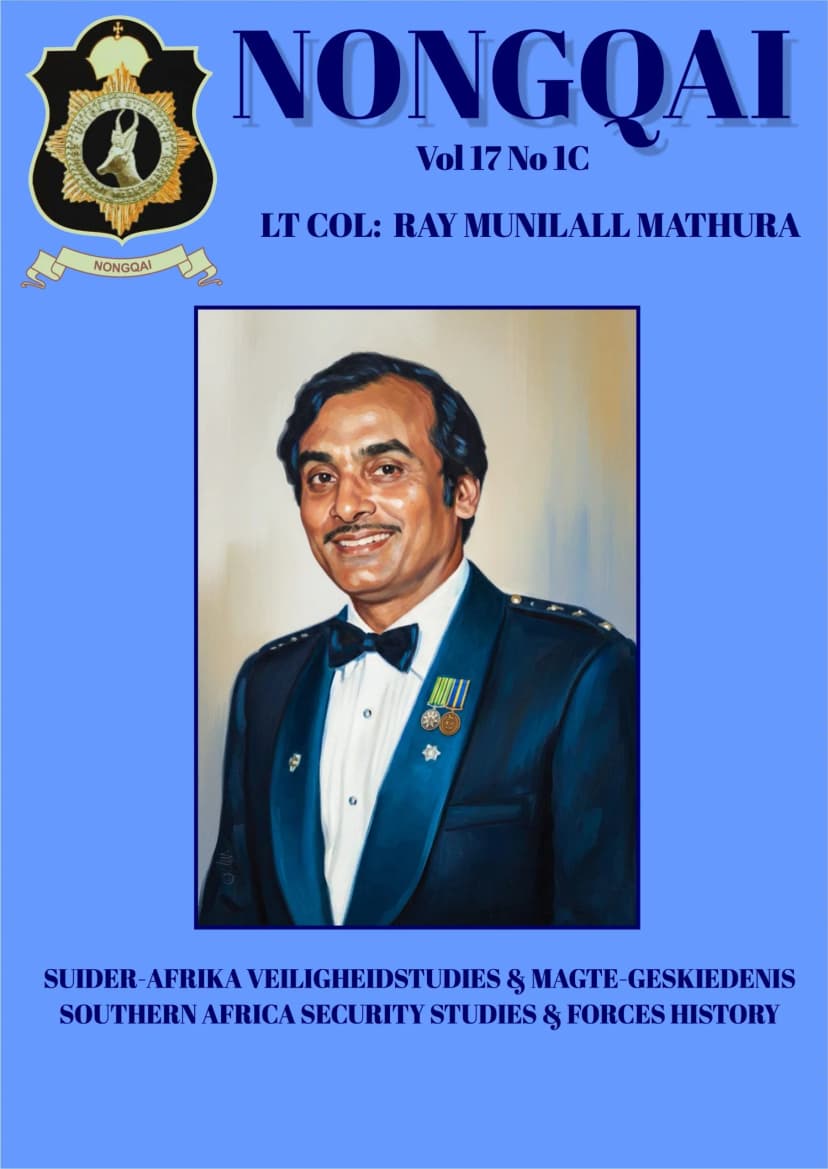
Lieutenant-Colonel Ray Munilall Mathura (1937-1993) was a groundbreaking Indian South African police officer. He served with great dedication during the apartheid era, a time when strict racial rules limited opportunities for non-white members. Born in 1937, he joined the South African Police on 19th April 1960 and served for more than 30 years. Despite strong racial discrimination, he rose through the ranks. During 1975, he was commissioned. Mathura’s career showed determination and courage in the face of hardship. He inspired others to serve their communities with pride, discipline, and integrity. Although he passed on 25th April 1993, his achievements are still honoured today. Police history records, including the Nongqai archives and he is also featured in the University of KwaZulu-Natal’s Gandhi-Luthuli Documentation Centre’s website gallery entitled, South African Police Indian Veteran. The centre serves as both a living archive and a tribute to the Indian community’s legacy in South Africa and recognise him as one of the great legends of the South African Police.
Captain Nelson Kabalamurthi Nayager (1932–1975) was a pioneering Indian member of the South African Police whose career embodied professionalism, integrity, and resilience during the apartheid era. Joining the force in 1952, he rose steadily despite systemic racial barriers, completing advanced technical training and earning widespread respect for his discipline and dedication. In 1970, he became one of the first two Indian policemen to receive a commissioned rank, later advancing to Captain in 1974—milestones that marked significant progress for Indian representation in the police service. Throughout his 23-year career, he was commended by senior judicial authorities for his exemplary conduct and became a mentor and advocate for the advancement of Indian policemen. His sudden passing in 1975 at the age of 43 was deeply mourned across racial lines, reflecting the high esteem in which he was held. Today, his legacy endures in police history records, including the Nongqai archives and the University of KwaZulu-Natal’s Gandhi-Luthuli Documentation Centre, where he is honoured as one of the great legends of the South African Police and a symbol of the Indian community’s contribution to public service.