4 articles match your filters

1914 - 1918 WW1The fire crackles softly in the windless Namib night, and the desert stretches out like an ancient, breathing presence. Around the flames, stories rise — of camel patrols, diamond fields, stranded ships, spies in German South West Africa, and policemen who walked the silence with discipline and courage. The Namib becomes a vast archive: a place where the stars speak of creation, where abandoned towns sink slowly into sand, and where men like Louis Botha, Trew, Ironside, Smith, Verster, and countless unnamed constables left their footprints on a land older than memory. In this world of dunes, wind, and forgotten histories, the desert keeps its secrets — yet reveals them to those who listen.
1988 75th Anniversary of SAP - Upingtonton: Camel StattueThe article commemorates the historical role of camels in the South African Police. Since 1914, camels were used for patrol duties in the arid regions of the Northern Cape and the Kalahari, and at one point 417 camels served the Police.
It describes the unveiling of a commemorative bronze statue in Upington on 25 April 1988 by Minister Adriaan Vlok, honouring both the animals and their riders, who served in harsh desert conditions. The article closes with a reflection that suffering teaches wisdom and faith.
The event formed part of the SAP’s 75th anniversary celebrations and highlighted the historical significance of camel patrols in remote regions. The article concludes with a contemplative remark on the lessons of hardship, wisdom, and faith.
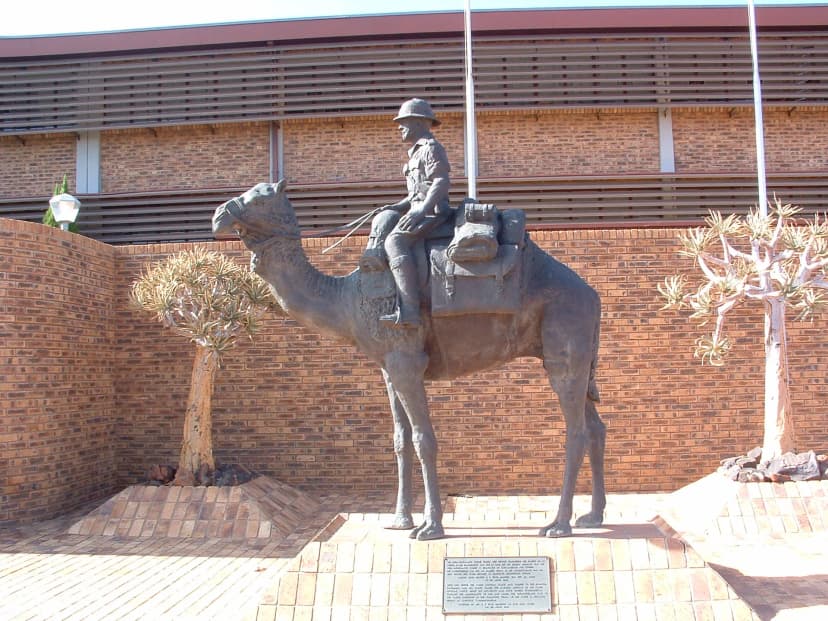
CULTURE - PRESERVINGNongqai Vol 17 No 8 - Kameel-standbeeld: Upington

CamelsThe one humped camel was introduced to German South West Africa from 1889 onward. Early shipments came from the East African coast, Port Said, British India, Somaliland and Arabia. Camels were difficult to obtain at the time due to global military and infrastructure demands. The first major shipment to DSWA included 76 camels from Port Said, followed by an additional 403 animals acquired through Hagenbach’s Somali and Arab trading contacts. Later, a large consignment of 2,000 Somali camels arrived after a sea voyage of 192 days. Initially, the camels were intended for railway construction between Lüderitzbucht and Keetmanshoop, but they soon became essential to military operations in the arid interior.