NONGQAISouth Africa’s National Security MagazineEstablished in 1907
DONATE

All Articles


7 articles match your filters

Anglo Boer War: Bethulie and the Bridges
1899 - 1902 Anglo Boer War

Anglo Boer War: Bethulie and the Bridges

This chapter examines the strategic importance of Bethulie and its railway and road bridges during the Anglo-Boer War. It recounts the destruction of the railway bridge by Boer forces, the dramatic efforts of British troops to save the wagon bridge, and the crucial role of the Imperial Military Railways in maintaining military supply lines. The narrative highlights the actions of Major Nolan-Neylan, Captain P. G. Grant, and Lieutenant R. S. Popham, whose interventions preserved a key crossing over the Orange River.

Horses in the Anglo Boer War
1899 - 1902 Anglo Boer War

Horses in the Anglo Boer War

The Anglo Boer War placed unprecedented demands on horses and mules, drawing animals from across the world into a conflict for which many were unprepared. Long sea voyages, unfamiliar fodder, extreme climate, disease, overloading and poor management resulted in catastrophic losses—around 60% of all horses died, compared with only 3% of human combatants. The Boers benefited from hardy local Cape horses accustomed to the harsh South African environment, while imported British horses often survived only a few weeks after arrival. Between 1899 and 1902, more than 109,878 horses and 81,524 mules were shipped from New Orleans alone, with many dying en route. Diseases such as mange, strangles, influenza, pneumonia and tick bite fever ravaged the imported stock. Individual horses became legendary: Freddy of the Household Cavalry, who survived 1,780 miles of campaigning; Fleur, De Wet’s conspicuous white Arab; Bokkie, De la Rey’s beloved mount; and Major, the only New Zealand horse to return home. Their stories highlight both the suffering and the extraordinary endurance of the animals that carried the war.

Cape District Mounted Troops in the Anglo Boer War
1899 - 1902 Anglo Boer War

Cape District Mounted Troops in the Anglo Boer War

This article recounts the operations of the Bedford District Mounted Troops (DMT) in the Cape Colony during the Anglo-Boer War. Composed mainly of local farmers, these units supported British forces by observing Boer movements rather than engaging directly, fearing reprisals against their farms. The narrative follows General Pieter Kritzinger’s 1901 incursion through the Cape Midlands, detailing skirmishes near Buffelskloof and Cameron’s Glen, the deaths of Captain John Rennie and Trooper W.D. Ross, and the subsequent pursuit by Gorringe’s Flying Column. The account captures the tension between loyalty, survival, and local heritage in a turbulent frontier.

Spioenkop
SOUTH AFRICAN FORCES HISTORY PRESERVED

Spioenkop

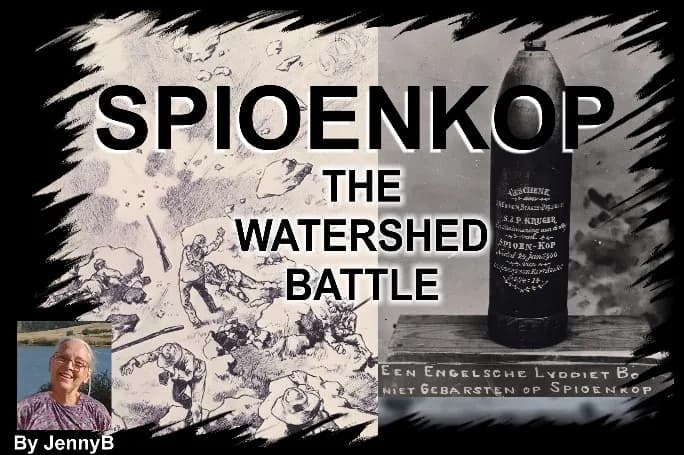
This chapter examines the Battle of Spioenkop (23–24 January 1900), one of the most decisive and tragic engagements of the Second Boer War. It outlines the British capture and subsequent loss of the summit due to poor reconnaissance, miscommunication, and tactical confusion. The narrative highlights key figures such as General Edward Woodgate, Dr Frederick Treves, General Joachim Christoffel Fourie, Captain Hendrik Frederik Slegtkamp, and international volunteers including Joseph and August Hammar and John Costas. The chapter integrates battlefield descriptions, personal accounts, medical details, and cultural artefacts to illustrate the human dimension of the conflict. It also traces how Boer tactical ingenuity, including actions at Aloe Knoll/Alwynkoppie, contributed to the British defeat. The legacy of Spioenkop is presented through graves, memorials, and later artistic depictions, underscoring its enduring place in South African and international military history.

ABW Agtertang & Slingerfontein
1899 - 1902 Anglo Boer War

ABW Agtertang & Slingerfontein

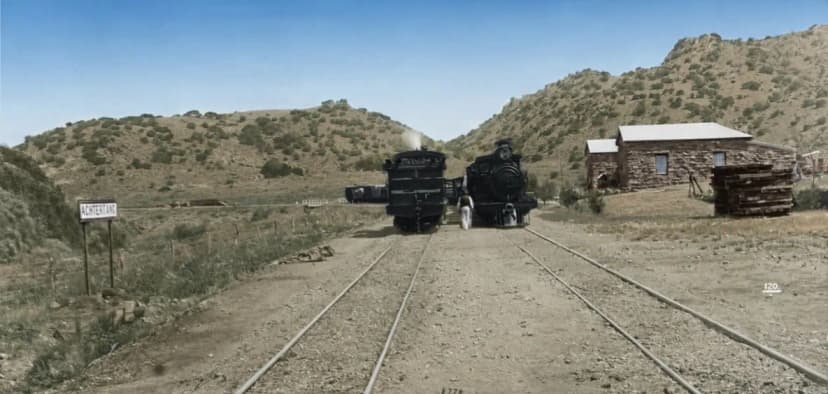
This chapter examines two linked engagements during the Colesberg campaign of early 1900: the skirmish at Agtertang Station on 3 January and the Battle of Slingerfontein on 9–10 January. British forces under Major General John French sought to secure railway lines and dominate the surrounding high ground, while Boer commandos under Generals Schoeman, Piet de Wet, and later Koos de la Rey attempted to halt their advance. The chapter highlights the role of mounted troops, particularly the newly arrived 1st New Zealand Contingent, whose reconnaissance, outpost duties, and defensive actions contributed significantly to British operations. Their stand on 15 January at what became known as New Zealand Hill—alongside the Yorkshire Regiment—proved decisive, repelling a determined Boer attack with minimal losses. The narrative also includes biographical notes on individual soldiers such as Trooper Alister Hugh Matheson and Private George Bradford, the first New Zealander to die in the Anglo-Boer War. Overall, the chapter situates these actions within the broader strategic contest for control of northern Cape Colony and the eventual British consolidation around Colesberg.

ABW Platrand 1900
1899 - 1902 Anglo Boer War

ABW Platrand 1900

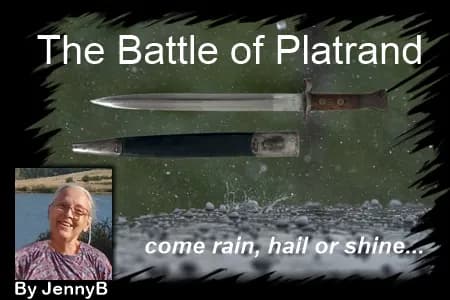
This chapter examines the Battle of Platrand (Wagon Hill) on 6 January 1900, one of the decisive engagements during the Siege of Ladysmith in the Second Boer War. It outlines the strategic importance of the Platrand ridge, the coordinated Boer assaults under Generals Schalk Burger and C. J. de Villiers, and the British defence directed by Colonel Ian Hamilton. The narrative highlights the intense close quarter fighting at Wagon Hill and Caesar’s Camp, the temporary Boer breakthroughs, and the eventual British counter attack by the Devonshire Regiment in a violent storm. Special attention is given to acts of exceptional bravery, including those of Trooper Herman Albrecht and Lieutenant R. J. T. Digby Jones—both posthumously awarded the Victoria Cross—and Lieutenant J. E. I. Masterson. The chapter also records the humanitarian role of Rev. J. D. Kestell, the death of Lord Ava, and the remarkable civilian contribution of Parbhoo Singh during the siege. Through these accounts, the chapter provides a detailed and humanised portrayal of the battle, its leadership, its failures, and its enduring legacy in South African and British military history.