NONGQAISouth Africa’s National Security MagazineEstablished in 1907
DONATE

All Articles


91 articles match your filters

SAP Camou
1966 Bush War / Coin

SAP Camou

From 1968 to 1994 the South African Police (SAP) Counter Insurgency Unit (COIN) and the SAP Special Task Force used distinct camouflage uniforms. First the SAP Pattern 1 and later the SAP Pattern 2, from 1970 to1994. With the SA Police Service (SAPS) only the Special Task Force still use camouflage uniforms.From 1968 to 1994 the South African Police (SAP) Counter Insurgency Unit (COIN) and the SAP Special Task Force used distinct camouflage uniforms. First the SAP Pattern 1 and later the SAP Pattern 2, from 1970 to1994. With the SA Police Service (SAPS) only the Special Task Force still use camouflage uniforms.

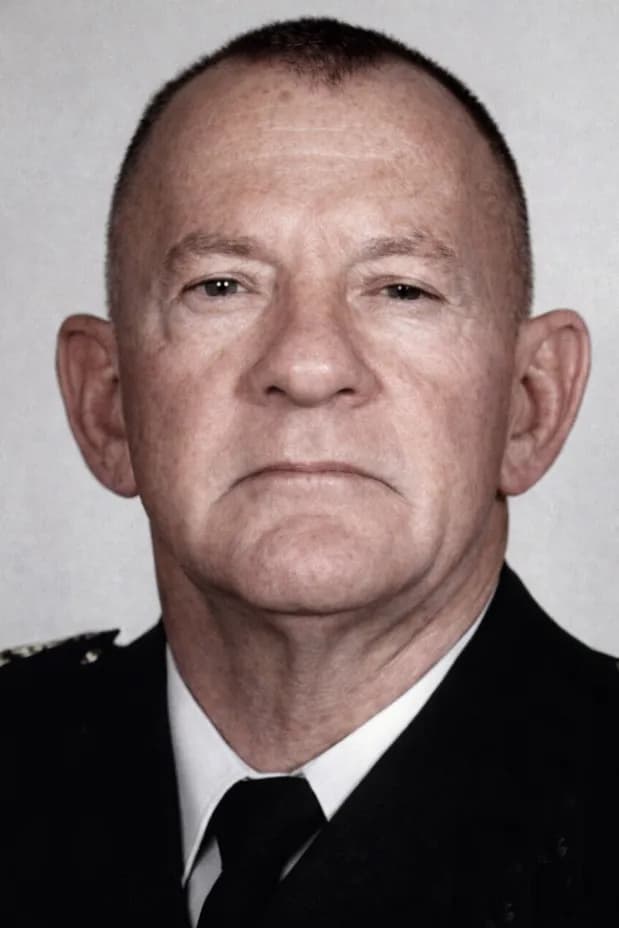
Brig. T. J. “Rooi Rus” Swanepoel, SOO
SOUTH AFRICAN FORCES HISTORY PRESERVED

Brig. T. J. “Rooi Rus” Swanepoel, SOO

This document presents an early strategic memorandum written in the early 1970s by Brigadier T. J. “Rooi Rus” Swanepoel of the South African Police. Swanepoel, a key operational figure during the first armed confrontation with SWAPO at Ongulambashe on 26 August 1966, drew on his extensive field experience and intelligence work to formulate recommendations on countering emerging insurgent threats. The report itself reflects this background: “I was from July 1963 to September 1967 closely involved in the struggle against terrorist organisations such as the ANC, PAC, SWAPO, ZAPU, ZANU, UNITA and also FRELIMO…” After serving in the Security Branch, Swanepoel was transferred to the Johannesburg Flying Squad, from where he submitted this assessment to Police Headquarters. The memorandum outlines his views on guerrilla tactics, leadership selection, patrol discipline, weapons, fieldcraft, survival skills, and the creation of specialised hunter killer teams. Although written before the implementation of “Operation K”, many of his proposals demonstrate notable foresight and align closely with counter insurgency practices later adopted by the South African Police and Defence Force. The original document survived only in a faded copy. It was carefully retyped by the late Sarie van Niekerk, with Lt Gen Johan Ferreira assisting in deciphering the final illegible sections. With hindsight, Brig Swanepoel’s observations and recommendations appear remarkably prescient.

SAP Long Service Medal
1906 Bambatha Rebellion (Medal)

SAP Long Service Medal

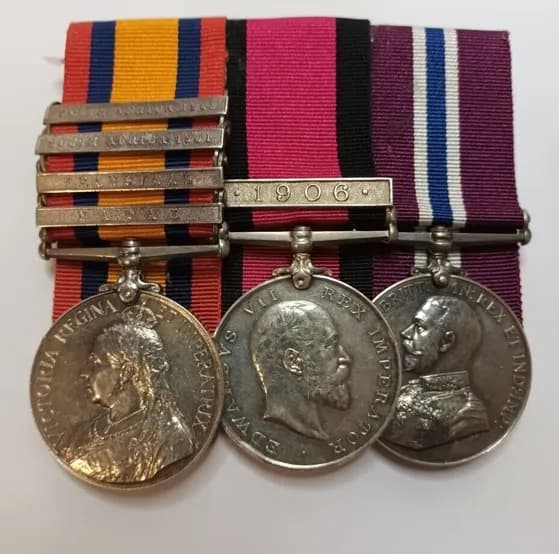
This article explores the long and distinguished policing and military career of Grade 1 Head Constable Charles Detmold Robbins, a Natal Policeman who later served in the 2nd South African Mounted Rifles (SAMR) and earned the Permanent Forces of the Empire Beyond the Seas Long Service & Good Conduct Medal. Robbins’ service reflects the transitional period during which the Natal Police were absorbed into the newly formed Union Defence Force and South African Police, with the SAMR assuming policing duties across Natal. Robbins participated in the Anglo Boer War, earning the Queen’s South Africa Medal with bars Natal, Transvaal, South Africa 1901, and South Africa 1902. He also served during the 1906 Natal Native (Bambatha) Rebellion, receiving the 1906 Medal with Clasp. His shooting achievements were notable, winning multiple competitions including the Hine Cup in 1912. His long service award, although earned in 1911, was only issued in 1916 after administrative delays. The medal is particularly interesting because it bears a police rank on a military long service medal, reflecting the hybrid nature of SAMR service. Robbins retired in 1923 as a state prosecutor and died in 1940, leaving behind a legacy intertwined with the evolution of policing in Natal and the early Union period. “The medal is named No 710 1st GDE. HD. CONST. C.D. Robbins 2nd SAMR.” “He served in the Boer War with Natal Police… earning the Queens South Africa Medal with bars.”

Const WL Bos/ss
1906 Bambatha Rebellion (Medal)

Const WL Bos/ss

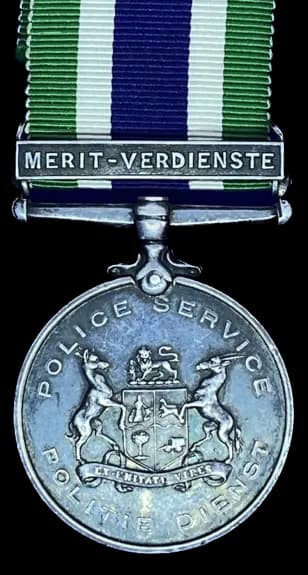
This article examines the complex service history of Constable William Lodewyk Bos/Boss, a member of the South African Mounted Rifles (SAMR) who later transferred to the South African Police (SAP). His career illustrates the transitional period in South African policing after Union, when militarised police forces evolved into national services. The article contextualises the development of long‑service awards, including the Permanent Forces of the Empire Beyond the Seas Long Service and Good Conduct Medal and the later Police Good Service Medal, instituted under Government Notice GN938 of 8 June 1923. Constable Bos/Boss’s military and police service included participation in the 1914 Afrikaner Rebellion, the German South West Africa campaign, and later enlistment in the Union Defence Force during World War II. His unusual change of surname from Bos to Boss, confirmed only by a newspaper notice, highlights administrative irregularities of the era. Despite disciplinary infractions that could have disqualified him, he ultimately received the SAP Good Service Medal in 1949. The article reconstructs his career through service records, force orders, medal documentation, and family history sources, offering a detailed case study of early 20th‑century South African policing and medal policy. “The award was to be known as the Police Good Service Medal…” “A letter dated 2nd January 1920… confirms to staff records at HQ that William Bos has changed his name to Boss.”

Helena M. Jacobs
Civilian Women

Helena M. Jacobs

Helena M. Jacobs recounts a distinguished career in the South African Police Service marked by dedication, resilience, and unwavering integrity. Beginning her service in 1990 as a clerk in Ogies, she went on to support several specialised units, including SANAB, Serious Violent Crime, Legal Services, and Organised Crime. Her journey reflects both professional challenges and profound personal loss, notably the tragic passing of her daughter in 1999, during which her SAPS colleagues offered exceptional compassion and support. Jacobs played a vital administrative role in complex investigations, high pressure environments, and sensitive case preparations, earning recognition as Gauteng’s second best Support Employee of the Year in 2014. Her career stands as a testament to the indispensable contribution of administrative personnel within policing, and she retires with a legacy of loyalty, discipline, and meaningful service to her country.

Heleen Swart
Bosveld (Limpopo) Nylstroom

Heleen Swart

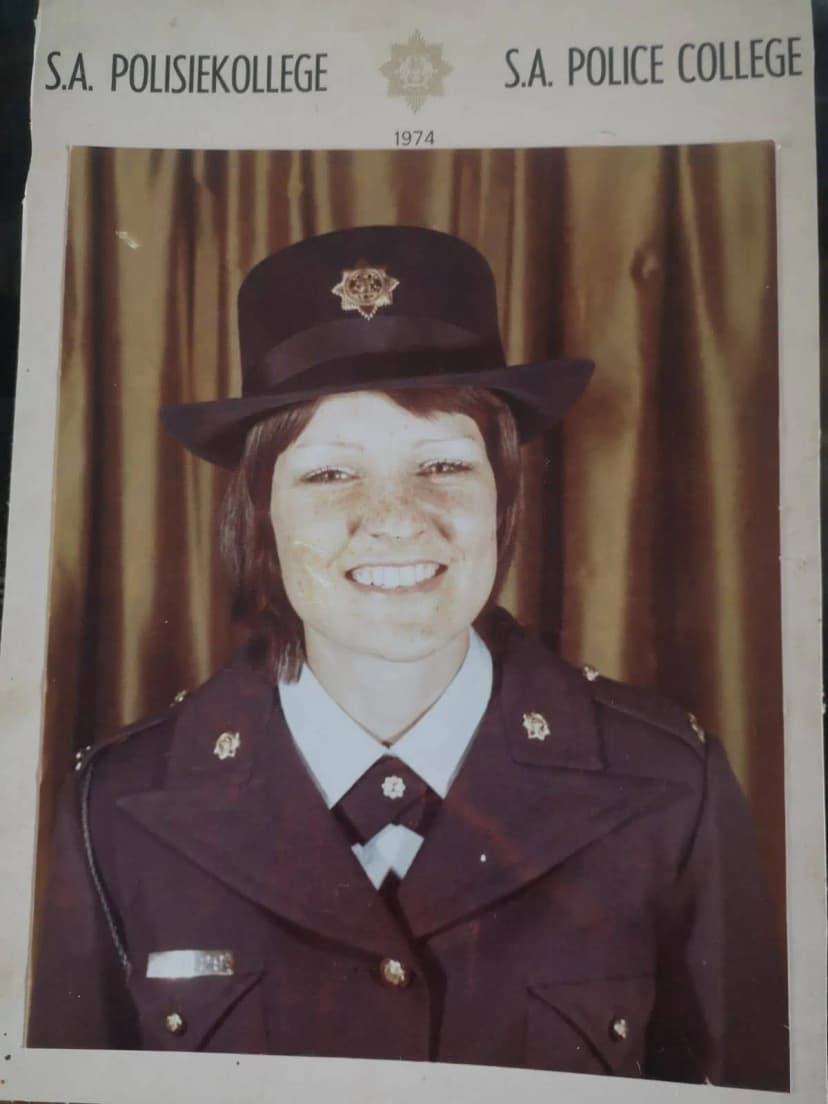
This biographical profile traces the life and distinguished career of Heleen Swart, a pioneering South African policewoman whose service spanned from 1974 to 1999. Rising from early administrative duties to specialised investigative work, she played a central role in establishing the first Child Protection Unit (CPU) in Durban following the landmark Addington Hospital baby abduction case. Her career included extensive work in crime investigation, police training, station command, and election management during South Africa’s transitional period. After retiring medically, she built a successful hospitality business and remains actively involved in community safety and veteran police organisations. Her story reflects resilience, dedication, and lifelong service to the SAPD, her community, and her family.

Ria Potgieter
Civilian Women

Ria Potgieter

This autobiographical narrative traces the life and career of Ria Potgieter within the South African Police Service (SAPS) community, beginning with her appointment in 1983 as a typist at the Potchefstroom Headquarters Division. Her story highlights the deep professional and personal bonds formed within the policing environment, her marriages to two policemen, and her varied roles in administrative, investigative, and child‑protection units. A central and devastating turning point occurs with the murder of her husband, Sergeant Jaco Potgieter, during an armed robbery on 25 June 1999 — an event that profoundly shaped her life and remains emotionally present decades later. The narrative also reflects her continued resilience, career transitions, relocation to the Western Cape, and her role in raising both her biological and step‑children. Ultimately, the account emphasises the enduring solidarity of the SAPS community and her gratitude for divine protection throughout her life.

SAPS/SAPD Reserviste
Reservists

SAPS/SAPD Reserviste

This article examines the development, role, and decline of the South African Police Service (SAPS) reservist programme from the 1970s to 2026. Historically, the reservist corps made a significant contribution to visible policing, crime prevention, and community involvement, comprising volunteers from diverse sectors of society. Following the recommendations of the De Witt Commission, community policing was strengthened, further emphasizing the role of reservists, particularly during the early 2000s when the programme reached its peak. Since around 2010, however, the programme has experienced a sharp decline due to policy changes, administrative obstacles, the suspension of recruitment and training, and uncertainty surrounding the role of reservists. Findings from the Pikoli investigation confirmed this trend, highlighting a drastic reduction in reservist numbers, with negative implications for policing capacity and visibility. Although the reservist programme still formally exists, it is not optimally utilized in a context of high crime levels and limited police resources. The article argues that this decline can largely be attributed to a lack of strategic leadership and the loss of institutional memory. It concludes that rebuilding the reservist corps should be treated as a strategic priority to strengthen policing capacity and improve the relationship between the SAPS and the communities it serves.

Photo Album June 2026
1913 Riots Kleinfontein Mine

Photo Album June 2026

Abstract This photo album, Nongqai Vol. 17 No. 6 (June 2026), presents a curated visual record of South African policing, military, and judicial history across different periods. The collection includes historical imagery related to significant events such as the Battle of Blood River (1838), the Kleinfontein riots of 1913, and wartime contributions by police forces. It also documents institutions such as the South African Police (SAP), South African Constabulary, Durban Borough Police, and the South African Railways Police, alongside notable locations including Boksburg Prison, Pietermaritzburg Magistrates’ Court (1939), and Esselen Park. The album further highlights the evolution of law enforcement through photographs of infrastructure, personnel, parades, and operational artifacts, including images related to the 1988 Johannesburg SAP activities and the bomb defused at the Hallmark Building. Archival materials such as maps, historical press excerpts, and photographs of training institutions and military units (e.g., SAAF and Staatsartillerie ZAR) provide additional context. Overall, the collection preserves and illustrates the development, roles, and historical significance of policing and security services in Southern Africa.

Cristina Swart
Contemporary Police History / Eietydse Polisiegeskiedenis

Cristina Swart

Cristina Swart’s career in the South African Police Service reflects a pioneering spirit, professional excellence, and unwavering commitment to justice. As the first Portuguese policewoman in the SAP, she progressed from police college in 1989 to specialised operational work in the Security Branch and later the Endangered Species Protection Unit (ESPU). Serving as Section Commander of the Fauna Team, she conducted high risk undercover operations, buy bust interventions, and investigations into ivory, rhino horn, abalone, and radioactive material syndicates. Her work brought her into international conservation circles, including engagements with the Discovery Channel and Prince Bernhard of the Netherlands. After transferring to East London in 1998, she became second in command of the Undercover Unit and later acted as commander before the unit’s closure. She subsequently joined Crime Intelligence, overseeing handlers, informers, and Secret Services Accounts. Swart resigned in 2014 with the rank of Captain, leaving behind a distinguished legacy of service, leadership, and dedication to combating organised crime and protecting South Africa’s natural heritage.

16 Junie 1976 – Mamelodi
1976 Onwards - Riots

16 Junie 1976 – Mamelodi

Abstract The author provides a vivid first person account of the events of 16 June 1976 as experienced by a lieutenant in the South African Police stationed at Silverton. What began as a routine winter morning quickly escalated when he and a small team were deployed to Mamelodi, where large scale unrest had erupted. He describes scenes of chaos: crowds throwing stones and petrol bombs, burning barricades, looted shops, and the destruction of administrative buildings. The narrative highlights the fear, exhaustion, and sense of helplessness felt by the small police contingent, as well as the extreme cold and the absence of food or relief for many hours. The arrival of riot units, the presence of international media, and the role of taxis in driving the unrest are recalled in detail. The following days brought more organisation, community support, and structured police deployment. Reflecting fifty years later, the author emphasises how these events shaped him personally and professionally, and how the camaraderie and solidarity forged during that period remain among his strongest memories. ABSTRAK: Die skrywer bied ’n persoonlike, eerstehandse getuienis van die gebeure van 16 Junie 1976 in Mamelodi, soos ervaar deur ’n luitenant in die Suid-Afrikaanse Polisie. Hy beskryf die oggend se roetine, die skielike opdrag om na Mamelodi te gaan, en die chaotiese tonele van oproer, geweld, plundering en brandstigting wat hom en sy kollegas begroet het. Die vertelling beklemtoon die intense gevaar, die gevoel van magteloosheid, die uiterste koue en die uitputting van ’n dag en nag sonder aflos of kos. Die skrywer herinner aan die rol van die media, die taxi’s wat die skares aangevuur het, en die uiteindelike organisering van polisiemagte en ondersteuning uit die gemeenskap. Hy reflekteer oor die vormende invloed van hierdie tydperk op sy loopbaan en persoonlike ontwikkeling, en beklemtoon die kameraadskap en solidariteit wat tussen kollegas gesmee is. Vyftig jaar later bly die gebeure vir hom lewend en onvergeetlik.
'n Huldeblyk aan Tilla Botha se merkwaardige loopbaan
Civilian Women

'n Huldeblyk aan Tilla Botha se merkwaardige loopbaan

The career of Ms Tilla Botha in the South African Police/ SAP Service: Tilla Botha’s career in the South African Police reflects a pioneering journey marked by perseverance, loyalty, and unwavering dedication. Beginning in 1964 as one of the first female typists at the Ladybrand District Office, she advanced through numerous specialised units during a period when opportunities for women in policing were limited. Her service included key roles in the Vanderbijlpark Detective Branch, Ermelo Security Police, Blinkpan Police Station, Burgersfort Detectives, SANAB Middelburg, Murder and Robbery, Serious and Violent Crime, and later the Hawks in Middelburg. Across all postings, Botha was recognised for her professionalism, integrity, and steadfast commitment to duty. Upon retirement, she looked back on a career rich in meaningful experiences and significant contributions. Today, at 80 years of age, she remains an inspiration to colleagues and all who know her, embodying a legacy of service, courage, and resilience.