NONGQAISouth Africa’s National Security MagazineEstablished in 1907
DONATE

All Articles


91 articles match your filters

Fanie se beste arrestasie
Commendation

Fanie se beste arrestasie

This article recounts Fanie van Vuuren’s most memorable arrest during his 23 year police career. In October 2005 he helped foil an armed bank robbery at FNB Brackenhurst, arresting four suspects on the roof. The incident involved dangerous conditions, multiple armed robbers, and rapid coordination between units. His decisive actions earned him a reward and public recognition in national newspapers and television news.

1988 75th Anniversary of SAP - Upingtonton: Camel Stattue

Standbeeld: Polisiekameel: Upington

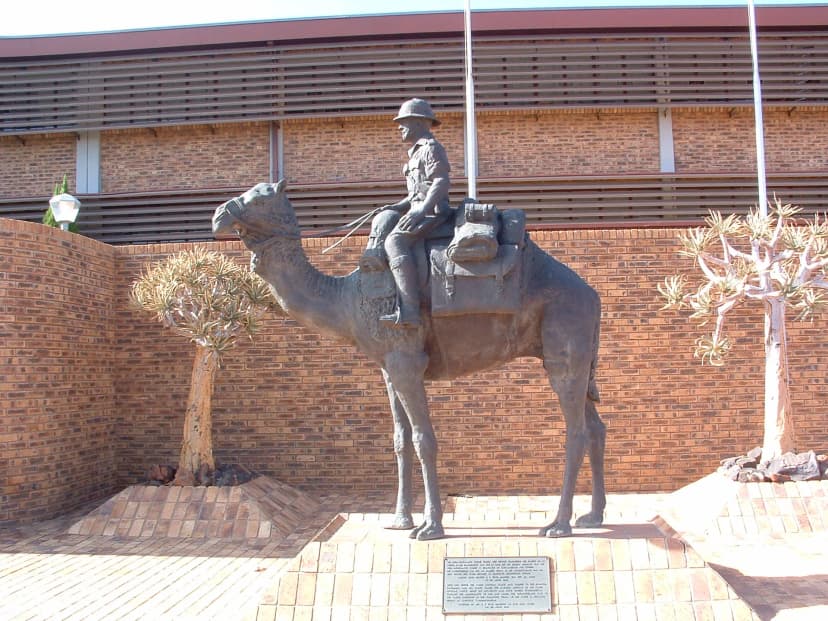
The article commemorates the historical role of camels in the South African Police. Since 1914, camels were used for patrol duties in the arid regions of the Northern Cape and the Kalahari, and at one point 417 camels served the Police. It describes the unveiling of a commemorative bronze statue in Upington on 25 April 1988 by Minister Adriaan Vlok, honouring both the animals and their riders, who served in harsh desert conditions. The article closes with a reflection that suffering teaches wisdom and faith. The event formed part of the SAP’s 75th anniversary celebrations and highlighted the historical significance of camel patrols in remote regions. The article concludes with a contemplative remark on the lessons of hardship, wisdom, and faith.

kol Johannes “Tollie” Vreugdenburg (SAPD)
Crime in South Africa (post 1994)

kol Johannes “Tollie” Vreugdenburg (SAPD)

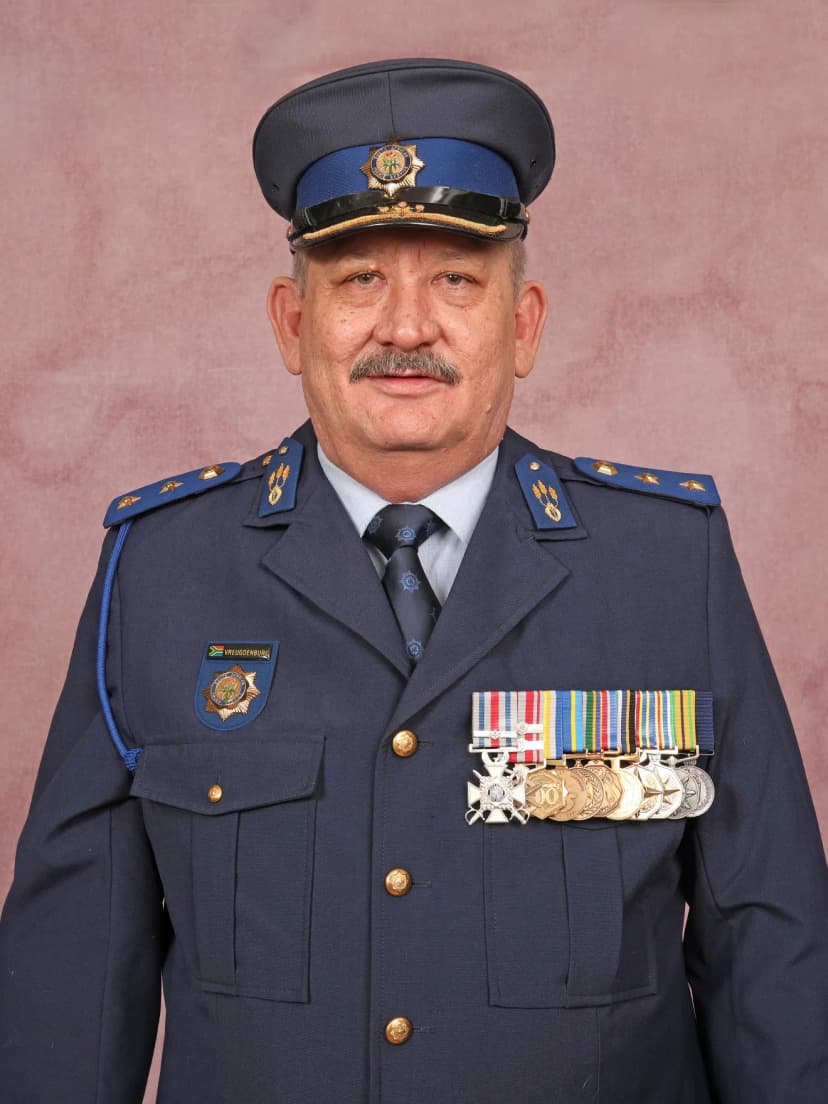
Colonel Johannes “Tollie” Vreugdenburg is one of the very few South African Police detectives to have earned the Silver Cross for Bravery twice, a distinction reserved for exceptional courage under extreme danger. His career reflects a lifetime of service marked by professionalism, integrity, and unwavering dedication to national security.

Capt Ida Steyn
SAP History / Geskiedenis

Capt Ida Steyn

Introducing Captain Ida Steyn — Editor of the Police Ladies Corner

Anita van Zyl
Amalgamation with SA Police

Anita van Zyl

Anita van Zyl recounts her career in the South African Railway Police, later integrated into the SAP and SAPD. She describes the stringent recruitment process, six‑month training at Esselen Park, and the unique living arrangements for female recruits. Her narrative highlights the disciplined daily routine, academic and practical subjects, and the strong camaraderie among trainees. Van Zyl reflects on operational duties across stations, airports, and harbours, including riot control, crime investigation, and specialised units. She offers vivid memories of unrest areas such as Katlehong and Tembisa, where women served alongside men in full combat gear. The account also covers sporting activities, cultural identity within the force, and the impact of the amalgamation that dissolved the Railway Police. Despite the organisational changes, she emphasises the enduring legacy, reunions, and pride shared among former members. Her memoir stands as a tribute to the professionalism, resilience, and unity of the SA Railway Police.

ABS - ISU

War in Peace: ISU East Rand

War in Peace: The Truth About the South African Police’s East Rand Riot Unit, 1986–1994 by Sgt Nick Howarth is a firsthand account of policing during one of the most volatile periods in South African history. Unlike political or academic narratives, this book is written from the perspective of a frontline riot policeman who served in the East Rand during the final years of apartheid and the transition to democracy. Drawing on real incidents, lived experiences and the emotional realities of daily service, Howarth captures the fear, confusion, courage, camaraderie and dark humour that shaped the lives of Internal Stability Division members. The book honours the thousands of riot police officers and their families whose sacrifices were seldom acknowledged, and provides younger and international readers with rare insight into a world usually described from the outside. Its global reception underscores the universal human themes of loyalty, survival, loss and brotherhood. War in Peace stands as an important historical record of a country in conflict, and a tribute to the men who served during those turbulent years.

Maandbrief: Potpourri
18338 Bloukrans

Maandbrief: Potpourri

This month’s letter weaves together South African history, policing heritage, personal memoir, and spiritual reflection. It opens with the remarkable story of Johanna van der Merwe — “a Voortrekker heroine who survived more than 20 assegai wounds during the Bloukrans massacre” — and expands into a broad historical survey of early policing bodies such as the Natal Mounted Police, Cape Police, Durban Borough Police, the Railway Police, and units active during the Anglo-Boer War. Interspersed with these historical accounts are vivid personal recollections: early police service in Wentworth, encounters with former colleagues, and meetings with figures from the South African Police, Railway Police, and National Intelligence Service. The letter also reflects deeply on Afrikaner identity, language decline, cultural shifts after 1994, and the changing landscape of schools, churches, and communities. The narrative asks the poignant question: What became of the once formidable Afrikaner? The final section offers a spiritual meditation on Simon of Cyrene — “the man who carried the cross” — and the enduring faith legacy of his family in the early Christian church. The article concludes as a rich blend of historical documentation, personal narrative, cultural commentary, and devotional insight.
Sergeant’s Ranks
SAP Black Members

Sergeant’s Ranks

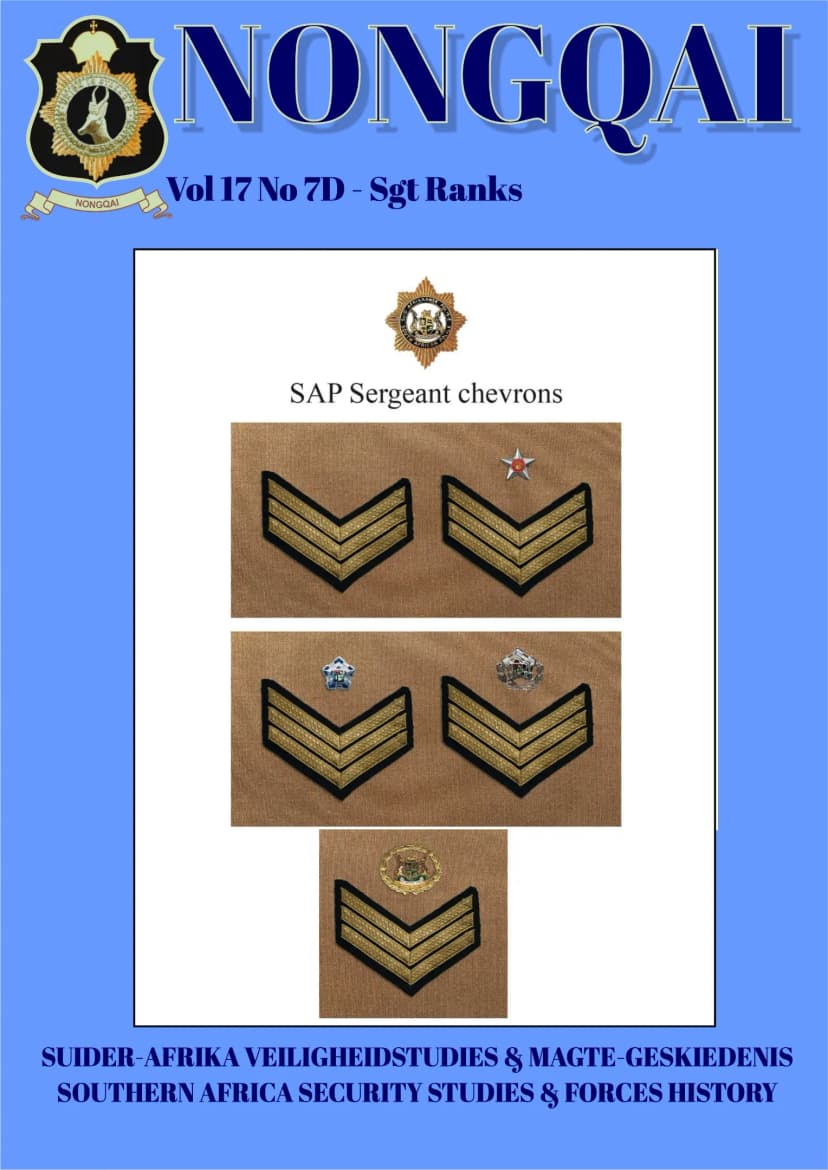
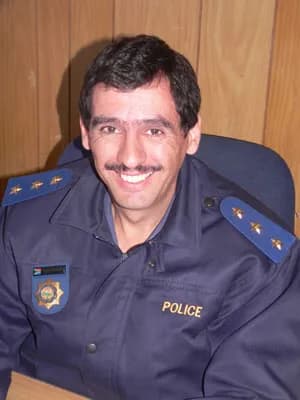
The research explains the different Sergeant ranks used in the South African Police during the 1960s and 1970s. It focuses on the ranks held by Non-White members and how these changed over time. It also describes the promotion system and the challenges faced because of racial discrimination. It highlights the service and achievements of several dedicated police members. The research aims to preserve an important part of South African policing history.

Kriptografie
Cryptology

Kriptografie

This article recounts the professional journey of Ida Steyn, who began working at the SAP/SAPS Security Branch in Potchefstroom in 1986 and later qualified as a cryptographer through the highly classified SAKSA training programme. She describes the demanding nature of cryptographic work, strict security protocols, and the responsibility of safeguarding confidential, secret, and top‑secret police communications. Steyn outlines the operational environment, including controlled access facilities, inspections, key‑card management, and the introduction of modern encrypted communication systems such as the Data 6. Her later appointment as crypto controller for the former Wes‑Transvaal province illustrates the high level of trust, discipline, and integrity required in police cryptographic operations. The article preserves an important part of South Africa’s policing and intelligence heritage. “Kriptografiese toerusting is gespesialiseerde kommunikasietoerusting… om Vertroulike, Geheime en Uiters Geheime inligting veilig te versend en te ontvang.” “Dit was ’n posisie wat groot verantwoordelikheid, absolute integriteit en onwrikbare dissipline vereis het.”

Proposed Riot Medal
ABS - ISU

Proposed Riot Medal

This article discusses the proposal for a commemorative medal intended to honour members of the Internal Stability Division and Riot Units who served between 1976 and 1994 during one of the most volatile periods in South Africa’s history. Although their work was dangerous, politically sensitive, and often unrecognised, many former members feel that their service deserves formal acknowledgement. The article argues that the significance of such a medal lies not in official government approval, but in its symbolic value—providing long‑overdue recognition, restoring dignity, and offering emotional closure to those who served and to the families of those who did not return. The piece invites readers to consider whether creating such a medal is appropriate and meaningful.

Memorabilia
Badges

Memorabilia

This article offers a reflective account of a lifetime devoted to collecting, preserving, and documenting police, military, and cultural memorabilia. The author, now in his eighties, recounts the development of extensive collections that include books, documents, photographs, medals, model trains, artefacts, insignia, and other historical items. He describes decades of research, travel, and editorial contributions to Nongqai, as well as the challenges faced when institutions lose interest in preserving certain aspects of South Africa’s past. The narrative concludes with practical guidance for veterans and collectors on responsibly disposing of their own historical materials to ensure that the heritage of the South African policing community is safeguarded for future generations.