NONGQAISouth Africa’s National Security MagazineEstablished in 1907
DONATE

All Articles


31 articles match your filters

Maandbrief: Potpourri
18338 Bloukrans

Maandbrief: Potpourri

This month’s letter weaves together South African history, policing heritage, personal memoir, and spiritual reflection. It opens with the remarkable story of Johanna van der Merwe — “a Voortrekker heroine who survived more than 20 assegai wounds during the Bloukrans massacre” — and expands into a broad historical survey of early policing bodies such as the Natal Mounted Police, Cape Police, Durban Borough Police, the Railway Police, and units active during the Anglo-Boer War. Interspersed with these historical accounts are vivid personal recollections: early police service in Wentworth, encounters with former colleagues, and meetings with figures from the South African Police, Railway Police, and National Intelligence Service. The letter also reflects deeply on Afrikaner identity, language decline, cultural shifts after 1994, and the changing landscape of schools, churches, and communities. The narrative asks the poignant question: What became of the once formidable Afrikaner? The final section offers a spiritual meditation on Simon of Cyrene — “the man who carried the cross” — and the enduring faith legacy of his family in the early Christian church. The article concludes as a rich blend of historical documentation, personal narrative, cultural commentary, and devotional insight.

Koffiefontein
1939 - 1945: The Wartime SA Police

Koffiefontein

This article traces the layered history of Koffiefontein, a Free State town shaped by diamond discovery, military conflict, and evolving systems of law enforcement. Beginning as a vital rest stop for 19th‑century transport riders, Koffiefontein rose to prominence after a diamond was found at its fountain in 1870, sparking a local diamond rush. The narrative follows three major eras: the diamond‑mining boom, the Anglo‑Boer War—during which British forces fortified the town with blockhouses—and the Second World War, when Koffiefontein became a major internment camp holding Italian and German POWs as well as South Africans suspected of pro‑Nazi activity, including future Prime Minister B.J. Vorster. The article also explores the development of policing in the region, from early constables of the Orange Free State Republic to the establishment of the SAP in 1913 and highlights the architectural heritage of the historic Hampden Street police station. Finally, it reflects on modern community concerns and the station’s dual identity as both a heritage landmark and an active centre of law enforcement.

ABW Agtertang & Slingerfontein
1899 - 1902 Anglo Boer War

ABW Agtertang & Slingerfontein

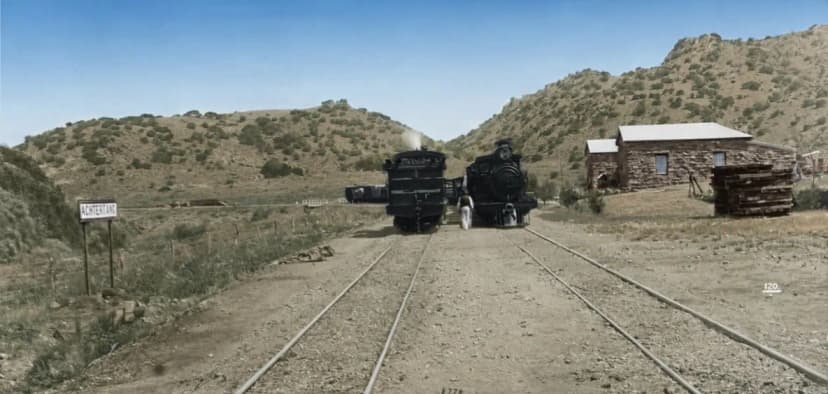
This chapter examines two linked engagements during the Colesberg campaign of early 1900: the skirmish at Agtertang Station on 3 January and the Battle of Slingerfontein on 9–10 January. British forces under Major General John French sought to secure railway lines and dominate the surrounding high ground, while Boer commandos under Generals Schoeman, Piet de Wet, and later Koos de la Rey attempted to halt their advance. The chapter highlights the role of mounted troops, particularly the newly arrived 1st New Zealand Contingent, whose reconnaissance, outpost duties, and defensive actions contributed significantly to British operations. Their stand on 15 January at what became known as New Zealand Hill—alongside the Yorkshire Regiment—proved decisive, repelling a determined Boer attack with minimal losses. The narrative also includes biographical notes on individual soldiers such as Trooper Alister Hugh Matheson and Private George Bradford, the first New Zealander to die in the Anglo-Boer War. Overall, the chapter situates these actions within the broader strategic contest for control of northern Cape Colony and the eventual British consolidation around Colesberg.

SAP Long Service Medal
1906 Bambatha Rebellion (Medal)

SAP Long Service Medal

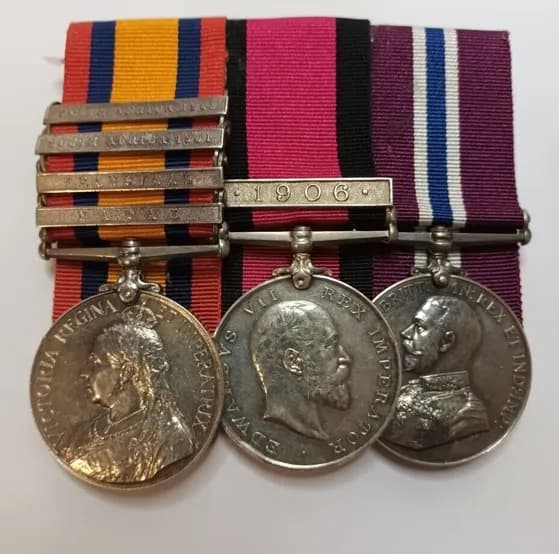
This article explores the long and distinguished policing and military career of Grade 1 Head Constable Charles Detmold Robbins, a Natal Policeman who later served in the 2nd South African Mounted Rifles (SAMR) and earned the Permanent Forces of the Empire Beyond the Seas Long Service & Good Conduct Medal. Robbins’ service reflects the transitional period during which the Natal Police were absorbed into the newly formed Union Defence Force and South African Police, with the SAMR assuming policing duties across Natal. Robbins participated in the Anglo Boer War, earning the Queen’s South Africa Medal with bars Natal, Transvaal, South Africa 1901, and South Africa 1902. He also served during the 1906 Natal Native (Bambatha) Rebellion, receiving the 1906 Medal with Clasp. His shooting achievements were notable, winning multiple competitions including the Hine Cup in 1912. His long service award, although earned in 1911, was only issued in 1916 after administrative delays. The medal is particularly interesting because it bears a police rank on a military long service medal, reflecting the hybrid nature of SAMR service. Robbins retired in 1923 as a state prosecutor and died in 1940, leaving behind a legacy intertwined with the evolution of policing in Natal and the early Union period. “The medal is named No 710 1st GDE. HD. CONST. C.D. Robbins 2nd SAMR.” “He served in the Boer War with Natal Police… earning the Queens South Africa Medal with bars.”

ABW Platrand 1900
1899 - 1902 Anglo Boer War

ABW Platrand 1900

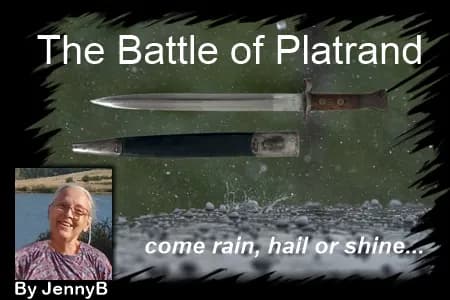
This chapter examines the Battle of Platrand (Wagon Hill) on 6 January 1900, one of the decisive engagements during the Siege of Ladysmith in the Second Boer War. It outlines the strategic importance of the Platrand ridge, the coordinated Boer assaults under Generals Schalk Burger and C. J. de Villiers, and the British defence directed by Colonel Ian Hamilton. The narrative highlights the intense close quarter fighting at Wagon Hill and Caesar’s Camp, the temporary Boer breakthroughs, and the eventual British counter attack by the Devonshire Regiment in a violent storm. Special attention is given to acts of exceptional bravery, including those of Trooper Herman Albrecht and Lieutenant R. J. T. Digby Jones—both posthumously awarded the Victoria Cross—and Lieutenant J. E. I. Masterson. The chapter also records the humanitarian role of Rev. J. D. Kestell, the death of Lord Ava, and the remarkable civilian contribution of Parbhoo Singh during the siege. Through these accounts, the chapter provides a detailed and humanised portrayal of the battle, its leadership, its failures, and its enduring legacy in South African and British military history.

John William Reynolds
1899 - 1902 Anglo Boer War

John William Reynolds

This document presents a biographical account of John William Reynolds, a 19th-century law enforcement officer and soldier from Grahamstown in the Cape Colony. Born in 1856, Reynolds served in the Divisional Police and later as a plain-clothes detective in the Urban Police. During the Anglo-Boer War, he enlisted in the Grahamstown Town Guard and was awarded the Queen’s South Africa Medal for his service. The narrative traces his personal life, including marriages, family, and career transitions, alongside the socio-political context of frontier life in the Eastern Cape. It also highlights his dedication to policing duties, health struggles, and the circumstances surrounding his death in 1907. The account provides insight into colonial policing, civic military service, and the personal challenges faced by individuals in that era.

ABW: Mafeking
1899 - 1902 Anglo Boer War

ABW: Mafeking

This article provides a concise historical overview of the Siege of Mafeking (October 1899 – May 1900), one of the most iconic episodes of the Second Boer War. The document highlights the leadership of Colonel Robert Baden‑Powell, whose innovative defensive tactics, including “dummy fortifications, fake minefields, and other tricks used to exaggerate British strength,” helped a vastly outnumbered garrison withstand a 217‑day Boer siege. The narrative incorporates the experiences of civilians, the Mafeking Cadet Corps, and notable figures such as Lady Sarah Wilson, Lt‑Col Gordon Chesney Wilson, and Sol Plaatje, whose diary remains a vital first‑hand account of the siege. Excerpts from Sergeant‑Major Edward ‘Teddie’ Jollie’s diary vividly illustrate the daily hardships, shelling, food shortages, and human cost of the prolonged bombardment: “We have all been on half rations since January, and thirsty and hungry we are.” The article also outlines the roles of Boer commanders General Piet Cronjé and General J.P. Snyman and explains how the relief of Mafeking became a major psychological victory for Britain, giving rise to the term “mafficking” for public celebration. The siege’s legacy endures through its cultural impact, its influence on Baden‑Powell’s later founding of the Scout movement, and its place in Anglo‑Boer War memory.

Whispers of War
1896 Jameson Inval

Whispers of War

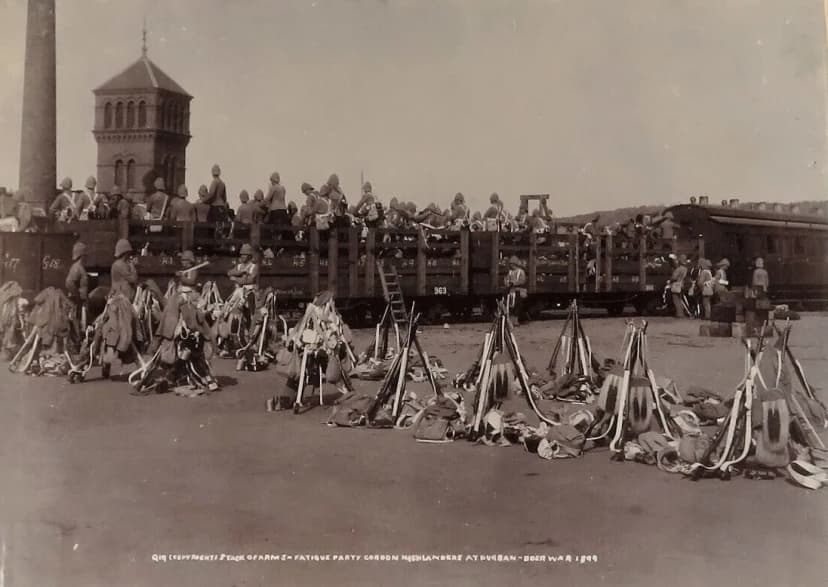
This article examines the political tension and population movements that followed the failed Jameson Raid of 1895–1896, focusing on the mass departure of British subjects from the South African Republic (Transvaal). After Dr. Leander Starr Jameson and his officers surrendered and were sent to England for trial, the Raid intensified distrust between Boer authorities and the Uitlander population. As the article notes, “many British settlers no longer believed they could live and work safely in a Boer republic that now treated them as potential traitors.” The study highlights how British officials, including High Commissioner Alfred Milner, used Uitlander grievances to escalate diplomatic pressure on President Paul Kruger, contributing to the mounting crisis that preceded the Anglo‑Boer War. The article also describes British naval intervention, such as HMS Philomel intercepting the Avondale Castle and forcing it to unload £250,000 in specie, demonstrating Britain’s strategy to restrict Boer access to financial resources. The exodus itself was dramatic: in September 1899, “6000 Europeans left Johannesburg alone in two days,” with early departures occurring in relative comfort and later refugees travelling in cattle trucks under harsh conditions. By October, both Boer and British forces were mobilising, martial law was imposed, and bullion shipments were seized and redirected. The article argues that this mass movement of people weakened the British “fifth column” within the Transvaal while simultaneously strengthening Britain’s claim that Uitlander rights were endangered, thereby helping to justify the coming war.

Nongqai Album 4/2026
1913 Riots Kleinfontein Mine

Nongqai Album 4/2026

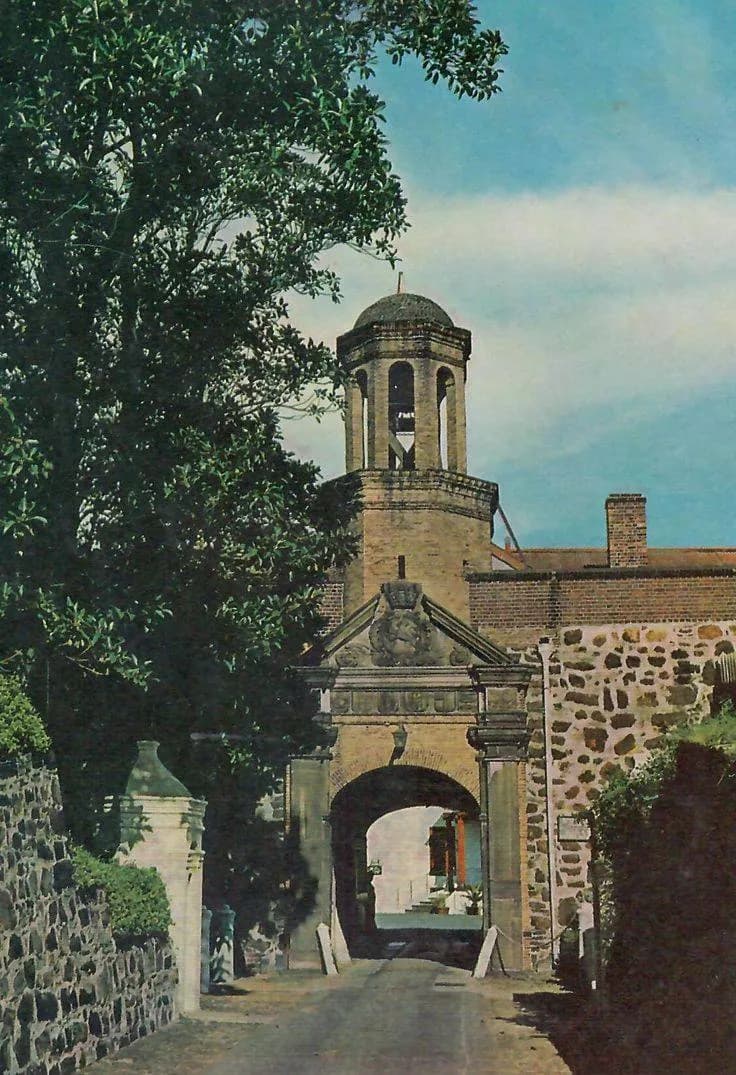
The Castle Cape Town, Durban Borough Police, The Anglo Boer War, 1900’s German Camel Police, GSWA, 1913 Mine Workers strike – Kleinfontein, 1913 – The Red Flag in Revolutionary Booklet, 1930’s – SWA Police camel & SAR Bus, 1930’s Special Service Battalion UDF South Africa,

Nongqai Album 2/2026
1939 - 1945: The Wartime SA Police

Nongqai Album 2/2026

A collection of historic South African military & police photos