
Court Humor
Adv Anton Wiid – Humor in die hof!
A courtroom turns comical when a one eyed accused removes his glass eye, stunning the judge into silence.
995 articles
A courtroom turns comical when a one eyed accused removes his glass eye, stunning the judge into silence.

The decisive 1981 Eden Park Test fused sport, politics, and protest into a single explosive moment.
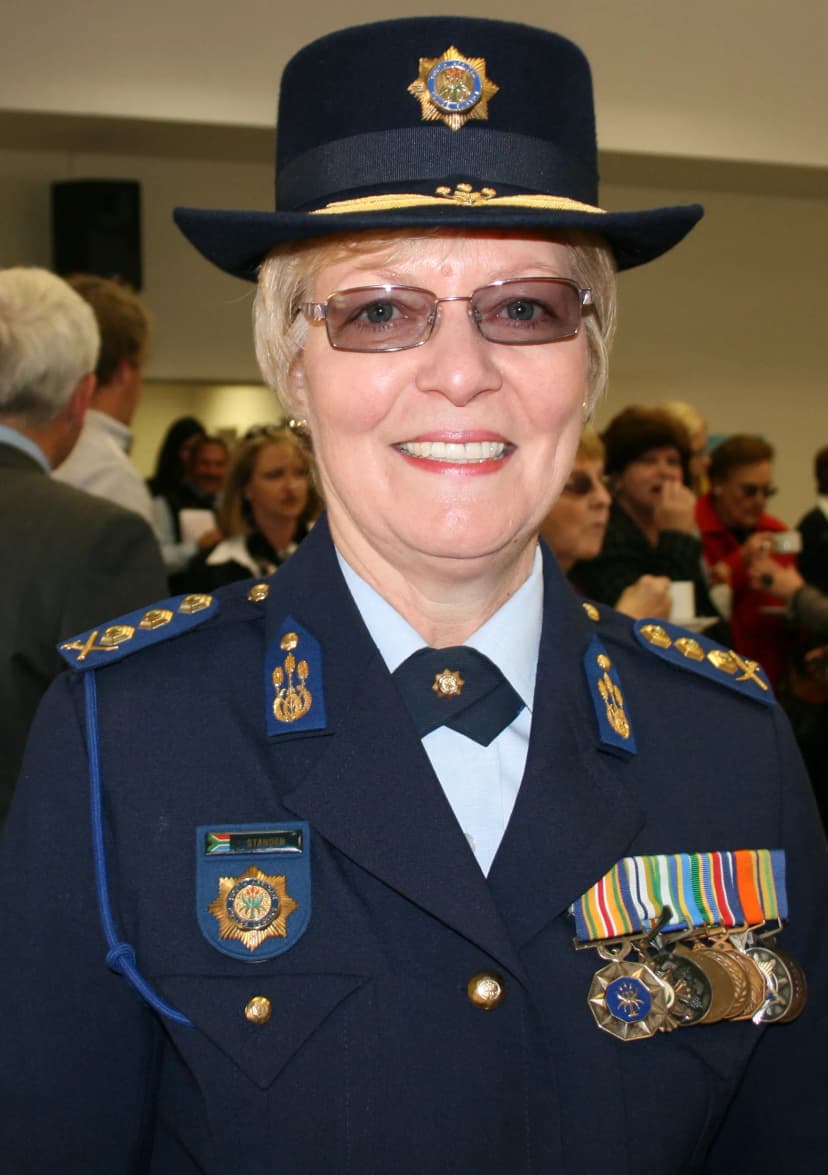
This profile traces the distinguished career of Lieutenant General Magda Stander, who rose from an administrative typist in 1970 to Deputy National Commissioner of the South African Police Service. Her professional journey reflects pioneering leadership, the advancement of women in policing, and decades of dedicated service recognised through high-level decorations, including the Star for Excellent Service and the Star for Excellent Service Gold. The article highlights her contributions, her role in shaping personnel services, and her lasting legacy within the SAPS.
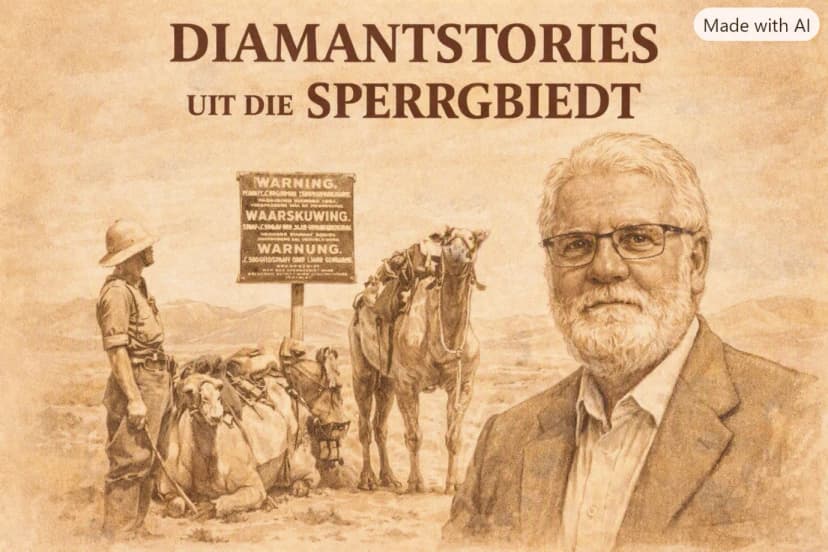
Lieutenant Colonel Vel Kruger recounts two ingenious diamond-smuggling cases from the Alexander Bay Sperrgebiet — one involving a homing pigeon harness and another where a trainee detective earns his stripes under a thorn bush.
In 1993, pilot Crause Steyl flew the Ghost Rider into Soyo as UNITA forces advanced and the town’s defenders fled by boat. His unexpected decision to land helped turn a seemingly doomed operation around, opening the way for Executive Outcomes’ first contract and its subsequent role in training Angola’s army.
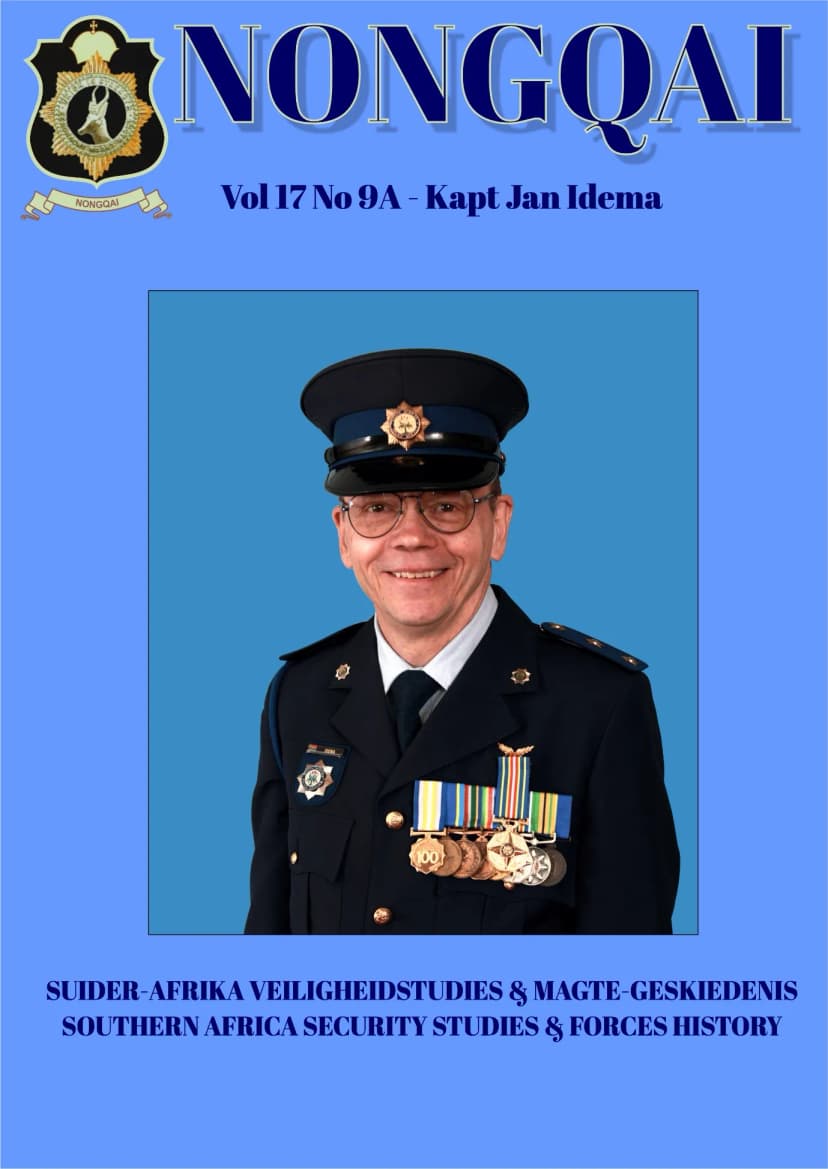
Captain Jan Idema’s career in the South African Police Service began on 10 December 1981, marked immediately by danger when the Wonderboom Poort Police Station was attacked by terrorists during his first week of service. His training year at the Police College in 1982 was shaped by strict discipline, memorable instructors, and participation in the state funeral of former President C.R. Swart. After a year in the Guard Unit, he spent eight formative years at Warmbad, where he gained extensive operational experience, handled serious investigations, worked closely with magistrates, and even served as Mess Master. In 1992 he moved into training at Pietersburg, later joining the Police Dog School in Pretoria-West in 1997, where he served for 25 years in Learner Support, curriculum monitoring, and international cooperation. His career included interactions with historic figures, foreign police delegations, and the custodians of long-standing SAP traditions. He retired on 29 April 2022 after 14,751 days of service.
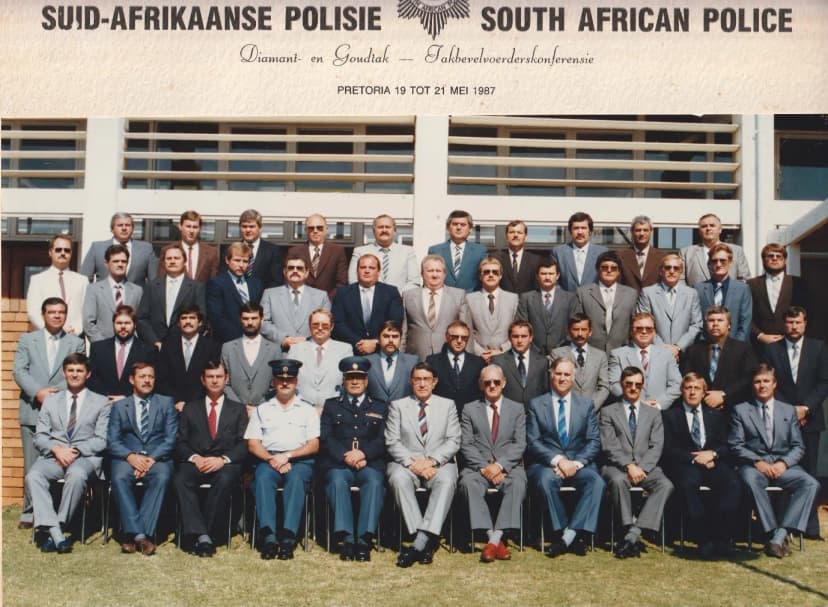
Nongqai Vol 17 No 9 – (9) SAP Diamant- en Goudtak - kursus- en reünie foto's

The South African Police Service [SAPS] and its many generals.

The fire crackles softly in the windless Namib night, and the desert stretches out like an ancient, breathing presence. Around the flames, stories rise — of camel patrols, diamond fields, stranded ships, spies in German South West Africa, and policemen who walked the silence with discipline and courage. The Namib becomes a vast archive: a place where the stars speak of creation, where abandoned towns sink slowly into sand, and where men like Louis Botha, Trew, Ironside, Smith, Verster, and countless unnamed constables left their footprints on a land older than memory. In this world of dunes, wind, and forgotten histories, the desert keeps its secrets — yet reveals them to those who listen.
The Anglo Boer War placed unprecedented demands on horses and mules, drawing animals from across the world into a conflict for which many were unprepared. Long sea voyages, unfamiliar fodder, extreme climate, disease, overloading and poor management resulted in catastrophic losses—around 60% of all horses died, compared with only 3% of human combatants. The Boers benefited from hardy local Cape horses accustomed to the harsh South African environment, while imported British horses often survived only a few weeks after arrival. Between 1899 and 1902, more than 109,878 horses and 81,524 mules were shipped from New Orleans alone, with many dying en route. Diseases such as mange, strangles, influenza, pneumonia and tick bite fever ravaged the imported stock. Individual horses became legendary: Freddy of the Household Cavalry, who survived 1,780 miles of campaigning; Fleur, De Wet’s conspicuous white Arab; Bokkie, De la Rey’s beloved mount; and Major, the only New Zealand horse to return home. Their stories highlight both the suffering and the extraordinary endurance of the animals that carried the war.
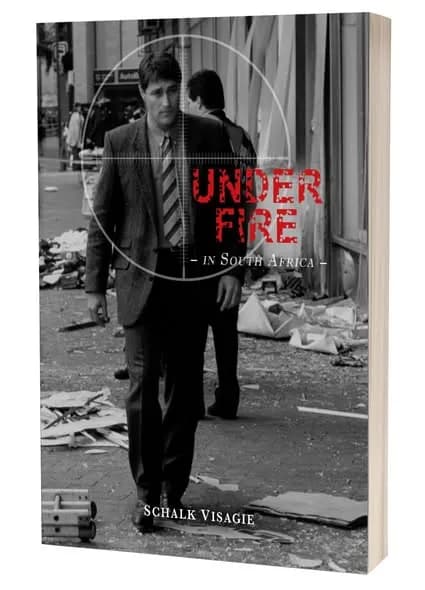
Under Fire in South Africa presents the extraordinary life and frontline experiences of Colonel Schalk Visagie, a South African Police officer who served at the heart of some of the country’s most turbulent and violent chapters. From the Border War in South West Africa/Angola, to presidential protection duties for P.W. Botha, to high‑stakes investigations within the Security Branch, Visagie’s career placed him at the centre of events that shaped national history. He confronted the aftermath of the St. James Church Massacre, the Planet Hollywood bombing, and the deadly campaigns of PAGAD and QIBLA, leading specialised units against organised violence, hit squads, and terror networks. His survival of the Black River Parkway ambush in February 1999—described by medical and ballistics experts as humanly impossible—stands as a profound testimony to providence and the power of prayer. Written with the precision of a seasoned detective and the humility of a man who has endured the unimaginable, Under Fire in South Africa is a gripping, deeply human narrative of courage, faith, trauma, and resilience. It is a story of national significance and cinematic potential, offering vital insight and inspiration for readers living in uncertain and troubled times.

Nongqai Vol 17 No 9: 1974: Potch-bom-ontploffing (I Steyn 2)