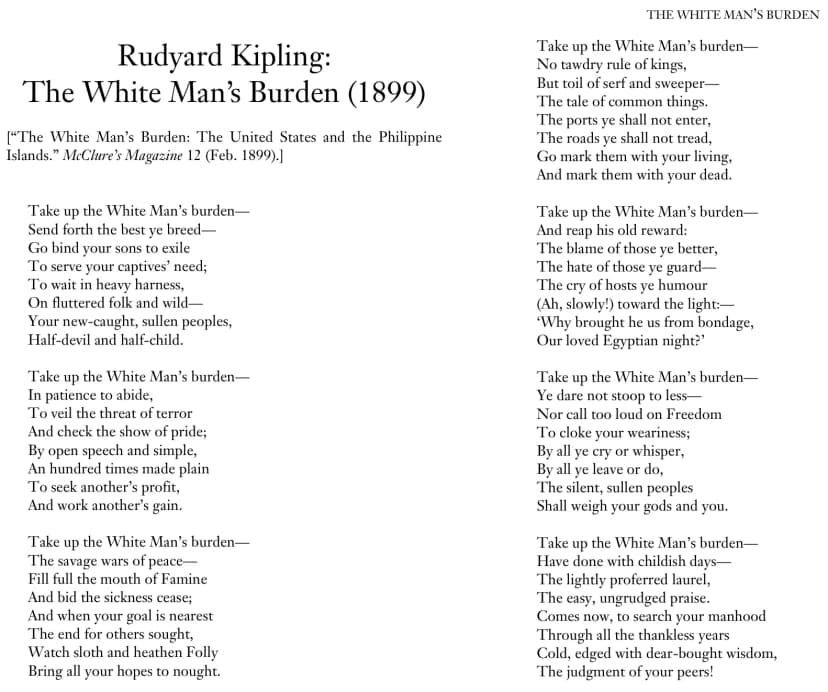
Written in 1899 as America crossed into overseas empire, Rudyard Kipling’s The White Man’s Burden offers a revealing view of power, responsibility and the assumptions of imperialism. More than a century later, its deepest question remains: does the power to intervene confer the wisdom or the right to reshape another society?
South Africa’s defence crisis is often framed as a problem of insufficient funding. This article argues that the deeper challenge is one of strategic incoherence. Using the Clausewitzian framework of ends, ways, and means, it examines how misalignment between political ambition, force design, and available resources has contributed to the SANDF’s gradual erosion. The article contends that sustainable defence renewal requires sequenced institutional regeneration, realistic strategic prioritisation, and a revitalised defence-industrial base rather than aspirational expansion alone.
This article examines the persistent gap between symbolic recognition and functional capability in Africa’s post-independence statecraft. Using the Alliance of Sahel States and South Africa’s defence-industrial ecosystem as empirical anchors, it argues that strategic autonomy is engineered through institutional coherence, fiscal discipline, and accountable state-industry alignment. Sovereignty is not inherited; it is continuously built.
South Africa’s defence difficulties are increasingly framed as a budget and personnel problem within the SANDF. This article argues that the deeper challenge is one of strategic coherence. Growing misalignment between political ambition, operational commitments, institutional capability, and changing security realities is weakening South Africa’s national security posture and regional influence within Southern Africa.
Artificial intelligence is transforming warfare by compressing the time available for human judgement. As conflict environments accelerate, states face growing challenges around strategic autonomy, decision-making, sovereignty, and the ability to maintain meaningful human oversight in increasingly machine-driven systems.
"The political and national security situation in South Africa and Africa is difficult to predict with certainty and surity." Nongqai's National Security correspondent Helmoed Romer Heitman analyses Future Force Design constructs in a period of political and econonic instability.
Helmoed Romer Heitman [Nongqai Naional Security Correspondent]
An Analysis of Military Posture and Strategic Behaviour in a new multipolar world order, by Strategic Security Analyst Dr Joan Swart, in Nongqai Magazine 26 March 2026.