
NONGQAISouth Africa’s National Security MagazineEstablished in 1907
DONATE

All Articles


4 articles match your filters

Boek deur kol Schalk Visagie
1976 Onwards - Riots

Boek deur kol Schalk Visagie

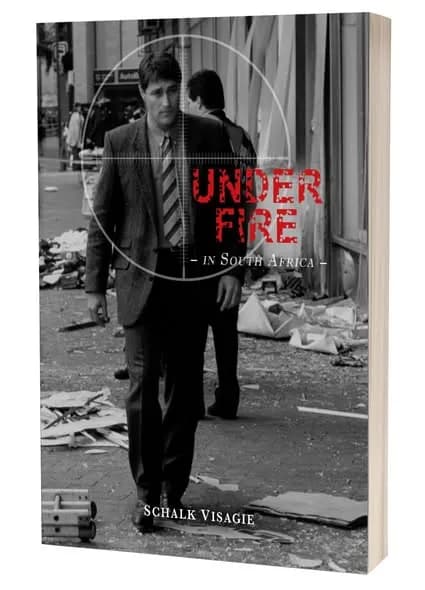
Under Fire in South Africa presents the extraordinary life and frontline experiences of Colonel Schalk Visagie, a South African Police officer who served at the heart of some of the country’s most turbulent and violent chapters. From the Border War in South West Africa/Angola, to presidential protection duties for P.W. Botha, to high‑stakes investigations within the Security Branch, Visagie’s career placed him at the centre of events that shaped national history. He confronted the aftermath of the St. James Church Massacre, the Planet Hollywood bombing, and the deadly campaigns of PAGAD and QIBLA, leading specialised units against organised violence, hit squads, and terror networks. His survival of the Black River Parkway ambush in February 1999—described by medical and ballistics experts as humanly impossible—stands as a profound testimony to providence and the power of prayer. Written with the precision of a seasoned detective and the humility of a man who has endured the unimaginable, Under Fire in South Africa is a gripping, deeply human narrative of courage, faith, trauma, and resilience. It is a story of national significance and cinematic potential, offering vital insight and inspiration for readers living in uncertain and troubled times.

16 Junie 1976 – Mamelodi
1976 Onwards - Riots

16 Junie 1976 – Mamelodi

Abstract The author provides a vivid first person account of the events of 16 June 1976 as experienced by a lieutenant in the South African Police stationed at Silverton. What began as a routine winter morning quickly escalated when he and a small team were deployed to Mamelodi, where large scale unrest had erupted. He describes scenes of chaos: crowds throwing stones and petrol bombs, burning barricades, looted shops, and the destruction of administrative buildings. The narrative highlights the fear, exhaustion, and sense of helplessness felt by the small police contingent, as well as the extreme cold and the absence of food or relief for many hours. The arrival of riot units, the presence of international media, and the role of taxis in driving the unrest are recalled in detail. The following days brought more organisation, community support, and structured police deployment. Reflecting fifty years later, the author emphasises how these events shaped him personally and professionally, and how the camaraderie and solidarity forged during that period remain among his strongest memories. ABSTRAK: Die skrywer bied ’n persoonlike, eerstehandse getuienis van die gebeure van 16 Junie 1976 in Mamelodi, soos ervaar deur ’n luitenant in die Suid-Afrikaanse Polisie. Hy beskryf die oggend se roetine, die skielike opdrag om na Mamelodi te gaan, en die chaotiese tonele van oproer, geweld, plundering en brandstigting wat hom en sy kollegas begroet het. Die vertelling beklemtoon die intense gevaar, die gevoel van magteloosheid, die uiterste koue en die uitputting van ’n dag en nag sonder aflos of kos. Die skrywer herinner aan die rol van die media, die taxi’s wat die skares aangevuur het, en die uiteindelike organisering van polisiemagte en ondersteuning uit die gemeenskap. Hy reflekteer oor die vormende invloed van hierdie tydperk op sy loopbaan en persoonlike ontwikkeling, en beklemtoon die kameraadskap en solidariteit wat tussen kollegas gesmee is. Vyftig jaar later bly die gebeure vir hom lewend en onvergeetlik.

From Special Constables (Kitskonstabels ) to Chaos: The Police, Boycotts and Violence in South Africa's Unfinished Transition
1976 Onwards - Riots

From Special Constables (Kitskonstabels ) to Chaos: The Police, Boycotts and Violence in South Africa's Unfinished Transition

Hierdie artikel ondersoek die oorgang van munisipale polisiemagte na die Suid-Afrikaanse Polisie (SAP) tydens die revolusionêre onrus van die 1980s, en die gevolge van die ANC se boikotstrategie op dienslewering, gemeenskapsveiligheid en staatsgesag. Deur persoonlike getuienis en argiefmateriaal word die rol van kitskonstabels, swart-op-swart geweld, halssnoer-moorde en faksiegevegte op die Goudvelde en in Soweto belig. Die artikel argumenteer dat die nalatenskap van politieke verset — insluitend nie-betaling vir dienste en die marginalisering van die SAP — tot ’n krisis van gesag en voortgesette geweld in die demokratiese era gelei het. Die versuim van politieke leiers, insluitend Kobie Coetsee, om die veiligheidsmagte tydens onderhandelinge te ondersteun, het verdere vervreemding veroorsaak. Die artikel sluit af met ’n oproep tot historiese begrip en verantwoordelike herstel.
