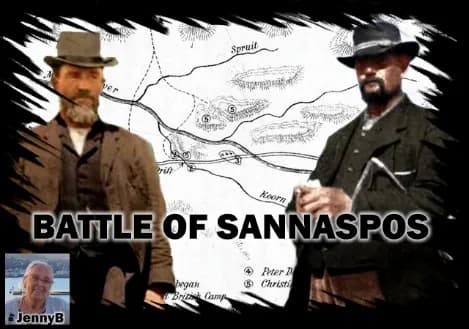
The Battle of Sannaspos – A Tactical Triumph
Photo gallery and explanation of battle fought on 31 March 1900 under Boer general CR de Wet east of Bloemfontein

The Battle of Sannaspos was fought on 31 March 1900, roughly 20 kilometres east of Bloemfontein in the Orange Free State. It was one of the most successful Boer operations of the Anglo-Boer War and a significant setback for the British forces following their occupation of Bloemfontein on 13 March 1900.
The battle took place against a background of growing Boer resistance. Although the British, under Lord Roberts, had captured the Free State capital, the Boer commandos had not surrendered and continued to operate in the surrounding countryside. Their objective was to disrupt British communications, threaten supply routes and, particularly, interfere with the water supply on which the British occupation force depended.
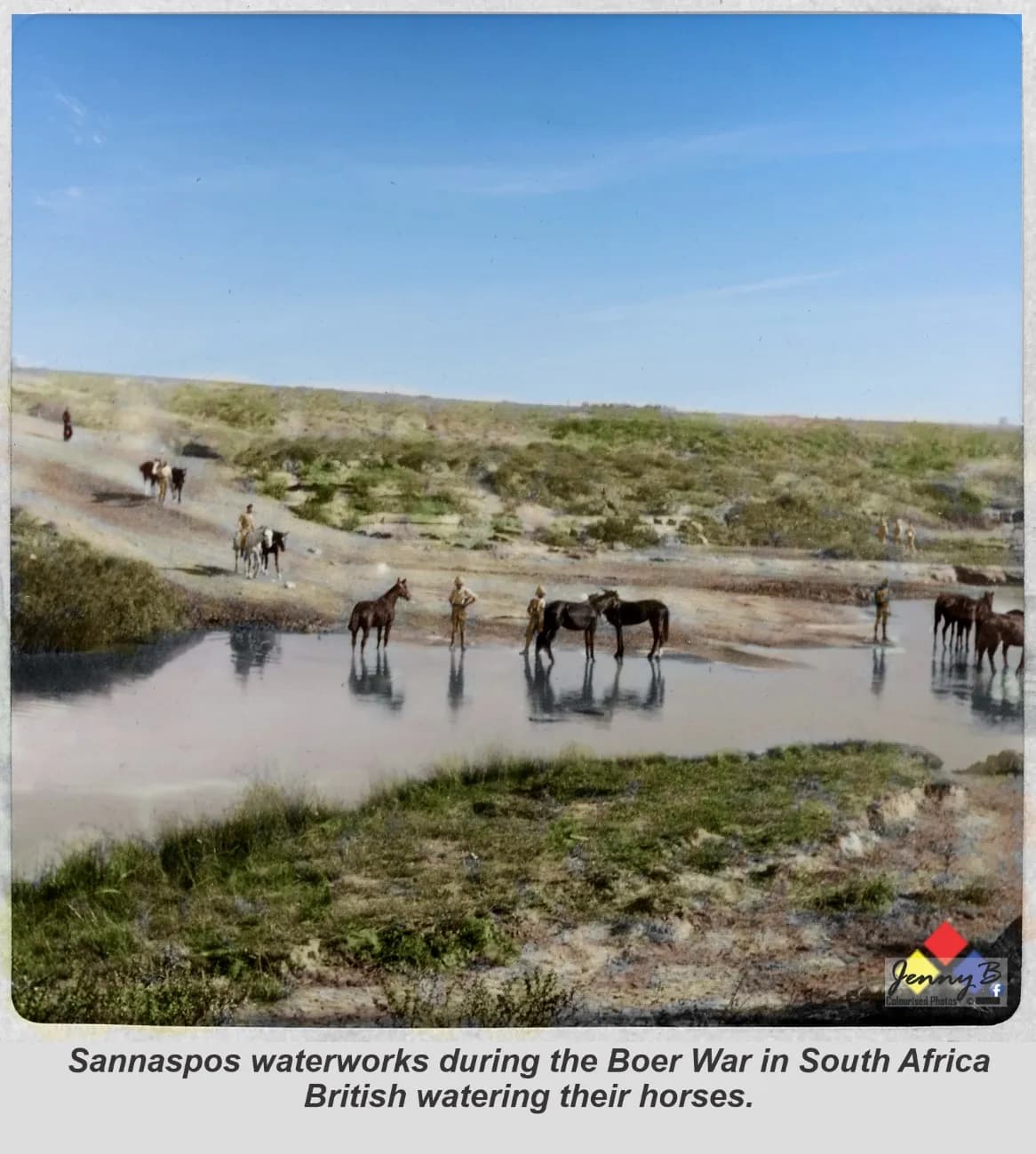
The Boer plan and British withdrawal
The Boer operation was led by General Christiaan de Wet. His original intention was to attack the Bloemfontein waterworks at Sannaspos, which supplied the town with water.
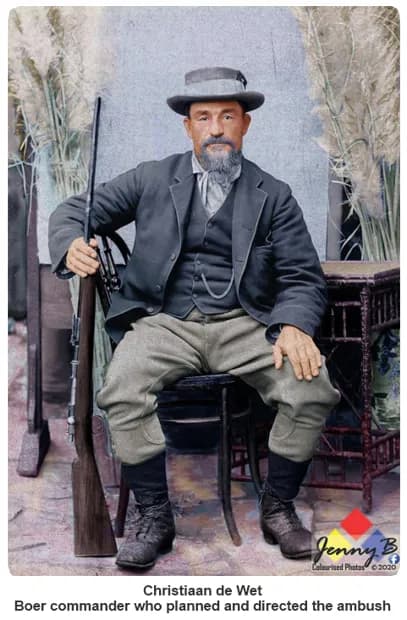
He learned that a British column under Brigadier-General Robert George Broadwood was withdrawing from Thaba ‘Chu towards Bloemfontein. De Wet seized the opportunity to devise an ambush and decided to split his forces.
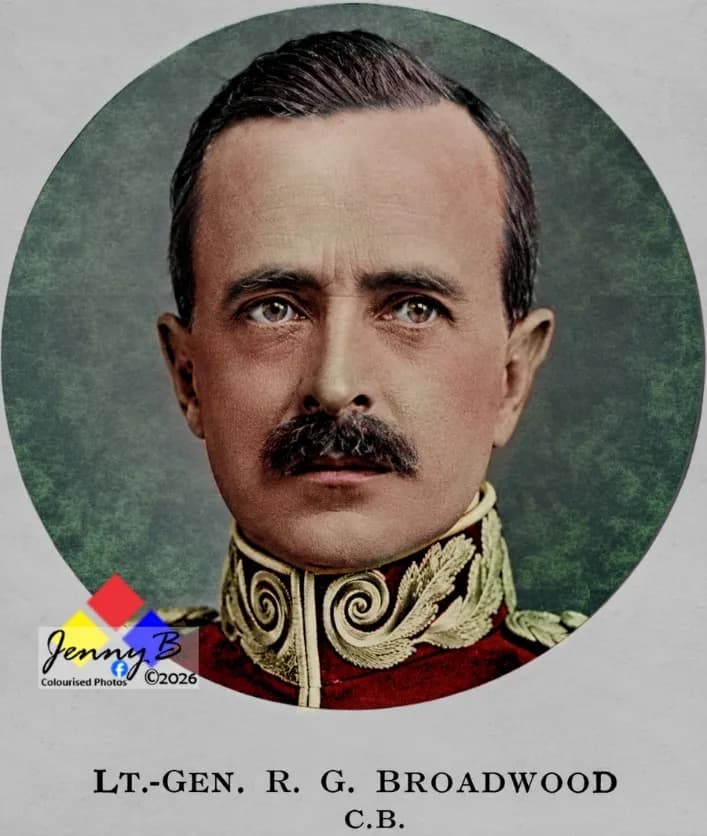
De Wet sent 1600 of his men under his brother Piet to attack Broadwood from the north, while he himself occupied Sannaspos to intercept their retreat.
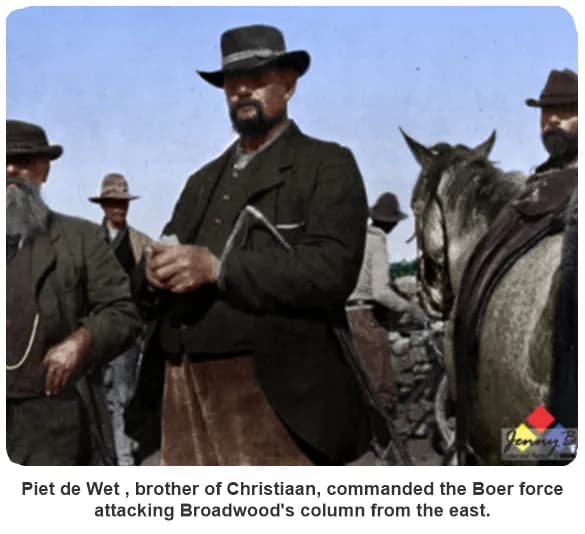
At first light on 31 March, Piet de Wet’s artillery opened fire from low hills to the north. The British troops were caught off-guard while preparing to break camp. The British troops began withdrawing towards the ravine where a Boer force lay in wait, under strict orders from De Wet not to fire. The civilian wagon drivers moving ahead of the soldiers were intercepted by the Boers and threatened with death if they alerted the British.
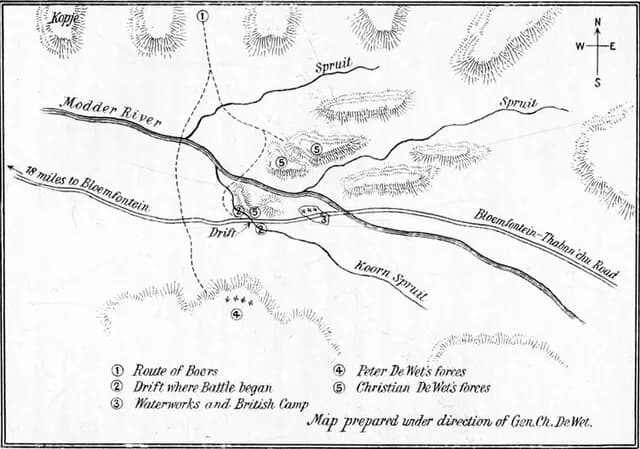
Unaware of the trap, the soldiers continued towards the river in small groups. As they approached, De Wet’s men called on them to surrender, resulting in the capture of approximately 200 British soldiers and all six guns of U Battery.
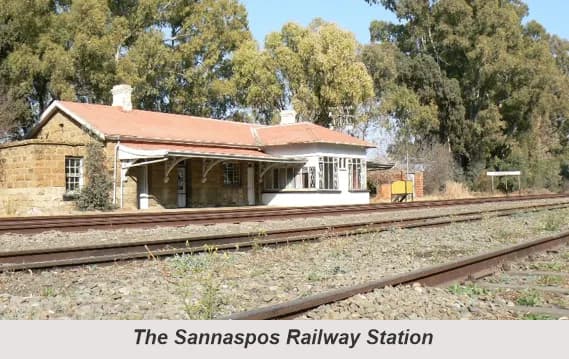
An alert British officer, however, recognised the danger and ordered Q Battery to gallop clear. De Wet’s men then opened fire, forcing the remaining British troops to fall back towards a nearby railway station, where they found substantial cover. - Src: sahistory.org.za+1, Wikipedia -
The Resistance of Q Battery and the Victoria Cross
One of the most memorable episodes of the battle involved Q Battery of the Royal Horse Artillery. Commanded by Major Edmund Phipps-Hornby, the battery managed to bring its guns into action against the Boers. When the order to withdraw was given, the men faced the extraordinary task of saving their artillery under heavy fire. With their horses lost or unavailable, the guns and limbers had to be dragged back to safety by hand.
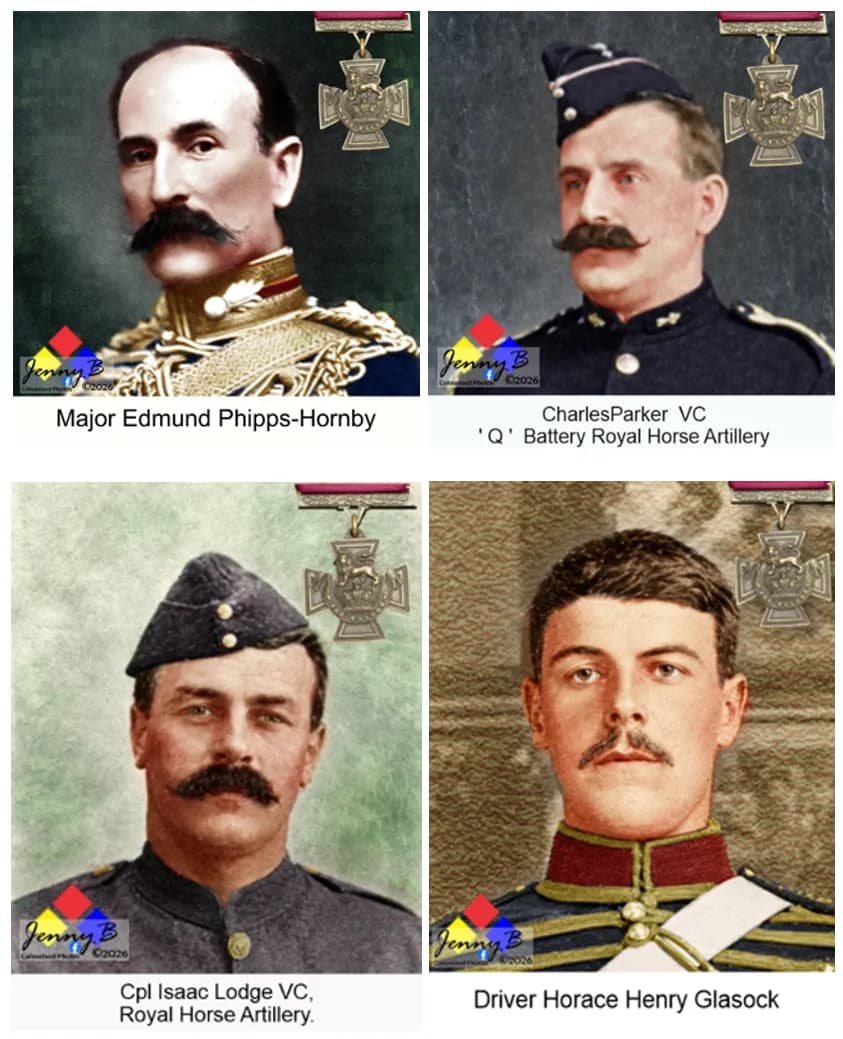
Four members of the battery were subsequently awarded the Victoria Cross for their collective gallantry: Major Phipps-Hornby, Sergeant Charles Parker, Gunner Isaac Lodge and Driver Horace Henry Glasock. Their actions became one of the most celebrated examples of courage during the Anglo-Boer War. Src: sahistory.org.za+2
The outcome and significance
The British eventually managed to withdraw and regroup but the cost to the British was high. About 428 British soldiers were captured, as well as seven artillery pieces and 117 wagons. British casualties included at least 18 killed and 134 wounded. In comparison, Boer losses were remarkably light. A notable British casualty was Frederick Russell Burnham, Lord Roberts's American Chief of Scouts, who was captured after attempting to warn the British of the approaching danger, but he later escaped from Boer captivity.
Sannaspos marked an important turning point in the character of the war, signalling the growing effectiveness of Boer guerrilla operations. Src: scientiamilitaria.journals.ac.za+1
Frederick Russell Burnham
Burnham left the Klondike to accept an appointment as Chief of Scouts to Lord Roberts during the Anglo-Boer War.
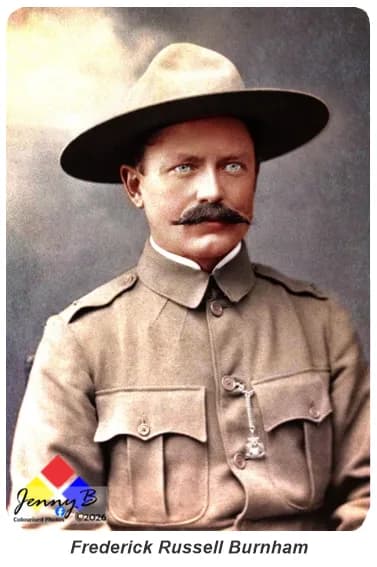
Burnham left the Klondike to accept an appointment as Chief of Scouts to Lord Roberts during the Anglo-Boer War.
While scouting ahead of the British forces, he discovered a Boer ambush near Korn Spruit and attempted to warn the approaching column by signalling with a red handkerchief. His warnings were ignored, and he was captured by the Boers and held in a stone-walled cattle kraal.
During the fighting, Burnham was held prisoner until he devised an ingenious escape. Pretending to have a badly injured knee, he was placed in an ox-wagon with wounded British officers. When the opportunity arose, he slipped from the wagon between the oxen and escaped into a roadside ditch. Alone and behind enemy lines, he eventually made his way back to the British camp, reportedly surviving on just one biscuit and a little mealies during the four-day journey.
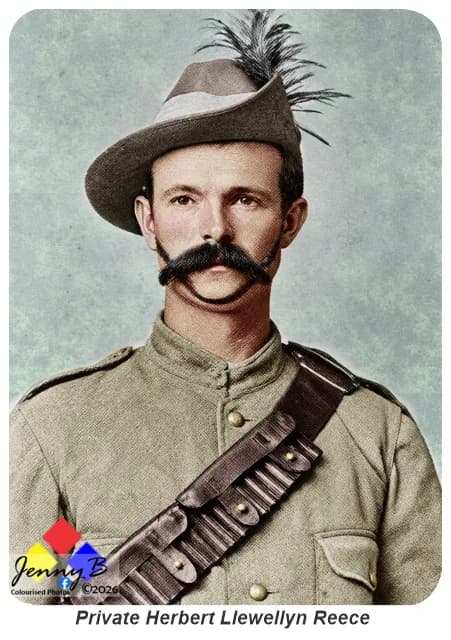
Private Herbert Llewellyn Reece, originally from Wales and residing at Mount Morgan, Queensland, served as No. 165 in B Company, 1st Queensland Mounted Infantry. He sailed for South Africa aboard the Maori King on 13 January 1900 as part of the first Queensland contingent. On 31 March 1900, he was killed during the Battle of Sanna's Post, when General Christiaan de Wet's Boer ambushed Brigadier-General Broadwood's British column near Bloemfontein. Reece is buried at Sannaspos Military Cemetery, and his memory is preserved on the Anzac Square Boer War Memorial in Brisbane.
Src: vwma.org.au - perthdps.com - commons.wikimedia.org
Francis Aylmer Maxwell
Lieutenant Francis Aylmer Maxwell, VC, played a distinguished role in the Battle of Sannaspos. He was a British Army officer serving with the Gordon Highlanders and became famous for his bravery during the battle, particularly in attempting to save guns and men from capture.
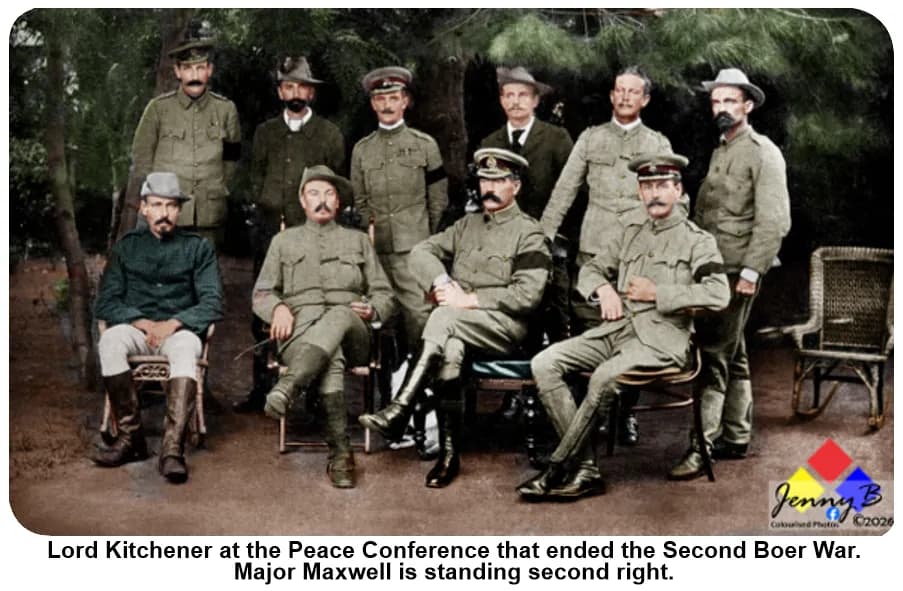
His actions included:
- Five separate journeys under fire to recover guns and equipment.
- Helping bring back two guns and three limbers, one of which he helped drag in by hand with Captain Humphreys and artillerymen.
- Joining a further attempt to rescue the final gun, remaining with it until the effort had to be abandoned.
His extraordinary courage earned him the Victoria Cross. He later became an aide-de-camp to Lord Kitchener. Src: National Army Museum, London+1
Orderly, Sowar Dost Muhammed Khan
Lieutenant Maxwell's orderly, Sowar Dost Muhammed Khan of the 18th Bengal Lancers, an outstanding cavalry officer was awarded the 3rd Class Indian Order of Merit for his gallant actions in support of Lieutenant Maxwell under heavy fire at Sanna’s Post. The Order is the Indian equivalent of the VC.
He was the highest decorated Indian soldier of the 18th Bengal Lancers from 1858 to 1921 He was awarded the O.B.I. for France 1917; The I.O.M., 3rd Class for South Africa 1900 and the IDSM for Persia in 1910
He entered the service aged 17 on 24/3/1896. His first service was on the Samana and in the operations of the flying Column in the Kurram Valley under Col. Richardson, 20th August to 1st October 1897.
Sailing from Bombay with Lieutenant Maxwell aboard the “Purnea” on the 20th January, he was bound for Durban with 220 horses for the Mounted Infantry.
Dafadar Dost Mohd. Khan accompanied Lt Maxwell to South Africa as his orderly and subsequently accompanied him to the United Kingdom to take part in the 1902 Coronation. Three British officers from this Regiment served in South Africa. Two British officers, a Jemadar & seventeen other ranks attended the 1902 Coronation.
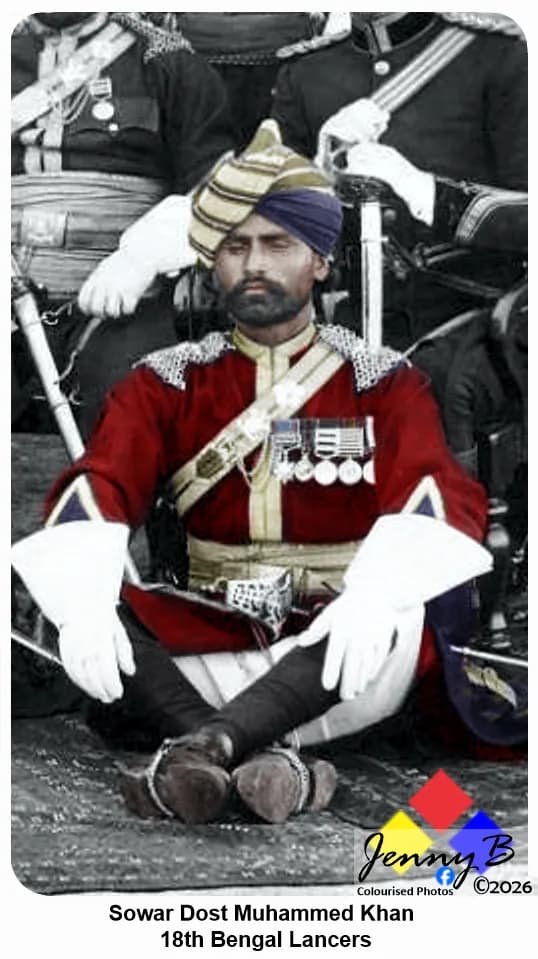
“At Sananh’s post, 30th, March 1900, the regiment (Robert’s Horse) was retiring under heavy fire from the Kroon Spruit. Having been with the leading squadron in the advance, I was somewhat in the rear of the regiment as it retired, my orderly, as always with me. Seeing a man fall (his horse being killed) we went to his assistance. As the fire was heavy and the range close, about 150 yards, I ordered Sowar Dost Mahomed to go off after the regiment, fearing what might happen to him if wounded and captured. This however he refused to do in spite of my repeated order to him to go but remained with me helping to keep my horse steady till the dismounted man was able to mount, when we retired together. Sowar Dost Mahomed’s horse was wounded during this action: and later he himself was wounded and very nearly captured owing to his devoted action in waiting for me till the last moment. I would like to add that he was again wounded at Diamond Hill together with the horse he was holding.”
No 1706 Sowar Dost Muhammed Khan, 18th Bengal Lancers, was admitted to the 3rd Class for conspicuous gallantry in action at Sanna's Post, South Africa on the 30th March 1900, on which occasion he, under a heavy rifle fire at close range, went with Lieutenant F.A. Maxwell to the assistance of a trooper of Robert's Horse whose horse had been killed, and helped him to mount and retire with the rest of the corps. Lieutenant Maxwell was awarded the Victoria Cross for the part he played in this action & for his gallantry in saving the guns of Q Battery Royal Horse Artillery.
Src: Photograph NAM www.angloboerwar.com/index.php?option=com_kunena&view=topic&catid=13&id=24782&Itemid=1360
© nongqai.org
References
- Rider Haggard, The Days of My Life, Volume II, 1926, pp. 124–125.
- Richard Harding Davis, Real Soldiers of Fortune, chapter 'Major Burnham, Chief of Scouts'.
- Scouting on Two Continents – Frederick Russell Burnham (1926)
- Private Herbert Llewellyn Reece.
Write to us about this article
Do you remember this, or know more? Your comment appears here once an editor has read it.
The editors may print your comment, with your name, in the monthly edition.