The 2012 Griekwastad triple murder case
The key role of blood stain pattern analysis in obtaining a conviction

Background:
The 2012 Griekwastad Triple Murder case was one of the most challenging and significant of my career, and also attracted huge public interest because of its unusual nature.
My evidence was presented on 13 and 14 November 2013 in the Northern Cape High Court in Kimberley, 13 years ago.
In 2012, I was stationed at the Forensic Science Laboratory in Cape Town as a Forensic Biology Crime Scene Investigator. So, what was my role in this triple-murder case? I was called to the scene a few days after the murders and was responsible for analysing and interpreting the bloodstain evidence and other physical evidence.
The case concerned the murder of three members of the Steenkamp family at their farm, Naauwhoek, near Griekwastad in the Northern Cape.
The victims were: Deon Steenkamp, his wife Christell Steenkamp, and their 14-year-old daughter, Marthella Steenkamp.
At the time, their 15-year-old son was a person of interest in murdering all three family members, as well as rape and defeating the ends of justice.
Sequence of the investigation
Post-mortem examinations of the victims
On 11 April 2012, I attended the post-mortem examinations of the Steenkamp family members: the father, mother, and youngest child. The examinations were conducted by Dr Fouche, who has since retired. I also took photographs documenting the victims’ condition during the examinations. These detailed images were necessary for reconstructing events at the crime scene and understanding the victims’ movements during the incident on the farm. I paid particular attention to bloodstain patterns on their clothing and took close-up photographs of their bodies and injuries. I determined the bullet trajectory in relation to the youngest child, Marthella Steenkamp, because I believed she played a significant role in the incident given the extent of her injuries. I also requested that the victims’ clothing be collected for analysis.
Crime Scene Attendance
On 11 April 2012, I received copies of the crime scene photographs from the Crime Scene Investigator. That evening, I reviewed the images and marked bloodstain patterns of interest on the photographs. My objective was to reconstruct the victims’ movements during the incident and identify matters requiring further investigation.
On 12 April 2012, I attended the crime scene at the farm Naauwhoek, in the district of Griekwastad. Additional areas inside the house and in the farmyard were examined for possible blood traces. The investigating officer informed me that the only surviving child had his cell phone with him during the incident. I was also asked to use my cell phone to assess network reception in specific areas around the house and inside the barn. I recorded the reception in those locations and presented the results as evidence in court. During my investigation, I photographed and measured the house and farmyard to support an accurate reconstruction of the scene at a later stage. All bullet holes and marks were documented with measurements. I also identified bloodstain patterns inside the house and asked the Crime Scene Investigator to record and photograph the bloodstains found. The area where the surviving child found the firearms was documented, and I made observations there.
During our debriefing at the crime scene, I was further asked to reconstruct the scene to determine the victims’ positions during the incident.
Evidence Received
On April 12, 2012, I requested the evidence collected during the crime scene investigation because it would play a significant role in the investigation and needed to be analyzed promptly. I also determined that the firearms had not been examined for possible fingerprints when the exhibits were collected and decided to examine them for fingerprints in my laboratory. The evidence included two firearms and clothing belonging to the surviving child (the accused).
Examination of the Evidence
On the 17th of April 2012, I examined the following significant clothing items in the laboratory:
Bloodstains on the accused’s clothing:
This was one of the most significant and disputed aspects of my evidence.
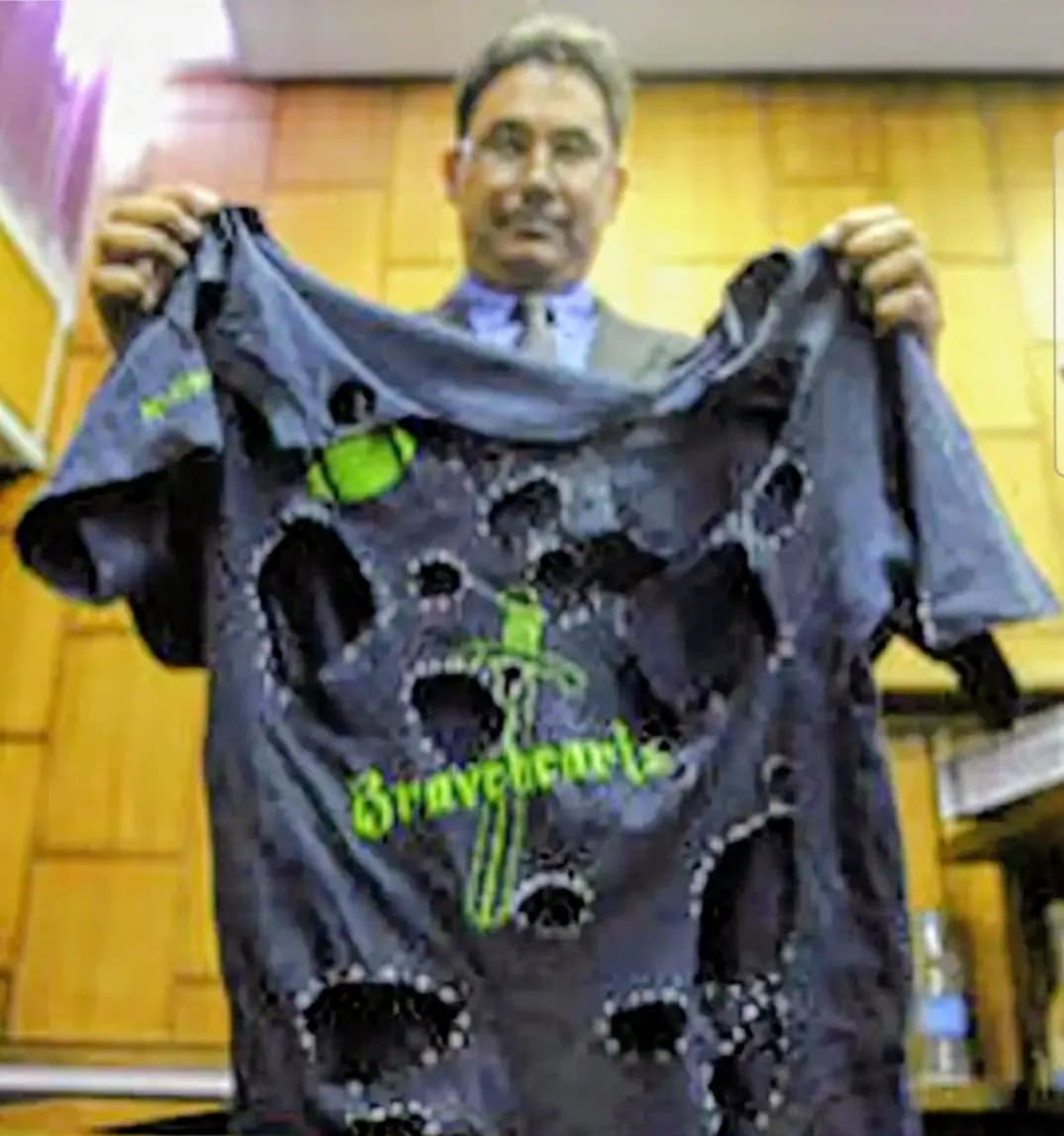
Dark blue T-shirt.
Maroon T-shirt.
Dark blue shorts.
1. Blue shirt worn by the surviving child (accused)
I paid particular attention to this exhibit because the shirt had numerous bloodstains, which appeared inconsistent with the surviving son’s statement. The shirt was taken to Question Document Unit for examination of the blood evidence, using an instrument that employs infrared imaging to document bloodstains on dark surfaces. During my examination, I collected 37 samples of suspected blood from the shirt. The findings were as follows:
Multiple blood transfers:
Bloodstains were documented across the front and middle of the blue T-shirt.
In my interpretation, these stains were not all caused by a single contact with one bleeding person. They were described as multiple transfers, indicating that the clothing appeared to have come into contact with blood on more than one occasion.
Wet blood:
The blood was transferred to the clothing while still liquid. This conclusion was based on the absence of clots in the stains.
DNA evidence:
Blood found on the blue and maroon T-shirts matched Marthella’s DNA profile. My interpretation was that when the accused changed T-shirts, his bloodied hands—bearing Marthella’s blood—transferred blood onto the maroon T-shirt.
2. Blue shorts belonging to the surviving child (accused)
During the examination of the shorts, I collected 13 samples of possible blood. The blood was identified as belonging to the accused.
I also conducted primary residue tests on the two exhibits mentioned above to determine whether the child had recently fired a firearm or had recently come into contact with one that was fired. These tests were forwarded to Head Office for analysis.
3. Green shirt worn by the youngest victim, Marthella Steenkamp
I paid particular attention to her shirt because she moved around the crime scene while injured and bleeding. To reconstruct the scene, I needed to determine how she moved during the incident. I documented all bloodstains on the shirt, which provided important information about her movements.
4. Examination of the parents’ bloodstains:
Interpretation of the blood evidence relating to Deon and Christell Steenkamp.
Victim Deon:
A smear of blood near Deon’s head appeared consistent with his right forearm moving towards his body. There was little movement after his father fell to the floor. I also suggested that Deon may have moved his arm after being wounded, possibly to make himself more comfortable.
Victim Christell:
Blood running down Christell’s back suggested that she was upright or kneeling when the accused shot her from behind.
Victim Marthella:
The blood patterns indicated movement from outside into the house and towards the telephone. Marthella moved around the scene and was the only victim whose blood patterns indicated movement throughout the scene.
Firearms examined
The .22 rifle and .38 Special revolver were photographed and documented, with particular attention paid to their condition, with no damage. Given how well preserved the firearms were and where the surviving child reported finding them, their condition appeared inconsistent with the circumstances described. A total of 15 samples were collected from the two firearms to determine whether they contained any foreign DNA, other than the victim’s blood and any DNA from the possible suspect, who may have handled them. The firearms were also subjected to chemical fuming to develop potential fingerprints or palm prints and determine whether the suspect or anyone else had handled them. Fire-arms were clean, no finger – and partial palm prints detected.
Condition of the firearms: I challenged the accused’s claim that he had picked up the murder weapons beside the road, noting that they lacked the dust or dirt expected on firearms left outdoors.
Revisit to the Crime Scene
During my investigation, I determined that possible bloodstains might be present on the wall where the bullet exited the house, near the location where the youngest victim had been sitting. Re-examining the wall could benefit the investigation by recovering the victim’s DNA and assisting with the reconstruction. On 16 May 2012, the crime scene was revisited, and five samples were collected from the wall.
Unidentified Fingerprints Found on a Glass at the Crime Scene
During consultations with the NPA and Advocate Hannes Cloete, we learned that fingerprints had been found on a glass at the crime scene. These prints could not be linked to either of the victims or to the possible suspect. The defence might therefore use them to argue that an unknown suspect was present at the scene. I recommended that the investigation team obtain the youngest victim Martella Steenkamp’s schoolbooks from her school. I would chemically enhance any fingerprints on the books and compare them with photographs I had taken of her hands during the post-mortem examination.
On 16 September 2013, I received the youngest victim’s schoolbooks and treated them with ninhydrin to enhance any finger and palm prints on their pages. I photographed the developed prints. I also recommended that the NPA team seek assistance from Warrant Officer Phillip Bekker of the CSI team in Port Elizabeth, a fingerprint expert specialising in ridgeology. Warrant Officer Bekker was contacted and asked to compare the enhanced prints from the books with the photograph of the youngest victim’s hand.
The unidentified fingerprints on the glass were identified as belonging to the youngest victim, Martella Steenkamp.
Reconstruction of the Crime Scene
Marthella’s movements through the house:
I interpreted the blood evidence as indicating the following sequence:
Blood from her chest wound ran down her body;
Blood flowed along her right arm and right leg;
Blood dripped from her fingers onto her feet;
She entered the house through the kitchen’s back door;
Blood drops continued through the scullery and into the kitchen;
She leaned against the kitchen counter;
She moved around the counter toward the telephone;
She stopped between the counter and the dining-room table;
A bloodstained handprint was found on the table and telephone handset;
The concentration of bloodstains and spatter on the floor suggests she remained there for some time.
Scientific assessment
There is a fundamental difference between:
Determining where blood was deposited.
Determining a person’s possible position when the blood was deposited.
Determining who was shot first, second, or third.
The third question is considerably more challenging.
Bloodstain patterns do not, by themselves, establish the chronological order of shootings. To determine that order, an analyst requires sufficiently discriminating evidence, such as overlapping patterns, medical findings, bullet trajectories, and other independently established observations.
Preparation for Court
I compiled a photo album containing 406 photographs. A second album, containing 20 photographs, was also prepared for court in connection with the fingerprint examination.
Two presentations were prepared for the court proceedings: one on the primary casework and one on bloodstain pattern analysis.
Court Proceedings
On 13 and 14 November 2013, I testified in the High Court. On the first day, I presented my evidence-in-chief, and on the second day, the defence cross-examined me.
Before court proceedings, I would do what I always did: walk around the courthouse corridors to get my blood circulating before standing in the witness box. At one point, I walked past the accused. We looked at each other, and he said in Afrikaans, “Goeie Morê Oom.” I greeted him in return. That moment has stayed with me ever since. He was facing three murder charges and a rape charge, yet he remained respectful.
Court: Notes on bloodstain pattern analysis were discussed and handed to the judge, the defence, and the state attorney.
My primary testimony focused on the following:
1. The suspect’s clothing and his involvement in the crime;
2. The movements of Marthella Steenkamp, the youngest victim, within the house, and her clothing;
3. The movements of Deon Steenkamp and the victim’s jacket;
4. The movements of Chritell Steenkamp;
5. Marthella Steenkamp’s position on the floor where she was found;
6. The bloodstain patterns on her body and how they were formed;
7. The bloodstain patterns identified at the crime scene and how they were formed;
8. The condition of the firearms and the area where they were found at the crime scene;
9. The sequence of events during the incident; and
10. The analysis of the suspect’s statement and the reasons for rejecting his account of events.
The cross-examination was held on 14 November 2013 in Kimberley, before Judge President Frans Kgomo. The defence was represented by Advocate Willem Coetzee and had also consulted its own forensic ballistics expert, Cobus Steyl, a highly respected specialist.
The bloodstains on the accused’s clothing were among the most significant and contested aspects of my evidence. The items included:
Dark blue T-shirt;
Maroon T-shirt;
Dark blue shorts.
The defence’s cross-examination:
The defence challenge to my evidence in the Griekwastad case focused on a fundamental forensic question:
Did the bloodstains truly support the sequence of events I described, or could other explanations account for how blood got onto the clothing and around the house?
The blue T-shirt: the central dispute:
I told the court:
“It is not consistent with just one action.”
The blood-flow patterns on Marthella:
The second major challenge concerned the reconstruction of Marthella’s movements.
I interpreted the evidence that she was shot inside the house, ran outdoors, fell onto the grass, then managed to get up and re-enter the house.
The defence challenged my interpretation of the blood flows on her body.
The key forensic questions were:
Could the blood-flow marks show that she had been standing or moving?
Could they indicate the direction in which she had travelled?
Could the stains distinguish blood deposited while she was moving from blood deposited after she fell?
Were there other possible explanations for the marks?
Scientific assessment
There are reasonable grounds to conclude that:
Marthella bled outdoors.
She came into contact with grass and gravel.
While still bleeding, she then entered the house.
The alleged struggle inside the house:
I interpreted the evidence as indicating that Marthella had defended herself against an attacker outside the house, rather than during a struggle indoors.
This interpretation was based on my examination of the bloodstains and the apparent lack of blood-pattern evidence supporting a struggle at the location where she was found.
This mattered because the accused’s account of his contact with Marthella was a significant issue at trial.
The defence needed to consider whether the absence of a particular stain or blood pattern could reliably rule out an alternative explanation.
The torn T-shirt: an important distinction:
The dark blue T-shirt was sent to Lieutenant-Colonel Gerhard Vermeulen, a forensic materials analyst, to examine its physical damage.
On 6 November 2013, defence advocate Willem Coetzee suggested that the damage might have occurred during a rugby game.
Lieutenant-Colonel Gerhard Vermeulen testified that:
The shirt showed stretching damage around both shoulders.
The damage appeared consistent with a strong downward pull.
The damage on both sides may have occurred at the same time.
He could not determine precisely when or in what circumstances the shirt was torn.
The defence emphasized the possibility that the shirt had been damaged earlier and that other causes could explain the damage.
The judge asked for my opinion on the sequence of events during the shootings.
The order of the three shootings:
In paragraph 65 of the judgment, the judge asked me to reconstruct the sequence of events. I gave the following interpretation:
Christell was probably the first victim.
Marthella may have been the second.
Deon was probably the third.
However, I was cautious in what I said about Marthella. I expressly acknowledged:
“I have no forensic evidence that can actually support that.”
I was referring to my opinion that Marthella was the second victim.
This admission is extremely important. It means that my bloodstain pattern analysis did not establish the proposed order of the shootings; rather, that order was based on other related evidence and observations.
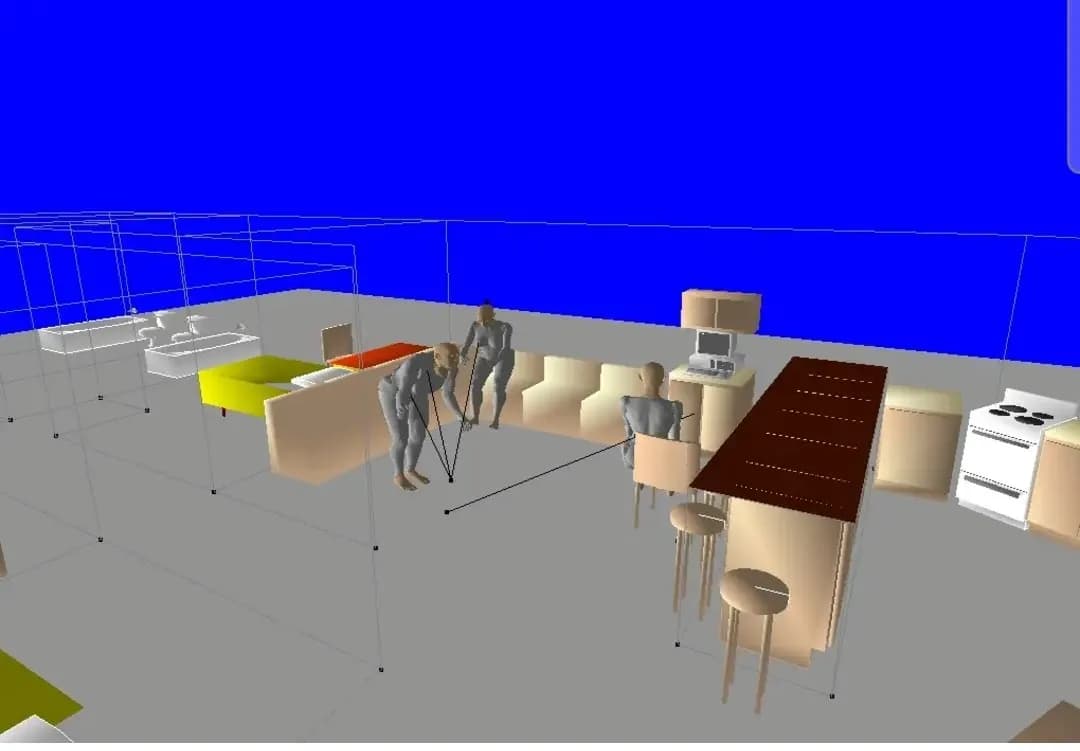
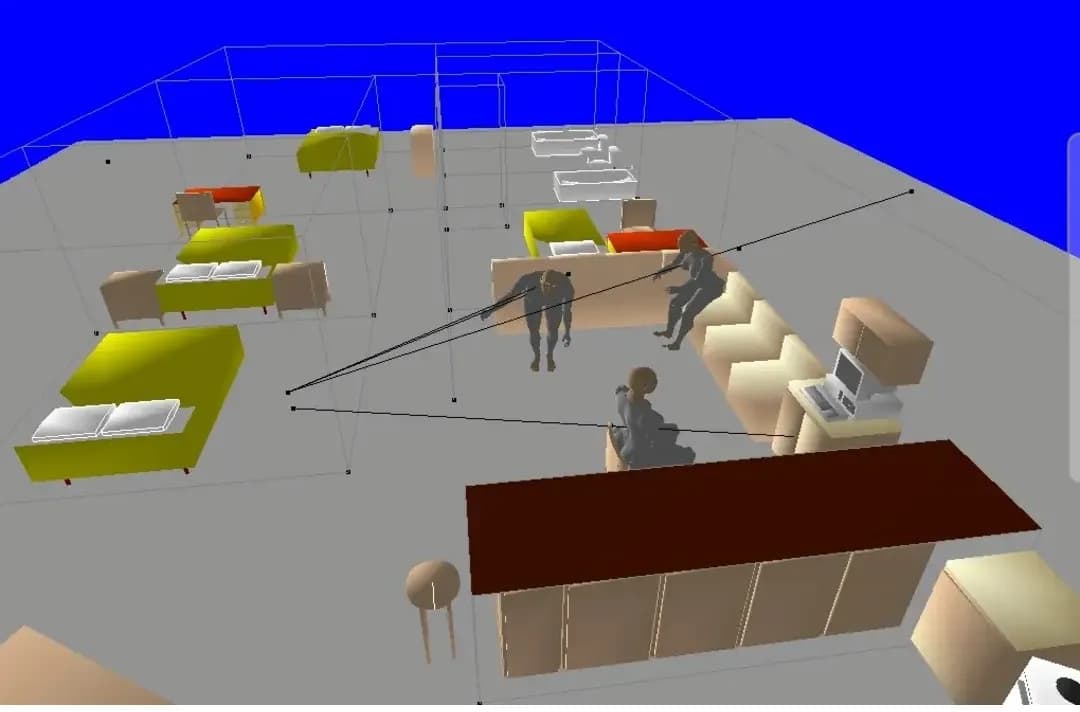
I offered the court the most likely reconstruction I could make from the available information, including the bullet trajectory through the house wall and into the barn door, the bullet strike on the computer stand in the living room, and the gunshot injuries sustained by the victims.
I used 3D software to reconstruct the victim’s position during the shooting in the living room. I also marked the bullet trajectories and the accused’s possible position when he fired the firearm.
What conclusion did the judge ultimately reach about the evidence?
The original judgment is especially valuable because it includes excerpts from my actual testimony, including questions posed by the judge.
The judgment examines my evidence in considerable detail, particularly:
Paragraphs 35–36: grass, gravel, and blood on Marthella’s clothing.
Paragraphs 43 and 65: the blood trail and the reconstruction.
Paragraphs 52–53: blood on the accused’s clothing and other physical evidence.
Paragraphs 63–66: the reconstruction and how it relates to the other evidence.
The judgment assessed my evidence within the broader reconstruction of events, alongside the DNA evidence, eyewitness testimony, the accused’s changing explanations, and other physical evidence.
On 19 and 20 November 2013, I assisted the NPA during the cross-examination of the suspect in court.
Scientific assessment
Medical and ballistic evidence could independently help establish:
The locations of the entry and exit wounds.
The direction in which the bullet traveled.
The body’s possible orientation at the time of injury.
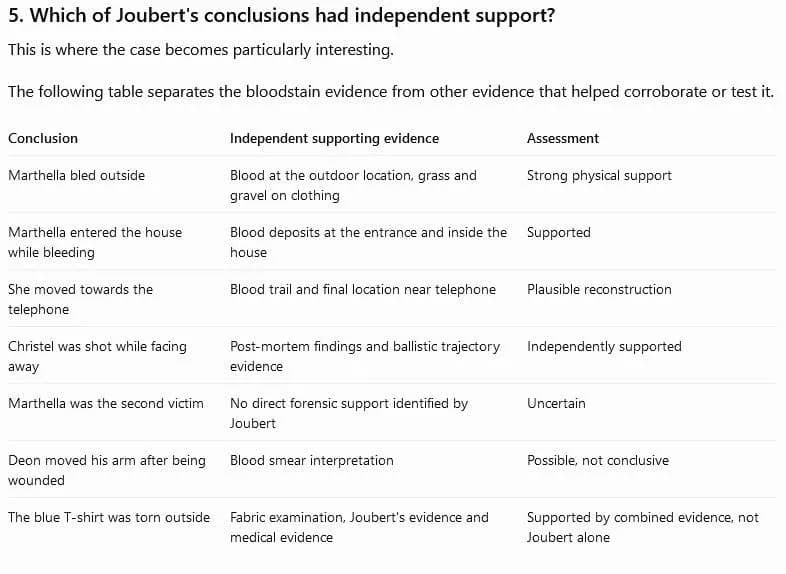
The table below distinguishes the bloodstain evidence from other evidence used to corroborate or evaluate it.
What was the final outcome?
27 March 2014: The accused was found guilty on all five charges.
13 August 2014: He was sentenced to an effective 20 years’ imprisonment, taking into account his age when he committed the crimes. Had he been an adult at the time, he would most likely have received three life sentences.
Incident summary:
Deon and Marthella were watching television, while Christell was working at the computer, seated at the computer stand. Their son went to the master bedroom and retrieved a .38 Special revolver. He then entered the living room and stood some distance behind his mother, facing her back.
The evidence suggests that his mother was the first victim. The bullet trajectory indicates that she was seated. Had she not been shot first, her body position would likely have been different, as she would have reacted to the gunfire.
Marthella was the second person he shot. The bullet perforated her chest, apparently as she was beginning to stand. This is consistent with the wound trajectory, the bullet hole in the wall, and the bullet’s path toward the barn door.
Deon Steenkamp was a large man and was nearly upright when he was shot at an angle. The bullet trajectories indicate that he was leaning slightly forward. He was also struck on the head with an object, most likely the revolver.
Marthella managed to run out of the house. The accused most likely caught her on the grass, where a struggle occurred and he assaulted her further. The accused then returned to the master bedroom to retrieve a .22 rifle, having run out of ammunition in the .38 Special. While he was in the bedroom, Marthella re-entered the house to call for help. The accused confronted her and shot her from behind. He then fired additional shots at Deon and Christell.
Before leaving, the accused changed his shirt in his room. He placed the firearms in the vehicle and drove to the police station.
The full judgement can be read here: https://www.saflii.org/za/cases/ZANCHC/2014/9.pdf



© nongqai.org
Write to us about this article
Do you remember this, or know more? Your comment appears here once an editor has read it.
The editors may print your comment, with your name, in the monthly edition.