
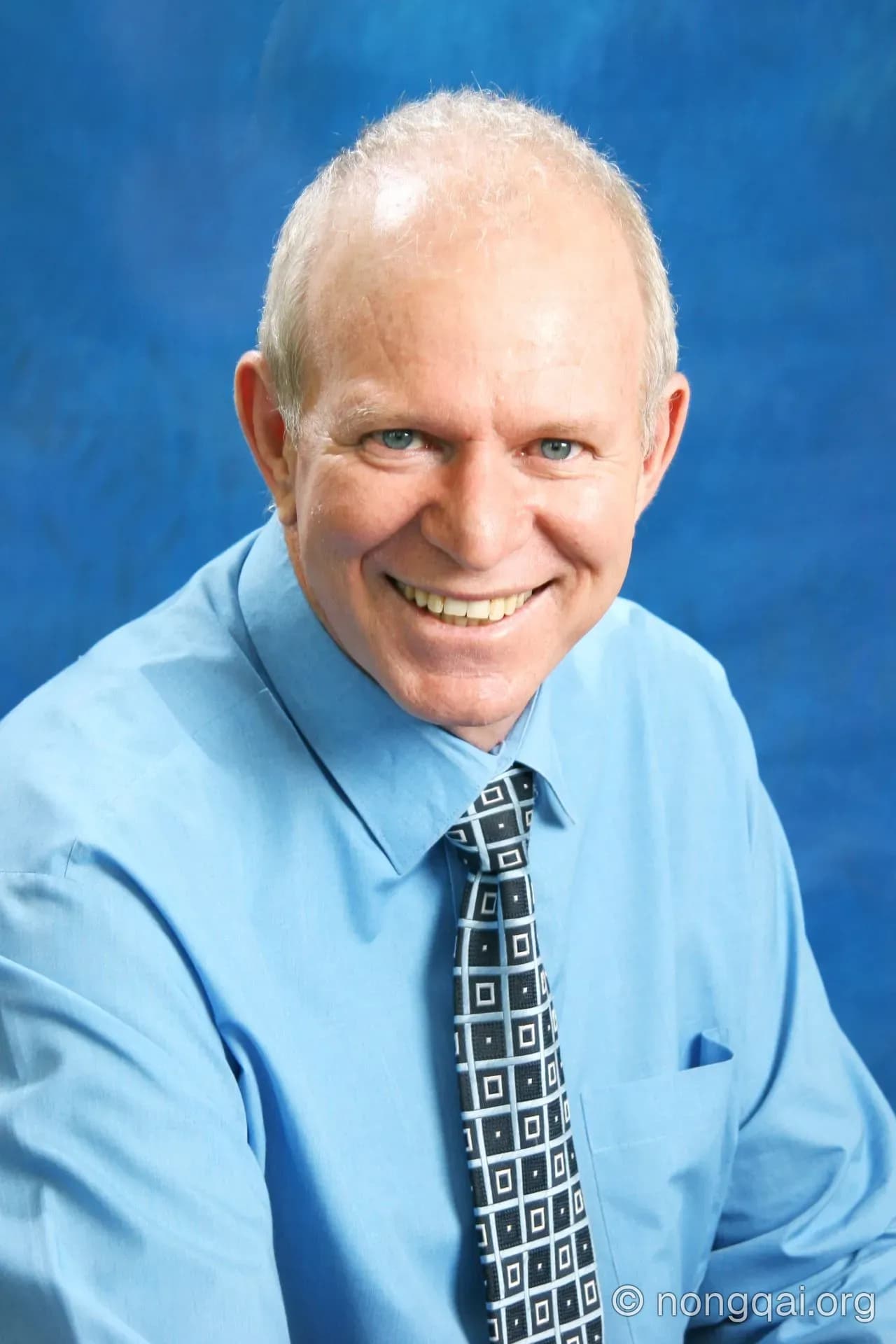
Anthony Turton
Introduction
This article has been prompted by three recent developments that have played out on the Nongqai platform. These are:
- A challenge of the validity of statements made by Johan Lotriet about K44.
- An accusation by Prof Fanie Cloete that my “hands are dirty”.
- Actual statements made by Johan Lotriet about K44.
Collectively these have prompted me to respond, which I do comforted by the fact that Nongqai is assembling the oral histories of veterans before they die.
As a point of departure, I wish to make a clear statement.
As a professional I have always believed that “facts are our friends” and that accountability is an essential part of any organization tasked to operate in secret. Therefore, I note that I have responded directly to Prof Cloete on the thread where he named me directly. I will therefore not respond further as it is unnecessary. The same applies to the allegations that the CDCO did not really exist, the logo is a fraud and the appointment of all members in leadership positions is invalid because the documents were not printed on NIS letterhead.
My answer to all these accusations is simple. The very fact that they have been made, and apparently supported by archival “evidence” to “prove” those allegations to be correct, are nothing more than validation of the effectiveness of the level of compartmentation, the unwavering application of the concept of plausible deniability, and the strict enforceability of the need-to-know principle that were the foundation of the CDCO.
The CDCO was created to be invisible, and guess what? We have been proven to be invisible. That has always been the sole objective.
Stated differently, the foundations of all that is to come about the evolution and impact of covert operations in NIS rests on (a) the strength of the concrete, and (b) the quality of the steel reinforcement used. Strong concrete and good steel enable enduring structures to be built. The durability comes from sceptical interrogation by people like Prof Cloete and others levelling these accusations. The more we are accused of misrepresentation, the stronger becomes the case we present, because each step in that process will have been tested and found to be truthful. Each gap in our story will have closed.
Facts are our very best friends – and we are the Faceless Few.
My First Introduction to the CDCO
In the 1980’s I was busy with four core activities.
- As a conscripted soldier I was reaching the end of my mandatory 720 days of active service in the Armoured Corps of the SADF.
- I was running a business, employing about 50 people, in an unstable economy where interest rates were running into the 20% range and trucks were being hijacked daily.
- I was operating as a contract agent for O61 being handled by SvD (Steve 1) and SW (Steve 2) as the alternative. Line functionally we fell under FS.
- I was studying part time to educate myself about what was happening in my country.
Then, one day when I was being debriefed by SvD, I was introduced to a senior NIS officer that wanted to talk to me. His name was MB. He was a humble man but with a mind like quicksilver and piercing eyes partially obscured by bushy eyebrows. He spoke up to me, which was odd, because he was clearly senior to SvD, who was my handler and therefore senior to me. I was at the lowest rung of this chain of authority, and yet the most senior man in that chain was talking up to me. This unsettled me somewhat, because it was totally out of left field.
In the SADF all leadership spoke down to their subordinates, so I had been brainwashed to accept that this was normal.
The conversation was interesting because it was clear to me that I was being “felt out” but I could not determine why this was the case, or what the objective was. After a while – maybe a few days – I was again called to a debriefing by SvD. I cannot recall if MB was present, but in essence I was invited to submit paperwork to initiate the process of testing my suitability for a new unit that was being created. I had no idea what the unit was about, or precisely what they saw in me as a potential candidate. All I knew was that the economy was being ravaged by high inflation, labour unrest and seething violence as a relentless campaign of bombing, necklacing, and social decay was making all commercial activity very risky. My business was not flourishing as a result, and my experience as a conscripted soldier in the cauldron of the East Rand Townships, had told me that the military was unable to manage this problem.
I had experienced that first-hand as Two Nine Foxtrot operating out of Esselen Park into the seething volatility of Thokoza, Katlehong, Vosloorus and Tembisa.
I therefore put in the paperwork required. Reams of documents about my lifestyle, my circle of friends, my alcohol consumption and a full declaration of my personal financial situation. This was fed into an invisible machine that I knew nothing of, at a time of profound uncertainty where the livelihoods of my ±20 employees, and their ±100 family members, was weighing on me like a massive burden.
The process of vetting took some time, so I simply got on with my life and continued with the four activities noted above. Two things then started to crystalize out for me. Firstly, I realized that South Africa was becoming ungovernable, and the SADF had no clue about how to deal with this. Secondly, I realized through my studies, but also through my ongoing contact with NIS members like MB, FS and SvD that there was an alternative. Professors Deon Fourie and Marie Müller, with whom I had developed an intellectual relationship, were teaching me things I had never heard of before.
I did not yet know what that alternative was, but what I saw comforted me. These were quality people. These were quietly professional people. These were enigmatic people because they had minds like quicksilver and piercing eyes beneath bushy eyebrows that peered into your soul, without speaking a word. These people were fundamentally different from the Hawks I had often encountered in the SADF, all full of the bluster of tough talk, but collectively devoid of any coherent plan that I could believe in. These were not talkers. These were thinkers and doers. They understood stuff.
I liked all of this because it came as a breath of fresh air blowing across a landscape of growing despair. Here I believed I could prosper and grow.
When the vetting was completed, I was invited to a safe house where I underwent psychometric testing and a full psychological evaluation. This included an IQ test. I met the polygraph machine for the first time and was fascinated at the jiggling movement of those needles as each question was asked and answered in rapid succession. Apparently, I passed the polygraph and psychometric testing. I was comforted by the fact that I was apparently not a psychopath, but I was concerned when the results indicated that I was an introvert. This is not how I saw myself, but I accepted the results from what was a thorough assessment conducted by highly qualified specialists.
Silence for the next few days. I paid attention to the woeful reality of my business, and I resigned myself to the fact that I simply had to keep the cashflow going because I had no alternative.
Then a phone call from SvD, again summonsing me to a meeting. This time MB did all the talking and SvD simply listened. In short, I was offered a job with a salary and benefits including medical aid, housing allowance and a car. This was a lifeline under the prevailing economic circumstances of truck hijacking, political unrest and inflation above 20%. When I asked what the job was about, I was told that it was too sensitive to talk about.
I wavered.
But I was also excited after years of futility in my army uniform, doing things I knew were incapable of making our country safer again. We were unprepared for the Peoples War. Maybe this was my chance to engage in that war? Not as a chest-beating macho soldier behind a Browning machine gun that was useless in the theatre of war – the townships of the East Rand – Katlehong, Tembisa, Thokoza and Vosloorus.
I was reminded of the experiences of a famous British soldier named Lisle March Phillipps, serving with the imperial cavalry unit Rimington’s Guides, who captured this harrowing reality in his contemporary account With Rimington in the Boer War[1]. His skillful description of their mission to burn the houses of the Boer women whose husbands were out on Commando resonated with me. I did not like the feeling. It placed me on the wrong side of history, but I was unable to change anything. I was not Phillipps, and I was reminded of my grandmothers’ admonition “that I must never forget that I am a Botha” even if I carried the name Turton through a quirk of cultural praxis.
Here I was being offered a job, in an organization I knew very little about, other than my compartmented contact with O61, without any clarity of the task at hand, or the objective to be reached. All I had was my long-term trust in FS, SvD and SW, and the newly forming confidence in MB.
I was learning about trust and confidence in leadership, something I had never experienced in my 12 years of service as a conscripted soldier in the SADF.
I signed the papers and was given a letter of appointment, on a blank piece of paper, without any letterhead or corporate branding, citing a file reference number that was alien to me. This was processed and I was given instructions to prepare myself for training at an unidentified location. From that moment things moved fast.
I closed my business down. One of my members of staff named Lenny – a veteran of the Battle of Ebo that I had taken under my wing to help him sort his life out – committed suicide. Apparently, the security that I provided was what was keeping him going, and now, faced with a new reality, he was unable to cope. His death is something I carry with me constantly. I console myself that I had done the best I could, with what I had available, and that was all I could do. He made his choice and I made mine.
This argument somehow seems hollow, but it is all that I have, for there is nothing more.
Meeting the K4 Team
Someone came to fetch me on my first day. I never learnt his real name. Even to this day I don’t know what it was. Let us call him Jan. I cannot even give him an initial because I never knew his surname. He drove me in his new VW Jetta to the home of another member of the team, in the vicinity of Megawatt Park. There I was introduced to KD, HB, BB and a man that introduced himself as Dries. Many years later I learnt that Dries was actually Johan Lotriet, but I never knew that at the time.
First impressions matter.
At that stage of my life, I was super fit, running half marathon distances with ease. The others were generally quiet and unengaging. The vacuum between us seemed to be overpowering, tempting me to fill it with something. I resisted. We were like shadows flitting in the underbrush of a forest, mostly concealed from view, except for those fleeting moments when someone spoke. There was no chest beating here. No macho warrior stuff puffed up to hide the underlying confusion that I had experienced in the army. None of us knew each other. We did not know each other’s real name and were told to keep it that way. The less we knew the less we could reveal if captured. Each had an operational name. Mine was Terry, so everyone knew me as that person. Dries was clearly in a leadership position, but his exact role was unclear to us all. MB was given the name Snuffles and Mike Kühn, who I had not yet met, was called Napoleon. People spoke with reverence of Napoleon. I wondered why but said nothing.
Now I ask the reader to imagine this.
Any normal social engagement starts by exchanging names. This establishes identity. You are John and she is Mary, but I am Peter. The next normal step is to ask where you live, or where you went to school. This places John, Mary and Peter in a social context. They become more than just a name. Suddenly common denominators become evident. If you are John that went to St Stithians, then you must know Brian who also went to that school and played lock in the rugby team. This is how the strands are brought together to create a network that slowly evolves into group identity.
Think of Ubuntu. I am because you are and therefore, collectively we also are.
None of this was possible. We were each lonely shadows floating in a gossamer cloud of anonymity, but now part of something neither of us knew anything about. Yes, we all knew that we were now part of NIS, but not one of us knew anything about the structure, administrative procedures and hierarchies within that structure. At best we knew that we were now part of something called K4, but none of us knew what that actually meant. I was one of the few that knew that O61 existed. Dries seemed to know about other structures within NIS, but certainly not too much detail.
I believed that we were called K43, whatever that meant. It was only decades later that I learnt I was wrong. We were in fact K44. Dries told me that when we met at a farewell party given by veteran covert operators as I was emigrating from South Africa to Australia. He showed me his letter of appointment to prove it.
The same letter that someone later said is fake because it was not written on letterhead with a logo. The letter that shaped my life for the next decade of reality at the cutting edge of change. The letter that did not exist, but actually did, in an alternative universe separated from the rest of the world by a flimsy membrane of invisibility.
We clung to that invisibility, because instinctively we knew it would be our only protection, once we were told what the mission was. None of us were issued with any identity cards, because officially we simply did not exist.
We were the Faceless Few.
Conclusion
All that we knew was that each of us had been selected for some or other reason that none of us was aware of. None of us knew how to execute the most basic administrative function. When writing an internal letter, it must be addressed to someone and have a certain format and reference number.
None of us knew anything about this level of detail. We were shadows unwilling to expose ourselves to each other, flitting around in a vacuum, hiding in the undergrowth of a forest. None of us knew the names of the spouses and whether each had a family. We didn’t even have an office to work from. We all knew that each had served either in the police or military, but none of us knew in what capacity.
We knew that Napoleon was somewhere out there, but we never saw him. We knew that MB was obviously in charge, but he never cracked the whip and always spoke up to his subordinates. He always treated us with respect, which was a new experience for me as a former conscripted soldier that had only been shouted at, and spoken down to for twelve years. We knew that Dries was in a leadership position close to Snuffels, and we knew that he came from the Railway Police Special Task Force that no longer existed, but it was also clear that he was unfamiliar with the administrative role and function he was executing. None of us had come through the “system” known as NIS, so we were all flying blind without any common navigation point to help us to determine where we were at that moment in time.
Then came the big shock when our salaries did not materialize as promised, and I was unable to pay the bond on the new home I had just purchased, using a financial guarantee that apparently never existed.
I quietly asked myself if I had jumped from the frying pan of financial insecurity, into the fire of hell, as the suicide of Lenny, my former employee, slowly ate me away from the inside.
© nongqai.org
References
- See Phillipps, Lisle March. 1901. With Rimington in the Boer War. London: Edward Arnold.
Write to us about this article
Do you remember this, or know more? Your comment appears here once an editor has read it.
The editors may print your comment, with your name, in the monthly edition.
Related Articles
National Intelligence Service – Covert Collection
October 28, 2026
Col J “Tollie” Vreugdenburg
July 28, 2026
Lekker gesels: Spoorwegpolisie Spesiale Taakmag en Nasionale Intelligensiediens
July 9, 2026
NONGQAI SERIES THE MEN SPEAK Dr Willem Steenkamp
February 24, 2024
NONGQAI SERIES THE MEN SPEAK Dr Willem Steenkamp Part 2
March 1, 2024