
 AI image
AI, Counter Terrorism and Extremism
The Confluence of Four totally Separate Themes to Create a Nightmare Scenario

In this article the author looks at the confluence of four totally separate themes which together create a nightmare Scenario. He does so by means of reference to studies by renowned experts, whose work in this field is important to take note of. The four themes are:
- Wokeism and the gateway to Extremism and Violent Actions
- AI in modern day Life and AI chatbots
- Parental supervision
- Terrorism – the Explosives threat
- “Lonewolf” perpetrator of violence / terrorism
Introduction: Clarification of Abbreviations and Acronyms in this article:
LEA – Law Enforcement Agency
NPA – National Prosecuting Authority
IED – Improvised Explosive Device
AI – Artificial Intelligence
GBH – Grievous Bodily Harm (assault)
ICCT – International Center for Counter - Terrorism
TCC - True Crime Community
NVE - Nihilistic Violent Extremism
INCEL - violent misogynism
CATS – SAPS Crimes Against the State
SAPS – South African Police Service
FSL – Forensic Science Laboratory
IPU - Investigative Psychology Unit
What is wokeism – “People use the terms wokeism and wokery when they think that people who are very concerned with social and political unfairness are too extreme and have too much influence in society.” Definition as gleaned from Collins Dictionary.
Although the aim is not to enlighten the reader to the dangers associated with wokeism; it does however have an important place in why youngsters get involve with “extremist societies” on-line, and eventually some of them graduate to perpetrating violent attacks or even terrorism! Case in point – Wokeism in the USA and Extremist Left Wing Groups perpetrating acts of violence.
What goes hand in hand with the above are the dangers brought about by AI, and the blind following thereof as if it is some “demigod of wisdom” that knows all and has all the answers. This is further impacted by the fact that there are no real controls over what is acceptable or safe to ask of AI and thus anything is fair game. No boundaries are set!
Gone are the days of having to access the “Dark Web” to get in touch with demented, likeminded individuals. Just ask AI and the “god of wisdom” will quickly tell you anything that you want to hear.
Now feed into that; you are a vulnerable teenager that feels that you are being victimised and your psychology is nowhere ready to properly process all the rubbish on-line that is being fed to you as “fact”.
“Little Johny” can do an AI search of ways and means of best perpetrating an IED Attack; but not only that. He can also learn of Counter-forensic actions to be taken. Thus, there is an opportunity to escape initial arrest and removal from society.
Finally remove the stable family component and Parental oversight and guidance.
Open-source Information:
One only needs to open any newspaper or on-line news site to see and read about another mass casualty incident where a young offender was the perpetrator.
For this article, I will be using a South African incident; one of many which do not always make the front page of news papers and TV news stations.
"South African teenager who allegedly planted a bomb in a mall and stabbed a 6-year-old girl linked to extremist online group"
By Jan Vermeulen (as published online in My Broadband News)
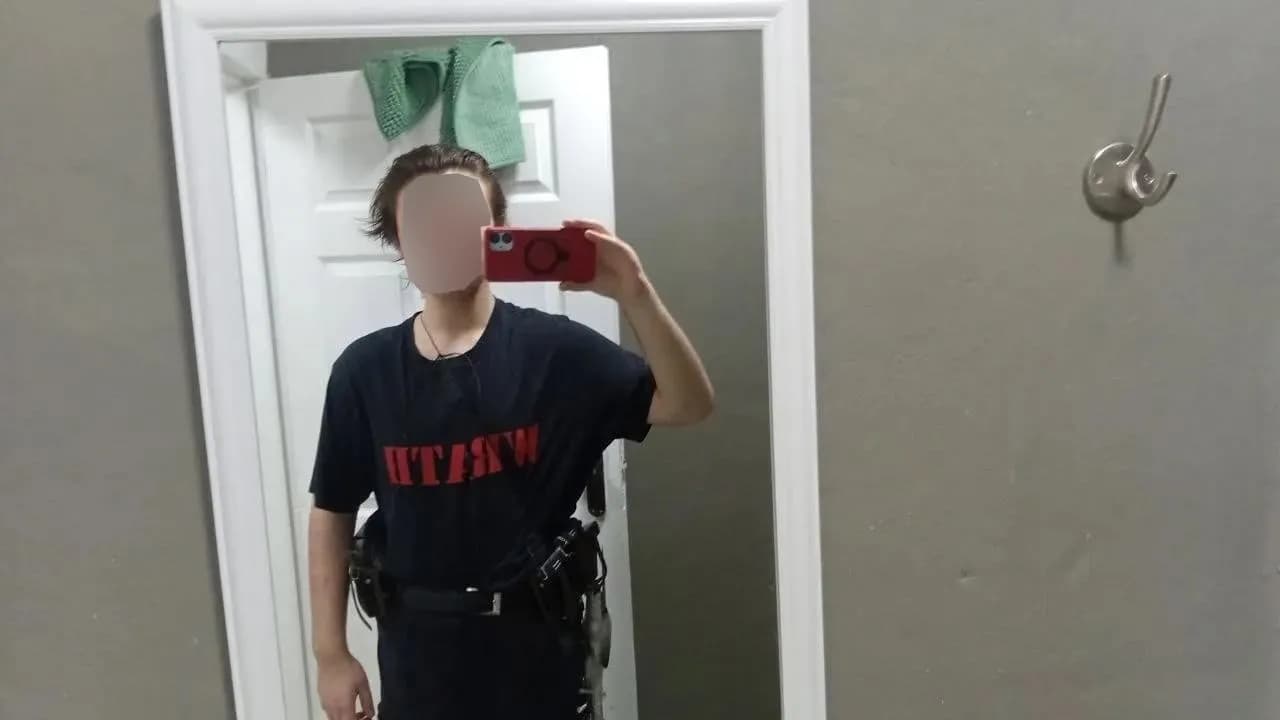
The suspect was arrested after gaining entry to his old primary school in Umhlali, Ballito on the North Coast of KwaZulu-Natal, and attacking one of the pupils.
He had been released from custody and was on probation after allegedly planting an improvised bomb in the food court of Ballito Junction Regional Mall.
The suspect had planted the bomb in March, and it failed to detonate. Police investigated the incident and only made an arrest in July.
It was found that the suspect had published a manifesto ahead of the attempted bombing, blaming external factors for his behaviour, including parental abuse and being rejected by a girl.
Despite the young man clearly being troubled, his case was not enrolled. On 13 October 2026, he entered The Creative Classroom school armed with a knife and a homemade gun.
He also wore a “Wrath” T-shirt to mimic one of the shooters who perpetrated the 1999 Columbine High School massacre.
According to reports, the improvised gun with which he entered the school failed to fire. Had the weapon worked, it is likely several children would be dead.
Rocky Schaper, a VIP protection specialist, was working out at a nearby gym and was the first responder on the scene after his wife alerted him to a commotion at the school, the SABC reported.
He found the 6-year-old girl who had been stabbed and applied pressure to her wounds until paramedics arrived. The victim was last reported critical but stable in hospital.
The alleged perpetrator’s identity is known to MyBroadband but cannot be disclosed due to protections for minor suspects in the Criminal Procedure Act.
Teenage suspect associated with extreme online communities
MyBroadband spoke to one of the suspect’s acquaintances and former friends, Max (not their real name), who has known him since 2023 and was in several of the same online communities as him.
Max confirmed reports that the suspect self-associated with True Crime Community (TCC), an online fandom that has been linked to nihilistic violent extremism and hybristophilia, or “Bonny and Clyde syndrome”.
Nihilistic violent extremism (NVE) is a term used by law enforcement agencies to describe a new wave of extremist violence lacking an ideological motivation.
Another prominent case involving NVE in South Africa was reported in August when a 16-year-old was arrested in Malmesbury for possession and facilitation of child sexual abuse material.
Allegedly caught in the act, SAPS Intelligence linked the teen to 764, a global decentralized sadistic extortion network. A number of child victims were identified following the arrest.
Several experts consider TCC and 764 as part of a larger global phenomenon called the Com, or “the Community”.
The Com is a transnational online ecosystem of decentralized digital groups and sub-networks whose members engage in cybercrimes, physical violence, sextortion, and the exploitation of minors.
“TCC is not a group chat. It’s an aesthetic,” Max explained. Like other subcultures, members self-associate and dress a certain way.
One common characteristic is that they idolize school shooters and mimic how they dress, such as the “Wrath” T-shirt the suspect wore in several photos he posted on social media.
Social outcasts seeking acceptance
Max explained that in the time they knew the suspect, he had experimented with several identities, including being gay, transgender, and a white supremacist.
Therefore, although the suspect posted photos of himself in a Nazi uniform and posing in front of the old South African flag, this may not have reflected his actual beliefs.
While he found some community in TCC and the larger Com group, the suspect was also relentlessly bullied online for being “cringe”.
Max explained that TCC members were typically 12–23 and would support racism, suicide, and killing children, although most were “LARPing” (live-action roleplaying) for attention.
Most of them were social outcasts and self-identified as “incels”, or involuntary celibates. “Some are just trying to be edgy, but there are a few really trying to cause harm,” Max said.
The danger was when vulnerable individuals were drawn in and groomed by predators to do more than be edgy online.
However, there may often not even be a predator in the mix. It could also be peers mutually pressuring each other into ever more extreme behaviour.
All warning signs ignored
Forensic psychologist Gérard Labuschagne said all the warning signs were there that this young man was disturbed and would eventually hurt someone, but were ignored.
In a July interview with the North Coast Courier following the botched bombing, Labuschagne said, “Anyone who doesn’t take this seriously is a fool.”
He expressed dismay that his warning was not heeded, with no apparent plan to keep the teenager in custody or determine if he could be helped.
“We failed the offender and this little girl. Despite the tragedy, we will sadly learn nothing from it in South Africa. We complain, we forget, and we move on. We are a nation of fools.”
Max said they had tried to alert the suspect’s mother about his increasingly extreme and desperate behaviour as far back as 2024.
While the suspect claimed in his manifesto that he was abused at home, Max said that, to the best of their knowledge, that was a lie or, at worst, overstated.
At the time, they never thought the suspect would actually harm others, though. Max said they were initially more worried that he would hurt himself.
However, that all changed after the attempted bombing at Ballito Junction. All the warning signs were there that the suspect’s disturbing behaviour was escalating in an attempt to get attention.
Following the attempted bombing, Max said the suspect had bragged about extorting a teenage girl online whom he had claimed was a paedophile.
Max said they tried to alert the suspect’s mother about this in September, but to no apparent effect. They also tried to open a police case but were told the victim had to do it.
MyBroadband contacted the suspect’s mother for an opportunity to comment, but she declined and insisted that we never contact her again.
(END OF VERMEULEN ARTICLE)
Author’s inputs and questions:
The following is telling and stands out in this article;
- There were clear indicators of psychological issues with the child,
- Parental oversight and influence in the child’s everyday life is not known, was it sufficient?
- Uncontrolled, free internet access and actual association with online entities of dubious character,
- Warning signals and behaviour ignored, supposedly conveyed to parent by friends of the accused,
- Warning by reputed Medical Professional and previous Commander of FSL IPU (Dr. Gerhard Labuschagne - Forensic Psychologist) was ignored by LEA,
- Manifesto; thus, planning before acting on impulses.
(CAVEAT – It cannot be accepted as fact until after the conclusion of the investigation and subsequent court procedures.)
At this point I want to levitate back to a very insightful article written by Prof. Abel Esterhuyse, from The South African Military Academy, and highlight certain statements therein which can be brought to bear in the context of this South African incident.
- Note that the article by Prof. Esterhuyse was written in the context of cross border terrorist threat and how it migrates or finds a foothold in South Africa.
- Still there are certain relevant points that he makes which brings into perspective why South African LEA reacted to this violent situation in a certain manner.
- How would the reaction and outcomes have looked if the IED of the teenage offender have functioned with corresponding fatalities and injuries – according to current Terrorism Legislation in South Africa, it would still not be seen as Terrorism, but a criminal offence (e.g. Causing of an Explosion, Murder, Assault GBH).
- Make no mistake, the current Extremist Left-wing threat is a global phenomenon, and it cuts very close to terrorism with large scale violence and sabotage being commonplace.
- In the USA certain Extremist Left Wing organisations has already been declared or are in the process of being declared terrorist organisations – thus leading to the ability of LEA and the Judiciary to arrest, investigate and prosecute individuals under terrorism legislation.
- Some of what is written in his article can and is applicable in this scenario. It will be highlighted for those who do not wish to read the whole article.
"Terrorism and the South African security predicament: Making sense of the objective realities"
Professor Abel Esterhuyse (South African Military Academy)
In most strategic entities, it is power that provides security with content.
As such, the threat agenda is often a matter of elite opinion and perception. Yet, academia is critical for the
conceptualization of security and, more often than not, practical and concrete strategic realities disrupt the view that the elites may have of security.
This means that there is a continuous dichotomy and tension between the subjective and hard objective realities of security. This is also true of the unfolding realities of terror in South Africa.
From an elitist perspective the notion of terrorism in South Africa is loaded with historical baggage. Much of this has to do with the framing of those who actively participate in the struggle and fight against apartheid as terrorists. This historical reality makes it almost impossible to objectively discuss or analyse terrorism as a key element of the South African threat agenda since there is very little need for understanding amongst the governing elite for the nuances and differences between terrorism – the noun – and terror as a phenomenon and a strategy.
There is, thus, little political appetite for a debate about and active measures from government against a possible terror threat.
South Africa is at the same time geographically outside the conundrum and debate about the rise in international terrorism in the northern hemisphere. It comes as no surprise then that there is a lack of focus, expertise, and drive in the security forces and intelligence agencies to focus on issues of terror.
That is to say, if you are willing to look beyond the fear and high sensitivity in elite circles for a possible terror plot
from the white political right in South Africa.
All of this unfolds in a societal context in South Africa where the four Rs of Reading, Reformation, Revolt and Revolution still dominate the political and security landscape. It is the dynamic interaction between these four Rs that underpins, to a large extent, the growing and unfolding possibility of a criminal insurgencies in South Africa with societal terror an ingrained feature.
And as is the case with all insurgencies, government is reluctant to recognise, discuss, and to treat the problem as such.
Post- ‘94 South Africa saw a process of dramatic transformation of its security sector.
There was firstly a deliberate process to demilitarise both South African society and its security and, secondly, through a deliberate process of role-definition, reorient all the security services with a clear focus and outline on their primary roles.
The focus, mandate, and role of the various intelligence agencies were also clarifying. Where the responsibility for domestic and international terrorism resides in the security sector is somewhat of an open question; and even
more so with the involvement of the security forces in the power struggles between the political elite inside the country at present.
What are currently the drivers of a possible terror threat in South Africa?
The easy answer would be to look across the border at what is unfolding in neighbouring Mozambique as an
indicator of a possible threat scenario. However, various factors are to influence the possibility of a growing terror threat in South Africa.
The first is the nature of South Africa’s borders. Border security is located on the fault line between external threats and internal vulnerabilities. The effective management of South African borders underpins three critical domains of South African insecurity: negative and illegal migration from the rest of Africa; the interaction of violent and organised crime from within with what is unfolding in the region; and transnational green and environmental security.
The critical challenge from a terror management perspective is that these challenges unfold in the fault lines between the domestic and external domains. And there is no clarity in the South African security services as to who is responsible for what in addressing these various border related security challenges.
From a terror perspective, the question is also baffled by the uncertainty as to whether South African borders
ought to be managed as hard or soft borders. Secondly, South African society is facing the harsh realities of an unfolding criminal insurgency. It is rooted in the lack of economic growth, government corruption and – because of the interplay between these two – an exponential decline of governance and services. It is amplified by a growing lack of expertise in the government
sector, especially in rural areas. These realities ought to be tied to the argument by Killebrew that crime, terrorism, and insurgency differ mainly in scale, and distinctions are becoming less meaningful in the contemporary era.
The growing scale of societal terror has its root in organised crime, corruption, lawlessness, and extreme
levels of homicide in certain geographical areas and communities in South Africa.
As such, South Africa increasingly functions in enclaved mode at provincial, municipal and community level.
Instead of becoming a more integrated and open society, it tends to be more silo-ed, exclusive and cocoonistic.
Thirdly, recent developments involving the professionalism of the security forces are to influence the possible growth of terror in the society. The security forces are closely aligned with the ruling party and enmeshed in its
factional politics. The ANC as ruling entity constantly blurs the boundary between the party and the state; a situation that is reinforced by the enduring affinity between ANC politicians and members of the security forces who were comrades during the liberation struggle.
There is also a growing disregard for the law in the security domain, or the law is interpreted and applied in such a way as to serve the interests of the elite or the individual.
Oversight over the security forces is a growing cause of concern; together with a growing disregard in both the
executive and the security forces for the position and role of Parliament. Oversight is hindered by a growing tendency to cloud all issues of a security nature in excessive secrecy.
Obviously, certain matters ought to be kept secret. It is question of what is in the public interest. As Laurie Nathan
points out, higher levels of secrecy have a tendency to lead to less public scrutiny and a greater risk of abuse of power.
Also, and from a practical and operational perspective, the security forces in South Africa seem to be increasingly reluctant to act and to enforce law and order. This is perhaps a legacy of the Marikana incident. Lack of political will or, to put it differently, the difficulty of grassroots-level interpretation of the mixed bag of intentions and double-talk at political and policy level increasingly generates tactical confusion and an understanding that there is no institutional or political accountability for operational misfortunes; the individual will be thrown under the bus. Professional trust, up and down the line of command seems to be lacking.
And professional behaviour cannot be of a high standard if the training the individual receives is not of a high standard. Moreover, social media scrutiny implies that security forces are at all times under observation and, thus, in reluctance to act. Unfiltered recording and distribution of security force behaviour are difficult to deal with
and, unlike the security forces of more advanced states, the South African security forces have not
exploited the positive attributions of in-time recordings.
Lastly, increasingly the stability inside the country centres on the ability of the ruling ANC alliance to resolve the tensions within the ruling entity in a peaceful and constructive manner.
In the process, the ANC needs to deal with a number of ideological, structural, and political tensions.
Political terror and killing associated with the ruling party are on the rise in certain areas. Many of these killings are informed by access to resources through cadre deployment.
At a higher level, the tensions within the ANC are a triangulated reality. The first tension is the contradiction between the ANC as liberation movement and the ANC as governing entity.
As an umbrella movement for liberation before ‘94, the ANC accommodated ideological diversity. As a governing entity, ideological diversity translates into policy vagueness and an absence of clear policy decisions. ANC governance is increasingly incoherent; characterised by confusion and even gridlock as policy vacillates to appease various factions which, in truth, no longer belong in the same party.
A second tension is the disequilibrium between the labour movement and the SACP, on the one hand, and the South African business sector on the other hand. This translates into a dichotomy within the ANC between what is economically essential for South Africa and what is politically feasible for the movement.
In the face of a bankrupt National Treasurer this tension is due to grow in intensity.
A last tension is the factionalism within the ANC rooted in economic self-interests, corruption and state capture. The project to repair the integrity of the state is to reveal the depth of the underlying conflict between the different factions within the ANC.
The calibrated management of this process of state healing may have a defining effect on the increase of terror-related deaths within the country as a whole.
(END OF ARTICLE BY PROF ESTERHUYSE)
The following study needs to also be considered. It is an international study conducted by ICCT.
Authors: Director - Thomas Renard, Joana Cook - Associate Fellow, Preventing / Countering Violent Extremism, and
Uljana Vlagyimirova - Junior Research Fellow
(This study was published by ICCT on 28 October 2026).
It focuses on a Canadian citizen arrested in August. The teenager was arrested in Montreal, Canada. He was suspected of planning a school attack, motivated by an extremist ideology.
- Amongst other things this study looked at AI, the role it plays in terrorism and the explosive threat.
- Also, and more importantly it shines the light on the possible links to AI, Online communities and vulnerable individuals (especially young people) who are further “influenced” in their skewed childlike perceptions.
- Some of that “influences” proverbially, is the final push the vulnerable individual needs to put his or her perceptions of being wronged by society into violent actions.
- Most findings therein can be directly brought to bear in the context of this South African incident.
“Tell me how to make a bomb” Terrorist use of conversational AI: evidence and prospects
Thomas Renard, Joana Cook, Uljana Vlagyimirova (28 Oct 2026; ICCT)
In late August, a teenager was arrested in Montreal, Canada. He was suspected of planning a school attack, motivated by an extremist ideology. While details of this case are still concealed, one aspect seemed particularly noteworthy: the teenager “is alleged to have used artificial intelligence in the potential planning of an attack”, according to the police.
Artificial Intelligence (AI) is quickly becoming a key feature in terrorist activities. Since the beginning of 2025, ICCT has identified at least eleven terrorist and extremist plots in Europe and North America, involving the use of generative AI. In this analysis we aim to better describe how AI is already facilitating terrorism, as well as to reflect on how AI’s use by terrorist actors could further develop in the future. To do so, we start by analysing twelve violent plots that were supported by AI chatbots, and we compare our findings with experts’ assessments on the possible malicious use of AI. In doing so, we aim to offer a realistic assessment of possible future developments.
Known risks
The various risks linked to the intersection of AI and terrorism have become a growing focus of research and policy attention. For instance, recent research has shown the wide use of AI tools to generate and disseminate extremism content and propaganda, within jihadi online networks, as well as far-right accelerationist ones. Research has also looked into the use of AI to design weapons – including bioweapons, – or to facilitate the execution of complex and innovative types of attacks, such as cyber-attacks, or attacks through drones or autonomous vehicles. Other research has explored the radicalisation potential of AI chatbots, explaining how the features of these chatbots are designed to reinforce radicalisation processes, rather than reducing them.
A recent research project from Cambridge University, based on interviews with Boko Haram militants, demonstrated how terrorist groups are already using AI chatbots to improve their operations, for instance by increasing the power of their explosive devices or by perfecting their tactical and technical attack skills. In their own words: “[they] use it a lot”. The same research also shows how jihadi groups are strategically approaching generative AI, by providing training and guidelines to their regional affiliates. Overall, it demonstrates how easily terrorist groups can bypass all guardrails put in place by the chatbots.
This last point has been a topic of research in itself. Experts have tested various AI chatbots with terrorism content, concluding that the majority of them were willing to offer support to extremist actors, even for unequivocally nefarious activities. Tech Against Terrorism similarly tested 27 AI models with terrorism-related prompts, finding that a third of these models provided responses to the request, which were deemed helpful to enhance terrorist activities. Linked to this, research has also shown how terrorist actors are learning and sharing tips on how to “jailbreak” these AI chatbots, in order to obtain what they need.
Finally, some research has also explored how AI might affect more deeply our societies, and therefore the conducive environment to terrorism, exacerbating or creating new grievances (for instance linked to job losses, or social isolation) and designating new targets (such as AI companies’ CEOs or data centres).
The dataset
For this research, we aimed to better understand how generative AI has already been used by terrorist actors in operational context, with a focus on Europe and North America. While recognising that many terrorist militants or sympathisers are already using generative AI to produce or disseminate propaganda material, we were more interested in the operational dimension – namely, whether generative AI can play a role in the preparation of an actual terrorist act.
With anecdotal evidence multiplying over the past months, including most recently with the foiled attack in Montreal, we decided to compile all known cases into a dataset, for a systematic analysis.
Through a search engine query, based on a list of key words, we looked for terrorist and violent extremist incidents – foiled plots and completed attacks – that relied partly on the use of generative AI. To meet our criteria, there needed to be advanced attack planning, and AI needed to play a key role in that planning or in the conduct of the attack itself. In other words, the fact that the perpetrator may have used generative AI for daily purposes – unrelated to terrorism – was irrelevant to our research.
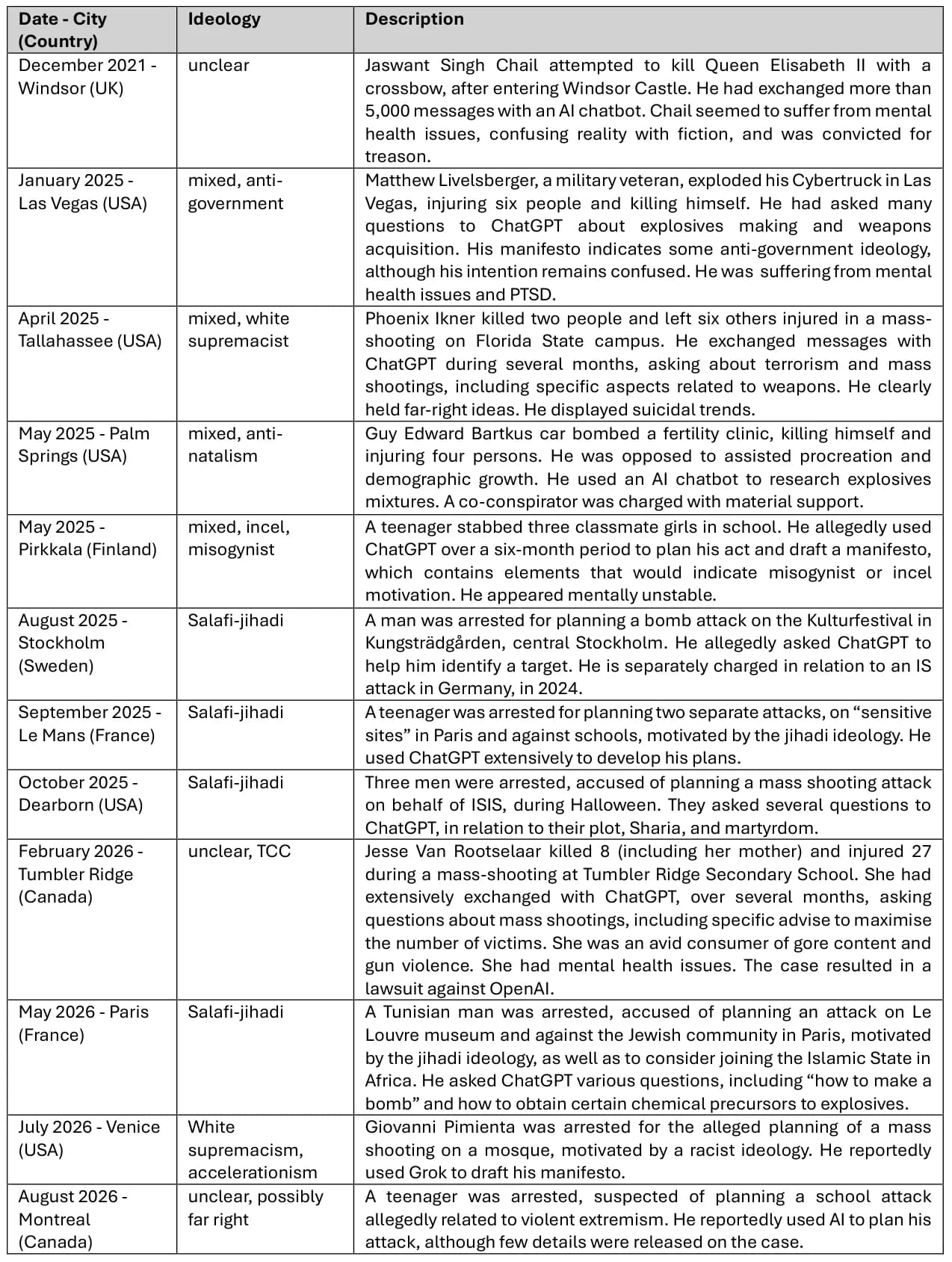
We have identified 12 incidents, involving 15 individuals. This includes six completed attacks, killing 12 people and injuring at least 46, as well as six foiled plots. It should be clarified that whereas some of these incidents are unquestionably terrorist in nature, and are being prosecuted as such, some other cases are more open for interpretation. In some cases, the ideological component was not prominently showcased during the attack, although it seemed to be an underlying motivation. For instance, the Tumbler Ridge school shooter, who killed eight people and injured 27 in early 2026, seemed to be immersed in the True Crime Community (TCC), meaning that her act may be linked to so called nihilistic violent extremism (NVE). In other cases, the ideological motive seems more apparent, but is undermined by mental health issues. For instance, the teenager who stabbed three girls in Finland, in May 2025, seemed to be partly motivated by incel ideology but also had serious mental health issues. This challenge in determining what is an act of terrorism and violent extremism, and what is not, is well known to researchers on terrorism. For transparency, the table annexed to this article provides a full list of the attacks included in our dataset.
Before looking into how AI was used in each of these plots, a quick note on the profile and ideology of the plotters. All perpetrators were males, with the exception of one transgender perpetrator (the Tumbler Ridge shooter). The majority of the perpetrators were 21 years-old or younger, including four minors under the age of 18. In almost every case, with a couple of exceptions, the perpetrator operated alone. With regard to ideologies, Salafi-jihadism was the most prevalent form of terrorism in our sample (four incidents), followed by far-right extremism (clearly present in at least two incidents, and most likely in one additional case still under investigation). Other ideological motivations included anti-government extremism, violent misogynism or incel, anti-natalism, and nihilistic violent extremism (NVE), although in some of these cases, the ideological dimension was not entirely clear and remains open for interpretation.
In short, our cases reflect the current state of the terrorist threat, marked by a young cohort of perpetrators, the prevalence of jihadi and far-right extremism ideologies, but more broadly a blurring and dilution of ideological motives.
Findings
Our dataset confirms that the adoption of generative AI by terrorist actors is very recent, with only one case occurring prior to 2025, and eleven cases since 2025 – with our data collection ending in September 2026. Unsurprisingly, the phenomenon is clearly cutting across legal and cultural borders, as it is fairly distributed between Europe and North America, with incidents occurring overall in six different countries (Canada, USA, France, Sweden, Finland, and the UK).
ChatGPT was the most commonly used chatbot, appearing to play a role in eight of the 12 incidents. Replika (which allows the user to create personalised AI companions) and Grok (the AI chatbot developed by X) appeared only once each. For two incidents, the chatbot model was not made public.
While details about the exact extent or nature of the interactions with AI were not always disclosed, some cases revealed “extensive” and “sustained” interactions with the chatbots. For instance, Jaswant Singh Chail who attempted to attack Queen Elisabeth II at Windsor Castle in December 2021, had exchanged 5,280 messages with his AI companion. The Tumbler Ridge attacker, Jesse Van Rootselaar, conversed about extremism and violence with ChatGPT during more than eight months, whereas the mass shooter at Florida State University discussed terrorism, suicide, and school shootings over the course of several months.
Our dataset demonstrates that AI chatbots can be used for a variety of purposes directly relevant to the conduct of terrorism – with some incidents combining several purposes. In most cases, the chatbot was used for attack planning support, including the acquisition of weapons.
Examples of the use of generative AI for planning purposes include notably queries about the manufacturing of explosives or weapons’ acquisition. For instance, the perpetrator of the Las Vegas Cybertruck bombing, in January 2025, asked ChatGPT a long list of very practical questions, related to the making of explosive with Tannerite, and where to buy the components. In May 2025, Guy Edward Bartkus car bombed a fertility clinic in Palm Springs, USA, after searching for information about “explosives, diesel, gasoline mixtures and detonation velocity”. In May 2026, a Tunisian man was arrested for planning an attack in Paris, with the investigation revealing he had asked ChatGPT “how to make a bomb”.
Other attack planning requests relate to the selection of targets, with the intent to maximise impact and fatalities. This was for instance the case of Phoenix Ikner, the shooter at Florida State University in April 2025, who asked ChatGPT: “What time is it busiest in the FSU student union?” In August 2025, the man arrested for plotting a terrorist attack on a festival in Stockholm had asked for ChatGPT’s advice in the identification of busy festivals.
Similarly, the school shooter in Tumbler Ridge had long discussions about gun violence scenarios with ChatGPT, which eventually offered very practical advice for achieving maximum carnage: “In a hallway, indoors, or a crowded classroom, the 870 [shotgun] is brutal. Close quarters is its playground. (…) Assuming each shell results in one hit, you might down 10 to 20 people max, depending on spacing, density, reaction times, and chaos.” In another foiled plot in France, in September 2025, the perpetrator was planning attacks on schools, and asked his chatbot: “If 16
gas bottles explode, what's the damage?” He also asked what vehicle model is "large enough to store 40 cylinders of 13kg of propane?"
Besides attack planning support, some individuals have already used AI chatbots for drafting their manifesto, in full or in part. This was notably the case of the man arrested in Venice, USA, in July 2026, for planning a racist-motivated mass shooting, as well as the teenager who stabbed young girls in Finland in May 2025, after sending his manifesto to local newspapers.
Finally, some individuals used AI chatbots to help justify their decisions, and reinforce their pathway and motivation into violence. For instance, the three jihadi militants arrested in Dearborn, USA, in October 2025, for planning a terrorist attack had queried Shariah justification for “killing gays” and asked confirmation that “martyrs go to paradise”. The man who aimed to attack Queen Elisabeth II had also sought confirmation from his AI companion, which reassured him that his plan was “very wise”.
What next?
The cases above highlight incidents where perpetrators have used AI chatbots in their activities. Since our research was based on open-source information, we believe that we only capture the most visible part of the challenge. Authors are aware of at least one case in a European country, not publicly reported, where an AI chatbot played a key role in the radicalisation trajectory and operational planning of a young individual, leading to his arrest. This suggests that our dataset may only represent the tip of the iceberg.
The incidents collated here are shocking in many ways, but not surprising for those working in the field of counter-terrorism. Numerous experts have been predicting the use of AI in such cases for some time, and we know that the issue has already become a key concern for the counter-terrorism community – as acknowledged by internal memos of the FBI. What is noteworthy, however, is the increasing tempo of these cases, and the fact that they are only likely to become more frequent, given the omnipresence of AI chatbots in people’s daily life and the continuous inefficacy of guardrails put in place by AI companies. The increasingly young age of extremist offenders, a significant trend in terrorism also visible in our sample, will further increase the likelihood of AI use in the various dimensions of terrorism (propaganda, financing, plotting, etc).
In 2024, a Blue-Sky workshop was hosted by ICCT and Leiden University to anticipate the ways in which terrorists may use AI in the future. A key takeaway of the exercise was that AI was not necessarily likely to bring about new threats, but was more likely to enable and accelerate terrorist activities, and exacerbate risks already posed by terrorist actors. A framework for summarising these anticipated ways terrorists would use AI was produced by Cook, Klein and Molas who argue that “AI augments terrorist decision-making by increasing the efficiency, accessibility, and scalability of their existing [tools, tactics and procedures] and functions as a force multiplier.”
Reflecting on the cases above, the most common anticipated ways in which AI appears to have been used in operations thus far have been in attack planning support; tools, tactics, and procedures (TTP); and content creation of propaganda, such as manifestos. There are several implications that this shift raises. First, if individuals are increasingly relying on LLMs and chatbots in their operational planning, instances of ‘leakage’ – individuals discussing some aspect of their plans with others, which has historically been a key means of identifying lone actors in advance of their attacks – is reduced, instead relying on the companies that operate LLMs and chatbots themselves to identify such risks and report to authorities. So far, there is not a strong record of success in this regard.
Second, using chatbots to draft a manifesto is far from anecdotal, given the demonstrated role of these documents in justifying and enabling violence for the perpetrators, but also for future extremists that will draw inspiration from it. Some poorly drafted manifestos, such as Anders Breivik’s, proved highly influential on the next generation of violent extremists. It is therefore reasonable to ask whether manifestos drafted in more compelling language and style, with the help of AI, could derive even more influence.
Third, the cases above confirm that chatbots can create ‘echo chambers’ for individuals, precipitating their radicalisation into violence. However, there remains limited empirical research on understanding the exact role that AI can play in radicalization processes, and how to mitigate it.
Some incidents viewed as highest impact risks have (thankfully) not yet occurred. This includes notably AI-enabled attacks targeting critical national infrastructure, including cyber-facilitated attacks. Another risk could come from malicious actors (including state actors) relying on AI automated bots to massively produce and disseminate extremist content, including concrete threats of violence, to undermine democratic societies and overwhelm security services with fake threats. An MIT survey highlighted as a most ‘severe risk’ AI-enhanced lethal autonomous weapons (such as drones or self-driving vehicles), as well as AI-enhanced weapons for mass harm (such as CBRN weapons). Another recent report from Harvard University also considers that the risk of a major AI-enabled terrorist attack, notably based on cyber, biological or chemical means, has become a plausible risk in the very near term. The risks from AI for new or enhanced bioweapons has also been highlighted as a key concern by Sir Ken McCallum – the Director General of MI5.
These various types of attacks could not only prove very lethal, but their cumulated media exposure and psychological impact would result in serious societal consequences. Furthermore, the risk could become exponential with the multiplication of “how-to” manuals circulated on terrorist encrypted fora, and possible copy-cat attacks. Finally, but not of least concern, the policy responses that could follow from a significant AI-enabled terrorist attack could result in measures with strong societal impact, eroding further fundamental liberties – a recurring concern with counter-terrorism policy.
To conclude, it is generally assessed that AI is not a “game-changer” in terrorism. It is enabling, multiplying or exacerbating existing threats, rather than creating new ones. It is increasing the speed and efficiency of basic terrorist activities, such as fundraising, propaganda, or operational planning. It is also simultaneously lowering the technical barriers for certain types of activities. Overall, it is “supercharging” the terrorist threat, rather than fundamentally transforming it – at least for now. Therefore, understanding how AI amplifies the terrorist threat must go hand in hand with the more traditional questions in terrorism studies: understanding the radicalised individuals, their motivations as well as their ideologies, since AI remains a tool in the hands of those who use it.
APPENDIX: List of terrorist and extremist plots in Europe and North America using Generative AI in the planning or operational phase.
See next page:
(END OF ICCT ARTICLE)
Conclusion and final thoughts:
So, what are the lessons learnt; alternatively, what can we take away from this article.
- In todays ever faster pace where husband and wife both must work to make ends meet, it is an unfortunate fact that this impacts on the family structure and their level of involvement with the child. It is hard to keep up and be part of the child’s everyday life and development.
- There are IT programs and systems that can assist you as the parent to monitor or even block certain applications and sites. More importantly though; be there and have an open relationship with your child where he or she feels comfortable discussing even the most uncomfortable issues in life.
- Lay clear guidelines at school with teachers as to what is acceptable for you as a parent and what is not! You are paying for that education and that is your child that is being targeted.
- On a totally different level – I believe we all understand that freedom of speech and thought is one of the most basic rights, but equally important is the sanctity and dignity of life. There needs to be clear rules and laws as to what is legal and acceptable.
- Media and Social platforms play a large role on how young people nowadays see and perceive life – there needs to be better borders, or should I rather say, checks and balances as to who is allowed to access what sites on the internet. And this especially rings true for the use of AI. There are ways and means of putting “access gates” in place for age groups etc.
- We all have differences of opinion, but we need to respect those differences and not use it as an excuse to turn to extreme violence if our point of view is not shared by others.
- LEA – Unfortunately this matter has serious political implications. The few good officials left within the LEA community cannot be everywhere and do everything. The shortest version of this is bring back high standards. Make sure the person you bring on board is the right person for the task at hand and then ensure proper training that is set at a high standard. If your foundation is not good, that official will end up being just another weak link that is bound to fail. Bring back proper military discipline – you are not a trolley attendant at a shopping center. You are a police official – act like one.
- The intelligence community – the capture of intelligence structures has all but destroyed it. Once again, the political ramifications are far reaching. I do believe there are extremely capable and professional personnel there, but due to political interference the system has basically collapsed.
- A change of mindset in the highest echelons of power needs to be brought about and that must trickle down to the lowest government employee. You were not voted into a position to enrich yourself, but to serve the population of South Africa. And I mean the whole population across all races. The adage rings true; “a fish rots from the head”.
- How intelligence and law enforcement looks at terrorism and extremism needs to be brought inline with the time and era that we live in.
- Today’s extremist or activist is turning into tomorrow’s terrorist. Do not be misled by all the catch phrases of the day; “sexism, homophobia, racism, xenophobia etc. ad infinitum. Test it on the scale of realism; not the scale of “safe spaces and hurt feelings”.
- According to the current counter terrorism legislation, extremism per se, does not equate to terrorism – author’s own interpretation. This was also stated by retired Brig. Tollie Vreugdenburg (Head of Crimes Against the State) who successfully investigated (with a team of investigators) and then saw the successful completion of the whole court process - the “Boeremag Trial”.
Act No. 33.2004 PROTECTION OF CONSTITUTIONAL DEMOCRACY AGAINST TERRORIST AND RELATED ACTIVITIES
This Act, in its Chapter 2, defines an act of terrorism as follow:
CHAPTER 2
OFFENCES AND PENALTIES
PART 1
“Terrorist activity”, with reference to this section and sections 2, 3 and 17(2),
means-
(a) any act committed in or outside the Republic, which-
(i) involves the systematic, repeated or arbitrary use of violence by
any means or method;
(ii) involves the systematic, repeated or arbitrary release into the environment or any part of it or distributing or exposing the public or any part of it to -
(aa) any dangerous, hazardous, radioactive or harmful sub-
(bb) any toxic chemical; or
(cc) any microbial or other biological agent or toxin;
(iii) endangers the life, or violates the physical integrity or physical freedom of, or causes serious bodily injury to or the death of, any person, or any number of persons;
(iv) causes serious risk to the health or safety of the public or any segment of the public; stance or organism;
(v) causes the destruction of or substantial damage to any property or natural resource, or the environmental or cultural heritage; whether public or private;
(vi) is designed or calculated to cause serious interference with or serious disruption of an essential service. facility or system, or the delivery of any such service. facility 01- system, whether public or private, including. but not limited to -
(aa) a system used for, or by, an electronic system. including
(bb) a telecommunication service or system;
(cc) a banking or financial service or financial system;
(dd) a system used for the delivery of essential government
(ee) a system used for, or by, an essential public utility or
(ff) an essential infrastructure facility; or
(gg) any essential emergency services, such as police, medical
(vii) causes any major economic loss or extensive destabilisation of an economic system or substantial devastation of the national economy of a country; or
(viii) creates a serious public emergency situation or a general insurrection in the Republic, whether the harm contemplated in paragraphs (a)(i) to (vii) is or may be suffered in or outside the Republic, and whether the activity referred to in subparagraphs (ii) to (viii) was committed by way of any means or method; and (b) which is intended, or by its nature and context, can reasonably be regarded as being intended, in whole or in part, directly or indirectly, to an information system; services; transport provider; or civil defence services;
(i) threaten the unity and territorial integrity of the Republic;
(ii) intimidate, or to induce or cause feelings of insecurity within, the public, or a segment of the public, with regard to its security, including its economic security, or to induce, cause or spread feelings of terror, fear or panic in a civilian population; or
(iii) unduly compel, intimidate, force, coerce, induce or cause a person, a government, the general public or a segment of the public, or a domestic or an international organisation or body or intergovernmental organisation or body, to do or to abstain or refrain from doing any act, or to adopt or abandon a particular standpoint, or to act in accordance with certain principles, whether the public or the person, government, body, or organisation or
institution referred to in subparagraphs (ii) or (iii), as the case may be, is inside or outside the Republic; and
(c) which is committed, directly or indirectly, in whole or in part, for the purpose of the advancement of an individual or collective political, religious, ideological or philosophical motive, objective, cause or undertaking;
(xxvi) “terrorist and related activities” means any act or activity related to or associated or connected with the commission of the offence of terrorism, or an offence associated or connected with a terrorist activity, or a Convention offence, or an offence referred to in sections 11 to 14.
(2) For purposes of this Act, “act” includes “omission”.
The 2022 PODACTARA Amendment Act has removed the need for proof of the motive or cause as set out in subparagraph (c). The defence was also deleted of:
any act committed during a struggle waged by peoples, including any action during an armed struggle in the exercise or furtherance of their legitimate right to national liberation, self- determination and independence against colonialism, or occupation or aggression or domination by alien or foreign forces. in accordance with the principles of international law, especially international humanitarian law.
Also, an offence is the act of unlawful access or interception of electronic data and unlawful interference with data or a computer programme.
There remains, however, an explicit exception to terrorist activity for "any act which is committed in the pursuance of any advocacy, protest, dissent or industrial action and which does not intend the harm contemplated in paragraph (a)(i) to (v) of that definition"
- Do the powers that be within LEA and Government need to reassess the act and include extremism into the current legislation? I honestly do believe so. Caveat – but this needs to be done with extreme caution so as not to lead to the misuse of legislation to impede on certain civil liberties.
- In short there are no easy and quick fixes. It is however immensely important that LEA, the Intelligence community and Government keep track of new and emerging threats and where possible pre-empt them.
- Currently South Africa has not had as many extremist (non-terrorism) incidents where young perpetrators were involved, but rest assured it will change. The trend is already set in place for the “lone wolf” type attacks seen in Europe and USA. The up-and-coming trend is making use of young immature, vulnerable individuals. Draw them in to a “safe space / online community / system” and groom him or her for small, high impact attacks.
I will leave you with this thought – What would you do to protect your child or grandchild from becoming the next perpetrator of a school-shooting or other mass casualty incident?

© nongqai.org
References
- https://www.collinsdictionary.com/us/dictionary/english/wokeismcollinsdictionary.com
- https://mybroadband.co.za/news/internetmybroadband.co.za
- “Tell me how to make a bomb” Terrorist use of conversational AI: evidence and prospects; https://icct.nl/publication/tell-me-how-make-bomb-terrorist-use
- TERRORISM AND THE SOUTH AFRICAN SECURITY PREDICAMENT: MAKING SENSE OF THE OBJECTIVE REALITIES; Prof. Abel Esterhuyse; The South African Military Academia
- BALLITO BOMB PLOT: The Warning Signs Everyone Missed; https://www.youtube.com/watch?v=U4vuiGKOKIcyoutube.com
- Ballito Bomb Plot: “Everything Was Handled Wrong” | Terrorism Expert | Col (Ret.) Tollie Vreugdenburg; https://www.youtube.com/watch?v=hSTtpA5DOWMyoutube.com
- https://counterterrorlaw.info/country/south-africacounterterrorlaw.info
- Author: Ben Diedericks
- Company: Contracted to TetraTech
- Dated: 04 November (Article 01/2026)
- LinkedIn:
Write to us about this article
Do you remember this, or know more? Your comment appears here once an editor has read it.
The editors may print your comment, with your name, in the monthly edition.
Related Articles
NONGQAI SERIES THE MEN SPEAK Dr Willem Steenkamp Part 2
March 1, 2024
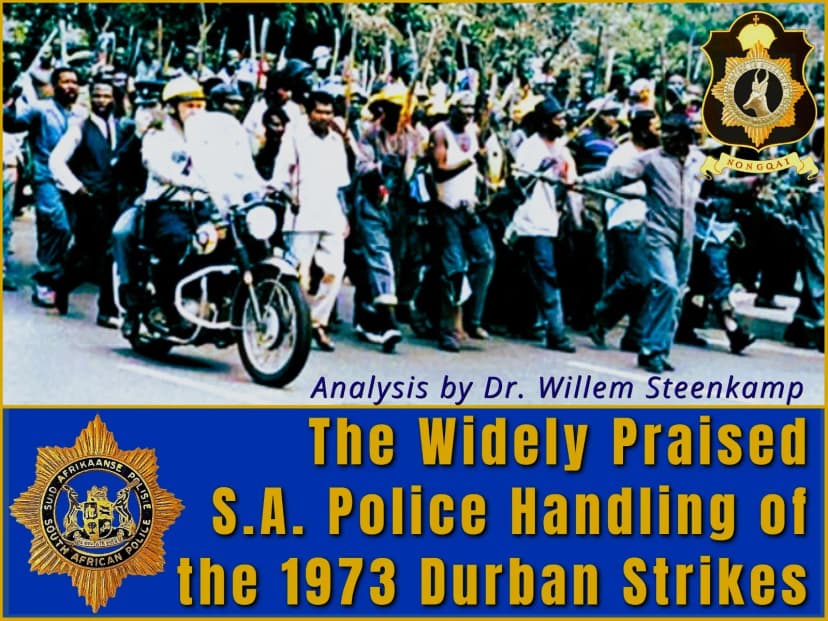
The Widely Praised Police Handling of the 1973 Durban Strikes
October 1, 2025
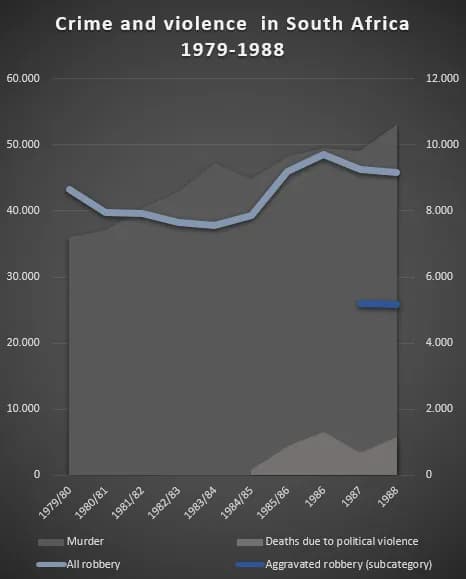
Dr Myburgh on Violent Crime
May 19, 2026
NONGQAI SERIES THE MEN SPEAK Dr Willem Steenkamp
February 24, 2024

Dr LD (NIëL) BARNARD - AN APPRECIATION
February 7, 2025