Nongqai Vol 17 No 6B – Employment of Armoured Trains in Mozambique
Abstract
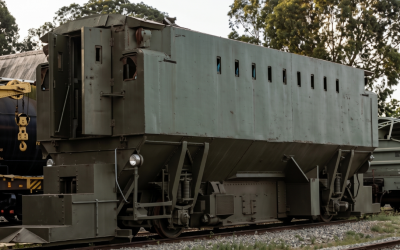
This article examines the employment of armoured trains in Mozambique across distinct historical phases shaped by conflict and strategic necessity. Beginning with the anti-colonial struggle led by FRELIMO and the subsequent civil war against RENAMO (1977–1992), Mozambique’s railway network emerged as a critical yet vulnerable logistical lifeline. In response to persistent sabotage, ambushes, and infrastructure attacks, government forces adopted improvised armoured trains—locally modified locomotives and carriages equipped with reinforced plating and weaponry—to secure rail corridors and maintain the flow of goods and military supplies.
The study highlights the operational role of armoured trains during key periods, including the protection of the Beira Corridor in the 1980s, where regional forces such as the Zimbabwe Defence Forces and Malawi Defence Force contributed to railway security, and the deployment of specialised armoured rolling stock such as the “Jackal.” It further explores the post-2000 resurgence of railway protection measures, particularly in safeguarding coal transport routes, where modern armouring solutions were applied to locomotives to counter renewed insurgent threats.
Overall, the article illustrates how Mozambique’s reliance on rail infrastructure, combined with prolonged insurgency, necessitated adaptive and evolving armoured rail solutions, reflecting both the tactical importance of railways in conflict zones and the enduring interplay between security and economic survival.
